
REVIEW · NORMANDY TOURS
2- to 6-hour sidecar excursion on the D-Day Landing Beaches
The road becomes part of the story. This private sidecar tour from Bayeux combines a thrilling vintage motorcycle ride with thoughtful visits to Normandy’s D-Day sites. I especially like the small-group format and the chance to use quiet country roads between beaches, villages, batteries, and cemeteries. The main drawback is simple: a sidecar is open to the weather, so cold, wind, or rain can affect your comfort.
I also like the flexible length. A two-hour outing gives you a quick look at one sector, while the four-hour and six-hour choices allow more time at Omaha Beach, the American Cemetery, Arromanches, and Pointe du Hoc. Guides such as Rémi, Philippe, and Jack are praised for their warmth, humor, and detailed explanations. Just bring layers, a scarf, and an appetite if you book a longer ride, since lunch is not included.
In This Review
- Key points to know before you book
- Why a sidecar suits the D-Day beaches
- Starting in Bayeux with the right equipment
- Arromanches and the British sector
- Longues-sur-Mer and the Atlantic Wall
- Port-en-Bessin and the fuel supply
- Omaha Beach, where the day turns somber
- The American Cemetery at Colleville-sur-Mer
- Pointe du Hoc on the six-hour route
- Choosing two, four, or six hours
- What the $169.31 price gets you
- Weather, comfort, and who should book
- Should you book this Normandy sidecar tour?
- FAQ
- Where does the sidecar tour begin?
- How long does the experience last?
- What is included in the price?
- Is lunch included?
- How many people can ride in one sidecar?
- How large can the private group be?
- What is the minimum age?
- Can the American Cemetery always be visited?
- Is the tour offered in English?
- What happens if the weather is poor?
Key points to know before you book
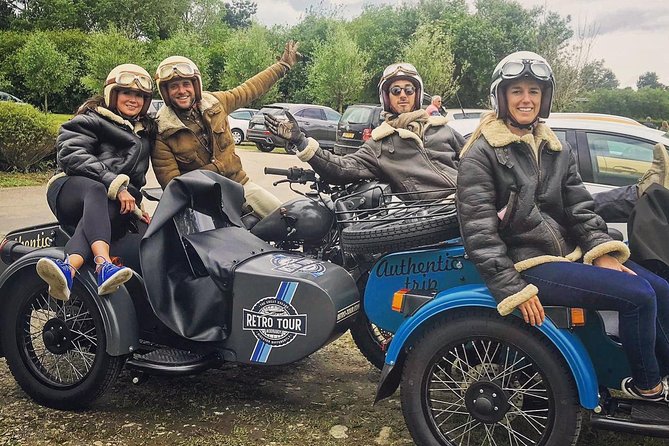
- Vintage sidecars make the journey part of the experience: You ride in the basket or behind the pilot, with helmets, gloves, goggles, and rain gear supplied.
- The six-hour route covers the most ground: It can include both British and American sectors, plus Pointe du Hoc.
- Rémi and Philippe add personal character: Their storytelling, humor, and careful driving receive especially strong praise.
- The ride uses Normandy’s smaller roads: You see more countryside and coastal villages than you might from a standard coach.
- Weather matters: Late autumn and winter rides can be chilly, even with provided gear, so dress warmly.
- The tour is private: Your group travels together, with up to six people per booking and up to twelve by request.
Why a sidecar suits the D-Day beaches
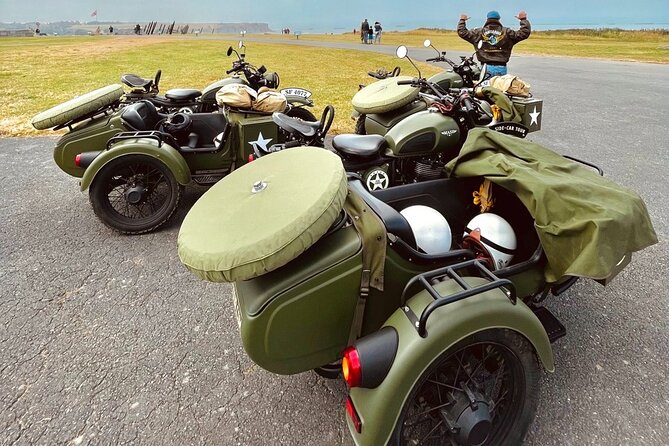
You can visit Normandy’s landing beaches by rental car, taxi, coach, bicycle, or guided minibus. Each method has its strengths. The sidecar offers something different: the ride itself connects the sites.
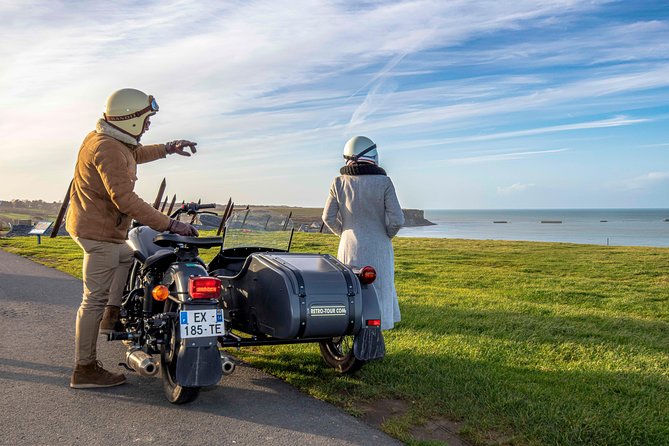
From the open seat, you pass through the Normandy countryside at a human pace. You see lanes, fields, villages, and stretches of coast rather than only the main highways. The motorcycle also makes the day feel less like a checklist of museums and more like a moving route through the places where the Allied campaign unfolded.
The guides drive the vintage motorcycles and explain the events along the way. They cover the Allied preparations, the landings on June 6, 1944, and the fighting that followed. Philippe has particular experience with weapons and tanks, and his past service in a French army tank division gives him a useful perspective. Rémi is often praised for mixing serious history with well-timed humor.
That balance matters. D-Day sites can become overwhelming when every stop carries the same solemn tone. A good guide gives you facts, human stories, and time to think without turning the day into a lecture. This tour appears to do that well.
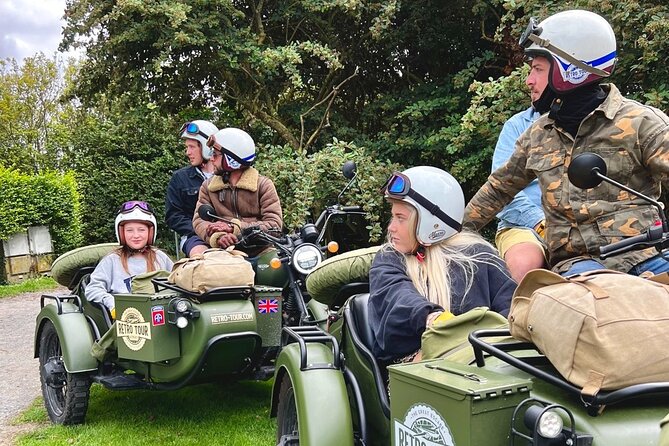
The vehicles carry one or two passengers per sidecar. One person rides behind the pilot, and one sits in the basket. The basket is reported to be roomy enough for tall adults, including a passenger around 6 feet 2 inches with a large build. Still, comfort depends on your seat, body size, clothing, and the weather.
A few more Bayeux outings to set side by side
- Normandy American D-Day Beaches Full Day Tour from Bayeux
★ 5.0 · 2,103 reviews - Normandy American D-Day Experience – Group tour from Bayeux
★ 5.0 · 1,566 reviews - Normandy Beaches Half-Day Afternoon Trip from Bayeux (A2)
★ 4.5 · 1,116 reviews
Starting in Bayeux with the right equipment
Your Gentleman Sider meets you at a pickup location of your choice, at the Bayeux Battle of Normandy Museum parking lot, or at the Bayeux bus station. Pickup is offered, which helps if you are staying in Bayeux and do not want to arrange a separate taxi.
Before setting off, the guide helps you put on a helmet, gloves, and retro goggles. Rain gear is also available. This preparation is practical, but it adds to the old-fashioned feel of the ride. You are not simply climbing into a modern vehicle and watching the sights pass by.
The first part of the excursion is also a chance to get comfortable with the motorcycle and sidecar. The guides make stops for breaks and photographs, so you are not expected to remain in the same position for the entire outing.
I would wear a warm coat even in mild-looking weather. Several riders found the wind colder than expected, especially in October and November. A scarf that covers your neck and lower face is a smart addition. In winter, dressing in layers will make a major difference.
Arromanches and the British sector
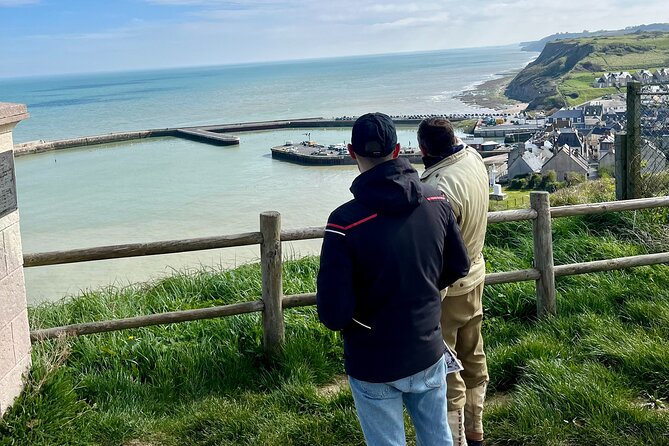
The British sector option brings you to Arromanches-les-Bains, one of the most important harbor sites connected with the Normandy landings. After D-Day, the Allies built Mulberry B here, a temporary artificial harbor that allowed heavy equipment and supplies to come ashore without waiting for the capture of major ports such as Le Havre or Cherbourg.
Arromanches avoided the worst of the fighting on June 6 because the beach and surrounding routes needed to remain usable for the harbor. British troops landed farther east, between Asnelles and Ver-sur-Mer, then liberated Arromanches by land that evening. The harbor began operating on June 14.
The stop lasts about an hour on the routes that include it. That gives your guide enough time to explain why this beach was selected and how the harbor supported the Allied advance. The story here is not only about the first assault. It is about the huge supply operation that kept the army moving after the initial landings.
Arromanches works well for visitors who want to understand the practical side of the campaign. Omaha is remembered for its human cost. Arromanches shows the engineering and logistics needed to sustain the invasion.
Longues-sur-Mer and the Atlantic Wall
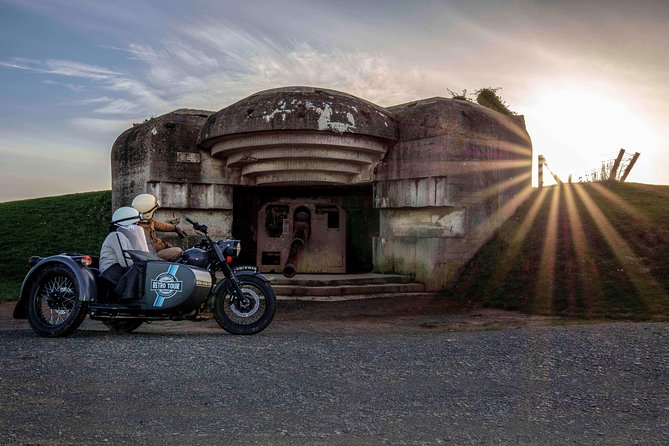
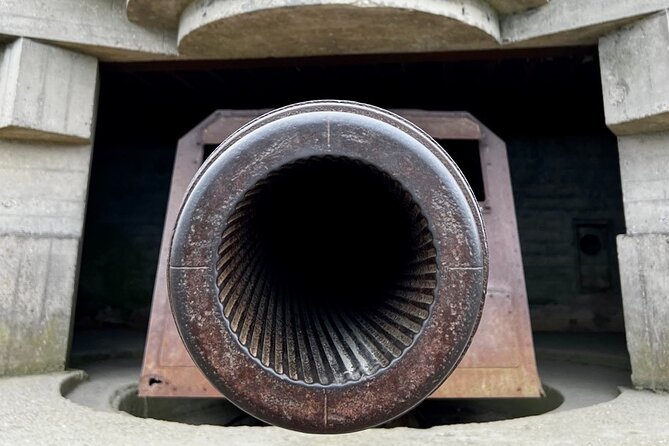
Longues-sur-Mer offers a very different view of the German defenses. The battery included four long-range 150 mm naval guns, each protected by a reinforced concrete casemate. Other buildings and defensive positions supported the guns.
The site sits between Omaha Beach and Gold Beach. Air and naval attacks damaged the battery and kept it from playing its full role on D-Day. British troops captured it the next day.
The battery is remarkably well preserved and is listed as a Historic Monument. You can walk among the concrete casemates and picture how the position controlled the coast. This is one of the strongest stops for understanding the Atlantic Wall because the physical remains are easy to read.
It is included on the two-hour British-sector route, as well as the half-day and full-day options. If your main interest is German coastal defenses, this shorter route may offer better value than trying to cover every American-sector site in a compressed schedule.
Same city, a slower kind of day:
- Omaha and Band Of Brothers Full Day Tour
★ 5.0 · 1,104 reviews - Omaha Beach D-Day Experience – Afternoon group tour from Bayeux
★ 5.0 · 1,088 reviews - Omaha and Utah beaches
★ 5.0 · 1,085 reviews - Normandy Battlefields Tour – American Sites (A3)
★ 5.0 · 876 reviews
Port-en-Bessin and the fuel supply
Port-en-Bessin-Huppain is included in the American-sector options. The harbor was liberated on June 8, 1944, by the 47th Royal Marines Commando. By June 16, it had become the center of a fuel pipeline system about 120 kilometers long.
That detail helps broaden your view of the invasion. Armies need fuel, and the Allied advance depended on moving supplies quickly and safely. By late August, Operation PLUTO expanded the system with underwater pipelines from the Isle of Wight to Querqueville near Cherbourg.
The stop lasts about 30 minutes. It is shorter than the visits to Arromanches or the cemetery, but the subject is important. You see how a harbor that might look peaceful today played a role in keeping the military campaign supplied.
Omaha Beach, where the day turns somber
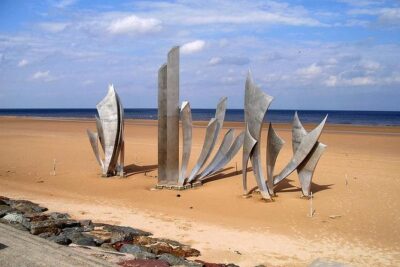
Omaha Beach is the most emotionally powerful stop for many people. Here, American troops came ashore under intense fire and artillery bombardment. Your guide explains the difficulties faced on the beach and points out the setting where those events occurred.
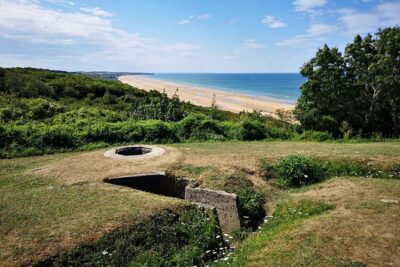
The physical openness of the beach can be striking. It is broad, exposed, and quiet in a way that makes the scale of the assault difficult to imagine. A walk here gives you time to absorb the place rather than view it only through a vehicle window.
The stop lasts about 30 minutes. That is enough for an introduction and a short walk, but not a full museum visit. If you want extensive time at Omaha Beach, ask how the guide will divide your schedule when booking the half-day or full-day option.
The guides handle this stop with respect. The sidecar ride may be playful, but the tone changes at the beach. You can expect serious explanations, personal stories, and time to reflect.
The American Cemetery at Colleville-sur-Mer
The Normandy American Cemetery sits on the cliff above Omaha Beach. Its rows of white marble crosses and Stars of David create one of the clearest visual reminders of the human cost of the invasion.
The guide shares stories about some of the people buried there and explains the wider importance of the cemetery. That personal detail can make the visit more meaningful than simply walking through the rows on your own.
The visit lasts about an hour when included. This is valuable time. You are not being hurried through a photo stop, and you can absorb the setting above the beach.
Pay close attention to the schedule. The cemetery may close early in the low season, and a tour starting at 4:00 PM cannot include it. From 2026 onward, the cemetery visit cannot be guaranteed and may be replaced by a visit to WN60. If the cemetery is essential to your plans, confirm the arrangement before booking and avoid a late start.
Pointe du Hoc on the six-hour route
Pointe du Hoc is reserved for the six-hour option. This clifftop position lay between Utah Beach and Omaha Beach and was heavily fortified by the Germans. Allied reconnaissance identified long-range guns here that threatened both beaches.
The Rangers’ assault on the cliffs became one of the best-known actions of D-Day. The position had to be neutralized quickly so the guns could not fire freely on the landings.
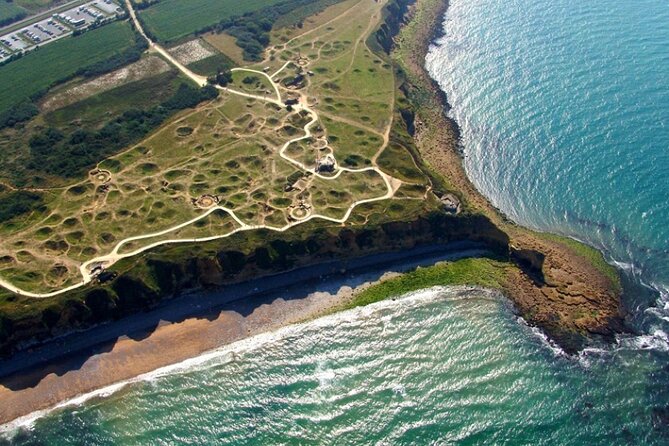
You spend about an hour at the site. The terrain and bomb craters help you understand why the position was so difficult to attack. This is not just another coastal viewpoint. It is a place where the geography explains the military plan.
If you want the fullest route, choose six hours. The extra time lets you include Pointe du Hoc alongside the American and British sectors. The tradeoff is that it becomes a full day with substantial time outdoors, so comfortable clothing and sensible footwear matter.
Choosing two, four, or six hours
The tour is offered in several lengths, roughly two to six hours. The exact stops depend on the option you choose.
The two-hour British-sector route includes Arromanches and Longues-sur-Mer. It is a good choice if you have limited time in Bayeux or want to focus on the artificial harbor and German battery.
The two-hour American-sector route includes Port-en-Bessin, Omaha Beach, and the American Cemetery when opening hours allow. This is the better short option if your priority is the American landing story.
The half-day route gives you more time to connect the sites and enjoy the countryside between them. It is a sensible middle ground for most people. You see more than a short orientation tour without committing your entire day.
The six-hour full-day route adds Pointe du Hoc and allows the broadest visit. I would choose it for a first visit if D-Day history is central to your trip. Several people who booked two hours wished they had selected a longer option because the ride and explanations ended before they were ready to stop.
Lunch or dinner is not included. The guides can recommend restaurants, but you should plan for the meal yourself. On a full-day outing, ask about the timing so you know how much free time is available.
What the $169.31 price gets you
At $169.31 per person, this is not the cheapest way to see the beaches. You are paying for a private experience, a pilot, equipment, guiding, pickup options, and access to a route that can cover several sites in a single day.
The value improves if you are a couple or a small family that wants flexibility. You do not share the vehicle with a large coach group, and the guide can answer questions as you go. The smaller motorcycle also allows the group to use country roads and stop in places that a large bus cannot easily reach.
Admission tickets are not listed as an extra cost for the included sites. Lunch is extra, and weather may affect the outing. Group discounts are offered, and the booking limit is six people, with up to twelve possible on request.
I would not choose this tour if you want long, indoor museum visits or a low-cost transfer between beaches. I would choose it if you value personal guiding, unusual transport, and a compact route with plenty of explanation.
Weather, comfort, and who should book
This experience requires good weather. If poor conditions force cancellation, you are offered another date or a full refund. That policy protects you, but it also means you should keep some flexibility in your Normandy schedule.
Rain gear is provided, yet the ride remains open-air. Cold wind can reach your face and neck, and weather can affect how much you enjoy the motorcycle. The practical advice is easy: layer up, bring a scarf, and wear shoes suitable for walking at the stops.
The minimum age is four. Most people can participate, and service animals are allowed. The tour is near public transportation, and pickup can be arranged from selected locations.
This is best for couples, families, history fans, and anyone who wants an active way to move between the sites. It also suits people who enjoy conversation and questions. If you dislike motorcycles, open-air rides, or changing weather, a van tour may be more comfortable.
The high praise centers on the guides. Rémi is described as friendly, funny, and especially strong at explaining the D-Day story. Philippe receives similar praise for his military knowledge and ability to bring lesser-known details to life. Jack is also praised for combining the major sights with personal stories. The exact guide is not guaranteed, but the company’s team clearly shapes the experience.
Should you book this Normandy sidecar tour?
I would book it if you want to see the D-Day beaches with a personal guide and a memorable way to travel between them. The six-hour route offers the best historical coverage, while the two-hour British or American routes make sense for a tight schedule.
Choose the American sector if Omaha Beach and the cemetery matter most. Choose the British sector for Arromanches and Longues-sur-Mer. If you can manage the time and cost, choose the full day, dress warmly, and confirm the cemetery schedule before you go.
The sidecar does not replace a museum visit or a full private battlefield study. It does something else very well: it links the beaches, roads, villages, and military sites into one moving story. For many visitors, that combination of history, scenery, and a little wind in the face becomes the part of Normandy they remember most.
FAQ
Where does the sidecar tour begin?
Your guide can meet you at a pickup location of your choice, at the parking lot of the Bayeux Battle of Normandy Museum, or at the Bayeux bus station.
How long does the experience last?
The available options run from about two to six hours. The exact duration depends on the route selected.
What is included in the price?
The price includes the vintage sidecar ride, helmet, gloves, retro goggles, rain gear, visits to the included sites, and guide anecdotes.
Is lunch included?
No. Lunch or dinner is not included. The guides can recommend restaurants if you want help choosing a place to eat.
How many people can ride in one sidecar?
One or two passengers can ride in each sidecar. One passenger sits behind the pilot, and one sits in the basket.
How large can the private group be?
The standard maximum is six people per booking. Groups of up to twelve can be arranged on request.
What is the minimum age?
The minimum age to participate is four years old.
Can the American Cemetery always be visited?
No. Opening hours can vary, and the cemetery may not be possible after 4:00 PM. Starting in 2026, the cemetery visit cannot be guaranteed and may be replaced by WN60.
Is the tour offered in English?
Yes. The experience is offered in English.
What happens if the weather is poor?
The experience requires good weather. If it is canceled because of poor conditions, you can choose another date or receive a full refund.
Recently added in Bayeux
- WW2 Jeep or Dodge truck tour of the Omaha Beach site★ 5.0 · 51 reviews
- Normandy Battlefields D-Day Private Trip with VIP Services from Paris★ 5.0 · 240 reviews
- Private vintage sidecar tour of the D-Day Landing Beaches★ 5.0 · 130 reviews
- Private Full day American D-Day Guided Tour in Bayeux★ 5.0 · 133 reviews
- Normandy U.S. D-Day Sites Half Day Tour From Bayeux★ 5.0 · 325 reviews
- Private American landing beaches tour from Bayeux★ 5.0 · 36 reviews
- Private guided Allied D-Day Tour from Bayeux★ 5.0 · 45 reviews
- Private tour landing beaches from Bayeux★ 5.0 · 82 reviews
Normandy Tours, compared.
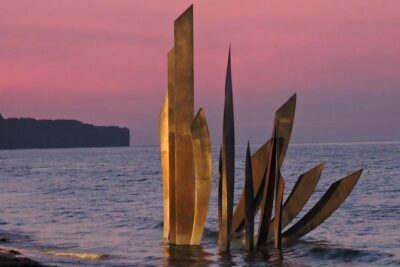
Normandy American D-Day Beaches Full Day Tour from Bayeux
Read our review →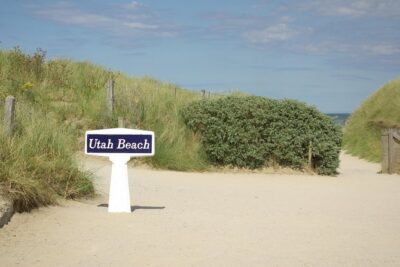
Normandy American D-Day Experience – Group tour from Bayeux
Read our review →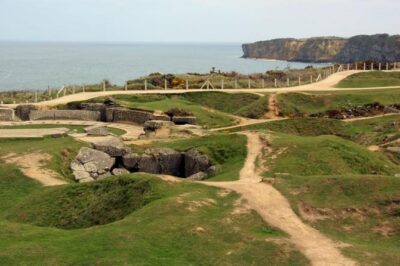
Normandy Beaches Half-Day Afternoon Trip from Bayeux (A2)
Read our review →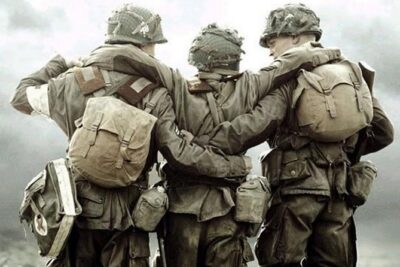
Omaha Beach D-Day Experience – Afternoon group tour from Bayeux
Read our review →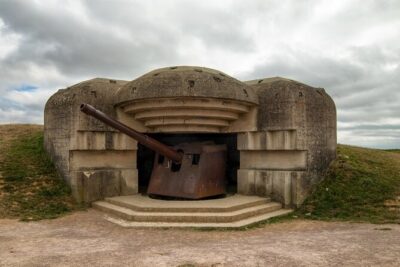
Normandy Battlefields Tour – American Sites (A3)
Read our review →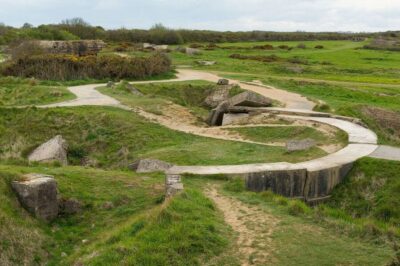
American D-Day Sites in Normandy Half-Day Tour
Read our review →Browse the lists this tour appears in