
REVIEW · BORDEAUX TOURS
Bordeaux Wines Masterclass paired with cheeses & charcuterie
Bordeaux makes wine lessons taste especially good. This small-group class combines six regional wines with local cheese, charcuterie, and baguette in a wine-bar setting two steps from the Grand Théâtre. I like the clear progression from white wine to single-grape reds and then Left Bank and Right Bank wines. I also like that the host explains Bordeaux without assuming you already know your Cabernet from your Merlot.
The main consideration is timing. The scheduled ninety minutes may run longer, so leave breathing room before your next plan. The room has also been uncomfortably warm on at least one occasion, and one unhappy report raised concerns about odor and food handling, though the overwhelming pattern is very positive. At $54.42 per person, this is good value if you want a useful Bordeaux primer rather than a quick pour-and-move-on tasting.
In This Review
- Key points to know before you book
- A wine class two steps from Bordeaux’s Grand Théâtre
- The opening white wine teaches you how to taste
- Three single-grape reds explain the Bordeaux blend
- Left Bank and Right Bank wines put the map in your glass
- Cheese, charcuterie, and baguette make the theory useful
- The instructors shape the experience
- Is $54.42 a fair price for 90 minutes?
- Who should book this Bordeaux tasting?
- Should you book the Bordeaux Wines Masterclass?
- FAQ
- Where does the Bordeaux wine masterclass begin?
- What time does the class start?
- How long does the experience last?
- How many wines are included?
- Is food included?
- Do I need prior wine knowledge?
- Can children or pets attend?
Key points to know before you book
- Six Bordeaux pours in a logical order: One white and five reds introduce grape types, blending, and the two banks of the Gironde.
- Single-grape reds make the lesson practical: You can compare grape characteristics before learning why Bordeaux producers blend them.
- The setting is central and compact: Meet at 2ter Rue Mably, close to the Grand Théâtre and public transportation.
- Local food is part of the lesson: Cheese, cold cuts, fresh baguette, and water accompany the tasting.
- Small groups help with questions: The maximum is 10 people, though the class may feel especially personal with only a few participants.
- Plan beyond 90 minutes: A lively session can continue past the advertised duration.
A wine class two steps from Bordeaux’s Grand Théâtre
The meeting point at 2ter Rue Mably puts you right in central Bordeaux. That matters because this is not a vineyard excursion requiring a full day, a bus ride, or a complicated trip outside town. You can fit it neatly into a morning of sightseeing, then walk on to lunch or the riverfront.
The venue is described as a small storefront with a clean, quiet tasting room. It has the feel of a wine bar crossed with a basic oenology class. You sit down, taste, listen, and ask questions rather than moving from one production room to another.
That compact format has both strengths and limits. You get a focused lesson in a short period, but you do not see vineyards, cellars, barrels, or château grounds. If you want scenery and estate visits, this is not the right substitute. If you want to understand a Bordeaux wine list before ordering dinner, it is a smart use of ninety minutes.
The maximum group size is 10. That is small enough for direct questions and conversation, although the quality of the session depends partly on how many people attend. A group of three can feel almost private. A full group will have less individual attention, but the instructor still has room to adjust the discussion to different levels of experience.
A few more Bordeaux outings to set side by side
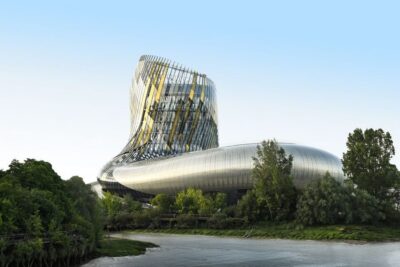
- Bordeaux: Cité du Vin Entry Ticket and Wine Tasting
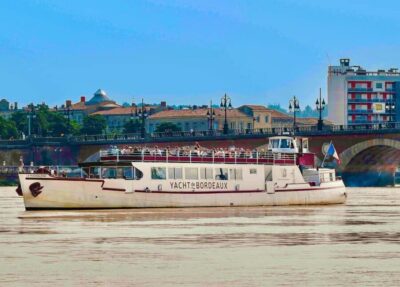
★ 4.6 · 3,885 reviews - Bordeaux: River Garonne Cruise with Glass of Wine and Canelé
★ 4.5 · 3,630 reviews - From Bordeaux: Afternoon Saint-Emilion Wine Tasting & snack
★ 4.8 · 1,581 reviews
The opening white wine teaches you how to taste
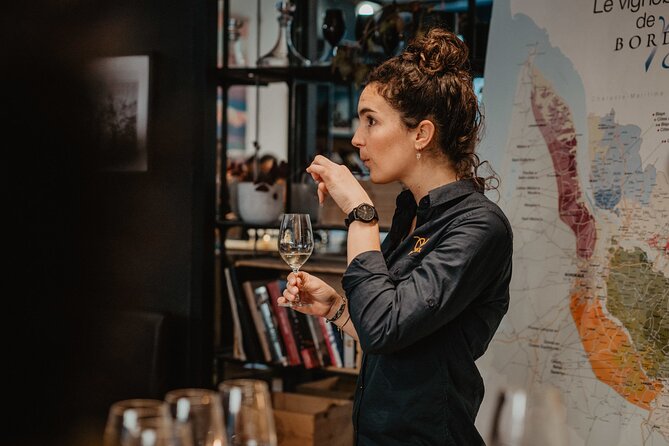
The tasting begins with a white Bordeaux. This first glass is not simply an aperitif. It gives the instructor a chance to explain a standard tasting method that you can reuse throughout your trip.
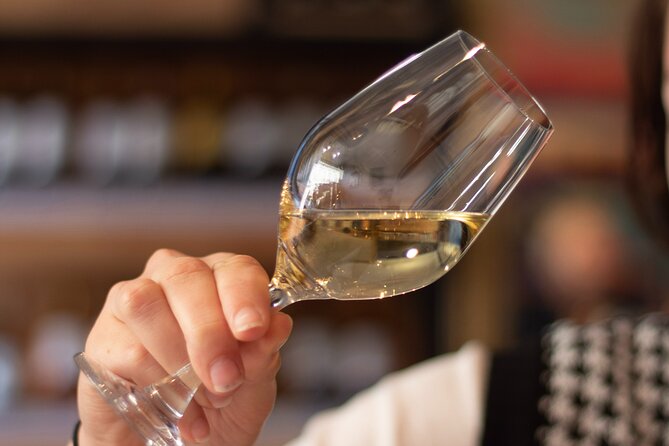
You will be guided through the basic steps: looking at the wine, smelling it, tasting it, and considering how the elements work together. The point is not to turn you into a sommelier in one morning. It is to replace vague reactions with simple observations.
You may learn to notice color, clarity, aroma, body, acidity, finish, and the way a wine changes after a few seconds in your mouth. The session also gives proper attention to smell. One instructor used sensory exercises to help the group identify aromas, and another included a scent-guessing game.
This part is especially helpful if French wine labels leave you puzzled. Bordeaux bottles often emphasize the château or appellation more than the grape variety. Once you understand how the wine tastes and what its place on the map suggests, the label becomes less mysterious.
The class covers key terms such as terroir, grape variety, appellation, classification, vinification, aging, storage, and serving. That sounds like a lot for one sitting, but the teaching appears to stay practical. The strongest hosts explain difficult ideas in plain language and adjust the amount of theory to the group.
Three single-grape reds explain the Bordeaux blend
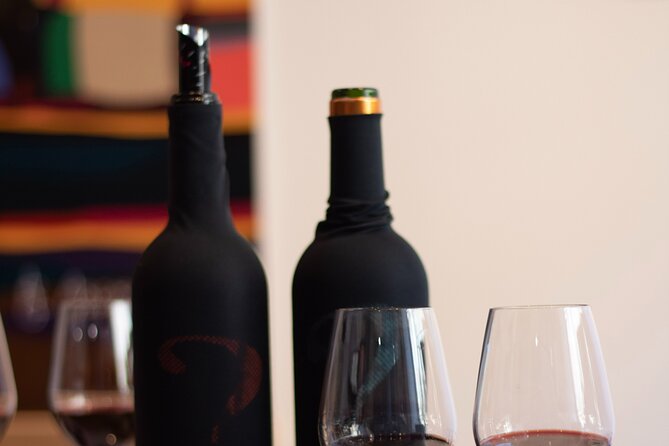
The next stage uses three regional red wines made around single grape varieties. This is one of the most useful parts of the program.
Bordeaux is famous for blends. Cabernet Sauvignon, Merlot, Cabernet Franc, Petit Verdot, and other permitted grapes can contribute different aromas, structure, color, acidity, or softness. Tasting examples separately helps you understand what each grape brings before you taste them in combination.
You might notice that one wine feels firmer or more tannic, while another seems rounder and easier to drink. You may find a third more aromatic or lighter in structure. The point is not to memorize a list. It is to build a tasting reference in your own mouth.
I like this approach because it gives you something more useful than a string of unrelated samples. A standard tasting can leave you thinking only about which glass you liked best. Here, you can connect the differences to grape type and winemaking choices.
The instructor may also use a blind tasting or a short tasting challenge. These activities keep the class from becoming a lecture. They also remind you that wine tasting is a skill of observation, not a test of expensive vocabulary. You do not need to identify every aroma correctly to benefit.
For a first-time Bordeaux visitor, this is a strong foundation. It can help you decide if you prefer softer Merlot-led wines, firmer Cabernet-based styles, or more complex blends. It will not tell you every bottle you will enjoy, but it gives you a sensible starting point.
Left Bank and Right Bank wines put the map in your glass
The final two wines shift from grape comparison to place. You taste one fine wine from the Left Bank and one from the Right Bank, with one identified as a Bordeaux Grand Cru.
The Left Bank and Right Bank labels refer to the two sides of the Gironde estuary and its connected rivers. In broad terms, the Left Bank is strongly associated with Cabernet Sauvignon, while Merlot has a major role on the Right Bank. Soil, climate, vineyard location, blending, and château practices all shape the final style.
The lesson does not reduce Bordeaux to a simple left-versus-right formula. That would be too neat. Instead, the comparison gives you a memorable way to connect geography, grape choice, and taste.
This is where the earlier single-grape tasting becomes useful. You can now ask how the blend changes the wine. You can also start thinking about appellations and château names as clues rather than intimidating labels.
The Grand Cru sample adds interest, but do not book this expecting a parade of luxury bottles. The wines are selected for teaching value and may vary with the schedule. One particularly candid assessment found the wines good but not the most exquisite. That is a fair way to view the class: you are paying for guided instruction, a broad regional sample, and a food pairing, not for a private cellar tasting of top-status Bordeaux.
Same city, a slower kind of day:
- Medoc or Saint Emilion Wine Tasting and Chateau from Bordeaux
★ 5.0 · 1,415 reviews - Saint Emilion Day Trip with Sightseeing Tour & Wine Tastings from Bordeaux
★ 5.0 · 1,120 reviews - Saint-Émilion: Grand Cru Classé Winery Visit and Tasting
★ 4.6 · 1,118 reviews - Saint Emilion Half-Day Trip with Wine Tasting & Winery Visit from Bordeaux
★ 4.5 · 1,034 reviews
Cheese, charcuterie, and baguette make the theory useful
The food board includes local cheeses, charcuterie, and fresh baguette. Water is available, and the food is included rather than treated as an extra purchase.
The board does more than keep you from tasting on an empty stomach. Salty cured meats, creamy cheese, and bread can change how a wine feels. A wine that seems sharp alone may work better with food. A firm red may feel more balanced beside charcuterie. This gives you a simple introduction to pairing without turning lunch into a formal meal.
The portions are described as tasting-board servings, not a full restaurant lunch. I would plan to eat separately if you need a substantial meal. Still, the combination is enough to make the class feel generous, especially at the stated price.
The local focus also gives the session a stronger sense of place. You are not just sampling imported crackers beside international wines. You are trying regional bottles with familiar French table foods, which is close to how wine is enjoyed in Bordeaux.
One practical note: cheese has a smell. Most people will regard that as part of the pleasure, but anyone sensitive to strong food odors should know what sort of room this is. A single poor report described an unpleasant smell and a hot room, while the wider response described the cheese, meat, and clean facility positively. I would treat comfort as a possible variable, not a reason by itself to reject the class.
The instructors shape the experience
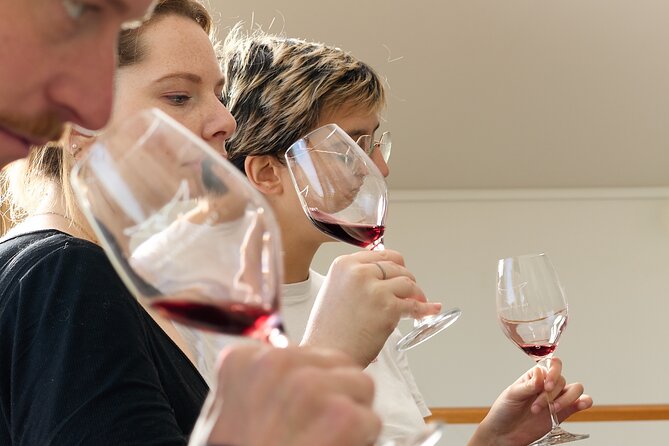
Several hosts have led these sessions, including Antoine, Hugo, Noe, Vincent, Matilde, Ana, and others. Their shared strength is the ability to explain wine to people with different levels of experience.
Antoine was praised for making production and Bordeaux wine terms easy to understand. Hugo has been described as friendly and strong on the region’s history, grapes, and Left Bank and Right Bank distinctions. Noe used the senses carefully, explaining primary, secondary, and tertiary aromas. Vincent has guided groups through regional history, visual tasting, smell, and taste.
Those details matter. A wine class can quickly become dull if the instructor recites facts without reading the room. Here, the best sessions appear to respond to questions and adapt the level of detail. A beginner can follow along, while someone who already drinks Bordeaux can still learn about appellations, blending, or sensory technique.
You should not expect the exact same instructor every time. The schedule and wines may change, but the standard of the offer is intended to remain similar. If you have a strong interest in one particular wine topic, ask questions during the session rather than waiting for a rigid presentation to cover everything.
The class is offered in English. That makes it accessible to many international visitors, but the experience still deals with French names, appellations, and château labels. A little patience with pronunciation and terminology will help.
Is $54.42 a fair price for 90 minutes?
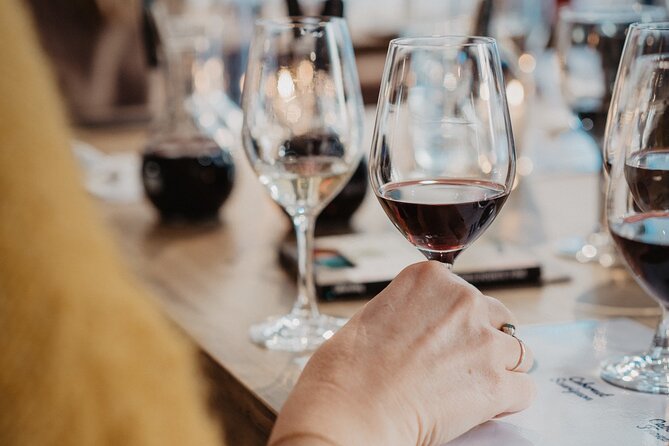
At $54.42 per person, the value depends on what you want from Bordeaux wine country.
I think the price is fair for six included pours, a board of cheese and charcuterie, bread, water, printed information, and an expert-led lesson in central Bordeaux. You are also getting a useful framework for choosing bottles later in the trip. If the class helps you avoid one poor wine purchase or makes a château visit more meaningful, it can quickly earn its keep.
The value is less convincing if you mainly want to drink prestigious wine. The tasting is educational, and the exact wines can change. The Grand Cru sample is a welcome part of the sequence, but this is not designed as a rare-vintage showcase.
The short duration works well for a city break. You do not lose a whole day, and you can schedule the class before other sights. Still, because some sessions run past 90 minutes, avoid booking a train, museum entry, or restaurant reservation immediately afterward. Give yourself at least a little extra time.
Who should book this Bordeaux tasting?
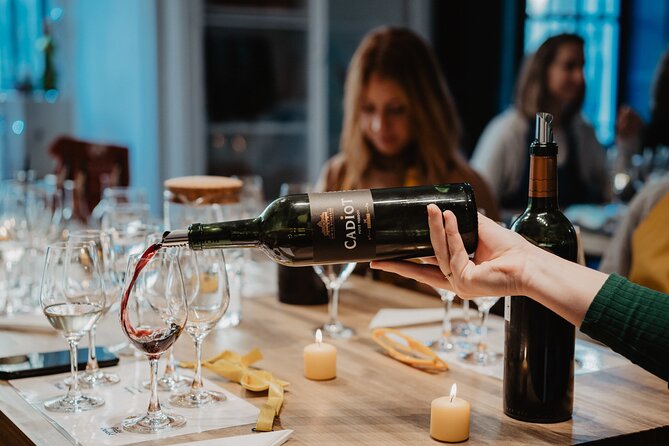
I would choose this class early in a Bordeaux stay. It gives you a working vocabulary before you visit the wine bars, browse bottle shops, or head out to the Left Bank and Right Bank. The class is also a good fit for couples, friends, solo visitors who enjoy small-group activities, and curious drinkers who know little about French wine.
It suits beginners especially well because no prior wine knowledge is required. You will not be expected to perform like a professional. The scent exercises and tasting method give you something concrete to practice.
It also works for experienced wine drinkers who want a regional reset. Bordeaux is not always easy to understand from a restaurant list alone, and the single-grape comparison can clarify why blends taste the way they do.
I would skip it if you want a vineyard walk, a château tour, or a long countryside outing. I would also think twice if you dislike group instruction, strong cheese aromas, or a tasting that may run beyond its stated length.
Children under 16 and pets are not allowed, and service animals are allowed. If those restrictions affect your plans, a private tasting may suit you better. The meeting point is near public transportation, and the activity ends where it begins.
Should you book the Bordeaux Wines Masterclass?
Yes, if you want a practical introduction to Bordeaux wines in the city center. The strongest reasons are the well-planned tasting sequence, the single-grape red comparison, the Left Bank and Right Bank pairing, and the hosts’ friendly teaching style.
I would book it near the start of your visit and keep the rest of that morning flexible. You will leave with more than six wine samples. You will have a better sense of what grape types do, how place affects Bordeaux wine, and how to make a more confident choice at your next French meal.
The overall rating of 4.9 from 110 ratings and a 99 percent recommendation mark match the experience’s main appeal: it is short, social, central, and genuinely instructive. Just remember that the wines and timing can vary, and allow extra time after the advertised ninety minutes.
FAQ
Where does the Bordeaux wine masterclass begin?
The class begins at 2ter Rue Mably, 33000 Bordeaux, France, close to the Grand Théâtre.
What time does the class start?
The scheduled start time is 11:00 am.
How long does the experience last?
The advertised duration is approximately 1 hour and 30 minutes. Some sessions may run longer, so keep your schedule flexible afterward.
How many wines are included?
The planned tasting includes one white wine and five red wines, for six wines in total. The specific wines and schedule may vary while the quality of the offer remains the same.
Is food included?
Yes. The experience includes a board of local cheeses and cold cuts, fresh baguette, and water. Personal expenses are not included.
Do I need prior wine knowledge?
No. The class is designed for beginners and teaches basic tasting, grape varieties, appellations, blending, winemaking, aging, storage, and serving.
Can children or pets attend?
Children under 16 and pets are not allowed. Service animals are allowed. A private tour or tasting may be more suitable if these restrictions affect your plans.
Recently added in Bordeaux
- Discover Braastad Cognac★ 5.0 · 52 reviews
- Au Cœur du Château – VSOP D’USSÉ & XO BARON OTARD★ 4.5 · 108 reviews
- retro road trip/ Méhari, 2CV & Burton in Rochefort, La Rochelle★ 5.0 · 28 reviews
- Saint Emilion Full Day Wine and Bike Tour★ 5.0 · 167 reviews
- Saint-Emilion Food and Wine Day Tour★ 5.0 · 323 reviews
- Bordeaux bike tour “The Best of Bordeaux”★ 5.0 · 164 reviews
- Virtual Room Bordeaux – 1st team virtual reality experience★ 5.0 · 47 reviews
- Luxurious full day Bordeaux wine tour in a Tesla★ 4.5 · 31 reviews
Bordeaux Tours, compared.
River Garonne Cruise with Glass of Wine and Canelé
Read our review →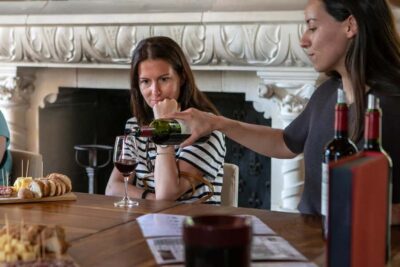
Afternoon Saint-Emilion Wine Tasting & snack
Read our review →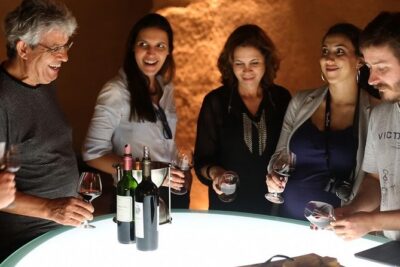
Medoc or Saint Emilion Wine Tasting and Chateau from Bordeaux
Read our review →
Saint Emilion Day Trip with Sightseeing Tour & Wine Tastings from Bordeaux
Read our review →
Saint-Émilion: Grand Cru Classé Winery Visit and Tasting
Read our review →
Saint Emilion Half-Day Trip with Wine Tasting & Winery Visit from Bordeaux
Read our review →
Browse the lists this tour appears in