
REVIEW · SAFARI
From Arles: Half-Day 4×4 Camargue Safari
Wild animals meet working farmland here. This four-hour Camargue 4×4 safari takes you through ponds, marshes, rice fields, and private land where you can see white horses, black bulls, flamingos, and other birds. I especially like the access to small roads and private areas, plus the chance to stop in Saintes-Maries-de-la-Mer. The main drawback is the rough ride, which may trouble anyone with a bad back or neck injury.
The guide is the real value. People such as Olivier, Flavio, Sandra, Patrice, Jean-Michel, and Solenne have been praised for explaining the region’s wildlife, farming, bulls, horses, and traditions in clear English and French. You may see some animals from a rental car, but you will miss much of the meaning without someone to explain what you are looking at.
In This Review
- Why this safari earns a place in your Arles plans
- Why the Camargue feels unlike Provence
- Starting the four-hour ride from Arles
- Ponds, marshes, and the search for flamingos
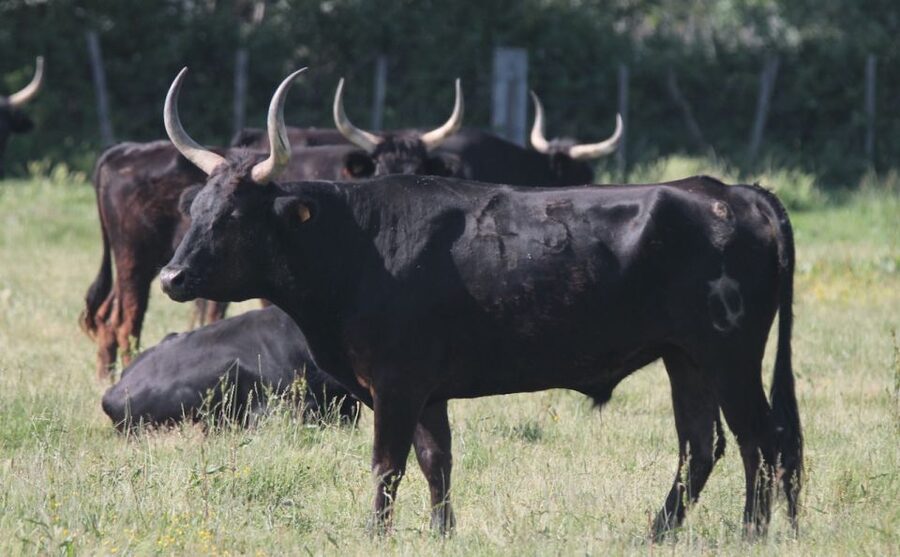
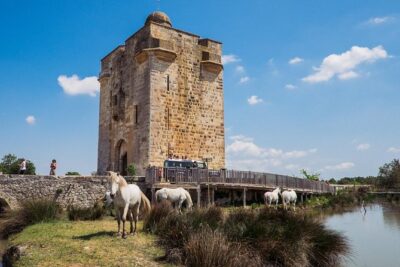
- White horses and Camargue bulls on private land
- Rice fields and the human side of the park
- Saintes-Maries-de-la-Mer adds a village stop
- What the guides add to the experience
- Is $69 a fair price?
- Who should book this Camargue safari?
- Should you book it?
- FAQ
- How long does the Camargue 4×4 safari last?
- What is included in the price?
- Are food and drinks included?
- Which languages are available?
- Will the tour stop in Saintes-Maries-de-la-Mer?
- What animals might I see?
- Can young children join the tour?
Why this safari earns a place in your Arles plans
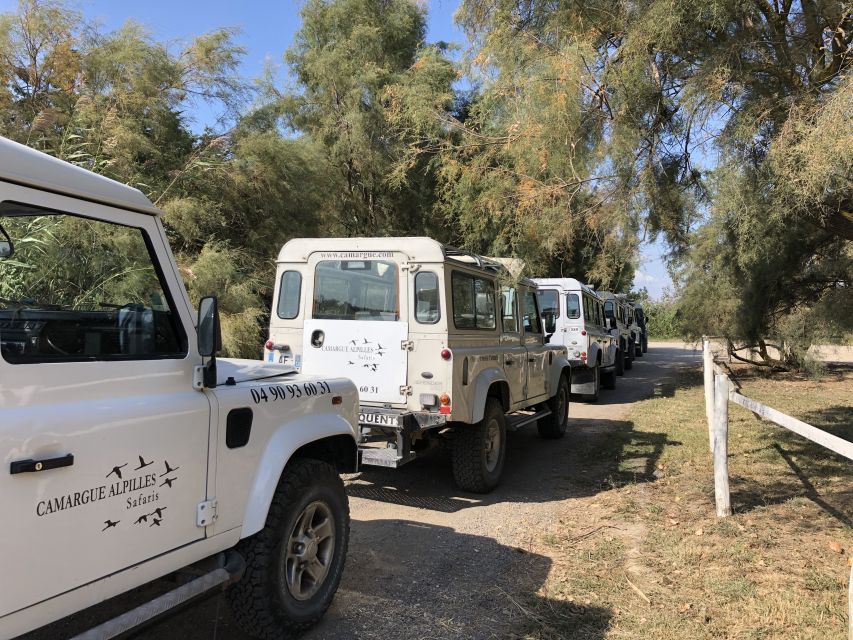
- Small roads open up the Camargue: The 4×4 can use tracks and routes that are easy to miss in an ordinary car.
- Wildlife is the star: Look for Camargue horses, bulls, pink flamingos, storks, ibis, and other wetland birds.
- The guide adds the local story: You learn how rice farming, cattle breeding, horse culture, and marsh life fit together.
- Saintes-Maries-de-la-Mer breaks up the ride: The famous seaside village gives you time to walk around and see a different side of the region.
- Private or small-group choices are available: A smaller vehicle can make it easier to ask questions and pause for photographs.
- Four hours is a useful introduction: You get a broad look at the area without giving up a full day in Provence.
Why the Camargue feels unlike Provence
South of Arles, the Rhône splits into branches and spreads across a flat, watery region. The Camargue is shaped by salt, mud, ponds, marshes, farmland, and shifting water. It does not look like the hill towns and vineyards that many people picture when they think of Provence.
That difference is the point. You are entering a place where nature and work share the same ground. Rice is grown in the fields, bulls are raised on local farms, and horses remain part of the area’s identity. The water attracts large numbers of birds, while people have developed ways to farm and live alongside them.
I like that this is not presented as a simple animal-spotting drive. A good guide helps you understand why the region looks this way and why the animals matter. You may hear about gardians, the Camargue horse riders who work with cattle, as well as local bull traditions and farming customs.
The setting is broad and exposed. There are few places to hide from the sun or wind, so bring water, sunglasses, a hat, and sunscreen. The open horizons can be beautiful, but the weather can also make the ride feel more demanding.
More wildlife parks near Avignon:
- 4×4 Camargue Safari 4h – Departure from Arles
★ 4.5 · 467 reviews - From Arles: Alpilles Regional Park Provence 4×4 Safari
★ 4.4 · 56 reviews - 4×4 Camargue Safari 4h – Private Tour – Departure from Arles
★ 5.0 · 40 reviews
Starting the four-hour ride from Arles
Your meeting point depends on the option you book, so check the precise instructions before setting out. Once you meet the guide, you board a safari vehicle rather than driving yourself through the park.
That matters more than it may sound. If you drive, one person must concentrate on narrow roads and unfamiliar turns. In the 4×4, you can watch for animals, take photographs, and listen to the guide. Several guides have also been praised for stopping whenever something interesting appeared, rather than racing through the area.
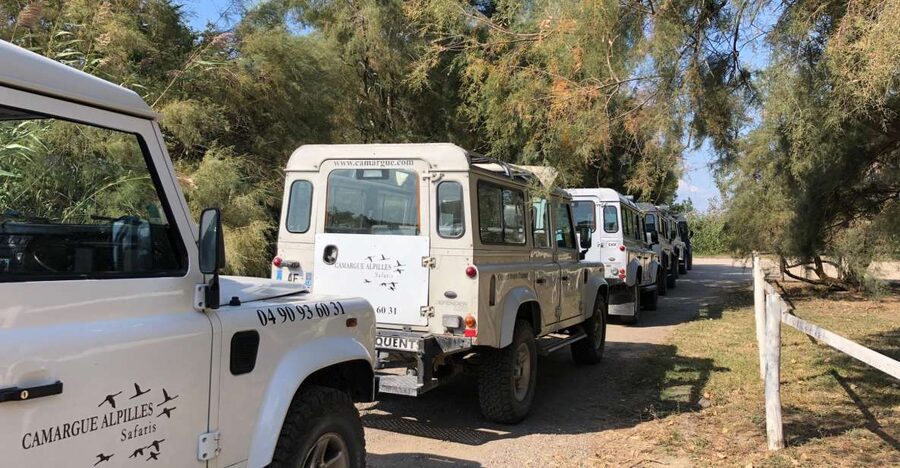
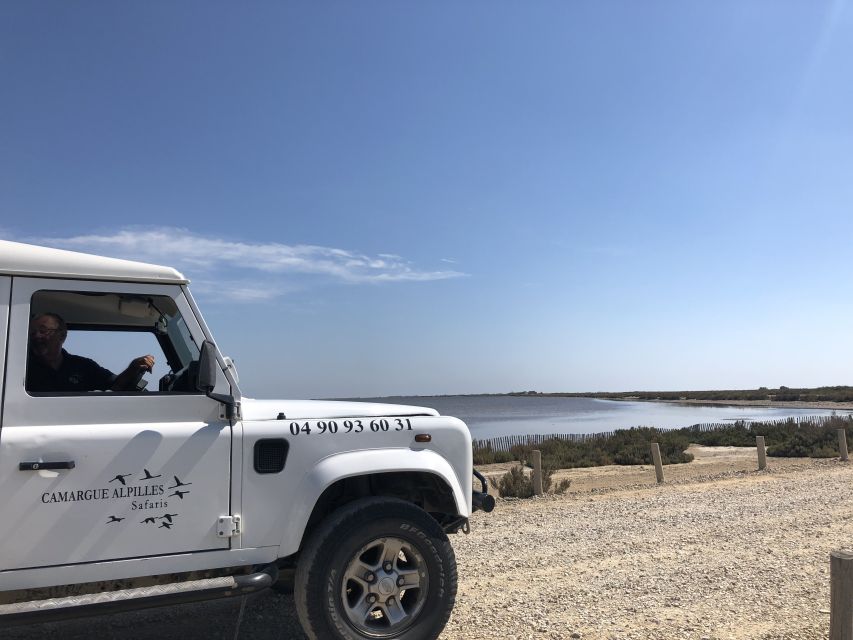
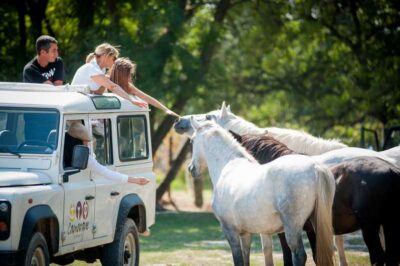
The vehicle may use smaller roads and tracks that you would not know about on your own. Some departures use Land Rover-style vehicles, and some may allow passengers to stand or enjoy an open roof when conditions permit. This is not guaranteed, though, and strong wind or rain can make an open-top ride impractical.
Expect a genuine safari vehicle, not a silent luxury car. Rough sections are part of the appeal, but they also create a real physical drawback. Sit carefully if you have back or neck problems, and ask about the seating arrangement before departure if comfort is important to you.
Ponds, marshes, and the search for flamingos
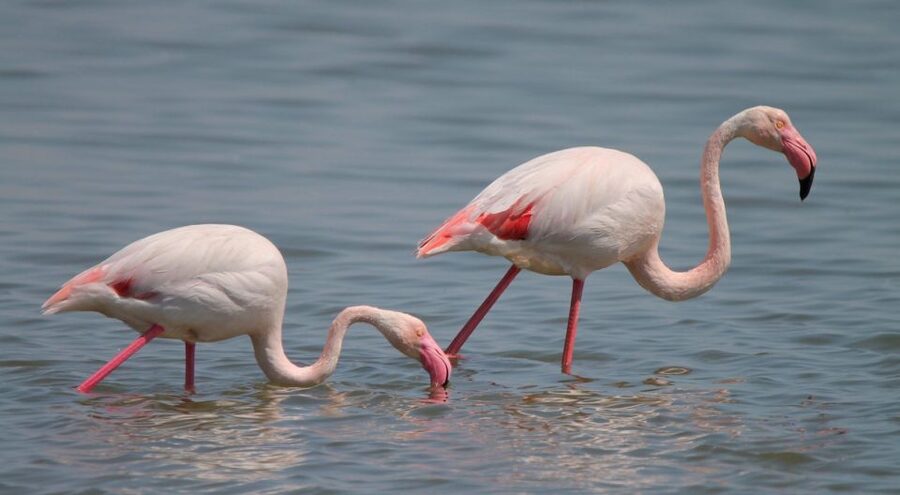
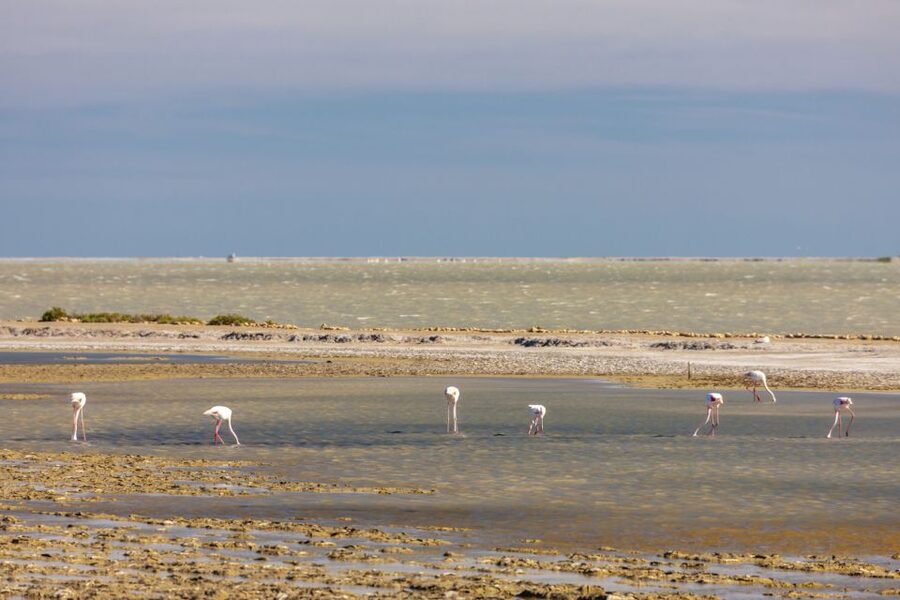
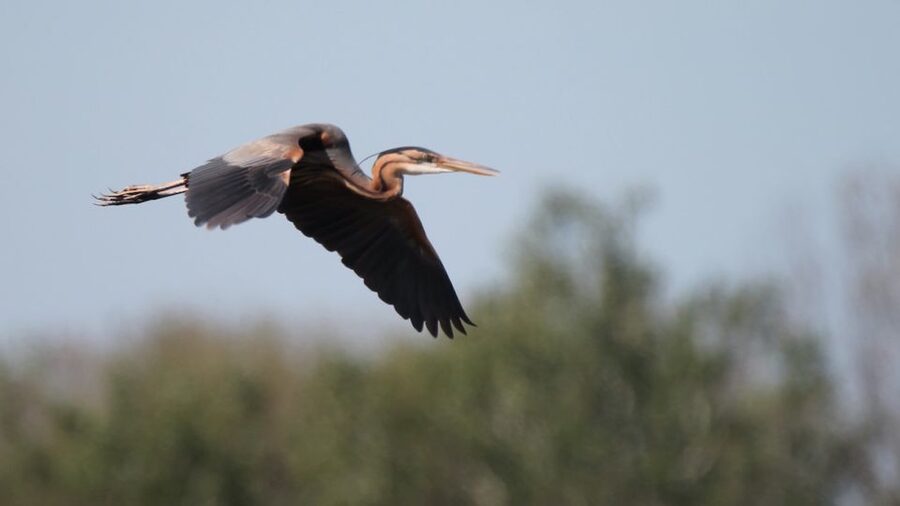
The wetlands are the most photogenic part of the outing. Ponds and marshes provide feeding areas for flamingos and many other birds. You might also see storks, ibis, and other species, depending on the day and conditions.
Flamingos are not a guaranteed performance. They are wild birds, not animals waiting beside the road. The guide’s local knowledge improves your chances, and the 4×4 can reach areas that are less obvious to a person driving through, but sightings still depend on nature.
When you do see a flock, the scene can be remarkable: pale pink birds gathered across shallow water, with long legs and curved necks making them easy to identify even from a distance. Bring a camera with a useful zoom if you have one. The guide can often stop for photographs, but do not expect to walk right up to the birds.
The marshes also show why the Camargue needs care. This is an active natural area, not a theme park. Water levels, weather, farming, and wildlife all affect what you see. I appreciate that the guides talk about protecting this place and respecting the animals rather than treating the region as a backdrop for quick photographs.
White horses and Camargue bulls on private land
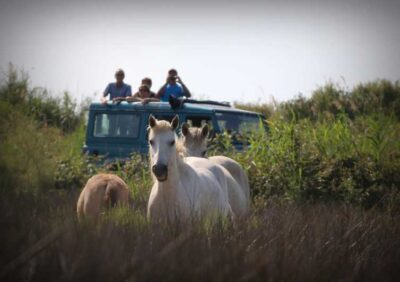
One of the strongest parts of this safari is access to private land. The tour can bring you close to the famous Camargue bulls and horses in places you may not reach independently.
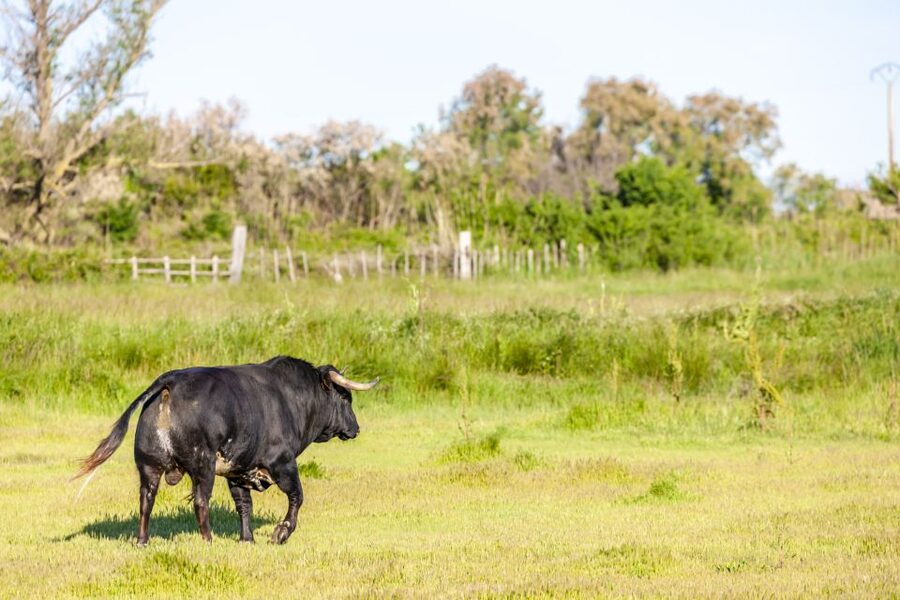
The Camargue horse is usually associated with its white coat, while the local bulls are dark and compact. Seeing them in their working environment gives you a better sense of the area than spotting a few animals from a public road. You may also see foals, which adds a memorable detail during the warmer months.
The guides explain how horses and bulls fit into local life. You can learn about cattle breeding, the role of the gardians, and the traditions surrounding bull games. This background turns a quick animal sighting into something more useful. You begin to understand why the animals are part of the region’s culture, not simply part of its scenery.
One particularly interesting possibility is seeing local work in progress. Depending on the timing, you might notice gardians handling bulls or selecting animals for an evening event. That is not promised, but it shows how the Camargue’s traditions remain connected to daily work.
Do not expect a petting zoo. These are working animals, and a respectful distance is part of the experience. The pleasure comes from seeing them where they belong and learning how local people care for and use the land.
More half-day plans in Avignon:
- From Avignon: Châteauneuf du Pape Half-Day Wine Tour
★ 4.7 · 365 reviews - From Avignon: Half-Day Great Vineyards Tour
★ 4.7 · 321 reviews - Provence Cru Wine Small-Group Half-Day Tour from Avignon
★ 4.5 · 290 reviews - Avignon: Pont du Gard, Saint Remy and Les Baux Half-Day Tour
★ 4.6 · 272 reviews
Rice fields and the human side of the park
The Camargue can look empty at first glance, but the ride reveals plenty of human activity. Rice cultivation is one of the clearest examples. Fields, waterways, and marshes overlap in a way that makes the region’s farming methods part of the scenery.
A guide can point out details you might otherwise pass without noticing. Several visitors have found the explanations about agricultural customs just as interesting as the wildlife. That is a useful reminder that the Camargue is not wilderness in the strict sense. It is a place where farming and protected nature exist side by side, sometimes uneasily.
You may also pass a mas, a traditional local farm property. The guide can explain how people live and work in this flat, watery environment. These details give the ride a human scale, especially if you are interested in rural life and regional traditions.
I would not book this excursion only for dramatic animal encounters. Book it if you want to understand how the whole area works. The rice fields, bulls, horses, birds, and marshes are connected, and the guide is best placed to show you those links.
Saintes-Maries-de-la-Mer adds a village stop
The stop in Saintes-Maries-de-la-Mer gives the morning or afternoon a welcome change of pace. After time in the 4×4, you can walk through this famous village and experience its connection with the sea and the wider Camargue.
The available time may be around half an hour, although the exact schedule can vary. That is enough to stretch your legs, take photographs, and get a quick impression of the village. It is not enough for an extended meal or a slow museum visit, so keep your expectations realistic.
Some guides have offered a longer pause when time allowed, and one guide even recommended a local restaurant. Food and drink are not included, so bring cash if you want to buy something during the stop. A little planning helps, especially if you are hungry after the ride.
The village can become particularly interesting when local events are taking place. A bull run through the streets has been seen during some visits, but this is a lucky timing issue, not a regular feature of every departure. The best approach is to enjoy the village as a short stop, with any local activity treated as a bonus.
What the guides add to the experience
The strongest part of this excursion is the quality of the guiding. The named guides praised by participants include Olivier, Flavio, Sandra, Patrice, Jean-Michel, Solenne, Patrick, Andreas, and others. The exact guide depends on the departure, but the pattern is clear: the guide is not just a driver.
You can expect explanations about birds, horses, bulls, farming, local customs, and the development of the Camargue. The best guides adjust their commentary to your questions and interests. Sandra, for example, was praised for stopping often for photographs and sharing her passion for wildlife. Flavio was singled out for friendly, informal explanations and careful attention to individual questions.
English and French are offered. Several English-speaking participants have found the explanations easy to follow, while bilingual commentary can be available on some departures. If language is important to you, choose the appropriate option at booking rather than assuming every vehicle will operate in the same format.
I also like the reported pace. The excursion is not meant to feel like a race from one animal to the next. Guides have stopped to observe, answer questions, and let people take pictures. Four hours gives enough time for a broad introduction while leaving room for the rest of your day.
Is $69 a fair price?
At $69 per person, this is a sensible price for a four-hour guided outing, especially if you are not renting a car. The fee includes the 4×4 transport and guide, so you are paying for access, local driving, interpretation, and the convenience of having someone else manage the route.
The value improves if you are interested in more than photographs. A self-drive can show you roads, fields, and perhaps animals, but it will not automatically explain rice farming, bull culture, horse traditions, or the purpose of the marshes. You also avoid the problem of having one member of your group watch the road instead of the scenery.
Private and small-group options can make the cost worthwhile for families or friends who want more time for questions. A larger shared group may be less personal, but it should still provide a useful overview at a modest price.
Food and drinks are extra. Bring water regardless, and carry cash for the village stop or any purchases along the way. Children under six are free, which can improve the value for families, though children under two cannot join.
Who should book this Camargue safari?
I would recommend it to first-time visitors who want a clear introduction to the region. It suits people who enjoy wildlife, rural culture, photography, and places that do not fit the usual Provence picture.
It is also a good choice if you have limited time in Arles. Four hours lets you reach the Camargue without surrendering an entire day. The format works well for couples, families with older children, and small groups who want a flexible guide.
You should think twice if you dislike bumpy vehicle rides. The 4×4 can use rough tracks, and the back seats may feel especially jolting. The weather can also be windy, rainy, or intensely sunny, so dress for exposure rather than assuming a gentle sightseeing drive.
For families, booster seats are available on request for children weighing 15 to 30 kilograms. There is no ISOFIX attachment, so you need to bring your own car seat if required. Children under two are not suitable for this activity.
Free cancellation is available up to 24 hours before departure, and you can reserve now while paying later. The meeting location can vary by option, so read the departure details carefully.
Should you book it?
Book this safari if you want context as well as wildlife. The 4×4 access, private land, flexible photo stops, and strong local guiding make it more useful than simply driving around the Camargue alone.
I would choose it during a Provence trip when you have a half-day available and want to see flamingos, horses, and bulls without arranging your own route. Skip it only if rough roads are a serious concern or if you want a long, leisurely visit to Saintes-Maries-de-la-Mer. For most visitors, this is a practical and memorable way to meet one of southern France’s most unusual regions.
FAQ
How long does the Camargue 4×4 safari last?
The activity lasts four hours. Check the selected option for the available starting times.
What is included in the price?
The price includes the 4×4 tour, transport in a safari vehicle, and a live guide.
Are food and drinks included?
No. Food and drinks are not included, so bring water and cash for purchases during the stop.
Which languages are available?
Guiding is available in English and French.
Will the tour stop in Saintes-Maries-de-la-Mer?
Yes. The experience includes a stop in the village of Saintes-Maries-de-la-Mer. The time available there can vary by departure.
What animals might I see?
The tour is designed to show you Camargue horses, bulls, flamingos, and other birds. Sightings are wildlife encounters, so they cannot be guaranteed.
Can young children join the tour?
Children under six are free, but children under two are not suitable for the activity. Booster seats can be requested for children weighing 15 to 30 kilograms, and there is no ISOFIX fixation.
Recently added in Avignon
- Rafting Verdon – “Explor Verdon” – Family Course★ 5.0 · 51 reviews
- Rando Aqua – “Le Pont de Tusset” – Discovery Course★ 5.0 · 92 reviews
- Châteauneuf du Pape Wine Day Tasting Tour including Lunch from Avignon★ 5.0 · 287 reviews
- Lavender Route – Small-Group Day Trip from Avignon★ 5.0 · 120 reviews
- Wines from Châteauneuf-du-Pape and surrounding areas in 1/2 day★ 5.0 · 96 reviews
- Truffle Hunting in Provence★ 5.0 · 55 reviews
- Van Gogh & Carrières de Lumières Half-Day Tour from Avignon★ 4.5 · 29 reviews
- Morning Wine Tour to Chateauneuf du Pape from Avignon★ 4.5 · 70 reviews
Safari, compared.

3.5 Hour Camargue 4×4 Safari from Le Grau-du Roi
Read our review →
From Arles: Alpilles Regional Park Provence 4×4 Safari
Read our review →
Aigues Mortes: safari en vélo – Ebike tour in Camargue
Read our review →Browse the lists this tour appears in