
REVIEW · BORDEAUX TOURS
Introduction to Bordeaux wines paired with cheeses & charcuterie
Wine gets less mysterious with a good guide. This one-hour Bordeaux tasting gives you a clear, friendly introduction to terroir, grape varieties, appellations, and the difference between the Left Bank and Right Bank, all in a wine bar-like setting near the Grand Theatre. I like the smart three-wine format, especially the white wine used to teach the basic tasting method, and I like that local cheese, charcuterie, baguette, and water are included in the $35.09 price. The main caution is pace: one hour is enough for an overview, but some sessions can feel rushed.
The small format is another strong point. The experience allows no more than 12 people, and the host can adjust the discussion for complete beginners or wine drinkers who already know the basics. Hosts such as Antoine, Vincent, Anna, Toku, and Toco have been praised for making the class warm, funny, and easy to follow. English is offered, but you should confirm the session language if that matters to you, since one participant found the presentation was conducted in French despite selecting English.
In This Review
- Key points to know before booking
- A practical first taste of Bordeaux wine
- Learning the language of terroir and appellation
- The first glass: white wine and the tasting method
- Comparing Bordeaux’s Left Bank and Right Bank
- Local cheese, charcuterie, and the problem of pairing
- How personal is a group of 12?
- Is $35.09 good value?
- Language, timing, and other useful details
- Who should book this Bordeaux tasting?
- Should you book it?
- FAQ
- Where does the Bordeaux wine tasting begin?
- What time does the experience start?
- How long does the wine workshop last?
- How many wines are included?
- What Bordeaux regions are discussed?
- Is a Grand Cru wine included?
- Is food included in the price?
- Is the tasting available in English?
- What is the cancellation policy?
Key points to know before booking
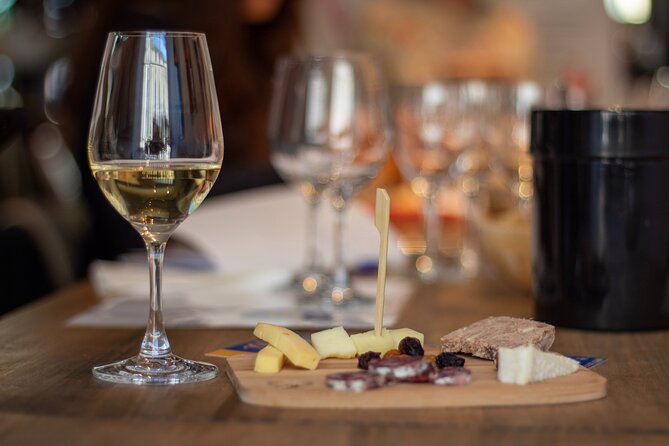
- Three wines with a clear purpose: You taste one white wine first, then two red wines, one from the Left Bank and one from the Right Bank. One is a Bordeaux Grand Cru.
- A short lesson, not a vineyard tour: You learn the foundations of Bordeaux wine in about an hour, right in central Bordeaux.
- Cheese and charcuterie are included: The board comes with local cheeses, cold cuts, fresh baguette, and water at no extra charge.
- Small groups keep the class personal: The maximum group size is 12, and the format is described as a private tasting with individual attention.
- Friendly teaching is the main attraction: Hosts have been praised for humor, patience, useful explanations, and answers to questions.
- English needs a quick check: English is listed as an option, but language delivery has not been identical in every session.
A practical first taste of Bordeaux wine
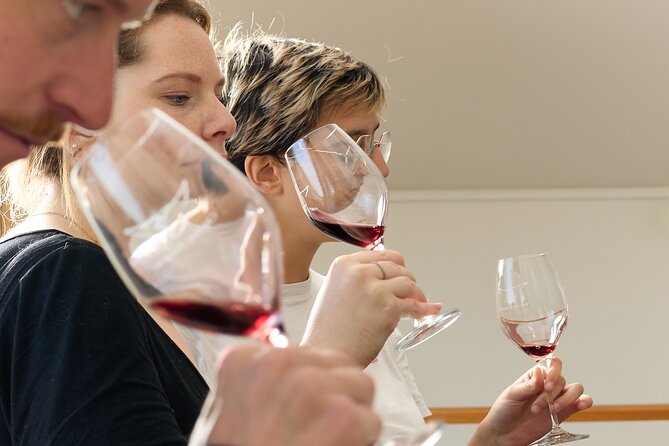
Bordeaux wine can seem like a code made of unfamiliar names. The bottle may highlight a château rather than a grape, and the label may focus on an appellation instead of telling you plainly what is inside. This workshop gives you the basic tools to make sense of that system without sending you into a full oenology course.
I like the location for a first lesson. The meeting point is at 2ter Rue Mably, only two steps from the Grand Theatre, so you can fit the tasting into a walk through central Bordeaux. It is near public transportation, and the activity ends where it begins. That makes it easy to pair with an afternoon around the historic center rather than giving up half a day for a distant excursion.
The setting is described as somewhere between a wine bar and a classroom. That balance matters. You get a seat, a structured presentation, and a chance to ask questions, but the tone is meant to stay relaxed. Several hosts have been praised for avoiding stiff wine language and making the subject approachable for people who do not yet know their Médoc from their Libournais.
The session begins at 2:30 pm. That is a useful time for your schedule. You can have lunch first, spend the morning seeing Bordeaux, and then use the tasting to sharpen your understanding before dinner. You should arrive ready to listen as well as taste, because the value is in learning how to interpret the wines, not just in receiving three glasses.
A few more Bordeaux outings to set side by side
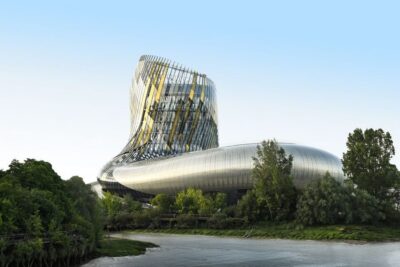
- Bordeaux: Cité du Vin Entry Ticket and Wine Tasting
★ 4.6 · 3,885 reviews - Bordeaux: River Garonne Cruise with Glass of Wine and Canelé
★ 4.5 · 3,630 reviews - From Bordeaux: Afternoon Saint-Emilion Wine Tasting & snack
★ 4.8 · 1,581 reviews
Learning the language of terroir and appellation
The first teaching block covers basic ideas such as terroir, grape varieties, and appellation. These are not decorative wine terms. They explain why Bordeaux bottles can be hard to read and why two wines made in the same broad region can taste quite different.
Terroir refers to the combination of place, soil, climate, and growing conditions that shape a wine. Grape variety is the type of grape used. Appellation identifies a legally defined wine area with its own rules and identity. You do not need prior knowledge, and the host is expected to adjust the level for beginners or more experienced drinkers.
This is where the class can be especially useful before a vineyard outing. If you visit Médoc or Saint-Émilion later, you will have a framework for the names you hear. Instead of treating every château as a separate mystery, you can start to understand the larger regions and styles behind the bottles.
The teaching also has a practical side. One participant who attended before a Bordeaux wine tour found the slides and explanations useful as preparation. Another said the information remained useful after returning home, which is a good sign for anyone hoping to leave with more than a pleasant hour and a mild buzz.
The hosts bring different personalities to the material. Antoine has been praised for making the class amusing and interactive. Anna added sensory challenges to one session, giving the group a way to think about smell as part of tasting. Toku and Toco were praised for answering questions and offering ideas for other outings in Bordeaux. The exact host matters, but the shared strength is a friendly teaching style.
The first glass: white wine and the tasting method
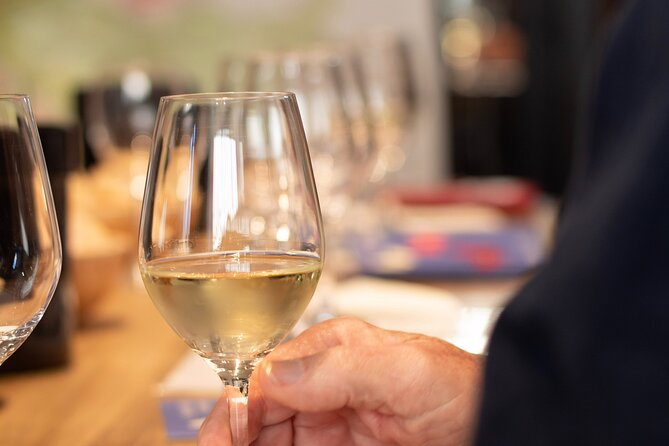
The tasting starts with a glass of white wine. This is not simply a warm-up pour. It is used to teach the main steps of tasting through a method widely used in the wine trade.
You learn to look at the wine, notice its color and clarity, smell it, and then taste it with attention. The goal is not to perform like a professional sommelier. It is to slow down and give your senses a job.
That first glass is a smart choice for beginners. Starting with white wine lets the host introduce the mechanics of tasting before moving to the more complex subject of Bordeaux reds. You can practice without worrying that there is a single correct answer. Sensory challenges in some sessions have made this part more playful, too.
You should expect discussion rather than a silent tasting. The best part of the format is the chance to ask why a wine smells or tastes a certain way. The presenters have been praised for making technical material understandable, and one participant described the instructor as personable and clear.
There are a couple of things to keep in mind. A French accent or fast speaking pace may make parts of the lesson harder to follow, especially if English is not your first language. If you have difficulty hearing, try to stay close to the host. The room is small, but one person found that a fast presentation made some points less clear.
Comparing Bordeaux’s Left Bank and Right Bank
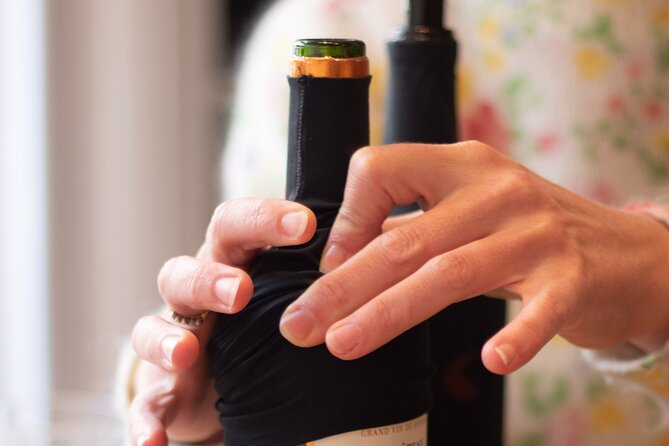
The two red wines provide the heart of the workshop. One comes from the Left Bank and the other from the Right Bank, allowing you to compare Bordeaux’s two major red wine areas. One of these wines is a Bordeaux Grand Cru, adding a taste of the region’s more prestigious category.
This side-by-side approach is more useful than tasting three unrelated bottles. You have a clear question in front of you: how do the two sides of Bordeaux differ? The host uses the glasses to explain the Médoc and the Libournais, two names you will hear often in local wine shops, restaurants, and vineyard tours.
The class does not promise a full map of Bordeaux, and it should not be treated as one. An hour cannot cover every appellation, château, vintage, and grape blend. What it can do is give you a working outline. You begin to connect geography with wine style and understand why the same region can offer such a wide range of bottles.
This is also the point where the tasting becomes useful for buying wine. The aim is to leave with less hesitation when choosing a bottle. That does not mean you will suddenly identify every Bordeaux wine blind. It means you will have better questions to ask and a better idea of what information on the label matters.
The wines themselves receive strong praise, with several people calling them excellent or very good. A few participants bought bottles afterward, and one returned the next day for more. That suggests the tasting is linked to a shop or sales point, though the supplied details do not promise that bottle purchases are part of the activity. Treat buying as an optional possibility, not as an included feature.
Same city, a slower kind of day:
- Medoc or Saint Emilion Wine Tasting and Chateau from Bordeaux
★ 5.0 · 1,415 reviews - Saint Emilion Day Trip with Sightseeing Tour & Wine Tastings from Bordeaux
★ 5.0 · 1,120 reviews - Saint-Émilion: Grand Cru Classé Winery Visit and Tasting
★ 4.6 · 1,118 reviews - Saint Emilion Half-Day Trip with Wine Tasting & Winery Visit from Bordeaux
★ 4.5 · 1,034 reviews
Local cheese, charcuterie, and the problem of pairing
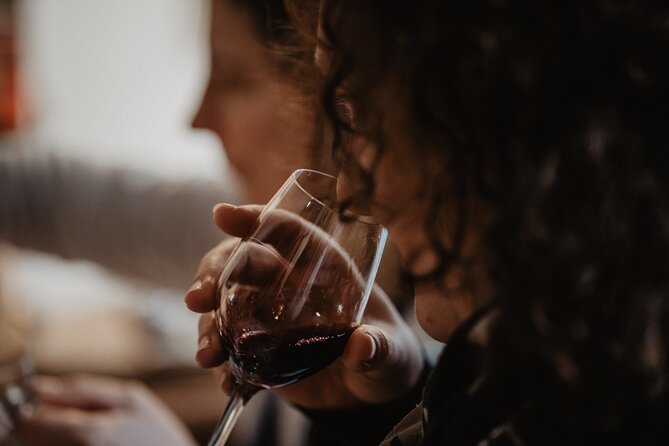
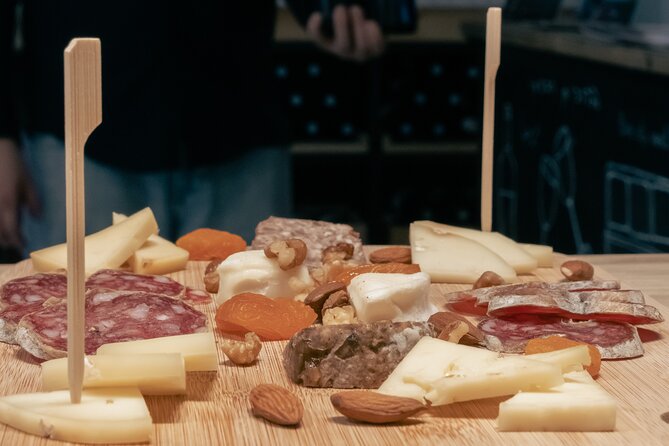
The food board includes local cheeses and charcuterie, or cold cuts, with fresh baguette available. These snacks are included in the price, so you are not paying extra for a few bites between pours. Water is also provided.
The food has two jobs. First, it makes the tasting more comfortable than drinking wine on an empty stomach. Second, it introduces the basic idea of food and wine pairing. You can notice how salt, fat, creaminess, and texture affect the way wine tastes.
I like that the board adds a local touch without turning the activity into a full meal. Cheese, cold cuts, and bread are simple foods, but they are central to everyday French eating. For a visitor staying in Bordeaux, this is a more grounded experience than a lecture followed by a plate of generic snacks.
You should not expect a formal pairing course with one carefully matched bite for each wine. One participant felt the cheeses and meats were not paired with every wine in a detailed way. That is a fair limitation. The food supports the tasting, but the wine lesson remains the main event.
If you have an allergy, tell the provider in advance. One food allergy was accommodated during a session, but the information does not promise that every dietary request can be handled. Personal expenses are not included, so any additional purchases are your responsibility.
How personal is a group of 12?
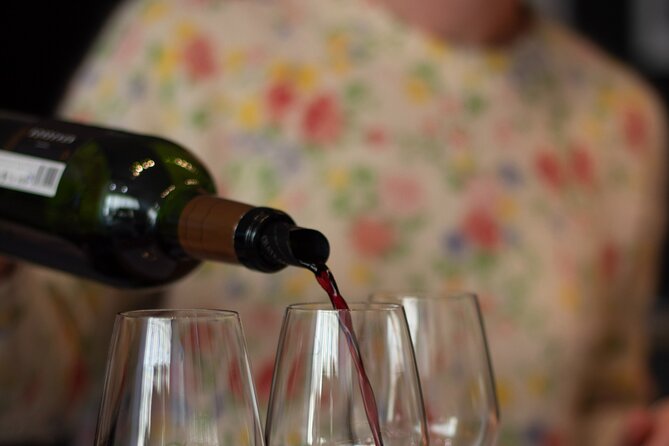
The experience is described as a private tasting, and the maximum is 12 people. That is small enough for a more personal discussion than you usually get on a large coach tour. You have a reasonable chance to ask questions, hear the presenter, and take part in the conversation.
The word private should not make you expect an exclusive class for just your own party. Up to 12 people may attend, and the experience may be shared with other participants. The benefit is the small scale, not necessarily a one-to-one appointment.
The atmosphere appears to depend partly on the host and the mix of people in the room. Several sessions have been described as friendly and interactive, with discussion among the presenter and the group. That is ideal if you like learning through questions.
There is one practical drawback. The space is small, and one person found it uncomfortable on a very hot day even with fans running. Bordeaux summers can be warm, so this is worth considering if you are sensitive to heat. The class may also feel compressed when another group is expected soon after the scheduled finish.
The advertised duration is approximately one hour. Some participants described their class as about 1.5 hours, but you should plan around the official one-hour schedule rather than count on extra time. That is enough for a focused introduction, not a leisurely afternoon tasting.
Is $35.09 good value?
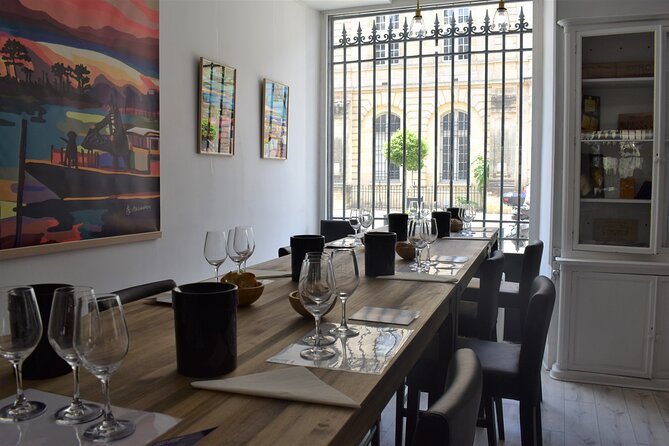
At $35.09 per person, the price is fair for central Bordeaux if you want instruction as well as wine. You receive three tastings, a cheese and charcuterie board, bread, water, handouts, and an expert-led presentation. The location also saves you the time and cost of traveling to a vineyard.
The value is strongest for first-time Bordeaux visitors. You get a basic vocabulary, a tasting method, a comparison of the Left Bank and Right Bank, and food with which to test the ideas. If you later buy wine or visit the vineyards, the lesson can make those choices easier.
The value is less clear if you only want generous pours or a full meal. This is a short educational tasting, and the food is a snack board rather than lunch. One person wished for a final glass of their favorite wine, but that is not included.
You should also know that a Grand Cru tasting does not mean you receive a bottle-size pour or a luxury event. The experience is designed to introduce the category and the region. For many people, that is exactly the right level before spending more on a château visit or a longer wine tour.
The 98 percent recommendation rate and 4.9 rating from 175 reviews point to very strong satisfaction, particularly with the hosts, explanations, wine quality, and relaxed mood. I would still read those numbers with the practical limits in mind: language delivery can vary, the room may get warm, and the pace is tight.
Language, timing, and other useful details
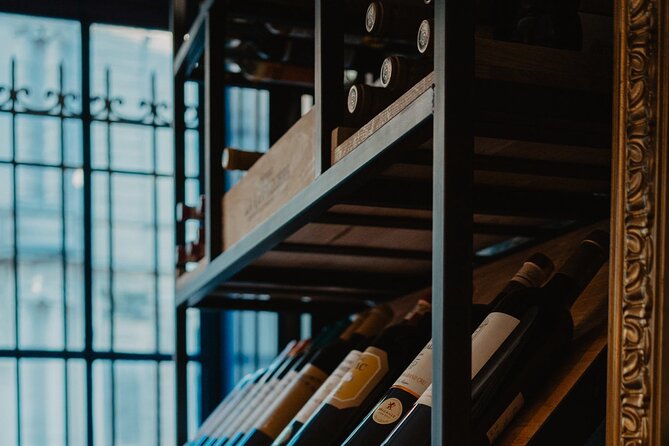
English is offered, and several sessions have been conducted successfully in English. Still, language is the one detail I would verify when booking. A French-language session was not what one English-speaking participant expected, although the facilitator tried to include English and a translation app helped.
Confirmation is sent when you book. Mobile tickets make the experience easy to carry on your phone. Service animals are allowed, and the location is near public transportation.
Free cancellation is available if you cancel at least 24 hours before the 2:30 pm start time. Changes or cancellations inside that window are not accepted for a refund. The provider also says the activity requires good weather. If poor weather causes a cancellation, you are offered another date or a full refund.
These rules are simple, but the weather note is worth remembering because the activity is held in Bordeaux and the provider lists weather as a condition. Keep the booking details handy and avoid making a last-minute change if your schedule is uncertain.
Who should book this Bordeaux tasting?
I would recommend it most strongly to:
- First-time Bordeaux visitors who want the basics without leaving the city
- People with only one free afternoon
- Wine beginners who feel lost when reading Bordeaux labels
- Couples or small groups looking for a relaxed cultural activity
- Anyone planning a vineyard tour and wanting some background first
- Wine drinkers who enjoy asking questions and tasting in a social setting
It may be less suitable if you want a long, slow tasting, a full meal, or a private class only for your own group. You should also check the language at booking if you need a fully English presentation.
Should you book it?
Yes, if you want a practical introduction to Bordeaux wine in the city center. The three-wine structure is well chosen, the Left Bank and Right Bank comparison gives the lesson a clear purpose, and the cheese, charcuterie, baguette, and water make the price feel reasonable.
Book it early if the 2:30 pm time fits your day, since it averages 15 days of advance booking. Go in expecting a compact class, not a vineyard expedition. If you stay engaged, ask questions, and listen for the label clues, you should leave better prepared to order, shop, and enjoy Bordeaux wine with confidence.
FAQ
Where does the Bordeaux wine tasting begin?
It begins at 2ter Rue Mably, 33000 Bordeaux, France, near the Grand Theatre.
What time does the experience start?
The listed start time is 2:30 pm.
How long does the wine workshop last?
The experience lasts approximately one hour.
How many wines are included?
Three wine tastings are included: one white wine and two red wines.
What Bordeaux regions are discussed?
The workshop introduces the Médoc on the Left Bank and the Libournais on the Right Bank.
Is a Grand Cru wine included?
Yes. One of the two red wines is a Bordeaux Grand Cru.
Is food included in the price?
Yes. The tasting includes a board of local cheeses and charcuterie, fresh baguette, and water.
Is the tasting available in English?
English is listed as an available language. You should confirm the language of your specific session because one session was conducted in French.
What is the cancellation policy?
You can cancel at least 24 hours before the start time for a full refund. Cancellations or changes made less than 24 hours before the experience are not accepted, and poor-weather cancellations may result in a different date or a full refund.
Recently added in Bordeaux
- Discover Braastad Cognac★ 5.0 · 52 reviews
- Au Cœur du Château – VSOP D’USSÉ & XO BARON OTARD★ 4.5 · 108 reviews
- retro road trip/ Méhari, 2CV & Burton in Rochefort, La Rochelle★ 5.0 · 28 reviews
- Saint-Emilion Food and Wine Day Tour★ 5.0 · 323 reviews
- Saint Emilion Full Day Wine and Bike Tour★ 5.0 · 167 reviews
- Virtual Room Bordeaux – 1st team virtual reality experience★ 5.0 · 47 reviews
- Bordeaux bike tour “The Best of Bordeaux”★ 5.0 · 164 reviews
- Luxurious full day Bordeaux wine tour in a Tesla★ 4.5 · 31 reviews
Bordeaux Tours, compared.
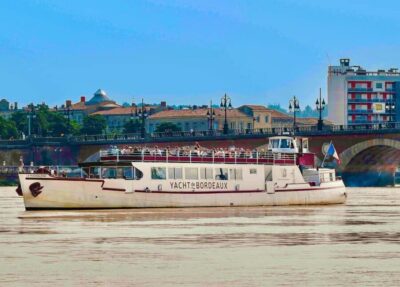
River Garonne Cruise with Glass of Wine and Canelé
Read our review →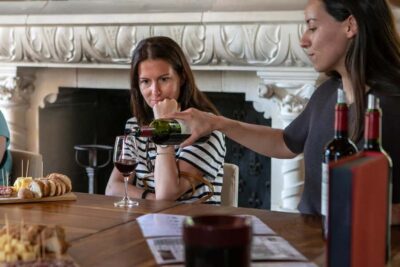
Afternoon Saint-Emilion Wine Tasting & snack
Read our review →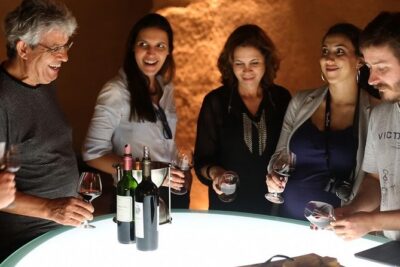
Medoc or Saint Emilion Wine Tasting and Chateau from Bordeaux
Read our review →
Saint Emilion Day Trip with Sightseeing Tour & Wine Tastings from Bordeaux
Read our review →
Saint-Émilion: Grand Cru Classé Winery Visit and Tasting
Read our review →
Saint Emilion Half-Day Trip with Wine Tasting & Winery Visit from Bordeaux
Read our review →
Browse the lists this tour appears in