
REVIEW · BORDEAUX TOURS
Make your own cuvée of Bordeaux wine
Taste Bordeaux differently here. At Le Pied à Terre, you do more than sip three reds and hear a lecture. You compare Merlot, Cabernet Sauvignon, and Cabernet Franc, then use tubes and pipettes to build a blend that suits your taste. I especially like the hands-on bottle-making and the warm, funny teaching style associated with James, Pierre, and Geoffroy. The main caution is simple: confirm the day’s agenda, since two past bookings became tastings only and did not include blending.
This is a compact, friendly workshop at 22 Rue Judaïque, with space for no more than 12 people. I like that it explains Bordeaux through tasting, soil samples, blind testing, and practical blending rather than relying on vineyard jargon. At $71.20 per person, it offers good value if you want a structured wine lesson and a personal bottle, but less value if you expect a vineyard visit, a full meal, or several hours of generous pours.
In This Review
- Key points before you book
- Entering Le Pied à Terre on Rue Judaïque
- First, learn how Bordeaux fits together
- Three grape varieties, three jobs in the blend
- Blind tasting turns theory into a game
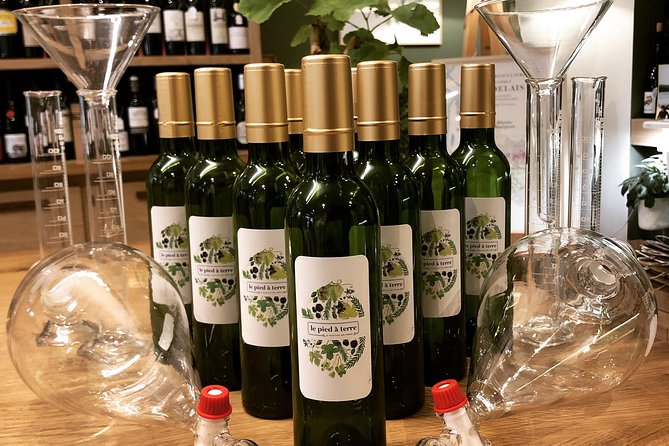
- Making your own cuvée with pipettes
- The bottle labeled with your name
- How much value do you get for $71.20?
- Who will enjoy this Bordeaux workshop most?
- Timing, cancellations, and small practical details
- Should you book Make Your Own Cuvée of Bordeaux Wine?
- FAQ
- Where does the Bordeaux wine blending workshop begin?
- Where does the experience end?
- How long does the experience last?
- What language is the workshop offered in?
- How many people can join the workshop?
- Which grape varieties are used for blending?
- Do I get to take home a bottle?
- Is food included?
- Are service animals allowed?
- Can I cancel for a full refund?
Key points before you book
- You blend three Bordeaux grapes: Compare Merlot, Cabernet Sauvignon, and Cabernet Franc before creating your own proportions.
- You take home your own bottle: Your finished cuvée can be bottled and labeled with your name.
- You learn by tasting, not just listening: Guided, assisted, and blind tastings help you identify tannin, aroma, acidity, and structure.
- You get a Basque-style food pairing: Cheese and charcuterie from the Basque Country accompany the tasting.
- You stay in a small group: The maximum is 12 people, which suits questions and personal guidance.
- You need to verify the blending portion: The experience has had rare scheduling mix-ups, so ask when booking if making your own bottle is included that day.
Entering Le Pied à Terre on Rue Judaïque
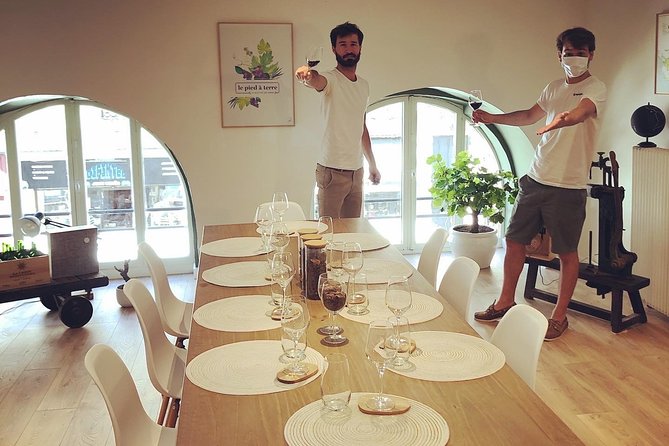
The workshop begins at Le Pied à Terre, a wine shop and tasting space at 22 Rue Judaïque in central Bordeaux. You return to this same location at the end, so there is no second meeting point to track down and no countryside transfer to arrange.
The setting matters. This is a cellar workshop, not a coach excursion through the Médoc or Saint-Émilion. You spend the session around wine, glassware, samples, and blending equipment, with the atmosphere kept casual and social. The shop downstairs also offers a selection of wines at different prices, which can be useful if the class gives you a clearer idea of what you want to drink in Bordeaux.
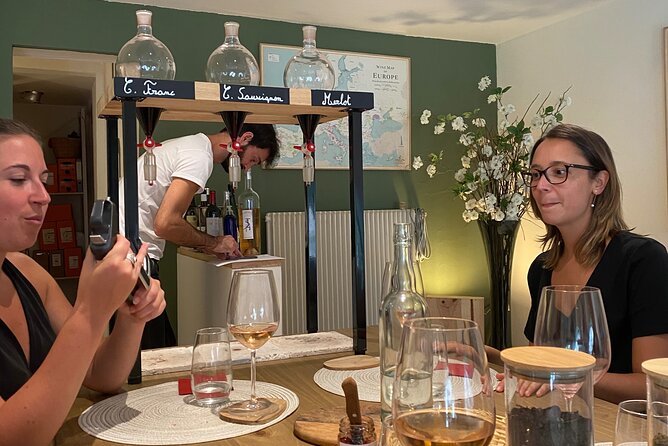
The group limit of 12 is one of the practical strengths. You are not lost in a crowd, and the format leaves room to ask why one wine feels more tannic or why another smells more floral. It also makes the activity a pleasant choice for couples, families with older children, and friends traveling together.
The experience is offered in English. Several reports praise the English delivery, including one that identifies the instructor as a native English speaker. The teaching team is described as two brothers, Pierre and Geoffroy, while the experience description names James as a guide. Since the staff may vary, check who is leading your session if that matters to you.
A few more Bordeaux outings to set side by side
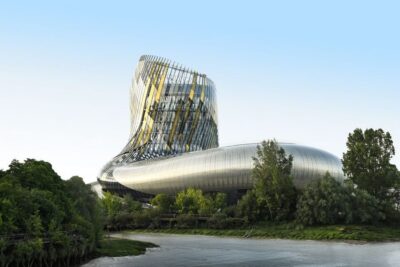
- Bordeaux: Cité du Vin Entry Ticket and Wine Tasting
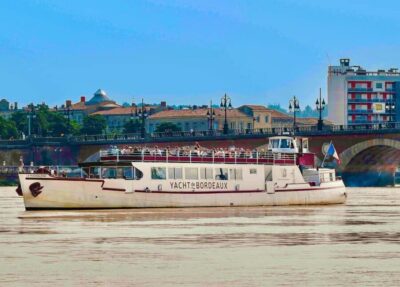
★ 4.6 · 3,885 reviews - Bordeaux: River Garonne Cruise with Glass of Wine and Canelé
★ 4.5 · 3,630 reviews - From Bordeaux: Afternoon Saint-Emilion Wine Tasting & snack
★ 4.8 · 1,581 reviews
First, learn how Bordeaux fits together
The class starts with the basics of Bordeaux wine. You learn about the area’s main wine zones, including the Left Bank, Right Bank, and Entre-Deux-Mers, then connect those places with grape varieties, soils, and wine style.
This part is useful because Bordeaux labels can feel like a code. The focus is not simply on memorizing estates. You begin to understand why blends are central to the region and why the same grape can taste different depending on where it grows.
The teaching also covers the mechanics of tasting. You work with aroma, flavor, acidity, tannin, and balance. Soil samples are used as visual aids, a small but effective touch that helps turn an abstract explanation into something you can see and discuss.
I appreciate this approach for a first Bordeaux visit. You can spend days tasting wine here without learning how to compare it. This workshop gives you a vocabulary and a method you can use later in a wine bar, shop, or restaurant.
The tone is part of the appeal. The brothers are often described as friendly, funny, and easy to follow. The class is educational, but it is not presented as a formal certification course. You can ask basic questions without feeling out of place, while experienced wine drinkers still get useful detail.
Three grape varieties, three jobs in the blend
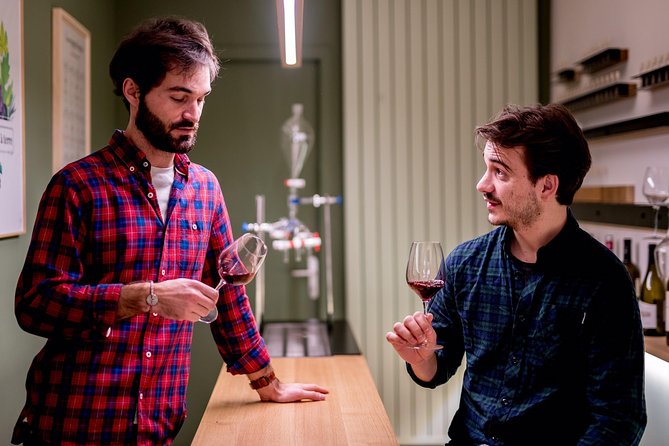
The heart of the workshop is the comparison of single-varietal wines. You taste separate examples of Merlot, Cabernet Sauvignon, and Cabernet Franc, then consider what each contributes to a Bordeaux blend.
Merlot generally brings softness, fruit, and an approachable feel. Cabernet Sauvignon contributes tannic structure and firmness. Cabernet Franc adds aroma and freshness. The point is not to declare one grape the winner. Bordeaux blending works because different elements support each other.
You taste the wines with food, including Basque cheese and charcuterie. That pairing gives you another way to notice texture and balance. A wine that feels sharp alone may work better with food, while tannin can seem more pronounced alongside certain flavors.
The pours are described as generous by some participants, but the quantities are still tasting portions rather than full glasses. One dissatisfied booking reported roughly three ounces of each of three wines. That is enough for comparison, not an afternoon of drinking. Plan to enjoy the session as a class first and a wine outing second.
A useful tip is to pay attention to all three varieties side by side if the setup allows it. Comparing them at the same moment makes the differences clearer, especially Cabernet Sauvignon’s tannin against Merlot’s softer fruit and Cabernet Franc’s aromatic lift.
Blind tasting turns theory into a game
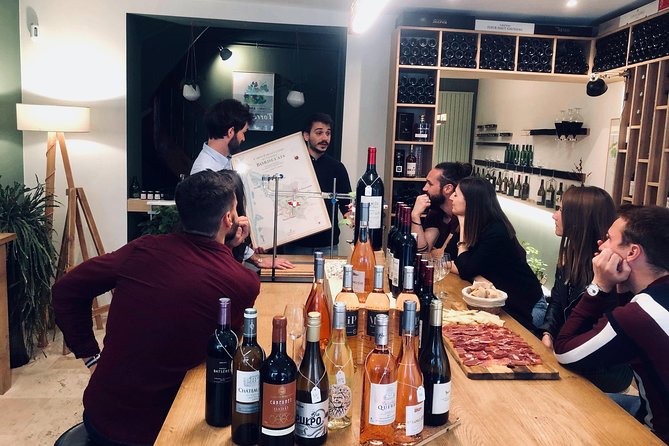
After the introduction, the session may move into guided, assisted, and blind tasting. This sequence is a strong feature because you first receive a framework, then practice using it without being handed every answer.
Blind tasting can sound intimidating, but here it functions more like a friendly test. You smell, taste, and discuss what is in the glass. The goal is not to guess a prestigious château. It is to notice what you are actually experiencing.
This section helps you become more confident with Bordeaux wine during the rest of your trip. Instead of treating every red as a mysterious regional product, you can ask practical questions: Does it have firm tannin? Is the fruit dark or bright? Does the aroma suggest Cabernet Franc? Does the wine feel balanced with food?
For experienced wine drinkers, the exercise prevents the class from becoming too basic. One person who had attended many tastings still found the visuals and blind tasting useful. For beginners, the relaxed delivery keeps the activity from feeling like an exam.
The food also encourages conversation among the small group. You may be seated with people at different points in their wine education, which can add to the fun. If you prefer a quiet, private tasting, this social format may be less appealing.
Same city, a slower kind of day:
- Medoc or Saint Emilion Wine Tasting and Chateau from Bordeaux
★ 5.0 · 1,415 reviews - Saint Emilion Day Trip with Sightseeing Tour & Wine Tastings from Bordeaux
★ 5.0 · 1,120 reviews - Saint-Émilion: Grand Cru Classé Winery Visit and Tasting
★ 4.6 · 1,118 reviews - Saint Emilion Half-Day Trip with Wine Tasting & Winery Visit from Bordeaux
★ 4.5 · 1,034 reviews
Making your own cuvée with pipettes
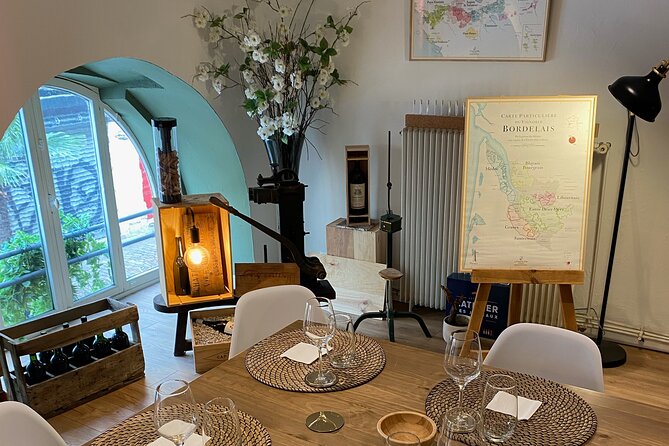
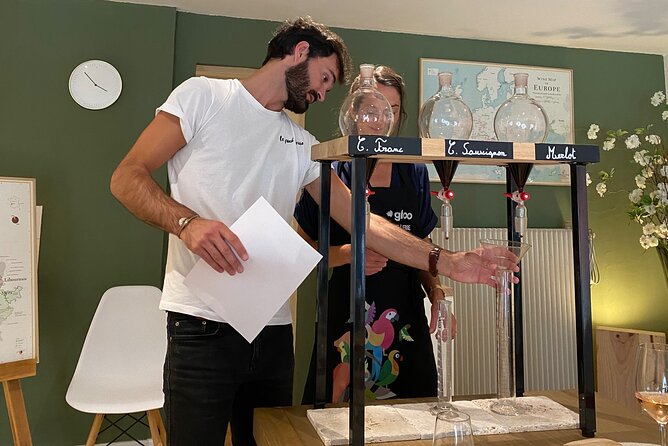
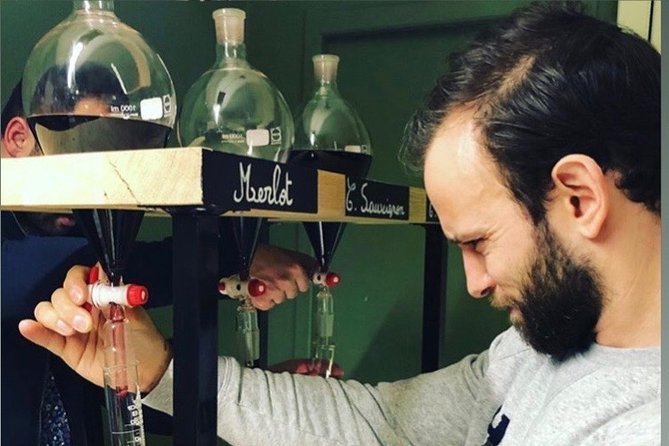
The most memorable section is the blending exercise. You work with samples of the selected single-varietal wines, using tubes and pipettes to create a mixture based on your preferences.
This is not vineyard farming or full-scale winemaking. You are not crushing grapes, fermenting juice, or aging a barrel. You are learning the final blending decision, a small but meaningful part of Bordeaux production. That distinction is important, especially because the title can create the impression that you will make wine from raw grapes.
You decide how much of each variety to include. A blend with more Cabernet Sauvignon may feel firmer and more structured. More Merlot may make it rounder and easier to drink. Cabernet Franc can shift the aromatic profile and add another layer of freshness.
The fun comes from seeing how small changes affect the result. You can test a blend, taste it, adjust the percentages, and compare it with other versions. One person suggested that a fourth or fifth option, such as a small amount of Petit Verdot, Pinot, or Gamay, could make the exercise even broader. The current format stays focused on three classic Bordeaux grapes, which keeps it manageable within a short class.
If you are traveling with a partner or friends, you can make separate blends and compare them later. That turns the bottle into more than a souvenir. It becomes a record of your own taste at that moment.
The bottle labeled with your name
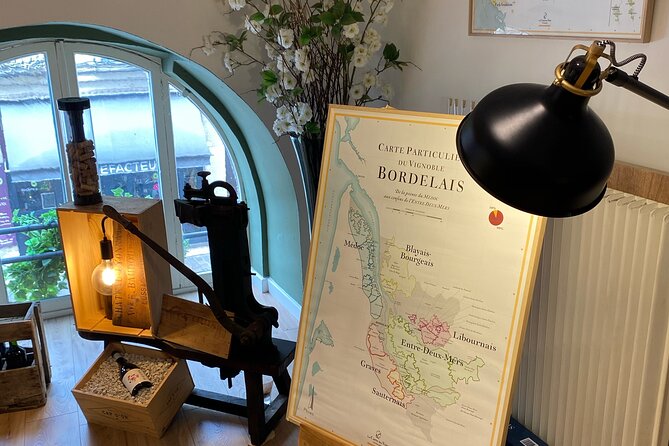
At the end, you may bottle your chosen blend and take it home with a label bearing your name. This is the feature that gives the workshop a personal finish.
A bottle from a Bordeaux shop is easy to buy. A bottle you helped formulate is harder to forget. You can keep it for a special meal, open it with the people who joined you, or use it for a blind tasting of your own at home.
Keep the wording in mind: you create a cuvée from prepared wines. The bottle is your blend, not a wine you personally grew, fermented, and aged. That does not make it less enjoyable, but knowing the limits of the activity will help you book with the right expectations.
There is also some uncertainty in the supplied experience history. Two low-rated bookings said their sessions included only a tasting and lecture, and the provider apologized for having used the wrong agenda. Since the blending activity is the main reason to choose this workshop, contact Le Pied à Terre before arrival and confirm that the bottle-making portion is scheduled.
How much value do you get for $71.20?
At $71.20, this workshop sits above a quick Bordeaux tasting but below the cost of a full-day wine-country excursion. Its value depends on what you want from your time.
You are paying for roughly two and a half hours, instruction in English, several wine samples, food, tasting exercises, and the chance to make a personal bottle. The small group cap improves the experience because the class is interactive rather than a one-way presentation.
The price looks fair if you are curious about Bordeaux but do not have time for a full day outside the city. It also works well near the end of a longer France trip, when you have already seen different wine regions and want to organize what you have learned.
It is less compelling if your goal is simply to drink as much as possible. The pours are tasting portions, and the food is a starter of Basque cheese and charcuterie, not a full lunch or dinner. You also do not visit vineyards, château cellars, or vineyards outside Bordeaux.
The experience is often booked well ahead, with an average booking lead time of about 45 days. If your dates are fixed, plan ahead rather than assuming you can find a last-minute place.
Who will enjoy this Bordeaux workshop most?
I would choose this for a curious wine drinker who wants to understand blending instead of collecting tasting-room stamps. It suits beginners because the instructors explain the basics clearly, and it suits experienced drinkers because the blind tasting and blending decisions require active attention.
It is also a good pick for:
- Couples who want a shared souvenir they helped create
- Friends who enjoy comparing personal tastes
- Visitors with only an afternoon or evening in Bordeaux
- Wine drinkers from regions where single-varietal wines are more common
- Families with older children who can take part in a tasting class
You may want another activity if you prefer white wine. This is a red wine experience focused on Merlot, Cabernet Sauvignon, and Cabernet Franc. You should also skip it if you want a vineyard tour, a château visit, or a detailed look at the entire production process from grape to bottle.
The social setting can be a plus or a minus. The maximum of 12 keeps it personal, but you will share the session with other people. Service animals are allowed, and the meeting point is near public transportation.
Timing, cancellations, and small practical details
The advertised duration is about two hours and 30 minutes, though one highly positive booking lasted closer to three hours. The session may run long when conversation and questions are flowing, so avoid scheduling a tight appointment immediately afterward.
You receive confirmation when booking, and the activity ends back at Le Pied à Terre. Mobile tickets are accepted. Free cancellation is available up to 24 hours before the local start time. Cancellations or changes inside that window are not refunded or accepted.
The activity requires a minimum number of participants. If that minimum is not reached, or if poor weather causes cancellation, you should be offered another date or experience, or a full refund. Since the workshop takes place in a cellar, the weather rule may feel unusual, but it is part of the operating policy.
Most important, confirm the exact agenda. Ask whether the session includes the pipette blending exercise and a take-home bottle. That one message can prevent the main disappointment reported about this activity.
Should you book Make Your Own Cuvée of Bordeaux Wine?
Yes, if you want a friendly, practical Bordeaux lesson with a real hands-on finish. The strongest parts are the clear comparison of grape varieties, the blind tasting, the food pairing, and the chance to leave with a bottle you blended yourself.
I would book it early, especially for a fixed Bordeaux itinerary, and treat the $71.20 price as payment for a compact wine class rather than a simple tasting. Confirm the blending portion before you go. If it is included, this is one of the better city-based ways to make Bordeaux wine feel understandable, personal, and a little more fun.
FAQ
Where does the Bordeaux wine blending workshop begin?
It begins at Le Pied à Terre, Cave à vin & atelier dégustation, at 22 Rue Judaïque, 33000 Bordeaux, France.
Where does the experience end?
The activity ends back at the same meeting point, Le Pied à Terre.
How long does the experience last?
The advertised duration is approximately two hours and 30 minutes. Some sessions may last closer to three hours.
What language is the workshop offered in?
The experience is offered in English.
How many people can join the workshop?
The maximum group size is 12 travelers.
Which grape varieties are used for blending?
The workshop focuses on Merlot, Cabernet Sauvignon, and Cabernet Franc.
Do I get to take home a bottle?
The experience includes the possibility of taking home a bottle of your own blend labeled with your name. Confirm that the blending portion is scheduled for your date.
Is food included?
Yes. The listed starter is cheese and charcuterie from the Basque Country.
Are service animals allowed?
Yes, service animals are allowed.
Can I cancel for a full refund?
Yes, if you cancel at least 24 hours before the experience start time. Cancellations made less than 24 hours in advance are not refunded.
Recently added in Bordeaux
- Discover Braastad Cognac★ 5.0 · 52 reviews
- Au Cœur du Château – VSOP D’USSÉ & XO BARON OTARD★ 4.5 · 108 reviews
- retro road trip/ Méhari, 2CV & Burton in Rochefort, La Rochelle★ 5.0 · 28 reviews
- Saint-Emilion Food and Wine Day Tour★ 5.0 · 323 reviews
- Saint Emilion Full Day Wine and Bike Tour★ 5.0 · 167 reviews
- Virtual Room Bordeaux – 1st team virtual reality experience★ 5.0 · 47 reviews
- Bordeaux bike tour “The Best of Bordeaux”★ 5.0 · 164 reviews
- Luxurious full day Bordeaux wine tour in a Tesla★ 4.5 · 31 reviews
Bordeaux Tours, compared.
River Garonne Cruise with Glass of Wine and Canelé
Read our review →
Afternoon Saint-Emilion Wine Tasting & snack
Read our review →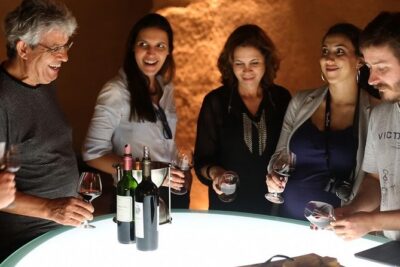
Medoc or Saint Emilion Wine Tasting and Chateau from Bordeaux
Read our review →
Saint Emilion Day Trip with Sightseeing Tour & Wine Tastings from Bordeaux
Read our review →
Saint-Émilion: Grand Cru Classé Winery Visit and Tasting
Read our review →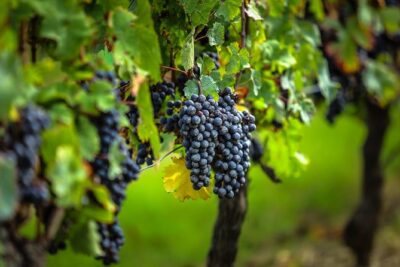
Saint Emilion Half-Day Trip with Wine Tasting & Winery Visit from Bordeaux
Read our review →
Browse the lists this tour appears in