
REVIEW · FRANCE
Narbonne: visit the Archbishops’ Palace and Cathedral
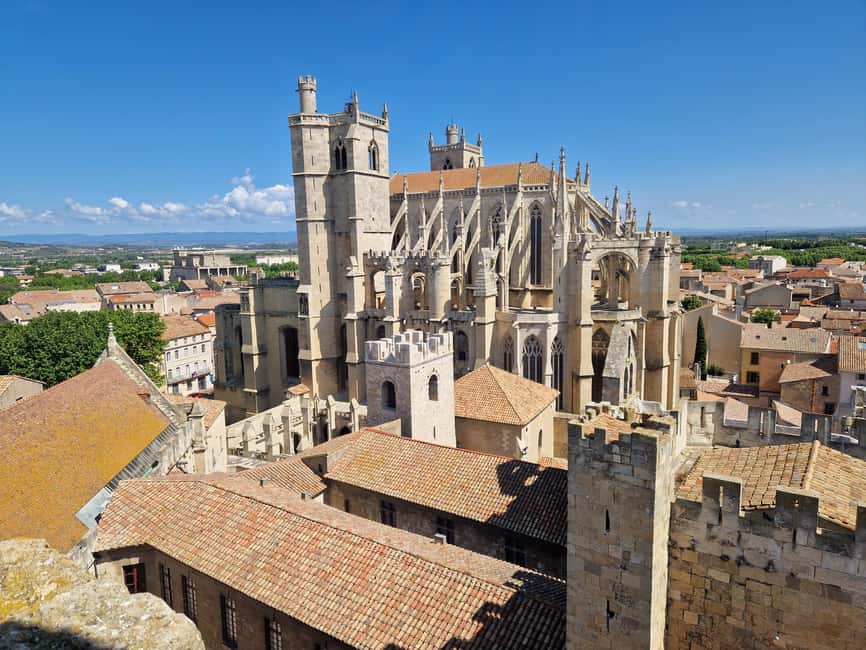
Step into Narbonne’s long story. This two-hour walking tour brings together the Archbishops’ Palace and Saint-Just and Saint-Pasteur Cathedral, then adds Roman remains, the medieval Pont des Marchands, and the city’s famous food market. I especially like the route’s variety and the way it links grand monuments with everyday Narbonne. I also like that the visit includes interior courtyards, the cloister, the archbishop’s garden, and the cathedral interior, not just exterior photo stops.
The main thing to consider is pace. Two hours gives you a useful introduction, but not enough time for every museum room or optional monument. Admission to the Donjon, the town’s art collection, and the Treasure Room costs extra. If Marion Quart guides your group, expect an enthusiastic and personable presentation, with clear explanations, humor, and plenty of local detail.
In This Review
- Key points to know before booking
- Start at Les Halles, then walk into old Narbonne
- Read the city’s past at the Via Domitia
- The Archbishops’ Palace and its Grand Staircase
- Cross the cloister beneath the gargoyles
- Look up inside Saint-Just and Saint-Pasteur Cathedral
- Optional admissions you should budget for
- Finish along the Promenade des Barques
- Les Halles makes a useful final stop
- Marion Quart’s guiding style
- Who will get the most from this tour
- Practical details for a smooth visit
- Should you book the Narbonne palace and cathedral tour?
- FAQ
- Where does the tour meet?
- How will I recognize the guide?
- How long does the experience last?
- What languages are offered?
- Is the tour wheelchair accessible?
- Is admission to the Donjon included?
- What other admissions cost extra?
Key points to know before booking
- The route begins at Les Halles: Meet near the war memorial at the main entrance, where the guide wears a green neckerchief and carries a professional card.
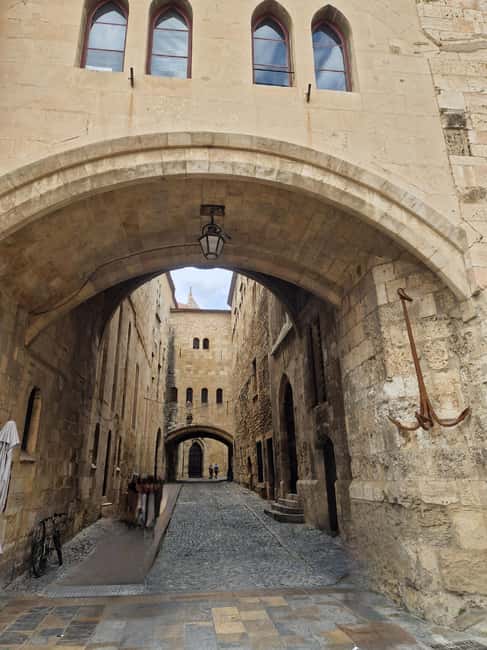
- The Archbishops’ Palace is more than a grand façade: You enter the main courtyard and see the Grand Staircase, interior spaces, and the Passage de l’Ancre.
- The cathedral is the tour’s architectural high point: The soaring Gothic vaults, monumental organ, and sculpted altarpieces give the visit real visual weight.
- Roman and medieval Narbonne appear side by side: The Via Domitia, Pont des Marchands, and palace complex show how the city changed over many centuries.
- The final walk ends at Les Halles: This is useful if you want to continue independently with coffee, lunch, or a look at local food stalls.
- The price is reasonable for a private two-hour visit: At $23 per person, you get a guide and access to the listed sites, while several extra admissions remain outside the price.
Start at Les Halles, then walk into old Narbonne
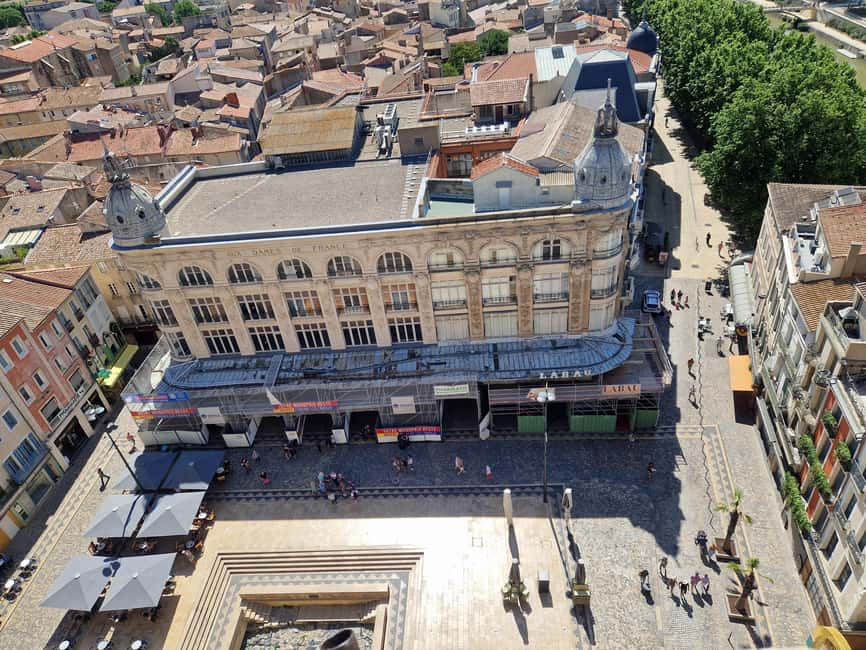
The meeting point is easy to identify: the main entrance to Les Halles de Narbonne, near the war memorial. Your guide should be wearing a green neckerchief with a professional card, so you will not need to search a large square for an uncertain meeting spot.
Les Halles matters here for more than convenience. It is one of the city’s main social places, and ending near the market gives the tour a pleasant local rhythm. You begin with architecture and church history, then finish where people shop, eat, and meet. That contrast helps keep the outing from feeling like a string of stone monuments.
The tour is designed as a private group, which is useful if you want to ask questions or adjust the emphasis toward architecture, religion, Roman Narbonne, or local life. The stated duration is two hours. That is long enough for a serious introduction, but short enough to fit around a larger day of sightseeing.
Other France afternoons worth holding open:
- Paris: Louvre Museum Timed-Entrance Ticket
★ 4.6 · 71,977 reviews - Disneyland® Paris 1-Day Ticket
★ 4.6 · 49,412 reviews - Paris: Versailles Palace and Gardens Full Access Ticket
★ 4.6 · 41,579 reviews
Read the city’s past at the Via Domitia
One of the first important stops is the Via Domitia, the Roman road associated with Narbonne’s ancient role. You are not simply looking at an isolated archaeological object. The road helps explain why this location became important in the first place and how movement shaped the city.
A guide adds value here because Roman remains can be easy to overlook without context. Marion Quart’s style, based on the praise attached to her tours, appears to favor details delivered in a clear and relaxed way rather than a heavy lecture. That approach suits a street-level site where the setting around you is part of the lesson.
I like this opening because it gives you a time scale before you enter the palace and cathedral. Narbonne is not presented as only a medieval church town. The Roman road reminds you that the city’s story began much earlier and continued through several major changes.
The Archbishops’ Palace and its Grand Staircase
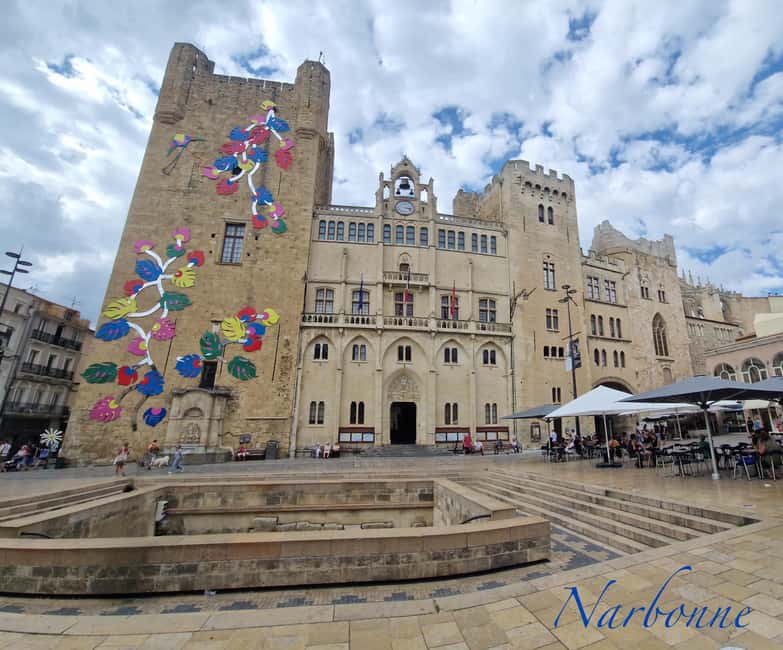
The Place de l’Hôtel de Ville is the former site of the Archbishops’ Palace, and the palace façade is the first major architectural statement of the visit. Your guide will point out what the exterior tells you, helping you read the building rather than simply photograph it.
The palace complex is especially worthwhile because the visit continues inside. You enter the main courtyard and see the Grand Staircase, then follow the route associated with the archbishops. This gives the building a stronger sense of place than a quick look from the square.
The Passage de l’Ancre is also included. Its name and enclosed character add another layer to the palace visit, showing that this was a working complex with routes, thresholds, and private areas, not merely a decorative façade.
You should expect a mix of explanation and walking rather than a long seated presentation. That makes comfortable shoes a sensible choice. The palace has enough architectural detail to reward close attention, but anyone hoping to explore every administrative room or historical collection should know that the separate museum admission is not included.
The Archbishops’ Palace is a good example of why a guide can be useful in Narbonne. On your own, you can admire the scale and position of the buildings. With an explanation of who used the complex and how it connected with the cathedral, the whole square becomes easier to understand.
Cross the cloister beneath the gargoyles
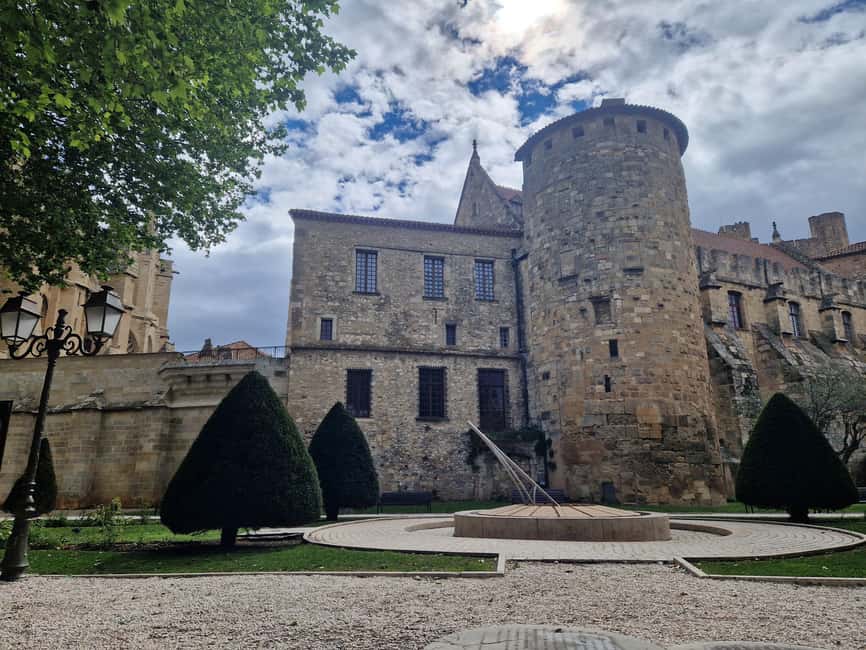
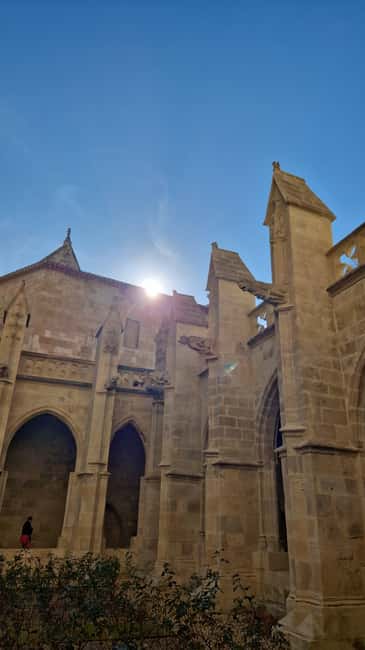
From the palace, the route continues toward Saint-Just and Saint-Pasteur Cathedral, passing through the cloister. This is one of the most atmospheric sections of the walk. The cloister creates a quieter transition between the civic space outside and the sacred architecture inside.
Look upward as you cross. Gargoyles tower above the passage, giving the cloister a touch of medieval drama. They are easy to miss if you keep your eyes at street level, so this is a good place to slow down and listen to the guide’s explanation.
The cloister also helps you understand the cathedral as part of a larger religious complex. You are not entering a church that appeared alone in the middle of the city. The surrounding spaces supported religious life, movement, ceremony, and administration.
The route includes the archbishop’s garden as well. The supplied details do not promise a long garden visit, so think of this as part of the palace and cathedral complex rather than a separate garden tour. Still, it adds a welcome change of texture after the stone courtyards and enclosed passages.
Same city, a slower kind of day:
- Paris: Evening River Cruise with Music
★ 4.4 · 22,721 reviews - Paris: Eiffel Tower Entry Ticket with Optional Summit Access
★ 4.4 · 20,035 reviews - Paris: Eiffel Tower Summit or Second Floor Access
★ 4.3 · 17,248 reviews - Paris: Louvre Guided Tour with Reserved Access & Boat Cruise
★ 4.3 · 16,353 reviews
Look up inside Saint-Just and Saint-Pasteur Cathedral
The cathedral is the visual center of the experience. It is known for its 14th-century Gothic architecture, and the first thing you are likely to notice inside is its height. The vaulted ceiling gives the building a strong vertical pull, encouraging you to look above the floor-level details.
A guided explanation helps here because Gothic churches can overwhelm you with scale. Instead of noticing only the size, you can pay attention to the vaulted structure, the relationship between the nave and the surrounding spaces, and the way decoration works within the larger design.
The visit includes both the exterior and interior of the cathedral. That matters. The outside gives you the building’s scale and Gothic profile, while the interior shows why the cathedral is considered one of Narbonne’s main architectural treasures.
Several specific works are highlighted:
- The monumental organ, an imposing feature that draws the eye upward and across the interior.
- The 17th-century altarpiece, which adds a later layer to the medieval building.
- The 14th-century sculpted altarpiece, described as a picture book in stone.
These details make the cathedral more rewarding than a simple walk through a large nave. You have distinct objects to look for, and the guide can explain how different periods left their mark on the same building.
If you enjoy church art, this part alone may justify the tour. If you prefer open-air sightseeing, the interior stops still remain manageable because the whole experience lasts two hours rather than occupying half a day.
Optional admissions you should budget for
The basic experience does not include admission to the Donjon, the town’s art collection, or the Treasure Room. These extras are available with the purchase of a €12 admission ticket.
That arrangement is useful if you want to keep the base cost low and decide on the day whether you have enough time and interest for more. It also means you should not assume that every major room connected with the palace is part of the guided visit.
At $23 per person, the tour offers good value if you want a structured introduction to several central sights. You receive a live guide, a private group format, and access to the palace courtyards, Passage de l’Ancre, cloister, cathedral, archbishop’s garden, Via Domitia, Promenade des Barques, Pont des Marchands, and Les Halles.
The value is less clear if you want a long museum visit or detailed access to every optional collection. In that case, add the €12 ticket and allow extra time. The tour itself is best understood as a guided city walk with important interior visits, not as a full-day palace and museum admission.
Finish along the Promenade des Barques
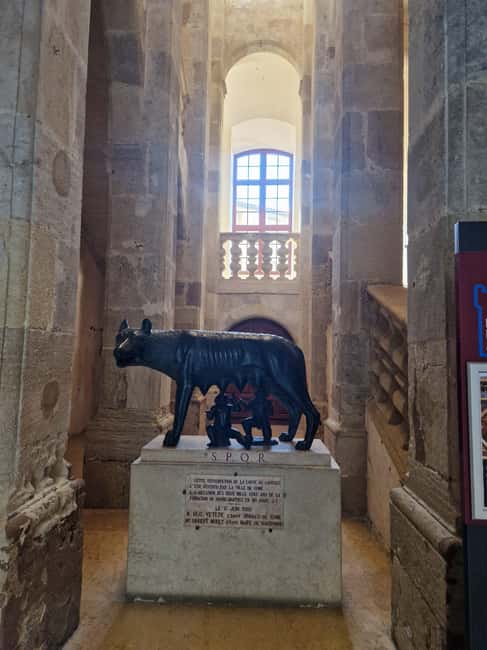
After the cathedral and palace complex, the route moves outdoors again along the Promenade des Barques. This section gives your eyes a break from Gothic stone and enclosed courtyards.
The walk continues toward Pont des Marchands, one of Narbonne’s notable crossings. The bridge is especially interesting because it connects the practical life of the city with its older urban structure. It is a reminder that Narbonne’s historic center is not a preserved stage set. People still move through these routes as part of daily life.
The Promenade des Barques also gives the tour a more relaxed ending. You can process the earlier architecture while walking toward Les Halles. That final change of mood is one of the route’s strengths. The tour does not end abruptly at the cathedral door.
Les Halles makes a useful final stop
The tour ends with access to Les Halles, Narbonne’s emblematic meeting place. The market is a practical finish because you can continue your day without retracing your steps to find food or a central gathering point.
The information provided does not specify particular stalls, dishes, or tasting arrangements, so do not book this expecting a food tour. Instead, treat Les Halles as a chance to see an important local meeting place after learning how the city developed around its major buildings.
If you are planning lunch, check the market’s opening arrangements separately. The tour includes access, but it does not promise a meal, tasting, or reserved table.
Marion Quart’s guiding style
The guide can make or break a history walk, and Marion Quart receives especially strong praise for her enthusiasm, clear storytelling, and ability to make information easy to follow. Her presentation is described as passionate without becoming tiring, with humor and simplicity used to explain the sites.
That balance matters in Narbonne. The palace, cathedral, Roman road, and bridge all carry plenty of dates and names. A guide who simply recites facts could make two hours feel long. Marion’s reported strength is turning those facts into a story that carries you from ancient settlement to medieval power and then into modern city life.
She is also praised for professionalism, availability, and thoughtful attention to the group. For a private visit, that personal approach may be particularly helpful. You can ask about details that catch your eye instead of staying silent in a large group.
The language information lists French and Sangro. Some content may be presented in its original language, so confirm the language arrangement when booking if this is important to you.
Who will get the most from this tour
I would recommend this experience to you if you want a compact introduction to Narbonne’s central monuments and prefer explanation over independent wandering. It suits people who enjoy architecture, church art, urban history, and small details that are easy to miss alone.
It is also a good fit for visitors with only a short amount of time in the city. The two-hour route covers several major sights without requiring transport between them.
Families and mixed-interest groups may appreciate the variety. The Roman road, palace, cathedral, bridge, promenade, and market create enough changes of scene to keep the walk moving.
The tour is wheelchair accessible, which is an important practical advantage. Still, the route includes historic buildings, courtyards, and a cloister, so you may want to confirm the exact access arrangements for every section before booking.
You may want something else if your main goal is a long art-museum visit, extensive access to the Donjon, or an unhurried cathedral study session. Those interests require the extra €12 admission and possibly more time than the standard two-hour route provides.
Practical details for a smooth visit
Meet at the main entrance to Les Halles de Narbonne, near the war memorial. Look for the guide’s green neckerchief and professional card.
The tour lasts two hours, and starting times depend on availability. It is offered as a private group experience and includes a live guide.
The price is listed at $23 per person. Free cancellation is available up to 24 hours in advance, and you can reserve now and pay later. These terms are useful if your route through southern France is still changing.
Wear shoes suited to a city walk and plan to remain attentive during several indoor stops. The route is not only a parade of viewpoints. The palace, cloister, and cathedral reward you for looking closely at ceilings, staircases, carved figures, and side details.
Should you book the Narbonne palace and cathedral tour?
Book it if you want Narbonne explained in a clear, human way within two hours. The strongest reasons are the varied route, access to the palace and cathedral interiors, the Roman and medieval context, and Marion Quart’s warm, energetic guiding style.
At $23, the experience offers solid value for a private guided walk through several important parts of the city. Just keep the optional €12 admission in mind if you also want the Donjon, art collection, or Treasure Room.
Skip it only if you prefer to explore completely alone or want a full museum visit rather than a compact walking tour. For most first-time visitors who want to understand how Narbonne fits together, this is a smart and well-paced introduction.
FAQ
Where does the tour meet?
Meet in front of the main entrance to Les Halles de Narbonne, near the war memorial.
How will I recognize the guide?
The guide will wear a green neckerchief and carry a professional card.
How long does the experience last?
The tour lasts two hours.
What languages are offered?
The listed languages are French and Sangro. Some content may be presented in its original language.
Is the tour wheelchair accessible?
Yes, the experience is listed as wheelchair accessible.
Is admission to the Donjon included?
No. Admission to the Donjon is not included in the base experience.
What other admissions cost extra?
The town’s art collection and the Treasure Room are also not included. These admissions are available with the purchase of a €12 admission ticket.
Recently added in France
- French Riviera Grand Panoramic E-Bike Tour★ 4.5 · 30 reviews
- Boat trip and snorkeling in Villefranche – sur – Mer★ 4.5 · 86 reviews
- French Riviera Cannes, Monaco & More shared guided tour from Nice★ 4.5 · 66 reviews
- One hour quad ride between Nantes and La Baule★ 5.0 · 35 reviews
- Visit to Saline – Guérande Salt Marshes★ 5.0 · 86 reviews
- A beautiful escape on an electric bike★ 5.0 · 44 reviews
- Self Guided Antibes, Cannes & Saint Paul de Vence from Nice★ 3.5 · 193 reviews
- Guided Tour “Unusual Nancy”★ 5.0 · 36 reviews