
REVIEW · HISTORICAL TOURS
Private Bordeaux History Tour with a glass of Bordeaux wine.
Start with Bordeaux’s best stories. This private walk links the city’s major landmarks with tales of English rule, royal weddings, revolution, architecture, and wine. I like the one-to-one feel and the chance to ask questions as you go, especially with guides such as Victor or Emma, who are praised for making the past easy to follow. You also finish with a glass of Bordeaux wine at a local bar, a fine way to close a city walk.
I especially like how much ground the tour covers in two hours, from Saint-André Cathedral to the Monument aux Girondins. The main drawback is the pace: with 13 stops packed into roughly 120 minutes, you will see many sites from outside rather than enter them, and some stops are brief.
In This Review
- Key Points at a Glance
- Why This Two-Hour Walk Works in Bordeaux
- Meeting Saint-André Cathedral and Tour Pey-Berland
- Rue du Loup and the English Chapter of Bordeaux
- Rue Saint-Catherine and Place du Palais
- Porte Cailhau, a Medieval Gateway to the Riverfront
- Place de la Bourse and the Miroir d’Eau
- Grand Théâtre and the Formal Heart of the City
- Place Gambetta, Passage Sarget, and Place du Chapelet
- Allées de Tourny and the Girondins Monument
- What the Private Guide Adds
- The Bordeaux Wine Finish
- Is $90.36 Per Person Good Value?
- Timing, Walking, and Practical Details
- Who Should Book This Bordeaux Tour?
- Should You Book It?
- FAQ
- How long does the Bordeaux history tour last?
- What language is the tour offered in?
- Is this a private tour?
- Where does the tour begin?
- Where does the tour end?
- Is a wine tasting included?
- Are monument entrance tickets included?
- Are gratuities included?
- Can most people participate?
- What is the cancellation policy?
Key Points at a Glance
- Private from start to finish: Only your group takes part, so the guide can adjust explanations to your interests.
- A compact Bordeaux introduction: The route covers cathedral, medieval lanes, royal gates, grand squares, covered passages, and revolutionary monuments.
- UNESCO-listed city center: You get close to several landmarks within Bordeaux’s World Heritage area.
- English-speaking guides: Victor and Emma have received particular praise for clear explanations and a friendly manner.
- Wine at the end: A glass at a partner bar adds a local touch after the walking portion.
- Fast but useful pace: Expect an overview of Bordeaux, not a leisurely museum tour or a series of interior visits.
Why This Two-Hour Walk Works in Bordeaux
Bordeaux can look easy on a map. Its central landmarks sit fairly close together, but the city’s story stretches across Roman roads, medieval power struggles, English rule, royal ambition, revolution, commerce, and wine. A guide helps connect those pieces instead of leaving you with a collection of handsome façades.
This tour is built as a private introduction. You meet at Bordeaux Cathedral, walk through the center, and finish at Place des Quinconces. Since only your own group participates, you can ask for more detail about architecture, political history, or Bordeaux wine without holding up a large crowd.
The route is also useful early in a stay. It gives you a mental map of the center, including Rue Saint-Catherine, Place de la Bourse, the Grand Théâtre, and the old gateways. You can then return to the places that caught your interest.
The pace deserves honest attention. Two hours is short for 13 listed stops, so most locations receive a brief explanation and an outside view. That is good for orientation, but not ideal if you want to enter every church, climb a tower, or spend time studying one monument.
More Historical Tours in Bordeaux
- Bordeaux: Historic Center & Chartrons District Bike Tour
★ 4.8 · 709 reviews - Bordeaux: Top Landmarks & Historic Bike Tour
★ 4.9 · 346 reviews - 2-Hour Walking Tour of the City’s Iconic Sights and History
★ 4.0 · 207 reviews
Meeting Saint-André Cathedral and Tour Pey-Berland
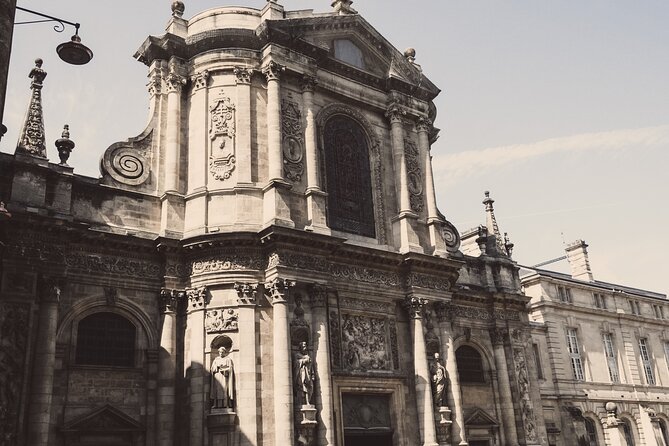
The tour begins at Cathédrale Saint-André de Bordeaux on Place Pey Berland. This Gothic cathedral is one of Bordeaux’s major landmarks and a UNESCO World Heritage site. Its connection to the wedding of Eleanor of Aquitaine and King Louis VII gives the building a direct link to European royal history.
Allow yourself a moment to look up at the façade and its carvings before the explanation begins. Inside, the soaring nave helps you understand the scale of medieval religious architecture, but entrance inside monuments is not included in the tour. The cathedral stop lasts about 15 minutes, so this is an introduction rather than a full church visit.
Tour Pey-Berland is listed as a separate stop, also for about 15 minutes. The name refers to the bell tower beside the cathedral, and the stop adds another part of the cathedral quarter to your first look at Bordeaux.
The route then moves toward Rue Saint-Catherine. The street is presented as a major pedestrian spine, with roots reaching back to a Roman road and a later life as a shopping street. I like this change of scene: you move from sacred stone and medieval power into the everyday center of modern Bordeaux.
Rue du Loup and the English Chapter of Bordeaux
Rue du Loup provides a short lesson in the Middle Ages. You look at medieval architecture and hear how Bordeaux became English. That political change is important because it shaped the city’s links with trade, wine, and the wider kingdom of England.
This is one of the places where a private guide can add real value. The buildings may not have the instant fame of the cathedral, but a good explanation helps you read the street as part of an older city. The stop lasts around 10 minutes, so expect a concise account rather than a long architectural survey.
The tour’s historical range is one of its strongest features. You are not given only the polished Bordeaux of grand avenues and elegant squares. You also get the medieval city and the political decisions that helped make Bordeaux an important port.
Rue Saint-Catherine and Place du Palais
The route includes both the Rue Saint-Catherine area and Promenade Sainte-Catherine. The descriptions overlap, so you should think of this portion as a walk through Bordeaux’s central pedestrian and shopping district rather than two completely separate historical chapters.
Rue Saint-Catherine is useful for seeing how old routes adapt to modern city life. Its Roman origins are paired with shops, cafés, and the movement of daily life. Promenade Sainte-Catherine adds a more recent commercial setting, giving you a contrast between old streets and contemporary urban use.
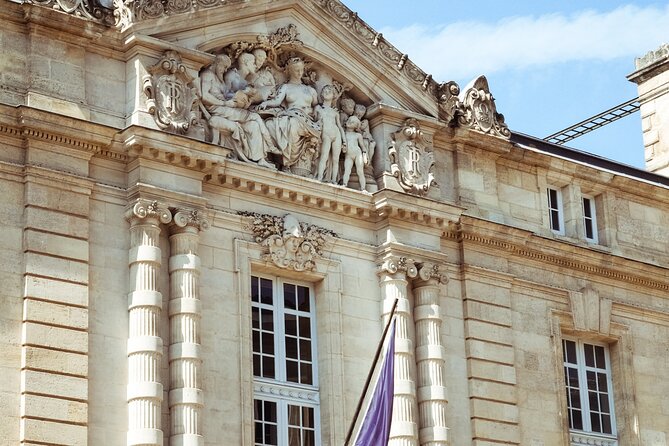
At Place du Palais, attention turns to the square’s design. You hear why it was created and how its architecture fits into the surrounding city. The stop is about 10 minutes, enough to take in the layout and ask a few questions.
I find squares especially helpful on a guided walk because their purpose is not always obvious at street level. A guide can point out how a space frames a gateway, directs traffic, or creates a formal approach to an important building.
More history-led days in Bordeaux:
- Bordeaux’ Best Boulangeries & History Tour
★ 5.0 · 126 reviews - Bordeaux Historic and Gourmet Food Walking Tour
★ 4.5 · 82 reviews - Historical Center, Bordeaux Food Tour
★ 5.0 · 33 reviews - Paris: Louvre Museum Entry with History of Mona Lisa
★ 3.9 · 2,823 reviews
Porte Cailhau, a Medieval Gateway to the Riverfront
Porte Cailhau is one of the tour’s most memorable stops. This 15th-century gateway once served as a main entrance to Bordeaux and was built to honor King Charles VIII’s victory at Fornovo.
Look closely at the mix of Gothic and Renaissance details. The gateway was practical, but it was also a public statement about royal power, city defense, and Bordeaux’s connection to regional prosperity. Its narrow vertical form makes a strong contrast with the broad squares visited later.
The stop lasts about 15 minutes. That gives you time to examine the façade and hear how the gate worked as both a defensive structure and a ceremonial entrance. The tour does not include admission inside monuments, so the value here comes from the exterior details and the guide’s explanation.
From Porte Cailhau, the walk leads toward Place de la Bourse. This is a natural shift from the medieval city to the grand riverfront created during Bordeaux’s later expansion.
Place de la Bourse and the Miroir d’Eau
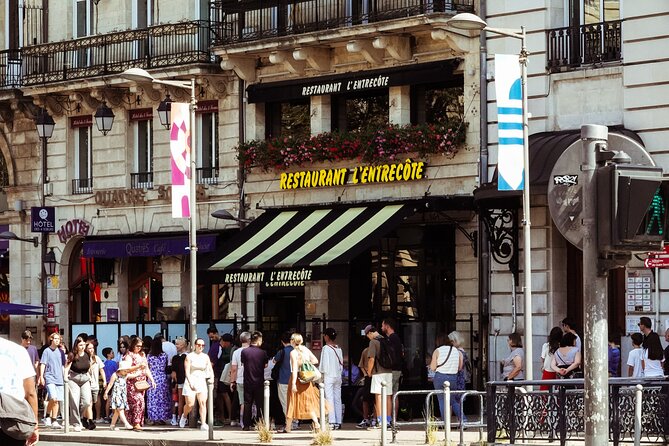
Place de la Bourse is one of Bordeaux’s defining views. Its formal architecture faces the river, and the nearby Miroir d’Eau creates the familiar reflection effect that has become one of the city’s most photographed scenes.
The scheduled stop here is short, about five minutes, so keep your expectations realistic. You will hear the main story and get your bearings, but you may want to return on your own for photographs or a slower look.
The square works well in the tour because it shows a different idea of Bordeaux. Porte Cailhau feels like a gate from a fortified medieval town. Place de la Bourse presents an orderly, outward-looking city tied to commerce and the river.
The route also identifies other major Bordeaux sights, including the Basilica of Saint-Michel and Pont de Pierre. They are part of the broader city picture introduced by the walk, but the listed stop times are concentrated on the central route. Ask your guide how much attention these places will receive on your departure date if they are priorities for you.
Grand Théâtre and the Formal Heart of the City
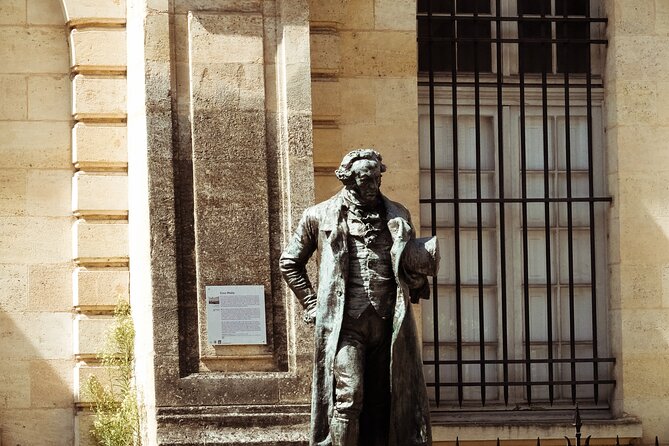
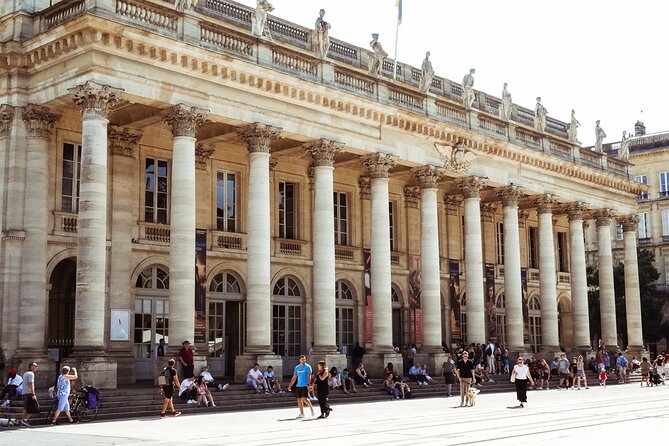
The Grand Théâtre of Bordeaux dates from 1780 and was designed by Victor Louis. Its neoclassical façade, columns, and statues of the nine muses and goddesses make it one of the city’s most impressive exterior views.
The tour gives you the story of the theatre’s role in Bordeaux’s cultural life. You may also hear about its grand staircase and chandelier, but entrance inside is not included. The scheduled five-minute stop is best treated as an architectural pause and photo opportunity.
A short stop can still be worthwhile here because the exterior carries so much visual information. The symmetry, columns, and sculpture program were designed to project order and prestige. Your guide can help you notice details that are easy to miss while passing through the square.
This is another point where the private format helps. If you care more about architecture than shopping, you can ask for extra context. If the theatre is simply one part of a first look at Bordeaux, the short visit keeps the overall route moving.
Place Gambetta, Passage Sarget, and Place du Chapelet
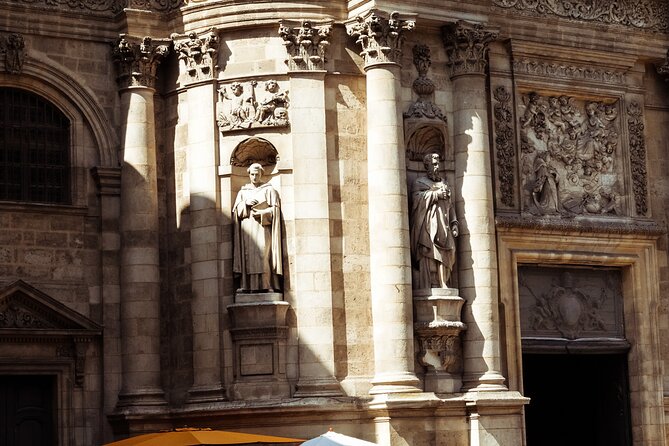
Place Gambetta offers a quieter change of mood. The square was once connected with the city’s western gate and later became part of Bordeaux’s urban changes in the 18th century. Its gardens and surrounding buildings show a more composed side of the city.
The stop lasts about five minutes. It is not long enough for a detailed political history, but the guide can connect the square with Bordeaux’s role during the French Revolution and its later development.
Passage Sarget adds a different kind of architecture. Built in the late 19th century, this covered passage links Rue de la Porte-Dijeaux with Place des Grands-Hommes. Its glass roof, ironwork, and stone details reflect the style of Parisian arcades and the Belle Époque.
I like this stop because it gets you away from the standard postcard views. The passage once catered to luxury shops and intellectual gatherings, and it still offers a look at how covered commercial spaces shaped city life. You have about 10 minutes here, enough to walk through and notice the details.
At Place du Chapelet, the focus turns to the Church of Notre-Dame. Built in the 17th century, the church is known for its organ and for its connection to the funeral of a famous 19th-century painter.
The stop takes about 10 minutes. You can expect a compact account of the church’s architecture and cultural role. Again, the tour does not include interior admissions, so check separately if you want to attend a performance or explore the organ and church in more detail.
Allées de Tourny and the Girondins Monument
Allées de Tourny is a broad, tree-lined avenue with a classical design. The guide explains the figure behind its layout and that person’s influence on urban planning in Bordeaux and Paris.
This short, five-minute stop helps explain why central Bordeaux often feels so formal and spacious. It is a useful bridge between the older lanes and the large civic spaces near Place des Quinconces.
The final major landmark is the Monument aux Girondins. Located in Place des Quinconces, the monument honors Girondin deputies who died during the French Revolution. Its sculptures refer to liberty, the Republic, and Bordeaux’s maritime identity.
The monument is visually dramatic, but its meaning rewards explanation. Without context, it can look like a tall column with elaborate sculpture. With a guide, you can connect the figures and symbols to the city’s political memory.
The tour ends at Place des Quinconces. This makes practical sense if you want to continue toward other central sights, cafés, or public transport, though the exact onward plan is yours.
What the Private Guide Adds
The strongest feature is not simply the number of landmarks. It is the chance to shape the conversation. The guide can explain why Bordeaux became English, how the city changed under ambitious urban planning, or how wine fits into its identity.
Victor receives especially strong praise for his city knowledge, historical explanations, and ability to follow a group’s particular interests. One account also notes that he explained Bordeaux’s wine origins, the city’s long period under British rule, and the work of a mayor who helped make Bordeaux easier to walk and cycle through, with less car traffic.
Emma is praised for giving a thorough and friendly tour. That matters because a history walk can become a list of dates if the guide does not keep it connected to the streets around you. The comments about both guides point to the same useful quality: clear explanations delivered in a personable way.
The private setup also helps with timing. A group that wants more architecture can ask for it. A group with children, limited time, or a strong interest in wine can signal that early. The tour is still only about two hours, but your questions do not have to compete with a large group.
The Bordeaux Wine Finish
A glass of Bordeaux wine at a partner bar is included after the walking portion. This is a modest extra, but it gives the tour a pleasant local ending and ties the city’s monuments to its best-known product.
The information provided does not specify the exact wine, bar, or tasting format. You should therefore expect one glass rather than a formal winery visit or a technical tasting lesson.
I see this as a social finish, not the main reason to book. The history walk provides the substance. The wine gives you time to pause, ask a final question, and receive the company’s top recommendations for what to do next in Bordeaux.
Is $90.36 Per Person Good Value?
At $90.36 per person, the price is not the cheapest way to see Bordeaux’s center. You are paying for a private English-speaking guide, a route tailored to your group, and a glass of wine, not for monument admissions.
The value improves if you are traveling with several people who want a private experience. A private tour lets you set the level of detail and avoid the stop-and-start feel of a large group. It is also useful on a first visit when you want an organized overview without spending half a day.
The value is weaker if your main goal is to enter buildings. Admissions are not included, and the short stop times mean the tour focuses on exteriors and explanations. You may need to return independently to the cathedral, Grand Théâtre, or other sites for a fuller visit.
I would book it for a couple, family, or small group that values conversation and orientation. Solo visitors should compare the cost carefully, since the per-person price is fixed at $90.36.
Timing, Walking, and Practical Details
The experience lasts approximately two hours. It is a walking route through central Bordeaux, beginning at Saint-André Cathedral and ending at Place des Quinconces.
You should wear comfortable shoes. The route includes pedestrian streets, historic lanes, squares, and broad avenues, with frequent stops rather than one long stretch of walking.
The meeting point is Cathédrale Saint-André de Bordeaux, Place Pey Berland, 33000 Bordeaux. The end point is Place des Quinconces. Both locations are in central Bordeaux and near public transportation.
Confirmation is provided when you book. Service animals are allowed, and most people can take part. Since traffic and parking can cause delays, give yourself extra time to reach the cathedral. One group arrived a few minutes late because of traffic and parking, and the guide was accommodating.
Free cancellation is available until 24 hours before the start time for a full refund. Cancellations or changes made less than 24 hours before the start time are not accepted for a refund.
Who Should Book This Bordeaux Tour?
Book this tour if you want a private first look at Bordeaux with a strong history focus. It suits people who like to ask questions, see many landmarks in one outing, and finish with a glass of local wine.
It is also a good fit if you are short on time. The route covers the cathedral quarter, medieval streets, riverfront architecture, neoclassical monuments, covered passages, and Place des Quinconces without requiring a full day.
I would choose another option if you want a slow photographic walk, extensive time inside churches and theatres, or a dedicated wine tasting. The schedule is full, and several stops last only five or ten minutes.
Should You Book It?
I would book this experience for a private introduction to Bordeaux, especially near the beginning of your stay. The guides’ personal approach, the broad range of landmarks, and the wine finish make it more useful than simply following a map between monuments.
Go in expecting an informed overview, not a series of interior tours. If you accept the quick pace and plan to revisit your favorite sites, the $90.36 price can be fair for a private English-language walk that helps the city’s streets make sense.
FAQ
How long does the Bordeaux history tour last?
The tour lasts approximately two hours.
What language is the tour offered in?
The tour is offered in English with an English-speaking guide.
Is this a private tour?
Yes. Only your group participates in the private activity.
Where does the tour begin?
The tour begins at Cathédrale Saint-André de Bordeaux, Place Pey Berland, 33000 Bordeaux, France.
Where does the tour end?
The tour ends at Place des Quinconces in Bordeaux.
Is a wine tasting included?
A glass of Bordeaux wine at a partner bar is included after the walking tour.
Are monument entrance tickets included?
No. Entrance inside the monuments is not included.
Are gratuities included?
No. Gratuities for the guide are not included.
Can most people participate?
Yes. Most people can participate, and service animals are allowed.
What is the cancellation policy?
You can cancel at least 24 hours before the experience start time for a full refund. Cancellations or changes made less than 24 hours before the start time are not accepted for a refund.
Recently added in Bordeaux
- Discover Braastad Cognac★ 5.0 · 52 reviews
- Au Cœur du Château – VSOP D’USSÉ & XO BARON OTARD★ 4.5 · 108 reviews
- retro road trip/ Méhari, 2CV & Burton in Rochefort, La Rochelle★ 5.0 · 28 reviews
- Saint-Emilion Food and Wine Day Tour★ 5.0 · 323 reviews
- Saint Emilion Full Day Wine and Bike Tour★ 5.0 · 167 reviews
- Bordeaux bike tour “The Best of Bordeaux”★ 5.0 · 164 reviews
- Virtual Room Bordeaux – 1st team virtual reality experience★ 5.0 · 47 reviews
- Luxurious full day Bordeaux wine tour in a Tesla★ 4.5 · 31 reviews
Historical Tours, compared.
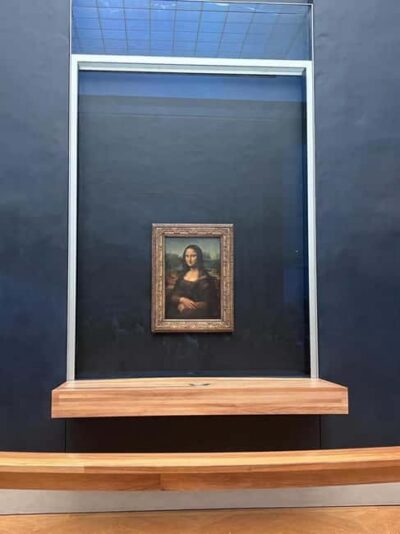
Louvre Museum Entry with History of Mona Lisa
Read our review →

Vieux Lyon Cultural & Historical Walking Guided Tour (English)
Read our review →
Toulouse Food & History Tour with a Chef (in English)
Read our review →
Small-Group Full-Day Tour of Côte de Nuits, Côte de Beaune Vineyards and Beaune Historical District
Read our review →
Browse the lists this tour appears in