
REVIEW · WINE TOURS
Alsace: Full-Day Wine Tour & Tastings from Strasbourg
Wine country begins beyond Strasbourg. This full-day outing pairs three winery tastings with Alsace’s prettiest villages, giving you a broad look at local wine without the trouble of driving. I especially like the small group, capped at eight, and the guides who bring real local knowledge, from Jerome’s sommelier skills to Laurence’s family connection to the region. The main drawback is price: at $253 per person, it is not cheap for three winery stops, and lunch costs extra.
The day covers a lot of ground, but it does not feel like a race. You taste Pinot Blanc, Sylvaner, Riesling, Pinot Gris, Muscat, and Gewürztraminer, then have time to walk through Ribeauvillé or Riquewihr. Bring a proper breakfast, since Alsace tastings often come without snacks, and wear shoes suited to old cobbled streets.
In This Review
- Key points to know before booking
- Why this Alsace wine day works so well
- Mittelbergheim and the first Rieslings
- Dambach-la-Ville and the Frankstein Grand Cru
- Lunch and free time in a medieval village
- Ribeauvillé and Riquewihr wine country
- What the small group adds
- Is $253 a fair price?
- Practical details that affect your day
- Who should book this Alsace wine tour?
- Should you book it?
- FAQ
- Where does the tour start and finish?
- How long does the tour last?
- How many wineries will I visit?
- Is lunch included?
- Is the tour suitable for children?
- What should I bring?
Key points to know before booking
- Three distinct winery visits: You taste in Mittelbergheim, Dambach-la-Ville, and the Ribeauvillé or Riquewihr area.
- A maximum of eight people: The small van and intimate group make questions and conversation easier.
- Riesling country: The route includes several Grand Cru areas where Riesling is the leading grape.
- Medieval villages are part of the day: You get free time for a walk and lunch, not just cellar visits.
- English-only operation: The guide provides live commentary throughout the drive and stops.
- Plan for a full day outdoors: The tour runs for eight hours, rain or shine, and is not suitable for wheelchair users.
Why this Alsace wine day works so well
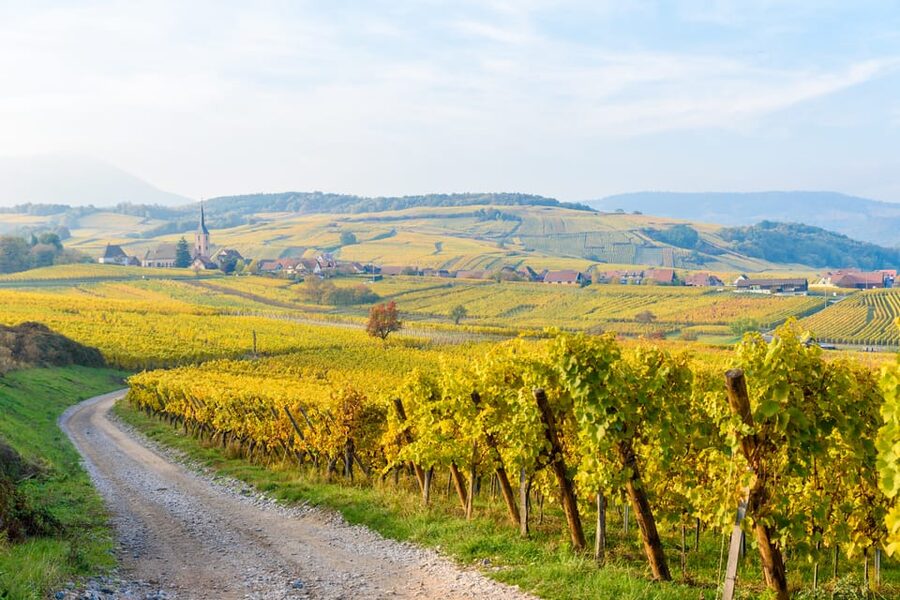
Alsace is a good place for a guided wine outing because the vineyards and villages are spread along the foothills west of Strasbourg. The drive matters. You get from the cathedral square into the wine country without arranging a rental car, finding parking, or worrying about who will stay sober.
The meeting point is 17 Place de la Cathédrale, a handy central location in Strasbourg. From there, you spend about an hour in the van before reaching the first wine area. The vehicle is described as comfortable and fully equipped, and the small group limit makes the ride more personal than a large coach excursion.
I like the way this tour joins wine with place. You are not simply sampling bottles in one tasting room. You move through several growing areas, see village architecture, and hear how the soils, grapes, and families differ from one part of Alsace to another.
The strongest part of the day is usually the guide. Jerome is repeatedly praised for his wine and regional knowledge, while Pauline, Laurence, Florence, Maxime, Camille, and others have each been singled out for warmth, clear English, and good pacing. Your guide will vary, but the pattern is clear: this is a guide-led experience rather than a simple transport package.
More Wine Tours in Strasbourg
- From Strasbourg: Medieval Villages & Wine Tasting Day Trip
★ 4.8 · 329 reviews - Alsace Wine Route Wineries & Tasting Small Group Guided Tour from Strasbourg
★ 5.0 · 229 reviews - Colmar: Highlights Walking Tour and Wine Tasting
★ 4.9 · 209 reviews
Mittelbergheim and the first Rieslings
The first stop is the Mittelbergheim wine-producing region, about an hour from Strasbourg. This area is home to the Zotzenberg, Kastelberg, and Wiebelsberg Grand Crus. The soils are especially suited to Riesling, so this is a useful place to begin if you want to understand why the grape is so important in Alsace.
The first tasting lasts about an hour and includes Pinot Blanc, Sylvaner, and Riesling. That lineup gives you a better introduction than tasting only the region’s most famous grape. Pinot Blanc is often softer and easygoing, Sylvaner can be dry and fresh, and Riesling usually brings more acidity and structure.
The exact bottles and number of pours can change. Past outings have included roughly 10 to 16 wines at some stops, with the full day sometimes reaching 20 or more samples. Do not treat those figures as a promise, though. The value lies less in chasing a high number of tastes and more in comparing styles from different producers.
At some visits, you may meet the people who make the wine or even taste with winery owners. That personal contact was one of the most memorable features for many people on earlier departures. It turns a technical tasting into a conversation about farming, production, family, and the local market.
You should pace yourself here. Three tastings over a long day can add up quickly, especially if you are not used to dry European wines served without food. France often keeps snacks out of the tasting room so food does not affect the wine’s flavor. Eat breakfast before departure and keep water with you.
Dambach-la-Ville and the Frankstein Grand Cru
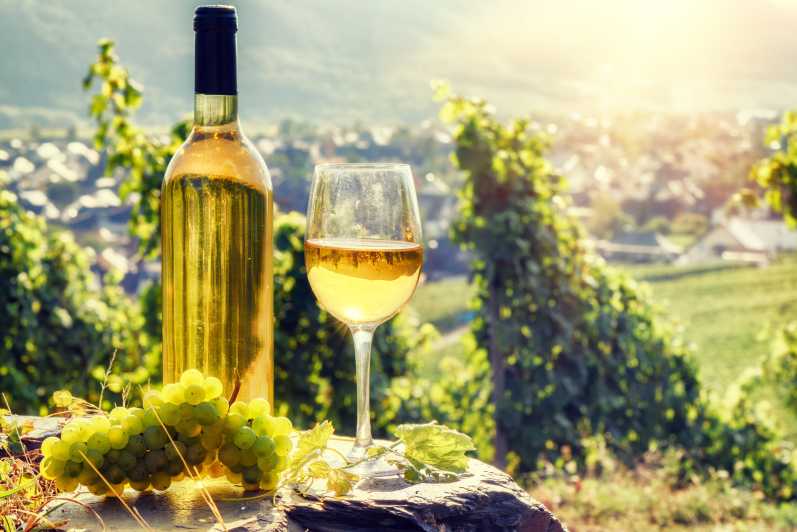
After the first tasting, the van travels about 15 minutes to the Dambach-la-Ville wine area. The village sits in the heart of the Alsace wine region and is associated with the Frankstein Grand Cru.
This second tasting lasts about 45 minutes. The shorter stop keeps the day moving, but it also means you should listen closely and ask questions while you have the chance. The best use of this visit is comparison. Notice how the wines differ from those in Mittelbergheim, even though both are part of the same broad Alsace wine route.
The tour does not promise one famous producer or one fixed estate. That is worth understanding before you book. The wineries are selected as typical local producers, which can be more revealing than visiting only the best-known names, but it also means the experience may feel less polished or prestigious than a luxury wine itinerary.
The tradeoff is authenticity. You may get a direct look at a smaller family operation and find bottles that are hard to spot outside the region. If buying wine appeals to you, bring enough luggage space and check how you will carry bottles home. Earlier outings gave people the chance to buy directly from the makers at winery prices, though purchases are optional and not included.
Lunch and free time in a medieval village
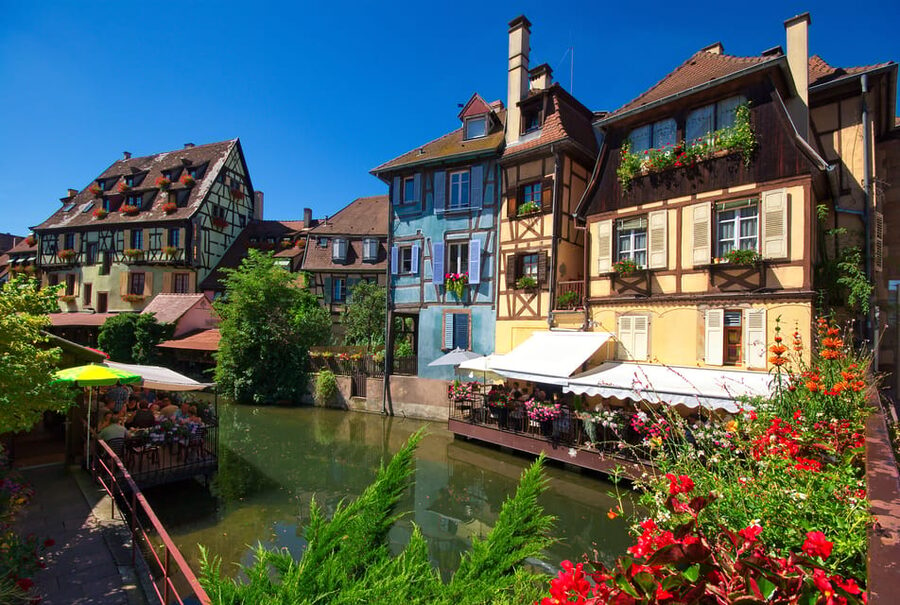
After the morning tastings, you get free time for lunch and a walk in a traditional village. The schedule allows about an hour for this break, followed by a 20-minute drive toward the final wine area.
An hour is enough for a focused meal and a quick look around, but it is not generous. One useful bit of advice is to decide on lunch promptly rather than spending half the break choosing a restaurant. The meal is not included, and the guide can offer recommendations.
Ribeauvillé has been a popular lunch choice on some departures. One earlier group ate at Au Passage de la Tour, an Alsatian-themed restaurant in the village, and found it a good fit for the stop. That is a suggestion, not a fixed part of the tour, so restaurant arrangements can differ.
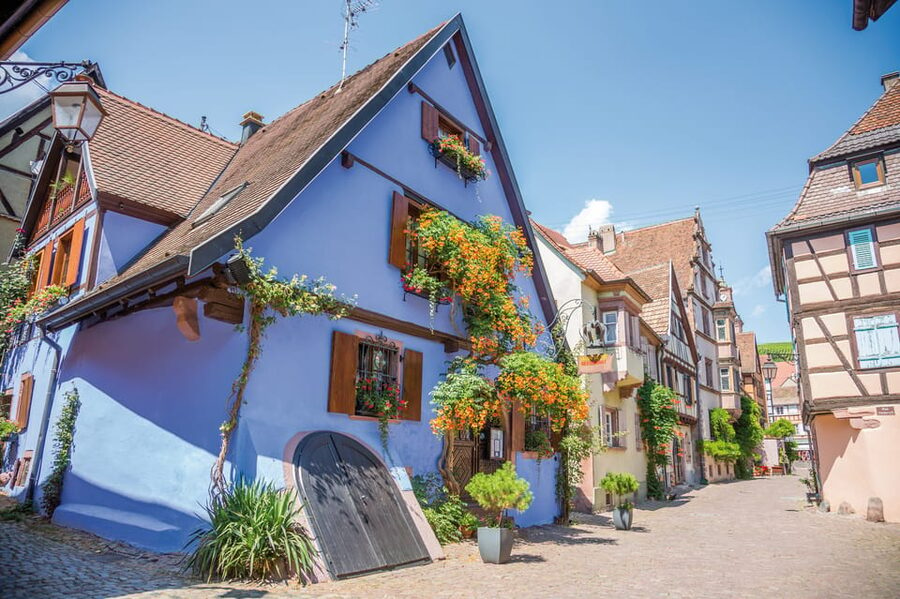
The village walk is important because it breaks up the tastings. You can stretch your legs, take in the old streets, and see the region as more than a collection of vineyards. Just remember that medieval centers often use uneven paving, which is one reason comfortable walking shoes are listed as essential.
The schedule may feature Ribeauvillé, Riquewihr, or another traditional village depending on the day’s arrangements. Riquewihr is especially appealing if you want a compact old-town stroll, while Ribeauvillé gives you another strong view of Alsace village life. You should not expect a long guided sightseeing tour of monuments. Entrance fees to museums, attractions, and monuments are not included.
More Strasbourg wine tastings:
- Alsace Half Day Wine Tour from Colmar
★ 4.5 · 119 reviews - Alsatian Guided Wine Tasting and Immersive wine cellar tour
★ 4.7 · 110 reviews - Alsace Full Day Wine Tour from Colmar
★ 5.0 · 104 reviews - From Colmar: Alsace Medieval and Wine Tasting Day Tour
★ 4.7 · 91 reviews
Ribeauvillé and Riquewihr wine country
The afternoon takes you into the Ribeauvillé and Riquewihr wine area. Five Grand Cru appellations are associated with this zone: Geisberg, Kirchberg, Osterberg, Schoenenbourg, and Sporen.
Here Riesling is the leading grape, but the range broadens with Pinot Gris, Muscat, and Gewürztraminer. This is one of the day’s most useful lessons. Alsace is often reduced to Riesling, yet its wines can be aromatic, dry, full-bodied, floral, spicy, or lightly sweet depending on grape and producer.
Two afternoon tastings complete the wine program. The supplied timing lists one tasting of about 45 minutes, with the overall route including two afternoon sessions. In practical terms, you should expect the final part of the day to focus heavily on tasting, discussion, and comparison rather than long sightseeing stops.
The area also connects to famous Alsace wine families. The Trimbach family has made wine since 1626, while the Hugel family began in 1639. The tour does not promise visits to either house, and you should not book expecting a specific famous label. Still, knowing these names helps you understand the depth of the local wine tradition.
This section may be especially rewarding if you already know what you like. Tell your guide if you prefer crisp Riesling, aromatic Gewürztraminer, lighter whites, or fuller Pinot Gris. Guides such as Laurence have been praised for paying attention to individual tastes, which can make the tasting feel less like a fixed script.
What the small group adds
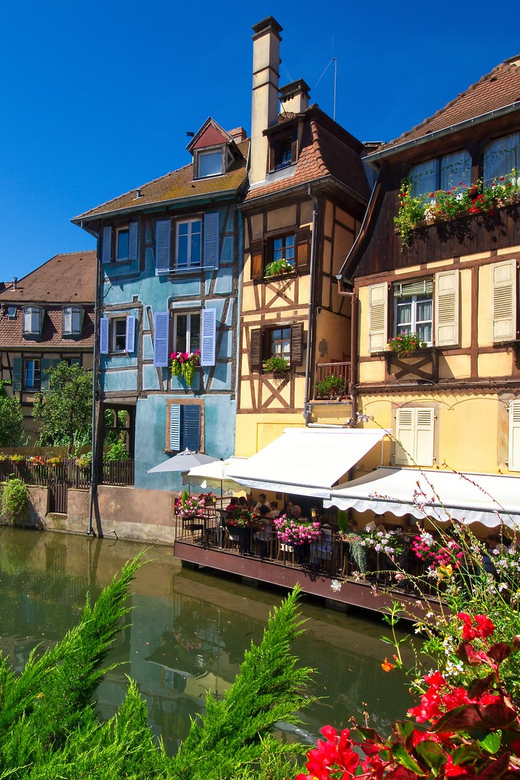
The tour takes no more than eight participants. That limit is a major reason to consider it instead of a large bus outing.
With eight people or fewer, you can usually ask more questions without holding up a crowd. You also have a better chance of speaking directly with the guide and winery hosts. Several guides have been praised for keeping the day friendly and well paced, while helping with explanations when language creates confusion at a tasting.
The van format has one small weakness. A previous participant found that a larger vehicle with taller windows would have made it easier to see sights from the middle seats. If the scenery matters greatly to you, your seat can affect the view, though the route itself includes plenty of attractive villages and vineyard scenery.
The guide is also the person managing the clock. That matters because the day contains three tastings, several drives, lunch, and village time. Jerome, Maxime, Pauline, and Laurence have all been praised for staying organized without making the day feel hurried.
Is $253 a fair price?
At $253, this is a premium day trip. The cost includes transportation in a comfortable mini-van, an English-speaking driver-guide, and tastings at three typical wineries. It does not include lunch, monument or museum admission, insurance, or personal spending.
The value depends on how you would otherwise reach the wine route. A rental car adds driving responsibility, parking concerns, and the obvious problem of wine tasting behind the wheel. Public transport can reach some Alsace villages, but it does not give you the same access to several winery visits in one day.
I would consider the price reasonable for a visitor who wants convenience, a small group, and instruction along the way. It is less convincing for someone who only wants to taste a few wines or who plans to visit one cellar independently.
The honest criticism is simple: three winery stops may feel light for the price. One person specifically felt the cost was high for only three visits. The counterpoint is that each stop can include many wines, and earlier days sometimes reached 12, 15, or even 20-plus samples overall. You are paying for the full regional route, the guide, and the transport as much as for the wine itself.
Practical details that affect your day
The tour lasts eight hours and operates in all weather. Check the starting time when booking, since availability determines the departure schedule.
You need a passport or ID card. The minimum age is 18, both for joining the adults-only tour and for drinking alcohol. Pets are not allowed, and the tour is not suitable for wheelchair users.
Comfortable shoes are a must. You may walk through old villages, stand during tastings, and deal with uneven streets. Pack a jacket or rain layer because the tour runs rain or shine.
The tour operates in English only. That works well if you want explanations about grapes, villages, and wine production without translating as you go. If you need another language, this is not the right choice.
The activity requires at least two adult passengers. If that minimum is not reached, the tour can be cancelled with a refund. You can also cancel up to 24 hours in advance for a full refund, and the reserve-now, pay-later option gives you some flexibility while plans are still changing.
Who should book this Alsace wine tour?
I would recommend it to first-time visitors based in Strasbourg who want a full day outside the city without renting a car. It suits couples, solo participants, and small groups who enjoy talking with a guide and comparing several local wines.
It is also a good fit if you care about the story behind the bottle. The best moments may come from meeting a grower, hearing about a family winery, or understanding why Riesling performs well in one Grand Cru area.
You may want another option if you dislike organized schedules, need a long leisurely lunch, or want guaranteed access to a particular producer. The tour covers a lot, and the lunch break is only about an hour. Wine collectors seeking prestigious estates should also check exactly which wineries are scheduled before paying.
Should you book it?
Book this tour if you want a well-organized regional overview with plenty of tastings, attractive villages, and an English-speaking guide who can connect wine to local culture. The small group and repeated praise for guides such as Jerome, Pauline, Laurence, and Florence are strong reasons to choose it.
Skip it if $253 feels too high for three winery visits, or if you would rather spend a whole afternoon at one estate. For most people staying in Strasbourg, though, this is an efficient and enjoyable way to reach Mittelbergheim, Dambach-la-Ville, Ribeauvillé, and Riquewihr in one day. Eat first, pace yourself, and leave room for a few bottles in your suitcase.
FAQ
Where does the tour start and finish?
The tour starts at 17 Place de la Cathédrale in Strasbourg and returns to the same location. During the Christmas period, the return point is just outside the Grande-Île district, with the exact address arranged with the guide.
How long does the tour last?
The experience lasts eight hours, including driving, three winery visits, village time, lunch time, and the return to Strasbourg.
How many wineries will I visit?
You will visit three typical local wineries. The route includes tastings in Mittelbergheim, Dambach-la-Ville, and the Ribeauvillé or Riquewihr wine area.
Is lunch included?
No. Lunch is not included, and you receive free time to choose and pay for your own meal. A good breakfast is recommended because snacks are usually not served during the tastings.
Is the tour suitable for children?
No. This is an adults-only tour, and participants must be at least 18 years old to join and drink alcohol.
What should I bring?
Bring a passport or ID card and comfortable walking shoes. The tour operates rain or shine, so suitable clothing for the weather is also sensible.
More Full-Day Plans in Strasbourg
- Strasbourg: Full-Day Small Group Tour to Colmar & Riquewihr
★ 4.3 · 121 reviews - France, Germany and Switzerland Full Day Tour from Colmar
★ 4.5 · 107 reviews - Normandy American D-Day Beaches Full Day Tour from Bayeux
★ 5.0 · 2,103 reviews - Paris: Parc Astérix Full-Day Entrance Ticket
★ 4.4 · 1,697 reviews
Recently added in Strasbourg
- Alsace villages half day tour from Colmar★ 5.0 · 186 reviews
- Alsace’s Gems Small Group Day Tour from Colmar★ 5.0 · 84 reviews
- Segway Tours 2h in Colmar★ 5.0 · 116 reviews
- The Emblematic: visit of villages, Haut-Koenigsbourg, Wine tasting★ 5.0 · 81 reviews
- Self-Guided and Interactive City Tour – Colmar★ 4.5 · 45 reviews
- Through Alsace Vineyards and Wine Villages Private Bike Tour★ 5.0 · 47 reviews
- Private and customizable: Alsace Wine Route HIGHLIGHTS in 3 hours★ 5.0 · 63 reviews
- Alsace 4 Wonders Small-Group Day Trip from Colmar★ 5.0 · 380 reviews
Wine Tours, compared.
Montmartre Hill French Gourmet Food and Wine Tasting Walking Tour
Read our review →
Loire Valley Castles Day Trip With Wine Tasting
Read our review →
Afternoon Saint-Emilion Wine Tasting & snack
Read our review →
Medoc or Saint Emilion Wine Tasting and Chateau from Bordeaux
Read our review →
Saint Emilion Day Trip with Sightseeing Tour & Wine Tastings from Bordeaux
Read our review →
Saint-Émilion: Grand Cru Classé Winery Visit and Tasting
Read our review →
Saint Emilion Half-Day Trip with Wine Tasting & Winery Visit from Bordeaux
Read our review →Browse the lists this tour appears in