
REVIEW · WINE TOURS
Alsace Wine Route Wineries & Tasting Small Group Guided Tour from Strasbourg
Beautiful villages, serious wine. This full-day outing pairs the Alsace Wine Route with three winery visits, generous tastings, and stops in storybook villages at the foot of the Vosges Mountains. I like the small group size, capped at eight people, and the chance to compare family-run cellars with more established producers. Guides such as Pauline, Laurence, Jerome, Amelie, Florence, and Maxim have earned especially warm praise for their wine knowledge, local stories, and thoughtful recommendations.
I also like that you do not have to drive after sampling Riesling, Gewürztraminer, Pinot Gris, Sylvaner, and other Alsatian wines. The main caution is that the exact village and winery choices can shift, particularly during the Christmas season, when road closures and crowds may make Riquewihr difficult to reach. At $260.12 per person, this is not a bargain-basement wine outing, so your enjoyment depends on valuing convenience, guiding, and access to several producers in one day.
In This Review
- Key points to know before booking
- Why this Alsace day trip works
- Mittelbergheim and the first taste of Alsace
- Dambach-la-Ville and the old caveau experience
- Lunch in a village, with one important warning
- Ribeauvillé, Riquewihr, and the northern vineyards
- The final two tastings and Alsace wine families
- The guides make or break the day
- Is $260.12 a fair price?
- Who should book this tour?
- Booking details worth remembering
- Should you book it?
- FAQ
- Where does the tour begin?
- Where does the tour end?
- How long does the tour last?
- How many people can join the tour?
- What transportation is provided?
- Are wine tastings included?
- Is lunch included?
- Is hotel pickup included?
- Are children allowed?
- Is the tour available every day of the year?
Key points to know before booking
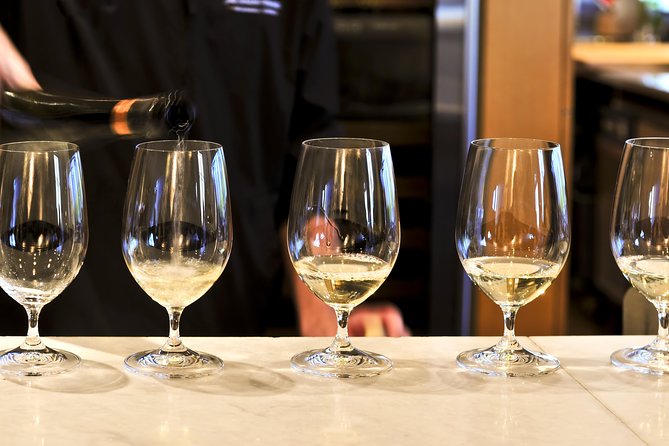
- Three winery tastings in one day: Sample Alsace’s best-known white grapes, with tastings held at three different producers.
- A maximum of eight people: The minivan setting allows for a more personal day than a large coach tour.
- Mittelbergheim starts the wine education: Riesling, Sylvaner, and Pinot Blanc take center stage near three Grand Cru vineyards.
- Dambach-la-Ville adds cellar character: You may taste in a traditional caveau while learning about soil, climate, and grape varieties.
- Village stops are part of the appeal: Ribeauvillé, Riquewihr, Dambach-la-Ville, Mittelbergheim, or another nearby village may feature, depending on the day.
- Lunch is on your own: Bring a good breakfast, and listen carefully to your guide’s restaurant advice.
Why this Alsace day trip works
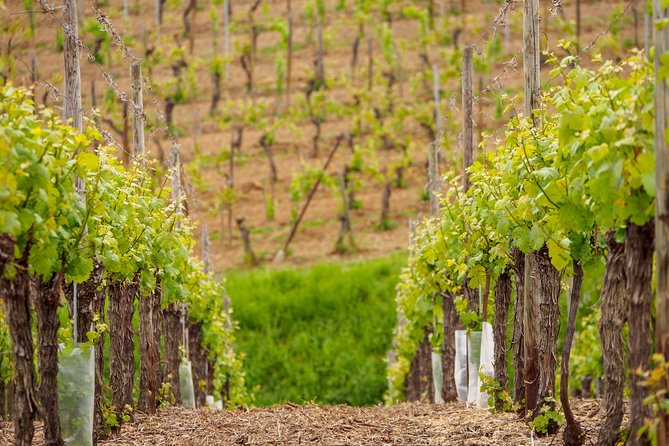
Alsace is one of France’s easiest wine regions to visit without a car. The vineyards run for about 105 miles, or 170 kilometers, along the lower slopes of the Vosges Mountains. From Strasbourg, a guided minivan trip lets you see a useful slice of this route in one day without worrying about directions, parking, or driving after tastings.
The tour begins at 9:00 a.m. outside the tourist information office at 17 Place de la Cathédrale in central Strasbourg. That location is convenient if you are staying near the Grande-Île, but you need to reach the meeting point yourself. Hotel pickup and drop-off are not included.
The air-conditioned minivan is more than a transport detail. It keeps the group together and gives your guide time to explain the area between stops. With only eight places, you can ask about a particular grape, winery, village, or bottle without trying to speak over a busload of people.
The day lasts about eight hours and ends back at the meeting point. Three tastings are included, but lunch and other food are not. French wine tastings often come without bread, cheese, or snacks, so eat properly before leaving Strasbourg. Wine on an empty stomach is a poor travel companion.
More Food Tours in Strasbourg
- Strasbourg Food Tour – A Taste of Tradition by Do Eat Better
★ 5.0 · 614 reviews - From Strasbourg: Medieval Villages & Wine Tasting Day Trip
★ 4.8 · 329 reviews - Alsace Wine Route Small Group Half-Day Tour with Tasting from Strasbourg
★ 4.5 · 291 reviews
Mittelbergheim and the first taste of Alsace
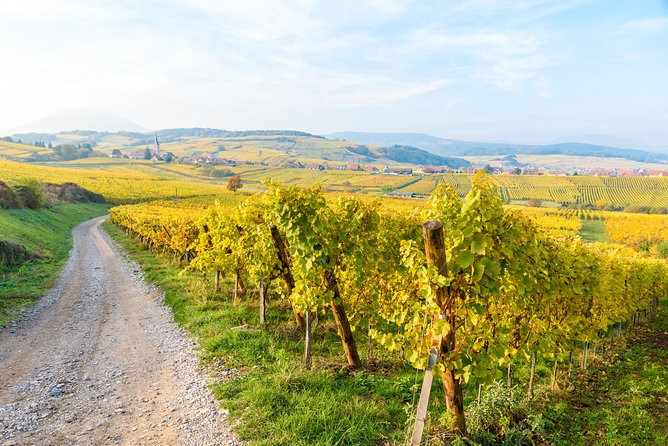
The first wine area is Mittelbergheim, a small village surrounded by vineyards and associated with three Grand Cru sites: Kastelberg, Zotzenberg, and Wiebelsberg. This is an excellent place to begin because the tasting introduces several grapes rather than focusing on only one style.
You can expect Riesling, Sylvaner, and Pinot Blanc at the first winery. Alsace Riesling can surprise visitors who know only the sweeter German versions of the grape. The local examples may be dry, crisp, and built for food, with the character of the site showing through.
Sylvaner is often less familiar to North American drinkers, which makes it a useful part of the tasting. Pinot Blanc gives you another point of comparison, generally softer and rounder than Riesling. Your guide can help connect the taste in your glass with the soil and exposure of the vineyards outside.
This first stop also sets the tone for the day. You are not simply being handed three glasses and sent on your way. The best guides explain how Alsace’s position between French and German cultural worlds has shaped its grapes, names, and wine traditions.
The quality of the first winery can vary by departure date, since the company uses different producers. That variety is part of the point, but it also means you should not book this expecting one famous estate from start to finish.
Dambach-la-Ville and the old caveau experience
The route continues to Dambach-la-Ville, described as Alsace’s biggest wine-producing village. Its vineyards include the Frankstein Grand Cru, one of the area’s most respected wine sites.
The second tasting is held in a classic wine cellar, or caveau. This may be the most atmospheric stop of the day. It is also the stop where expectations need a little adjustment. A caveau can mean an old, modest room rather than a polished tasting lounge.
One past itinerary included a tasting at Domaine Durrmann, a long-established local producer appreciated for its distinctive approach and wines. Experiences at smaller family wineries can feel direct and personal, with the producer’s own stories and working methods close at hand.
But a modest cellar may be cold or short on atmosphere, especially in the off season. One visit was described as taking place in a basement or garage-like room with little warmth. That does not automatically mean poor wine, but it can matter if you expect elegant interiors and a formal presentation.
The wines here usually include Riesling and Gewürztraminer. This is a good moment to compare the leaner, more mineral character of Riesling with the perfumed, spicy quality of Gewürztraminer. Your guide should also explain how local soil and weather affect ripeness and style.
The contrast between producers is useful. Some people want only grand estates, while others prefer meeting small growers who sell wine close to where it is made. This tour tries to show both sides, and the result can feel more like an introduction to the region than a luxury tasting circuit.
Lunch in a village, with one important warning
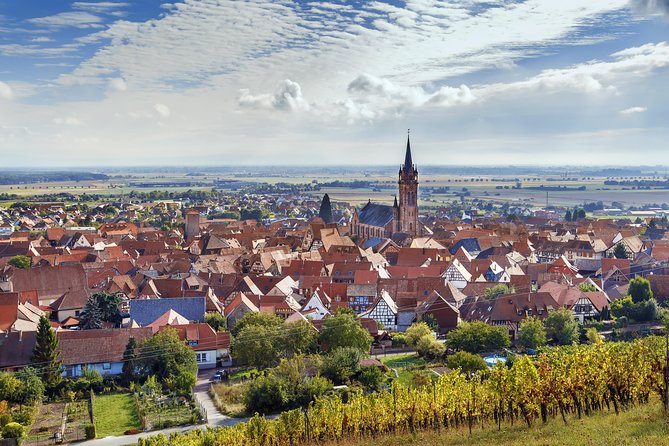
Around midday, you stop for lunch at your own expense. The stop is usually in a small Alsatian village, giving you time to eat and walk instead of rushing from one tasting to the next.
This is one of the pleasant parts of the schedule, but you should not assume every restaurant will be open. A past outing had few lunch choices available. Seasonal hours, quiet village schedules, and Christmas market road restrictions can all affect what is practical.
Ask your guide for a recommendation as soon as lunch plans are discussed. Amelie, for example, was praised for giving useful restaurant and food suggestions during a stop in Bergheim. Other guides have also been praised for adjusting advice to the group’s interests.
The tour does not include food or drinks beyond the wine tastings. If you prefer a particular lunch style, such as a long sit-down meal or a quick picnic, ask what time and village options are realistic. The schedule gives you a break, but it is not a food tour.
More Wine Tours in Strasbourg
- Colmar: Highlights Walking Tour and Wine Tasting
★ 4.9 · 209 reviews - Alsace: Full-Day Wine Tour & Tastings from Strasbourg
★ 4.8 · 125 reviews - Alsace Half Day Wine Tour from Colmar
★ 4.5 · 119 reviews - Alsatian Guided Wine Tasting and Immersive wine cellar tour
★ 4.7 · 110 reviews
Ribeauvillé, Riquewihr, and the northern vineyards
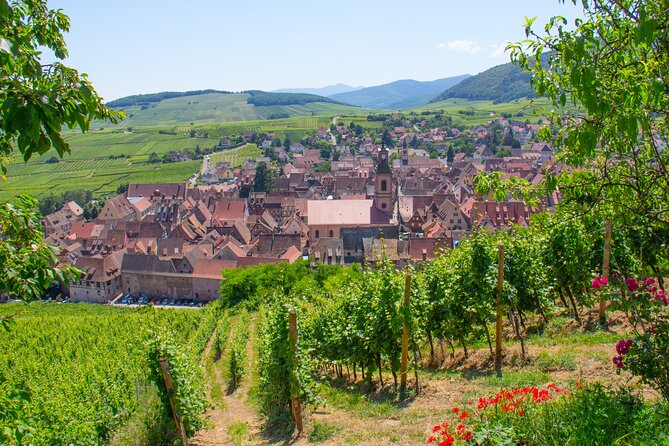
After lunch, the route turns toward the Ribeauvillé and Riquewihr wine area. Five Grand Cru sites are associated with this zone: Kirchberg, Osterberg, Geisberg, Schoenenbourg, and Sporen.
Riesling remains important here, but the tasting may also include Muscat, Gewürztraminer, and Pinot Gris. If you have already tasted Riesling and Gewürztraminer earlier in the day, this second look can show how the same grape changes from one producer or vineyard to another.
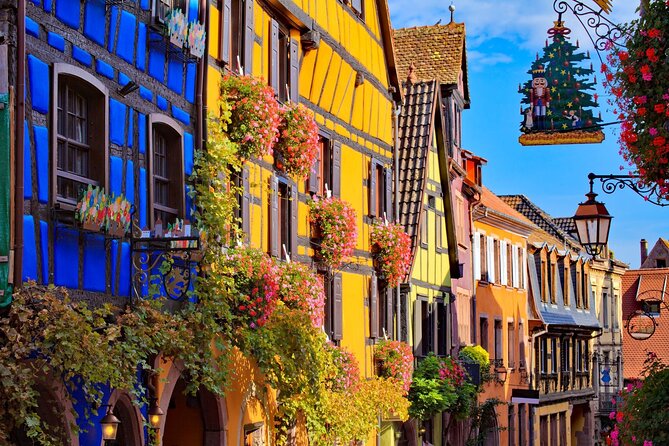
The villages are a major reason to book the tour. Ribeauvillé and Riquewihr have timber-framed buildings, narrow streets, and the compact scale that makes Alsace so enjoyable to explore on foot. Riquewihr is especially popular and has the fairytale look that inspired the village setting associated with Disney’s Beauty and the Beast.
Still, do not treat a visit to every named village as guaranteed. The itinerary may pass through Riquewihr without allowing a proper walk, and during the Christmas period road closures and market traffic can make access difficult. One winter departure did not include a visit inside Riquewihr, even though it was the village the customer most wanted to see.
If Riquewihr is your top priority, ask about the likely route before booking and consider visiting it separately. If your main goal is wine education with a few village walks, the flexible routing is less of a problem.
The final two tastings and Alsace wine families
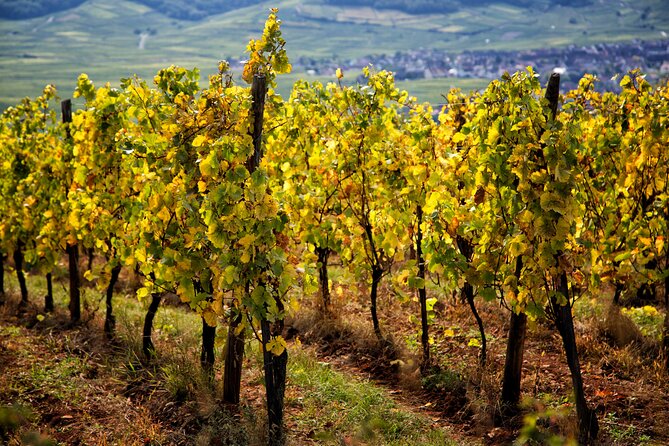
The final part of the day includes two tasting sessions at two different wineries in the Ribeauvillé and Riquewihr area. Across the day, that brings the total to three wineries.
You may hear about the Hugel and Trimbach families, names tied to Alsatian winemaking for hundreds of years. These stories give useful context to the bottles you taste. Alsace wine is not only about grape labels. Family ownership, cellar practice, Grand Cru sites, and the region’s borderland culture all help explain why the wines have such a distinct identity.
The tastings can be generous. Several people have praised the range of wines and the chance to sample Grand Cru bottles alongside everyday styles. One participant bought twelve bottles and arranged shipment home to the United States, though the tour information does not promise shipping assistance or include it in the price.
The last winery may be less consistent than the first two. One account described a final visit where the winemaker seemed tired or uninterested, leaving the guide to carry much of the explanation. That appears to be an exception rather than the usual tone, but it is a fair reminder that a winery day involves real producers, not a staged performance at every stop.
The guides make or break the day
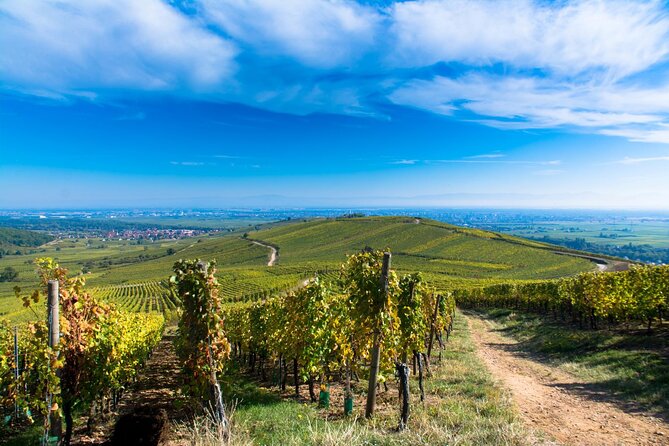
The strongest part of this experience is the guide. Laurence has been praised for matching wines to the group’s preferences and for combining wine information with humor. Pauline received similar praise for her hospitality, local history, and care with restaurant suggestions.
Jerome is another strong choice if available. He has been singled out for explaining vineyards, grapes, terroir, and the history of Alsace in a clear way. Maxim has also been praised for answering questions about wine, culture, and the region while giving the group options during the day.
Guide assignments are not something you can usually control, but the pattern is clear: the tour works best when the guide treats the itinerary as a conversation rather than a script. A good guide can make an ordinary cellar interesting and can explain why one bottle suits your taste better than another.
The small group helps here. You can say that you prefer dry wines, floral whites, fuller textures, or something to take home. The guide can then shape the discussion and help focus later tastings.
Is $260.12 a fair price?
At $260.12 per person, the cost is significant. You are paying for an eight-hour day, an English-speaking driver-guide, air-conditioned minivan transport, and three tastings.
The price is easier to justify if you are staying in Strasbourg without a rental car. A self-guided wine day requires transport planning, a designated driver, winery appointments, and careful timing between villages. This tour bundles those problems into one booking and lets you taste freely.
It is less compelling if you mainly want a quick scenic drive or one exceptional winery. The producers are selected to show different sides of Alsace, and not every stop will feel luxurious or world-famous. Some people have found the wines good but not exceptional for the price.
You should also budget for lunch and any bottles you buy. The tour is best value for someone who wants a broad first look at Alsace wine and village life, not for someone comparing the cost of three tasting flights alone.
Who should book this tour?
I would choose this for an adult couple, solo wine enthusiast, or small group that wants the countryside without renting a car. It suits you especially well if you enjoy asking questions and comparing different producers.
It is also a good fit if you want more than wine. The village stops, Grand Cru explanations, and stories of Alsace families give the day a cultural side. Several guides have been praised for making the route feel like an introduction to the people and traditions of the region, not just a series of tastings.
This is not suitable for children under 18, and pets are not allowed. At least two adults must book for the tour to operate. Most people can participate, and the tour is offered in English.
The season matters. In warmer, busier months, village access may be easier and more restaurants may be open. In winter, the vineyards can still be beautiful, but cold cellars, limited lunch choices, and Christmas traffic can alter the day.
Booking details worth remembering
You meet at 17 Place de la Cathédrale in Strasbourg at 9:00 a.m. The tour returns to that meeting point after about eight hours.
It runs with a maximum of eight people and requires at least two adults. Confirmation is provided when you book, and the activity is offered with a mobile ticket.
The experience is not available on December 25 or January 1. During the Christmas period, the return point may be just outside the Grande-Île, with the exact address arranged with your guide.
The booking is non-refundable and cannot be changed for any reason. If poor weather cancels the tour, or if the minimum number is not reached, you will be offered another date or experience, or a full refund.
Should you book it?
Book this tour if you want an easy, well-guided introduction to Alsace wine, with three tastings and a real chance to see small villages. The small group and excellent guides are the main reasons it earns its high marks.
Book with realistic expectations. The wineries may range from polished estates to plain family cellars, lunch is your responsibility, and Riquewihr is not guaranteed as a full walking stop, especially in December. For a first visit from Strasbourg, I think the combination of transport, wine education, scenery, and local guidance makes the price reasonable, provided wine and village time matter more to you than luxury surroundings.
FAQ
Where does the tour begin?
It begins at 17 Place de la Cathédrale, 67082 Strasbourg, France, at 9:00 a.m.
Where does the tour end?
The tour ends back at the meeting point in Strasbourg. During the Christmas period, the return may be just outside the Grande-Île, with the exact address arranged with the guide.
How long does the tour last?
The experience lasts approximately eight hours.
How many people can join the tour?
The maximum group size is eight people.
What transportation is provided?
Transport is provided in an air-conditioned minivan.
Are wine tastings included?
Yes. Three wine tastings at selected wineries are included.
Is lunch included?
No. Food and drinks are not included unless specifically stated. Lunch is at your own expense.
Is hotel pickup included?
No. You must make your own way to the meeting point, and hotel pickup and drop-off are not included.
Are children allowed?
No. This is an adult-only tour, and children under 18 are not allowed.
Is the tour available every day of the year?
No. It is not available on December 25 or January 1. The tour also requires good weather and a minimum number of participants.
Recently added in Strasbourg
- Alsace villages half day tour from Colmar★ 5.0 · 186 reviews
- Segway Tours 2h in Colmar★ 5.0 · 116 reviews
- Alsace’s Gems Small Group Day Tour from Colmar★ 5.0 · 84 reviews
- The Emblematic: visit of villages, Haut-Koenigsbourg, Wine tasting★ 5.0 · 81 reviews
- Self-Guided and Interactive City Tour – Colmar★ 4.5 · 45 reviews
- Through Alsace Vineyards and Wine Villages Private Bike Tour★ 5.0 · 47 reviews
- Private and customizable: Alsace Wine Route HIGHLIGHTS in 3 hours★ 5.0 · 63 reviews
- Alsace 4 Wonders Small-Group Day Trip from Colmar★ 5.0 · 380 reviews
Wine Tours, compared.
Montmartre Hill French Gourmet Food and Wine Tasting Walking Tour
Read our review →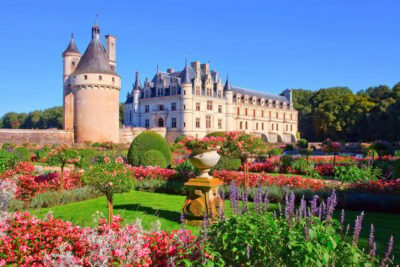
Loire Valley Castles Day Trip With Wine Tasting
Read our review →
Afternoon Saint-Emilion Wine Tasting & snack
Read our review →
Medoc or Saint Emilion Wine Tasting and Chateau from Bordeaux
Read our review →
Saint Emilion Day Trip with Sightseeing Tour & Wine Tastings from Bordeaux
Read our review →
Saint-Émilion: Grand Cru Classé Winery Visit and Tasting
Read our review →
Saint Emilion Half-Day Trip with Wine Tasting & Winery Visit from Bordeaux
Read our review →Browse the lists this tour appears in