
REVIEW · SCUBA DIVING
Beyond Bouillabaisse: Diving into Marseille’s Multicultural Stew
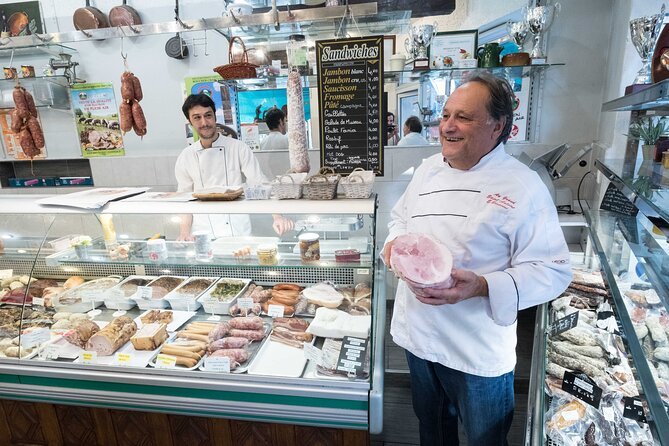
Come hungry, leave with a city map in your head. Beyond Bouillabaisse is a five-and-a-half-hour walking food tour through central Marseille, using cafés, markets, bakeries, spice shops, and modest local eateries to explain how migration shaped the city’s food. I especially like the tiny maximum group of seven and the way the tour ends at the Old Port, where you can continue exploring rather than retrace your steps.
The other big plus is the guide. Coco, Séverine, Chloé, and Alexis have all been praised for making the tour feel personal, with stories about Marseille’s people, neighborhoods, architecture, and food. You also get practical restaurant ideas for the rest of your stay. The main consideration is focus: this is not primarily a tour of classic French dishes, and some food is bread-based, vegetarian, or simple working-class fare rather than polished restaurant cuisine.
In This Review
- Five things to know before you book
- Why this Marseille food walk feels different
- Saint-Charles: starting with Marseille’s many arrivals
- Saint-Vincent de Paul and the café pause
- La Canebière: spices, shops, and a changing boulevard
- Noailles: the city’s food cupboard
- The Old Port: apéro at the finish line
- The guides make or break the day
- How much food do you really get?
- Is $160 a fair price?
- Who should book this tour?
- My call: book it for the story, not just the snacks
- FAQ
- How long does the Marseille food tour last?
- Where does the tour begin?
- Where does the tour end?
- How many people can join the tour?
- Is food included during the experience?
- Can I cancel for a full refund?
Five things to know before you book
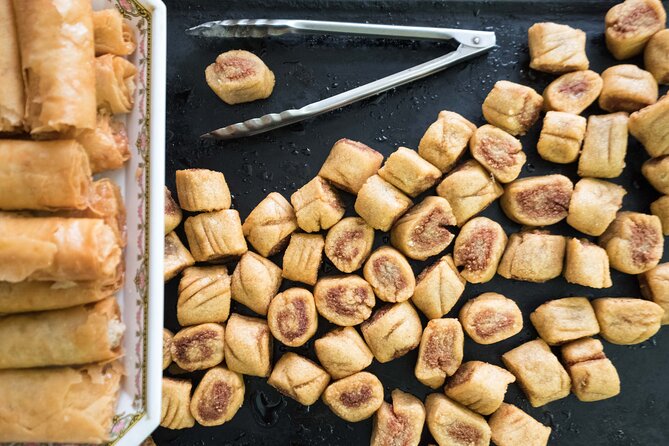
- The food tells Marseille’s migration story: Algerian specialties, mint tea, spices, Provençal biscuits, seafood, cheese, wine, pastries, and unusual fruits all appear along the route.
- The group is capped at seven people: That makes conversation with the guide easier and helps small food shops feel less crowded.
- You receive two substantial meals worth of food: Arrive hungry. Several people found the portions so generous that finishing everything became a challenge.
- The tour starts at Saint-Charles and ends at the Old Port: It is useful as an introduction to Marseille, but it does not return you to the starting point.
- Comfortable shoes matter: The day includes a good amount of walking, though stops for coffee, snacks, meals, and drinks break up the route.
- The $160 price pays for access as much as food: You are buying a guide’s local relationships, cultural explanation, and a ready-made route through places you might not choose on your own.
Why this Marseille food walk feels different
Marseille is often reduced to bouillabaisse, the Old Port, and a postcard view of Notre-Dame de la Garde. Those are worthwhile, but they explain only one part of the city. This tour looks at Marseille as a port where people, languages, ingredients, and cooking habits have met for generations.
The food is the entry point. At the first stop, near Marseille Saint-Charles station, an Algerian delicacy introduces the city’s migratory story. Later, the route moves through Noailles, the Canebière, and the Old Port, showing how different communities have helped shape the streets and shops.
I like this approach because it gives you a better way to understand what you are eating. Mint tea is not simply a refreshing drink. A spice shop is not merely a place to buy seasoning. Each stop links food to movement, work, family, religion, trade, or neighborhood life.
The tour also gives you a working plan for the rest of your visit. Several guides send restaurant suggestions afterward, and taking the tour on your first day makes those suggestions especially useful. You can return to a bakery, market, café, or restaurant with some confidence instead of choosing at random.
A few more Marseille outings to set side by side
- Calanques National Park Snorkel and Scuba Dive
★ 4.8 · 27 reviews - Calvi: Introduction to Diving Dive with an Instructor
★ 4.8 · 112 reviews - Scuba diving baptism
★ 5.0 · 37 reviews
Saint-Charles: starting with Marseille’s many arrivals
The meeting point is Place des Marseillaises, beside Gare de Marseille Saint-Charles. This is a sensible place to begin. The train station sits above the center of Marseille, and its role as a gateway fits the tour’s opening theme: people arriving, settling, and adding something to the city.
The first hour combines food with an introduction to Marseille’s migratory past. The exact Algerian specialty can vary, but the purpose is clear. You begin outside the usual French food script and see how North African cooking became part of daily Marseille life.
If you arrive by cruise ship, plan this transfer carefully. The tour does not begin at the port. One cruise participant had trouble with a taxi driver who dropped the party far from the meeting point, requiring another taxi. Give yourself extra time and confirm that the driver understands Place des Marseillaises near Saint-Charles.
The station area also means you start with a little uphill walking. It is not a strenuous hike, but the full day requires steady movement. Wear shoes you can happily keep on for five and a half hours.
Saint-Vincent de Paul and the café pause
After the opening food stop, the route spends about 30 minutes at Église Saint-Vincent de Paul. The church is known for its grand Gothic design, and this pause keeps the tour from becoming a nonstop eating contest.
The church visit gives you a visual break and a chance to talk with the guide about the district. Then comes a classic café stop with Provençal biscuits, coffee, and, according to the most useful practical tip, likely a croissant or other pastry early in the day.
Skip a large breakfast. The food begins quickly, and the day includes enough eating to fill two full meals. One person nearly had to surrender late in the tour, which is a cheerful warning but a real one.
This stop also shows the tour’s basic rhythm: walk, listen, taste, sit, and talk. You are not simply handed samples while being hurried to the next address. The time to drink tea or coffee and chat with the guide and the small group is part of the experience.
La Canebière: spices, shops, and a changing boulevard
The next hour follows La Canebière, Marseille’s best-known central boulevard. It is a good place to connect the city’s public face with its food culture. The route includes a colorful spice shop and a market, where smells and ingredients do much of the storytelling.
You might see products that are unfamiliar if your experience of French food has centered on cheese, wine, butter, and seafood. The tour makes room for foods brought by immigrant communities, along with the shops that serve them.
Past tastings have included unusual fruits and flowers, spices, salts, and products from ethnic grocery stores. The point is not to check off a fixed menu. It is to help you notice how a city’s food culture is built from ordinary shops and repeated daily habits.
This is one place where expectations matter. If you want a formal explanation of Provençal cuisine, the region’s famous dishes, or a long seafood tasting, you may find the emphasis too broad. The tour gives you a wider portrait of Marseille, with French food sharing the table with North African and other influences.
Same city, a slower kind of day:
- Marseille: City Sightseeing Hop-On Hop-Off Bus Tour
★ 3.8 · 2,820 reviews - Marseille: Côte Bleue Calanques Half-Day Kayak Tour
★ 4.7 · 877 reviews - Marseille Food Tour – Full Meal of Local Tastes by Do Eat Better
★ 5.0 · 530 reviews - Marseille: Calanques National Park Guided Hike with Picnic
★ 4.9 · 516 reviews
Noailles: the city’s food cupboard
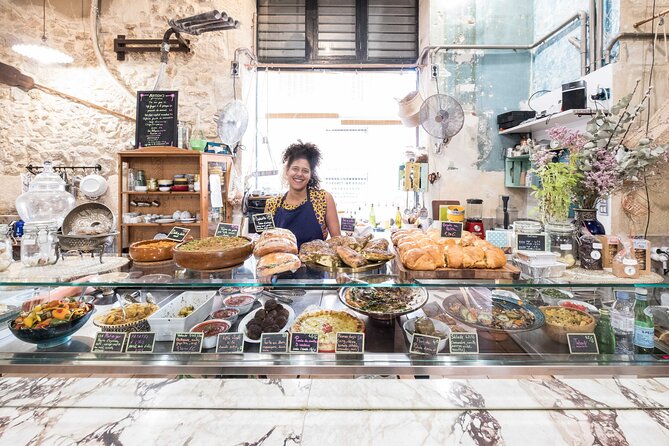
The hour at Marché de Noailles is likely the busiest food section of the day. The neighborhood is often called the belly of Marseille, and its food stalls, small shops, and strong smells make that nickname easy to understand.
Here, the guide helps you approach a market that can feel confusing on your own. You may move between bakeries, street food counters, spice sellers, chocolate shops, and grocery stores. The value is not just in tasting something. It is in learning what to look for and how the different shops fit into the neighborhood.
The tour has included foods from several cultures, along with bread, vegetarian bites, tea, fish, cheese, wine, and sweets. One especially memorable stop for some participants was mint tea in a side shop. That kind of pause captures the tour’s character better than a famous dish would: local, social, and tied to the people who run the place.
Noailles also reveals the tour’s main weakness. Some food may feel simple rather than luxurious. One less-satisfied participant found the selection too heavy on bread and vegetarian items, with too little meat, seafood, or sit-down dining. If you measure value only by the retail cost of the food, $160 can feel high.
I see the price differently, but only if you want the cultural side. You are paying for the route, the guide, introductions, explanations, and the chance to visit places that may not be obvious to a first-time visitor. Still, anyone expecting six restaurant courses or a seafood-focused feast should choose carefully.
The Old Port: apéro at the finish line
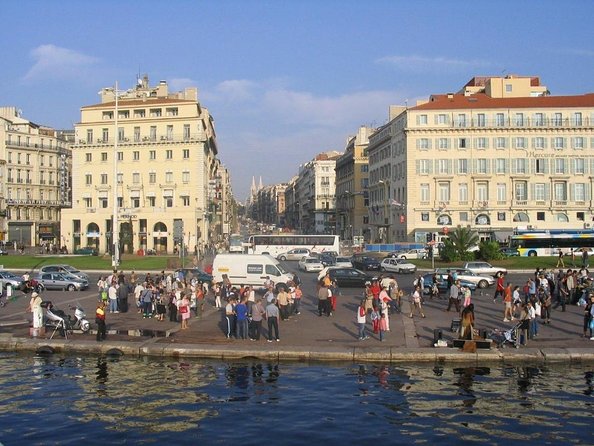
The final hour brings you to the Vieux-Port, Marseille’s boat-filled harbor and one of the city’s easiest places to continue sightseeing. The guide explains the harbor’s role before leading you to an apéro in a former sailors’ bar.
Apéro is not just a drink before dinner. It is a social habit, a time to sit, sip, and share small bites. Ending with this custom gives the tour a relaxed finish after the market walking and heavier food.
The final stop is also practical. You can stay in the Old Port for dinner, walk toward nearby sights, or arrange transport back to your ship. Since the tour does not return to Place des Marseillaises, think of the route as a one-way introduction to central Marseille.
Cruise passengers should allow time for the return journey. One group needed taxis to get back to the ship, and the guide helped arrange the final taxi. That assistance can be valuable, but you should still check the port timing yourself and avoid scheduling the tour too close to ship departure.
The guides make or break the day
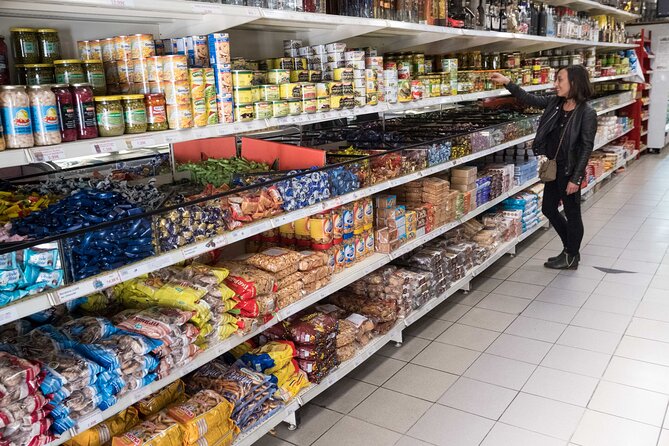
The strongest part of this experience is the human connection. Coco is repeatedly praised for combining food knowledge with stories about architecture, neighborhoods, festivals, and the city’s changing population. She has also been described as flexible and easy to spend a full day with.
Séverine receives similar praise for her warmth, local relationships, and ability to adjust the pace. She has handled rain without letting the day fall apart and helped cruise passengers with transport. Chloé is noted for explaining the link between food, immigration, and Marseille’s development in a relaxed way.
Alexis has also made a strong impression, particularly for balancing the food stops with the non-food parts of the tour. The guide assigned to your date may vary, so do not book solely on the hope of receiving one particular person. The consistent pattern is that the guides are central to the experience, not just escorts between restaurants.
A group of seven or fewer helps here. You can ask questions, hear the answers, and talk with the other participants without the guide needing to lecture over a crowd. Several people described the group feeling friendly by the end, which matters on a long food walk.
How much food do you really get?
The tour promises two full meals spread across the day, and that description should be taken seriously. You will not be eating one tiny sample every hour and then searching for lunch afterward.
The foods can include coffee and pastries, Provençal biscuits, street food, fish, wine, cheese, tea, chocolate, spices, fruit, flowers, and an apéro. The exact balance may change with the day, the businesses open, and the guide’s route.
That variety is the attraction. It lets you compare textures, cooking styles, and ingredients from different parts of Marseille’s food world. It also means the tour may not satisfy a narrow craving for meat, seafood, or classic French cuisine.
I would treat this as a generous grazing day rather than a gourmet tasting menu. The food may be humble, but the context gives it weight. If you enjoy discovering what ordinary people eat and where they shop, that is a fair trade. If you want refined dishes in elegant dining rooms, this is not the right format.
Is $160 a fair price?
At $160 per person, this is an expensive food walk. You should not book it simply because it includes a large amount of food. The samples alone may not equal the price, especially if you compare them with what five people could buy at a market.
The better question is what kind of day you want. For that price, you receive about five and a half hours with a guide, a small group, two meals worth of tastings, cultural explanation, and recommendations for later. You also avoid the work of researching a route through several neighborhoods and guessing which shops welcome first-time visitors.
I think the price makes more sense for a first day in Marseille. You get your bearings, collect ideas for later meals, and learn how the central neighborhoods connect. If you already know Marseille well, or if you prefer to eat independently, the cost may be harder to justify.
The 98 percent recommendation rate and five-star overall rating suggest very strong satisfaction, but the less positive experiences are useful. Food quality and portion balance may not suit everyone. Go for access and interpretation, not for luxury.
Who should book this tour?
I would recommend it to you if you:
- Want to understand Marseille through migration and food
- Prefer small local shops to famous tourist restaurants
- Enjoy a long walking day with frequent eating stops
- Are visiting Marseille for the first time
- Want restaurant ideas for the rest of your stay
- Like talking with a guide and a small group
- Are open to food beyond standard French dishes
I would hesitate if you:
- Want bouillabaisse or classic Provençal food to dominate the day
- Need a formal sit-down meal at every stop
- Prefer a short, low-walking activity
- Eat very little or dislike shared tasting formats
- Expect the food value alone to equal $160
- Need the tour to end where it begins
The tour is generally suitable for most people, and service animals are allowed. It is near public transportation, but the route itself is on foot. English is the offered language, and the maximum group size is seven.
My call: book it for the story, not just the snacks
I would book Beyond Bouillabaisse if I had one day in Marseille and wanted a useful introduction to the city. The combination of Saint-Charles, Saint-Vincent de Paul, La Canebière, Noailles, and the Old Port gives you a broad first look, while the guides add the local connections that are hard to create alone.
Come without breakfast, wear good shoes, and expect plenty of food. Book it early if your schedule is fixed, since it is often reserved well ahead of the date. Just remember that the tour is about Marseille’s multicultural table, not a greatest-hits parade of French cuisine.
The cancellation terms are straightforward: you can receive a full refund if you cancel at least 24 hours before the start time. Poor weather or failure to meet the minimum group size can also lead to another date or a full refund.
FAQ
How long does the Marseille food tour last?
The experience lasts approximately 5 hours and 30 minutes.
Where does the tour begin?
It begins at Place des Marseillaises, beside Gare de Marseille Saint-Charles in Marseille.
Where does the tour end?
The tour ends at the Old Port of Marseille, also called Vieux-Port. It does not return to the starting point.
How many people can join the tour?
The maximum group size is seven travelers.
Is food included during the experience?
Yes. The tour includes enough food for two full meals, with tastings that can include pastries, Provençal biscuits, fish, wine, cheese, tea, spices, fruit, chocolate, and an apéro.
Can I cancel for a full refund?
Yes. You must cancel at least 24 hours before the experience start time for a full refund. Changes or cancellations made less than 24 hours in advance are not accepted for a refund.
Recently added in Marseille
- The Urban Hike of Marseille★ 5.0 · 35 reviews
- Sailing day in the heart of the Calanques★ 4.5 · 61 reviews
- Sormiou Calanques National Park Electric Bike Tour from Marseille★ 5.0 · 60 reviews
- Sunset Lavender Tour in Valensole with pickup from Marseille★ 5.0 · 41 reviews
- Marseille Highlights & Wine Tasting Day Tour from Marseille★ 4.5 · 27 reviews
- Sightseeing Tour of Marseille with a Private Driver★ 4.5 · 26 reviews
- Rando-Palmée Getaway Around an island★ 4.0 · 54 reviews
- Cassis and Aix en Provence Sightseeing Tour from Marseille★ 4.5 · 132 reviews
Scuba Diving, compared.
Calvi: Introduction to Diving Dive with an Instructor
Read our review →
Fréjus: Diving Experience in Port-Fréjus with an Instructor
Read our review →
Browse the lists this tour appears in