
REVIEW · HIKING & TREKKING
The Urban Hike of Marseille
Marseille reveals itself on foot. This 3.5-hour urban hike links the Old Port, fishing coves, quiet neighborhoods, sea paths, wooded parks, and Notre Dame de la Garde, giving you a fuller sense of how the city fits together. I especially like the mix of local history and everyday neighborhoods, plus the chance to reach viewpoints and lanes that buses cannot.
I also like the active format. You cover roughly 10 kilometers, climb stairs, and pause often for water, shade, and photos rather than rushing from monument to monument. The main consideration is the terrain: accessible to most people does not mean flat or effortless. You should wear good walking shoes, and confirm the language before booking because the experience is offered in French.
In This Review
- Key points to know before you book
- Why this walk gives you more than a standard city tour
- Starting at the Old Port and reading Marseille from the water
- Vallon des Auffes and the Corniche Kennedy
- Pharo Palace, maps, and the city built under Napoleon III
- Parc Valmer and the shift from sea to Mediterranean greenery
- Bompard and the quiet lanes of Vallon de l’Oriol
- Notre Dame de la Garde and Marseille from every direction
- The return through Malmousque and steep central streets
- Palais de Justice and the Second Empire city center
- What the price includes in practical terms
- Heat, fitness, language, and other practical details
- Who should book this Marseille hike?
- Should you book The Urban Hike of Marseille?
- FAQ
- Where does The Urban Hike of Marseille start?
- Where does the tour end?
- How long is the urban hike?
- How many people can join the tour?
- Is the tour available in English?
- What happens if the weather is poor?
Key points to know before you book
- A 10-kilometer route through many sides of Marseille: You see the harbor, coast, parks, hills, historic buildings, and residential districts in one outing.
- Small groups capped at 10 people: This allows room for questions and a more personal exchange with guide Olivier.
- Eight water points, shaded areas, and a slow pace: The route is planned with Marseille’s heat in mind, including early morning and late afternoon time slots.
- Notre Dame de la Garde is the high point: The basilica and its square provide broad views that help you understand the city’s shape.
- A local guide adds the real value: Olivier is praised for his humor, warmth, passion for Marseille, and explanations of places beyond the standard sightseeing circuit.
- French-language availability matters: One serious complaint came from a guest expecting an English tour, so check this point carefully before reserving.
Why this walk gives you more than a standard city tour
Marseille is easy to misunderstand if you only see the Old Port, the Panier district, and a few famous monuments. The city spreads between the Mediterranean, steep hills, old fishing quarters, grand Second Empire avenues, and newer urban districts. This walk helps you connect those pieces.
The route is described as about 10 kilometers, completed in roughly three and a half hours. That is a brisk amount of ground, but the pace is intentionally slow, with no pressure to race. You are walking for exercise as well as sightseeing, so the experience suits you best if you enjoy being outdoors and do not mind hills.
The group limit of 10 is another advantage. Olivier can explain a building, answer a question, or point out a small detail without speaking to a crowd. The high rating of 4.9 from 35 ratings, along with a 97 percent recommendation rate, reflects how strongly the guide’s personality shapes the experience.
The most repeated praise centers on Olivier. He is described as humorous, friendly, courteous, passionate, and clear in his explanations. His local knowledge includes not only dates and monuments, but also the character of Marseille’s neighborhoods and the way residents relate to the sea, religion, politics, and city life.
A few more Marseille outings to set side by side
- Marseille: Calanques National Park Guided Hike with Picnic
★ 4.9 · 516 reviews - From Marseille: Calanques National Park Guided Hike
★ 4.8 · 489 reviews - Hiking in the Calanques National park from Marseille
★ 4.5 · 211 reviews
Starting at the Old Port and reading Marseille from the water
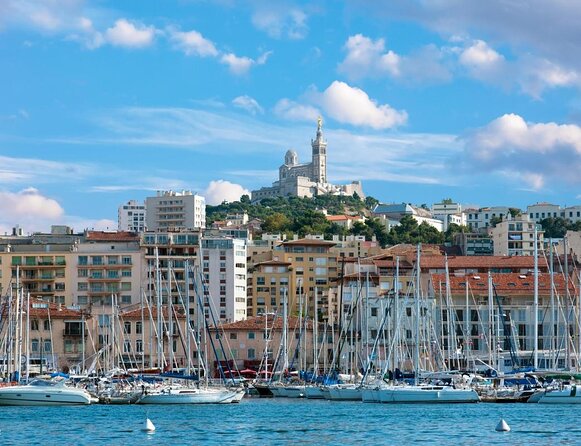
You meet at 19 Quai des Belges, at the Old Port. This is a sensible starting point because Marseille’s story begins here. The port has anchored the city since antiquity, and its role continued through the reign of Louis XIV and into modern times.
The opening half hour is not just a quick orientation. Olivier introduces the route, explains what to expect, and begins with the city’s relationship to the Mediterranean and the eastern Mediterranean world. That context helps you read the rest of the walk. Marseille is not simply a French port with pretty views. Its position on the sea shaped its trade, culture, architecture, and strong sense of independence.
The Old Port is also where you finish, so you can return later for a meal or a drink around Cours Estienne d’Orves. That makes the tour useful early in a stay, when you want a city overview, or near the end, when you want one last walk through familiar ground.
Vallon des Auffes and the Corniche Kennedy
From the center, the walk reaches Vallon des Auffes, one of Marseille’s most photographed spots. Its small fishing houses and cove offer a sharp contrast to the broad harbor. The point here is not only taking pictures. Olivier explains how this pocket of traditional housing survived as Marseille grew into a major city.
That is one of the tour’s strongest ideas: you see how old and new Marseille sit side by side. The preserved fisherman’s homes show a quieter way of life, while the surrounding city reflects centuries of expansion and redevelopment.
The stop itself is listed at about 10 minutes, so you should expect a focused visit rather than a long break. The path continues along the Corniche Kennedy for about 20 minutes. Here, the sea opens up and the city’s Mediterranean identity becomes physical. You get a long horizon, fresh air, and a better sense of how the road follows the coast.
The Corniche is also one of the easier portions for enjoying the scenery. Still, remember that this is one part of a much longer walk. Save some energy for the climb toward Notre Dame de la Garde.
Pharo Palace, maps, and the city built under Napoleon III
At Palais du Pharo, the route pauses in green space with views toward both the Old Port and the Grand Port of Marseille. The palace was built under Napoleon III, and Olivier uses it to explain how the Second Empire reshaped Marseille.
This historical link gives the walk useful structure. Instead of treating each sight as an isolated stop, you learn why the city has its grand avenues, official buildings, and expanded port areas. A map helps trace the city’s growth from that period to the Marseille you see today.
The listed 30 minutes should give you time for explanation and views. You might find this section especially useful if you like urban history rather than only famous monuments. It also offers a break from the denser streets.
Same city, a slower kind of day:
- Marseille: City Sightseeing Hop-On Hop-Off Bus Tour
★ 3.8 · 2,820 reviews - Marseille: Côte Bleue Calanques Half-Day Kayak Tour
★ 4.7 · 877 reviews - Marseille Food Tour – Full Meal of Local Tastes by Do Eat Better
★ 5.0 · 530 reviews - Marseille: Musée de l’Illusion Entry Ticket
★ 4.1 · 488 reviews
Parc Valmer and the shift from sea to Mediterranean greenery
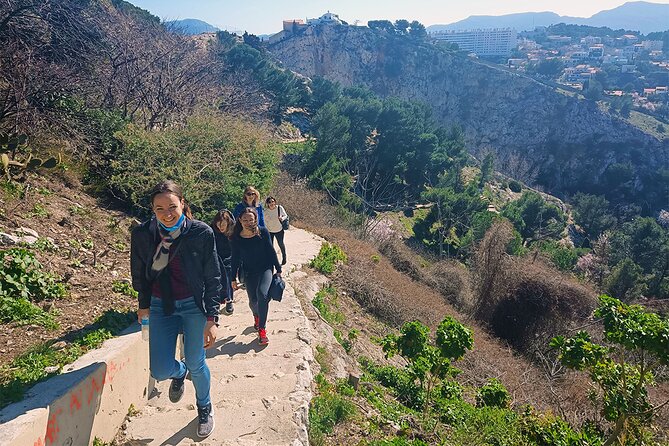
Parc Valmer changes the mood again. After the open sea and harbor views, you move into a wooded park with Mediterranean plant life and the Villa Valmer. This is one of the walk’s quieter sections.
Olivier connects the site to Marseille’s economic past, including the 19th-century olive oil trade and the city’s later move toward tourism. That is a practical way to understand the coastline. The sea was not only a view or a place for swimming. It supported commerce, shaped local wealth, and helped create the city’s present-day appeal.
The park stop lasts about 30 minutes. If the weather is warm, this pause matters. The tour includes eight water points, shaded areas, wooded breaks, and access to sunscreen, with early morning and late afternoon departures intended to reduce the worst heat. Even with those precautions, bring water and sun protection of your own.
Bompard and the quiet lanes of Vallon de l’Oriol

The walk then leaves the immediate waterfront and enters Bompard by way of Chemin du Vallon de l’Oriol. This is where the experience becomes less like a coastal promenade and more like a neighborhood walk.
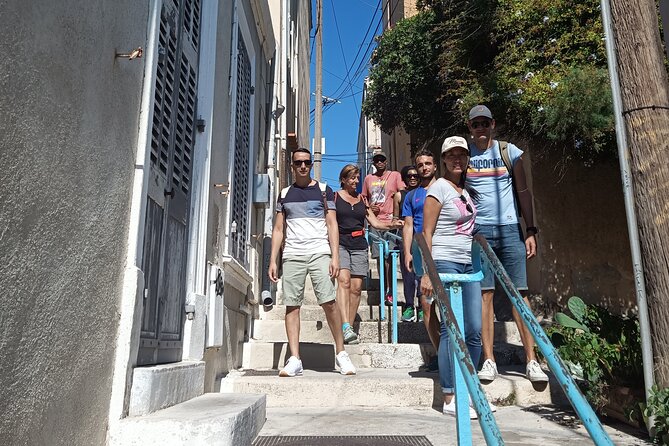
You see changes in local housing, including the elegant bastides associated with the 20th century. The route uses narrow paths and quieter streets that are difficult to reach by car or bus. This is a major reason to choose a walking guide instead of a standard sightseeing vehicle.
The route is not designed around a checklist of major monuments. It is about how people live in Marseille, how homes respond to hills and sea air, and how the city’s architecture reflects different eras. Olivier’s stories reportedly include small local details, including a stop connected with footballer Eric Cantona’s childhood home. That kind of detail gives the walk a personal, neighborhood feel.
The path eventually leads toward Notre Dame de la Garde. Expect an uphill section and stairs. The climb is manageable for many people, but it is still a real physical effort after several kilometers.
Notre Dame de la Garde and Marseille from every direction
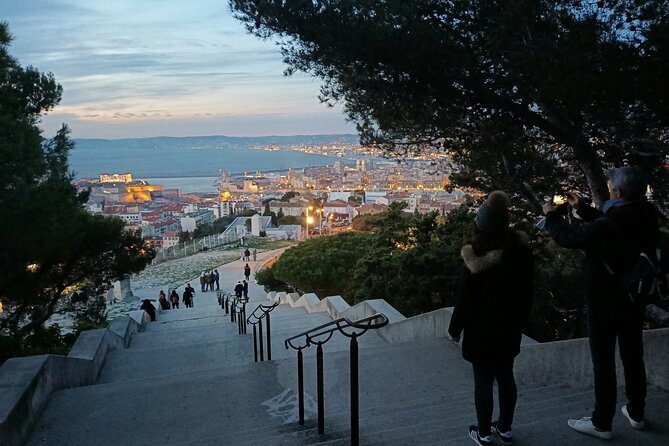
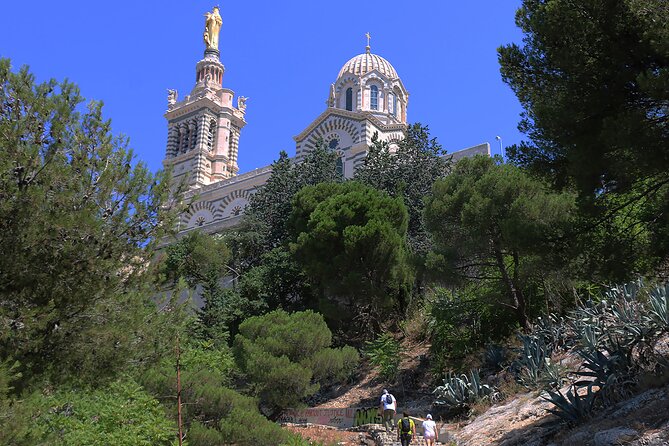
Notre Dame de la Garde is the high point of the outing, both physically and visually. The basilica is one of Marseille’s most recognizable buildings, and the square around it gives you a 360-degree view across the city and the sea.
This is where the earlier explanations about geography become useful. From above, you can see how the Old Port, Grand Port, coastal neighborhoods, central districts, and hills relate to one another. A view is more useful when you understand what you are looking at.
The basilica also carries major cultural importance for Marseille. The visit helps explain how local people use and regard this place, rather than treating it as just another photo stop. You have about 30 minutes here, allowing time for the building, the view, and Olivier’s explanation.
Conditions inside religious buildings can vary, so dress and behave respectfully. The supplied information does not promise a full guided interior tour, so think of this as a visit to the basilica and its setting, with interpretation from the guide.
The return through Malmousque and steep central streets
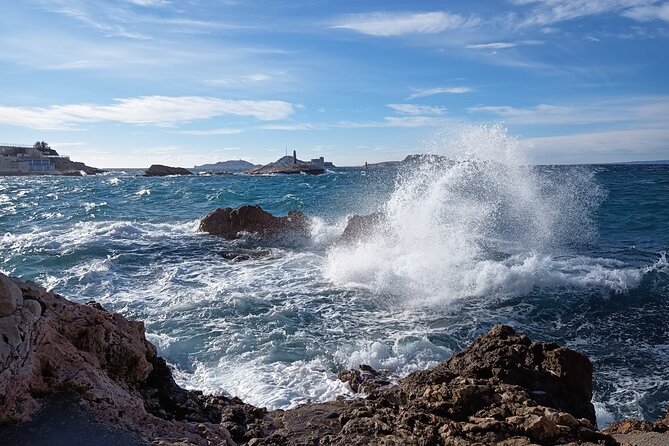
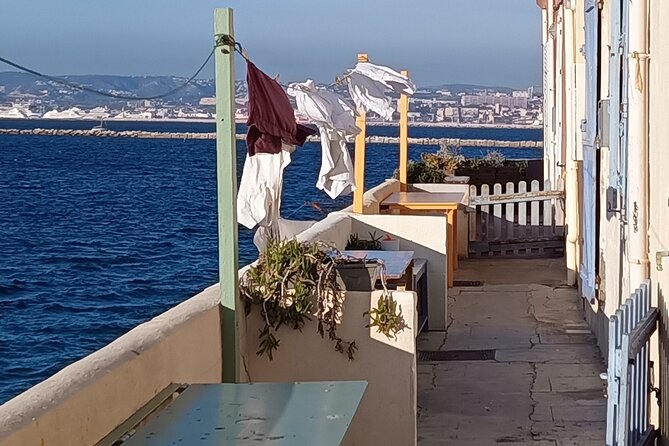
Anse de Malmousque is another coastal highlight. Its cove, small port, and Greek-influenced character offer a calm change from the main waterfront. The area shows how Marseille’s residents have built a way of life beside the sea, while also preserving traces of older fishing communities.
The stop lasts about 30 minutes. You get time to appreciate the setting, but the larger value is the comparison with Vallon des Auffes. Both places reveal older seaside housing, yet each has a different atmosphere and urban story.
The route then turns back toward the Old Port along Boulevard André Aune. This return is steep, and the supplied description calls it the steepest boulevard in Marseille. That is the point where good shoes and a reasonable level of fitness become especially important.
The climb brings you through changing views and into the city center. Olivier uses the buildings and slopes to discuss Marseille’s distinctive architecture, along with anecdotes about the city’s culture. You are not simply retracing your steps. You are watching the city close in around you as the route descends toward its busiest central spaces.
Palais de Justice and the Second Empire city center
The walk also passes between the Palais de Justice and the Commerce Court. These Second Empire buildings provide another look at the period when Marseille was being reshaped and formalized.
The stop lasts about 10 minutes, so this is a brief architectural and civic lesson rather than an extended courthouse visit. Olivier connects the buildings with the power of the French judicial system and Marseille’s long habit of questioning central authority.
That political angle adds flavor to the tour. Marseille’s identity is not only coastal and commercial. It also includes a strong relationship with national power, local independence, law, and public institutions.
What the price includes in practical terms
At $41.27 per person, the walk is reasonably priced for a 3.5-hour private-feeling experience with a group limit of 10. You are paying for a guide who covers a large section of the city and provides historical and cultural interpretation along the way.
The value is strongest if you would otherwise spend a day trying to connect these places yourself. Vallon des Auffes, Parc Valmer, Malmousque, Bompard, and the hill routes are not all obvious additions to a first-time city walk. Public transport might get you near some of them, but it would not provide the same continuous explanation of how they fit together.
The price does not appear to include food, drinks, or paid admission. The listed stops are free-admission visits, and the tour ends back at the Old Port, where you can choose your own café or meal. One past participant praised Olivier for suggesting a good lunch spot, which is a useful bonus rather than a guaranteed part of the service.
Heat, fitness, language, and other practical details
The operator has built the route around Marseille’s sunny climate. You get eight water points, shady areas, wooded parks, sea breezes, rest breaks, and a slower rhythm. Early morning and late afternoon time slots are available, which are the better choices in hot weather.
Even so, do not treat this as a casual stroll. Ten kilometers, stairs, hills, and the steep return route require comfortable shoes. Most people can participate, but anyone with mobility concerns should assess the distance and elevation before booking.
The meeting point is near public transportation, and the activity accepts service animals. You receive a mobile ticket, and confirmation is provided at booking. Free cancellation is available until 24 hours before the start time. Poor weather or failure to meet the minimum group size can lead to a new date or a full refund.
The language issue deserves special attention. The guide’s response to one complaint makes clear that the tour was available in French rather than English. If you need English, ask before booking and wait for a clear answer. Do not assume that a booking platform’s general language options apply to this specific outing.
Who should book this Marseille hike?
I would choose this walk if you want a broad introduction to Marseille and enjoy learning through movement. It is a good fit for active couples, solo visitors, small groups, and anyone who prefers local streets and viewpoints to a standard bus circuit.
It also suits you if you want to challenge the usual image of Marseille. The route includes fishing quarters, quiet coves, parks, grand public buildings, hillside housing, and the basilica, creating a more complete picture than the Old Port alone.
I would hesitate if you want a flat route, a short sightseeing walk, or a detailed indoor tour of every monument. The pace is relaxed, but the distance is not short. You should also reconsider if the tour language is not comfortable for you.
Should you book The Urban Hike of Marseille?
Book it if you want a city lesson with real walking in it, not simply a procession between famous sights. Olivier’s warmth, humor, and love for Marseille appear to be the main reasons this experience earns such strong marks.
Bring sturdy shoes, sun protection, and an appetite for hills. Confirm the French-language format before paying, then choose an early or late departure in hot weather. For the right person, $41.27 buys a useful overview of Marseille’s history, geography, neighborhoods, and coastal character, all tied together by your own two feet.
FAQ
Where does The Urban Hike of Marseille start?
The tour starts at 19 Quai des Belges, 13001 Marseille, France, at the Old Port.
Where does the tour end?
The experience ends back at the meeting point in the Old Port area.
How long is the urban hike?
The activity lasts approximately 3 hours and 30 minutes and covers about 10 kilometers.
How many people can join the tour?
The group has a maximum of 10 participants.
Is the tour available in English?
The available information indicates that the tour is offered in French. Confirm the language with the provider before booking, especially if you require English.
What happens if the weather is poor?
The experience requires good weather. If it is canceled because of poor weather, you will be offered another date or a full refund.
Recently added in Marseille
- Sailing day in the heart of the Calanques★ 4.5 · 61 reviews
- Sormiou Calanques National Park Electric Bike Tour from Marseille★ 5.0 · 60 reviews
- Sunset Lavender Tour in Valensole with pickup from Marseille★ 5.0 · 41 reviews
- Marseille Highlights & Wine Tasting Day Tour from Marseille★ 4.5 · 27 reviews
- Sightseeing Tour of Marseille with a Private Driver★ 4.5 · 26 reviews
- Rando-Palmée Getaway Around an island★ 4.0 · 54 reviews
- Cassis and Aix en Provence Sightseeing Tour from Marseille★ 4.5 · 132 reviews
- Lavender Small-Group Tour In Valensole from Marseille★ 4.5 · 53 reviews
Hiking & Trekking, compared.
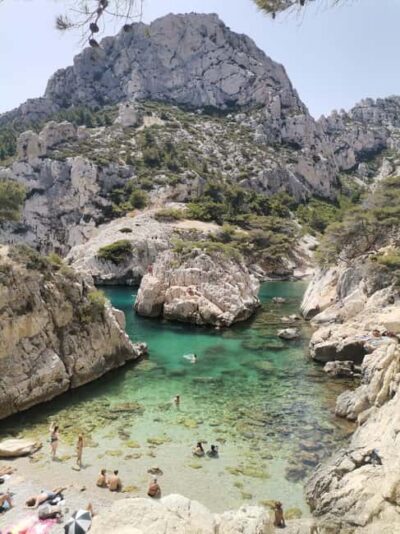
Calanques National Park Guided Hike with Picnic
Read our review →
Hiking in the Calanques National park from Marseille
Read our review →
Cassis: 3 Calanques Half-Day Hiking Tour with Swimming
Read our review →
Guided Hiking Calanques National Park from Luminy
Read our review →

Quad and Moto hike, discover the Corrèze otherwise. Accessible to everyone !!
Read our review →Browse the lists this tour appears in