
REVIEW · WINE TOURS
Bordeaux Wine and Trade Museum Admission Ticket with Wine Tasting
Bordeaux’s wine story begins underground. This small museum occupies the vaulted cellars of an 18th-century merchant’s building, where you can trace the city’s wine trade before tasting two Bordeaux wines with guidance from the staff. I especially like the historic cellar setting and the chance to compare Merlot with Cabernet Sauvignon. The main drawback is its size: you may finish the displays in 45 minutes if you read quickly, even though the full visit can take one to two hours.
I also like the price, about $14.51 per person, because the ticket includes two tastings and useful background on Bordeaux’s wine regions, merchants, châteaux, and production methods. This is a self-guided museum, not a traditional escorted tour, so you should choose it for its focused story and tasting rather than expecting a large, high-tech attraction.
In This Review
- Key points to know before you go
- What this Bordeaux wine museum actually offers
- A self-guided route through Bordeaux’s merchant past
- The 1720 cellars are part of the lesson
- The wine tasting is the strongest part
- What non-drinkers and families should know
- How it compares with Cité du Vin
- Is $14.51 good value?
- Who should book this experience?
- Final verdict: book it for the tasting and setting
- FAQ
- Where is the Bordeaux Wine and Trade Museum located?
- What are the museum’s opening hours?
- How long does the visit take?
- Is the wine tasting included?
- Which wines are tasted?
- Is the museum visit guided?
- Is this the same as Cité du Vin?
- Can someone who does not drink alcohol take part?
- What is the cancellation policy?
Key points to know before you go
- The museum occupies two vaulted cellars built in 1720, giving the visit a genuine connection to Bordeaux’s old wine trade.
- The tasting includes two wines, usually used to explain the differences between Merlot and Cabernet Sauvignon.
- The visit is self-guided, with English notes, folders, videos, displays, and audio material.
- The staff-led tasting is the highlight, with explanations about Bordeaux appellations, soils, climate, merchants, and château wines.
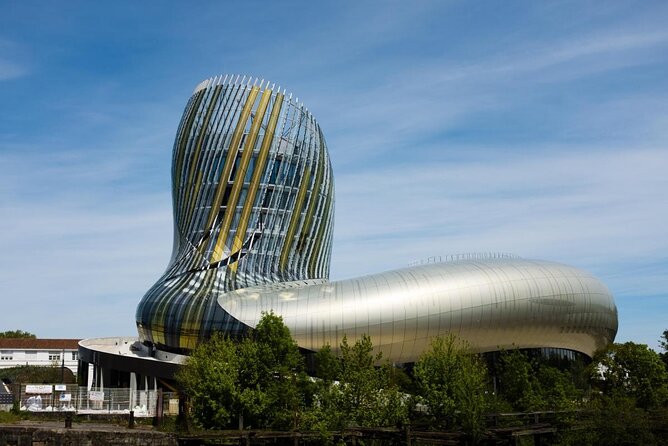
- Do not confuse this museum with Cité du Vin, Bordeaux’s much larger and more modern wine museum.
- The ticket is inexpensive, but the museum is physically small and the tasting itself is not lengthy.
What this Bordeaux wine museum actually offers
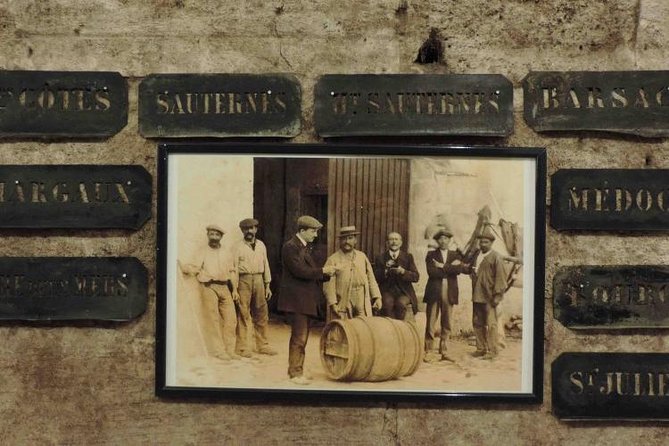
The Musée du Vin et du Négoce, or Wine and Trade Museum, tells the story of Bordeaux through commerce as much as through winemaking. That distinction matters. Many wine attractions focus on vineyards, grapes, and tasting notes. This one also explains how wine moved through Bordeaux, how merchant families built their businesses, and how the city’s famous wine trade shaped its architecture and identity.
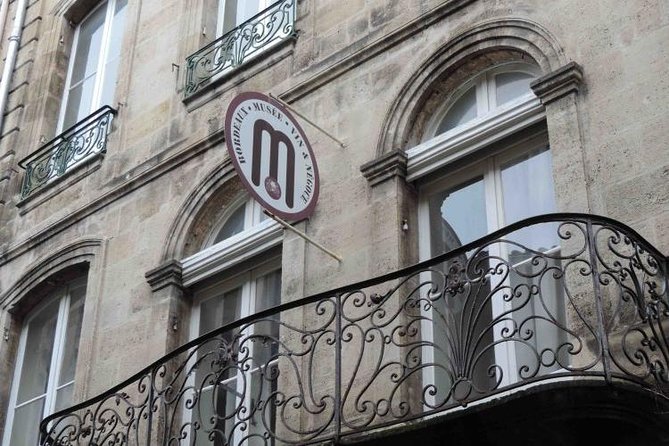
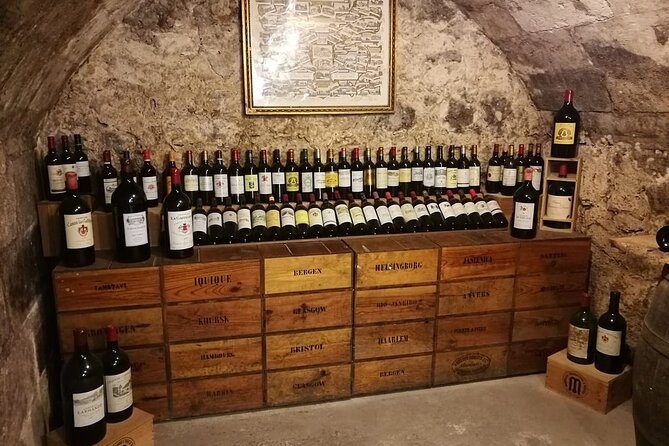
The museum is located in the former building of Louis XV’s royal broker. Its cellars date to 1720, and the low, vaulted rooms help explain why wine was stored and aged here. The setting is not polished or theatrical. It feels old, enclosed, and practical.
That authenticity is part of the appeal. You are not simply looking at modern displays about wine. You are standing in the kind of cellar where Bordeaux merchants once handled barrels, bottles, and records. At the same time, the age of the building has drawbacks. One person found the cellar musty and moldy smelling, and humidity is clearly part of the environment. If you are sensitive to damp historic interiors, keep that in mind.
The museum is small, with exhibits spread through two semi-buried cellars. That means you can fit it into a busy Bordeaux schedule, but it also means the experience does not have the scale of Cité du Vin. The focus is narrower, and for many people, that is exactly the point.
More Food Tours in Bordeaux
- Bordeaux: Cité du Vin Entry Ticket and Wine Tasting
★ 4.6 · 3,885 reviews - From Bordeaux: Afternoon Saint-Emilion Wine Tasting & snack
★ 4.8 · 1,581 reviews - Medoc or Saint Emilion Wine Tasting and Chateau from Bordeaux
★ 5.0 · 1,415 reviews
A self-guided route through Bordeaux’s merchant past
When you arrive, you receive material to help you explore the displays at your own pace. English explanations and a guidebook make the visit workable for international visitors, even though the route is not led from room to room by a guide.
The displays cover the work of coopers, traditional wine aging, bottling, merchant activity, and the development of Bordeaux’s wine business. Archival documents and objects connect the trade to the careers of major merchant families. You also learn about the practical skills of cellar workers, whose work was essential but is often left out of grand stories about famous châteaux.
I find this trade-centered angle useful because it makes Bordeaux easier to understand. The city’s wine identity was not created only in vineyards outside town. Merchants, brokers, barrel makers, warehouse workers, and exporters all played a role. The museum helps you see how wine passed from producer to market, and why Bordeaux became such an important commercial center.
Some of the material is presented in folders or in small print on walls. You will need to read carefully if you want the full story. A few videos and audio elements add variety, but the technology is limited and the audio has been described as confusing. This is not a highly interactive museum with touchscreens at every turn.
For a quick look, allow about 45 minutes. If you pause for the documents, videos, and explanations, your visit can stretch toward two hours. I would plan on about 90 minutes, especially if you want time for the tasting afterward.
The 1720 cellars are part of the lesson
The building itself does much of the teaching. The vaulted cellars show how Bordeaux’s wine merchants worked in the 18th and 19th centuries, when wine was aged and stored in conditions very different from those of a modern visitor center.
You can see how the architecture suited the wine trade. The cellar atmosphere also explains why Bordeaux’s merchants needed reliable storage close to the river and commercial districts. The Chartrons area became closely linked with wine merchants, and the museum helps connect that neighborhood’s architecture with its business past.
The setting is especially convenient if you are visiting Bordeaux by cruise ship. The museum is about a five-minute walk from one cruise boat location, according to one detailed account. The supplied information does not promise a particular cruise terminal or route, so check your own arrival point, but the central location makes this a practical stop.
Public transportation is nearby, and the museum is open daily from 10 a.m. to 6 p.m. for the stated operating period. Multiple entry times are offered through the day, which helps if you are arranging the visit around lunch, sightseeing, or a train schedule.
The wine tasting is the strongest part
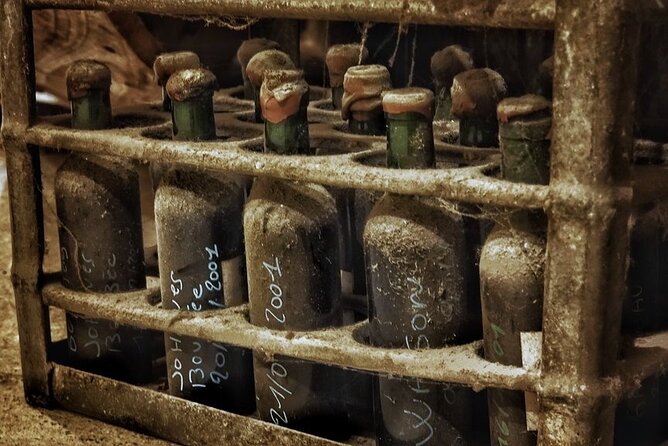
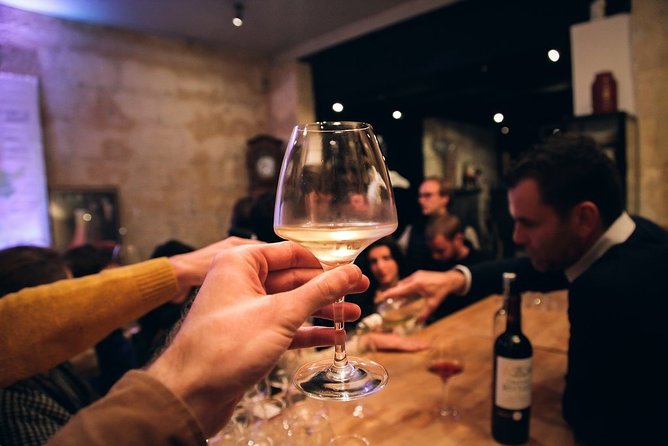
At the end, you move to the museum boutique for a tasting of two wines. The tasting is included in the admission price, and this is where the experience becomes more personal and useful.
The staff explain the difference between Merlot and Cabernet Sauvignon, two grapes strongly associated with Bordeaux blends. You are also introduced to the distinction between a merchant wine and a château wine. That last point is important for anyone who is still puzzled by Bordeaux labels. The museum connects the wine in your glass with the commercial system explained in the cellar.
The tasting may also cover Bordeaux appellations, soil, climate, and the differences between wine areas in the region. Several accounts describe the staff as generous with their time and willing to answer questions. Cristina is praised by name for her attentive guidance, and other staff members are described as fluent in English and able to explain the wines clearly.
Do not expect a long tasting session or a large pour. One detailed assessment noted that the servings were not especially generous, and another said the tasting does not last very long. That is normal for an included museum tasting. The value comes from the explanation, not from drinking a large quantity.
If you want the tasting to be more informative, ask questions. The staff can explain the two wines, the grape varieties, Bordeaux’s regions, and the merchant system. The level of detail may depend on how much you ask and who leads the session. A few people found the tasting less informative than expected, while others considered it excellent and worth the admission price by itself.
A small chocolate may accompany the wine, and one account mentions complimentary bottles at the end as a pleasant surprise. These extras are not clearly guaranteed, so treat them as possible additions rather than part of the promised package.
More Wine Tours in Bordeaux
- Saint Emilion Day Trip with Sightseeing Tour & Wine Tastings from Bordeaux
★ 5.0 · 1,120 reviews - Saint-Émilion: Grand Cru Classé Winery Visit and Tasting
★ 4.6 · 1,118 reviews - Saint Emilion Half-Day Trip with Wine Tasting & Winery Visit from Bordeaux
★ 4.5 · 1,034 reviews - From Bordeaux: St. Emilion Village Half-Day Wine Tour
★ 4.7 · 728 reviews
What non-drinkers and families should know
You do not need to drink alcohol to enjoy the museum. A non-drinking companion was served excellent grape juice during the tasting. That makes the experience more comfortable for couples or families with different preferences.
The museum can also work for children if you keep expectations realistic. It is not built as a children’s attraction, but one family appreciated a scent game that gave children something to do while adults tasted wine. The historical displays may require patience, especially because much of the information is printed rather than presented through hands-on activities.
For adults who want a short introduction to Bordeaux wine, the format is straightforward. You look around, read what interests you, and then ask questions over two wines. For serious wine students, the museum may feel limited, but the tasting can still provide a useful overview of Bordeaux terms and categories.
How it compares with Cité du Vin
The most important planning tip is simple: this is not Cité du Vin. Bordeaux has both attractions, and their names can be confused when booking.
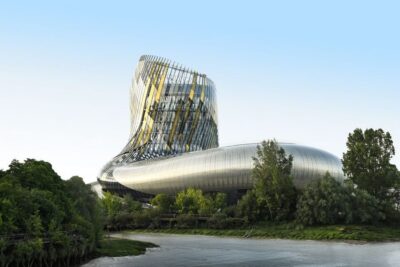
Cité du Vin is the larger, more polished, more modern museum with a broad international focus. The Wine and Trade Museum is smaller and more traditional. It concentrates on Bordeaux’s merchants, cellars, local wine commerce, and the history of the city’s trade.
I would choose the Wine and Trade Museum if you want an intimate historic setting and a direct connection to Bordeaux’s commercial past. I would choose Cité du Vin if you want a major museum experience with modern presentation and a wider world wine perspective. If you have enough time, visiting both gives you two different views of wine: one focused on Bordeaux’s local trade and one focused on wine culture on a larger scale.
Several detailed assessments preferred the smaller museum precisely because it felt less high-tech and more specific. Others found the limited size disappointing. Your choice depends on whether you value atmosphere and focus more than scale and interactive displays.
Is $14.51 good value?
At about $14.51 per person, the ticket is reasonably priced for Bordeaux. You receive entry to a historic museum, English-language material, and two wine tastings. If the staff member leading your tasting is willing to answer questions, the educational value improves considerably.
The price is less attractive if you only want a large collection of objects or an elaborate museum production. The exhibits are limited by the size of the two cellars, and some of the information can feel crowded onto paper or small wall text.
For me, the value rests on three things: the building, the focused story, and the tasting. Remove the tasting, and the museum alone may feel brief. Remove the historical setting, and the displays would be less memorable. Together, they create a compact experience that fits well into a morning or afternoon.
It is also a good final-morning activity before leaving Bordeaux. You can spend less than two hours learning the basics, tasting two wines, and possibly browsing the boutique for wine-related gifts. The shop sells wine and souvenirs, though the museum experience should not be treated as a shopping visit.
Who should book this experience?
I would recommend it to you if you are visiting Bordeaux for the first time and want a manageable introduction to the city’s wine trade. It is especially useful if you like history, old buildings, and practical explanations more than flashy presentation.
It suits:
- First-time Bordeaux visitors who want context before visiting wine country
- Couples looking for a short cultural stop with a tasting
- Cruise passengers seeking a walkable activity near the waterfront
- English-speaking visitors who prefer written explanations and staff assistance
- Families with adults who want to taste and children who can manage a quiet museum
- Non-drinkers accompanying someone who wants to sample Bordeaux wine
I would be more cautious if you expect a fully guided tour, extensive interactive displays, or a long tasting. The experience is self-guided, the museum is compact, and the tasting is brief. Also, avoid booking it by name alone if you actually want Cité du Vin.
The museum is recommended by 94 percent of customers and has a 4.7 rating from 599 reviews, which fits the overall picture: the strongest praise goes to the friendly staff, the tasting, the historic cellars, and the value. The lower ratings tend to focus on the small size, limited interactivity, cellar odor, or confusion with another Bordeaux wine attraction.
You can cancel for a full refund if you do so at least 24 hours before the start time. Changes or cancellations made less than 24 hours ahead are not accepted, based on local time.
Final verdict: book it for the tasting and setting
Book the Bordeaux Wine and Trade Museum if you want a small, affordable introduction to Bordeaux wine commerce followed by a guided tasting. The two wines, English material, cellar setting, and friendly staff make this more worthwhile than a simple shop tasting.
Skip it if your priority is a large, interactive museum or a long formal wine class. For many visitors, the best plan is to pair it with other Bordeaux sights, giving the museum about 90 minutes and treating the tasting as the centerpiece. Just confirm that you are selecting the Wine and Trade Museum, not Cité du Vin.
FAQ
Where is the Bordeaux Wine and Trade Museum located?
It is located in Bordeaux, France, in the historic building associated with the royal broker Louis XV. The museum is in the Chartrons area, and public transportation is nearby.
What are the museum’s opening hours?
The stated opening hours are 10 a.m. to 6 p.m., Monday through Sunday, during the listed operating period from March 1, 2025, through February 16, 2027.
How long does the visit take?
The experience takes approximately one to two hours. If you move quickly through the displays, you might finish the museum portion in about 45 minutes, while a slower visit with videos, reading, and tasting can take longer.
Is the wine tasting included?
Yes. The ticket includes a tasting of two wines at the museum boutique after the self-guided visit.
Which wines are tasted?
The tasting explains the differences between Merlot and Cabernet Sauvignon. The specific wine labels are not stated.
Is the museum visit guided?
The museum portion is self-guided. English notes, folders, displays, and audio material are available, while staff lead or explain the wine tasting.
Is this the same as Cité du Vin?
No. The Wine and Trade Museum is a smaller museum in historic cellars focused on Bordeaux’s wine trade. Cité du Vin is a separate, larger wine museum with a more modern presentation.
Can someone who does not drink alcohol take part?
Yes. A non-alcoholic grape juice option has been provided for someone accompanying a wine drinker. The included tasting is for two wines, and additional food and drinks are not included unless specified.
What is the cancellation policy?
You can cancel for a full refund up to 24 hours before the experience start time. Cancellations or changes made less than 24 hours before the start time are not accepted.
More Museums in Bordeaux
- Bordeaux: Museum of Illusions Entry Ticket
★ 4.2 · 588 reviews - Paris: Louvre Museum Timed-Entrance Ticket
★ 4.6 · 71,977 reviews - Louvre Museum Masterpieces Guided Tour with Access
★ 4.5 · 12,023 reviews - Paris: Louvre Museum Entry Ticket With Host and River Cruise
★ 4.6 · 9,926 reviews
Recently added in Bordeaux
- Discover Braastad Cognac★ 5.0 · 52 reviews
- Au Cœur du Château – VSOP D’USSÉ & XO BARON OTARD★ 4.5 · 108 reviews
- retro road trip/ Méhari, 2CV & Burton in Rochefort, La Rochelle★ 5.0 · 28 reviews
- Saint-Emilion Food and Wine Day Tour★ 5.0 · 323 reviews
- Saint Emilion Full Day Wine and Bike Tour★ 5.0 · 167 reviews
- Bordeaux bike tour “The Best of Bordeaux”★ 5.0 · 164 reviews
- Virtual Room Bordeaux – 1st team virtual reality experience★ 5.0 · 47 reviews
- Luxurious full day Bordeaux wine tour in a Tesla★ 4.5 · 31 reviews
Wine Tours, compared.
Montmartre Hill French Gourmet Food and Wine Tasting Walking Tour
Read our review →
Loire Valley Castles Day Trip With Wine Tasting
Read our review →
Afternoon Saint-Emilion Wine Tasting & snack
Read our review →
Medoc or Saint Emilion Wine Tasting and Chateau from Bordeaux
Read our review →
Saint Emilion Day Trip with Sightseeing Tour & Wine Tastings from Bordeaux
Read our review →
Saint-Émilion: Grand Cru Classé Winery Visit and Tasting
Read our review →
Saint Emilion Half-Day Trip with Wine Tasting & Winery Visit from Bordeaux
Read our review →Browse the lists this tour appears in