
REVIEW · CHEESE
Bordeaux: Wine Masterclass with Cheese and Charcuterie Board
Bordeaux makes wine feel wonderfully less mysterious. This 90-minute masterclass puts six regional wines, practical tasting lessons, and local cheese and charcuterie together in a wine bar near the Grand Théâtre. I like the clear tasting method, which moves from sight to smell to taste, and I like the way the wines show Bordeaux from several angles rather than offering six similar pours. The main consideration is that children under 16 cannot attend, and the exact wines may change.
The class also gives you useful background before you visit a château or vineyard. You learn about terroir, grape varieties, appellations, classification, winemaking, aging, storage, and service without needing a wine diploma. Guides such as Antoine, Hugo, Enzo, Anna, and Vincent have been praised for making the subject friendly, funny, and easy to follow.
In This Review
- Key points at a glance
- Why this Bordeaux class works for beginners
- Starting with white wine and the tasting method
- Three single-grape reds reveal Bordeaux’s building blocks
- Comparing the Left Bank and Right Bank
- Cheese, charcuterie, and the practical side of pairing
- A city-center setting near the Grand Théâtre
- What the $53 price includes
- Who will get the most from the class
- Timing, language, and planning tips
- Should you book the Bordeaux wine masterclass?
- FAQ
- How long does the Bordeaux wine masterclass last?
- How many wines are included?
- Are all the wines from Bordeaux?
- Is a Bordeaux grand cru included?
- What food is served with the wine?
- Where is the meeting point?
- Can I attend if I do not know much about wine?
- What languages are offered?
- Are children and pets allowed?
Key points at a glance
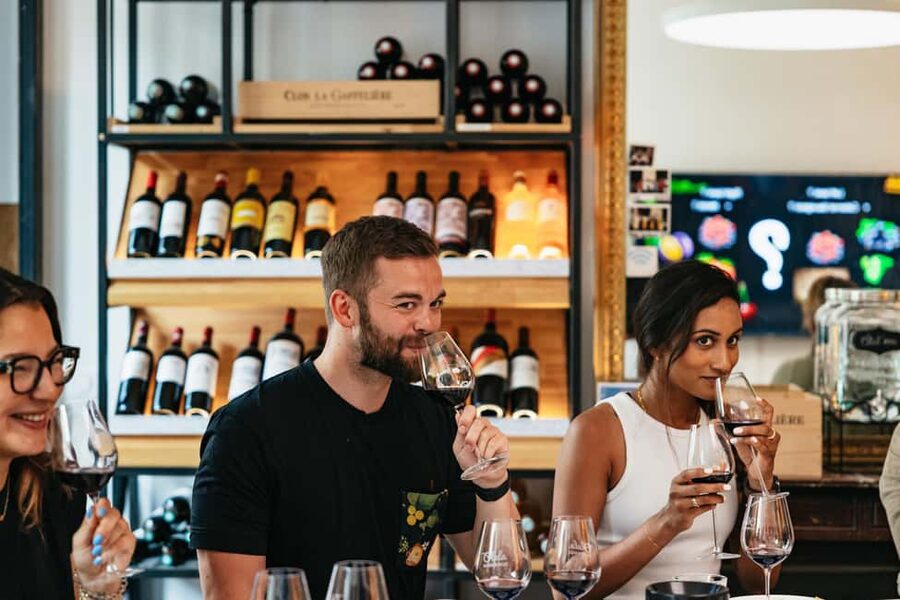
- Six wines in 90 minutes: Taste one white and five reds, including examples from both sides of the Gironde.
- A practical tasting lesson: Learn how to look at, smell, and taste wine with a repeatable method you can use in a restaurant.
- Bordeaux’s red grapes explained: Three single-grape red wines help you notice how grape character changes before blending enters the picture.
- Left Bank versus Right Bank: The final pair compares the two classic Bordeaux styles, including one Bordeaux grand cru.
- Food makes the lesson easier: Local cheeses, charcuterie, baguette, and water accompany the wines.
- Easy city-center meeting point: Olala Bordeaux is about five minutes from the Quinconces tram stop and close to the Grand Théâtre.
Why this Bordeaux class works for beginners
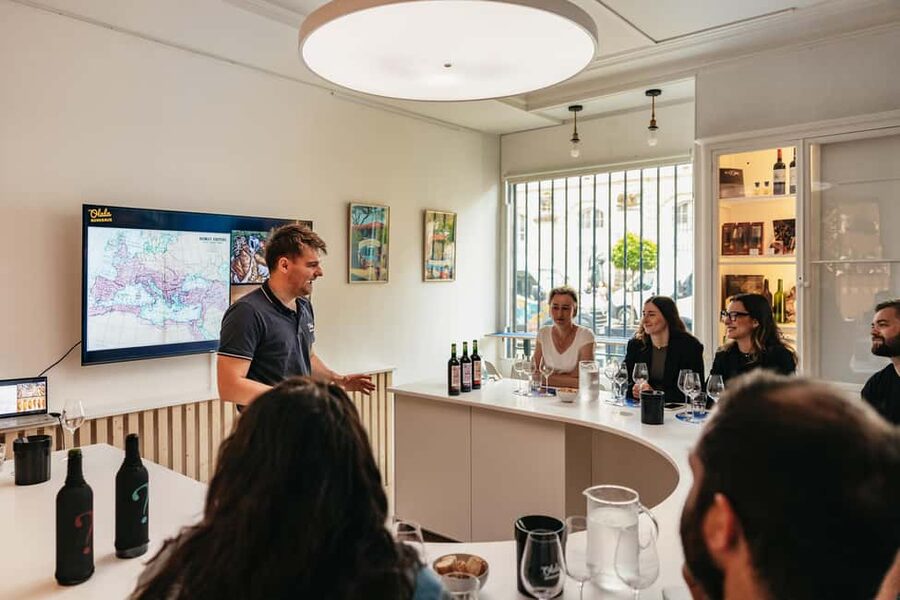
Bordeaux wine can look like a wall of labels, estates, rankings, and French place names. This class gives you a useful map before you try to make sense of a wine list or plan a vineyard visit.
The guide begins with basic terms. You hear how terroir refers to the combination of place and growing conditions, and how grape varieties, appellations, and classification shape the identity of a bottle. You also learn that Bordeaux wines are often blends, an important point in a region where a bottle may reflect more than one red grape.
I like this approach because it does not assume you already know the difference between a grape and an appellation. The class can suit a complete beginner, yet it still gives an intermediate wine drinker something useful, especially when the guide explains how vinification, oak aging, storage, and service affect what ends up in your glass.
The teaching style appears to be one of the strongest parts. Different guides have led the session over time, including Antoine, Hugo, Enzo, Anna, Noe, Olivier, and Vincent. The consistent praise is for clear explanations, humor, patience, and a genuine interest in the topic. That matters here. Wine lessons can become stiff very quickly, but a relaxed guide helps you ask the basic questions you might otherwise keep to yourself.
More cheese tastings in Bordeaux:
- Professional – Bordeaux Wine and Cheese Tasting with a walking tour
★ 5.0 · 218 reviews - Tasting of 6 Bordeaux wines and pairing charcuterie & cheese
★ 5.0 · 199 reviews - Bordeaux Afternoon Food Tour : Sweets, Wine and Cheese
★ 5.0 · 38 reviews
Starting with white wine and the tasting method
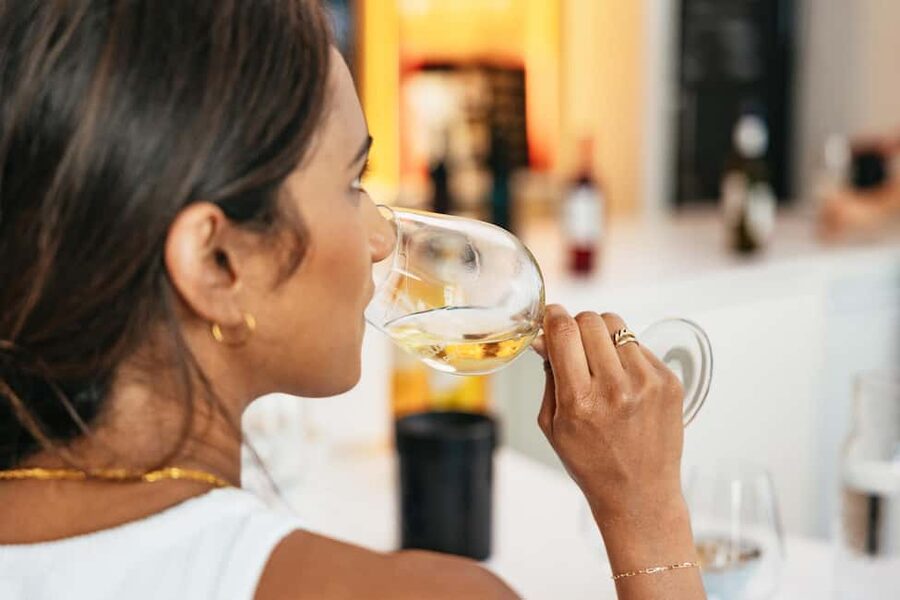
Your first glass is a white wine. It is used less as a grand introduction to Bordeaux than as a clean way to wake up your senses and establish the tasting routine.
You learn to look at the wine, smell it, and taste it. The method is described as universal, so it is not merely a trick for this one class. You can use the same sequence later in a restaurant, at a château, or with a bottle bought in Bordeaux.
The sensory part is handled in a practical way. You may be asked to notice visual details, search for aromas, and think about what happens on the palate. One past session included an aroma sample kit, which helped connect wine vocabulary with recognizable smells. Another included a blind tasting exercise, giving the class a playful test of what you had just learned.
This is where the course earns its teaching fee. You are not simply handed a glass and told that it tastes nice. You get a way to pay attention. Afterward, you may not identify every grape correctly, but you should feel more comfortable describing what you like and why.
The white wine also gives the group a change of pace before the red wines arrive. Since the class focuses heavily on Bordeaux reds, do not book it expecting an equal survey of white, rosé, and sparkling wines. The white is one part of a red-wine-focused lesson.
Three single-grape reds reveal Bordeaux’s building blocks
The next stage brings three glasses of regional red wine, each made to show the character of a single grape variety. This is one of the most useful parts of the session because Bordeaux is famous for blending.
In a blend, the finished wine can gain balance from several grapes. One may bring structure, another fruit, another fragrance or softness. Tasting single-grape examples first helps you understand the raw materials before you encounter the more classic finished styles.
Your guide explains the main red grape varieties associated with Bordeaux and points out their typical traits. You may notice differences in fruit, body, tannin, aroma, and finish. The point is not to memorize a chart. It is to train your palate to compare one glass with the next.
I find this order sensible. If you start with famous classified wines, the lesson can become a parade of labels and prices. Starting with the component grapes gives you a better chance of understanding why Bordeaux producers blend at all.
The wines and timing can vary, so you should not expect specific estates or vintages. That flexibility is worth keeping in mind if you have your heart set on one particular château. The stated promise is the quality and structure of the class, not a fixed bottle list.
Comparing the Left Bank and Right Bank
The final two wines take you into one of Bordeaux’s classic conversations: Left Bank versus Right Bank.
The class presents one wine from each side, then explains how their regional identity can differ. This is not a substitute for visiting both areas, but it gives you a useful framework for reading Bordeaux labels and understanding why people speak about the two banks as distinct styles.
One of these wines is a Bordeaux grand cru. That gives you a chance to taste a more prestigious example alongside another regional wine and consider the difference for yourself. The grand cru was a favorite in one session, but the value of the comparison is more important than picking a winner.
A blind tasting exercise may also appear in the class. It turns the lesson into a small challenge and lets you test your new vocabulary without the answer sitting in front of you. Do not worry about getting it wrong. The exercise works best when you treat it as a taste experiment, not an exam.
This final pairing is especially useful if you plan to continue exploring Bordeaux after the class. You can carry the Left Bank and Right Bank distinction into a restaurant order or a day trip. You will still need more study to understand individual appellations and estates, but you will have a starting point.
A few more Bordeaux outings to set side by side
- Bordeaux: Cité du Vin Entry Ticket and Wine Tasting
★ 4.6 · 3,885 reviews - Bordeaux: River Garonne Cruise with Glass of Wine and Canelé
★ 4.5 · 3,630 reviews - From Bordeaux: Afternoon Saint-Emilion Wine Tasting & snack
★ 4.8 · 1,581 reviews - Medoc or Saint Emilion Wine Tasting and Chateau from Bordeaux
★ 5.0 · 1,415 reviews
Cheese, charcuterie, and the practical side of pairing
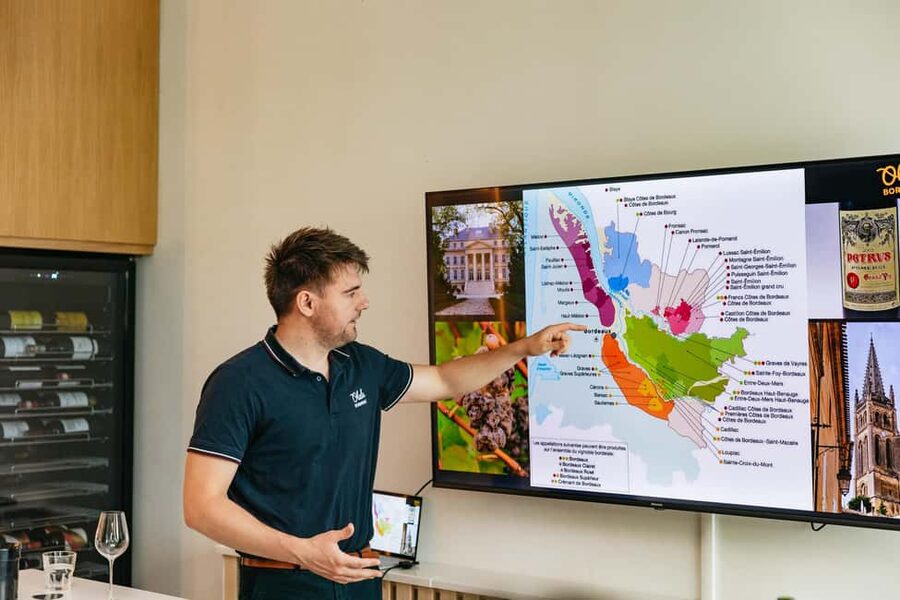
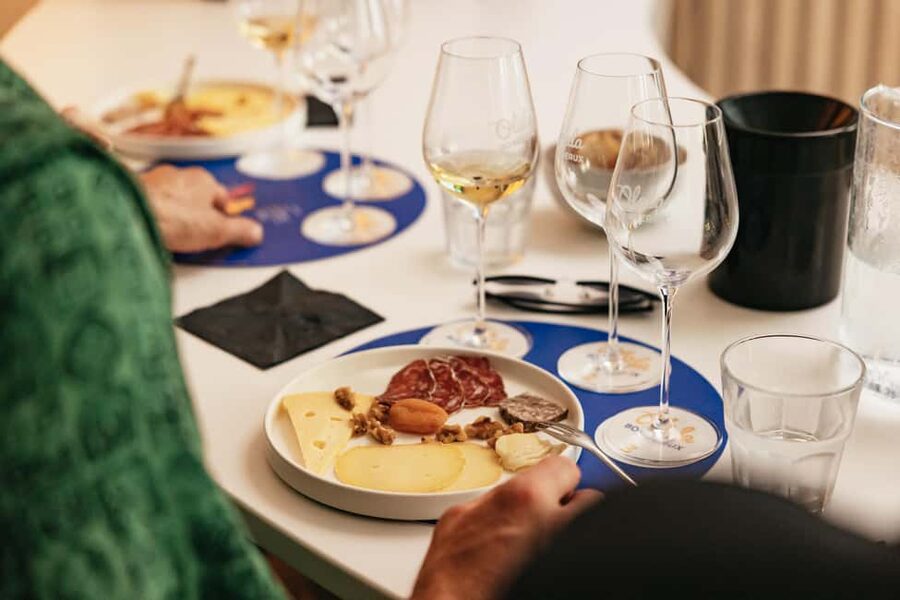
Wine is easier to assess when you have food beside it. The class includes a board of local cheeses and cold cuts, along with baguette and water.
The food is not described as a full meal, so I would not arrive hungry enough for dinner. Think of it as a generous tasting accompaniment. The cheese, meat, and bread give you a way to observe how the wine changes with salt, fat, and texture.
That makes the pairing lesson more useful than a simple snack break. A red wine can seem firmer or softer once you eat, and the right food may make a wine feel more balanced. You get basic guidance rather than a formal chef-led course, but it is enough to help you make better choices at a French table.
The food also keeps the class rooted in Bordeaux rather than turning it into a technical lecture. You are learning about regional wine while eating familiar local products in a city wine bar. Several sessions have included different cheeses and sausages, and the accompaniments have been singled out as a strong part of the experience.
Baguette and water are included. The water is useful during a six-wine tasting, and you should use it. Six pours in 90 minutes is manageable, but it is still a lot of wine, especially if you are not accustomed to tastings.
A city-center setting near the Grand Théâtre
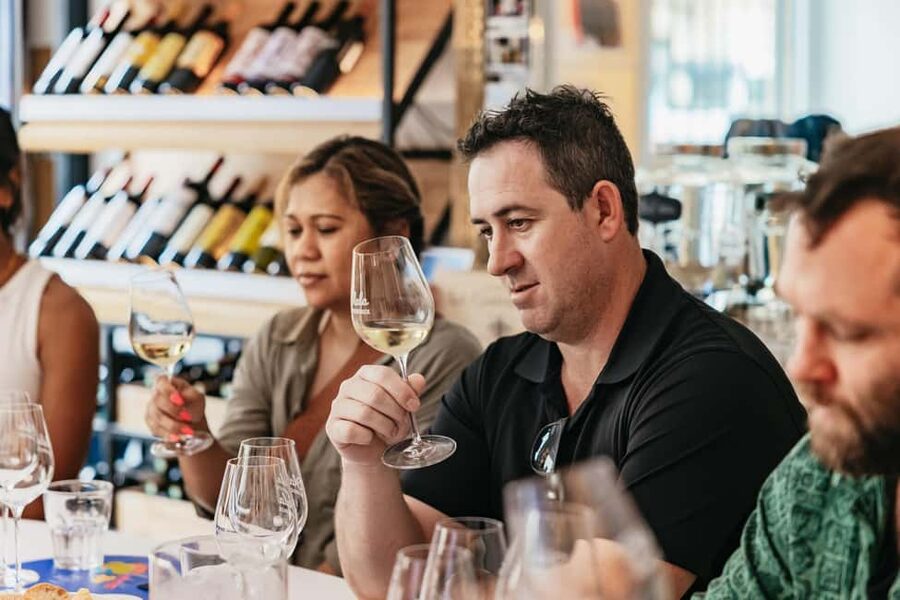
The meeting point is Olala Bordeaux, a short walk from the Quinconces tram stop and close to the Grand Théâtre. Tram lines B, C, and D serve Quinconces, making this an easy addition to a day in central Bordeaux.
The location is a wine bar and shop with a tasting area. Previous descriptions point to a small, cozy room arranged for instruction, with visual material and a setup suited to tasting. You get the atmosphere of a local wine business rather than a classroom in a hotel conference room.
That setting helps the lesson feel connected to the city. You can arrive by tram, take the class, and continue on foot through central Bordeaux afterward. A useful tip is to keep the rest of your schedule nearby. The class is short enough to fit before lunch or between sightseeing stops, and several people have treated it as a morning activity.
The five-minute walk from Quinconces is simple, but you should still allow a little extra time to find Olala Bordeaux. Meeting points in busy central districts can be easy to pass, especially when you are watching the tram map rather than the shopfronts.
What the $53 price includes
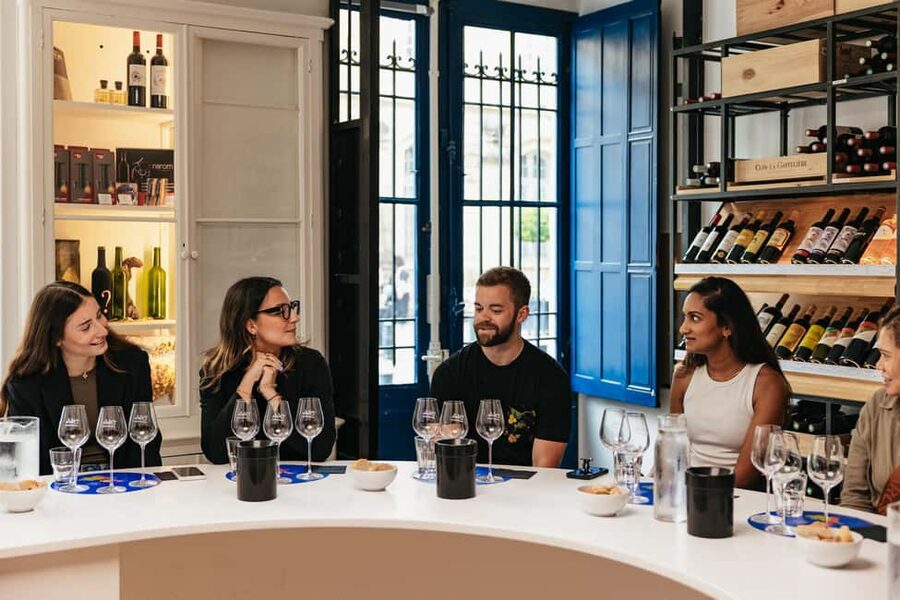
At $53 per person, the class is not the cheapest way to drink wine in Bordeaux. It is also not simply a bar tasting where you pay for six glasses and receive brief label descriptions.
The price includes the wine guide, one white wine, five red wines, the cheese and charcuterie board, baguette, water, and printed information. Most important, it pays for a structured explanation of what you are drinking.
You get six wines in total, which works out to less than $9 per wine before assigning any value to the food or instruction. That simple calculation is not a perfect measure, since tasting pours are smaller than full glasses, but it shows why the experience is often considered good value.
The grand cru sample also affects the calculation. You are not promised a particular château or vintage, so you should not judge the price as a guaranteed luxury tasting. Instead, consider it a guided introduction to Bordeaux with one higher-level comparison built in.
I would call the value strongest for people who want to learn. If your only goal is to drink as much as possible, a wine bar may suit you better. If you want to understand labels, compare styles, and feel more confident ordering wine, the class makes more sense.
Who will get the most from the class
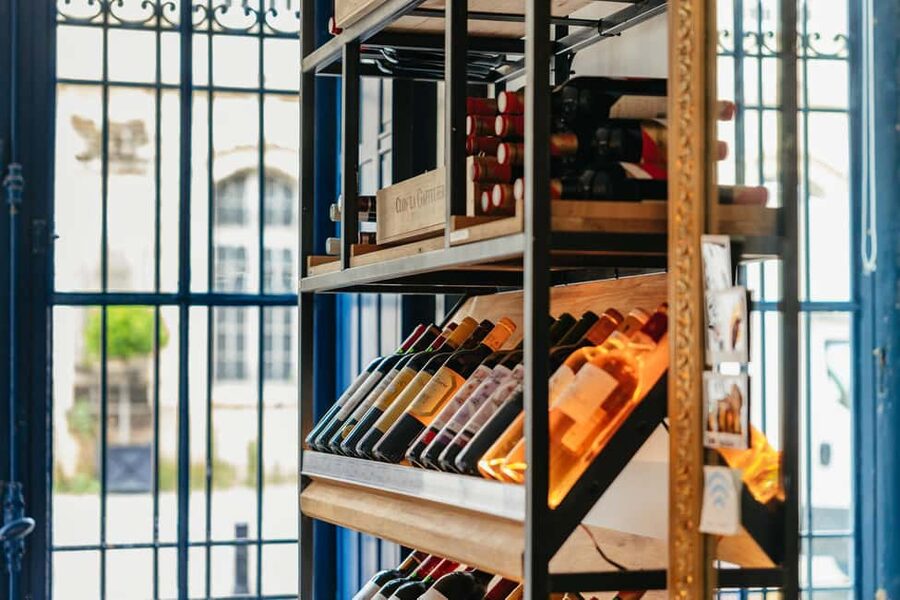
This is a good fit if you are new to wine and want a calm introduction without being talked down to. It also works for couples, friends, and solo visitors who enjoy meeting a small group around a shared table.
The atmosphere has been described as relaxed, friendly, and not rushed. One small group even continued drinking wine at a nearby restaurant afterward. That is not a scheduled part of the activity, but it gives you an idea of the social tone the class can create.
You will probably enjoy it most if you like asking questions. Guides have been praised for taking time with different levels of experience, so do not worry if you cannot name a grape or describe tannin. The class is designed to teach those basics.
It is not suitable for children under 16, and unaccompanied minors are not allowed. Pets are also not permitted. If your group includes younger children, you will need a separate plan for this part of the day.
Experienced wine drinkers may find some material familiar, particularly the basic tasting method. Still, the single-grape comparison and Left Bank versus Right Bank tasting can add useful structure. The class is better seen as an accessible regional lesson than an advanced sommelier course.
Timing, language, and planning tips
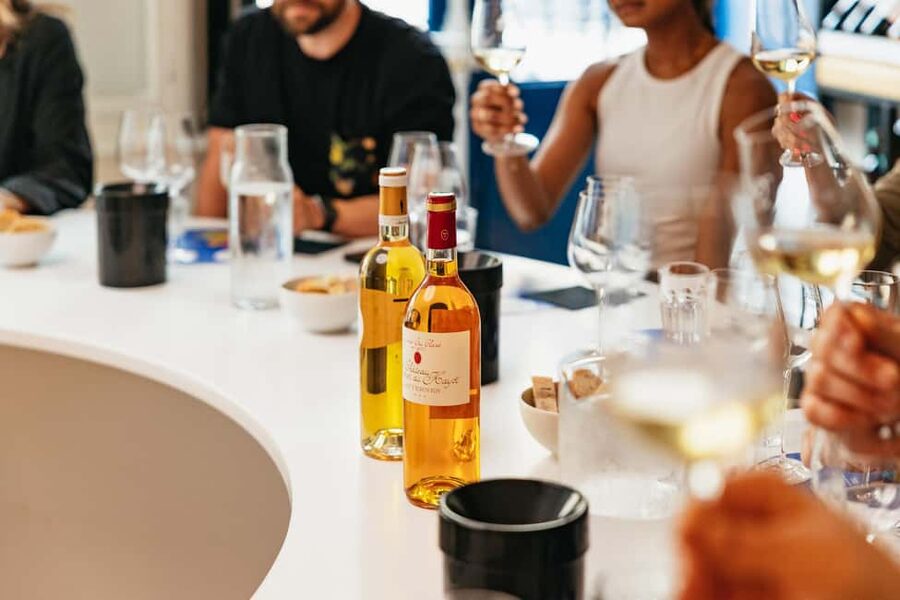
The experience lasts 90 minutes, with starting times available according to the date you choose. Check the schedule before you build a museum visit or meal around it.
Instruction is offered in English or French. If you need a specific language, confirm that choice when booking rather than assuming every session uses English.
The wines and order can change. That is normal for a tasting, especially when availability varies, and the activity specifically notes that the quality remains the same even when the bottle list changes.
You can cancel up to 24 hours in advance for a full refund, and a reserve-now, pay-later option is available. Those terms make it easier to place the class into a changing Bordeaux itinerary, but check the conditions attached to your booking before relying on them.
A practical tip: avoid scheduling a serious wine excursion immediately afterward if you want to remember the details. The class includes one white and five reds, so it is best treated as the main wine event for that part of your day.
Should you book the Bordeaux wine masterclass?
I would book this if you want more than a row of glasses. The strongest reason is the teaching: you learn a usable tasting method, see how Bordeaux grapes behave on their own, and then compare regional styles with food beside them.
The location is convenient, the price is fair for six wines plus instruction and food, and the friendly delivery has been remarkably consistent across different guides. Antoine, Hugo, Enzo, Anna, Noe, Olivier, and Vincent have all been praised for making the subject clear and enjoyable.
Skip it if you want a full vineyard visit, château tour, or a fixed list of famous labels. This takes place in central Bordeaux and lasts 90 minutes, so it gives you a foundation rather than a day in the countryside.
For a first visit to Bordeaux, I think it is a smart way to get your bearings before booking a vineyard excursion. You leave with better questions, a clearer idea of Left Bank and Right Bank wines, and perhaps a favorite cheese to order with your next glass.
FAQ
How long does the Bordeaux wine masterclass last?
The class lasts 90 minutes.
How many wines are included?
You taste six wines: one white wine and five red wines.
Are all the wines from Bordeaux?
The tasting focuses on regional Bordeaux wines, including three single-grape red wines and two final wines representing the Left Bank and Right Bank.
Is a Bordeaux grand cru included?
Yes. One of the final two wines is a Bordeaux grand cru.
What food is served with the wine?
The experience includes a cheese and charcuterie board, baguette, and water.
Where is the meeting point?
Meet at Olala Bordeaux, about a five-minute walk from the Quinconces tram stop. Tram lines B, C, and D serve Quinconces.
Can I attend if I do not know much about wine?
Yes. The class covers basic tasting, grape varieties, terroir, appellations, winemaking, aging, storage, and wine service, making it suitable for beginners.
What languages are offered?
The instructor can teach in English or French.
Are children and pets allowed?
Children under 16 are not allowed, and pets are not permitted. Unaccompanied minors cannot attend.
Recently added in Bordeaux
- Discover Braastad Cognac★ 5.0 · 52 reviews
- Au Cœur du Château – VSOP D’USSÉ & XO BARON OTARD★ 4.5 · 108 reviews
- retro road trip/ Méhari, 2CV & Burton in Rochefort, La Rochelle★ 5.0 · 28 reviews
- Saint-Emilion Food and Wine Day Tour★ 5.0 · 323 reviews
- Saint Emilion Full Day Wine and Bike Tour★ 5.0 · 167 reviews
- Bordeaux bike tour “The Best of Bordeaux”★ 5.0 · 164 reviews
- Virtual Room Bordeaux – 1st team virtual reality experience★ 5.0 · 47 reviews
- The essential in Bordeaux, private tour with a local★ 5.0 · 26 reviews
Cheese, compared.
Montmartre Cheese, Wine & Pastry Guided Walking Tour
Read our review →
Private Montmartre Food Tour with Wine, Cheese & Pastries
Read our review →
Paris Le Marais Food Tour With 10+ Tastings, Cheese, Wine & More
Read our review →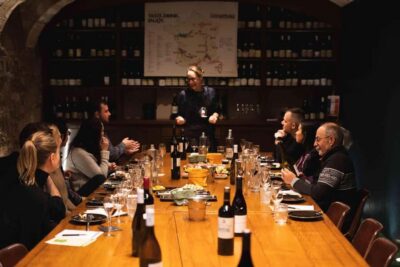
Cheese & Wine Tasting in Montmartre with Local Cheesemonger
Read our review →
French Wine, Champagne And Cheese Tasting Paris SECRET WINE DOOR
Read our review →
Walking Food Tour with Cheese, Wine and Delicacies
Read our review →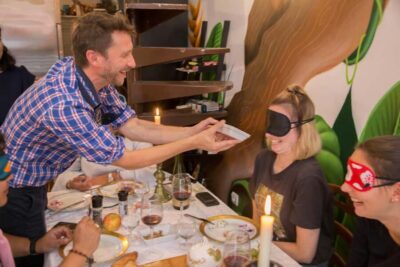
Browse the lists this tour appears in