
REVIEW · CHEESE
Tasting of 6 Bordeaux wines and pairing charcuterie & cheese
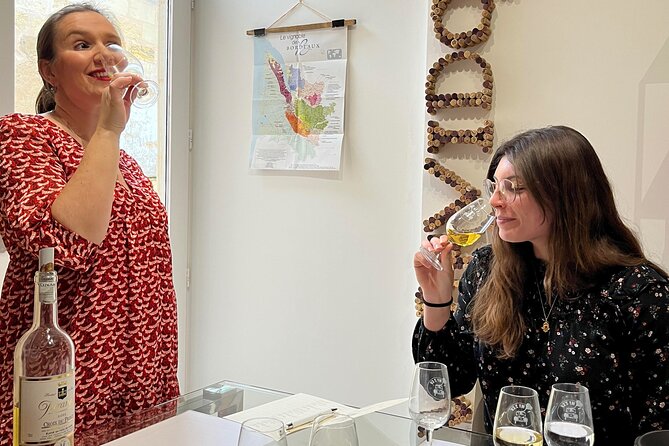
Bordeaux makes more sense after one good tasting. This compact session turns a complicated wine region into something you can understand, using six Bordeaux wines, simple tasting exercises, and food pairings. I especially like the small maximum of six people and the clear teaching from guides such as Cécilia and Mathilde. The main caution is that the charcuterie and cheese are tasting portions, not a meal.
I also like the range: dry whites from both banks, red blends, a sweet wine, and bottles from both classified estates and organic family producers. You get a tasting booklet to use later. At about $54.44 per person for roughly 75 minutes, it is a good introduction, though the short schedule can feel rushed if the group arrives late or needs translation.
In This Review
- Key points at a glance
- A short lesson in Bordeaux wine at 25 Avenue Thiers
- Learning to taste without taking it too seriously
- The six wines and the one numbering puzzle
- Left Bank, Right Bank, and why the distinction matters
- Charcuterie, cheese, and the limits of the pairing
- Courtyard, cellar, or indoor room
- Why the 75-minute schedule matters
- Is $54.44 a fair price?
- Who will enjoy this Bordeaux tasting most?
- FAQ
- Where does the wine tasting start and end?
- How long does the experience last?
- How many wines will I taste?
- Is food included?
- Is the tasting offered in English?
- Can I cancel for a full refund?
- Should you book it?
Key points at a glance
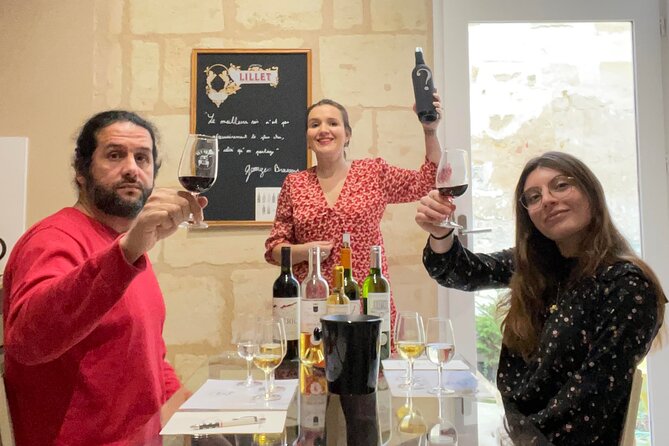
- Six Bordeaux pours in one sitting: The tasting covers dry white, red, blended, left-bank, right-bank, mystery, and sweet wine styles, although the written wine breakdown appears to list seven categories.
- Small groups make questions easy: The maximum is six people, so you can ask about labels, aromas, soil, and food matching without shouting across a crowded room.
- Cécilia and Mathilde teach the basics well: Both are trained at the University of Wine and explain Bordeaux wine in clear English, with warmth and humor.
- The setting changes with the season: You might taste in a private courtyard, cellar, or furnished indoor room.
- Food is a side partner, not lunch: Charcuterie and cheese show how pairing works, but portions may be modest.
- A useful choice for a short Bordeaux visit: The meeting point is near public transportation, and the activity returns to the same address.
A short lesson in Bordeaux wine at 25 Avenue Thiers
The experience begins at 25 Av. Thiers, 33100 Bordeaux. You meet there and finish back at the same point, which keeps the outing easy to fit around sightseeing in the city.
The format is intentionally small. With no more than six people, the tasting can feel more like a relaxed wine lesson than a formal class. That matters in Bordeaux, where the vocabulary can quickly become a thicket of château names, appellations, classifications, grape varieties, and bank distinctions.
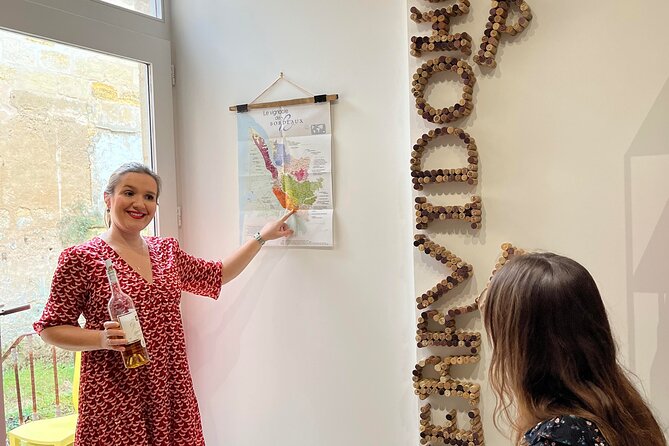
Your guide begins with the foundations. You learn how Bordeaux is divided into the Left Bank and Right Bank, why the soil matters, how producers blend grapes, and how French labels differ from the variety-first labels common in many other countries.
This is useful even if you already drink wine. In Bordeaux, the bottle often emphasizes the estate and appellation rather than telling you plainly which grapes are inside. The session helps you read that information with less guesswork.
Cécilia is praised for explaining the subject clearly and with humor. Mathilde is described as warm, easy to talk with, and especially good at explaining regions, blends, aromas, and French labels. The provider also lists Ilona and Ilo in individual experiences, so the exact host may vary.
More Food Tours in Bordeaux
- Bordeaux: Cité du Vin Entry Ticket and Wine Tasting
★ 4.6 · 3,885 reviews - From Bordeaux: Afternoon Saint-Emilion Wine Tasting & snack
★ 4.8 · 1,581 reviews - Medoc or Saint Emilion Wine Tasting and Chateau from Bordeaux
★ 5.0 · 1,415 reviews
Learning to taste without taking it too seriously
The tasting lesson is practical. Instead of simply handing you a glass and naming the bottle, the guide asks you to pay attention to what your senses notice.
You may work with aroma samples or scent exercises, similar to those used in wine education. The aim is not to turn you into a sommelier in 75 minutes. It is to help you put words to what you already notice: fruit, spice, floral notes, freshness, sweetness, weight, and texture.
That approach suits beginners. You do not need a trained palate or a large wine vocabulary. The friendly style helps take away the pressure to identify every aroma correctly.
You also learn how a wine’s character connects to its origin. The guides explain the role of terroir, including the relationship between soil, grape growing, production methods, and the final blend. This gives you a reason behind the differences instead of asking you to memorize a list of Bordeaux names.
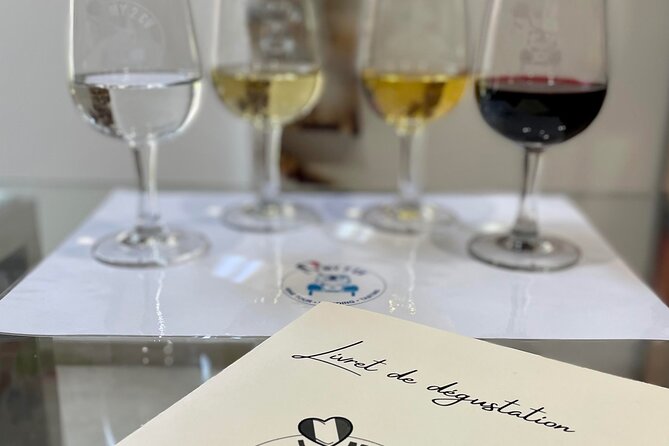
The tasting booklet is a small but valuable extra. You can record impressions, compare wines, and continue practicing at home. It also gives the lesson some lasting value after the glasses are empty.
The six wines and the one numbering puzzle
The advertised format includes six glasses of wine. The selection is designed to show breadth rather than focus on one famous château or one grape.
The written description lists:
- One mystery wine
- Two dry white wines, representing the Left Bank and Right Bank
- Three red wines, including blends and wines from both banks
- One sweet wine
That list appears to total seven wine categories, while the experience is clearly described elsewhere as six wines. The individual descriptions also consistently refer to six pours. If the exact count matters to you, confirm the lineup before booking, but you should plan on the stated six glasses.
The mystery wine is a clever opening or teaching tool. Without a label or explanation first, you can make your own judgment before learning where the wine comes from. It turns tasting into a small puzzle and shows how much expectation affects your palate.
The dry whites provide an important comparison. Bordeaux is often associated with red wine, but its white wines can be fresh, aromatic, and quite different from one bank to the other. Tasting them side by side helps you notice regional style without needing to visit several estates.
The red wines focus on Bordeaux’s famous blending tradition. You may compare wines linked to the Left Bank and Right Bank, along with different blends. This is one of the strongest parts of the session because it explains why Bordeaux does not taste like one single thing.
A sweet wine completes the range. The inclusion of a soft or sweet pour keeps the tasting from becoming a parade of similar reds and gives you another chance to examine balance, sweetness, acidity, and food matching.
The wines come from both Grands Crus Classés and family estates using organic farming. That gives you a useful contrast between classified production and smaller-scale winegrowing. It also avoids the narrow idea that Bordeaux is only about expensive, prestigious bottles.
The bottles tasted are available for sale. If you find a style you like, you can buy it before leaving. One participant used the tasting to choose an affordable bottle priced at €15, which shows the practical side of the session: you can leave with more confidence rather than selecting a bottle by label alone.
Left Bank, Right Bank, and why the distinction matters
Bordeaux’s two-bank split is not just a geography lesson. It gives you a simple framework for understanding the region’s main styles.
The tasting uses wines from both sides of the Gironde and its connected rivers. Your guide explains how the soils and grape blends influence what you taste. The point is not to force you into a team, but the comparison may reveal that you prefer the fuller, bolder character of one style or the fruit-forward feel of another.
One participant described discovering a preference for bold or fruity wines after learning about the Left Bank and Right Bank. That is exactly the sort of result you want from a first tasting. You are not merely told what experts like. You gain a better sense of what you like.
The discussion of blending is also important. Bordeaux wines are traditionally built from several grape varieties, and the balance between them can affect structure, aroma, fruit, and aging potential. You may not remember every grape name afterward, but you should leave with a clearer idea of why two Bordeaux reds can taste so different.
More cheese tastings in Bordeaux:
- Professional – Bordeaux Wine and Cheese Tasting with a walking tour
★ 5.0 · 218 reviews - Bordeaux: Wine Masterclass with Cheese and Charcuterie Board
★ 4.9 · 184 reviews - Bordeaux Afternoon Food Tour : Sweets, Wine and Cheese
★ 5.0 · 38 reviews - Wine Masterclass & Cheese Tasting Workshop in Bordeaux
★ 5.0 · 29 reviews
Charcuterie, cheese, and the limits of the pairing
Food is included as part of the lesson. Small servings of charcuterie and cheese demonstrate how a wine changes when tasted with something salty, creamy, or savory.
This is a good teaching choice. Pairing is easier to understand when you taste the wine alone and then try it with food. A cheese can soften a wine’s sharp edge, while cured meat can make fruit and body seem more pronounced.
Keep your expectations in check. The food is described as snacks, and the tasting boards may consist of bite-sized portions. Some sessions offer two cheeses and two meats, often served toward the end rather than alongside every glass.
That means the food is not a separate pairing for each wine. If you arrive hungry, order the optional picnic with local products in advance. Lunch is not included, and the picnic is available only by reservation.
Vegetarian needs deserve extra attention. One person reported that a meat selection was served despite a vegetarian request. If you do not eat meat, contact the provider ahead of time and confirm that the request has been recorded and will be honored.
The provider describes specialized tastings for people who prefer only red or only white wine. The standard tasting is more varied, but you can ask about those options if you want a narrower session.
Courtyard, cellar, or indoor room
The setting depends on the season. You might sit in a private courtyard, a cellar, or a furnished room.
The courtyard has received praise for its pleasant, intimate feel. An outdoor tasting can make the hour feel especially relaxed, but the seasonal format means you should not assume you will always be outside.
The cellar or furnished room may be the better setting for a focused lesson. The space is small and personal rather than grand. That suits the teaching style, since you can hear the explanation and speak directly with the guide.
The atmosphere is one of the experience’s strengths. It is comfortable and informal, but the subject remains serious enough to teach you something useful. You get a local tasting rather than a staged performance built around elaborate scenery.
Why the 75-minute schedule matters
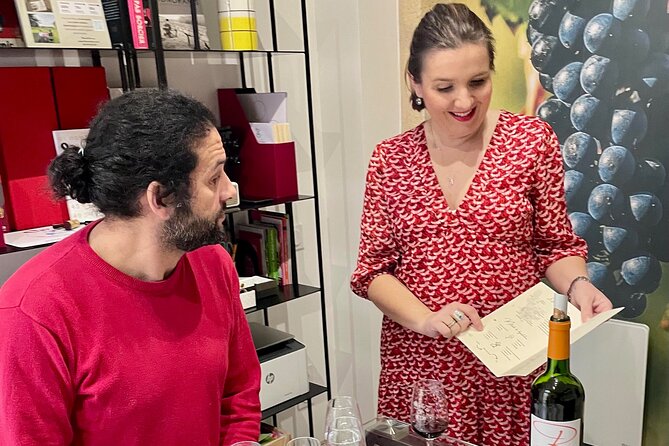
The advertised duration is about one hour and 15 minutes. That is enough time for a thoughtful introduction and six pours if everyone arrives promptly.
It is not much time for a full regional lecture, extended questions, generous food service, and leisurely drinking. A session can feel compressed if someone arrives late or if part of the group needs the explanation in two languages.
One person arrived with cruise timing concerns and had only about 40 minutes after transportation problems. Cécilia adjusted by welcoming the group early, but the presentation had to be condensed. If you are coming from a cruise ship or catching a long-distance train, timing deserves careful planning.
An earlier 11:30 a.m. tasting is available, and one participant suggested noon as a more convenient start for transport connections. The important lesson is simple: do not choose a time that leaves only a narrow margin for getting back to your ship or train.
The experience is offered in English. A note also says there are no Spanish classes from August 14 through August 24, so Spanish-language support should not be expected during those dates.
Is $54.44 a fair price?
At $54.44 per person, the price is reasonable if you want instruction as well as wine. You are paying for six glasses, a guided explanation of Bordeaux, food pairing, a booklet, and a small-group format.
The value is strongest for first-time Bordeaux drinkers. A large tasting room may offer more wine, but it may give you less personal help with labels, aromas, and preferences. Here, the guide can respond to your questions and adjust the explanation to the group’s experience.
The price is less attractive if you are expecting a meal or large pours. The charcuterie and cheese are snacks, and the session is short. You are buying a compact lesson, not an evening feast.
It also helps that wines are available to purchase. If you are trying to choose a bottle for your hotel room or to take home, the tasting can prevent an expensive guess.
The experience is commonly reserved about three weeks ahead, with an average booking lead time of 22 days. That suggests you should reserve early if your Bordeaux dates are fixed, especially for a group of six or fewer.
Who will enjoy this Bordeaux tasting most?
I would recommend it to you if you want a clear introduction to Bordeaux without spending a full day in the vineyards. It works especially well for:
- First-time visitors who find French wine labels confusing
- Couples or small groups who prefer conversation over a crowded tasting room
- Solo visitors who want help choosing a bottle
- Wine drinkers curious about Left Bank and Right Bank differences
- People with limited time in Bordeaux
- Visitors who want both white and red wine in one session
The tasting is also a smart first activity before a vineyard excursion. After learning the basic terms, you will get more from a later visit to an estate.
It may not suit you if you want a full meal, generous quantities of food, or a long, slow afternoon of drinking. It is also not ideal if your transport schedule is tight. Leave enough time to reach the meeting point and return afterward.
Most people can participate, service animals are allowed, and the meeting point is near public transportation. Confirmation is provided when you book. Free cancellation is available up to 24 hours before the start time, but changes or cancellations inside that window are not accepted.
FAQ
Where does the wine tasting start and end?
It starts at 25 Av. Thiers, 33100 Bordeaux, France, and ends back at the same meeting point.
How long does the experience last?
The tasting lasts approximately one hour and 15 minutes.
How many wines will I taste?
The experience includes six glasses of wine. The description lists several categories that appear to total seven, so confirm the exact lineup if the number or style of each pour is important to you.
Is food included?
Yes. Snacks and a food and wine pairing with charcuterie and cheese are included. Lunch is not included, but a picnic with local products can be reserved separately.
Is the tasting offered in English?
Yes. The experience is offered in English. The information also notes that there are no Spanish classes from August 14 through August 24.
Can I cancel for a full refund?
Yes. You can cancel at least 24 hours before the local start time for a full refund. Cancellations or changes made less than 24 hours before the start time are not accepted.
Should you book it?
Book this tasting if you want Bordeaux explained in plain language, with enough variety to discover your own preferences. The small group, strong hosts, booklet, and mix of classified and organic family wines give the $54.44 price solid value.
Go in expecting a wine lesson with snacks, not dinner. Confirm dietary requests, allow plenty of time for transport, and ask about the exact wine count if that detail matters. For a short stay in Bordeaux, this is an efficient way to understand the bottles you will see throughout France.
Recently added in Bordeaux
- Discover Braastad Cognac★ 5.0 · 52 reviews
- Au Cœur du Château – VSOP D’USSÉ & XO BARON OTARD★ 4.5 · 108 reviews
- retro road trip/ Méhari, 2CV & Burton in Rochefort, La Rochelle★ 5.0 · 28 reviews
- Saint-Emilion Food and Wine Day Tour★ 5.0 · 323 reviews
- Saint Emilion Full Day Wine and Bike Tour★ 5.0 · 167 reviews
- Bordeaux bike tour “The Best of Bordeaux”★ 5.0 · 164 reviews
- Virtual Room Bordeaux – 1st team virtual reality experience★ 5.0 · 47 reviews
- Luxurious full day Bordeaux wine tour in a Tesla★ 4.5 · 31 reviews
Cheese, compared.
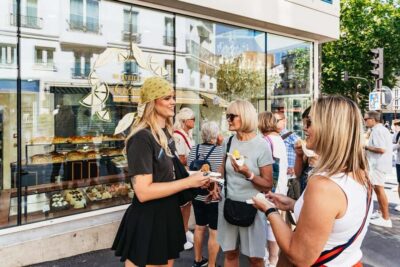
Montmartre Cheese, Wine & Pastry Guided Walking Tour
Read our review →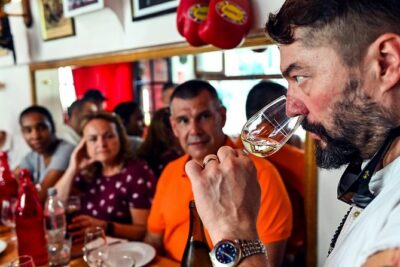
Private Montmartre Food Tour with Wine, Cheese & Pastries
Read our review →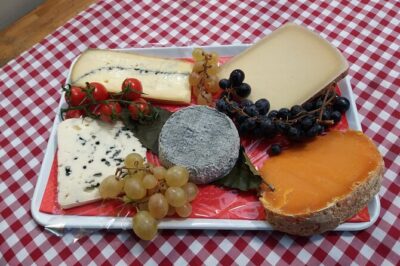
Paris Le Marais Food Tour With 10+ Tastings, Cheese, Wine & More
Read our review →
Cheese & Wine Tasting in Montmartre with Local Cheesemonger
Read our review →
French Wine, Champagne And Cheese Tasting Paris SECRET WINE DOOR
Read our review →
Walking Food Tour with Cheese, Wine and Delicacies
Read our review →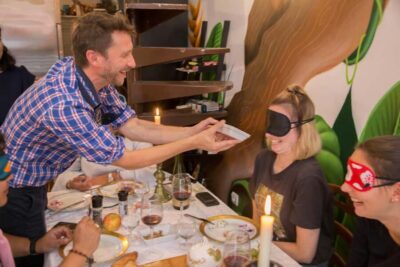
Browse the lists this tour appears in