
REVIEW · LOUVRE MUSEUM TOURS
Closing Time at the Louvre: The Mona Lisa at her Most Peaceful
The Louvre is best when the clock runs down. This three-hour evening tour gives you a focused route through the museum, with an art-history guide explaining the palace, its famous works, and the stories behind them. I especially like the chance to see the Mona Lisa later in the day, when the room may be calmer, and the small-group format, capped at 20 people, makes it easier to hear and ask questions.
I also like the efficient path through major sights, from the moat foundations to the Venus de Milo, Winged Victory, Caravaggio, Raphael, and The Raft of Medusa. The main caution is simple: peaceful is not guaranteed. A winter evening can feel wonderfully quiet, but a June afternoon or busy holiday period may still bring heat, noise, and a packed crowd around the Mona Lisa.
Guides make a real difference here. Adam earned especially warm praise for his humor and art discussions, while Julie, Felicia, Nancy, Felix, Lee, Nazli, Omar, and others were singled out for clear explanations and lively pacing. You do not choose the guide, but the overall guide record is strong, with a 4.7 rating and 93 percent recommendation rate.
In This Review
- Key points before you book
- Why closing time can improve a Louvre visit
- Meeting at the Carrousel
- Entering through the Louvre’s evening crowds
- Starting below the palace at the moat
- Venus de Milo and Winged Victory
- Renaissance paintings and the road to Leonardo
- The Mona Lisa at the end of the day
- The Raft of Medusa and the final galleries
- What the guides do best
- Is $101.58 good value?
- Who should take this Louvre tour?
- Should you book it?
- FAQ
- How long is the Closing Time at the Louvre tour?
- Is museum admission included?
- Is the tour offered in English?
- Where does the tour start?
- Where does the tour end?
- How large can the group be?
- Is hotel pickup included?
Key points before you book
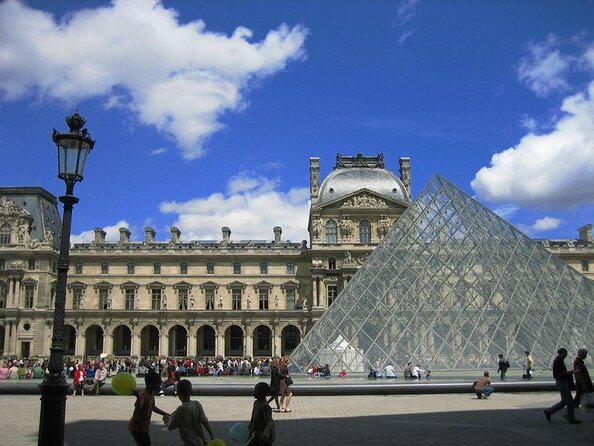
- Late entry changes the Louvre’s mood: The final part of the museum day can bring fewer people, especially in winter, but summer crowds may remain.
- The route covers the essential masterpieces: You see the Mona Lisa, Venus de Milo, Winged Victory of Samothrace, major Renaissance works, and The Raft of Medusa.
- The guide supplies the museum’s missing context: You learn about the palace foundations as well as the paintings and sculpture.
- The group entrance saves time: Several visitors reported passing the main entrance lines and moving through security with help from the tour team.
- It is a brisk walking tour: You need to keep up at a moderate pace, and one guide was described as a very fast walker.
- The tour ends at closing: You will not have extra time afterward to wander through the galleries alone.
Why closing time can improve a Louvre visit
The Louvre is enormous. Without a plan, you can spend half an hour finding a gallery and another half hour wondering if you are even on the right floor. This tour solves that problem with a clear route and a guide who decides what deserves your limited time.
The late timing is the real idea behind the experience. The museum is still open, but the day is winding down. During quiet winter periods, the difference can be striking. One visitor described sitting close to artworks, talking with the guide, and taking clear photographs without the usual crush.
That calm depends on the date. The name promises a peaceful Mona Lisa, not a private viewing. In June, the museum may still be crowded at the final entry, and one afternoon tour had a hot, noisy room with a thick crowd around Leonardo’s painting. Go in expecting better odds, not an empty gallery.
The tour has earned a 4.7 rating from 513 reviews, and 93 percent of customers recommend it. The praise focuses less on a clever gimmick and more on the guides, timing, organization, and ability to get through a huge museum without wasting the evening.
More Louvre visits and guided rooms:
- Paris: Louvre Museum Timed-Entrance Ticket
★ 4.6 · 71,977 reviews - Paris: Louvre Guided Tour with Reserved Access & Boat Cruise
★ 4.3 · 16,353 reviews - Louvre Museum Masterpieces Guided Tour with Access
★ 4.5 · 12,023 reviews
Meeting at the Carrousel
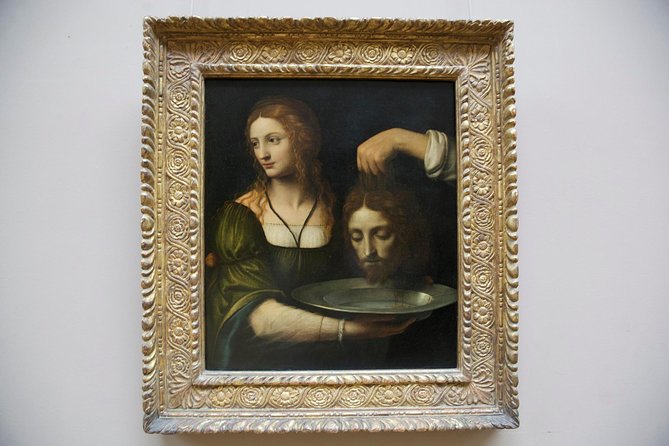
Your starting point is the Arc de Triomphe du Carrousel at Place du Carrousel, 75001 Paris. This is not the grand Arc de Triomphe on the Champs-Élysées. It is the smaller triumphal arch in front of the Louvre, near the central courtyard and Pyramid.
Give yourself enough time to identify the exact meeting spot. One person missed the tour after confusion between the Louvre and the meeting point, so this is the one practical detail I would treat seriously. Check the confirmation carefully, arrive early, and do not assume that simply being somewhere near the Pyramid is enough.
The route also passes Place des Pyramides and Place du Carrousel before ending at the Louvre. The glass Louvre Pyramid is easy to recognize, but the outdoor courtyard can feel confusing if you are rushing. The guide provides the entrance structure, yet you still need to be at the correct starting point.
The experience does not include hotel pickup or drop-off. It is near public transportation, so you arrange your own way to the Carrousel and your own return afterward.
Entering through the Louvre’s evening crowds
The €22 adult museum ticket is included in the $101.58 per-person price, along with the guide, an English-speaking local guide, and a headset. The headset matters in a museum full of hard floors, tall rooms, and many other groups speaking at once.
The entry process has been a strong part of the experience. Customers described finding the group easily, being guided through security, and using a group entrance instead of waiting in the longest public line. This does not mean you skip every possible delay. Security and museum operations can still slow things down, but a guided entry is valuable at a place where queues can consume your evening.
The maximum group size is 20 people. That is not an intimate private tour, but it is small enough for the guide to keep the group together and respond to questions. Some departures may be much smaller. One group had only six people, which allowed more time for discussion and made it easier to sit near the art during explanations.
You receive confirmation when booking. The tour is offered in English only, so you should be comfortable listening to an art discussion in English while walking through busy rooms.
Starting below the palace at the moat
Before racing to the famous paintings, the guide introduces the Louvre as a building. The route includes the palace foundations and moat, a useful reminder that this was not created as one giant art museum from the start.
That architectural beginning adds meaning to the collection. You are not simply crossing from one picture to the next. You are moving through a former fortress and royal palace that grew over centuries before becoming the Louvre you know today.
This is one of the tour’s best choices. People often remember the Mona Lisa and forget the building around her. The foundations give you a sense of the Louvre’s age and help explain why the galleries can feel like a maze of different eras.
The stop is also a good test of the guide’s style. A strong guide connects the building to the works inside it rather than treating the moat as a quick history lecture. Past guides such as Lee and Nazli were praised for explaining both the museum’s structure and the art, while other guides used humor, questions, and visual examples to keep the group involved.
A few more Paris outings to set side by side
- Disneyland® Paris 1-Day Ticket
★ 4.6 · 49,412 reviews - Paris: Versailles Palace and Gardens Full Access Ticket
★ 4.6 · 41,579 reviews - Paris: Evening River Cruise with Music
★ 4.4 · 22,721 reviews - Paris: Eiffel Tower Entry Ticket with Optional Summit Access
★ 4.4 · 20,035 reviews
Venus de Milo and Winged Victory
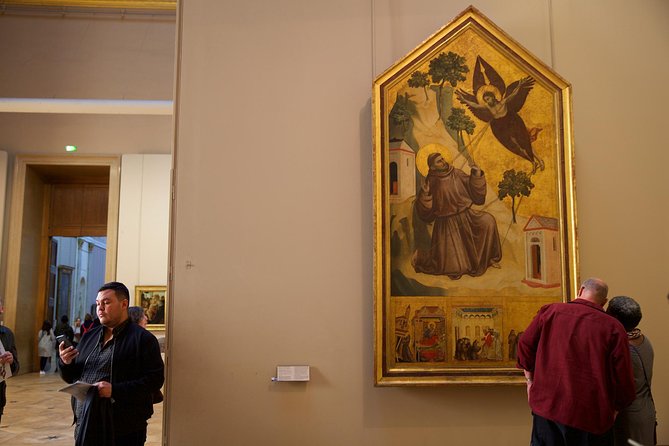
The classical Greek sculpture section brings two of the Louvre’s most famous figures into view: the Venus de Milo and the Winged Victory of Samothrace.
The Venus de Milo can look familiar before you even see it. A guide gives you a better reason to stop, look carefully, and think about the missing arms, posture, and presentation. The point is not simply to take the required photograph. It is to understand why this sculpture has held such a powerful place in the museum.
Winged Victory is a very different experience. Set dramatically at the top of a staircase, the sculpture rewards a pause before you move on. The guide can direct your attention to the pose, the movement of the clothing, and the way the sculpture interacts with the architecture.
This is where a good Louvre route saves you energy. You can spend hours wandering between famous objects without understanding their place in the collection. The guide gives each major work a short, useful frame, then keeps you moving.
The pace is not leisurely in the traditional sense. One customer described the tour as fast but exceptional, while another said the guide walked quickly. You may be asked to keep up, especially when the group is crossing long gallery corridors. The reward is broader coverage.
Renaissance paintings and the road to Leonardo
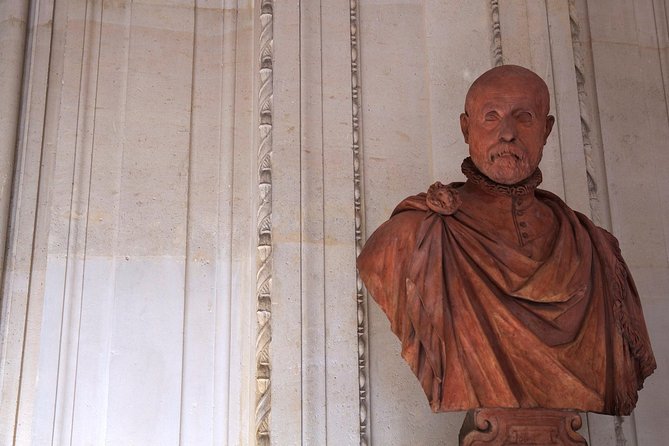
The route includes works by Caravaggio, Raphael, and Leonardo da Vinci. These names draw crowds, but the guide’s interpretation is what turns a checklist into a visit you can remember.
The strongest guides do more than identify the artist and title. Adam was praised for making people think about the art, and another guide used an iPad to show related examples during the tour. That kind of visual comparison can help you notice choices in composition, gesture, color, and expression that are easy to miss when you are standing in a busy gallery.
The tour also gives you a chance to see more than one Leonardo work. That matters because the Mona Lisa is so famous that it can swallow the rest of the Renaissance collection. A guide can place her within Leonardo’s wider work instead of presenting her as an isolated celebrity.
You should expect focused stops rather than a complete survey of every room. Three hours is long enough to cover major highlights with some explanation, but nowhere near enough to see the Louvre fully. That limitation is not a flaw. It is the only sensible way to approach a museum this large in one visit.
The Mona Lisa at the end of the day
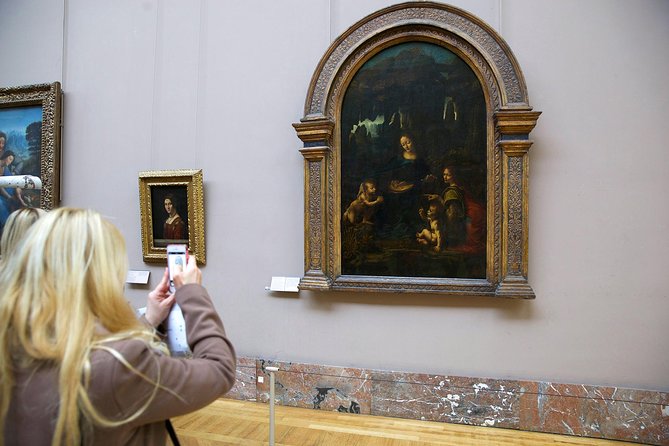
The Mona Lisa is the emotional center of the tour. The route builds toward her after the palace, sculptures, and other paintings, so you arrive with some context rather than walking straight into the most famous room in Paris.
Access varies by time and season. Around 5:30 p.m., one visitor found no one in front of the painting. During a quieter winter evening, another group could stand close enough for clear photographs and a longer look. In peak season, the crowd may be manageable but still present.
You cannot get right up against the painting. A barrier keeps people at a distance, as it should. The advantage of a lighter crowd is that you may reach the front rather than trying to see over a dense line of heads from the back.
This is also where the tour’s title needs a little realism. A late visit can be peaceful compared with the middle of the day, but the museum does not empty on command. A Wednesday at 3:30 p.m. in June may feel anything but quiet. If the Mona Lisa is your one absolute priority, the tour improves your odds of a good view, but it cannot control attendance.
The Raft of Medusa and the final galleries
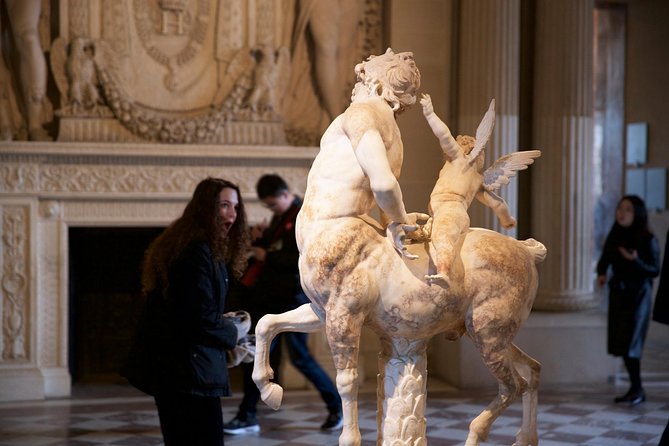
The route includes Théodore Géricault’s The Raft of Medusa, a large Romantic painting that rewards time and explanation. Its scale and drama are hard to grasp in a quick photograph, and the guide can point out details in the scene that you might otherwise miss.
This is one of the moments when a guide earns the ticket price. You may recognize the painting, but recognition is not the same as seeing it. A focused explanation gives you a reason to study the expressions, gestures, and tension across the canvas.
The itinerary also allows for other important treasures along the way. Exactly which rooms you visit can change because museum areas may close, so the guide may adjust the route on the day. That flexibility is necessary in a working museum, though it means you should not treat every named stop as an absolute guarantee.
The tour finishes as the Louvre closes. You do not get free time afterward to return to a favorite gallery or explore a room the group passed quickly. If you want a long, independent museum session, book a separate Louvre visit for another day.
What the guides do best
Guide quality is the experience’s strongest feature. Adam received repeated praise for humor, warmth, and art commentary that encouraged deeper thought. Julie was praised for her engaging style and ability to give a quieter winter group time to sit and talk.
Felicia was especially attentive to group comfort. She checked that no one was left behind, made restroom stops, and kept the equipment working. Daniel was praised for keeping children and teenagers involved, while Antoine was described as entertaining and especially good with kids.
Other guides, including Sara, Laurence, Ahmed, Omar, Nancy, Felix, Lee, Nazli, and Aurelia, were praised for different strengths: clear delivery, strong art knowledge, humor, family appeal, visual aids, and thoughtful pacing. You cannot request a specific guide from the information provided, but the repeated pattern is encouraging.
The main variation is pace. Some guides linger and welcome questions. Others move quickly to cover more ground. If you have mobility concerns, the tour requires moderate walking without difficulty, so this is not the right choice for a slow, stop-anywhere museum visit.
Is $101.58 good value?
At $101.58 per person, this is not a cheap way to enter the Louvre. The adult admission alone is €22, so much of the remaining cost pays for the guide, route planning, group access, headset, and the time saved by avoiding aimless wandering.
I think the price makes sense if this is your first Louvre visit, your schedule is tight, or the idea of facing the museum alone feels overwhelming. You are paying for decisions: which rooms to visit, where to stand, what details matter, and how to reach the big works before closing.
It is less appealing if you already know the Louvre well or want to spend hours with a small set of lesser-known paintings. You might get more from a regular admission ticket and a self-guided plan, especially if you qualify for free admission. Visitors under 18 and EEA residents under 26 can enter free with valid identification and proof of residency, though the tour’s guide service still forms part of the experience.
Free cancellation is available up to 24 hours before the start time. Inside that window, changes and refunds are not accepted.
Who should take this Louvre tour?
I would choose this tour for a first visit, a short Paris stay, couples who want a shared cultural evening, and families who need a guide to keep the museum from becoming a giant endurance test. The positive feedback from parents and teenagers is useful: humor and a clear route can make a real difference.
It also suits art lovers who want interpretation rather than a quick photo stop. The guides often go beyond labels, using questions, stories, and visual comparisons to make the works easier to read.
I would hesitate if you dislike brisk walking, need guaranteed quiet, or want complete control over every room. The group can be as large as 20, some guides move quickly, and the Louvre can remain crowded at closing time.
Should you book it?
Book it if you want the Louvre’s greatest hits with a strong guide and a better chance of seeing the Mona Lisa from near the front. The late timing, included admission, headset, and group entry make a large museum easier to handle.
Choose a winter date if you can, and arrive early at the Arc de Triomphe du Carrousel. Go in expecting a focused three-hour route, not an empty museum or extra time after closing. With those expectations, this is a smart first look at the Louvre and one of the more efficient ways to meet its biggest masterpieces.
FAQ
How long is the Closing Time at the Louvre tour?
The tour lasts approximately three hours.
Is museum admission included?
Yes. The tour includes the €22 adult entrance ticket to the Louvre.
Is the tour offered in English?
Yes. It includes a local English-speaking guide and is offered in English.
Where does the tour start?
It starts at the Arc de Triomphe du Carrousel, Place du Carrousel, 75001 Paris, France.
Where does the tour end?
It ends at the Louvre Museum in Paris.
How large can the group be?
The maximum group size is 20 people.
Is hotel pickup included?
No. Hotel pickup and drop-off are not included, so you need to reach the meeting point independently.
Recently added in Paris
- Private Transfers in Paris★ 5.0 · 75 reviews
- CDG – Euro Disney – CDG Two Way Private Shuttle Transfer★ 5.0 · 233 reviews
- Disneyland® Paris 1 Day Ticket with Transport from Paris★ 3.5 · 302 reviews
- Personalized Transport service from Disneyland to Paris★ 5.0 · 63 reviews
- Monet’s Gardens & House-Private Giverny Tour From Paris★ 4.5 · 137 reviews
- Guided tour Monet’s house and gardens/small group★ 4.5 · 68 reviews
- Giverny Monet House and Gardens Skip the line Walking tour★ 4.0 · 217 reviews
- Monet’s House and Garden & Giverny Village★ 4.5 · 39 reviews
Louvre Museum Tours, compared.

Louvre Guided Tour with Reserved Access & Boat Cruise
Read our review →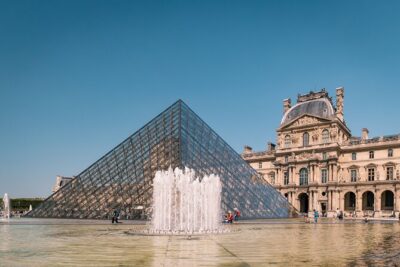
Louvre Museum Masterpieces Guided Tour with Access
Read our review →
Louvre Museum Entry Ticket With Host and River Cruise
Read our review →
Priority Access Louvre with Host -Direct to Mona Lisa
Read our review →
Mona Lisa & Louvre Masterpieces Tour with Reserved Access
Read our review →
Louvre Museum – Exclusive Guided Tour (Entry Included)
Read our review →
Louvre Reserved Ticket and River Cruise Combo
Read our review →Browse the lists this tour appears in