
REVIEW · WALKING TOURS
Giverny Monet House and Gardens Skip the line Walking tour
Monet’s paintings become real in Giverny. This two-hour tour combines a walk through the village with skip-the-line entry to Claude Monet’s pink house, flower gardens, Japanese bridge, and lily ponds. I like the small-group format, capped at 15, and the way a guide adds context to rooms and gardens you might otherwise view without much explanation. The main concern is crowd control: on busy days, the gardens can feel packed, and one account described a group larger than the advertised limit.
I also like that the tour includes the entrance fee, rather than leaving you to sort out tickets at the gate. Guides such as Bertrand, Mwamiri, Marine, and a guide visitors remembered as Virginia have been praised for clear storytelling and for keeping groups together. Still, skip-the-line does not mean skip-the-crowd. Giverny is a major day trip from Paris, especially in spring and during school holidays.
In This Review
- Key points to know before booking
- Why Giverny is worth the trip from Paris
- Meeting at La Capucine Giverny
- A short walk through Monet’s village
- Entering Monet’s pink house
- The flower gardens and Japanese water garden
- What the guide adds, and where the tour can falter
- Choosing the right month for flowers
- Is $63.86 a fair price?
- Who should book this Giverny tour?
- Final call: book it or go alone?
- FAQ
- How long does the Giverny Monet house and gardens tour last?
- What does the $63.86 price include?
- Where does the tour meet?
- Do I need to arrive before the scheduled start?
- How many people can join the tour?
- Can I cancel for a full refund?
Key points to know before booking
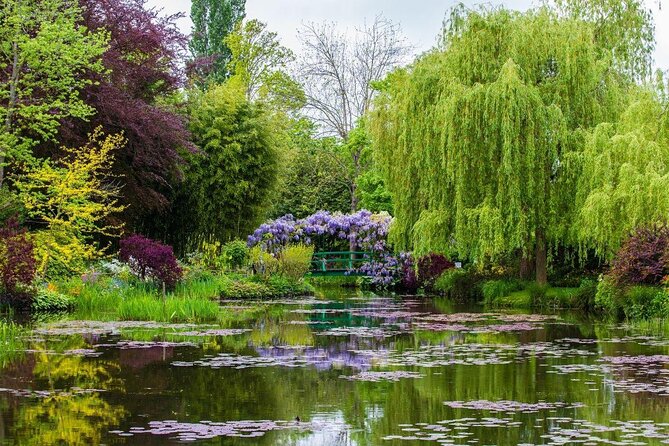
- The house and gardens are the main event: See Monet’s home, Japanese prints, colorful kitchen, flower beds, lily ponds, and Japanese bridge.
- A short village walk comes first: Your guide introduces Giverny and Monet’s life before you enter the foundation.
- Skip-the-line entry saves time: Tickets are included, with access through a special entrance arranged by the guide.
- The advertised group limit is 15: This should feel more personal than a large coach tour, though one account described a bigger group.
- Season matters greatly: April through October brings the main flower display, but October can be quieter and less floral.
- You must arrange your own transport: There is no pickup or drop-off, and the meeting point is at La Capucine Giverny.
Why Giverny is worth the trip from Paris
Giverny is not simply a museum with a famous name on the door. It is the place where Monet lived and worked from 1883 until his death in 1926. The garden was not a decorative extra for him. It was a working source of color, light, reflections, and changing seasons.
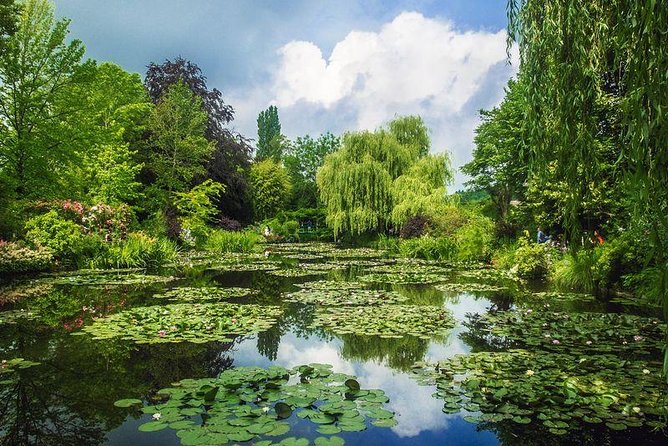
That connection gives the visit its special pull. You are not only looking at reproductions of paintings. You are standing beside the water, under the willows, and near the bridge that helped shape some of Monet’s best-known scenes.
I would not book this tour only for original Monet paintings. The celebrated canvases are held in museums, not in the house at Giverny. What you see here is the home, the garden, selected replicas, Japanese prints, and the setting that fed his Impressionist work.
The village also gives the visit a human scale. Monet’s presence helped turn sleepy Giverny into an artists’ colony by the late 19th century. Artists including John Singer Sargent, Paul Cézanne, and Mary Cassatt were connected with the community around him.
More Walking Tours in Paris
- Paris Top Sights Half Day Walking Tour with a Fun Guide
★ 5.0 · 2,893 reviews - Montmartre Hidden Gems and Scenic Highlights Walking Tour
★ 5.0 · 2,684 reviews - Montmartre Hill French Gourmet Food and Wine Tasting Walking Tour
★ 5.0 · 2,588 reviews
Meeting at La Capucine Giverny
The tour begins at La Capucine Giverny, 80 Rue Claude Monet, 27620 Giverny. You need to arrive 15 minutes early. The guide leaves promptly, and late arrival can mean missing the group.
That warning matters because Giverny is a day-trip destination with complicated timing. If you come from Paris by train, you make your own way to Vernon and then continue to Giverny by shuttle, according to practical information supplied by visitors. The shuttle detail is easy to miss when planning, so allow extra time rather than aiming for a close connection.
If you drive, parking can also affect your schedule. One frustrating account described spending about an hour looking for a space and eventually giving up. That does not mean every visit will go that way, but it is a good reason to arrive early and avoid treating the meeting time as a target.
Your mobile ticket is confirmed at booking. The tour includes the entrance fee, but the ticket is provided by the UTG guide rather than directly by the Monet Foundation. This is an independent guided service, not a tour operated by Monet’s house and gardens.
A short walk through Monet’s village
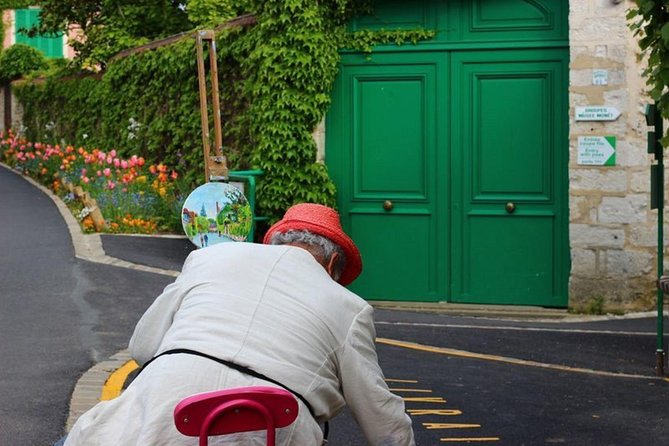
The first part is a walking tour of Giverny. This introduction helps place Monet’s house in the village rather than presenting it as an isolated attraction.
Your guide explains Monet’s life, his years in Giverny, and the artists who gathered around him. That background is useful because the house itself does not tell the full story. The village walk gives you a sense of the small community that became linked with one of modern art’s major figures.
The walk is also a gentle way to begin. You are not rushed directly into the entrance queue, and you get a basic orientation before reaching the gardens. Guides who explain the story well can make the rest of the visit easier to understand, especially if you know Monet mainly from a few famous water-lily paintings.
Do not expect a long village excursion. The experience lasts about two hours in total, so the village portion is an introduction, not a full-day exploration of every street. After the guided visit, you return to the meeting point, with some accounts noting plenty of free time to explore the village afterward.
Entering Monet’s pink house
The special entrance is the practical reason to consider this tour. Giverny can attract large crowds, and avoiding the regular entry line can protect a good part of your limited time.
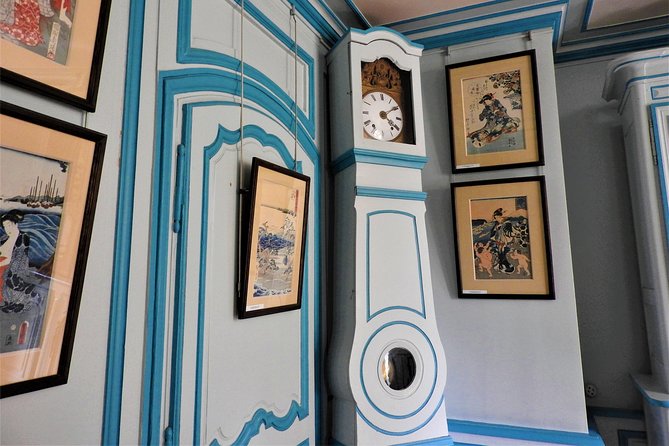
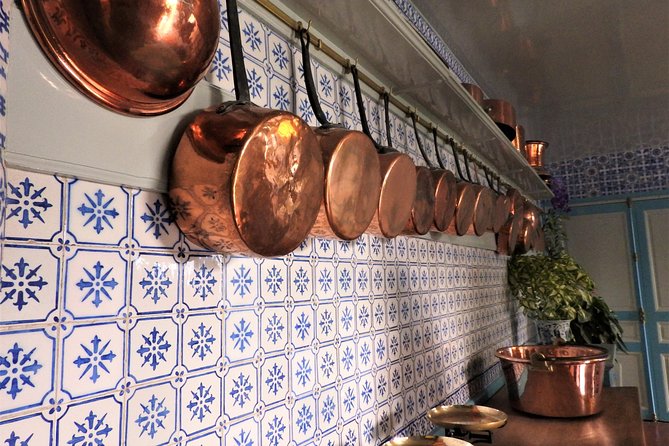
Inside the house, you see the rooms associated with Monet and his family. The kitchen is one of the most memorable spaces, with cheerful colors and a lively feel rather than the solemn atmosphere of a traditional historic house.
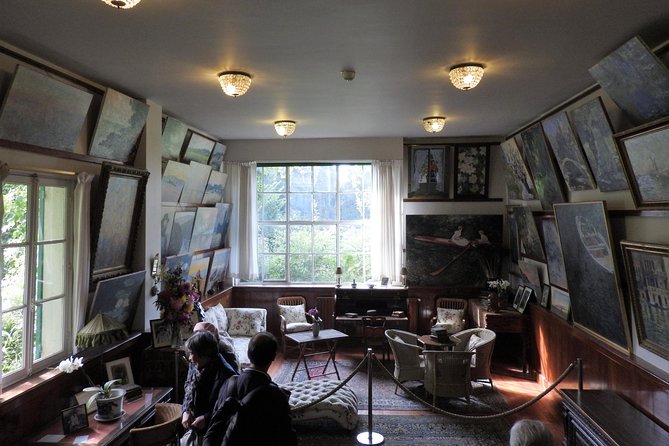
Monet’s collection of 18th and 19th-century Japanese prints is another important feature. These works help explain his interest in Japanese design and the way that influence appeared in his garden planning and visual compositions.
The house is not huge, and crowded conditions can make the interior feel tight. You may need to move with the group and wait for space in some rooms. That is where a well-prepared guide earns the fee by pointing out details and linking the rooms to Monet’s work.
The tour includes replicas of famous paintings, not the original canvases. I consider that a strength when the guide uses them to show how a real view became a painted image. It is also important to set expectations: art lovers hoping for a gallery of original Monets should visit a museum in Paris or elsewhere.
More reserved-entry tickets in Paris:
- Versailles: Skip-the-Line Tour of Palace with Gardens Access
★ 4.7 · 9,778 reviews - Versailles: Skip-the-Line Guided Palace Tour and Full Access
★ 4.6 · 5,214 reviews - Louvre Museum: Skip-the-Line Small Group Guided Tour
★ 4.6 · 3,960 reviews - From Paris: Versailles Skip-the-Line Tour & Gardens Access
★ 4.7 · 3,011 reviews
The flower gardens and Japanese water garden
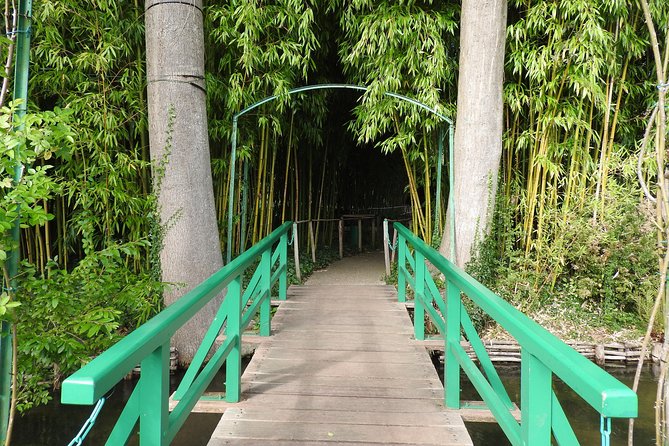
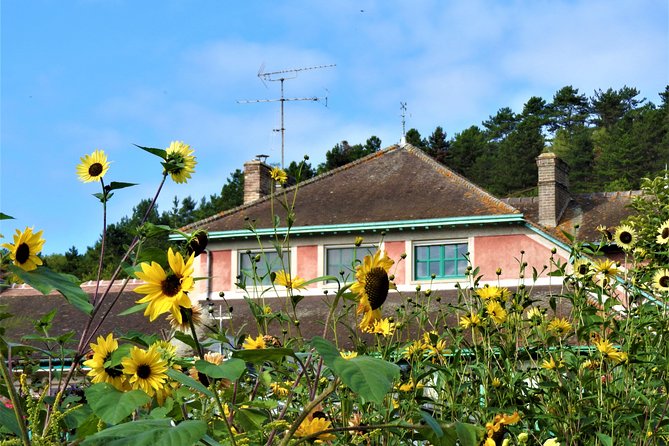
The gardens are the heart of the visit. From April through October, the property is planted with roses, hollyhocks, poppies, honeysuckle, and other seasonal flowers. The effect changes sharply by month.
May is a particularly strong choice if flowers are your priority. Accounts from early May describe flowers bursting into bloom and gardens that were especially rewarding for photographs. Easter periods can also bring heavy crowds, so you may gain color but lose some quiet.
The Japanese-style water garden is the scene most closely tied to Monet’s paintings. Water lilies, weeping willows, and the Japanese bridge create the familiar arrangement, though the real view is more complex than a canvas. Light shifts, people move through the frame, and the flowers change with the season.
You will have plenty to photograph, but this is not always a peaceful stroll. Even accounts that describe a serene setting also note thousands of people on site. The guide can help you move through the garden and understand what you are seeing, but no tour can remove the crowd once you are inside.
One disappointing account described the visit as a rushed sprint through Monet’s house and garden. That experience appears to be linked to poor pacing and crowd pressure, rather than to the site itself. If you want to linger over every flower bed or wait for a clear photograph of the bridge, a self-guided visit may give you more control.
What the guide adds, and where the tour can falter
The best guides turn a pretty garden into a meaningful visit. Bertrand has been praised for filling in gaps even for someone who already knew a great deal about Monet. Mwamiri has been praised for keeping a group together and adding plenty of information. Marine has been described as friendly, attentive, and good at watching the group.
The guide’s role is especially useful in a crowded setting. You need help finding the right entrance, understanding the order of the visit, and staying with the group as people stop for photos.
But guide quality can vary. One poor experience involved a guide who spoke only occasionally and did not use a headset, while other groups did. Another account described a language mix-up in which a tour expected to be in English included French-speaking participants, forcing the guide to translate. A long line and unreliable audio made it hard for people at the back to hear.
These are not small issues. A two-hour tour leaves little room to recover from a late start, weak presentation, or confused group arrangement. If you book, arrive early, stay near the guide, and ask at the start how the group will handle questions and movement through the gardens.
The supplied information advertises a maximum of 15 people, which is a sensible size for a historic house and narrow garden paths. Because one account described 22 people, I would confirm the group size close to the date if having a small group is important to you.
Choosing the right month for flowers
Season is one of the biggest decisions here.
- April and May: Expect the strongest spring color, with May receiving especially favorable comments for flowers and photographs. Crowds can be heavy around Easter.
- Summer: The gardens remain within the main April to October visiting season, though heat and crowds may affect the pace.
- October: The gardens can still be lovely, and rain does not automatically ruin the visit. Some October accounts describe excellent photographs and more flowers than expected. Others found many flowers past their best.
I would choose May for the fullest floral display, while October can work for visitors who are comfortable with less predictable blooms. The house remains worthwhile outside peak flower moments because of its rooms and Japanese print collection.
Is $63.86 a fair price?
At $63.86 per person, this is not the cheapest way to see Giverny. The value depends on how much you want help with transport planning, entry, and interpretation.
The fee includes a local guide and admission to Monet’s house and gardens. It does not include pickup, drop-off, food, or drinks. You still need to reach Giverny yourself and meet at La Capucine.
For you, the price makes the most sense if:
- You want to avoid the main entrance line.
- You value a guide’s explanation of Monet’s life and work.
- You are visiting Giverny for the first time.
- You prefer a planned visit rather than working out the entrance process alone.
- You are comfortable paying extra for structure and interpretation.
The price is harder to justify if you are happy to arrive early, buy or arrange entry independently, and explore at your own pace. One critical account made exactly that argument, saying a self-guided visit might have been better after a rushed experience.
The tour is booked an average of 39 days in advance, which suggests that you should not leave it until the final week during the busy season. It also comes with free cancellation up to 24 hours before the scheduled start, but cancellations inside that window are not refunded.
Who should book this Giverny tour?
I would recommend it to first-time visitors who want the story behind the rooms and gardens, art lovers who enjoy seeing the place behind the paintings, and families who benefit from a guide keeping the visit moving.
It can also suit anyone taking the train to Vernon and shuttle to Giverny, provided you allow enough time. The tour is near public transport, most people can participate, and service animals are allowed.
I would be more cautious if you dislike crowds, need a slow photography session, or want complete control over how long you spend in each room. The two-hour schedule is efficient, but efficiency can feel rushed on a busy day.
Final call: book it or go alone?
Book this tour if skip-the-line entry and a strong guide are worth paying for. The gardens and house are genuinely special, and the best guides add much more than a few dates. Bertrand, Mwamiri, Marine, and other praised guides show how much the experience can improve when the person leading it is engaged and organized.
Go independently if you can arrive early, want to linger, or prefer not to risk a large or poorly managed group. Either way, Giverny deserves the trip. Just remember that the original Monet paintings are elsewhere. Here, the reward is seeing the flowers, water, bridge, home, and village that helped him paint them.
FAQ
How long does the Giverny Monet house and gardens tour last?
The tour lasts approximately two hours and ends back at the meeting point.
What does the $63.86 price include?
The price includes a local tour guide and entrance fees to Monet’s house and gardens. Food, drinks, tips, pickup, and drop-off are not included.
Where does the tour meet?
The meeting point is La Capucine Giverny, 80 Rue Claude Monet, 27620 Giverny, France.
Do I need to arrive before the scheduled start?
Yes. You should arrive 15 minutes early because the tour starts promptly, and latecomers may miss the group.
How many people can join the tour?
The advertised maximum is 15 people. One account described a larger group, so you may wish to confirm the group size if this is important to you.
Can I cancel for a full refund?
You can cancel at least 24 hours before the experience start time for a full refund. Cancellations or changes made less than 24 hours before the start are not accepted or refunded.
Recently added in Paris
- Private Transfers in Paris★ 5.0 · 75 reviews
- CDG – Euro Disney – CDG Two Way Private Shuttle Transfer★ 5.0 · 233 reviews
- Disneyland® Paris 1 Day Ticket with Transport from Paris★ 3.5 · 302 reviews
- Personalized Transport service from Disneyland to Paris★ 5.0 · 63 reviews
- Monet’s Gardens & House-Private Giverny Tour From Paris★ 4.5 · 137 reviews
- Guided tour Monet’s house and gardens/small group★ 4.5 · 68 reviews
- Monet’s House and Garden & Giverny Village★ 4.5 · 39 reviews
- Fontainebleau Forest Half Day Hot-Air Balloon Ride with Chateau de Fontainebleau★ 4.5 · 53 reviews
Walking Tours, compared.

Paris Top Sights Half Day Walking Tour with a Fun Guide
Read our review →
Montmartre Hidden Gems and Scenic Highlights Walking Tour
Read our review →
Montmartre Hill French Gourmet Food and Wine Tasting Walking Tour
Read our review →
Paris Île de la Cité and Notre-Dame Walking Tour With Crypt
Read our review →
Montmartre Cheese, Wine & Pastry Guided Walking Tour
Read our review →
Paris in a Day: Louvre or Orsay, Eiffel Tower, City Walk & Cruise
Read our review →
Montmartre Highlights Walking Tour with a Local Guide
Read our review →
Paris City Center Free Walking Tour (Tip-Based)
Read our review →Browse the lists this tour appears in