
REVIEW · FULL-DAY
From Sarlat-la-Canéda: Lascaux IV and Cave Art Full-Day Tour
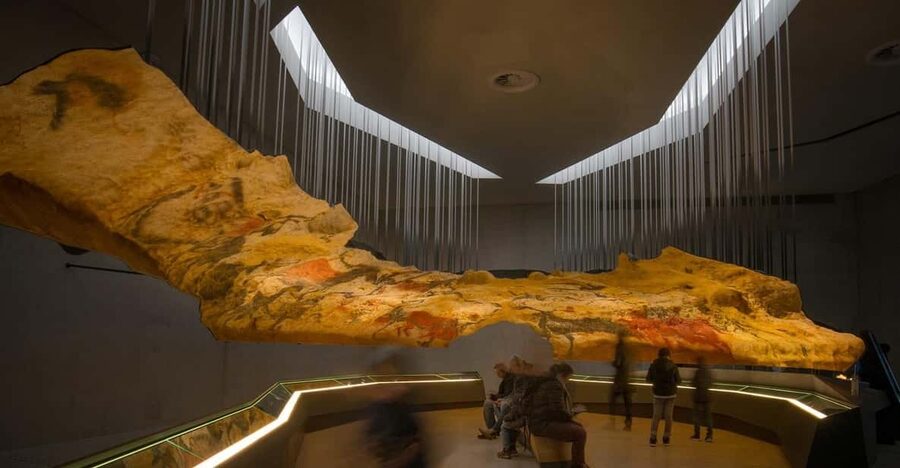
Prehistory gets surprisingly personal. This full-day Dordogne outing links Lascaux IV with Rouffignac, the National Prehistory Museum, and La Roque Saint-Christophe, giving you both carefully protected reproductions and authentic prehistoric settings. I especially like the small van, capped at eight people, and the guides who add useful context during the drives. The main drawback is the price, $265 per person, plus the limited number of English-language tours inside Lascaux IV.
The nine-hour schedule is full but sensibly broken into museum time, cave visits, a lunch break, and scenic driving. Guides such as Anne, Benoit, Lena, Martin, Florence, and Marion have been praised for their clear English, local knowledge, and calm handling of timetable changes. Bring a warm jacket, though: the caves stay around 14°C, or 57°F.
In This Review
- Key points to know before booking
- Why this Dordogne day works so well
- Les Eyzies and the National Prehistory Museum
- Rouffignac by electric train
- Lascaux IV and the art that cannot be visited directly
- La Roque Saint-Christophe and the cliffside world
- Lunch, driving, and the shape of the day
- The guides are a major part of the value
- Is $265 a fair price?
- Who should book this experience?
- Should you book the Lascaux IV day tour?
- FAQ
- Where does the tour begin?
- How long does the experience last?
- Is the tour conducted in English?
- What is included in the tour?
- Are meals included?
- Is the tour suitable for people with mobility issues?
- What should I bring?
Key points to know before booking
- Lascaux IV is a high-tech reproduction: The original cave remains closed, but this detailed reconstruction recreates the shapes, colors, and atmosphere of the famous paintings.
- Rouffignac offers a different experience: You travel through the cave by a small electric train and see authentic engravings and animal drawings.
- Les Eyzies puts the story in context: The National Prehistory Museum holds one of the world’s largest collections of prehistoric artifacts.
- La Roque Saint-Christophe adds open-air drama: This limestone cliff was inhabited from Paleolithic times and includes stairs, cliff shelters, and old engineering works.
- The small group matters: With no more than eight participants, the guide can answer questions and keep the day flexible.
- English at Lascaux IV is limited: The cave visit itself is often conducted in French, with your English-speaking guide explaining the material before and after.
Why this Dordogne day works so well
The Dordogne is one of the best places in France to connect archaeology with the places where early modern humans lived. Cro-Magnon remains were first identified near Les Eyzies in 1868, and the region’s caves preserve drawings, engravings, shelters, and traces of human activity from the Paleolithic era.
I like this tour because it does not treat Lascaux as an isolated attraction. You see museum objects, enter a real cave at Rouffignac, study a modern reconstruction at Lascaux IV, and then visit a cliffside settlement shaped by both nature and human ingenuity.
That range is important. Lascaux IV is the visual showstopper, but the museum and Rouffignac help you understand what you are seeing. La Roque Saint-Christophe then takes the subject outdoors, where the scale of the limestone cliffs makes prehistoric life feel less abstract.
The day begins at the Place Pasteur bus stop near La Maison Secrète in Sarlat-la-Canéda. From there, you ride in a comfortable van for roughly 30 minutes. The drive is not wasted time. Guides often explain the Dordogne countryside, point out nearby places, and set up the historical background before you arrive.
More full-day plans in Bordeaux:
- Bordeaux: Saint-Emilion and Medoc Full-Day Wine Experience
★ 4.8 · 582 reviews - Full-Day tour to Saint-Emilion and Margaux, from Bordeaux
★ 5.0 · 372 reviews - Bordeaux Full Day Wine Tour – 3 Wineries & Gourmet Picnic Lunch
★ 5.0 · 307 reviews
Les Eyzies and the National Prehistory Museum
Les Eyzies-de-Tayac-Sireuil is the natural starting point for a day about early humans. Five Cro-Magnon skeletons were discovered here in 1868, and the town remains closely tied to the study of European prehistory.
The National Prehistory Museum opened in 2004 and holds the largest collection of prehistoric artifacts in the world. You receive a guided visit of about an hour and a half, enough to see the main displays without trying to cover every object.
This stop is useful because cave paintings can otherwise seem like isolated masterpieces. Museum collections provide the wider setting: tools, bones, and other archaeological material show how people lived, worked, and adapted to their surroundings.
I would pay close attention to your guide here. The museum contains far more than you can absorb in a short visit, and a good explanation helps you focus on the displays that matter most. Previous guides have been praised for making the subject understandable without turning the tour into an academic lecture.
The limitation is time. You could easily spend much longer in the museum, but the fixed cave reservations keep the schedule moving. If you prefer museums to outdoor sites, you may wish the visit lasted all day. For most people, the guided overview is a sensible compromise.
Rouffignac by electric train
Rouffignac provides the authentic cave experience in this program. Instead of walking through a replica, you enter a natural cave system and ride a small electric train through it.
The cave is known for engravings and animal outlines, offering a different view of Paleolithic art from the painted panels associated with Lascaux. That contrast is one of the best reasons to visit both sites. Lascaux dazzles with color and large animal figures, while Rouffignac shows another form of ancient image-making in a genuine underground setting.
The train also makes Rouffignac less physically demanding than a long cave walk. Even so, you should wear comfortable shoes and bring a jacket. Cave temperatures stay close to 14°C throughout the year.
English-language arrangements can vary. At some scheduled visits, the official cave presentation may be in another language, and past experience has shown that this can affect how much you get from the visit. Your English-speaking guide will explain the cave before and after, but simultaneous translation inside is not allowed.
That point is worth taking seriously. If hearing every word in English is essential to you, ask about the scheduled language before booking. The guide’s preparation helps, but it cannot replace a full English presentation inside the cave.
Lascaux IV and the art that cannot be visited directly
Lascaux is the reason many people come to the Dordogne. The original cave, discovered in 1940, is closed to ordinary visitors so that its fragile paintings can be protected. Lascaux IV, opened in 2016, recreates the cave and its artwork for the public.
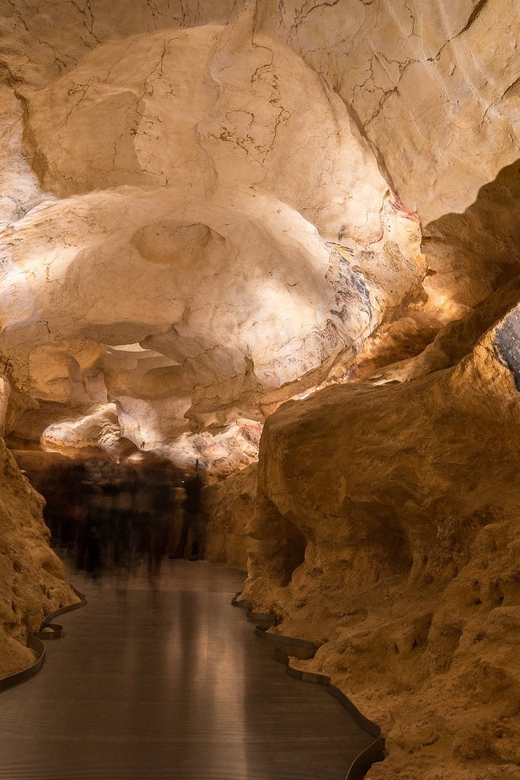
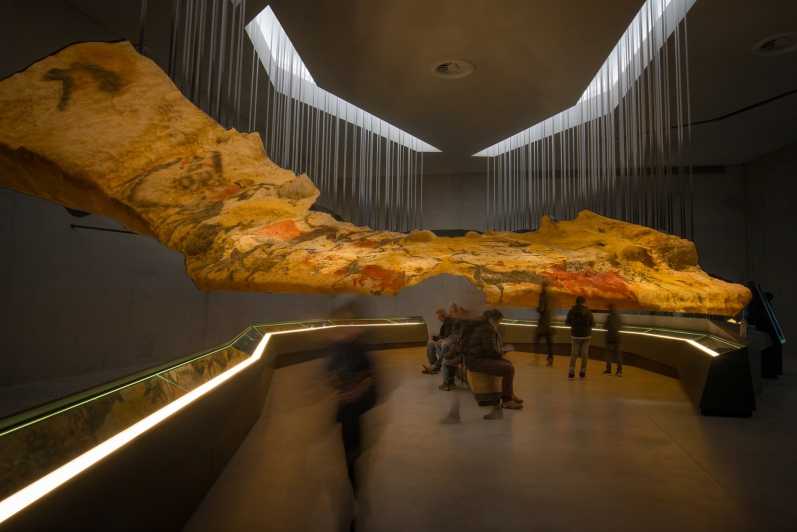
The reconstruction is far more than a flat display of copied paintings. A reinforced concrete shell was shaped with methods adapted from shipbuilding, and the cave’s relief was reproduced in fine detail. The painted surfaces use natural pigments and follow the appearance of the originals from about 17,000 years ago.
You enter a space designed to reproduce the cramped shapes and changing surfaces of the cave. That physical setting matters. Seeing the drawings on curved walls and around bends gives you a better sense of how the images occupy the cave than viewing them in a standard gallery.
The tour includes skip-the-line access to the Lascaux IV complex, which is particularly useful when the site is busy. Your reserved time slot controls the day, however, so the order of visits may change. You might visit Lascaux earlier or later depending on the schedule.
The English issue applies here as well. English cave tours are limited, and many visits are conducted in French. Your guide provides the explanation before and after the official visit, which has generally been enough for people who want the historical and artistic context. Still, do not book assuming the entire cave presentation will be in English.
Lascaux IV also includes more than the replica itself. The building is part of the experience, using modern design and technology to present a prehistoric site without putting the original at risk. Some people find the reconstruction less moving than Rouffignac because it is not authentic. I understand that reaction. Even so, the accuracy of the replica makes it the only practical way for most people to see Lascaux’s famous art.
A few more Bordeaux outings to set side by side
- Bordeaux: Cité du Vin Entry Ticket and Wine Tasting
★ 4.6 · 3,885 reviews - Bordeaux: River Garonne Cruise with Glass of Wine and Canelé
★ 4.5 · 3,630 reviews - From Bordeaux: Afternoon Saint-Emilion Wine Tasting & snack
★ 4.8 · 1,581 reviews - Medoc or Saint Emilion Wine Tasting and Chateau from Bordeaux
★ 5.0 · 1,415 reviews
La Roque Saint-Christophe and the cliffside world
La Roque Saint-Christophe is a dramatic limestone cliff inhabited since Paleolithic times. It shifts the day from underground art to the practical question of how people used the rock around them.
The site includes prehistoric shelters and later human adaptations to the cliff. Your guide explains how people made use of the natural ledges and how engineering developed to suit the steep setting. The combination of geology, shelter, and human construction gives you another way to think about the region’s long history.
This visit involves stairs, so it is not suitable for people with mobility issues or wheelchair users. Comfortable walking shoes are essential, and anyone who dislikes uneven or stepped sites should consider that before booking.
The itinerary identifies Peyzac-le-Moustier for this portion of the day, with about two hours set aside for a guided visit. Because Lascaux time slots can change, the order may differ from the listed sequence. Your guide handles the timing, but you should expect the day to remain active from beginning to end.
Lunch, driving, and the shape of the day
A full-day tour needs breathing room, and this one includes about two and a half hours of free time around Montignac. That gives you time for lunch and a short walk rather than forcing you to eat quickly in the van.
Guides have recommended lunch spots during this break, and the pause also gives you a chance to talk with the other people in the group. The schedule is not a leisurely village day, but it does avoid one common problem with ambitious day trips: constant rushing between attractions.
The van ride back to Sarlat takes about 30 minutes. Transport is a real part of the value here. You avoid arranging separate tickets, navigating small regional roads, and trying to coordinate several timed admissions. You can look out at the countryside while your guide fills in the gaps between sites.
The small group limit of eight is another advantage. A guide can hear your questions, explain a display without shouting, and adjust explanations for a mixed group. Several guides have also been praised as careful drivers, which matters on narrow roads in the Dordogne.
One practical caution is seating. At least one person found being assigned to the last row for the whole day disappointing. If you have a strong preference, ask politely at the start, but do not assume seats will rotate.
The guides are a major part of the value
This tour depends heavily on its driver-guide. The sites are excellent, but the same cave or museum can feel flat without a clear explanation of what you are looking at.
The strongest pattern in the guide feedback is not simply subject knowledge. Guides are praised for making prehistory understandable, using local stories, answering questions, and adapting when a museum or cave changes its timetable. Anne and Lena have been singled out for being friendly, organized, and easy to understand. Benoit and Martin have been praised for combining humor with strong regional knowledge, while Florence and Marion have been remembered for their enthusiasm and personal attention.
That matters during the drives. Instead of losing half an hour between sites, you get an informal introduction to the Dordogne, its geology, local culture, and prehistoric importance.
The guide also helps you compare the places. You learn why a perfect reproduction can be valuable, why an authentic cave may feel more powerful despite less familiar art, and how the museum objects connect to the shelters and paintings.
Is $265 a fair price?
At $265 per person, this is not a budget excursion. The price makes sense mainly if you want to see several major prehistoric sites in one day without driving or managing the schedule yourself.
The value comes from the combination: an English-speaking driver-guide, small-group transport, Les Eyzies and its museum, Lascaux IV, and La Roque Saint-Christophe, with Rouffignac included in the described program. You also get the benefit of coordinated timed visits, which can be difficult to arrange independently.
Meals and drinks are not included. The information provided also says entrance fees to monuments, museums, and attractions other than those mentioned are excluded, so confirm exactly which admissions are covered when you reserve. The named visits are part of the program, but it is sensible to check the ticket details.
Driving yourself could cost less, especially for a group of adults with a rental car. You would need to coordinate reservations, follow the cave schedules, find parking, and provide your own explanations. I would pay the premium if prehistory is a central reason for your Dordogne visit, or if you want a guide to make sense of what you see.
Who should book this experience?
I would recommend it to anyone with a serious interest in archaeology, cave art, geology, or early human culture. It is also a good choice if you have only one day for the Dordogne’s prehistoric sites and want an efficient plan from Sarlat.
Families with older children can enjoy it, but children under four cannot join. Specify a child’s age when booking so an appropriate car seat can be arranged. The stairs at La Roque Saint-Christophe and the cool caves also make this less suitable for very young children or anyone with mobility limits.
You should be comfortable with a nine-hour day, several guided visits, and the possibility of a changed order. The tour operates in rain or shine, and it is not available in August. In July, departure is at 8:30 a.m. rather than 9 a.m.
Bring a passport or ID card, comfortable shoes, and a warm jacket. Pets are not allowed.
Should you book the Lascaux IV day tour?
Book it if you want the Dordogne’s prehistoric story presented as one connected day. The mix of Rouffignac’s authentic cave, Lascaux IV’s precise reproduction, the museum at Les Eyzies, and La Roque Saint-Christophe gives you more than a single famous stop.
I would hesitate only if you need every cave explanation in English, dislike a tightly scheduled day, or want a cheaper self-guided outing. For most visitors staying in Sarlat, the small group, capable guides, and coordinated transport make the $265 worthwhile, especially when prehistory is high on your list.
FAQ
Where does the tour begin?
The meeting point is the Place Pasteur bus stop in Sarlat-la-Canéda, near La Maison Secrète.
How long does the experience last?
The tour lasts about nine hours, including the drives between Sarlat and the prehistoric sites.
Is the tour conducted in English?
The driver-guide speaks English. English visits inside Lascaux IV are limited, and many official cave visits are conducted in French. Your guide explains the cave before and after because simultaneous translation inside is not permitted.
What is included in the tour?
The program includes an English-speaking driver-guide, a visit to Les Eyzies and the National Prehistory Museum, Lascaux IV, and La Roque Saint-Christophe. The described program also includes a visit to Rouffignac.
Are meals included?
No. Meals and drinks are not included, but the schedule provides free time for lunch around Montignac.
Is the tour suitable for people with mobility issues?
No. La Roque Saint-Christophe requires climbing stairs, and the activity is not suitable for wheelchair users.
What should I bring?
Bring a passport or ID card, comfortable walking shoes, and a warm jacket. The caves remain around 14°C, or 57°F.
Recently added in Bordeaux
- Discover Braastad Cognac★ 5.0 · 52 reviews
- Au Cœur du Château – VSOP D’USSÉ & XO BARON OTARD★ 4.5 · 108 reviews
- retro road trip/ Méhari, 2CV & Burton in Rochefort, La Rochelle★ 5.0 · 28 reviews
- Saint-Emilion Food and Wine Day Tour★ 5.0 · 323 reviews
- Saint Emilion Full Day Wine and Bike Tour★ 5.0 · 167 reviews
- Bordeaux bike tour “The Best of Bordeaux”★ 5.0 · 164 reviews
- Virtual Room Bordeaux – 1st team virtual reality experience★ 5.0 · 47 reviews
- Private Bordeaux History Tour with a glass of Bordeaux wine.★ 5.0 · 28 reviews
Full-Day, compared.
Normandy American D-Day Beaches Full Day Tour from Bayeux
Read our review →
The Best of the French Riviera Full Day Tour
Read our review →


Saint-Emilion and Medoc Full-Day Wine Experience
Read our review →Browse the lists this tour appears in