REVIEW · GUIDED
Giverny: Monet’s House and Gardens Guided Tour
Art comes alive among the flowers. This two-hour visit to Claude Monet’s home and gardens in Giverny links the painter’s daily life with the plants, colors, and views that shaped his work. I especially like the small group of no more than 10 people, which makes it easier to ask questions, and the skip-the-line entry, which can save serious time when queues build outside the Fondation Monet. The main consideration is price: at $69 per person, it costs more than entering on your own.
I also like the way the tour covers both the water garden and the Clos Normand before moving through Monet’s house. Guide Brigitte receives repeated praise for her clear explanations, humor, botanical knowledge, and warm attention to individuals. One practical caution: a participant reported difficulty hearing without headphones, so stay close to the guide, especially when the garden is crowded.
In This Review
- Key points to know before you book
- Why a guide changes the visit at Monet’s Giverny
- Meeting at Les Nymphéas café
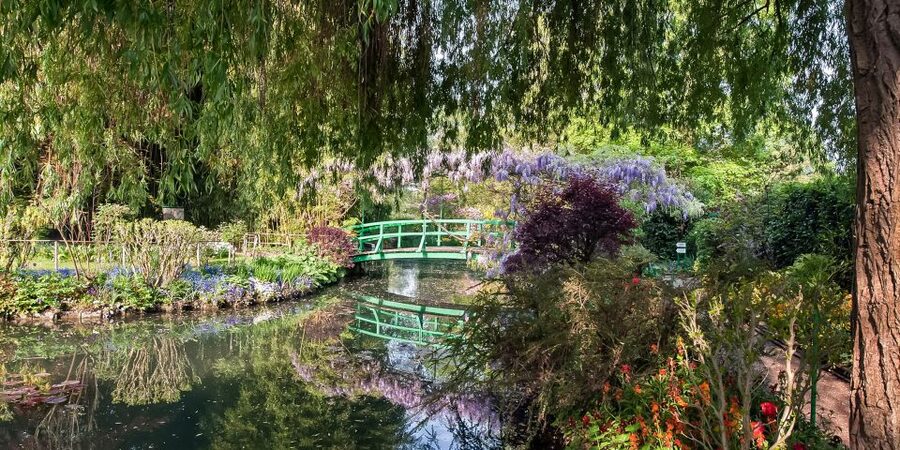
- The water garden and Japanese bridge
- The Clos Normand and its changing colors
- Inside Monet’s house and family life
- Monet, light, and color
- How the small group affects the experience
- Is $69 a fair price?
- Duration, access, and practical planning
- Who should book this Giverny tour?
- Should you book it?
- FAQ
- Where does the Giverny tour meet?
- How long does the guided visit last?
- What language is the tour offered in?
- Is skip-the-line entry included?
- Can I stay at Monet’s property after the tour?
- Is the tour wheelchair accessible?
Key points to know before you book
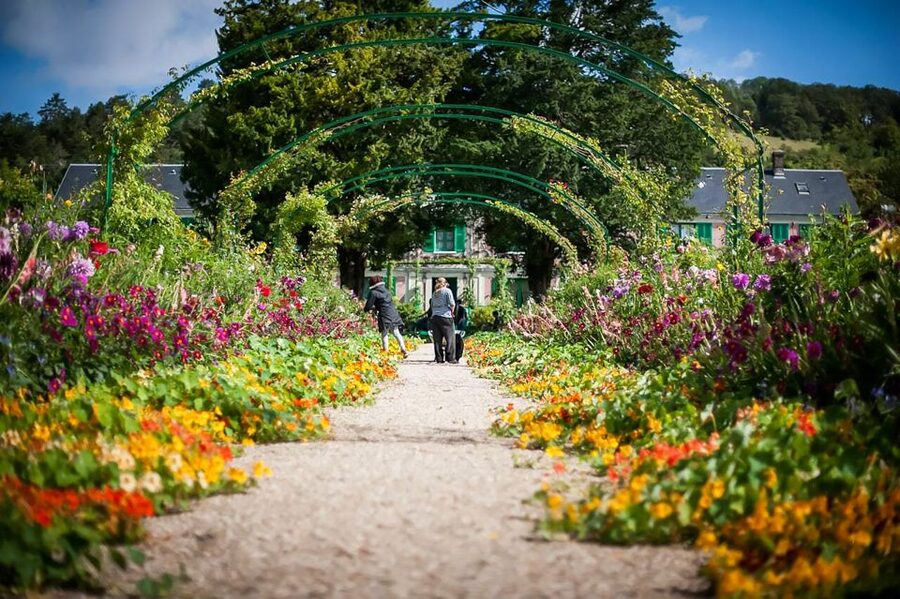
- The Japanese bridge and water lilies come first: You see the famous water garden that inspired Monet’s best-known series of paintings.
- Brigitte adds unusual depth: Her talks connect Monet’s family life, painting methods, color theory, friendships, and gardening plans.
- Skip-the-line entry matters: During busy periods, the separate entrance can save time and reduce uncertainty.
- The tour is genuinely small: With a maximum of 10 people, you can interact with the guide instead of simply following a flag through the grounds.
- You can stay after the tour: Once the guided portion ends, you may continue strolling independently and visit the large gift shop.
- Season affects the visit: The gardens open from early spring until the first days of November, with different flowers and colors appearing through the season.
Why a guide changes the visit at Monet’s Giverny
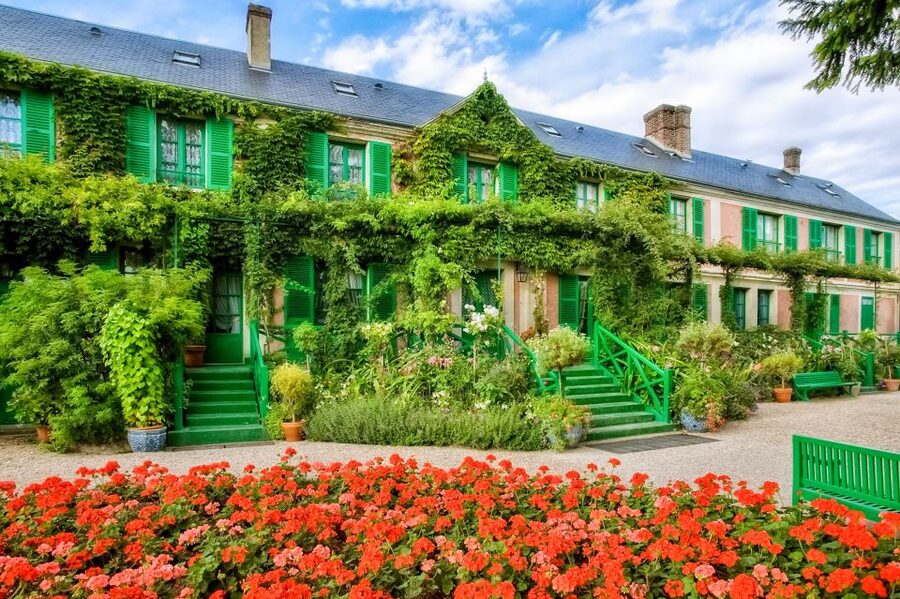
Monet’s gardens are lovely even if you know little about art. You can walk past the flowers, cross the Japanese bridge, photograph the water lilies, and admire the house. But without context, it is easy to see only a pretty garden rather than the working subject of a major painter.
This tour helps you connect the planting scheme with Monet’s paintings. The guide points out plant species, garden features, and the way Monet used color and light. That link is the real reason to pay for a tour. You are not simply being shown where to take pictures. You are being helped to look at the garden as Monet looked at it, as a changing arrangement of color, reflection, shadow, and seasonal growth.
Brigitte is the guide most often named in the feedback provided for this experience. Her style appears to combine firm organization with humor and personal attention. She has learned participants’ names and interests, used images of Monet’s paintings, explained color wheels and complementary colors, and connected the garden to his work in Paris and other countries.
That level of detail will suit you if you enjoy art, gardening, or social history. If you prefer to wander silently and set your own pace, a guided visit may feel more structured than necessary. Still, the tour ends after two hours, and you can remain inside the property to explore on your own.
A few more Paris outings to set side by side
- Paris: Louvre Museum Timed-Entrance Ticket
★ 4.6 · 71,977 reviews - Disneyland® Paris 1-Day Ticket
★ 4.6 · 49,412 reviews - Paris: Versailles Palace and Gardens Full Access Ticket
★ 4.6 · 41,579 reviews
Meeting at Les Nymphéas café
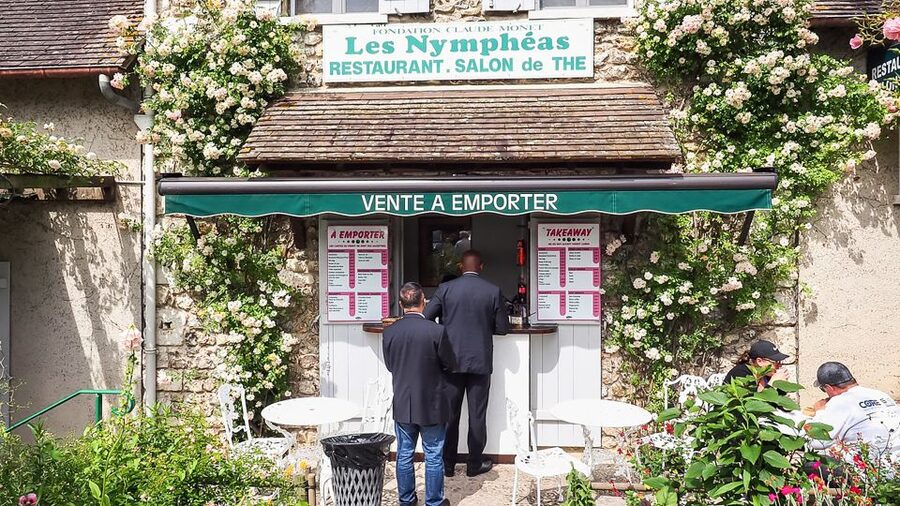
The meeting point is outside Les Nymphéas café or restaurant, the closest meeting place to Monet’s house. This detail matters because Giverny can become confusing when several groups gather near the entrance.
Look for a guide with a blue badge and a green folder marked written guided tour. Brigitte has also been easy for groups to spot in a green and white striped dress on some visits, though you should rely on the stated badge and folder rather than clothing.
Your guide holds the prepaid admission tickets and takes the group to the entrance. You do not need to collect a separate ticket first. Arrive with enough time to identify the guide, since the tour has a fixed starting time and the property can be busy.
The meeting point beside the café is convenient if you want a drink or meal before or after the visit. Food and drinks are not included, so plan that separately. One useful timing tip is to consider an early morning start, when the grounds may feel less crowded, or a start around 12:30, when some people pause for lunch. These times are not guaranteed to be quiet, but they may help you avoid the heaviest flow.
The water garden and Japanese bridge
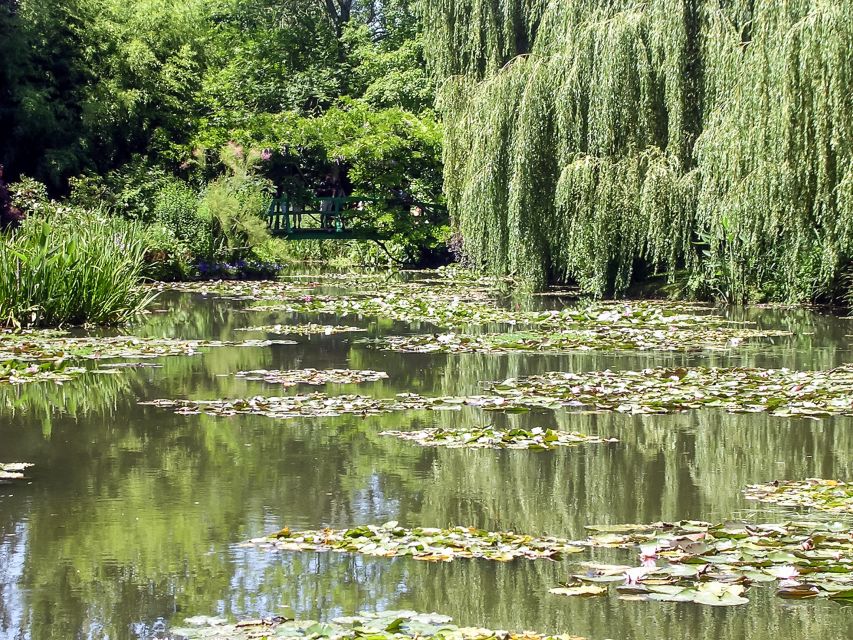
The tour begins with Monet’s water garden, the section most closely tied to his famous water-lily paintings. The Japanese bridge and pond provide the familiar view, but the guide gives you reasons to study more than the postcard angle.
Pay attention to reflections and the way the garden changes as you move. The water, bridge, plants, and sky create shifting shapes rather than a single fixed scene. Your guide explains how the planting and color choices relate to Monet’s painting, helping you see why this was not just an ornamental pond.
This is also the part of the visit where photography can slow the group. You will have plenty of photo opportunities, but remember that other people are trying to see the same bridge and lilies. A small group helps here because the guide can pause for questions without managing a large crowd.
The most useful explanations are those that connect botany with art. Instead of hearing only the names of flowers, you learn why certain colors work together and how Monet planned the garden to create visual effects. That is what turns a stroll into an art lesson without making it feel like a classroom.
The Clos Normand and its changing colors
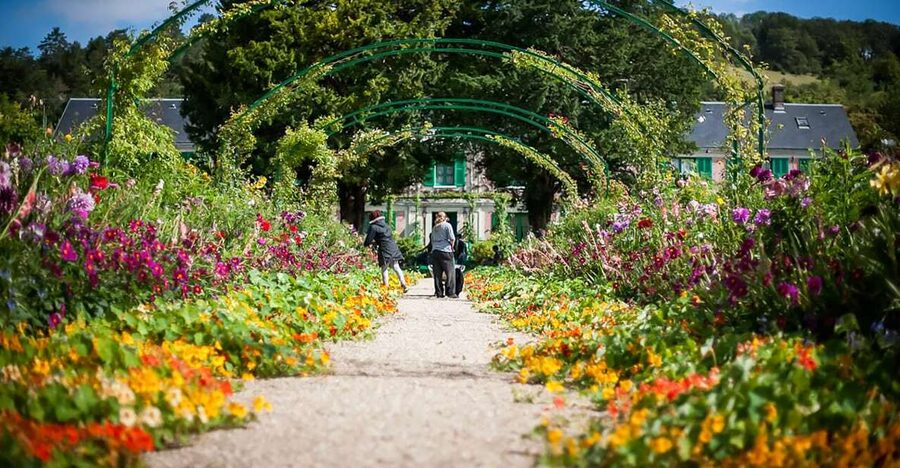
After the water garden, the group visits the Clos Normand, the broad flower garden in front of the house. This area has a different character. It is more open, more densely planted, and full of changing color combinations.
The guide points out different flower species and features of the grounds. The exact display depends on the time of year. From early spring until the first days of November, the gardens move through different stages of bloom, so you should expect the mood and colors to vary with your date.
A spring visit may give you fresh growth and early flowers. Summer brings fuller displays and heat, while early autumn can offer cooler conditions and mature planting. The garden is not a static museum exhibit. It is maintained as a living place, which means your visit depends partly on the season and weather.
The guided pace has an advantage here. The grounds can tempt you to stop every few steps, especially with a camera in hand. Brigitte is praised for keeping groups moving while still allowing time for questions and photographs. That balance matters because two hours passes quickly, and the visit includes both gardens and the house.
If you visit in warm weather, bring water and sun protection. One participant became unwell in the heat, and the guide helped arrange a shaded place in the dining room of Monet’s house. That account suggests a caring and attentive guide, but you should still prepare for sun exposure and walking.
More guided days in Paris:
- Paris: Louvre Guided Tour with Reserved Access & Boat Cruise
★ 4.3 · 16,353 reviews - Louvre Museum Masterpieces Guided Tour with Access
★ 4.5 · 12,023 reviews - Louvre Museum – Exclusive Guided Tour (Entry Included)
★ 5.0 · 6,296 reviews - Versailles: Skip-the-Line Guided Palace Tour and Full Access
★ 4.6 · 5,214 reviews
Inside Monet’s house and family life
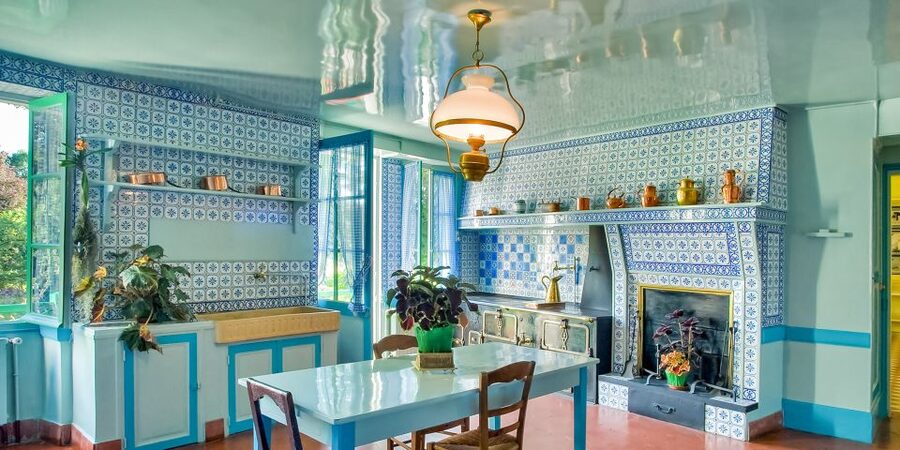
The house adds a personal dimension to the gardens. Here, the visit shifts from flowers and paintings to Monet’s home, family, and everyday surroundings.
The guide explains Monet’s life, his family, and the way the house functioned. The most useful stories place the painter in ordinary domestic settings rather than treating him only as a famous name. You gain a better sense of the person who lived at Giverny, not just the artist associated with water lilies.
The house is described as beautiful and authentic, but it is also a busy part of the visit. Rooms can fill with other groups, and you may not move at the same speed you would in a private home. A guide who can steer a small group around other parties is a real advantage.
You will want to look closely at the rooms, but do not rush past the connection between house and garden. Monet did not treat the grounds as a separate attraction. His home, studio life, planting choices, and paintings belong to the same story. The guide’s explanations make that relationship easier to understand.
Monet, light, and color
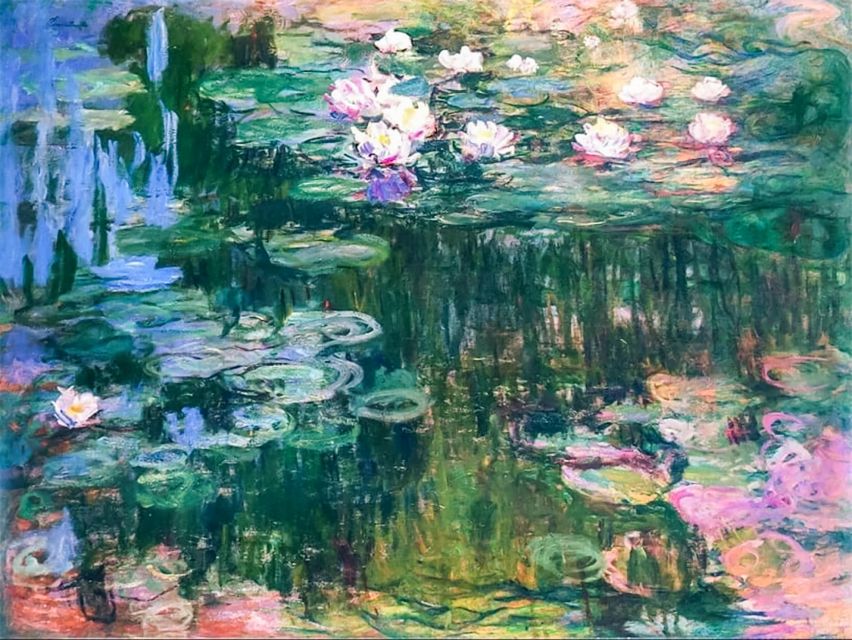
The strongest part of the tour appears to be its explanation of Monet’s working method. Brigitte uses examples of his paintings and discusses light, color, and complementary tones. She also explains how flowers were chosen and arranged to produce the beauty Monet wanted to see.
This is valuable even if you are not an art expert. You do not need a background in Impressionism to understand the basic idea: color changes with light, reflections alter what you see, and a garden can be designed as a series of visual experiences.
The guide also places Monet in his time. You hear about his friendships with artists in Paris, the development of his painting style, and how his work was received. These details help explain why Monet became a major figure in Impressionism rather than leaving you with a list of dates and famous paintings.
I would particularly recommend this tour if you have seen Monet’s work in museums but have never visited Giverny. The grounds give physical meaning to paintings you may have known only as images on a wall. If you already know a great deal about Monet, the botanical detail and garden design may still offer something new.
How the small group affects the experience
The group limit is 10 people. That is small enough for direct conversation but large enough to give the tour a pleasant social feel.
You can ask questions without shouting across a crowd. The guide can respond to individual interests, and people who want more art detail or more flower information can take part. Several participants particularly valued the chance to interact easily with Brigitte.
The group size also helps with pacing. A guide can move around other parties and keep the route organized. That matters at Giverny because the site attracts many people, and the most famous areas can become crowded.
There is one weakness to keep in mind. A visitor reported that no headphones were provided and that they heard only about half of the guide’s talk. The tour is described as a small group, which should help, but you may still want to walk near Brigitte and tell her promptly if you cannot hear.
The tour operates in one language at a time, either French or English. Check the selected language carefully when booking. A single-language tour is usually clearer than a mixed-language presentation, but it means you need to choose the right option for your group.
Is $69 a fair price?
At $69, this is not the cheapest way to enter Monet’s property. If you mainly want photographs and prefer to read information on your own, independent admission may offer better value.
The tour earns its price in three ways. First, the ticket includes skip-the-line entry through a separate entrance. Second, you receive two hours of live explanation from a licensed local guide. Third, the group is limited to 10 people, so you are paying for access to a more personal experience rather than a large procession.
The value improves on a crowded day. Waiting in a long queue can eat into a day in Normandy, especially if Giverny is one stop on a route between Paris and Bayeux. One visitor specifically found the skip-the-line access worth the cost after seeing how long the regular line was.
I would see the price as reasonable for art lovers, first-time visitors, and people with limited time. It is less compelling for repeat visitors who already know the house and gardens well. The ability to remain afterward is useful because you do not lose the chance to take your own time with the property.
Duration, access, and practical planning
The guided visit lasts two hours. That is long enough to cover the water garden, Clos Normand, and house without turning into an exhausting half-day lecture. The guide-led portion has a planned pace, so you can see the main areas and still have time afterward for independent wandering.
Wheelchair access is listed for the activity. Since this is a historic property with gardens and a house, you should still confirm any specific route needs when booking, but the activity itself is marked wheelchair accessible.
Cancellation is free up to 24 hours before the start time for a full refund. You can also reserve now and pay later, which helps if your Normandy plans are still shifting. These options are useful for a trip with changing transport arrangements, but they do not remove the need to reach the meeting point on time.
The gardens are open from early spring until the first days of November. They are closed to visitors for part of the winter, so check operating dates before building your route around Giverny.
Wear comfortable shoes and expect to spend much of the tour outside. On warm days, carry water and prepare for sun. The café near the meeting point gives you an easy place to arrange food or drinks, but nothing edible is included with the tour.
Who should book this Giverny tour?
I would choose this tour if you want more than a quick look at Monet’s famous bridge. It is especially suited to:
- First-time visitors to Monet’s house and gardens
- People who want art explained in plain language
- Garden lovers interested in plant choices and color
- Visitors trying to save time at a busy attraction
- Couples and families who prefer a small, interactive group
- People combining Giverny with a Normandy route toward Bayeux
You may skip it if you dislike guided pacing, want complete solitude, or are mainly interested in taking photographs. You can stay after the tour, though, so the guided format does not end your personal time at the property.
The experience also suits mixed-interest groups. Someone who loves painting can focus on Impressionism, while another person can ask about flowers, house details, or Giverny itself. The guide can point you toward other things to see in the village, although those additional sights are not part of the two-hour tour.
Should you book it?
Book it if you want context, a smaller group, and a safer plan for busy entry lines. The strongest reason is not simply admission. It is the connection between Monet’s life, his garden design, and the paintings that grew from it.
At $69, the tour asks you to pay for time and understanding as much as access. For a first visit, that is a fair trade, particularly if you are fitting Giverny into a packed Normandy schedule. Brigitte’s clear storytelling, humor, and skill with both art and plants add real value.
Skip it if you already know the property well or would rather wander without a schedule. For most first-time visitors, though, the guide helps you notice the ideas behind the beauty, and that makes Giverny much more than a pleasant garden stop.
FAQ
Where does the Giverny tour meet?
Meet your guide outside Les Nymphéas café or restaurant, the café closest to Monet’s house. Look for a blue badge and a green folder marked written guided tour.
How long does the guided visit last?
The guided tour lasts two hours and includes the Fondation Monet, its gardens, and Monet’s house.
What language is the tour offered in?
The tour operates in one language at a time. Available languages are French and English.
Is skip-the-line entry included?
Yes. The price includes a prepaid ticket and entry through a separate entrance intended to avoid the main ticket queue.
Can I stay at Monet’s property after the tour?
Yes. After the guided portion, you can continue walking through the property on your own and visit the large gift shop before leaving.
Is the tour wheelchair accessible?
Yes. The activity is listed as wheelchair accessible.
Recently added in Paris
- Private Transfers in Paris★ 5.0 · 75 reviews
- CDG – Euro Disney – CDG Two Way Private Shuttle Transfer★ 5.0 · 233 reviews
- Disneyland® Paris 1 Day Ticket with Transport from Paris★ 3.5 · 302 reviews
- Personalized Transport service from Disneyland to Paris★ 5.0 · 63 reviews
- Monet’s Gardens & House-Private Giverny Tour From Paris★ 4.5 · 137 reviews
- Guided tour Monet’s house and gardens/small group★ 4.5 · 68 reviews
- Giverny Monet House and Gardens Skip the line Walking tour★ 4.0 · 217 reviews
- Monet’s House and Garden & Giverny Village★ 4.5 · 39 reviews
Guided, compared.

Louvre Guided Tour with Reserved Access & Boat Cruise
Read our review →
Louvre Museum Masterpieces Guided Tour with Access
Read our review →
Louvre Museum – Exclusive Guided Tour (Entry Included)
Read our review →
Skip-the-Line Guided Palace Tour and Full Access
Read our review →
Louvre Priority Access with Mona Lisa Escort or Guided Option
Read our review →
Louvre Museum: Skip-the-Line Small Group Guided Tour
Read our review →