
REVIEW · HIKING & TREKKING
Marseille: Urban Hiking Tour with a Local Guide
Marseille reveals itself on foot. This 210-minute urban hike links the Old Port, small fishing harbors, quiet parks, coastal coves, and Notre-Dame de la Garde. I especially like the route’s mix of sea air and local neighborhoods, plus the way guides such as Olivier explain both the city’s past and its present-day character.
The small group, limited to 10 people, makes it easy to ask questions and keep the experience personal. My main caution is simple: this is a genuine hike, not a gentle city stroll. Expect steep climbs, many steps, uneven pavement, and roughly seven to eight miles of walking according to past participants.
In This Review
- Key points to know before you book
- Starting at the Old Port with a local guide
- From Palais du Pharo to Plage des Catalans
- Small harbors and rocky coves along the coast
- Quiet parks and former village districts
- The long climb to Notre-Dame de la Garde
- Returning through the city center
- What the guide adds to the experience
- Price, pace, and practical value
- Who should take this Marseille hike?
- Should you book Urban Hike?
- FAQ
- Where does the Marseille urban hike start?
- How can I identify the guide?
- How long does the tour last?
- What languages are available?
- How large is the group?
- Does the route visit Notre-Dame de la Garde?
- Is this a difficult walk?
- Is the tour suitable for children?
- Is the route suitable for people with mobility impairments?
- What should I bring?
Key points to know before you book
- A real uphill walk: The route includes steep inclines, narrow alleys, uneven steps, and long stretches on pavement and asphalt.
- Marseille beyond the postcard: You pass fishing ports, rocky coves, parks, former village districts, and quieter corners that are easy to miss alone.
- The coast comes first: The walk heads south from the center and follows the waterfront before turning inland.
- Notre-Dame de la Garde is the payoff: The climb ends at Marseille’s famous basilica, with wide views over the city and sea.
- Strong local storytelling: Olivier, also listed as Oliver in some details, receives repeated praise for explaining Marseille’s history, neighborhoods, geography, sports, and social life.
- Good practical extras: Eight water points and sunscreen are included, but you still need to bring your own drinking water.
Starting at the Old Port with a local guide
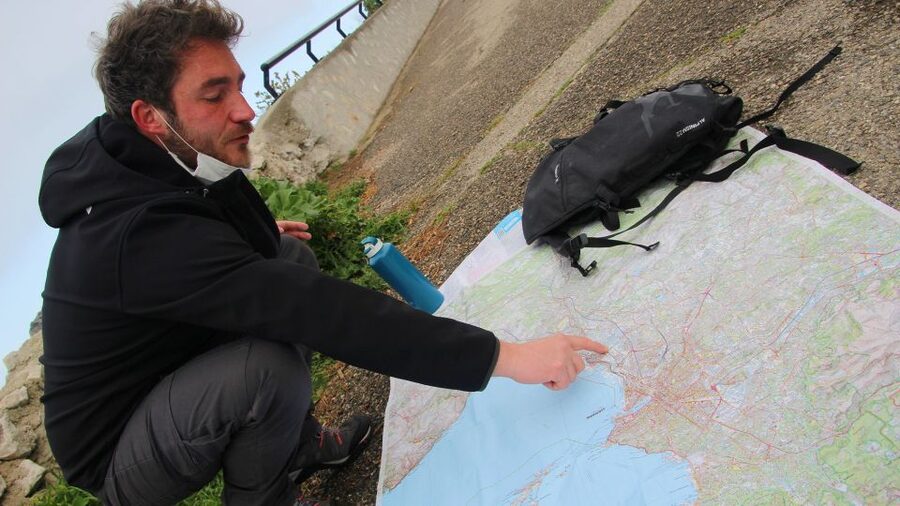
You meet in front of Burger King at the intersection of La Canebière and the Quai des Belges. It is an easy place to find near Marseille’s central Old Port, but look for a guide in hiking clothing with a backpack rather than expecting a large tour sign.
The tour begins with a short introduction to the Old Port. This is useful orientation because Marseille can feel scattered at first. The port gives you a clear center, and from here the walk shows how the city spreads outward toward the sea, the hills, and its different districts.
Your guide speaks French or English. Olivier is the name most often associated with the experience, while one past participant praised Charles. The important point is the guide’s personal connection to Marseille. Olivier is described as someone who grew up in the city and still lives there, and his explanations cover more than dates and monuments. He talks about neighborhoods, social changes, geography, sports, and the way Marseille’s people see their city.
That local viewpoint is the main reason to choose this tour over a standard sightseeing circuit. You are not simply ticking off famous buildings. You are learning how the parts of Marseille fit together.
A few more Marseille outings to set side by side
- Marseille: Calanques National Park Guided Hike with Picnic
★ 4.9 · 516 reviews - From Marseille: Calanques National Park Guided Hike
★ 4.8 · 489 reviews - Hiking in the Calanques National park from Marseille
★ 4.5 · 211 reviews
From Palais du Pharo to Plage des Catalans
After the Old Port, the route reaches Palais du Pharo. You stop for about 20 minutes to hear about the site, take photographs, and look back toward the waterfront. The palace area offers one of the first broad scenic viewpoints, so it helps you understand the shape of the harbor before the walk moves farther along the coast.
The next stop is Plage des Catalans, a city beach close to the center. You pass by it rather than spending a long time there, with roughly 10 minutes for sightseeing and photographs. This is a brief stop, but it shows how quickly Marseille changes from port city to beach town.
The route then reaches the Monument aux morts de l’Armée d’Orient et des terres lointaines. The stop lasts only about five minutes and is mainly for photographs. It adds a memorial layer to the walk and reminds you that Marseille’s public spaces carry stories from well beyond the city itself.
At this point, you should already understand the tour’s rhythm. You walk, pause for a view or explanation, continue through another district, and then walk again. The schedule gives approximate times, but the activity can run longer than three and a half hours when the weather is pleasant and there is plenty to discuss.
Small harbors and rocky coves along the coast
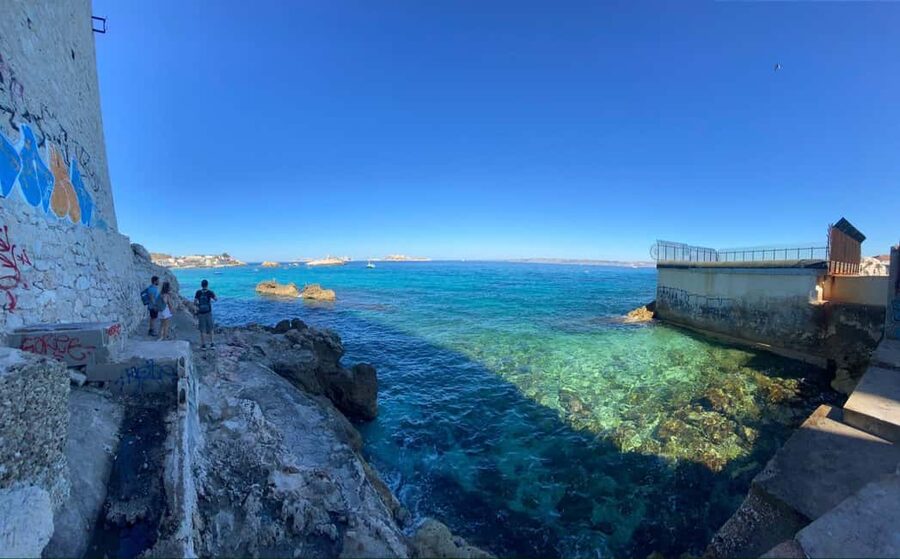
The coastal section is one of the strongest parts of the experience. At Vallon des Auffes, you spend about 20 minutes exploring, listening, and taking in the view. This small fishing harbor feels very different from the broad Old Port. Its compact setting and boats give you a closer look at Marseille’s long connection with the sea.
The walk continues to Anse de Malmousque, another coastal stop of about 20 minutes. Here, you get more sea views and a quieter sense of the city. The route is not confined to the grand waterfront. It leads you toward coves and smaller shorefront spaces where Marseille feels more local and less arranged for sightseeing.
At Anse de la Fausse Monnaie, you again have around 20 minutes for photographs, stories, and views. These stops are valuable because they give the walk a strong sense of place. You see the coast from several angles rather than stopping once for a single standard photograph.
The practical catch is that coastal beauty does not make the walking easy. You are still covering serious distance, and the route includes changes in level. Comfortable shoes are essential. Sandals or hard-soled fashion shoes could make the later climb much less pleasant.
Quiet parks and former village districts
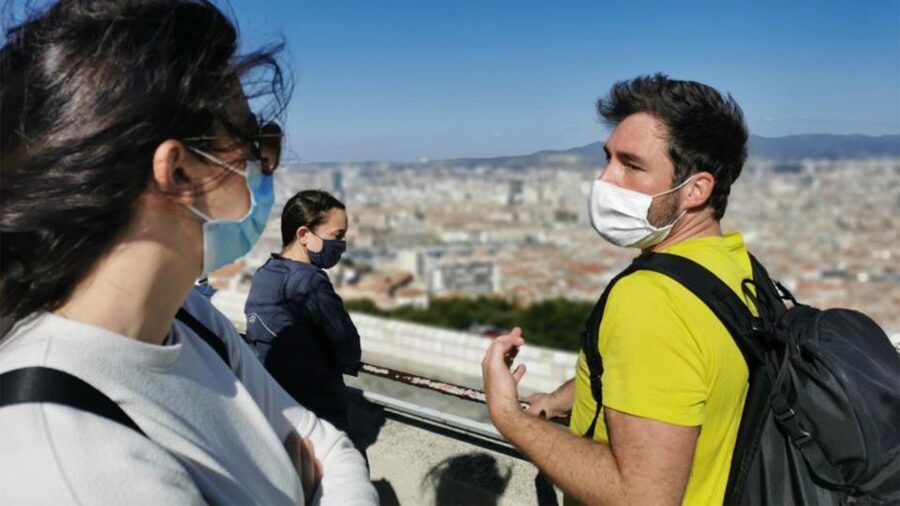
After following the waterfront, the route turns inland through parks and narrow passages. This shift is part of the fun. Marseille can change from open sea views to shaded greenery and residential streets within a short walk.
Chemin du Bois Sacré is a 20-minute walking section with scenic views along the way. The exact path may vary, and the experience includes a secret stop lasting about 40 minutes. That stop is designed around local knowledge: a place to see, hear about, and photograph that is not part of the usual first-time route through Marseille.
I like this part because it gives you a better sense of the city’s old village districts. Several participants praised the winding route through villages that have since been absorbed into Marseille. You see how the city grew by bringing smaller communities into one urban area, rather than viewing Marseille as one uniform center.
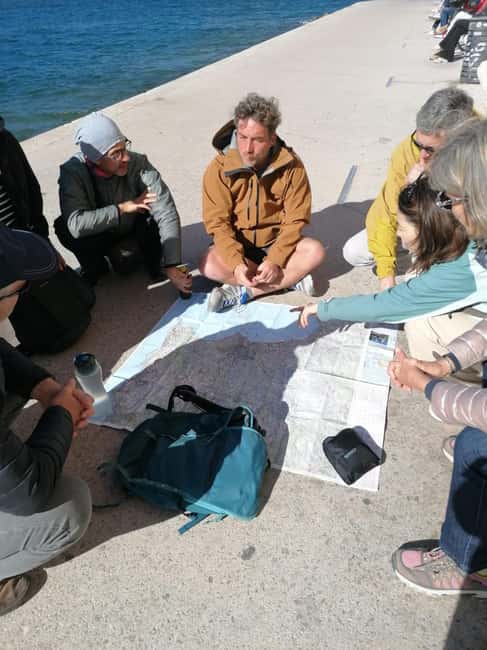
The guide’s explanations matter here. A map and neighborhood stories help connect what you are seeing with the city’s development. You may hear about differences between districts, changes in the city, and the relationship between historic Marseille and its modern communities.
This is also where the tour can become more personal. Olivier has been praised for sharing information about Marseille and his own connection to it, while still keeping the focus on the city. That combination can make the walk feel less like a memorized speech and more like an informed local conversation.
Same city, a slower kind of day:
- Marseille: City Sightseeing Hop-On Hop-Off Bus Tour
★ 3.8 · 2,820 reviews - Marseille: Côte Bleue Calanques Half-Day Kayak Tour
★ 4.7 · 877 reviews - Marseille Food Tour – Full Meal of Local Tastes by Do Eat Better
★ 5.0 · 530 reviews - Marseille: Musée de l’Illusion Entry Ticket
★ 4.1 · 488 reviews
The long climb to Notre-Dame de la Garde
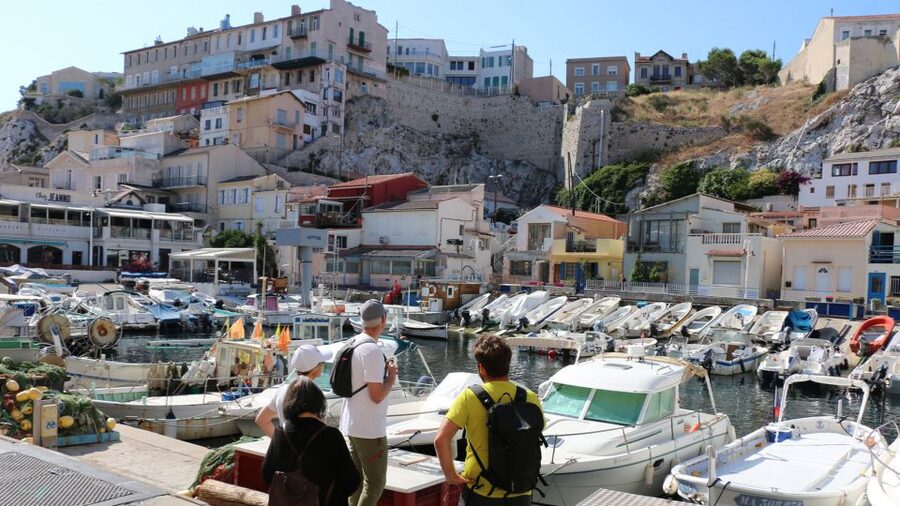
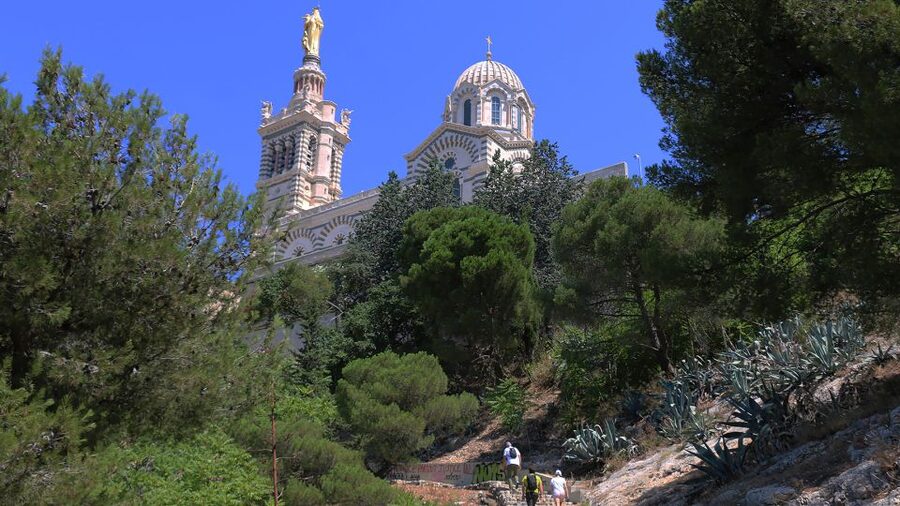
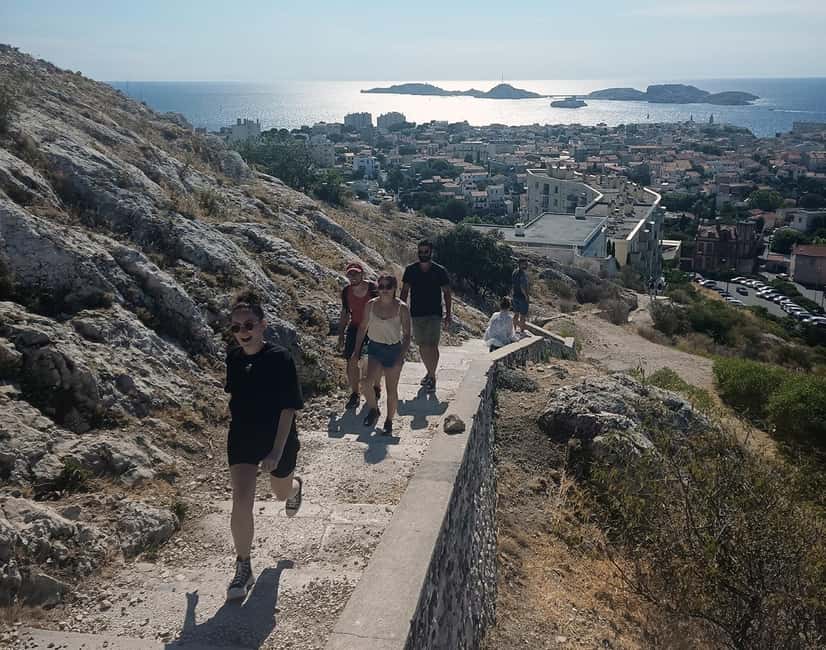
The route eventually takes you up narrow alleys toward Notre-Dame de la Garde. This is the physical centerpiece of the tour, and it is where you need to be honest about your fitness.
Several participants described the walk as seven or eight miles, with steps, pavement, asphalt, uneven surfaces, and steep inclines. One person warned about steps galore and incline after incline. Another said the guide walked quickly but regularly waited for everyone to catch up. That is useful information: you do not need to be a serious hiker, but you should be comfortable walking for several hours and climbing repeatedly.
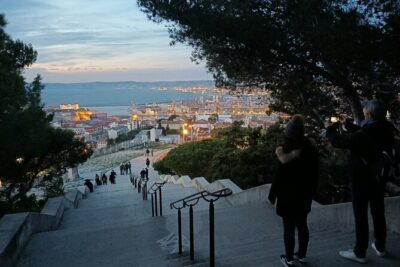
The basilica stop lasts about 30 minutes. You have time for photographs, a guided visit, sightseeing, and some self-guided exploration. The reward is the view from above, with Marseille, the harbor, the coastline, and surrounding hills spread out below you.
Notre-Dame de la Garde is a major symbol of Marseille, but reaching it by foot gives the visit more meaning. You have watched the city change from port to beach, from coast to park, and from central streets to hillside alleys. By the time you reach the basilica, the view is not just a pretty panorama. You can recognize the areas you have crossed.
If you want to visit the basilica at a relaxed pace, note that the listed 30-minute stop is not a full museum-style visit. The tour focuses on the building, the viewpoint, and the route. You may want to return independently if you prefer more time inside.
Returning through the city center
After Notre-Dame de la Garde, the route descends along Boulevard André Aune. This section takes about 20 minutes and includes walking, photographs, local commentary, and views on the way back toward central Marseille.
The descent can be easier than the climb, though uneven steps and tired legs still matter. You have already spent several hours on your feet, so this is the point where the included water points become particularly welcome.
The walk finishes at the Old Port, with about five minutes of free time. That ending is convenient because you are returned to a central part of Marseille rather than left on a distant hillside. You can continue with lunch, shopping, a museum, or another walk through the center.
The route is also useful early in your stay. Guides give practical suggestions for other places to visit and things to do in Marseille. Since the hike crosses several districts, you can use those recommendations with a better understanding of where they are located.
What the guide adds to the experience
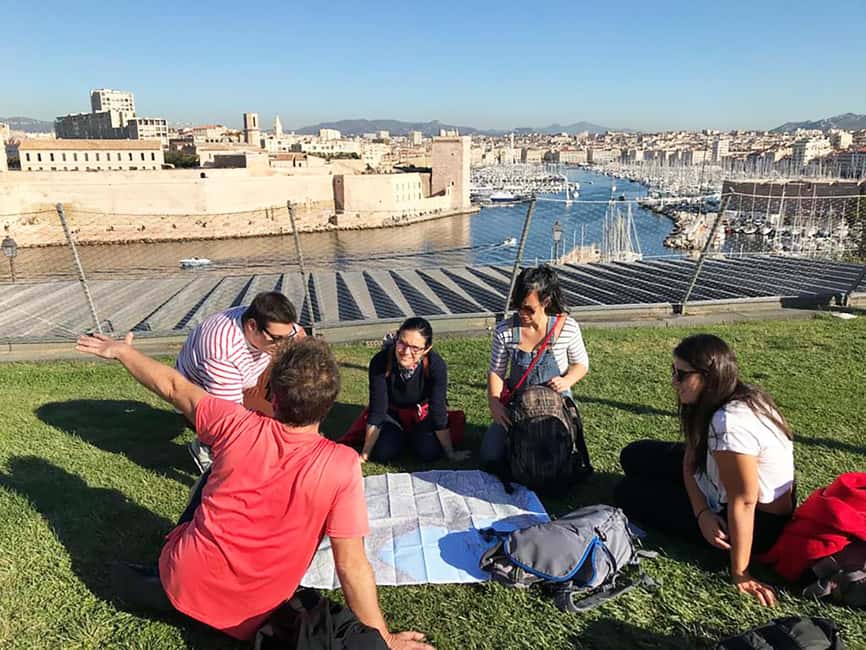
The guide is the strongest part of this activity. Past participants repeatedly praised Olivier for his clear English, enthusiasm, and ability to explain both ancient and modern Marseille. One person specifically valued his attention to history, geography, sociology, and current changes in the city.
That broad subject range is important. Marseille is not a city you understand from one monument. Its identity comes from the port, migration, neighborhoods, sports, religious sites, coast, and complicated social life. A good guide can connect those threads while you move through the city.
The tour also seems to reward curiosity. Ask questions as you go. The group size is limited to 10, so you should have a better chance to speak with the guide than on a large coach or walking tour. Small groups also make it easier to keep a steady pace and stop without creating a crowd.
There is some variation in the guide names and guide style, so I would not book solely because you expect one particular person. Still, the consistent praise for the guiding approach suggests that the local storytelling is central to the activity, not an extra added around a fixed route.
Price, pace, and practical value
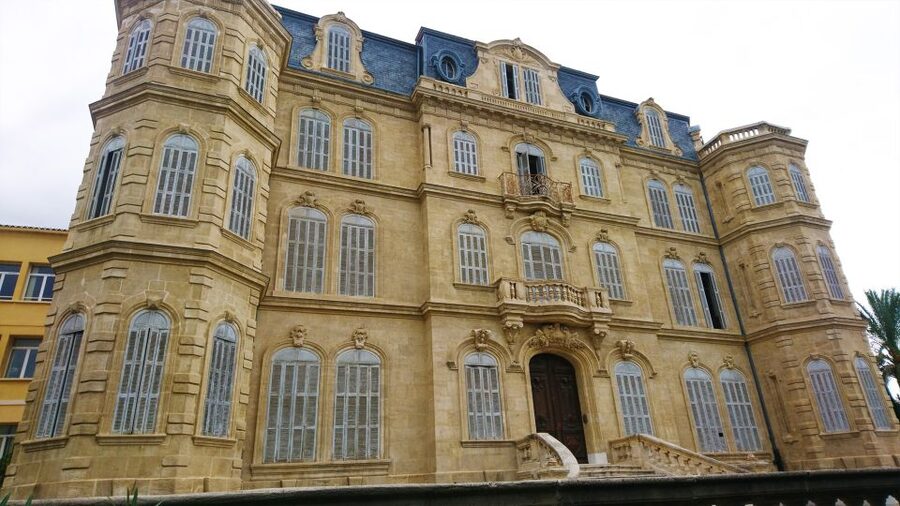
At $46 per person, this is fairly priced for a three-and-a-half-hour small-group experience with a live guide, sunscreen, and eight water points. You are paying for access to local knowledge and for a route that would be difficult to plan efficiently on your own.
The value is strongest if you want context. You could visit the Old Port, the coast, and Notre-Dame de la Garde independently, but you would need to research the connections, choose a route, and find the quieter paths yourself. Here, the guide does that work and adds stories about the districts along the way.
The value is weaker if you mainly want a short monument tour. The route is long, and some stops are brief. You spend more time walking between sights than you would on a conventional city-center tour.
The activity includes water points, but water or other drinks are not included. Bring your own bottle, sunscreen, and comfortable shoes. The tour provider supplies sunscreen, but carrying your own is still sensible, especially in summer.
In hot weather, the route is adapted with more frequent stops, drinking water points, and shaded parks. Even so, do not schedule a tight appointment immediately afterward. The activity is listed at 210 minutes, but it can run beyond three and a half hours when the weather is good and the guide has plenty to explain.
Who should take this Marseille hike?
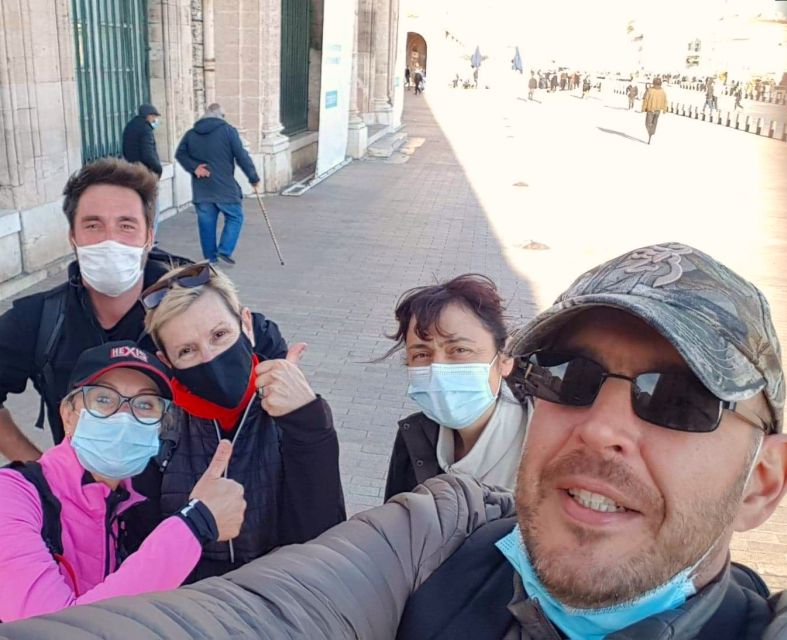
I would choose this tour if you want to understand Marseille through its neighborhoods rather than simply photograph its headline sights. It suits active visitors who enjoy long walks, local stories, coastal views, and a little exertion in exchange for a broader feel for the city.
It is also a good choice for a first day in Marseille if you want an overview. The route shows you where the coast sits in relation to the center, how the neighborhoods change, and why Notre-Dame de la Garde matters as both a religious site and a viewpoint.
Families should note the age limit. Children under seven are not permitted, and the route is not suitable for people with mobility impairments. Older children who are used to long walks may manage it, but the steep sections and uneven steps should be taken seriously.
I would not choose this activity if you need a flat route, dislike walking in warm weather, or have only a narrow window before a train, meal reservation, or cruise departure. The guide may pause often, but the total time is not rigid.
Cancellation is flexible up to 24 hours before the activity for a full refund, and you can reserve now and pay later. Those terms help if your Marseille plans are still shifting, but the physical demands remain the main booking decision.
Should you book Urban Hike?
Book it if you want a real introduction to Marseille, not just a list of monuments. The combination of small harbors, coves, parks, village-like districts, local stories, and the final climb to Notre-Dame de la Garde gives you a strong sense of how the city works.
Skip it if you are looking for an easy stroll. The route is long, hilly, and sometimes demanding. Bring water, wear proper shoes, leave room in your schedule, and treat the climb as part of the experience rather than an inconvenience.
For fit visitors who want local perspective and wide views, the $46 price is good value. This is one of the better ways to see Marseille’s character in a single morning or afternoon, provided you are ready to walk for it.
FAQ
Where does the Marseille urban hike start?
The meeting point is in front of Burger King at the intersection of La Canebière and the Quai des Belges.
How can I identify the guide?
The guide will be dressed in hiking gear and carry a backpack.
How long does the tour last?
The planned duration is 210 minutes, or three and a half hours. It can last longer when the weather is pleasant and there is a lot to discuss.
What languages are available?
The tour is offered in French and English.
How large is the group?
The group is limited to 10 participants.
Does the route visit Notre-Dame de la Garde?
Yes. The tour includes about 30 minutes at Notre-Dame de la Garde for a visit, guided commentary, sightseeing, photographs, and some self-guided time.
Is this a difficult walk?
Yes. The route includes steep inclines, many steps, pavement, asphalt, and uneven surfaces. Past participants described it as roughly seven to eight miles.
Is the tour suitable for children?
Children under seven years old are not permitted.
Is the route suitable for people with mobility impairments?
No. The activity is not suitable for people with mobility impairments.
What should I bring?
Bring comfortable shoes, water, and sunscreen. Sunscreen and access to eight water points are included, but drinks are not provided.
Recently added in Marseille
- The Urban Hike of Marseille★ 5.0 · 35 reviews
- Sailing day in the heart of the Calanques★ 4.5 · 61 reviews
- Sormiou Calanques National Park Electric Bike Tour from Marseille★ 5.0 · 60 reviews
- Sunset Lavender Tour in Valensole with pickup from Marseille★ 5.0 · 41 reviews
- Sightseeing Tour of Marseille with a Private Driver★ 4.5 · 26 reviews
- Rando-Palmée Getaway Around an island★ 4.0 · 54 reviews
- Marseille Highlights & Wine Tasting Day Tour from Marseille★ 4.5 · 27 reviews
- Cassis and Aix en Provence Sightseeing Tour from Marseille★ 4.5 · 132 reviews
Hiking & Trekking, compared.
Calanques National Park Guided Hike with Picnic
Read our review →
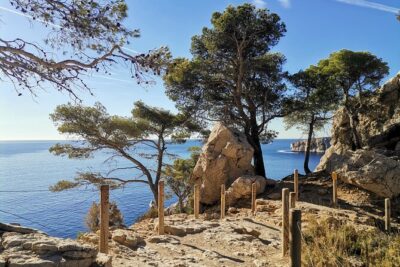
Hiking in the Calanques National park from Marseille
Read our review →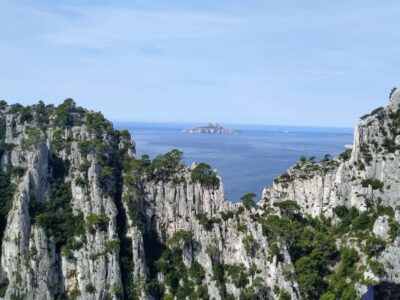
Cassis: 3 Calanques Half-Day Hiking Tour with Swimming
Read our review →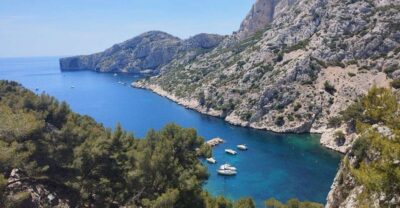
Guided Hiking Calanques National Park from Luminy
Read our review →

Quad and Moto hike, discover the Corrèze otherwise. Accessible to everyone !!
Read our review →Browse the lists this tour appears in