
REVIEW · NOTRE DAME TOURS
Notre-Dame Cathedral Exterior & Latin Quarter Guided Tour
Paris reveals itself on foot.
This two-hour walk links the Latin Quarter’s Roman, medieval, and intellectual past with an up-close look at Notre-Dame’s famous exterior. I especially like the small group limit of 11 and the guides’ strong storytelling, with Benjamin and Pilou earning repeated praise for their warmth, wit, and command of French history. The main drawback is the pace: you cover a great deal in two hours, so this suits curious walkers more than anyone hoping for a slow café-side stroll.
The route is flat, but it is still a walking tour on cobbled streets and is not recommended for people with mobility impairments. You also need to remember that Notre-Dame’s interior is not part of the guided visit, and the Panthéon, Cluny Museum, and other monuments are viewed from outside.
In This Review
- Key points to know before you book
- Beginning at Place Saint-André des Arts
- Fontaine Saint-Michel and the first glimpse of old Paris
- St. Séverin Church, a Gothic pause
- The Cluny Roman Baths and Paris before Paris
- La Sorbonne and the Latin Quarter’s intellectual life
- The Panthéon and France’s national memory
- St. Julien le Pauvre beside Notre-Dame
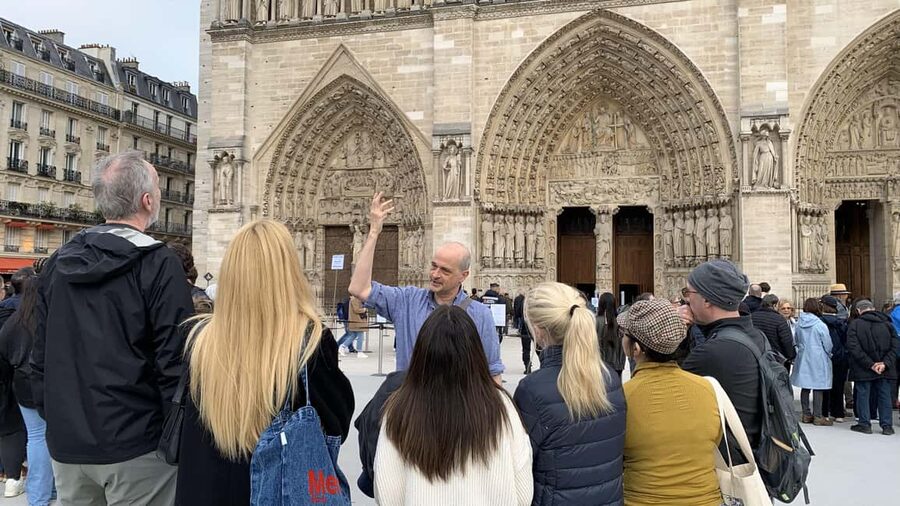
- Notre-Dame’s façade, sculptures, and fire story
- What the guides add to the experience
- The optional one-hour Seine cruise
- Price, pace, and who gets good value
- Should you book the Latin Quarter and Notre-Dame walk?
- FAQ
- How long is the guided tour?
- Where does the tour start?
- What language is the live tour in?
- How large is the group?
- Does the tour enter Notre-Dame Cathedral?
- Are monument and museum entrance fees included?
- Is the Seine River cruise included?
- Is the tour suitable for people with mobility impairments?
- What should I bring?
Key points to know before you book
- Roman Paris appears early: The Cluny Baths offer a direct link to Lutetia, the Roman city beneath modern Paris.
- The small group matters: With no more than 11 people, it is easier to hear the guide and ask questions.
- Benjamin and Pilou are standout guides: Their energetic, personal approach adds life to architecture and political history.
- St. Séverin is a major treat: Its Gothic design and medieval glass are easy to miss without a guide.
- Notre-Dame is an exterior visit: You see the façade, sculptures, and gargoyles, while the interior remains off-limits for guided entry.
- The boat trip is optional: A separate one-hour Seine cruise adds broad city views, with audio in 11 languages.
Beginning at Place Saint-André des Arts
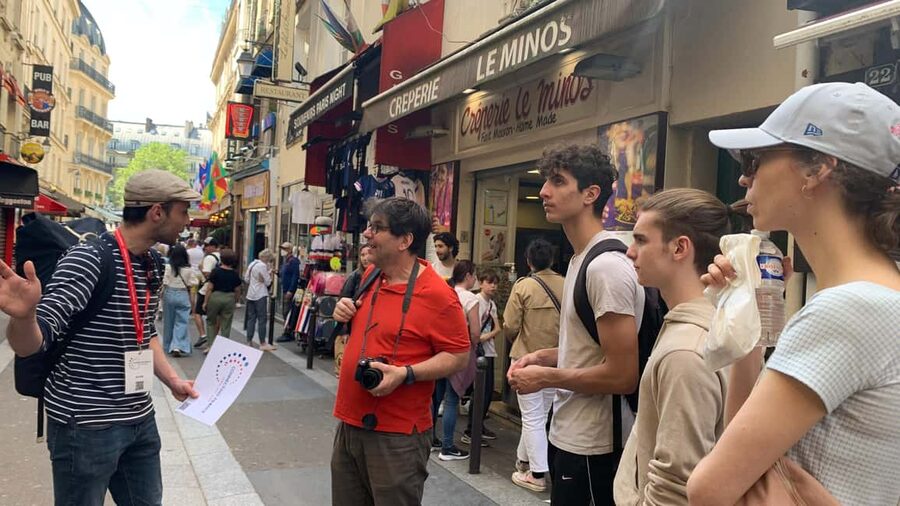
The tour starts at Place Saint-André des Arts, in front of Café G. Look for a guide holding a sign marked Connecting France.
This is a useful starting point because it places you right in the middle of the Left Bank rather than at a distant bus stop or hotel pickup point. Do not count on a taxi or Uber to get you there quickly. Traffic around central Paris can turn a short ride into a late arrival, so walking or using public transport may be the safer plan.
From here, your guide sets the tone for the Latin Quarter. This part of Paris is not just a collection of old buildings. It has long been linked with learning, religion, literature, political debate, and student life. The best part of a guided walk is the way these layers sit beside one another, often on the same short street.
The group is capped at 11 people, and private tours are available. That is a useful difference from a large walking group, especially when the guide stops beside a church façade or in a narrow street. You can hear the explanation, ask a follow-up question, and keep the group moving without the usual crowd-management routine.
More Notre Dame and island walks:
- Paris Île de la Cité and Notre-Dame Walking Tour With Crypt
★ 5.0 · 2,272 reviews - Paris: Eternal Notre-Dame VR Experience Ticket
★ 4.4 · 1,150 reviews - Paris: Notre-Dame Cathedral Exterior Tour & Free Entrance
★ 3.7 · 1,010 reviews
Fontaine Saint-Michel and the first glimpse of old Paris
The Fontaine Saint-Michel is an easy landmark to recognize. Built in the 19th century, it features the Archangel Michael defeating the Devil in a dramatic sculptural scene.
The fountain is more than a photo stop. It introduces the tour’s interest in public art and the way Paris has repeatedly reshaped its streets and monuments. Your guide can use the setting to explain how the modern city was built around older quarters, churches, squares, and surviving fragments of earlier Paris.
This is also a busy central area, so listen closely during the first few minutes. The fountain sits near major routes across the Left Bank, and the surrounding streets can feel more urban and hurried than the quieter lanes later in the walk.
St. Séverin Church, a Gothic pause
St. Séverin Church is one of the most rewarding stops because it is less famous than Notre-Dame but full of architectural detail.
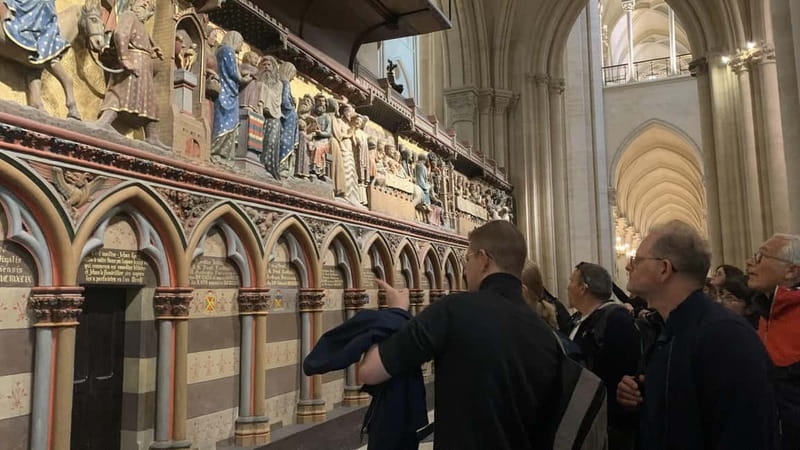
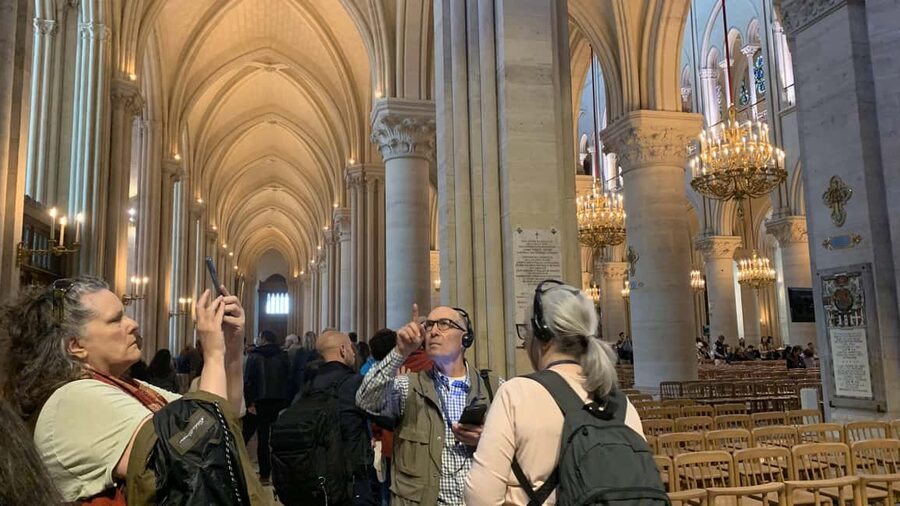
Inside, you can expect attention to the medieval stained-glass windows and the church’s double ambulatory. An ambulatory is the passage that curves around the main sanctuary, allowing people to move through the church without interrupting worship. In St. Séverin, that arrangement gives the interior a distinctive rhythm and helps you see how Gothic churches were designed for movement, ceremony, and light.
This stop also shows why a guide is useful. Gothic architecture can become a blur of pointed arches and stone decoration when you are walking alone. A good explanation helps you notice the structure, not just the age of the building.
Pilou is one of the guides associated with this experience, and his style suits this kind of stop. He is described as approachable, lively, and happy to take questions. That matters in a church, where a short explanation of a design feature can turn a quick look into a memorable visit.
The Cluny Roman Baths and Paris before Paris
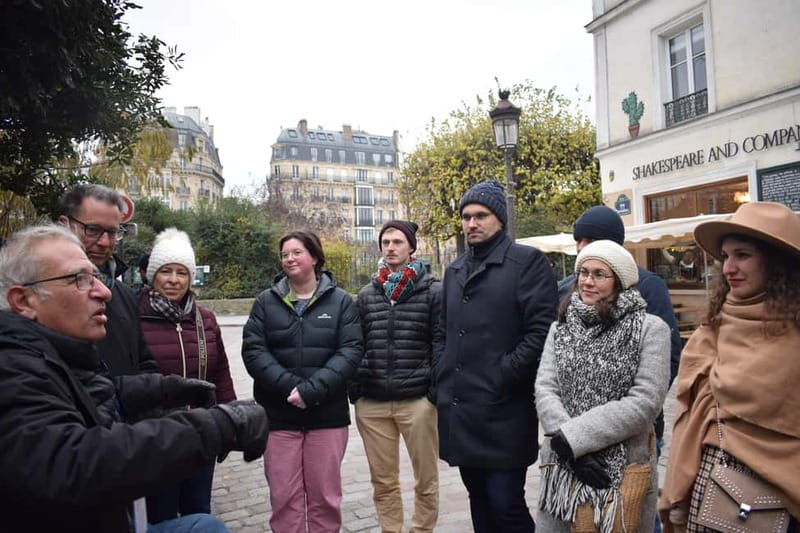
The ruins of the Cluny Roman Baths take you much farther back than the medieval churches.
These remains belonged to Lutetia, the Roman city that occupied this area. The baths were part of everyday urban life, not simply a grand monument. Your guide explains their role and points out how the Roman past survives beneath the modern Latin Quarter.
The adjacent Cluny Museum, officially the National Museum of the Middle Ages, is passed from outside rather than entered. If you have time on another day, it may be worth returning for a separate visit, but entrance is not included in this walking tour.
This is one of the clearest examples of the tour’s value. You are not only looking at an old wall. You are being shown how Paris developed in layers, with Roman foundations, medieval religious buildings, university life, and later national monuments occupying the same small area.
The limitation is time. The route gives you context and an exterior view, not an extended museum visit or archaeological tour. If Roman history is your main interest, you may want to plan extra time at the Cluny Museum independently.
A few more Paris outings to set side by side
- Paris: Louvre Museum Timed-Entrance Ticket
★ 4.6 · 71,977 reviews - Disneyland® Paris 1-Day Ticket
★ 4.6 · 49,412 reviews - Paris: Versailles Palace and Gardens Full Access Ticket
★ 4.6 · 41,579 reviews - Paris: Evening River Cruise with Music
★ 4.4 · 22,721 reviews
La Sorbonne and the Latin Quarter’s intellectual life
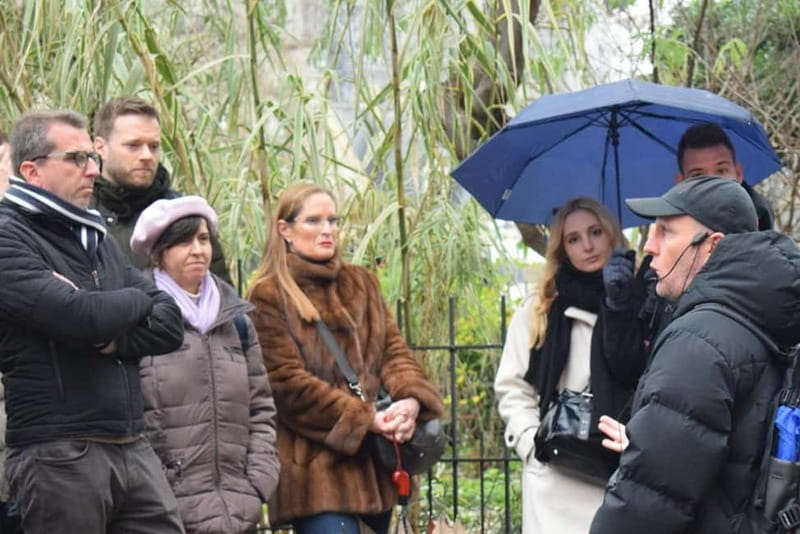
The walk continues toward La Sorbonne, one of the district’s key academic landmarks.
The Latin Quarter gets its name from the Latin once used in schools and universities. The area’s identity is closely tied to students, teachers, writers, philosophers, and political movements. Your guide connects La Sorbonne with that long tradition of study and public debate.
This is where the walk shifts from ancient and religious Paris toward the neighborhood’s intellectual character. You move through streets associated with bookshops, cafés, and courtyards, while the guide fills in the people and ideas connected with them.
Do not expect a formal university interior visit. La Sorbonne is a sightseeing stop on the route, and the main value comes from the surrounding context and the guide’s explanation.
Benjamin has received especially strong praise for explaining how people lived in the Latin Quarter across the centuries. His approach is described as energetic and engaging rather than dry, which helps when the subject moves into dates, institutions, and French political history.
The Panthéon and France’s national memory
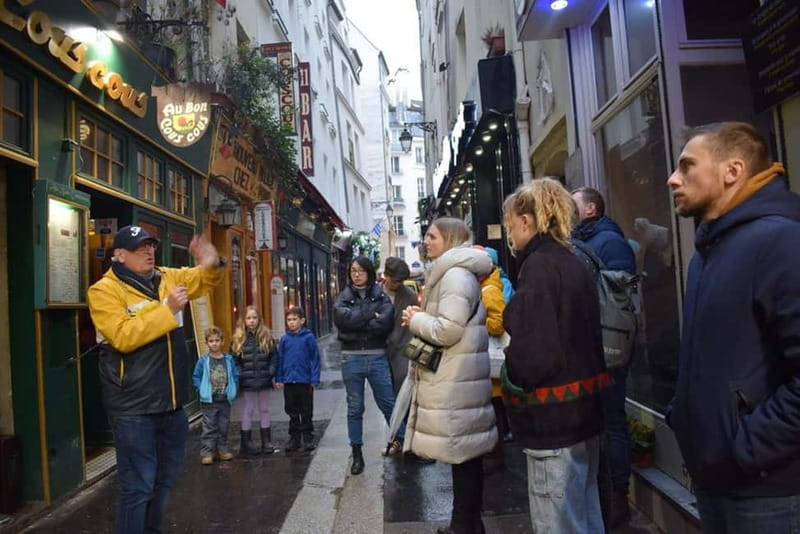
The Panthéon gives the walk its grandest architectural moment.
Originally built as a church, it later became a mausoleum for major French figures. Voltaire, Rousseau, Victor Hugo, and Marie Curie are among those associated with the monument. The building’s neoclassical style feels deliberately different from the Gothic churches earlier in the route.
Your guide explains this change in purpose and what it says about French national identity. The Panthéon is not only a large dome on a hill. It is a place where France decides which people represent its ideals, achievements, and public memory.
You view the Panthéon from outside. Admission is not included, so anyone wanting to see the interior, crypt, or other displays should plan a separate visit. One person specifically wished entry had been included, and that is a fair point if you want a complete monument tour rather than a neighborhood walk.
The uphill section is manageable for most walkers, but the route is still active and fairly quick. Wear shoes with good support. Paris cobbles are charming for about five minutes and less charming by the end of a long day.
St. Julien le Pauvre beside Notre-Dame
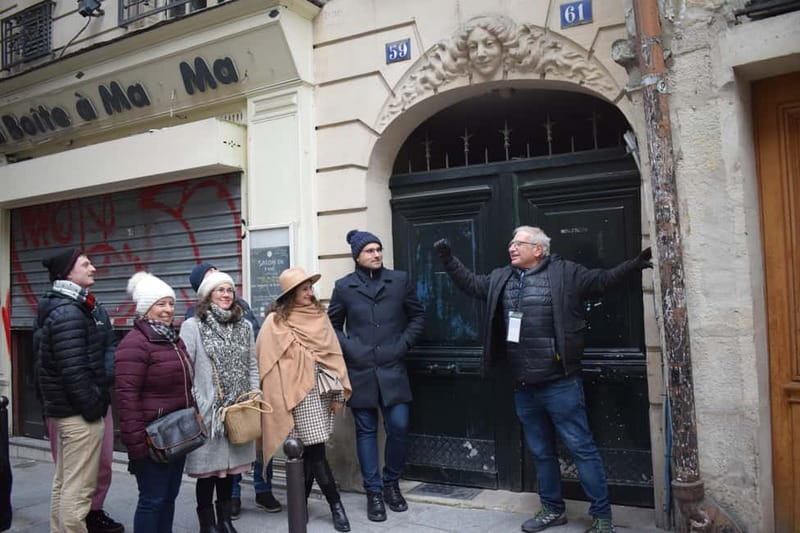
Near Notre-Dame, the tour introduces a quieter contrast: St. Julien le Pauvre.
This church dates from the 12th century and has a Byzantine-style character that sets it apart from the monumental Gothic cathedral nearby. Its location in a small square makes the stop feel more intimate than the grand approach to Notre-Dame.
The church helps you understand how varied medieval Paris was. Notre-Dame often dominates the imagination, but smaller churches carried out much of the city’s religious and community life. St. Julien le Pauvre also gives the guide a chance to discuss the medieval history of the area without competing with the cathedral’s huge façade.
This is the kind of stop you could easily walk past on your own. It is not promoted by the same visual drama as Notre-Dame, but it adds texture to the route and keeps the experience from becoming a simple cathedral photo outing.
Notre-Dame’s façade, sculptures, and fire story
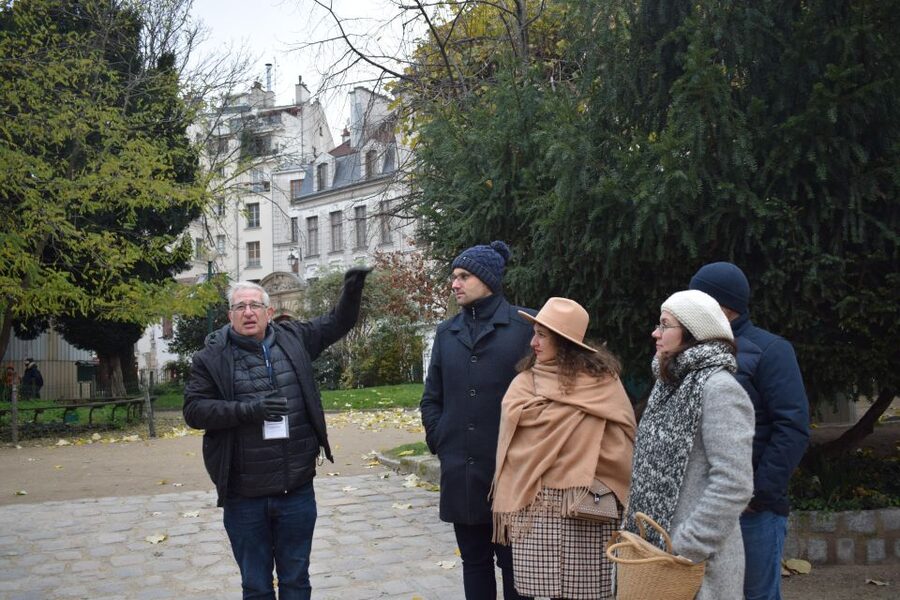
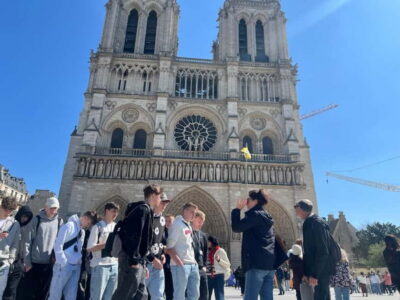
The tour ends at the legendary Notre-Dame Cathedral, with the focus firmly on the exterior.
You see the west façade, stone sculptures, and gargoyles while your guide explains the cathedral’s medieval origins and later history. The story also includes the devastating 2019 fire, an event that changed how the world viewed this already famous building.
Expect time to look closely at the details rather than a guided entry. The interior is not included, and the supplied tour information says guided tours are not permitted inside. That distinction matters when comparing this walk with a cathedral admission ticket.
The cathedral is the emotional finish, but it works because the earlier stops have prepared you for it. You have seen Roman foundations, Gothic design, university culture, national memory, and a small medieval church. By the time you reach Notre-Dame, the building feels less like an isolated attraction and more like part of a long story about Paris.
The activity information contains two endpoint descriptions: the route culminates at Notre-Dame, while the meeting details also say the activity ends back at the starting point. Confirm the final arrangement when you book, especially if you have an appointment afterward.
What the guides add to the experience
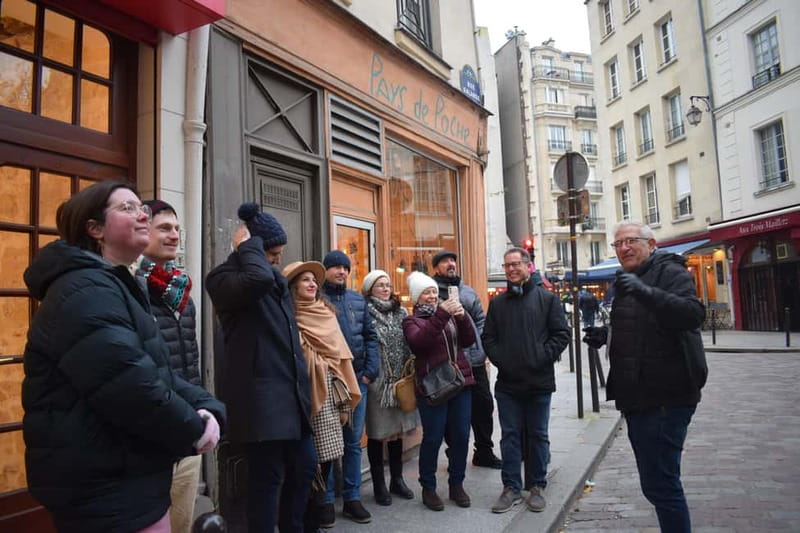
The strongest feature here is the guide.
Benjamin is repeatedly praised for his energy, patience, and ability to explain French history clearly. His style appears to work particularly well for visitors who want more than a list of dates. He connects buildings with people, political events, and daily life.
Pilou is another guide who brings a lively personal approach. His explanations cover revolution stories, important figures, architecture, and the changing life of the neighborhood. He also seems comfortable with questions, which is useful because the Latin Quarter can prompt plenty of them.
Pierre is described as friendly, cheerful, and well prepared. His challenge, like that of any guide on this route, is fitting a large amount of material into two hours. The tour can feel academic, especially for anyone less interested in history, and some explanations may come quickly.
That is not a flaw for the right audience. If you enjoy ancient and medieval history, architecture, and French politics, the steady stream of information is a benefit. If you prefer a relaxed walk with long unscheduled pauses, this may feel too packed.
The optional one-hour Seine cruise
You can add a one-hour boat trip on the Seine.
The cruise offers wide views that the walking route cannot provide. Depending on the sailing, you can see the Eiffel Tower, Notre-Dame, Île de la Cité, Les Invalides, Napoleon’s tomb, the Musée d’Orsay, Hôtel de Ville, the Louvre, Place de la Concorde, and the Grand Palais from the water.
Audio explanations are available in 11 languages. This makes the cruise a practical add-on if some people in your group prefer listening to a recorded presentation rather than following a live guide in English.
The boat trip is optional, not part of the core two-hour walking experience. Treat it as a separate way to see central Paris, especially if you want a break from walking. The wide river views also help you understand how the major monuments relate to one another.
Price, pace, and who gets good value
At $43 per person, the walking tour offers solid value if you want expert interpretation and a compact introduction to the Latin Quarter.
You are paying for a live English-speaking guide, a small group, and a route that connects several periods of Parisian history. The price does not cover monument or museum admission, food, drinks, hotel pickup, or entry into Notre-Dame. That keeps the cost fairly clear, but it also means you should budget separately for any interiors you want to visit.
The best value comes from the guide’s local context. You could walk past the fountain, churches, Roman baths, Sorbonne, Panthéon, and Notre-Dame for free. You would not get the same explanation of how they fit together.
The tour is rated 5 out of 5 from 54 ratings, and the praise centers on the guides’ command of the subject, friendliness, and ability to answer questions. The most useful caution is also consistent: the walk covers a lot in a short time.
Choose this experience if you:
- Want a history-focused introduction to the Latin Quarter
- Prefer a small group over a large city walk
- Enjoy architecture, French history, and local stories
- Are comfortable walking at a steady pace
- Want Notre-Dame context without relying on a cathedral interior visit
You may want something else if you need step-free access, dislike academic explanations, or want long stops inside the Panthéon, Cluny Museum, or Notre-Dame.
Wear comfortable shoes and dress for the weather. The tour runs rain or shine. A private booking may be worth considering if you need a slower pace or more flexibility, although the activity is still not suitable for people with mobility impairments.
Should you book the Latin Quarter and Notre-Dame walk?
I would book this tour if you want Paris explained rather than simply photographed.
The route is especially useful early in a Paris stay. It gives you a working map of the Left Bank and helps you recognize the difference between Roman ruins, Gothic churches, neoclassical monuments, and modern national memory.
The small group and strong guides are the biggest reasons to choose it. Benjamin, Pilou, and Pierre are praised for making serious history personal and understandable. Just arrive ready to walk, listen, and keep moving.
Book it if you like substance, local stories, and a guide who can answer questions. Skip it if you want a slow scenic stroll or guaranteed access inside the major monuments.
FAQ
How long is the guided tour?
The guided walking tour lasts two hours.
Where does the tour start?
It starts at Place Saint-André des Arts, in front of Café G. The guide carries a Connecting France sign.
What language is the live tour in?
The live tour guide speaks English.
How large is the group?
The group is limited to a maximum of 11 people. A private group option is also available.
Does the tour enter Notre-Dame Cathedral?
No. The tour focuses on Notre-Dame’s exterior, including the façade, sculptures, and gargoyles. Entrance to the cathedral is not included.
Are monument and museum entrance fees included?
No. The tour views the main buildings from outside, and entrances to monuments or museums are not included.
Is the Seine River cruise included?
A one-hour Seine River boat cruise is available as an optional addition. It includes audio explanations in 11 languages.
Is the tour suitable for people with mobility impairments?
No. Although the route is described as flat walking, it is not suitable for people with mobility impairments. A private tour may be worth considering, but the activity information still identifies this limitation.
What should I bring?
Wear comfortable shoes and dress for the weather. The tour operates rain or shine.
Recently added in Paris
- Private Transfers in Paris★ 5.0 · 75 reviews
- CDG – Euro Disney – CDG Two Way Private Shuttle Transfer★ 5.0 · 233 reviews
- Disneyland® Paris 1 Day Ticket with Transport from Paris★ 3.5 · 302 reviews
- Personalized Transport service from Disneyland to Paris★ 5.0 · 63 reviews
- Monet’s Gardens & House-Private Giverny Tour From Paris★ 4.5 · 137 reviews
- Guided tour Monet’s house and gardens/small group★ 4.5 · 68 reviews
- Giverny Monet House and Gardens Skip the line Walking tour★ 4.0 · 217 reviews
- Monet’s House and Garden & Giverny Village★ 4.5 · 39 reviews
Notre Dame Tours, compared.
Paris Île de la Cité and Notre-Dame Walking Tour With Crypt
Read our review →
Notre-Dame Cathedral Exterior Tour & Free Entrance
Read our review →
Paris Highlights Bike Tour: Eiffel Tower, Louvre and Notre-Dame
Read our review →
Early Access Paris Notre Dame Cathedral Walking Tour
Read our review →
Sainte-Chapelle, Conciergerie, Notre Dame Guided Tour
Read our review →
Notre Dame Outdoor Tour with Sainte-Chapelle / Crypt.
Read our review →
Notre Dame Outdoor Walking Tour and Entrance to Sainte Chapelle
Read our review →Browse the lists this tour appears in