
REVIEW · MARSEILLE TOURS
“Old Marseille” district tour and treasure hunt
Marseille turns history into a game. This 150-minute walk through Le Panier, the city’s oldest district, mixes riddles, local stories, and a treasure hunt that gives children a reason to keep moving. I especially like the small groups, limited to 10 people, and the way the booklet makes you study street names, building details, and bits of urban furniture. The main consideration is the walking distance: about 4.5 kilometers, with some stairs.
I also like the clear route from the Hôtel de Ville to Fort Saint-Jean, which gives you a useful introduction to central Marseille rather than a disconnected collection of sights. Guide Eric D. leads the activity in English, French, or German, and his German has been praised as especially strong. The game is best for children aged six and up, though adults who prefer a quiet, lecture-style tour may find the playful format less appealing.
In This Review
- Key points at a glance
- Why Le Panier works so well for a treasure hunt
- Starting beside Marseille’s Old Port
- Reading the clues through Le Panier
- Stories, legends, and the route’s historical layer
- The treasure hunt and the gift for the winner
- The 4.5-kilometer walk and its stairs
- Finishing at Fort Saint-Jean
- Language, group size, and the guide
- Is $33 per person a fair price?
- Who should book this Marseille walk?
- Should you book the Old Marseille treasure hunt?
- FAQ
- Where does the Old Marseille treasure hunt begin?
- Where does the activity finish?
- How long does the experience last?
- How far do you walk?
- Are there stairs on the route?
- What age is this activity suitable for?
- What languages does the guide speak?
- How large is the group?
- What is included in the price?
- Can I cancel the booking?
Key points at a glance
- A 4.5-kilometer puzzle walk: You solve clues based on street names, facades, monuments, and public objects as you move through Old Marseille.
- Le Panier is the main playground: The route explores the district’s narrow streets and connects modern Marseille with its 2,600-year story.
- Small groups keep the game lively: With no more than 10 participants, the activity feels easier to follow and more social.
- A real prize adds motivation: The winner of the treasure hunt receives a gift.
- Good for multilingual families: Eric D. leads in English, French, and German, with particularly strong German-language feedback.
- The finish at Fort Saint-Jean is practical: You end near one of Marseille’s major historic sites, rather than returning to the starting point.
Why Le Panier works so well for a treasure hunt

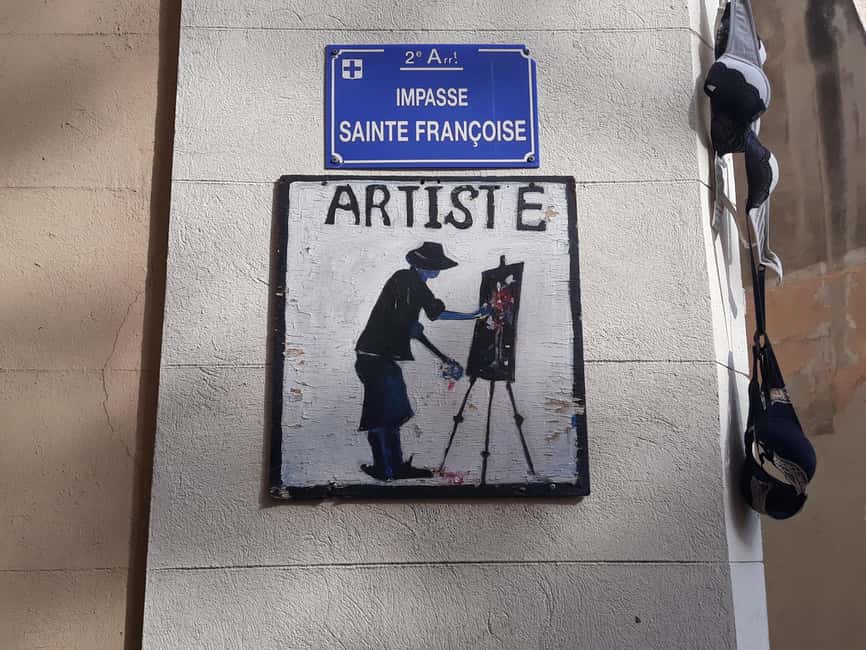
Marseille can be a challenging city to understand on a first visit. Its old center is a mix of steep lanes, weathered buildings, grand civic monuments, harbor views, and everyday city life. A normal sightseeing walk can leave younger children asking how much longer. A booklet full of clues gives them a job.
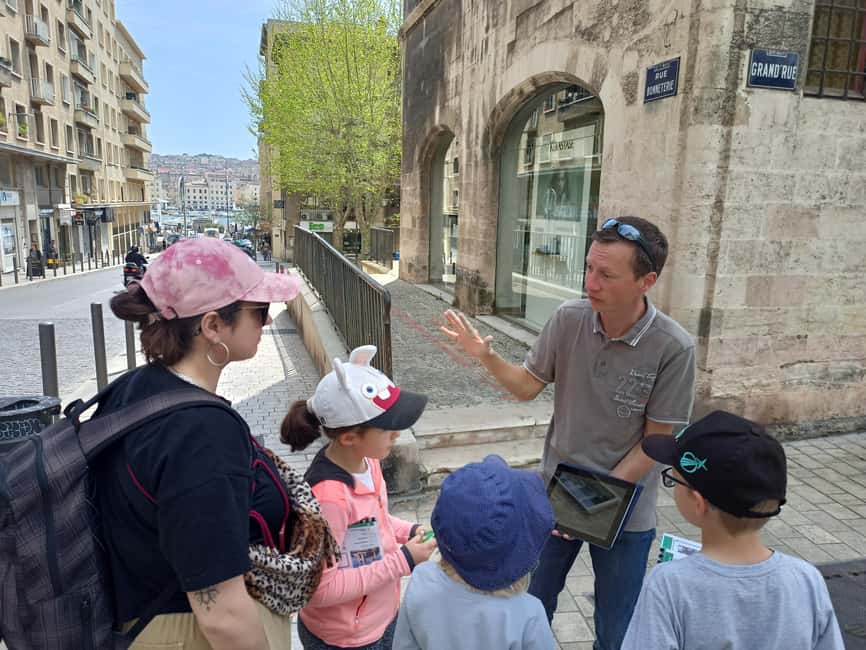
That is the central idea here. Eric hands you a game and riddles booklet created for this route, then uses it to guide your progress from one stage to the next. You are not simply following a guide from one stop to another. You are looking carefully at the city and trying to work out where the next clue leads.
The clues may use the name of a street, a detail on a facade, a monument, or an item of street furniture. This makes the activity more observant than a standard stroll. You may find yourself looking above a doorway, checking a sign, or studying a small feature you would otherwise pass without noticing.
I like that the game does not require special equipment or prior knowledge. The booklet is included, and the guide supplies the context when a clue leads into a story about Marseille. The result is part city orientation, part history lesson, and part friendly competition.
A few more Marseille outings to set side by side
- Marseille: City Sightseeing Hop-On Hop-Off Bus Tour
★ 3.8 · 2,820 reviews - Marseille: Côte Bleue Calanques Half-Day Kayak Tour
★ 4.7 · 877 reviews - Marseille Food Tour – Full Meal of Local Tastes by Do Eat Better
★ 5.0 · 530 reviews
Starting beside Marseille’s Old Port
The meeting point is near the Ferry-Boat pier beside City Hall, on the north shore of the Old Port. This is a sensible place to begin because the Old Port is one of the easiest parts of central Marseille to identify. You are not being sent to an obscure side street or a distant neighborhood before the walk even starts.
From here, the activity moves toward Le Panier and its surroundings. The starting area also gives Eric a natural place to explain the rules, hand out the booklet, and divide attention among the participants. In a group of up to 10, you should have a reasonable chance to hear the instructions and ask questions.
The format depends on cooperation as much as speed. Small groups help preserve the playful mood, and they reduce the chance that the activity feels like a noisy race. If you are visiting with children, this matters. The children can take part without being lost in a large crowd, while adults can still follow the historical explanation.
You should arrive ready to walk rather than expecting a stationary introduction. Comfortable shoes will matter more than anything else you bring. The total route is around 4.5 kilometers, so this is a substantial city walk even though it is not described as difficult.
Reading the clues through Le Panier
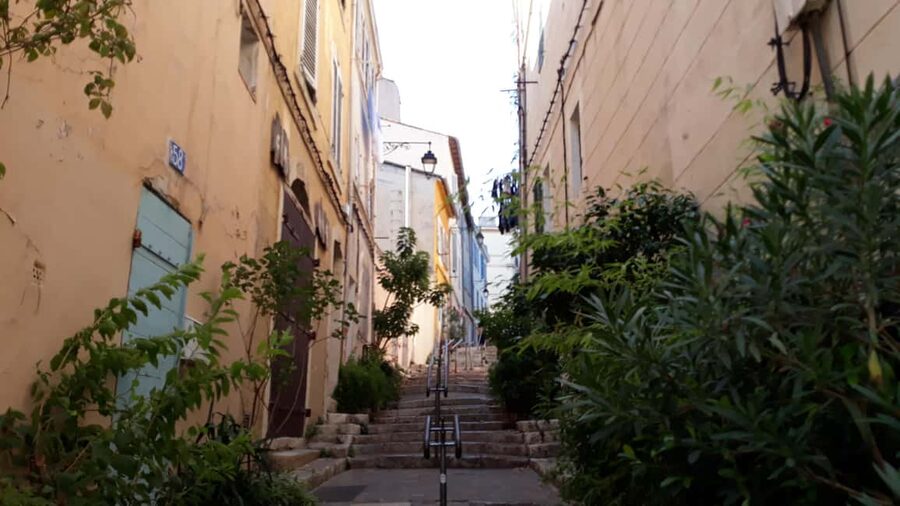
Le Panier is the heart of the experience. The district is often described as Old Marseille, and its streets provide exactly the sort of details that make a clue-based walk work. Names, corners, facades, and small public features become part of the puzzle.
The route connects the present city with Marseille’s beginnings as a settlement founded by Greek colonists. The city’s story stretches across roughly 2,600 years, and the walk promises a way to meet traces of that long past while moving through streets that are still part of daily life.
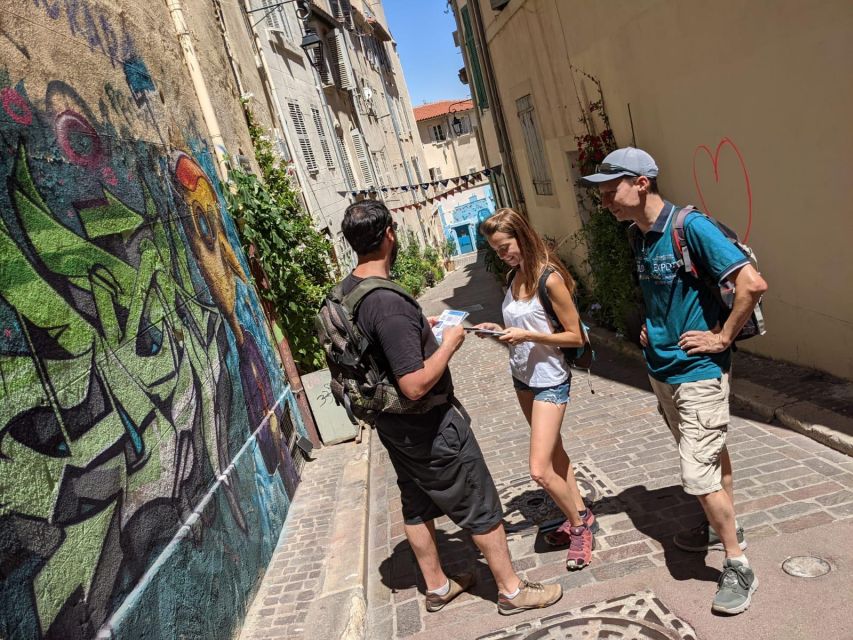
That combination is more useful than a tour made up only of famous monuments. You get the major sights, but you also learn to read the less obvious parts of the neighborhood. A street name can point toward the next stage. A detail on a building can carry a historical reference. An ordinary object in the street can suddenly become important.
This is where Eric’s role matters. The booklet sets the challenge, but a good guide gives the clue a reason to matter. Eric is described as a passionate guide, and the activity includes information about the places you meet, their history, and their legends. That keeps the treasure hunt from becoming a worksheet exercise.
The playful format also changes how families move through the district. Instead of asking children to remember a long explanation, you can let them search, guess, and test their answers. One family found that the children stayed involved without complaining, while the adults still found the walk informative. That is a strong sign that the game serves both age groups rather than treating adults as unpaid supervisors.
Stories, legends, and the route’s historical layer
The tour’s historical promise is broad rather than academic. You will hear about Marseille from its Greek origins to the present, along with stories and legends connected to the places along the way. That approach suits a walking game because short pieces of history are easier to absorb between clues.
You should not expect a full museum lecture or an exhaustive account of every period in Marseille’s past. The strength here is the connection between story and place. If Eric points out a feature on a building or explains why a street matters, the information arrives at the exact spot where you can see evidence of it.
I find that kind of explanation especially valuable in Le Panier. The district’s narrow streets can feel confusing at first, and the game gives you a reason to slow down. You are not only trying to reach the next stop. You are learning how the old neighborhood is arranged and how small details relate to its past.
The tour also includes some must-see locations, though the emphasis is not limited to postcard views. That balance should suit first-time visitors who want orientation but do not want to spend the entire walk hearing only standard facts. You get a sense of the district as a lived-in part of Marseille, not just a historic display.
Same city, a slower kind of day:
- Marseille: Calanques National Park Guided Hike with Picnic
★ 4.9 · 516 reviews - From Marseille: Calanques National Park Guided Hike
★ 4.8 · 489 reviews - Marseille: Musée de l’Illusion Entry Ticket
★ 4.1 · 488 reviews - Marseille: Frioul Calanques Sailing Trip
★ 4.8 · 433 reviews
The treasure hunt and the gift for the winner

The competition is the engine that keeps the activity moving. At each stage, the group works out a riddle and follows the answer toward the next point. The final reward is a gift for the winner, which adds a simple but effective reason for children to take the clues seriously.
The game is not described as a difficult contest, so you do not need to worry about turning the afternoon into an examination. The point is to look carefully and work together. Children can search for visible details, while adults can help interpret the wording or connect a clue to the historical explanation.
Small groups are particularly useful here. A limit of 10 participants helps keep the game cohesive and prevents the winning team from disappearing far ahead. It also allows the guide to maintain the shared rhythm of walking, solving, and explaining.
The competitive element may not suit every adult. If you want a slow, silent walk with long pauses for photography, the clues can feel like a distraction. I would choose this experience when your group enjoys puzzles, conversation, and a little friendly pressure to keep going.
The 4.5-kilometer walk and its stairs

The walking distance is about 4.5 kilometers, with no major difficulty except some stairs. That makes the tour manageable for many active families, but you should still treat it as a proper half-day walk. The stated duration is 150 minutes, so the pace includes time for solving riddles, hearing explanations, and moving between stages.
The stairs are the main physical point to consider. Le Panier is known for its old lanes and uneven changes in level, and the route is not presented as flat. If anyone in your group struggles with stairs or sustained walking, check carefully before booking because no separate accessible route is provided in the available information.
Children under six are not suitable for this activity. That restriction makes sense: the clues require reading, observation, and patience, and very young children may not have the attention span for a two-and-a-half-hour game. Older children can take an active role, while adults can still enjoy the local stories.
Bring water and wear comfortable shoes. Those are basic city-walking precautions, but they matter more here because the distance is long enough for tired feet to affect the fun. The route ends at Fort Saint-Jean, so plan the rest of your day from the finish rather than assuming you will return to City Hall.
Finishing at Fort Saint-Jean
The tour ends at Fort Saint-Jean, at the entrance to the larger historic and waterfront area near the Old Port. Ending there gives the walk a clear conclusion and places you near another important Marseille landmark.
The finish is also useful for planning. You can continue exploring the fort and surrounding area afterward, or use the end of the tour as a natural point to pause before the next activity. Since the walk begins near City Hall and ends at Fort Saint-Jean, it functions as a one-way introduction to Old Marseille.
That route design is better than a loop for some visitors and less convenient for others. If you have a restaurant booking or transport waiting near the starting point, you will need to allow time to get back. If you want to continue sightseeing, though, the finish puts you in a strong central location.
The tour does not promise admission to Fort Saint-Jean as part of the activity, so think of the fort as the endpoint, not automatically as an included visit. The included elements are the guide and the game and riddles booklet.
Language, group size, and the guide
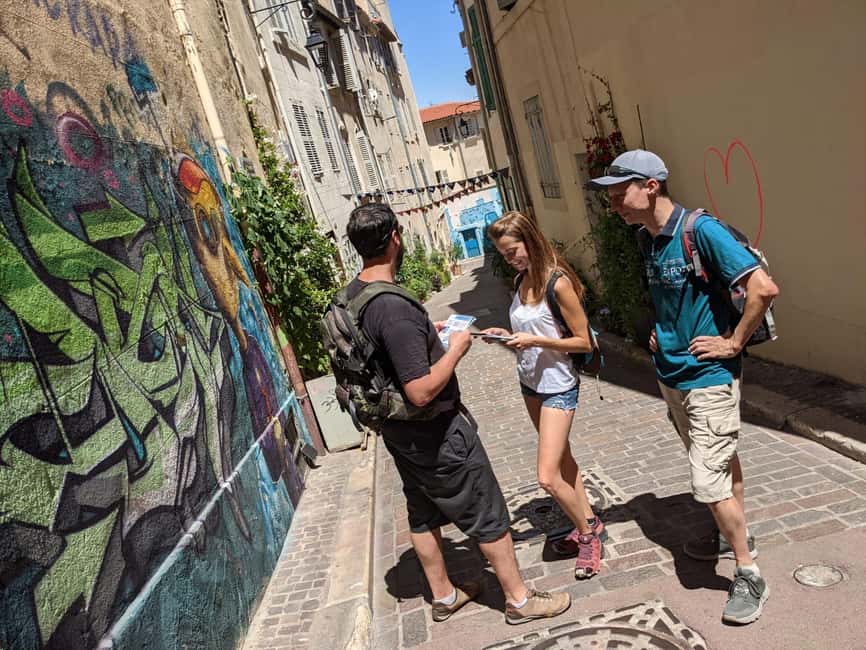
Eric D. leads the activity in English, French, and German. This is a real advantage for mixed-language families or groups. A puzzle walk depends on understanding precise wording, so language ability matters more here than it might on a simple panoramic tour.
The German-language experience has received especially warm praise, with the guide’s German described as very good. English and French are also offered, giving you a choice when booking or checking availability.
The maximum group size is 10. That is small enough to keep the guide close and make it easier for children to participate. It also supports the activity’s social side. You are solving clues with the group, not watching a guide from the back of a large crowd.
I would ask yourself what kind of guide you want. Eric’s role combines explanation with encouragement and game management. If you prefer a guide who talks continuously while you take notes, this may not be the right match. If you want local stories delivered in short bursts between practical challenges, the format should work well.
Is $33 per person a fair price?
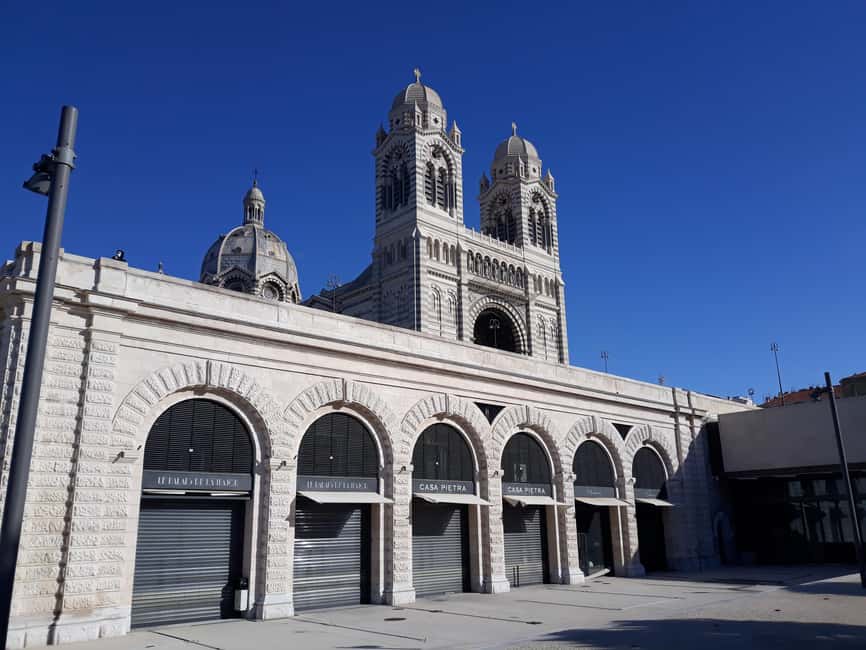
At $33 per person, this experience is priced above a basic self-guided walk but includes more than a downloadable route. You receive a live guide, a created booklet, a structured 150-minute itinerary, historical explanations, and a treasure hunt with a prize.
For a family, the value comes from combining entertainment with sightseeing. You do not need to invent your own activity to keep children interested, and the guide helps turn the district’s details into something accessible. The small group limit also gives you a more focused experience than a large public tour.
The value is weaker if your main aim is to visit paid attractions or spend time inside museums, since the activity is a guided outdoor walk and does not list admission tickets. It is also less useful for anyone who already knows Le Panier well and does not enjoy puzzle games.
Flexible booking improves the financial calculation. You can reserve now and pay later, and cancellation is free up to 24 hours in advance for a full refund. Check the available starting times before you commit, especially if you have other plans around the Old Port.
Who should book this Marseille walk?
I would recommend it most strongly to families with children aged six and older who enjoy walking and playing together. It also suits adults who want a light, social introduction to Le Panier rather than a formal lecture.
It is a good choice for:
- Families looking for a reason to explore on foot
- First-time visitors who want Old Marseille explained in context
- Mixed-language groups needing English, French, or German
- Adults who enjoy riddles, local legends, and friendly competition
- Small groups that prefer a more personal guide-to-participant ratio
I would hesitate if your group includes children under six, anyone uncomfortable with stairs, or people who want a very relaxed route with long stops. The 4.5-kilometer distance and game structure are central to the experience, not minor details.
Should you book the Old Marseille treasure hunt?
Book it if you want to see Le Panier with your eyes open and your family involved. The riddles turn street names, facades, monuments, and everyday objects into clues, while Eric D. adds the history and legends that give those clues meaning.
The strongest reason to choose it is the balance. Children get a game and a prize, adults get a guided introduction to Marseille’s long past, and everyone covers a useful stretch of the old center. Just come prepared for stairs, a fair amount of walking, and an afternoon that asks you to solve rather than simply follow.
FAQ
Where does the Old Marseille treasure hunt begin?
It begins near the Ferry-Boat pier beside City Hall, on the north shore of Marseille’s Old Port.
Where does the activity finish?
The tour finishes at Fort Saint-Jean in Marseille, near the Old Port.
How long does the experience last?
The activity lasts 150 minutes, or two and a half hours.
How far do you walk?
The walking distance is approximately 4.5 kilometers.
Are there stairs on the route?
Yes. The route has some stairs, but it is described as having no major difficulty beyond them.
What age is this activity suitable for?
Children under six are not suitable for the activity. It is designed for older children and adults.
What languages does the guide speak?
The activity is available in English, French, and German.
How large is the group?
The group is limited to 10 participants.
What is included in the price?
The price includes the guide and the game and riddles booklet.
Can I cancel the booking?
Yes. You can cancel up to 24 hours in advance for a full refund. You can also reserve now and pay later.
Recently added in Marseille
- The Urban Hike of Marseille★ 5.0 · 35 reviews
- Sailing day in the heart of the Calanques★ 4.5 · 61 reviews
- Sormiou Calanques National Park Electric Bike Tour from Marseille★ 5.0 · 60 reviews
- Sunset Lavender Tour in Valensole with pickup from Marseille★ 5.0 · 41 reviews
- Sightseeing Tour of Marseille with a Private Driver★ 4.5 · 26 reviews
- Rando-Palmée Getaway Around an island★ 4.0 · 54 reviews
- Marseille Highlights & Wine Tasting Day Tour from Marseille★ 4.5 · 27 reviews
- Cassis and Aix en Provence Sightseeing Tour from Marseille★ 4.5 · 132 reviews
Marseille Tours, compared.
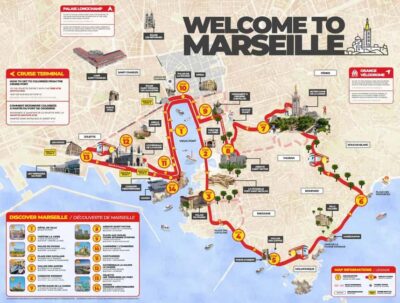

Marseille Food Tour – Full Meal of Local Tastes by Do Eat Better
Read our review →
Calanques National Park Guided Hike with Picnic
Read our review →



Browse the lists this tour appears in