REVIEW · PARIS TOURS
Paris: Baking Insider Experience with a Professional Baker
Bread can explain a lot about Paris. This two-hour class takes you inside a working boulangerie, where you learn to shape baguettes, roll croissant dough, and taste the results along the way. With a maximum of eight participants, it feels more personal than a large cooking demonstration.
I like the hands-on format, especially because you work with several classic French bakes instead of making only one item. I also like the access to a real neighborhood bakery, where you can see how bakers work and hear about flour, yeast, sourdough, and French bread rules. The main drawback is practical: you must stand for much of the two hours and climb 15 steps to a second-floor bakery with no elevator.
The experience costs $108 per person and earns a strong 4.8 rating from 256 reviews. That is not a small bite of your Paris budget, but the price includes instruction, tastings, and the food you help prepare. Guides including Pierre, Martin, Jess, David, Candice, Rachel, Igor, and Jessica have all received warm praise for their friendly teaching.
In This Review
- Key Points At A Glance
- What The Two-Hour Class Is Really Like
- Shaping A Baguette In A Paris Bakery
- Rolling Croissant Dough And Learning Lamination
- Financiers And The Sweet Side Of The Lesson
- A Working Bakery, Not A Film Set
- The Guides Make A Big Difference
- Why Families And Teenagers Like It
- Price, Group Size, And Practical Value
- Access, Clothing, And Other Things To Know
- Who Should Book This Experience?
- Should You Book The Paris Baking Class?
- FAQ
- How long does the Paris baking experience last?
- How much does the experience cost?
- What language is the class conducted in?
- How many people can join the class?
- What will I learn to make?
- Is the class held in a real bakery?
- Can children participate?
- Is the bakery wheelchair accessible?
- Can I cancel the booking?
Key Points At A Glance
- Three French baking projects: Shape baguettes, work with croissant dough, and prepare a small sweet bake such as financiers, depending on the session.
- A real working bakery: You are not simply watching a staged display. You learn in a traditional Paris bakery and may meet bakery staff and the pastry chef.
- Small group attention: The group is limited to eight participants, giving you a better chance to handle the dough and ask questions.
- Useful baking lessons: You learn how flour types, yeast, sourdough, lamination, and baguette shaping affect the final product.
- Tastings built into the class: Sweet and savory samples help you understand how texture and flavor change from one bread or pastry to another.
- A family-friendly activity with limits: Children five and older can take part, while children under five may attend free but cannot join the hands-on work.
What The Two-Hour Class Is Really Like
The exact meeting point depends on the option you book, since the activity can take place at one of two traditional Paris bakeries. The class ends where it begins, so you will not need to arrange a separate pickup or find your way across the city afterward.
Once inside, the session is built around doing rather than simply listening. You may begin with a pastry and drink from the bakery, then move into an explanation of the products and techniques. One group started with a choice of pastry and beverage in Le Marais, which is a pleasant way to settle in before getting flour on your hands.
The structure can vary a little by bakery and guide. That is worth knowing before you arrive. One session focused on two types of baguette, financiers, and croissants. Another included bread shaping, a pastry, and croissant work. The common thread is a close look at several French staples, with tastings between tasks.
The two-hour length works well for a vacation schedule. It is long enough to learn the basic methods without taking half a day from your sightseeing plans. At the same time, you should not expect to leave as a trained pastry chef. The class gives you a practical introduction, not a full professional course with complete recipes and every stage of fermentation.
A few more Paris outings to set side by side
- Paris: Louvre Museum Timed-Entrance Ticket
★ 4.6 · 71,977 reviews - Disneyland® Paris 1-Day Ticket
★ 4.6 · 49,412 reviews - Paris: Versailles Palace and Gardens Full Access Ticket
★ 4.6 · 41,579 reviews
Shaping A Baguette In A Paris Bakery
The baguette lesson is one of the most useful parts of the experience because it turns a familiar French symbol into a set of choices. You learn that baguettes are not all alike. Flour, fermentation, yeast, sourdough, shaping, and baking all affect the loaf.
You get to handle the dough and practice shaping it. The technique may look simple when a professional does it, but the reviews make clear that getting the form right takes some guidance. This is where a small group matters. With no more than eight people, the guide can watch your hands and correct your method before the loaf goes into the oven.
The tasting is not just a snack. Trying different baguettes helps you notice the difference between crust, crumb, and flavor. You leave with a better sense of why one loaf may taste mild and soft while another has a stronger character and more chew.
At some bakeries, the baguettes you shape are baked during the session and available to eat afterward. Several participants appreciated taking home or carrying away what they made. Still, timing can vary. One account noted that the croissants were rolled but not tasted during the class, so you should not assume every item will be ready at the exact end of the two hours.
Rolling Croissant Dough And Learning Lamination
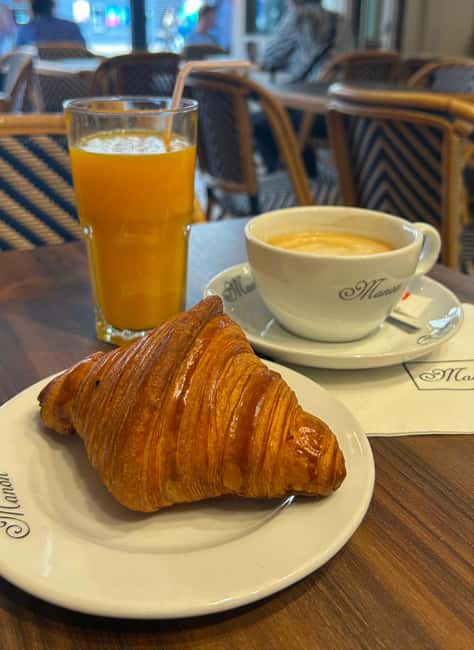
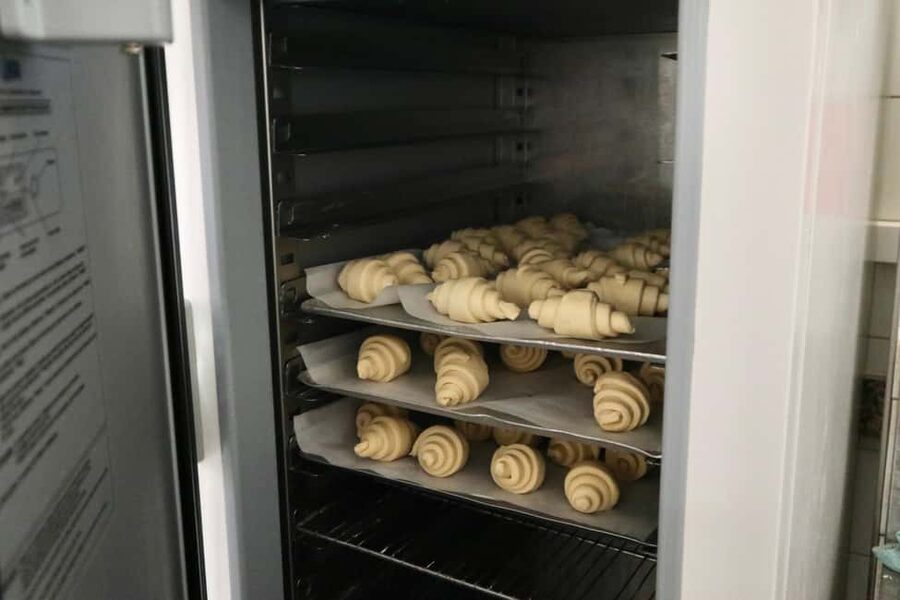
Croissant work is the most technically interesting part of the class. You learn how lamination creates thin layers of dough and butter, which then puff in the oven. The process explains why a croissant is light and flaky rather than simply sweet bread shaped into a crescent.
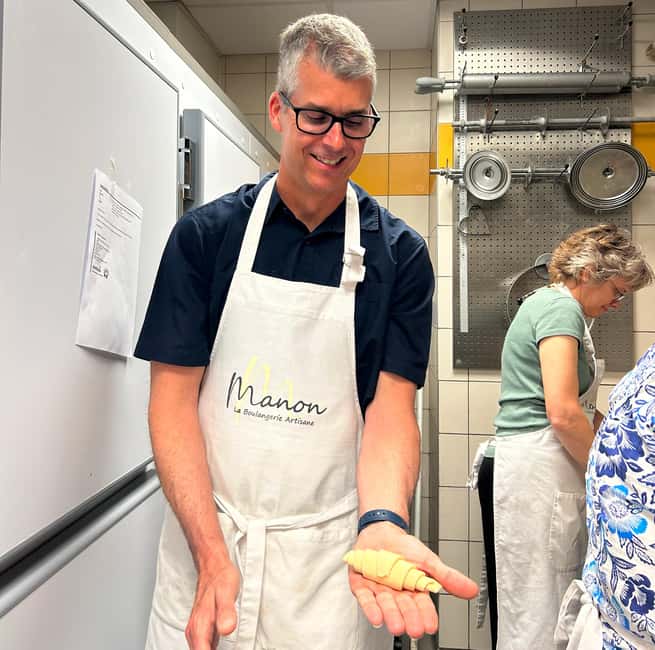
You will handle and roll the dough, with the baker showing you how the layers are formed. This is a good chance to understand the work hidden inside a bakery display case. A neat croissant depends on careful rolling, even layers, and proper shaping. The guide also explains the history and background of the pastry, so the lesson connects technique with French food culture.
Do not expect to make a perfect bakery croissant on your first attempt. That is part of the fun. The point is to learn what the baker is doing and to feel how the dough changes under your hands.
The class can also help you appreciate the price of good French pastry. Once you have seen the care involved in preparing laminated dough, a croissant that costs a few euros seems less mysterious. You may still buy one from the nearest bakery later, but you will have a better idea of what you are paying for.
Financiers And The Sweet Side Of The Lesson
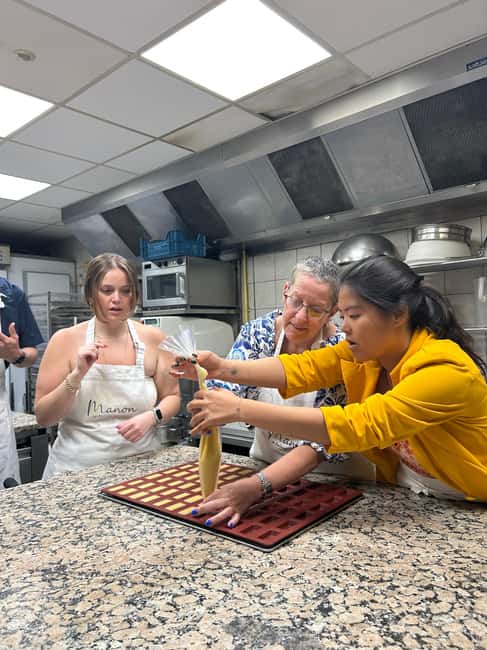
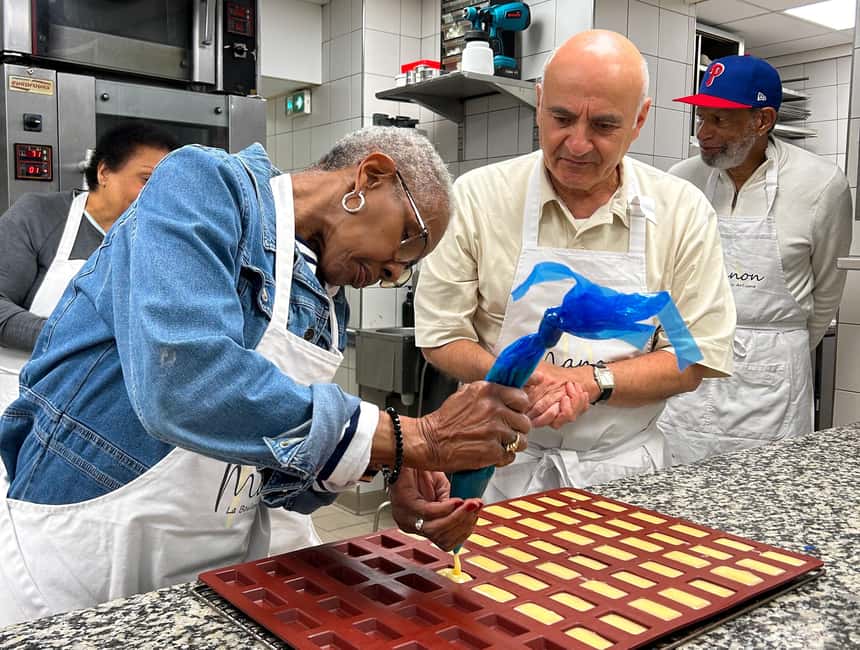
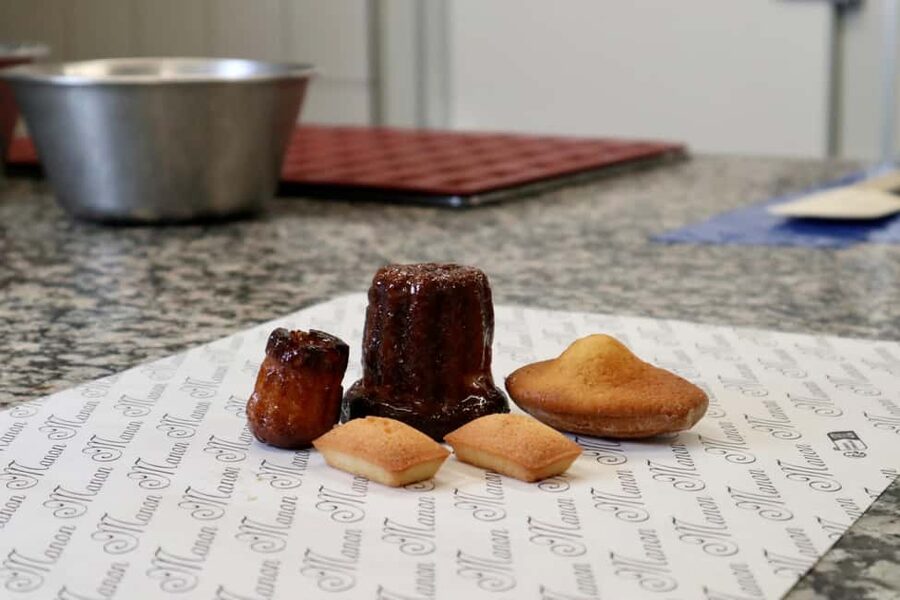
The sweet bake adds variety to a class that could otherwise focus only on bread. Financiers are small French cakes, and one session included preparing and baking them. Their compact size makes them a sensible choice for a short class.
This part of the experience gives you a different lesson in texture and flavor. Bread depends heavily on fermentation and shaping, while a small cake puts more attention on the mixture, baking, and final taste. You also get another item to sample, which helps keep the class lively for children and anyone who is less excited by dough.
The exact sweet item may depend on the bakery or option selected. The information for the experience specifically mentions sweet and savory tastings, along with financiers in one session, so you should treat the menu as flexible rather than guaranteed down to the last pastry.
Several people liked being able to snack on their finished products later in the day. If you plan to visit cafés or order a large meal immediately afterward, keep that in mind. The class includes enough food that arriving hungry is sensible.
Same city, a slower kind of day:
- Paris: Evening River Cruise with Music
★ 4.4 · 22,721 reviews - Paris: Eiffel Tower Entry Ticket with Optional Summit Access
★ 4.4 · 20,035 reviews - Paris: Eiffel Tower Summit or Second Floor Access
★ 4.3 · 17,248 reviews - Paris: Louvre Guided Tour with Reserved Access & Boat Cruise
★ 4.3 · 16,353 reviews
A Working Bakery, Not A Film Set
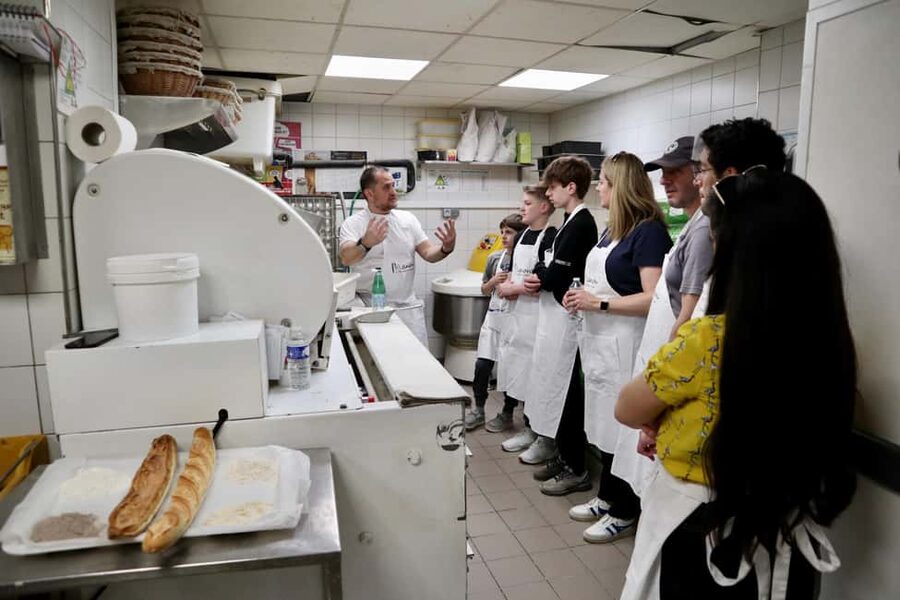
The bakery setting adds much of the value. You are learning in a place that produces bread and pastry, rather than standing in a classroom designed only for tourists. You may see bakery staff at work, meet the owner, or catch the pastry chef coming in and out during the lesson.
One session took place in an organic bakery that made its products in-house. That detail will not necessarily apply to every option, but it shows the kind of operation you might encounter. Another group enjoyed seeing how a neighborhood boulangerie functions, including how food is stored and presented close to sale.
The setting also brings a few trade-offs. A working bakery can be busy, and the class may involve going up and down the stairs more than once. It may feel less polished than a purpose-built cooking studio. I consider that a fair exchange for seeing ordinary bakery work up close, but people who need a quiet, spacious, fully accessible room should think carefully before booking.
The Guides Make A Big Difference
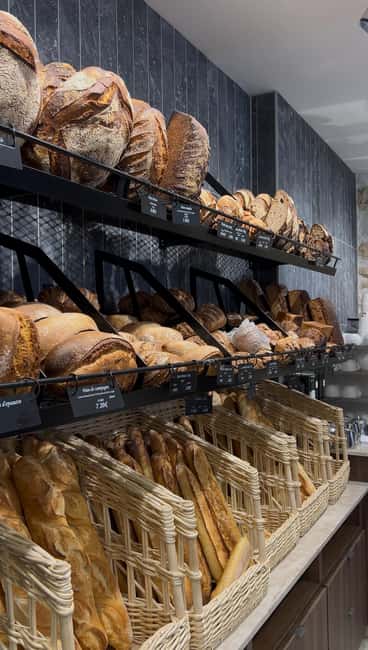
The guides are a major reason this experience receives such strong feedback. Pierre is repeatedly praised for being welcoming, entertaining, and able to keep a group involved while bakery work continues around them. Martin is described as engaging and good with both adults and children. Jess receives similar praise for her positive teaching style and clear explanations.
David led a particularly detailed session covering two baguettes, financiers, and croissants. He also explained the ingredients and methods while participants shaped and baked their own food. Candice, Rachel, Igor, Jessica, and other guides have also been praised for patience, warmth, and personal attention.
Because the class is in English, the guide is important for more than translation. The best guides connect the technical lesson to everyday French baking. They explain why a bakery makes a certain choice, not just what to do with the dough.
The guide assigned to your date may vary. You cannot count on a particular person unless the booking option specifically confirms one. Still, the repeated praise for several guides suggests that the teaching quality is not tied to only one individual.
Why Families And Teenagers Like It
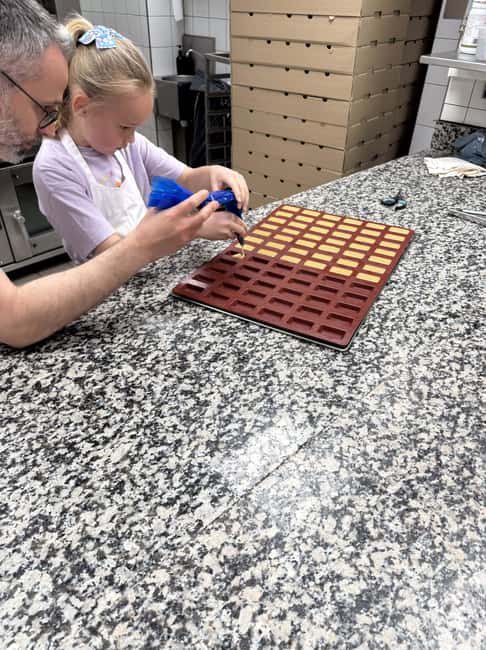
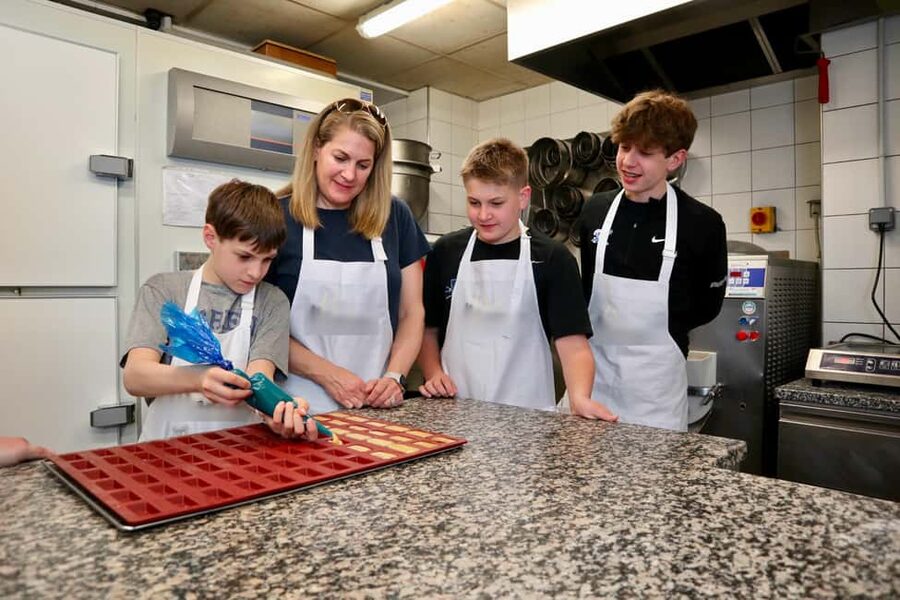
This is one of the better food activities for families who want more than a restaurant meal. Children and teenagers can shape dough, taste what they make, and see a real bakery at work. An 11-year-old particularly enjoyed learning several classic French baked goods, while another family found the activity worked well for a nine-year-old and a 60-year-old together.
Children under five are free, but they cannot participate in the hands-on baking because of safety concerns. The activity is therefore most suitable for children aged five and older, especially those who can follow instructions and remain standing for much of the class.
The working environment means this is not a loose, playroom-style activity. Younger children may need close supervision. Hair can also get in the way, so bring a hair tie or clip if you have long hair.
For adults, the family appeal does not make the class childish. The information about bread flour, yeast, sourdough, and lamination gives the lesson enough substance for serious food lovers. The shared work simply makes it easy for different ages to take part.
Price, Group Size, And Practical Value
At $108 per person, this is a premium two-hour activity. You are paying for a small group, an English-speaking expert, hands-on work, tastings, and access to a professional bakery. The value is strongest if you want instruction and a local setting, not just a pastry tasting.
A cheaper bakery visit would let you buy bread and croissants, but it would not teach you how to tell one baguette from another or show you how lamination works. A longer cooking school could offer more detailed instruction, but it would take more time and may not use a working neighborhood bakery.
The maximum of eight participants is important. Everyone gets a turn, and several sessions specifically made sure each person shaped and tasted something. In a larger group, you might spend more time watching someone else handle the dough.
The activity lasts two hours, with starting times shown according to availability. That makes it easy to place between other Paris plans. I would avoid scheduling a major timed attraction immediately afterward, since bakery work can run at the pace of the dough and the group.
Free cancellation is available up to 24 hours before the activity, and you can reserve while paying later. Those terms help if your Paris plans are still shifting.
Access, Clothing, And Other Things To Know
You need to stand for an extended period. The bakery is reached by 15 steps to the second floor, and there is no elevator. The activity is not suitable for wheelchair users.
The meeting point can change depending on the option you select, so check the details carefully before setting out. The tour ends back at the meeting point.
Wear practical clothing. Flour and dough are part of the fun, and long hair should be tied back with a clip or hair tie. The class takes place in a working bakery, so comfort matters more than dressing for a formal Paris meal.
The activity is conducted in English. If you are hoping to receive full recipes, set your expectations modestly. One participant left wishing for the recipes, which suggests the class is better understood as a guided technique lesson than a take-home cookbook session.
Who Should Book This Experience?
I would choose this class for anyone who likes food, wants a more active Paris activity, or is curious about the daily work behind French bread. It is also a good fit for families with children old enough to follow safety instructions, and for couples looking for something different from museums and monuments.
You will get the most from it if you are willing to stand, handle dough, taste several products, and accept that the bakery environment may be a little busy. The class is less suitable if you need step-free access, want a quiet luxury setting, or prefer a precise recipe-based course.
The experience also works well on a cold or rainy day. You spend the time indoors, learn a skill, and leave with food rather than another souvenir that will sit in your luggage.
Should You Book The Paris Baking Class?
Yes, if you want to understand French baking by doing it. The baguette shaping, croissant lamination, sweet tasting, and working-bakery setting give the two hours real substance.
I would skip it only if the stairs, standing, or $108 price create a problem. For everyone else, this is a friendly, practical way to connect with Paris through bread. Arrive hungry, bring a hair tie if needed, and allow a little flexibility about exactly which pastries you taste or take away.
FAQ
How long does the Paris baking experience last?
The activity lasts two hours. Starting times depend on availability when you book.
How much does the experience cost?
The listed price is $108 per person.
What language is the class conducted in?
The live tour guide conducts the experience in English.
How many people can join the class?
The class is limited to a maximum of eight participants.
What will I learn to make?
You learn techniques for bread and croissant dough, including baguette shaping and dough lamination. Sessions may also include a sweet bake such as financiers, along with sweet and savory tastings.
Is the class held in a real bakery?
Yes. The experience takes place in one of two traditional Parisian bakeries, depending on the option booked.
Can children participate?
Children under five are free but cannot take part in the hands-on baking for safety reasons. Children aged five and older can participate, provided they can manage the standing and follow the class instructions.
Is the bakery wheelchair accessible?
No. The bakery requires climbing 15 steps to a second floor and has no elevator. The activity is not suitable for wheelchair users.
Can I cancel the booking?
Yes. You can cancel up to 24 hours in advance for a full refund. You can also reserve now and pay later.
Recently added in Paris
- Private Transfers in Paris★ 5.0 · 75 reviews
- CDG – Euro Disney – CDG Two Way Private Shuttle Transfer★ 5.0 · 233 reviews
- Disneyland® Paris 1 Day Ticket with Transport from Paris★ 3.5 · 302 reviews
- Personalized Transport service from Disneyland to Paris★ 5.0 · 63 reviews
- Monet’s Gardens & House-Private Giverny Tour From Paris★ 4.5 · 137 reviews
- Guided tour Monet’s house and gardens/small group★ 4.5 · 68 reviews
- Giverny Monet House and Gardens Skip the line Walking tour★ 4.0 · 217 reviews
- Monet’s House and Garden & Giverny Village★ 4.5 · 39 reviews
Paris Tours, compared.



Versailles Palace and Gardens Full Access Ticket
Read our review →

Eiffel Tower Entry Ticket with Optional Summit Access
Read our review →

Louvre Guided Tour with Reserved Access & Boat Cruise
Read our review →