
REVIEW · CRUISES & BOAT TOURS
Paris: Big Bus Hop-On Hop-Off Tour with Optional Cruise
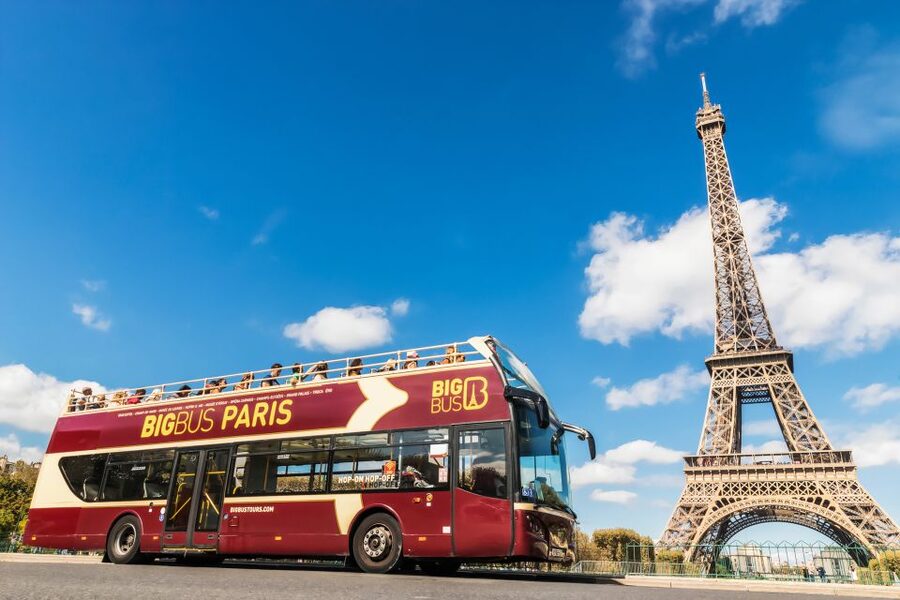
Paris is easier from the top deck. This tour gives you wide views of major sights without asking you to master the Metro on day one, and I like the frequent buses and clear audio guide. The main catch is traffic, plus the open upper deck can be very cold or crowded.
I also like the freedom to hop off near the Louvre, Notre Dame, Eiffel Tower, and Champs-Élysées, then continue when you are ready. The optional Seine cruise adds a fine second view of Paris, but boat waits can be long at busy times, so it needs a little planning.
In This Review
- Key points to know before you go
- Why this bus works well for a first day in Paris
- Starting at Louvre-Pyramide and the Seine
- Notre Dame and Musée d’Orsay
- Champs-Élysées, the Arc de Triomphe, and the grand boulevards
- Iena, Trocadéro, and the Eiffel Tower
- Invalides, Place Vendôme, and Opéra Garnier
- The Seine cruise near the Eiffel Tower
- The 24-hour ticket or 48-hour ticket?
- Audio, app, seating, and access
- Who should book this Paris bus tour?
- Should you book the Big Bus Paris tour?
- FAQ
- Where can I start the Big Bus Paris tour?
- How long is the full bus route?
- How often do the buses run?
- What time does the last full tour leave?
- Where does the Seine cruise depart?
- How often does the Seine cruise depart?
- Is the bus wheelchair accessible?
- What languages are available for the audio guide?
Key points to know before you go

- A 2-hour-15-minute full loop connects the Louvre, Notre Dame, Musée d’Orsay, Arc de Triomphe, Eiffel Tower, Invalides, and Opéra Garnier.
- Buses generally arrive every 10 to 20 minutes, making short stops practical when traffic is moving normally.
- The upper deck delivers the best views, but the lower level is more comfortable in cold, rain, or strong sun.
- The Seine cruise leaves near the Eiffel Tower, from Pontoon No. 3 at Port de la Bourdonnais.
- The free app tracks buses in real time, which helps you find stops that are not always right beside the attraction entrance.
- A 48-hour ticket gives you more breathing room than the 24-hour option, especially if you plan to visit museums or take the boat ride.
Why this bus works well for a first day in Paris
Paris is a walking city, but its famous sights are spread across a wide area. The Louvre, Arc de Triomphe, Eiffel Tower, Notre Dame, and Opéra Garnier are not a neat little cluster. You can walk between some of them, but you will spend plenty of time crossing long boulevards rather than enjoying the city.
The Big Bus route solves that problem in a simple way. You sit back, listen to the multilingual commentary, and get a first look at Paris without stopping to study a street map. I find this especially useful on a short visit, when you want to see the city before deciding where to spend your limited time.
The route takes about 2 hours and 15 minutes if you remain aboard for the full circuit. That is a useful orientation ride, though traffic can make the journey longer. Paris traffic is part of the deal, not a fault unique to this tour, but you should leave extra time if you have a timed museum entry or dinner reservation.
The tour is best used as transportation with a view, not just as a ride. Pick two or three stops for proper visits, then use the bus to connect them. Trying to tour every major sight in one day will leave you looking at monuments through a headset instead of actually seeing them.
More Boat Tours in Paris
- Paris: Evening River Cruise with Music
★ 4.4 · 22,721 reviews - Paris: Louvre Guided Tour with Reserved Access & Boat Cruise
★ 4.3 · 16,353 reviews - Paris: Tootbus Hop-on Hop-off with optional river cruise
★ 4.3 · 11,924 reviews
Starting at Louvre-Pyramide and the Seine
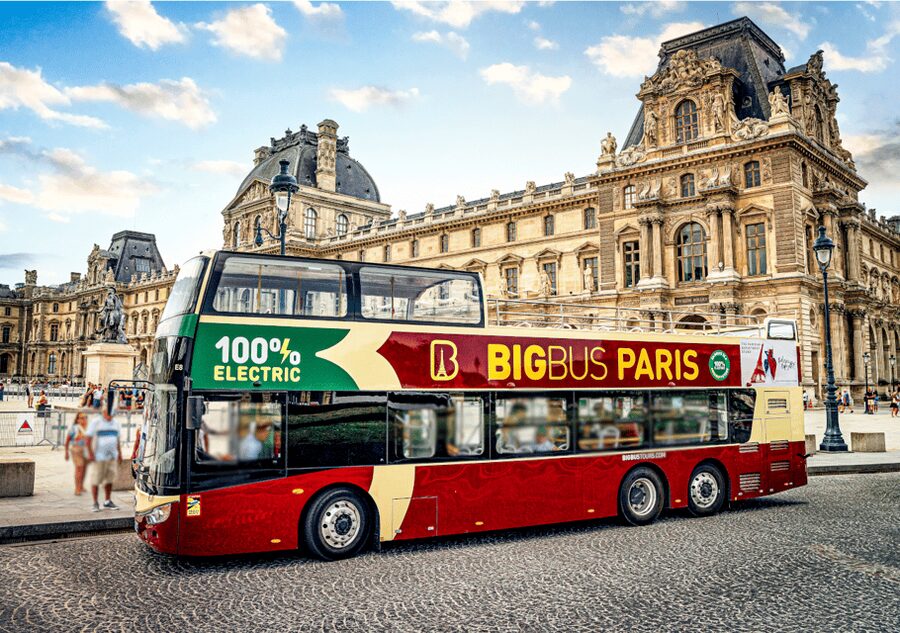
The main information center is at 11 Avenue de l’Opéra, but you can begin at any Big Bus stop along the route. Starting at Louvre-Pyramide is convenient if you are near the opera district, Palais-Royal, or the central Louvre area.
From there, the bus passes Palais-Royal and the Louvre Museum. Do not expect the bus stop itself to replace a Louvre visit. The museum is enormous, and a proper visit needs far more time than the bus route allows. Still, the ride gives you a helpful first view of the Louvre’s grand exterior and the famous pyramid area.
The next stop, Louvre and Pont des Arts, sits by the Seine at 56 Quai François Mitterrand. This is a good place to leave the bus for a walk along the river, especially if you want to connect the Louvre with the historic bridges and central riverfront.
The route passes Pont des Arts, then continues toward Notre Dame. If you are using the bus to get your bearings, this early stretch is one of the most useful. You see how the Louvre, river, Île de la Cité, and Left Bank fit together, something that is harder to grasp from a Metro tunnel.
Notre Dame and Musée d’Orsay
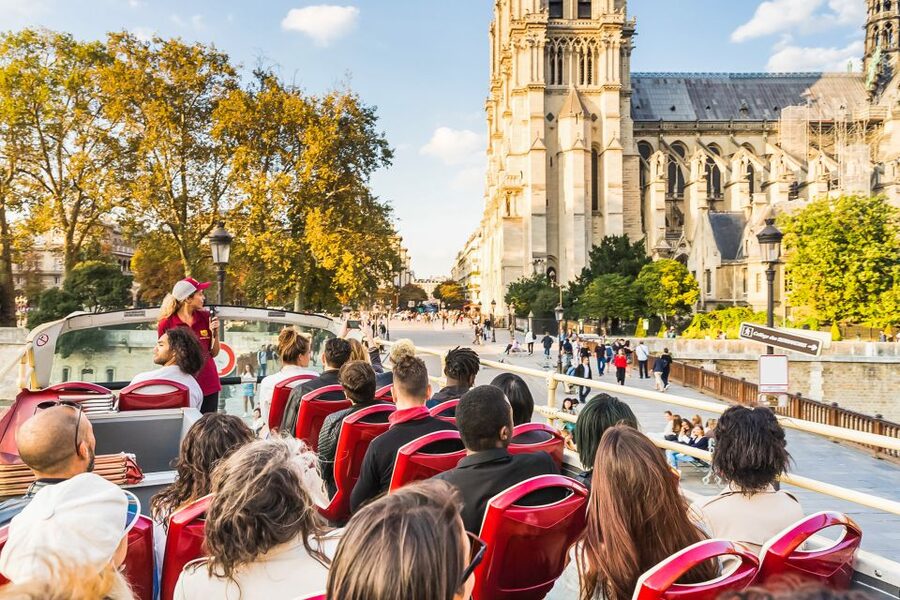
The Notre Dame stop is at 3 Rue Lagrange, on the Left Bank side of the river. The cathedral is not directly at the curb, so allow walking time. That small distance matters if you have mobility concerns or are trying to fit a quick visit between buses.
Notre Dame is one of the essential stops, but the bus only brings you near it. You will need to walk from the stop and manage your own admission plans. The nearby streets and river views are part of the pleasure, so do not rush straight back to the bus unless your schedule is tight.
The Musée d’Orsay stop is at 58 Place Henry de Montherlant. This former railway station, now an art museum, is a strong choice for a longer hop-off. If you want to see the collection, plan enough time for the museum itself rather than treating it as a quick photo stop.
The route also passes the Palais Bourbon, the Tuileries Garden, and Place de la Concorde. These sections are particularly pleasant from the upper deck, where you can see the formal avenues and open spaces without having to walk the entire distance. On a sunny day, this is the part of the ride that feels most like a moving city tour.
Champs-Élysées, the Arc de Triomphe, and the grand boulevards

The Champs-Élysées stop is at 156 Avenue des Champs-Élysées, giving you access to one of Paris’s best-known avenues. This is a practical hop-off for shopping, people-watching, and a walk toward the Arc de Triomphe.
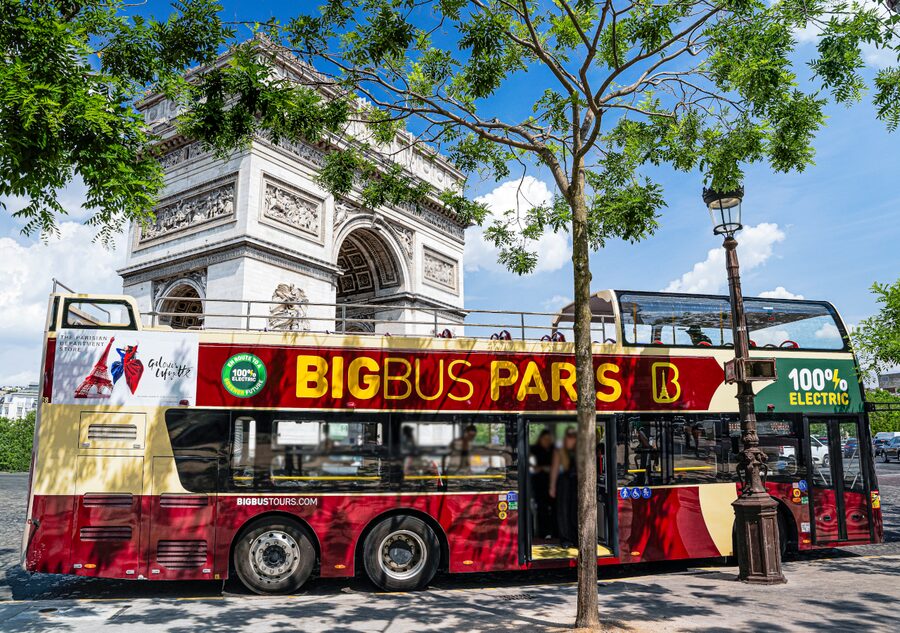
The Arc de Triomphe itself is passed on the route, but the bus does not take you inside. If you want the rooftop view, you need to arrange that separately. The monument sits at a notoriously complicated traffic circle, so the bus offers an easier way to see it than trying to navigate the surrounding lanes on foot.
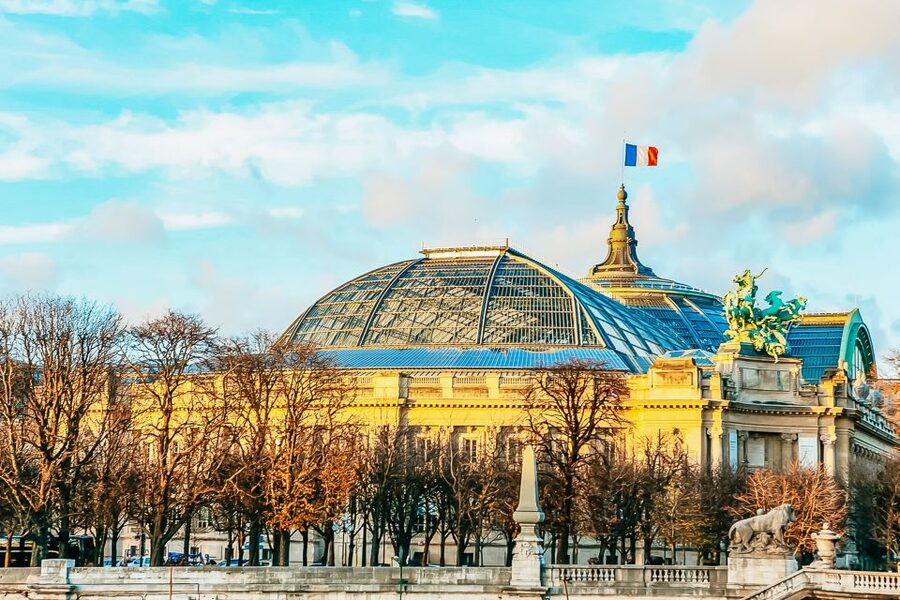
The route continues past the Grand Palais and Petit Palais along Avenue Winston Churchill. The two buildings face each other near the Seine and are worth a stop if exhibitions, architecture, or the nearby riverfront interest you. The Grand Palais stop is listed at Avenue Winston Churchill.
This section is also a good reason to use the bus instead of a taxi for sightseeing. You get a steady view of the monumental avenues, and the audio commentary explains what you are passing. The effect is informative without requiring you to read while walking.
A few more Paris outings to set side by side
- Paris: Louvre Museum Timed-Entrance Ticket
★ 4.6 · 71,977 reviews - Disneyland® Paris 1-Day Ticket
★ 4.6 · 49,412 reviews - Paris: Versailles Palace and Gardens Full Access Ticket
★ 4.6 · 41,579 reviews - Paris: Eiffel Tower Entry Ticket with Optional Summit Access
★ 4.4 · 20,035 reviews
Iena, Trocadéro, and the Eiffel Tower

The Iena stop on Avenue Iéna brings you toward the Eiffel Tower district and the Palais de Chaillot. It is a useful stop for Trocadéro views, which are among the best-known places to see the tower from across the river.
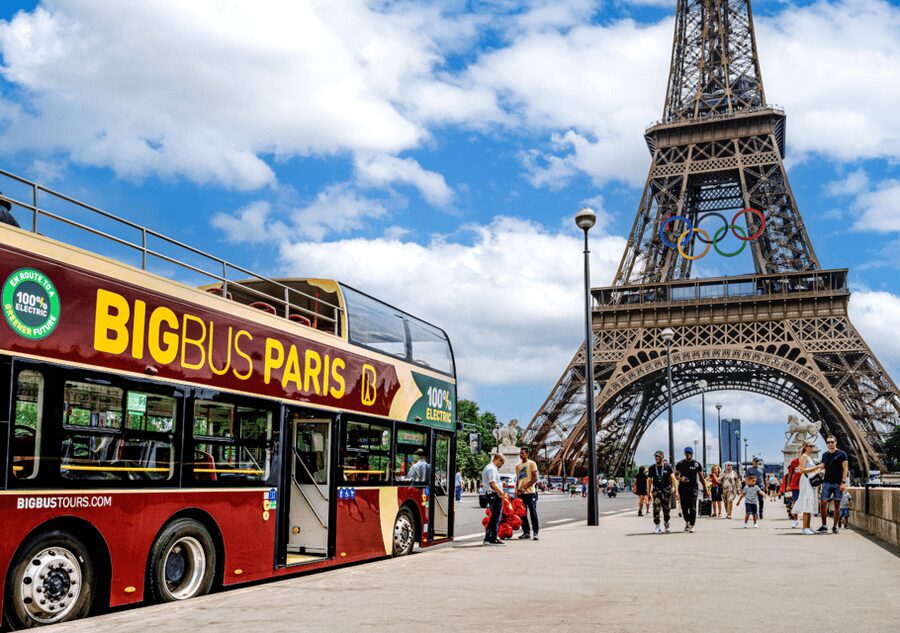
The Eiffel Tower stop is at Quai Branly, Entrance 2, near the tower and the river cruise departure point. This is one of the busiest parts of the route, so expect more demand for seats and more people getting on and off.
The bus passes the Eiffel Tower rather than providing tower admission. Your ticket does not include entry to the tower, and you will need a separate reservation if you plan to go up. The tour is still valuable here because it handles the cross-city journey and leaves you close to the monument.
Champ de Mars and École-Militaire are also on the route. Champ de Mars is the long park in front of the Eiffel Tower, a good place to slow down after the bus ride. If you are taking photographs, this area gives you more room than the immediate tower entrance zone.
The open-top deck is at its best around the Eiffel Tower, but it is also where weather matters most. In winter, bring extra layers. In rain, move to the covered upper-deck section or lower level. The lower deck has air conditioning, which makes it a sensible choice on very warm days as well.
Invalides, Place Vendôme, and Opéra Garnier
The Invalides stop is at 2 Avenue de Tourville. The grand complex is known for its golden dome and military museums, and it makes a strong hop-off if you want a more focused visit away from the busiest central sights.
The route then passes Place Vendôme, a polished square associated with luxury shops and grand architecture. It is not one of the listed main hop-off points, so check the route map before planning a visit around it. Passing it from the bus still gives you a quick look at a very different side of central Paris.
Opéra Garnier is at the stop facing 15 Rue Scribe. The opera house is a handsome final stop for architecture, shopping streets, and access back toward the tour’s starting point. If you have already visited the Louvre and riverfront, this part of the route gives your day a different flavor.
The loop returns to Avenue de l’Opéra. The complete circuit includes Palais-Royal, Louvre, Pont des Arts, Notre Dame, Musée d’Orsay, Palais Bourbon, Tuileries Garden, Place de la Concorde, Champs-Élysées, Arc de Triomphe, Grand Palais, Petit Palais, Palais de Chaillot, Eiffel Tower, Champ de Mars, École-Militaire, Invalides, Place Vendôme, and Palais Garnier.
The Seine cruise near the Eiffel Tower

The optional one-hour Seine cruise leaves from Pontoon No. 3 at Port de la Bourdonnais, near the Eiffel Tower stop. It is operated by Les Bateaux Parisiens, not by the bus itself, so you should treat it as a separate part of the day.
Cruises are scheduled about every 45 minutes from 10:30 a.m. to 9 p.m. On weekends, departures are listed every 30 minutes. Those times make it possible to pair the boat with the bus, but do not assume you can step directly from one to the other.
The boat gives you a low, river-level view of bridges, monuments, and the city’s riverfront. The live commentary adds context as you pass the landmarks, and the change of viewpoint is worthwhile after several hours above street level.
The main practical warning is waiting time. A long wait of more than an hour has occurred at busy periods, which can eat into a short Paris day. If the cruise is important to you, check the departure board when you reach the Eiffel Tower area and decide promptly. If the queue is long, you may get better value from continuing the bus route and taking the boat at a quieter time.
For older visitors or anyone with difficulty using stairs, the cruise may require more effort than the bus. One useful strategy is to buy the 48-hour bus option and place the boat ride on the day when you have the most flexibility.
The 24-hour ticket or 48-hour ticket?
The listed price starts at about $43 per person, with the final cost depending on the option you select. The price is easiest to justify if you use the bus several times and include the cruise.
A 24-hour ticket can work well for a short stay. You can ride the full loop first, then hop off at the Eiffel Tower, Louvre, or Notre Dame. It is also useful if you are tired of walking and want a scenic way back across the city.
The 48-hour ticket is the better choice if you want to visit museums or spend real time at several stops. You do not need to cram every major sight into one day, and you can use the bus as a practical connection between walking areas.
Keep one important detail in mind: a 24-hour ticket does not mean buses run all night. The last full tour leaves Stop 1 at about 5:30 p.m., and normal service winds down around the late afternoon or early evening. The exact operating hours can vary, so do not buy the pass mainly for evening transport.
Value also depends on how much you normally enjoy walking. If you are happy using the Metro and walking long distances, you may find a standard transport ticket cheaper. If you want views, commentary, simple navigation, and stops close to the main sights, the Big Bus fare can be reasonable.
Audio, app, seating, and access
The digital audio commentary is available in English, French, German, Italian, Portuguese, Spanish, Chinese, Korean, and Russian. Earphones are supplied, though carrying your own pair can be useful if a headphone jack is faulty or supplies run short.
The commentary explains landmarks such as the Louvre, Champs-Élysées, and other major sites. It is not a private guide, but it gives you enough background to understand what you are seeing while the city moves past.
Download the free app before you start. It includes the route map and real-time bus tracking, and that is more useful than relying only on a printed stop list. Some stops are a short walk from the actual attraction, so the map helps you avoid waiting at the wrong corner.
Buses have onboard Wi-Fi and ramps for wheelchair access. Small dogs may ride on the lower level. The upper deck can fill up, and one reported problem involved passengers standing upstairs when no seats were available, so sit down promptly and be careful when the bus pulls away.
The buses are described as electric, which means less engine noise and no exhaust smell on the open deck. That makes the commentary easier to hear and the ride more pleasant, especially when you are sitting above the traffic.
Who should book this Paris bus tour?
I would choose this tour for a first Paris visit, a short city break, families, older visitors, and anyone who wants a broad view before committing to individual museums. It is also useful for people who dislike underground transport or want to limit long walks between distant monuments.
It is less suitable if you need precise point-to-point travel at rush hour. Traffic can make a short journey surprisingly slow, and the bus route does not replace the Metro when you are trying to cross Paris quickly.
Give yourself a full day if you want several hop-offs. Use the first circuit to learn the route, then pick the stops that matter most to you. A clever approach is to ride later in the afternoon when your feet are tired, then use the next morning of a 48-hour pass for the museum or monument you most want to visit.
Should you book the Big Bus Paris tour?
Book it if you want an easy first look at Paris, frequent connections to the famous monuments, and the freedom to get off without planning every street in advance. The clear commentary, real-time tracking app, accessible buses, and strong coverage of central sights make it a dependable introduction to the city.
Choose the 48-hour option if you dislike rushing, and add the Seine cruise only if you can accept possible waits. Skip it if you already know Paris well, prefer the Metro, or plan to spend your days inside museums rather than moving between landmarks.
For most first-time visitors, I would use the bus as an orientation tool and a scenic connector, not as the whole Paris experience. Get off, walk the neighborhoods, sit in a garden, and let the bus handle the long stretches between them.
FAQ
Where can I start the Big Bus Paris tour?
You can start at any Big Bus stop along the route. One main starting point is the Big Bus Information Centre at 11 Avenue de l’Opéra.
How long is the full bus route?
The complete tour takes approximately 2 hours and 15 minutes without getting off.
How often do the buses run?
Buses generally depart every 10 to 20 minutes. Traffic and operating conditions can affect the actual wait.
What time does the last full tour leave?
The last tour departs from Stop 1 at approximately 5:30 p.m.
Where does the Seine cruise depart?
The cruise departs from Pontoon No. 3 at Port de la Bourdonnais, near the Eiffel Tower stop.
How often does the Seine cruise depart?
Cruises depart about every 45 minutes from 10:30 a.m. to 9 p.m. On weekends, departures are listed every 30 minutes.
Is the bus wheelchair accessible?
Yes. All buses have a ramp for wheelchair access.
What languages are available for the audio guide?
The audio guide is available in Chinese, English, French, German, Italian, Korean, Portuguese, Russian, and Spanish.
Recently added in Paris
- Private Transfers in Paris★ 5.0 · 75 reviews
- CDG – Euro Disney – CDG Two Way Private Shuttle Transfer★ 5.0 · 233 reviews
- Disneyland® Paris 1 Day Ticket with Transport from Paris★ 3.5 · 302 reviews
- Personalized Transport service from Disneyland to Paris★ 5.0 · 63 reviews
- Monet’s Gardens & House-Private Giverny Tour From Paris★ 4.5 · 137 reviews
- Guided tour Monet’s house and gardens/small group★ 4.5 · 68 reviews
- Giverny Monet House and Gardens Skip the line Walking tour★ 4.0 · 217 reviews
- Monet’s House and Garden & Giverny Village★ 4.5 · 39 reviews
Cruises & Boat Tours, compared.
Louvre Guided Tour with Reserved Access & Boat Cruise
Read our review →
Tootbus Hop-on Hop-off with optional river cruise
Read our review →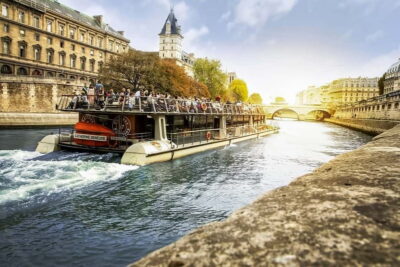
Seine Cruise & Crepe Tasting near the Eiffel Tower
Read our review →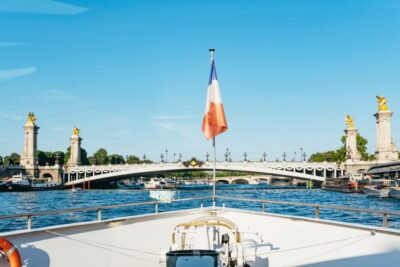
Louvre Museum Entry Ticket With Host and River Cruise
Read our review →
Eiffel Tower Access by Elevator & Seine River Cruise
Read our review →
3-Course-Dinner Cruise on the Seine with live music
Read our review →Browse the lists this tour appears in