

REVIEW · LOUVRE MUSEUM TOURS
Paris: Louvre Private Family Tour for Kids + Reserved Entry
The Louvre is too big for guesswork. This private family tour makes the museum manageable, mixing major art with questions and deduction games that give children a reason to look closely. I like the reserved entry and the way guides such as Corinne, Nadia, Astrid, and Martin have adapted their pace and stories for young children. The main drawback is time: two hours is enough for highlights, not for a full Louvre visit.
I also like the private format, especially for families with children aged 6 to 15. You can ask questions, pause when a child is fading, and request more art or more palace history. At $294 per person, it is a serious expense, so the value depends on whether you want an efficient, tailored visit rather than the freedom of wandering alone.
In This Review
- Key points to know before booking
- Why a private Louvre visit helps families
- Meeting the guide at Napoleon Square
- Mona Lisa: famous, crowded, and still worth seeing
- Venus de Milo and the appeal of Greek sculpture
- Winged Victory of Samothrace on the grand staircase
- More than three masterpieces in two hours
- How guides handle different ages
- The two-hour pace and what you will miss
- Is $294 per person fair value?
- Who should book this Louvre experience?
- FAQ
- How long does the Louvre family tour last?
- What artworks are included?
- Where do we meet the guide?
- Is Louvre entry included?
- Can children older than 15 join this tour?
- How many people can join one private group?
- Is an audio guide included?
- What should I bring, and what cannot I bring?
- Should you book it?
Key points to know before booking
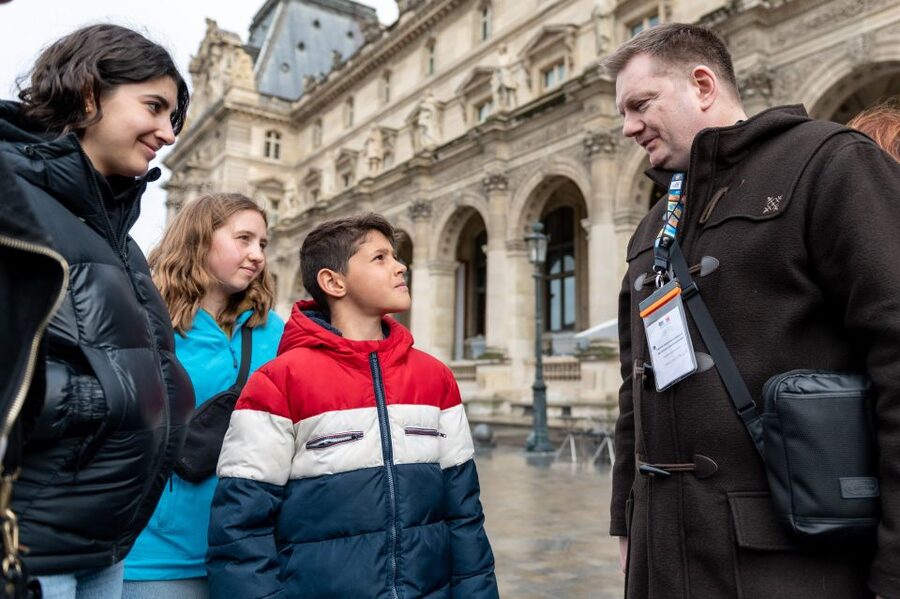
- The tour targets children up to age 15: Provide every child’s age so the guide can adjust the stories and questions.
- Three essential works are built into the route: You see the Mona Lisa, Venus de Milo, and Winged Victory of Samothrace.
- Reserved entry saves precious time: A separate entrance helps you avoid some of the regular waiting.
- The private group limit is six people: Larger families need to make a second booking.
- Guides make or break the experience: Corinne, Nadia, Astrid, Martin, Clement, and others have received especially warm praise for engaging children.
- Two hours passes quickly: The route covers highlights and some wider museum history, but not the Louvre in full.
Why a private Louvre visit helps families
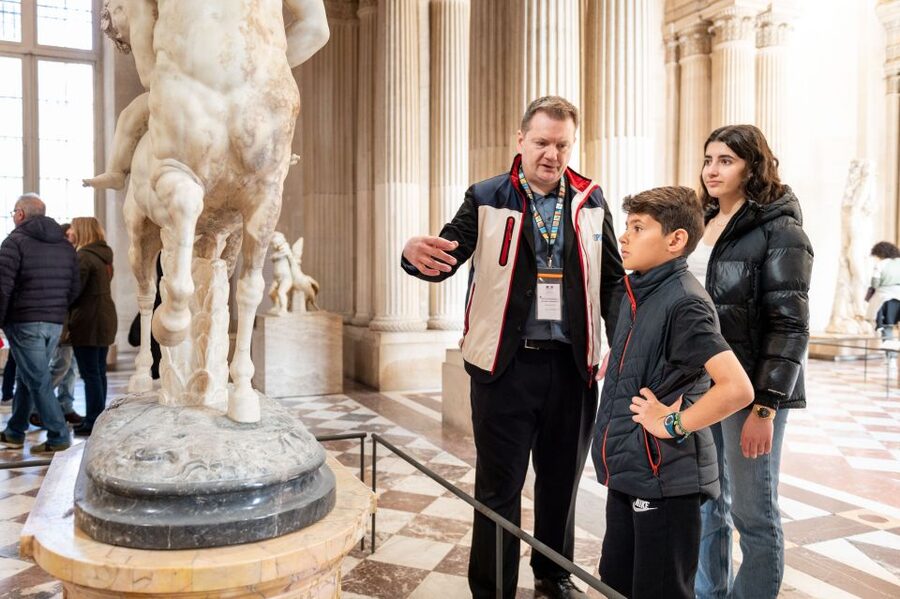
The Louvre is not simply a gallery with a few famous paintings. It is a huge former royal palace, filled with long corridors, grand rooms, sculptures, ancient objects, and paintings from many periods. For a child, the sheer size can turn an exciting outing into a long march toward one crowded painting.
A private guide gives the visit a clear shape. Instead of trying to choose from thousands of objects, you follow a route built around famous works and the stories behind them. The guide can also watch your family’s energy. Several families found that good guides changed pace when children became tired or spent extra time when a particular object caught their attention.
The child-friendly idea is based on questions, deduction, and creativity. Your children may be asked to inspect an artwork and work out clues rather than listen to a long lecture. That approach matters because children remember what they have figured out for themselves.
Still, you should set realistic expectations. The exact style depends on your guide. The tour description promises an interactive approach, but one family found the visit more like a standard art explanation, with little in the way of games or a scavenger hunt. If interaction is your main reason for booking, tell the guide clearly at the start that you want the visit aimed at the children.
More Louvre visits and guided rooms:
- Paris: Louvre Museum Timed-Entrance Ticket
★ 4.6 · 71,977 reviews - Paris: Louvre Guided Tour with Reserved Access & Boat Cruise
★ 4.3 · 16,353 reviews - Louvre Museum Masterpieces Guided Tour with Access
★ 4.5 · 12,023 reviews
Meeting the guide at Napoleon Square
You meet in front of the Louis XIV statue in Napoleon Square, outside the Louvre entrance. The precise map name is Louis XIV sous les traits de Marcus Curtius (copie), which is useful because the Louvre grounds have several statues, entrances, and broad open spaces that can confuse a first-time visitor.
Arrive with enough time to find the statue. A missed meeting can be especially stressful when children are involved, and the meeting point is not a hotel pickup. The stated location is 8 Place du Carrousel.
Bring a passport or identity card. Do not bring luggage, large bags, or oversized luggage, since these are not allowed. A small day bag is the sensible choice, but follow the current museum security rules on the day.
The separate entrance is one of the practical strengths here. It does not mean the museum will be empty, especially around the Mona Lisa. It does mean your guide can spend more of the two-hour window showing art instead of standing in the main entry queue.
Mona Lisa: famous, crowded, and still worth seeing

The Mona Lisa is the stop most children already know, even if they know little about Renaissance painting. The guide uses her mystery as a starting point for questions about the sitter, the expression, the painting’s fame, and the way people look at art today.
Expect a crowd around the painting. The guide’s value here is not only explanation. It is also positioning the group, keeping the visit orderly, and helping you move through the room without losing the children.
Do not expect a long, quiet viewing. You will likely get a short look and a clear explanation before moving on. That is sensible for a family tour. The Mona Lisa is important, but spending too long in one crowded room can drain the children before the more spacious sculpture galleries.
The best guides turn this stop into a puzzle rather than a worshipful pause. Ask your guide to involve the children directly, especially if they are between 7 and 12. That age range often responds well to visual clues and questions about what they notice.
Venus de Milo and the appeal of Greek sculpture
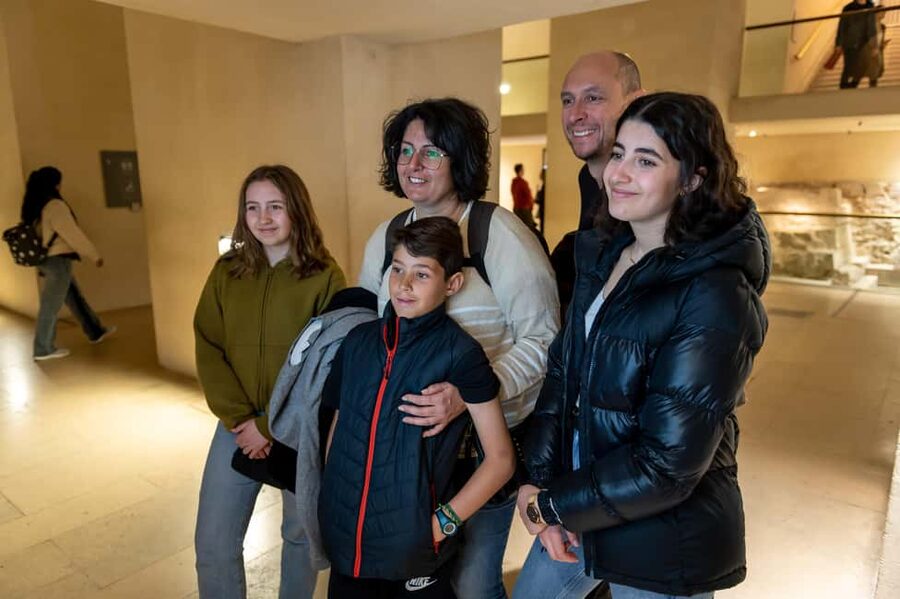
The Venus de Milo offers a different kind of museum moment. Children can look at the missing arms, the pose, and the way the sculpture seems to move even though it is made of stone. The guide can use the work to introduce Greek mythology, idealized beauty, and the challenge of interpreting a statue with missing parts.
This is often a stronger family stop than parents expect because it invites observation. Your child does not need prior art knowledge to notice that something is missing or to guess what the figure may once have held.
One family particularly enjoyed a guide who used Greek mythology and ideas about art to give the visit a clear story. That is the sort of explanation that works well here: short, visual, and linked to a question your children can answer.
The room can be busy, and two hours does not allow much time for long discussions. The guide will probably give you the main points and keep the group moving toward the next major work.
A few more Paris outings to set side by side
- Disneyland® Paris 1-Day Ticket
★ 4.6 · 49,412 reviews - Paris: Versailles Palace and Gardens Full Access Ticket
★ 4.6 · 41,579 reviews - Paris: Evening River Cruise with Music
★ 4.4 · 22,721 reviews - Paris: Eiffel Tower Entry Ticket with Optional Summit Access
★ 4.4 · 20,035 reviews
Winged Victory of Samothrace on the grand staircase
The Winged Victory of Samothrace, also called Nike, is one of the Louvre’s most dramatic sculptures. Its position at the top of the Daru staircase gives it instant impact. You see the figure from below, with the wings and flowing clothing creating a sense of movement.
For children, this is an easy work to approach through the senses. Ask what makes the statue look as if it is moving, where the wind seems to come from, and why the sculptor placed it high above the stairs. Your guide can add the ancient Greek setting and explain why the sculpture remains incomplete yet so powerful.
The staircase itself can be tiring for young children, especially after a crowded start. This is one reason the private format helps. You can keep the stop focused and avoid wasting energy on rooms that do not suit your family.
The three headline works give the tour a reliable backbone. Around them, the guide may add French royal history, Egyptian objects, Italian Renaissance paintings, French decorative arts, or scenes connected with the French Revolution.
More than three masterpieces in two hours
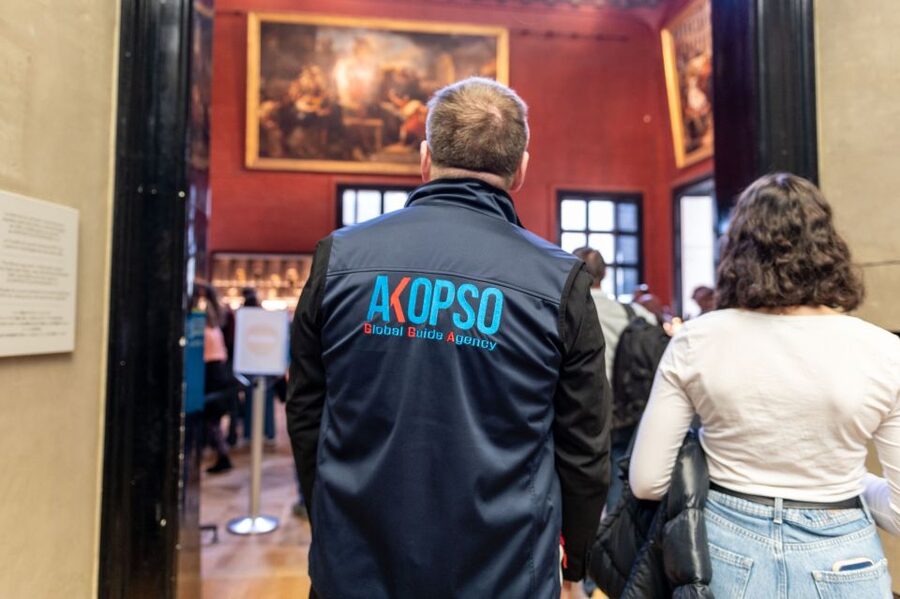
The route is not limited to the Mona Lisa, Venus de Milo, and Winged Victory. Families have also been taken through French jewels, palace rooms, Egyptian collections, and lesser-known objects that help explain how the Louvre grew from a royal residence into a vast museum.
That extra context is valuable. You do not just collect three photographs. You begin to understand the building itself, the French monarchy, and the way art from different civilizations ended up under one roof.
Several guides have been praised for combining art with the history of Paris and the monarchy. That balance can work well for adults who want more than a child-focused game. You can request a visit that gives the children simple questions while still offering adults useful historical detail.
The tradeoff is coverage. A guide may show you 12 to 14 major pieces, as one particularly efficient family visit did, but you will not see every famous room. The Louvre rewards repeat visits. Treat this tour as an introduction and a way to learn how the museum is organized, not as a complete survey.
How guides handle different ages
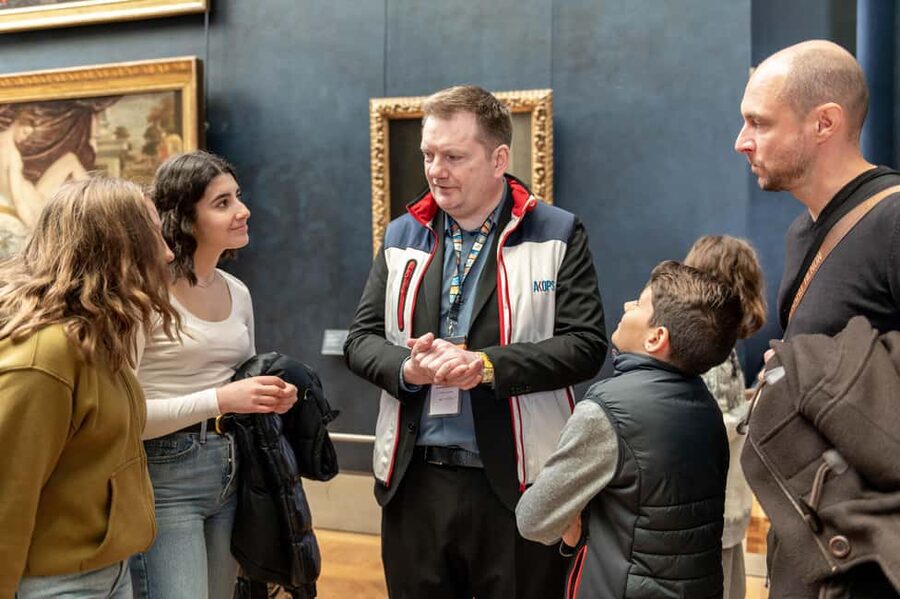
The advertised age range runs through 15, and the guide asks for children’s ages in advance. That is important. A six-year-old needs a different pace and vocabulary from a 13-year-old, and a group with children of several ages needs a flexible approach.
The strongest examples include guides who addressed children directly, told stories, asked questions, and watched body language. Corinne was praised for being patient with young children and for handling practical family needs, including finding suitable bathrooms. Nadia was repeatedly valued for stories and fun facts that kept boys aged 11 and 13 focused.
Clement adapted a visit for a 10-year-old while also keeping a 73-year-old grandparent involved. Another guide managed to hold the attention of children aged 9, 11, and 13 while giving the adults useful insights. Those details show what a successful family tour can look like: the children receive the main attention, but adults are not left with a watered-down talk.
Do not assume every guide will use a formal game. One family expected detective activities and found the explanation too adult-focused. At the start, be direct. Say which children need more movement, who already knows the Mona Lisa, and whether you prefer mythology, palace stories, Egyptian objects, or painting.
Children over 15 are not the target for this tour. For older teenagers and adults, the separate Louvre Masterpieces Private Tour with Reserved Entry is suggested instead.
The two-hour pace and what you will miss
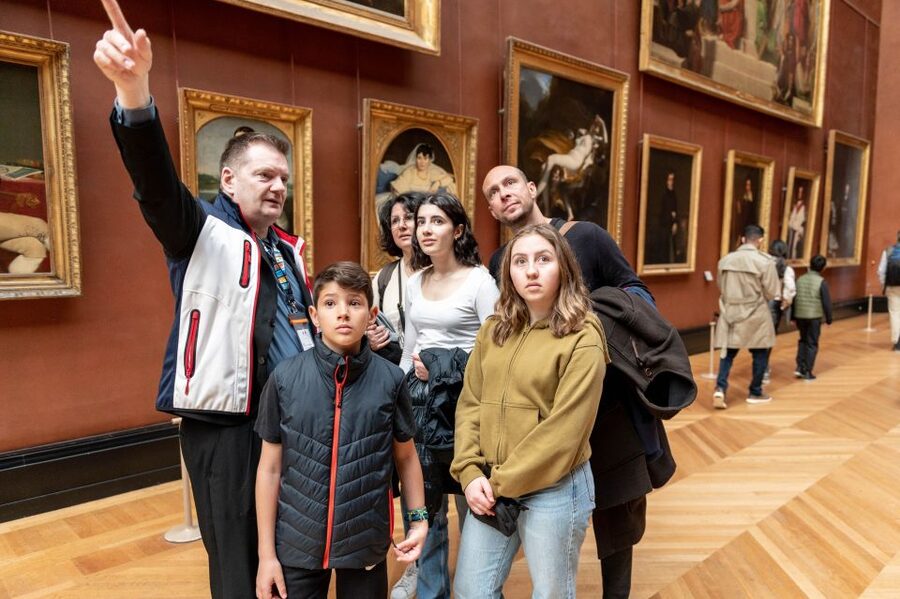
Two hours is a smart length for many families. It fits a busy Paris day and matches the attention span of many children around 8 to 10. It also avoids the common mistake of trying to spend an entire day in a museum that can exhaust even adults.
The time will feel tight if your family wants long periods in front of paintings or if you stop often for photographs. One family said the guide covered the main points well but felt two hours was rushed. Another family wished it had booked an earlier start to enjoy more of the enormous museum.
The guide’s route planning matters greatly. Experienced guides such as Eric and Sendhil were praised for moving efficiently through the building and reaching the main works without unnecessary detours. Crowds can slow any visit, but a guide who knows the galleries can reduce wasted time.
You should also expect some walking and standing. The activity is marked wheelchair accessible, but it is also listed as not suitable for people with mobility impairments. That conflict deserves clarification before booking. If anyone in your group has mobility concerns, contact the provider before paying and ask exactly how the route can be adapted.
Is $294 per person fair value?
At $294 per person, this is not a budget museum outing. The ticket to the permanent collection is listed at €28 per adult, so much of the price pays for the private guide, reserved entry arrangement, planning, and personal attention.
The value improves if you have four to six people sharing a private booking and strongly want an efficient visit. You are paying to avoid planning a route through a huge museum, to ask questions freely, and to keep the children involved. A guide can also help you avoid spending half the visit lost between galleries.
The price is harder to justify for two adults and one very young child who may not care about art, especially if your family is happy to see only the Mona Lisa and leave. It also feels high if your guide gives a general lecture rather than the interactive child-focused visit you expected.
Temporary exhibitions are not included. The permanent collection ticket is included for adults, while an audio guide costs an additional €4.80. Since you already have a live guide, the audio guide is unlikely to add much value during this tour.
Free cancellation is available up to 24 hours before the start, and you can reserve now and pay later. Those terms help if your Paris schedule is still shifting, but they do not change the basic question: you need to value expert routing and family attention more than low cost.
Who should book this Louvre experience?
I would choose this for a first Louvre visit with children aged roughly 7 to 14, especially if your Paris schedule is short. It suits families who want the famous works without asking children to wander through endless rooms.
It is also a good match for grandparents traveling with children, or for adults who have visited before but want a more structured route. The private setting lets the guide balance generations, which a large group tour cannot do as easily.
I would pause before booking if your children dislike museums, if you want a slow art-study visit, or if you expect a guaranteed scavenger hunt. Ask for the most interactive guide style available and share the children’s ages and interests in advance.
Groups are limited to six people. If you have seven or more, you need a second booking, which can make the total cost climb quickly.
FAQ
How long does the Louvre family tour last?
The tour lasts two hours, including the guided museum visit and the featured artworks.
What artworks are included?
The planned highlights include the Mona Lisa, Venus de Milo, and Winged Victory of Samothrace. The guide may also cover Egyptian collections, Italian Renaissance works, French Revolution subjects, French jewels, and other museum highlights.
Where do we meet the guide?
Meet in front of the Louis XIV statue in Napoleon Square, near the Louvre’s outside entrance. The statue can be found on Google Maps under the name Louis XIV sous les traits de Marcus Curtius (copie).
Is Louvre entry included?
Entry to the Louvre’s permanent collection is included, with an adult ticket value of €28. Temporary exhibitions are not included.
Can children older than 15 join this tour?
The tour is designed for groups with children up to age 15. For children older than 15, the separate Louvre Masterpieces Private Tour with Reserved Entry is recommended.
How many people can join one private group?
A maximum of six people can join one group. Groups larger than six need to make an additional booking.
Is an audio guide included?
No. An audio guide costs €4.80 and is not included in the private guided tour.
What should I bring, and what cannot I bring?
Bring a passport or identity card. Luggage, large bags, and oversized luggage are not allowed.
Should you book it?
Book this tour if you want the Louvre’s major works explained clearly, with a guide who can adjust the visit to your children. The strongest family experiences came from guides who used stories, questions, humor, and smart pacing, with Corinne, Nadia, Astrid, Martin, Clement, and others praised for those skills.
Skip it if $294 per person feels too steep for a two-hour museum visit, or if your family prefers to wander without a set route. For most first-time family visits, though, the private format solves the Louvre’s biggest problem: too much to see and too little patience to see it all.
Recently added in Paris
- Private Transfers in Paris★ 5.0 · 75 reviews
- CDG – Euro Disney – CDG Two Way Private Shuttle Transfer★ 5.0 · 233 reviews
- Disneyland® Paris 1 Day Ticket with Transport from Paris★ 3.5 · 302 reviews
- Personalized Transport service from Disneyland to Paris★ 5.0 · 63 reviews
- Monet’s Gardens & House-Private Giverny Tour From Paris★ 4.5 · 137 reviews
- Guided tour Monet’s house and gardens/small group★ 4.5 · 68 reviews
- Giverny Monet House and Gardens Skip the line Walking tour★ 4.0 · 217 reviews
- Monet’s House and Garden & Giverny Village★ 4.5 · 39 reviews
Louvre Museum Tours, compared.


Louvre Guided Tour with Reserved Access & Boat Cruise
Read our review →
Louvre Museum Masterpieces Guided Tour with Access
Read our review →
Louvre Museum Entry Ticket With Host and River Cruise
Read our review →
Priority Access Louvre with Host -Direct to Mona Lisa
Read our review →
Mona Lisa & Louvre Masterpieces Tour with Reserved Access
Read our review →
Louvre Museum – Exclusive Guided Tour (Entry Included)
Read our review →
Louvre Reserved Ticket and River Cruise Combo
Read our review →Browse the lists this tour appears in