
REVIEW · FOOD & DRINK
Paris: Montmartre Food Tour with Full Meal
Montmartre tastes better one stop at a time. This three-and-a-half-hour walk combines French sweets, cheese, wine, and a full savory dish with stories from the neighborhood. I like the small groups of up to 12 and the way the route moves through real streets rather than keeping you at one restaurant. I also like that the food is substantial, not just a parade of tiny samples.
The main thing to consider is the hill. Montmartre means uphill and downhill walking, and the route is not suitable for people with mobility impairments. You should also arrive hungry: several tastings can add up to a full meal, and sometimes more than a full meal.
In This Review
- Five useful things to know before you book
- Why this Montmartre food tour works
- Starting beneath the Moulin Rouge
- Rue Lepic: the first taste of the hill
- Place des Abbesses and the neighborhood’s softer side
- Place du Tertre, artists, and the tourist heart
- Rue du Chevalier-de-La-Barre and the full-meal moment
- Ending at Sacré-Cœur
- What the guides add to the food
- How much walking and food to expect
- Is $117 a fair price?
- Who should book this experience?
- Should you book the Montmartre food tour?
- FAQ
- Where does the Montmartre food tour begin?
- Where does the tour finish?
- How long does the tour last?
- How many food stops are included?
- What food and drinks are included?
- Is the tour suitable for people with mobility impairments?
Five useful things to know before you book
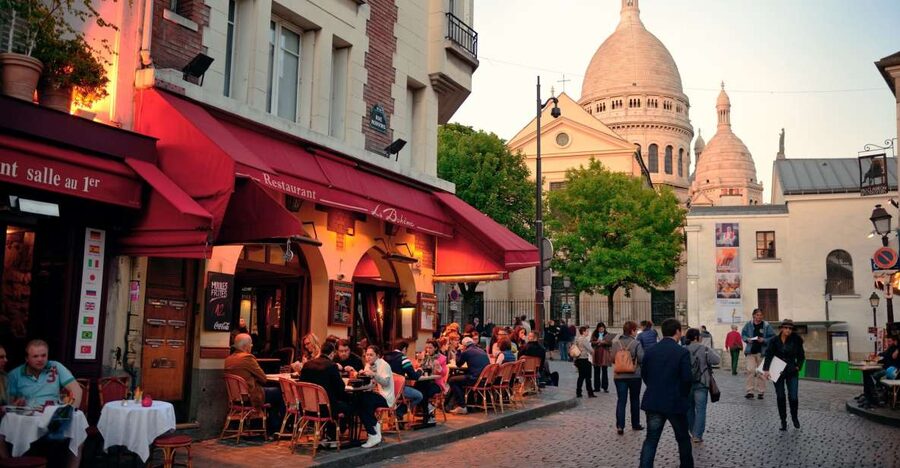
- It begins at the Moulin Rouge and ends at Sacré-Cœur, giving you a clear route through several of Montmartre’s best-known areas.
- Expect at least four food stops, with samples such as chou, macarons, cheese, crêpes, and boeuf bourguignon.
- The food is plentiful, so eat lightly beforehand rather than treating this as a small snack walk.
- The guide makes a big difference, with hosts such as Peter, Kevan, Lolla, Rocco, Hugo, Thomas, and Zac praised for warmth, humor, and local stories.
- One alcoholic drink and water are included, but extra drinks and food cost more.
- The schedule and dishes can change, depending on the season and what partner eateries have available.
Why this Montmartre food tour works
At $117 per person, this is not a cheap way to grab lunch in Paris. It is better understood as a guided neighborhood walk, a meal, and a tasting lesson rolled into one. You are paying for several food stops, a local guide, one alcoholic drink, water, and three and a half hours of company and context.
I find the value strongest if you are new to Paris or unsure how to approach Montmartre. The district can feel confusing because the famous sights sit among steep streets, small squares, souvenir shops, cafés, and residential corners. A good guide gives the walk shape and helps you see more than the obvious postcard views.
The food also arrives in a sensible order. You may begin with a sweet bite, continue to savory dishes, pause for cheese, and finish with a crêpe or another dessert. That rhythm gives you time to sit, eat, ask questions, and keep walking without racing from one address to the next.
The tour has earned a 4.8 rating from 301 bookings, and the most consistent praise is aimed at the guides. Peter is described as calm and personable. Kevan brings humor and energy. Lolla draws on her long residence in the area, while Rocco has been praised for learning about the group and adjusting his commentary to their interests. Those details matter because this is a social experience, not a self-guided food map.
More Food Tours in Paris
- Paris: Seine Cruise & Crepe Tasting near the Eiffel Tower
★ 4.4 · 11,231 reviews - Authentic Parisian Gourmet Food Tour with 10 Local Dishes & Wines
★ 5.0 · 4,754 reviews - Normandy D-Day Small-Group Day Trip with Omaha Beach, Cemetery & Cider Tasting
★ 5.0 · 2,786 reviews
Starting beneath the Moulin Rouge
Meet your guide in front of the Moulin Rouge ticket office at 82 Boulevard de Clichy. This is an easy landmark to identify, but the boulevard can be busy, so give yourself time to find the exact meeting point rather than arriving at the last second.
The Moulin Rouge is a fitting place to begin. It puts you at the lower edge of Montmartre, where the broad boulevard gives way to narrower streets and a more village-like feel. From here, the route heads uphill toward the neighborhood’s food shops and squares.
Your guide may speak in both English and French during the walk. The advertised tour languages are English and French, so if you need clear English commentary, listen for the guide’s opening instructions and stay close enough to hear. Small groups help here, with a maximum of 12 people, though at least two participants are needed for the tour to operate.
Rue Lepic: the first taste of the hill
Rue Lepic is one of the most useful early stops because it introduces the character of Montmartre before the route reaches the grander viewpoints. You get sightseeing and food tasting together, rather than spending the first hour only on history.
This is where the walking begins to feel like part of the meal. The street rises, and you will want comfortable shoes with a firm sole. Montmartre’s charm comes partly from its slopes and old streets, but those same slopes can make the tour tiring for anyone who has trouble with stairs, inclines, or uneven paving.
A possible tasting here is chou, a small puff pastry made with choux pastry and sugar pearls. It is less famous than a macaron or crêpe, which makes it a nice choice for a food walk. The bite is sweet but modest in size, and your guide can explain how it fits into French pastry traditions.
Dishes are not fixed. You might receive chou at one stop, while another departure includes a different seasonal specialty. That flexibility keeps the food tied to current availability, but it also means you should not book expecting every item on the sample list.
Place des Abbesses and the neighborhood’s softer side
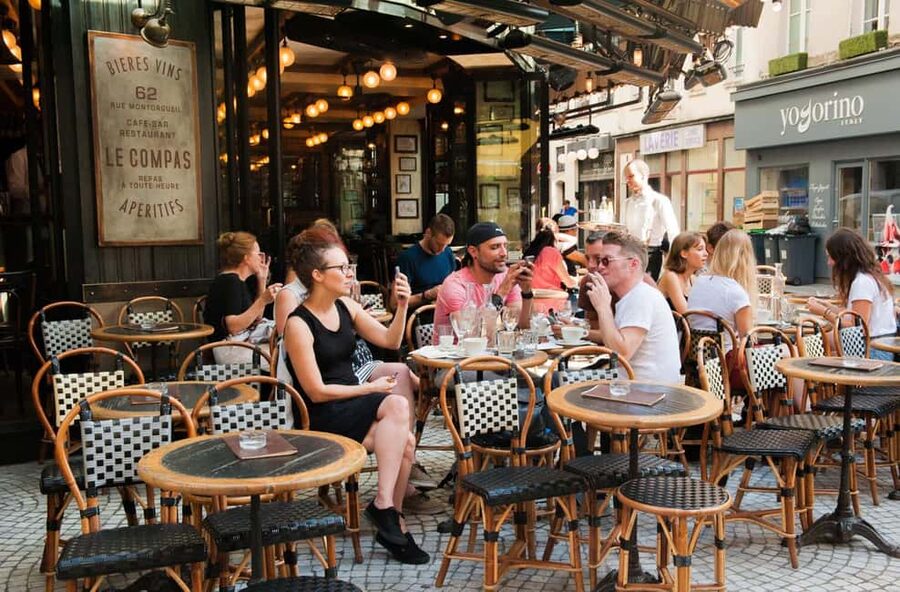
Place des Abbesses gives the route another change of pace. After the climb along Rue Lepic, this square offers a place to pause, look around, and taste something without feeling hurried.
The square is also a good setting for the guide’s local stories. Several guides, including Lolla, Thomas, and Zac, have been praised for mixing neighborhood history with practical suggestions for the rest of a Paris visit. That is one of the tour’s better extras. You can ask where to go next, what to see nearby, or how to make better use of your time in Montmartre.
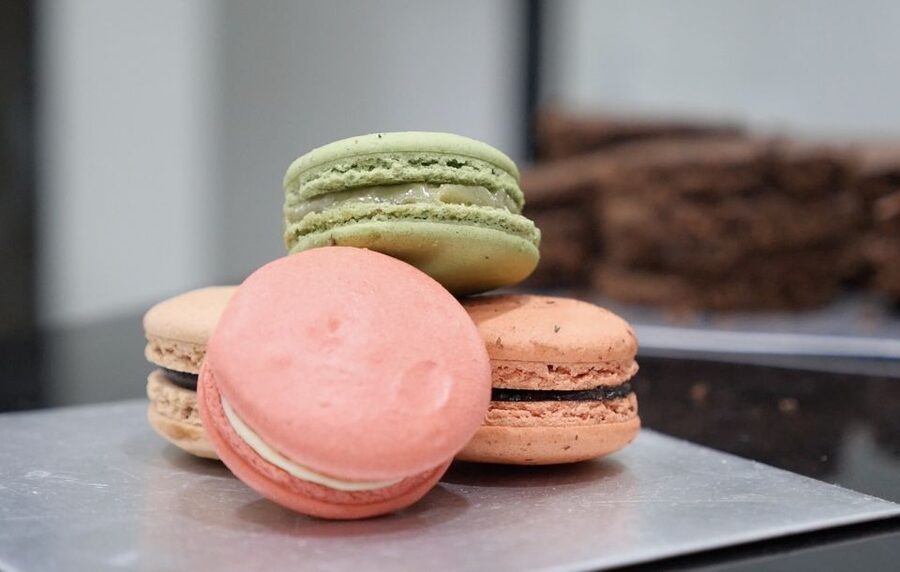
The food at this part of the walk can include macarons. These small round cakes use almond powder, sugar, and eggs, with a baked shell and a sweet filling. They are delicate, familiar, and easy to share, though anyone who dislikes very sweet food may prefer the savory stops later.
The group size helps keep this stop personal. A dozen people is large enough for conversation but small enough for a guide to answer questions without turning the walk into a speech delivered to a crowd. Several hosts have also been praised for keeping children involved, making this a workable choice for families with older children.
Same city, a slower kind of day:
- Paris: Louvre Museum Timed-Entrance Ticket
★ 4.6 · 71,977 reviews - Disneyland® Paris 1-Day Ticket
★ 4.6 · 49,412 reviews - Paris: Versailles Palace and Gardens Full Access Ticket
★ 4.6 · 41,579 reviews - Paris: Evening River Cruise with Music
★ 4.4 · 22,721 reviews
Place du Tertre, artists, and the tourist heart
Place du Tertre is one of the most recognizable points on the route. Its artists, cafés, and visitors make it more crowded and more tourist-focused than some of the quieter streets nearby. That is not a flaw, but you should know the atmosphere changes here.
This stop gives your guide a chance to explain Montmartre’s connection with painters and the artists who lived and worked in the district. Zac, Lolla, and other hosts have been praised for telling stories about the neighborhood’s artists rather than simply pointing out buildings and moving on.
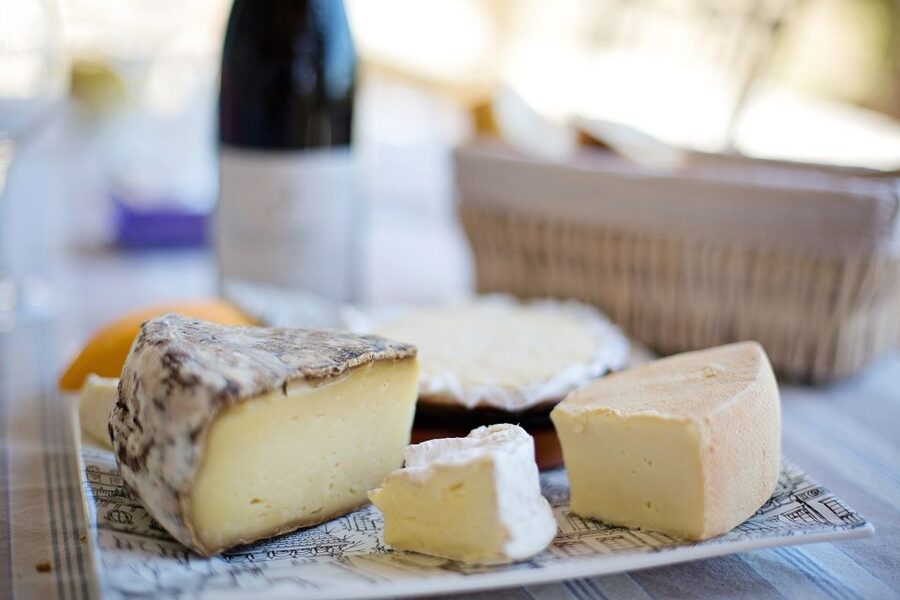
You may taste cheese in or near this section of the walk. The traditional mix of fromage is selected by a neighborhood cheese specialist, so the exact choices can vary. This is one of the more useful tastings for a first visit to France because you are not just eating one famous product. You are comparing textures, strength, and style across several cheeses.
Cheese is also a welcome savory pause after pastries. Water is included, and one alcoholic drink is part of the tour, often making the cheese stop feel closer to a relaxed French aperitif. If you want additional wine, beer, or soft drinks, those are not included.
Place du Tertre can be busy, and that may affect the pace. If you want quiet streets and uninterrupted photographs, this is not the calmest section. Still, it is an important part of the Montmartre experience, and the food gives you a reason to stop instead of simply passing through.
Rue du Chevalier-de-La-Barre and the full-meal moment
The route then continues along Rue du Chevalier-de-La-Barre, heading toward the Sacré-Cœur area. This section helps connect the food experience with the upper hill, and it is often where the walking feels most demanding.
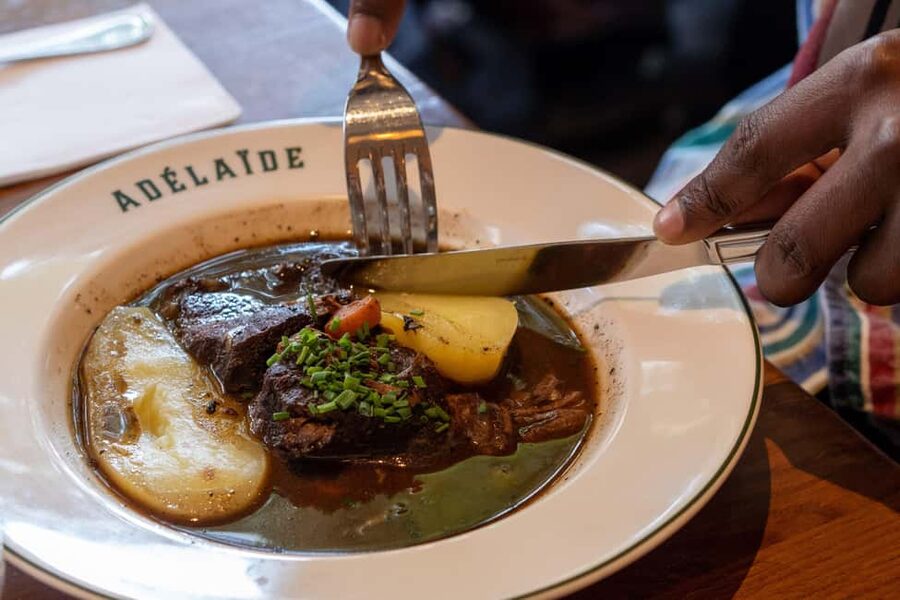
A possible main dish is boeuf bourguignon, the Burgundy-style beef stew cooked slowly with red wine, vegetables, and herbs. It is the meal’s anchor: warm, filling, and far more substantial than a pastry or confection. Several people have singled out the beef dish as a favorite, although one noted that it could have been hotter on the day.
That small criticism is worth keeping in mind. Food served to a moving group may not always arrive at the ideal temperature, and seasonal availability can affect the exact preparation. Even so, boeuf bourguignon gives the tour real meal value. You are not left trying to find dinner afterward simply because the samples were too small.
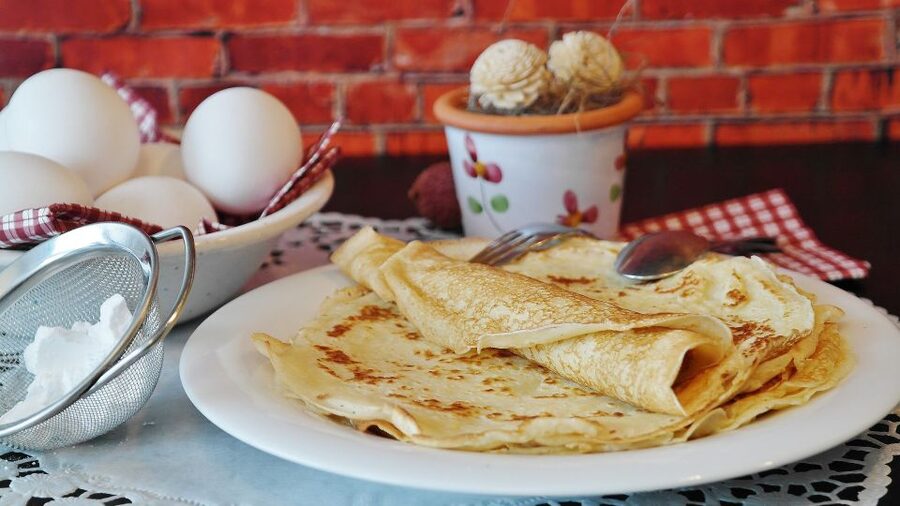
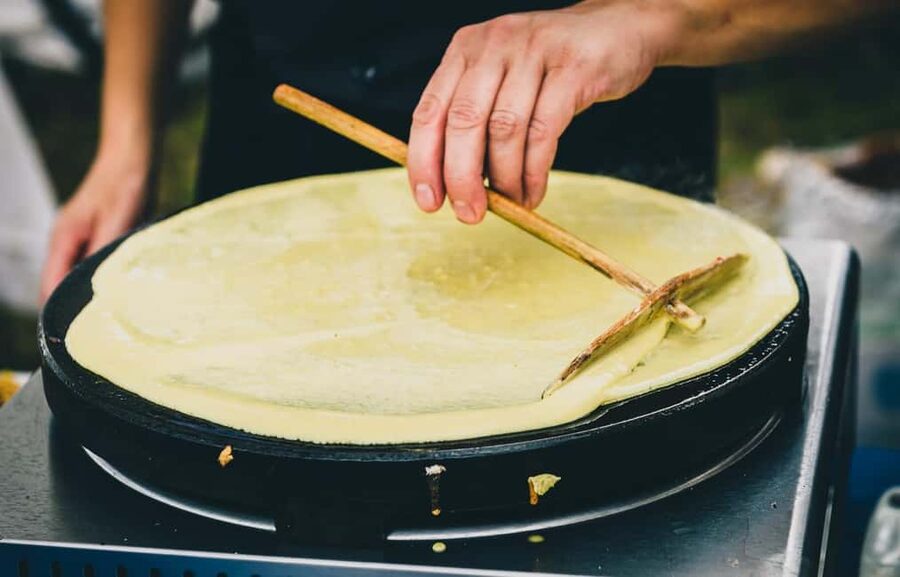
You may also receive a crêpe, perhaps with one of the classic sweet fillings. The French crêpe is thin and soft, and the dessert is usually sweet without being overwhelming. Depending on the day, the crêpe may be accompanied by other pastries or replace one of the listed sweets.
One particularly useful tip comes from the amount of food. Some groups found the portions plentiful enough to feel almost too full by the final stop. I would skip a large breakfast or late lunch, but I would not arrive starving. You want enough room to enjoy the cheese, stew, and sweets without turning the last tasting into a chore.
Ending at Sacré-Cœur
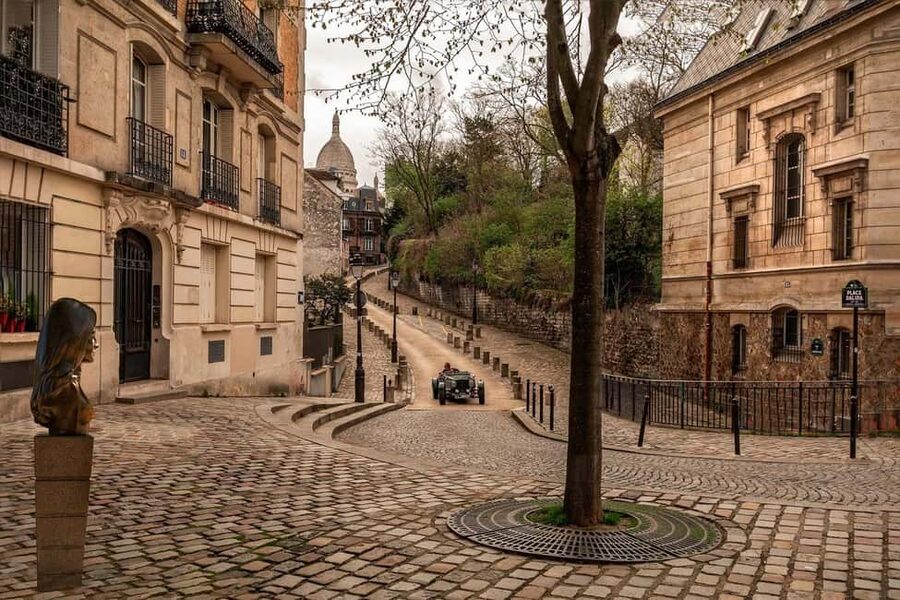
The tour finishes at the Basilica of Sacré-Cœur of Montmartre. This is a satisfying endpoint because it brings you to one of Paris’s best-known sights after you have crossed the district on foot.
The finish is also practical. You can continue exploring the basilica and nearby streets on your own, or simply enjoy the view and head elsewhere. The tour does not include hotel pickup or drop-off, so you will make your own way back after the guide says goodbye.
Remember that ending at Sacré-Cœur means ending high on the hill. The final approach can involve more uphill walking, and the return route may require stairs or a descent. If you have mobility concerns, this is the most important factor in deciding whether the tour fits your plans.
What the guides add to the food
The food is the reason you book, but the guide determines how much you take away. The strongest pattern across the guide team is a friendly, personal style rather than a formal lecture.
Peter has been praised for giving a comfortable walking pace and taking time to explain points of interest. Kevan is repeatedly described as funny, engaging, and good at bringing the group together. Marie’s energy and enthusiasm for Parisian food have made the stops feel welcoming, while Hugo combines local history with an easy, conversational manner.
Rocco has been especially good at tailoring the commentary to the people in the group. That can make a difference if you are more interested in food than art, or if you want advice for the rest of your Paris stay. Thomas has also been praised for keeping the experience light and informative.
Guide assignments can change, so you should not book on the assumption that one particular host will lead your departure. Still, the range of positive comments suggests the operator has a strong group of hosts. The best guides do more than recite facts. They notice who is listening, answer questions, and explain why a particular food matters.
How much walking and food to expect
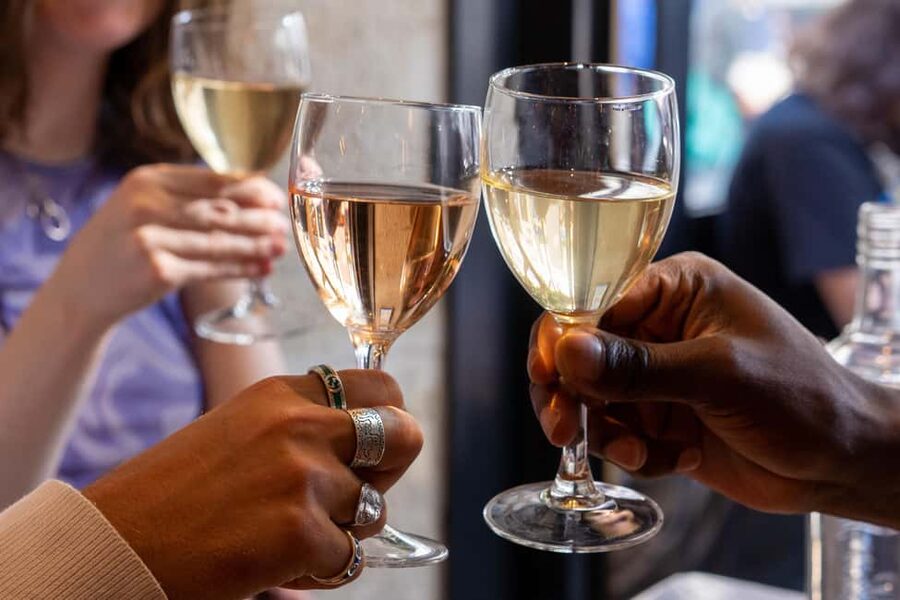
The tour lasts 210 minutes. That is long enough for a full neighborhood circuit, but not so long that the day disappears. The route includes sightseeing and tasting at Rue Lepic, Place des Abbesses, Place du Tertre, and Rue du Chevalier-de-La-Barre, with Sacré-Cœur as the finish.
You should expect repeated uphill and downhill sections. Comfortable shoes are not a polite suggestion here. Wear them. Leave luggage and large bags behind, since those are not allowed, and pets cannot join the tour.
At least one serving of food is included at every stop. The possible menu includes:
- Chou with sugar pearls
- Macarons
- Boeuf bourguignon
- A selection of neighborhood cheeses
- A sweet crêpe
- One alcoholic drink
- Water
The word possible matters. The menu changes with the season and partner availability. If you have allergies, dietary restrictions, or strong dislikes, ask before booking because the supplied information does not promise substitutions.
Is $117 a fair price?
The price makes sense for someone who wants an organized evening rather than a list of bakeries to visit alone. You receive at least four stops, several food categories, a full savory dish, a drink, and a guide who handles the route and explanations.
The value is less convincing if your main goal is simply to eat the cheapest possible meal. You could spend less by choosing one crêpe, one pastry, and a casual dinner on your own. You would not get the same sequence of tastings, neighborhood storytelling, or help finding the right streets.
I would especially consider booking this near the start of a Paris visit. The walk can help you get oriented in Montmartre, and guides such as Zack, Zac, and Rocco have offered useful ideas for the rest of a stay. Booking early also gives you a chance to use the free-cancellation policy, which allows a full refund up to 24 hours before the tour, and the reserve-now, pay-later option keeps your plans flexible.
Who should book this experience?
I would recommend it to first-time Paris visitors, food-focused couples, small families, and anyone who enjoys learning while eating. It suits people who want a social activity with a clear route and enough food to count as dinner.
Families can do well here, especially with older children. One guide was praised for being patient with young kids, and another adjusted food choices so children aged 12 and 16 could enjoy the stops. Still, the hill and three-and-a-half-hour duration may be tiring for very young children.
I would be more cautious if you have mobility limitations, need a strictly predictable menu, or dislike group tours. The group is capped at 12, but you are still eating and walking with other people. The guide may also speak both French and English, which can affect the rhythm of the commentary.
Should you book the Montmartre food tour?
Book it if you want a generous food walk with local storytelling, not just a quick tasting circuit. The combination of boeuf bourguignon, cheese, crêpes, macarons, and neighborhood pastries gives you a broad taste of French food, while the route shows Montmartre from Moulin Rouge to Sacré-Cœur.
Skip it if the hills will be difficult or if you want to choose every dish yourself. For most visitors who can manage the walking, $117 is a reasonable price for a guided meal, several tastings, and a well-paced introduction to one of Paris’s most characterful districts.
FAQ
Where does the Montmartre food tour begin?
Meet the guide in front of the Moulin Rouge Ticket Office at 82 Boulevard de Clichy.
Where does the tour finish?
The tour finishes at the Basilique du Sacré-Cœur de Montmartre.
How long does the tour last?
The experience lasts 210 minutes, or three and a half hours.
How many food stops are included?
At least four food stops are included, with at least one serving of food at each stop.
What food and drinks are included?
Possible tastings include chou, macarons, boeuf bourguignon, a selection of cheese, and a sweet crêpe. Water and one alcoholic drink are included. The dishes may change with the season and partner availability.
Is the tour suitable for people with mobility impairments?
No. The route includes uphill and downhill walking through Montmartre and is not suitable for people with mobility impairments. Comfortable shoes are recommended.
More Places to Eat around Paris
- Montmartre Hill French Gourmet Food and Wine Tasting Walking Tour
★ 5.0 · 2,588 reviews - Devour Paris Ultimate Food Tour
★ 5.0 · 2,087 reviews - Private Montmartre Food Tour with Wine, Cheese & Pastries
★ 5.0 · 1,027 reviews - Paris Le Marais Food Tour With 10+ Tastings, Cheese, Wine & More
★ 5.0 · 985 reviews
Recently added in Paris
- Private Transfers in Paris★ 5.0 · 75 reviews
- CDG – Euro Disney – CDG Two Way Private Shuttle Transfer★ 5.0 · 233 reviews
- Disneyland® Paris 1 Day Ticket with Transport from Paris★ 3.5 · 302 reviews
- Personalized Transport service from Disneyland to Paris★ 5.0 · 63 reviews
- Monet’s Gardens & House-Private Giverny Tour From Paris★ 4.5 · 137 reviews
- Guided tour Monet’s house and gardens/small group★ 4.5 · 68 reviews
- Giverny Monet House and Gardens Skip the line Walking tour★ 4.0 · 217 reviews
- Monet’s House and Garden & Giverny Village★ 4.5 · 39 reviews
Food & Drink, compared.
Seine Cruise & Crepe Tasting near the Eiffel Tower
Read our review →
Authentic Parisian Gourmet Food Tour with 10 Local Dishes & Wines
Read our review →

Normandy D-Day Small-Group Day Trip with Omaha Beach, Cemetery & Cider Tasting
Read our review →
Illuminated Evening River Cruise & Waffle Tasting
Read our review →
Montmartre Hill French Gourmet Food and Wine Tasting Walking Tour
Read our review →
Loire Valley Castles Day Trip With Wine Tasting
Read our review →Browse the lists this tour appears in