REVIEW · PARIS TOURS
Paris: Montmartre. The old artist village+its unique charm.
Montmartre still rewards curious walkers. This two-hour tour takes you from the Moulin Rouge through the old artists’ village, along quieter streets, and up to Sacré-Cœur, with a local German-speaking guide adding personal insight along the way. I like the small group of eight or fewer, which should make it easier to ask questions and keep the walk personal. I also like the guide’s German and Parisian perspective, especially since the guide has lived in Paris for many years and brings an outside view to local life.
The main consideration is the physical effort. Montmartre rises to 130 metres, and this is a walking tour rather than a gentle sightseeing ride. Comfortable shoes are essential, and the route is not suitable for wheelchair users. The meeting and finishing details also need checking, since the route description ends at Sacré-Cœur while the meeting information says the activity finishes back at the Moulin Rouge.
In This Review
- Key points to know before booking
- Starting beside the Moulin Rouge
- Why Montmartre feels like a village
- Following the quieter streets uphill
- The artists who shaped Montmartre
- Photo stops and the climb to Sacré-Cœur
- What two hours can realistically cover
- Is $40 a fair price?
- Who should book this Montmartre walk?
- Should you book it?
- FAQ
- Where does the Montmartre tour start?
- Where does the tour finish?
- How long does the walking tour last?
- What language is the tour in?
- How large is the group?
- What price should I expect?
- Is the tour suitable for wheelchair users?
- What should I wear?
- What landmarks are included?
- Can I cancel for a refund?
Key points to know before booking
- A small group capped at eight people keeps the walk more intimate than a large city tour.
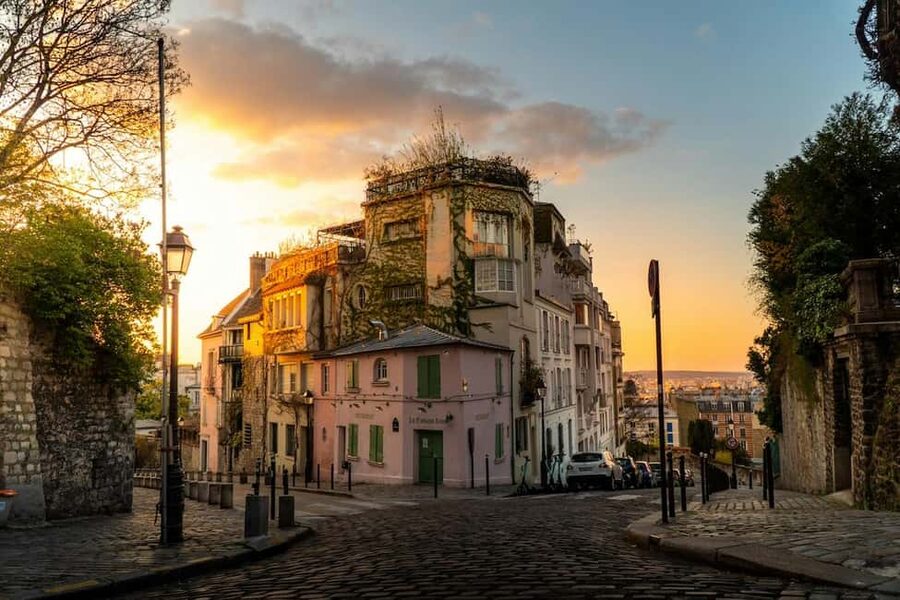
- The route begins at the Moulin Rouge and heads uphill through Montmartre toward Sacré-Cœur.
- The guide speaks German, with a useful German and Parisian perspective on life in the city.
- Montmartre’s artistic past is central, with connections to Renoir, Van Gogh, Picasso, Dalida, Toulouse-Lautrec, and others.
- The walk includes quieter streets and scenic viewpoints, not only the best-known tourist corners.
- The final view reaches across Paris from the city’s highest point, at about 130 metres above sea level.
Starting beside the Moulin Rouge
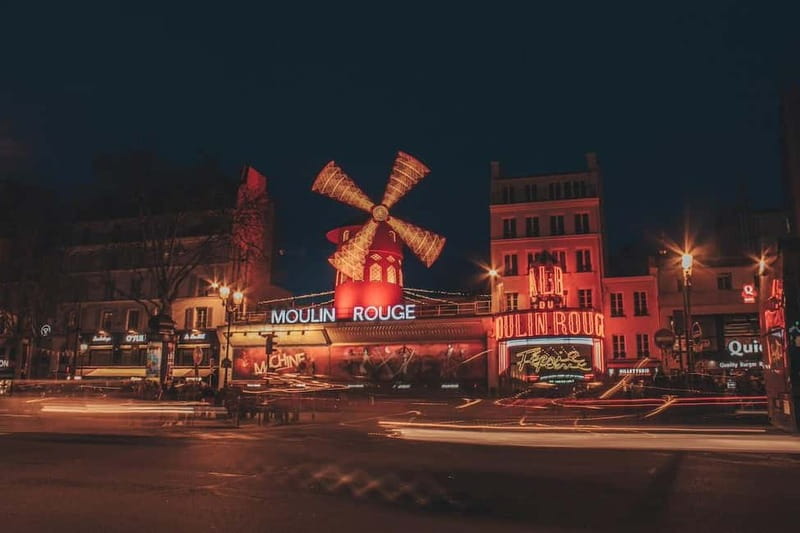
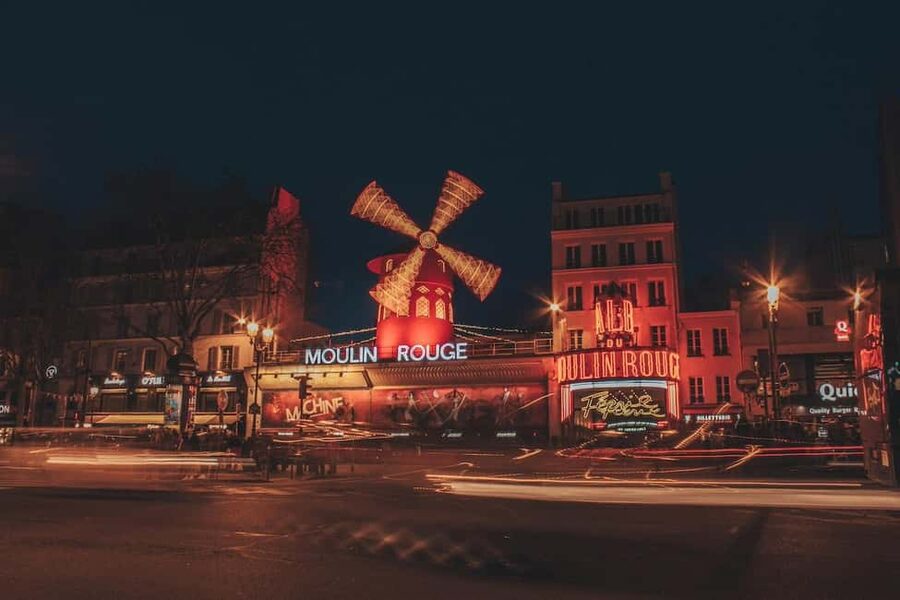
The tour begins in front of the Moulin Rouge theatre, at the ticket office marked Billetterie. This is an easy landmark to identify, but the area is one of Paris’s busiest entertainment zones, so arriving a little early is sensible. Look for the guide directly in front of the theatre rather than assuming the group will gather inside.
Starting here gives the walk a clear sense of place. The Moulin Rouge belongs to the famous nightlife image of Montmartre, while the tour then leads you toward the hill’s older lanes and village character. That change is part of the appeal. You begin in a well-known Paris setting and gradually move into a quieter side of the neighborhood.
The provider is Paris through my eyes, and the experience is led by a local guide who has lived in Paris for many years. The guide is German-speaking, which makes this tour particularly useful for German-speaking visitors who want more than a basic sightseeing script.
The group size matters at this point. With no more than eight participants, the guide can speak to the group without shouting, and you have a better chance of asking about a street, building, or local custom when something catches your attention.
A few more Paris outings to set side by side
- Paris: Louvre Museum Timed-Entrance Ticket
★ 4.6 · 71,977 reviews - Disneyland® Paris 1-Day Ticket
★ 4.6 · 49,412 reviews - Paris: Versailles Palace and Gardens Full Access Ticket
★ 4.6 · 41,579 reviews
Why Montmartre feels like a village
Montmartre is often described as the old artists’ village, and the phrase makes sense once you leave the main roads. The hill has a distinct identity within Paris, with small streets, uphill routes, and views that open suddenly between buildings.
The area was once associated with more than 30 windmills, scattered across the hill before 1900. You should not expect a working windmill tour, but this detail changes how you read the neighborhood. Montmartre was not always the dense urban district you see today. Its earlier character was more rural, and the windmills are a reminder of that past.
The tour focuses on authentic and charming little streets rather than keeping you on the most direct route. That means the walk may feel less like checking off monuments and more like getting your bearings in a neighborhood with layers. I value this approach because Montmartre is best understood through its streets, not only through a photograph of Sacré-Cœur.
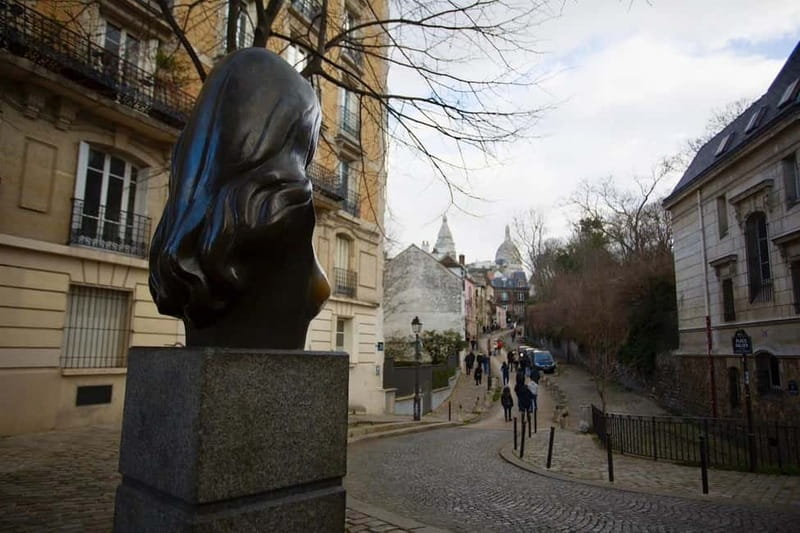
The guide also points out connections to artists who lived or worked here, including Pierre-Auguste Renoir, Edgar Degas, Vincent van Gogh, Pablo Picasso, Henri Matisse, Salvador Dalí, and Toulouse-Lautrec. Dalida is another important name linked with the district. These references give the streets a human scale. You are not simply hearing that Montmartre was artistic. You are learning how many major creative figures were drawn to this hill.
Following the quieter streets uphill
The middle section takes place on foot through Montmartre and the 18th arrondissement. The timing is divided into several parts, including roughly 30 minutes of walking and around 20 minutes for a guided visit, photo stops, and views. The exact pace can vary, but you should expect steady movement rather than long periods standing in one place.
This is where the route’s off the beaten path promise matters most. The tour is designed to include iconic streets while also showing less obvious corners. That balance is better than a route made entirely of famous photo stops. You get the classic Montmartre atmosphere, but you also have time to notice how the neighborhood fits together.
The 18th arrondissement is not presented as an abstract administrative district. It is the setting for the walk, the viewpoints, and the climb toward the basilica. The guide’s local perspective should help connect the area’s artistic reputation with present-day Parisian life.
I would plan for the walking portion to feel active. The hill is the central feature of Montmartre, and the route goes upward toward Sacré-Cœur. If stairs or inclines are difficult for you, this tour may not be comfortable. The supplied information specifically says it is not suitable for wheelchair users, and all participants should wear comfortable shoes.
The artists who shaped Montmartre
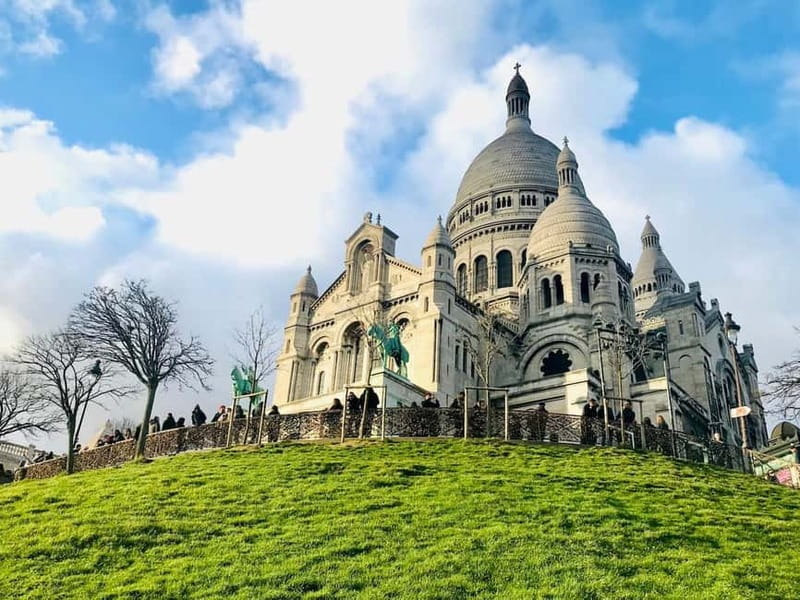
A good Montmartre tour needs to avoid treating artists as a list of famous names. The value here is in linking the people to the neighborhood’s former role as a gathering place for creative life.
Renoir, Degas, Van Gogh, Picasso, Matisse, Dalí, and Toulouse-Lautrec represent different periods and artistic styles. Their presence helps explain why Montmartre became known far beyond Paris. The district offered a setting where artists, performers, and other creative people could work and meet.
Dalida adds another layer to the story. She is not part of the same painterly group, but her connection shows that Montmartre’s cultural identity continued beyond the early modern art scene. You are getting a broader picture of the area rather than a narrow lesson about painters alone.
The guide’s German and Parisian background is another useful feature. Someone who has lived in Paris for years but did not grow up there can explain both the local habits and the details that may puzzle an outsider. That kind of perspective can be especially helpful if you want to understand what makes Paris feel different from other European capitals.
A previous booking praised Nadine by name, describing her as friendly and engaging, with the time passing quickly because of the way she told the story. I would treat that as a useful sign of the tour’s tone, though guide availability can vary. The strongest praise centers on Nadine’s warmth, interesting explanations, and ability to keep the two hours moving.
Same city, a slower kind of day:
- Paris: Evening River Cruise with Music
★ 4.4 · 22,721 reviews - Paris: Eiffel Tower Entry Ticket with Optional Summit Access
★ 4.4 · 20,035 reviews - Paris: Eiffel Tower Summit or Second Floor Access
★ 4.3 · 17,248 reviews - Paris: Louvre Guided Tour with Reserved Access & Boat Cruise
★ 4.3 · 16,353 reviews
Photo stops and the climb to Sacré-Cœur
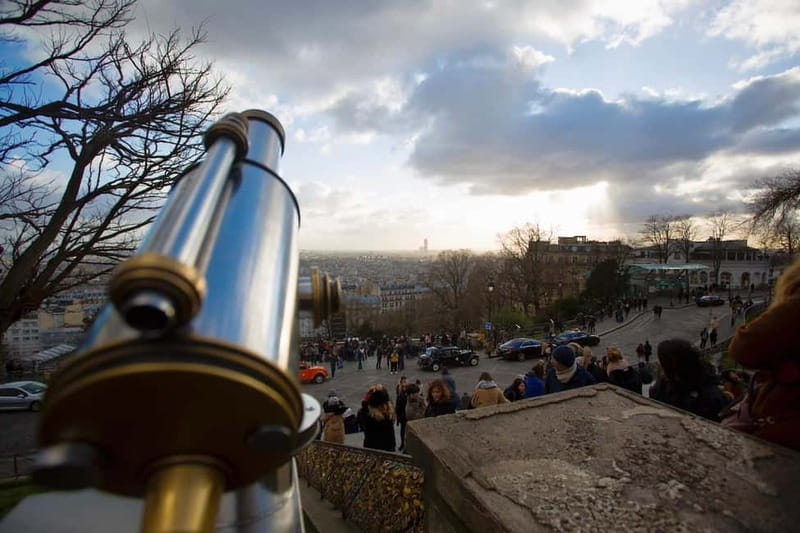
The route includes photo stops and scenic views on the way, but the main visual reward comes at Sacré-Cœur. The basilica sits at the top of Montmartre, about 130 metres above the rest of Paris, making this the city’s highest point.
You reach the basilica on foot, so the final approach is part of the experience rather than a quick transfer. The climb gives the tour a natural shape. You begin near the Moulin Rouge, pass through the hill’s streets, and finish above the city.
At the top, you can take a breath and look across Paris. The view is one of the clearest reasons to choose a walking tour of Montmartre instead of seeing the basilica in isolation. The route gives you a sense of the height and the neighborhood’s changing character before you reach the panorama.
Sacré-Cœur is also a practical endpoint for the walk. You may want extra time afterward to look around the basilica area, take photographs, or enjoy the view at your own pace. However, check the final meeting instructions carefully before booking. One part of the information gives 1 Parvis du Sacré-Cœur as the finish, while another says the activity ends back at the original Moulin Rouge meeting point. That is a meaningful difference when planning your next stop.
What two hours can realistically cover
Two hours is enough for an introduction to Montmartre, not a complete exploration of the district. You will cover the main route, hear about the artists and windmills, visit parts of the 18th arrondissement, and reach Sacré-Cœur. You will not have time to examine every street or spend a long period at each landmark.
I see the short duration as a strength for a first visit. You can learn the basic shape of Montmartre without giving up an entire morning or afternoon. It also fits well early in a Paris stay, since you can use the guide’s orientation to decide where you want to return later.
The tradeoff is that the schedule may feel brisk if you want extended photography or detailed time at Sacré-Cœur. The tour includes sightseeing and stops, but it is still a guided walk with a fixed two-hour window. If you prefer to linger often, plan additional time after the tour.
The small group should help the guide manage questions and pauses, but it does not change the distance or incline. Comfortable footwear is not a minor suggestion here. Flat, supportive shoes will make the uphill route much easier.
Is $40 a fair price?
At $40 per person, this is not the cheapest way to see Montmartre, but the value depends on what you want from the visit. You are paying for a two-hour guided walk, a small group limited to eight people, and a local German-speaking guide rather than simply paying to enter a sight.
The price makes more sense if you care about context. Montmartre’s streets can be enjoyable to wander alone, but it is easy to miss the connections between the artists, the windmill past, the 18th arrondissement, and the hilltop view. A guide gives those details a structure.
It is less compelling if you only want a quick look at Sacré-Cœur and a few photographs. The basilica area can be visited without this tour, and the experience does not include extra products or expenses. If you buy anything encountered during the walk, you pay separately.
The value is strongest for German-speaking visitors who want personal explanation in their own language and for first-time visitors who prefer a compact introduction. The rating of 4.9 from 67 reviews supports the idea that the format has worked well for many bookings, especially when the guide is warm and clear.
Who should book this Montmartre walk?
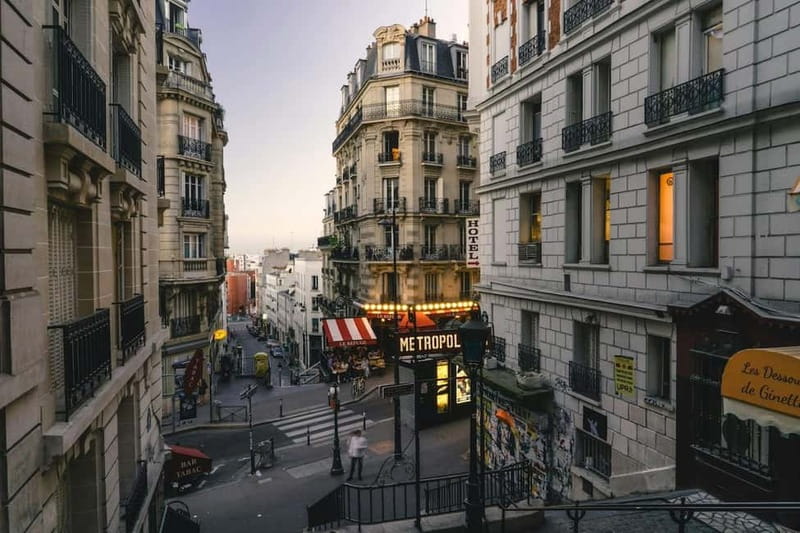
I would recommend it to you if you enjoy walking, local stories, and neighborhoods that reward looking beyond the obvious landmark. It suits first-time visitors who want a clear introduction to Montmartre and German-speaking visitors who prefer a German-language tour.
It also fits anyone who likes small groups. Eight people or fewer is a useful limit in narrow streets and makes the tour feel more like a guided conversation than a procession.
You should think twice if steep streets are a problem, if you use a wheelchair, or if you want a slow tour with long stops. This is an active walking experience, and the route rises toward the highest point in Paris.
Bring comfortable shoes and keep extra time available at the end. Since the supplied meeting information gives two possible finishing points, confirm whether you will finish at Sacré-Cœur or return to the Moulin Rouge.
Free cancellation is available up to 24 hours before the start for a full refund, and you can reserve now and pay later. Those terms help if your Paris schedule is still changing, but they do not replace checking the start time and endpoint before you commit.
Should you book it?
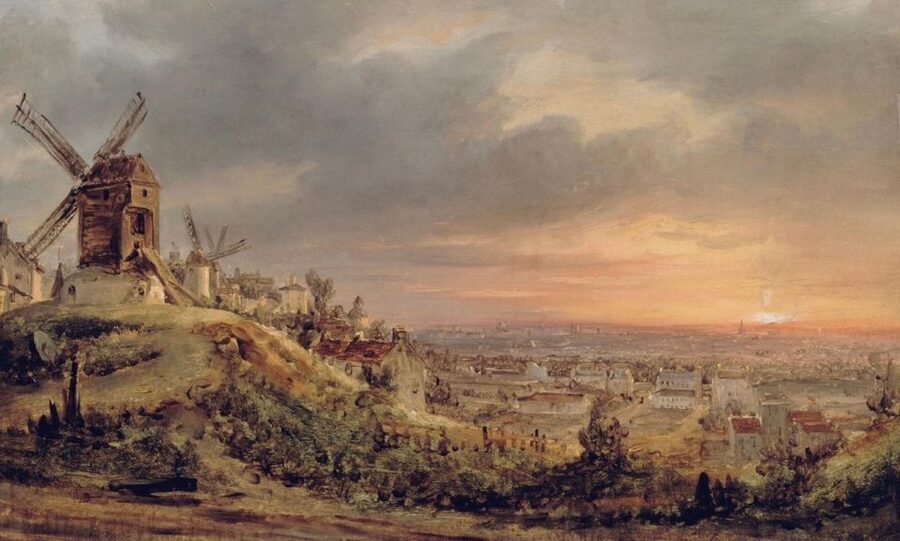
Book this tour if you want Montmartre explained through its artists, streets, history of windmills, and hilltop views rather than reduced to a visit to Sacré-Cœur. The small German-speaking group and the personal perspective from Paris through my eyes give it a clear advantage over a large, generic city walk.
Skip it if you need an accessible route or prefer to explore entirely at your own pace. For everyone else, $40 is a reasonable price for a focused two-hour introduction, especially if Nadine is leading and you value friendly storytelling. Just wear good shoes and clarify the endpoint before setting off.
FAQ
Where does the Montmartre tour start?
It starts in front of the Moulin Rouge theatre, at the ticket office marked Billetterie.
Where does the tour finish?
The route information gives 1 Parvis du Sacré-Cœur as the finish, but the meeting information says the activity ends back at the Moulin Rouge. Confirm the endpoint before the tour.
How long does the walking tour last?
The tour lasts two hours.
What language is the tour in?
The live tour guide speaks German.
How large is the group?
The group is limited to eight participants.
What price should I expect?
The listed price is $40 per person.
Is the tour suitable for wheelchair users?
No. The activity is not suitable for wheelchair users.
What should I wear?
Wear comfortable shoes because this is a guided walking tour through the uphill streets of Montmartre.
What landmarks are included?
The route begins at the Moulin Rouge, passes through Montmartre and the 18th arrondissement, and leads to Sacré-Cœur.
Can I cancel for a refund?
Yes. You can cancel up to 24 hours in advance for a full refund.
Recently added in Paris
- Private Transfers in Paris★ 5.0 · 75 reviews
- CDG – Euro Disney – CDG Two Way Private Shuttle Transfer★ 5.0 · 233 reviews
- Disneyland® Paris 1 Day Ticket with Transport from Paris★ 3.5 · 302 reviews
- Personalized Transport service from Disneyland to Paris★ 5.0 · 63 reviews
- Monet’s Gardens & House-Private Giverny Tour From Paris★ 4.5 · 137 reviews
- Guided tour Monet’s house and gardens/small group★ 4.5 · 68 reviews
- Giverny Monet House and Gardens Skip the line Walking tour★ 4.0 · 217 reviews
- Monet’s House and Garden & Giverny Village★ 4.5 · 39 reviews
Paris Tours, compared.


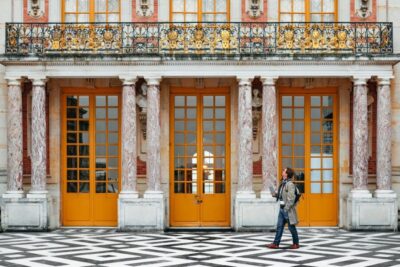
Versailles Palace and Gardens Full Access Ticket
Read our review →

Eiffel Tower Entry Ticket with Optional Summit Access
Read our review →

Louvre Guided Tour with Reserved Access & Boat Cruise
Read our review →