
REVIEW · NORMANDY TOURS
Private Tour of American Sites with an Expert Guide from DDAY
Normandy’s beaches still ask hard questions. This private eight-hour tour links Sainte-Mère-Église, Utah Beach, Pointe du Hoc, Omaha Beach, and the American Cemetery with an expert English-speaking guide, giving you both the broad military story and time for personal questions. I like the private format, which lets your group set the pace, and I like how the route combines airborne history, beach landings, battlefield ground, and remembrance. The main drawback is that lunch is not included, and the day covers a lot of territory, so each stop has a firm time limit.
The price is $1,081.32 for up to eight people, not per person. That makes the tour costly for one or two people, but potentially good value for a larger family or group that wants a dedicated guide and air-conditioned transport. Guides including Eric, Alex, Victor, Katell, and Sophie have been praised for their warmth, storytelling, and ability to adapt the day to family history.
In This Review
- Key points to know before booking
- Why this private Normandy tour works
- Sainte-Mère-Église and the airborne opening
- Utah Beach and the first American beach landing
- Pointe du Hoc and the Ranger assault
- Omaha Beach and the hardest part of the day
- Colleville-sur-Mer and the American Cemetery
- Guides who bring more than dates and battle maps
- Price, group size, and what you actually receive
- Who should book this private D-Day tour
- FAQ
- How long does the tour last?
- Which sites are included?
- Are the museums included?
- Is lunch included?
- How many people can join the private tour?
- Can I cancel for a full refund?
- Should you book it?
Key points to know before booking
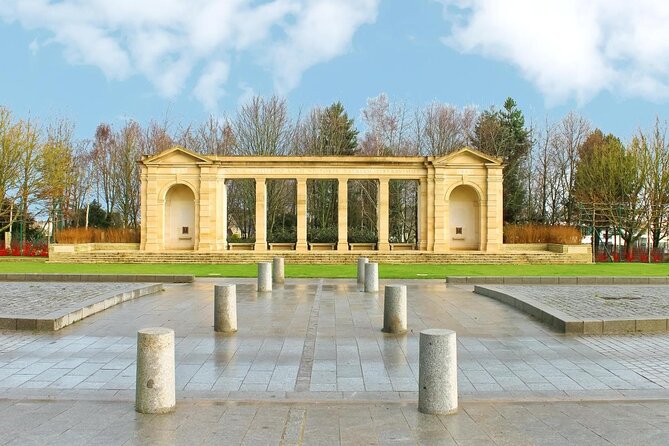
- Five major American D-Day sites in one day: The route covers Sainte-Mère-Église, Utah Beach, Pointe du Hoc, Omaha Beach, and the American Cemetery at Colleville-sur-Mer.
- A private group of up to eight: You will not share the vehicle or guide with unrelated people, which gives you room to ask questions and request extra attention at a meaningful site.
- Personal military research can shape the day: Alex researched one family’s relative, found the crash site and memorial connected to his death, and added a German cemetery stop along the way.
- Omaha receives a shorter scheduled stop: The planned visit is 30 minutes, though Eric spent extra time there for a guest whose father landed with the Big Red One.
- Museum admission is not part of the plan: The stops themselves are included, but the Airborne Museum at Sainte-Mère-Église and Utah Beach Museum are optional paid additions.
- Plan for lunch: You have about eight hours on the road, and food is not included, so ask your guide about the best place to pause or bring something with you.
Why this private Normandy tour works
A good D-Day tour needs more than a list of beaches. Normandy is spread out, and the significance of each place can blur if you are simply driving from one field to the next. This route gives you a clear sequence: American paratroopers first, then the Utah landings, the dangerous assault at Pointe du Hoc, the disaster and recovery at Omaha, and finally the graves of those who died.
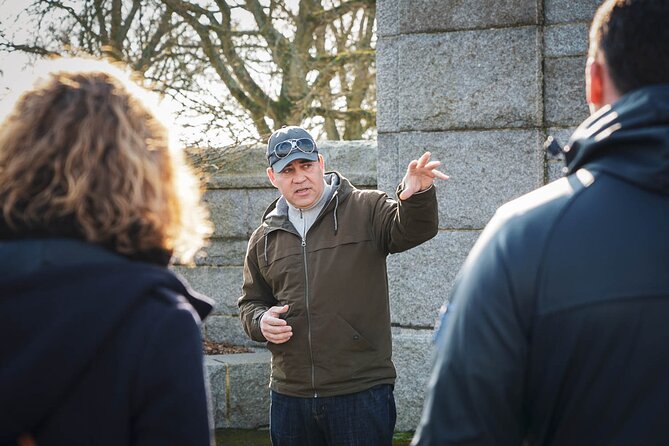
I especially like the private setup for families. You can ask basic questions without feeling self-conscious, or spend longer on a relative’s regiment, landing area, or grave. The guide can also adjust the tone for children. One family found that Eric kept a 10-year-old engaged, while another family appreciated the way he handled a deeply personal visit connected to a father who landed at Omaha.
The route is also useful for first-time visitors who want a strong overview. You will not study every American unit or every battlefield, but you will come away with a workable mental map of the western Normandy landings. If you want a very detailed military tour, you may need a second day for the British, Canadian, and additional American sectors.
The eight-hour length includes driving between sites, so do not expect eight full hours of walking or museum time. The listed stops add up to about four hours and 15 minutes. The rest of the day is used for transport, guiding, and a lunch break. That balance is practical, but the schedule will feel full.
A few more Bayeux outings to set side by side
- Normandy American D-Day Beaches Full Day Tour from Bayeux
★ 5.0 · 2,103 reviews - Normandy American D-Day Experience – Group tour from Bayeux
★ 5.0 · 1,566 reviews - Normandy Beaches Half-Day Afternoon Trip from Bayeux (A2)
★ 4.5 · 1,116 reviews
Sainte-Mère-Église and the airborne opening
Your first stop is Sainte-Mère-Église, where American paratroopers became some of the first Allied soldiers on the ground in Normandy during the night of June 5 to 6, 1944. The town is closely tied to the airborne part of the invasion, and the guide uses it to explain what happened before most troops reached the beaches.
You have about one hour here. That is enough to hear the main story and look around, but it is not a long museum visit. The Airborne Museum is an optional addition, not part of the included experience. If you want to enter, you should allow for the extra cost and ask how it fits the schedule.
This stop works well as an opening because it reminds you that D-Day was not only a beach operation. Paratroopers were dropped inland to disrupt German movement and support the forces coming ashore. The night was confused and dangerous, and the guide can help connect those scattered actions to the larger invasion plan.
For families, Sainte-Mère-Église may be one of the easiest places to introduce the subject. The town setting is more approachable than a cemetery or a battered cliff position, and a good guide can explain the risks without reducing the story to a dramatic anecdote.
Utah Beach and the first American beach landing
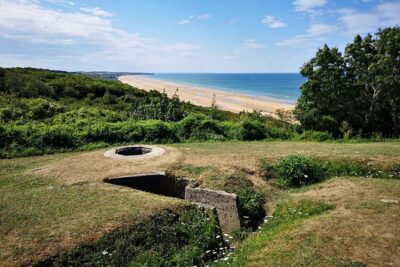
At Utah Beach, the focus shifts from airborne troops to the men of the 4th Infantry Division. This was the first Normandy beach reached by American ground forces, and the guide explains how the landing began under enemy fire.
The scheduled time is about 45 minutes. You can expect a focused explanation of the beach sector, the troops involved, and why the operation moved forward despite confusion and danger. The Utah Beach Museum is optional and not included, so decide in advance if you want to add it.
Utah often works as a useful contrast with Omaha. The two beaches are not far apart in the larger story, but their experiences were very different. A guide can help you see why one landing moved with less disaster while the other became a symbol of the invasion’s worst losses.
The broad shore can make the scale of the landing easier to grasp. You can look out across the same open approach that exposed soldiers to fire, then hear how planning, geography, unit objectives, and battlefield confusion shaped the result. This is one of the places where a guide adds real value. Without context, a beach can look like just another stretch of coast.
Pointe du Hoc and the Ranger assault
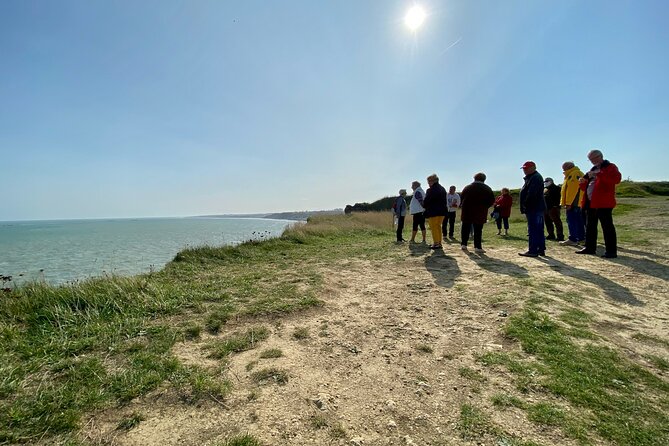
Pointe du Hoc is the most physically dramatic stop on the route. The 2nd Ranger Battalion, under Colonel Rudder, was assigned the dangerous task of scaling the cliffs and attacking German gun positions. The cliffs were a poor place for a landing, but the position mattered enough to justify the risk.
You have about 45 minutes here. The time is enough to understand the operation and see the ground, though it may feel short if you want to examine every part of the site. The terrain is uneven in places, so wear practical shoes and keep your attention on where you walk.
This stop gives the day a strong sense of place. At Utah and Omaha, you look across broad beaches. At Pointe du Hoc, you see the steep obstacle that made the Rangers’ assignment so difficult. The physical setting helps you understand why the mission demanded unusual courage and why the planners considered the German position important.
It is also a good moment to ask about the difference between military objectives and what actually happened on the ground. D-Day plans were built around maps, timing, tides, and estimated enemy positions. Once the assault began, units had to work with incomplete information and heavy losses. Your guide can tie those problems to the larger story without turning the stop into a simple tale of success or failure.
More private outings in Bayeux:
- Private D-Day Experience from Bayeux
★ 5.0 · 573 reviews - Private guided American D-Day Tour from Bayeux
★ 5.0 · 255 reviews - Normandy Battlefields D-Day Private Trip with VIP Services from Paris
★ 5.0 · 240 reviews - Private Day Tour including Normandy Landing Beaches & Battlefields from Bayeux
★ 5.0 · 172 reviews
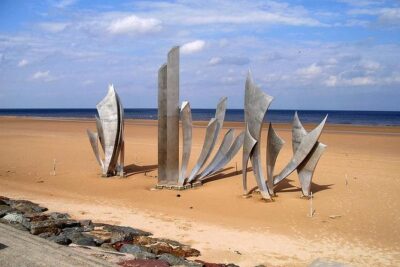
Omaha Beach and the hardest part of the day
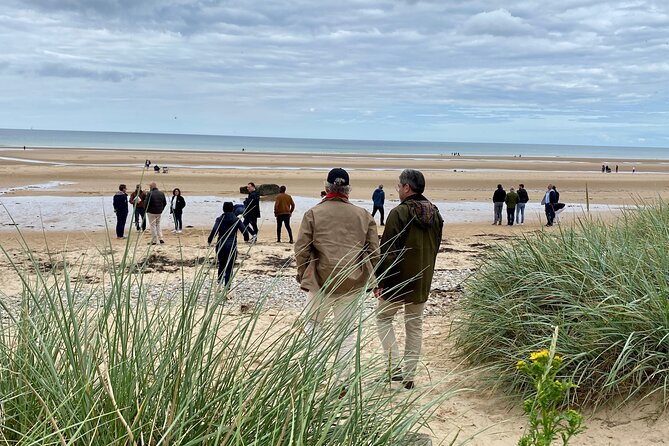
Omaha Beach receives a planned 30-minute visit, the shortest stop on the route. That may sound brief for the best-known American beach, but the guide uses the time to explain why the landing became so costly and why the first hours were so chaotic.
The beach stretches for roughly eight kilometers, so you cannot cover its entire story in one quick visit. The value comes from standing in the area, then hearing how terrain, defensive fire, tides, troop confusion, and landing problems combined against the Americans.
This is the stop where you should speak up if your family has a personal connection. Eric spent extra time at Omaha for one guest whose father landed there with the 1st Infantry Division, known as the Big Red One. He showed the landing area and the route toward a church where the unit set up camp, then marked the journey on a map for the family to keep.
That kind of adjustment is one of the strongest reasons to book a private tour. A large coach group usually cannot pause for one family’s story. Here, your guide may be able to give a personal connection the attention it deserves, although you should share the details before the tour so the guide has time to prepare.
Omaha can also be emotionally heavy. You may want a little quiet after the explanation. The schedule does not promise that, but the private format gives you a better chance to ask for a slower pace if the moment calls for it.
Colleville-sur-Mer and the American Cemetery
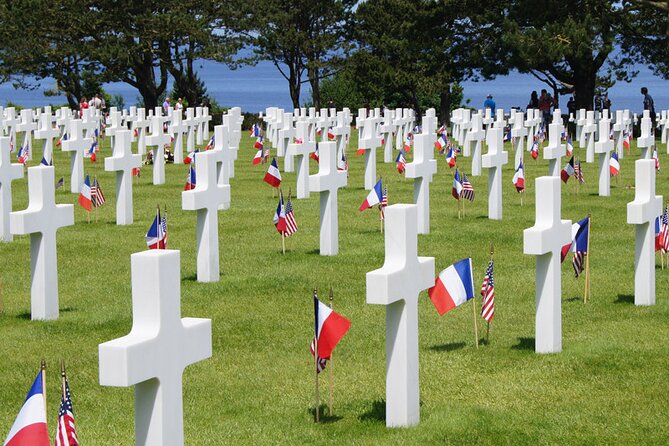
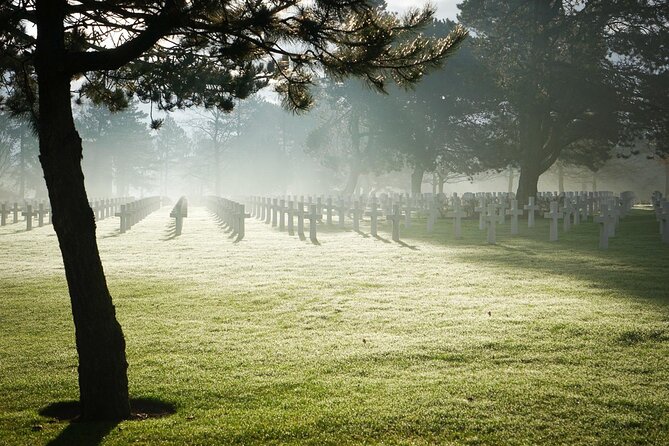
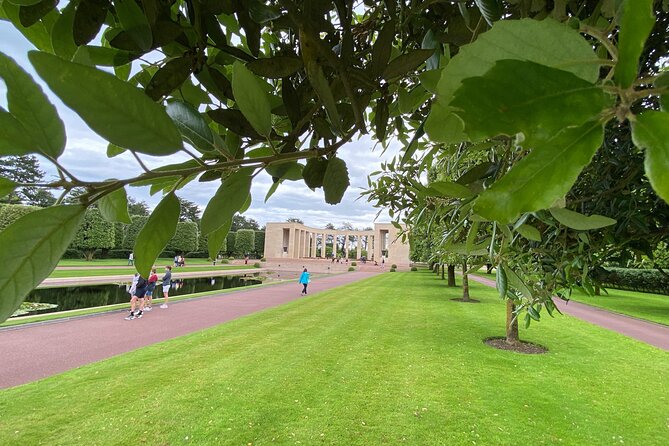
The final major stop is the Normandy American Cemetery at Colleville-sur-Mer, with about one hour set aside. After a day of troop movements, landing plans, and battlefield decisions, the cemetery changes the focus from operations to people.
The setting invites a quieter kind of attention. The guide can help you understand how the sites visited earlier connect to the men buried here. By this point, names and unit movements are no longer abstract. You have seen the beaches and cliffs, and the cemetery gives those events a human cost.
This stop is especially important if you are visiting a relative’s grave. Alex prepared in advance for one family, researched the soldier’s service record, and discovered that the man had died when his aircraft, carrying munitions and paratroopers, was shot down over Magneville. The family was then taken to a monument at the crash site, where the names of those killed were listed.
Alex also offered a stop at a German cemetery along the way. That comparison reportedly made the difference between the two burial sites clear. If your family has a specific soldier connected to Normandy, send the name and service information before the tour. The company cannot promise every extra stop, but this example shows how useful advance preparation can be.
One hour is a sensible amount of time for the cemetery, though a personal visit may require more. If you need to locate a particular grave, tell the guide early. A guide may know how to help you make the best use of the visit, but the tour still has to return to Bayeux on schedule.
Guides who bring more than dates and battle maps
The strongest praise for this experience centers on the guides. Eric is described as attentive, funny, and strong at explaining Normandy’s history to both adults and children. His work with the Big Red One family shows a willingness to adapt the day rather than deliver a fixed speech.
Alex has been singled out for detailed family research and a quick wit. His preparation turned a standard battlefield visit into a personal pilgrimage, linking a service record, a crash site, a monument, and the American Cemetery.
Victor is praised for a friendly manner and clear explanations. Katell handled a group that included a history major and several people with substantial background knowledge, which suggests she is comfortable with detailed questions. Sophie is praised for solid knowledge and for making a long day feel exceptional.
The guide you receive is not guaranteed by name, so you should not book solely because you want one particular person. Still, the pattern is clear: the company’s strength is its human guiding, not just its vehicle and route.
Price, group size, and what you actually receive
At $1,081.32 per group of up to eight, the value depends heavily on your party size. For eight people, the cost works out to about $135 per person. For four, it is about $270 per person. For two, it becomes a major expense.
You are paying for a private day, an English-speaking expert guide, and an air-conditioned vehicle. You are also paying for the ability to ask questions, discuss family history, and potentially adjust the emphasis at important sites. That can be worth more than a cheaper shared excursion if Normandy is a major reason for your trip.
The price does not include lunch or optional museum admission. Keep those extras in your budget. The tour begins at 9:00 a.m. and ends back at the meeting point in Bayeux. Hotel pickup is offered, but you need to provide your hotel name so the meeting can be arranged. The listed meeting point is Place du Québec in Bayeux, so confirm the exact pickup details before the day begins.
The tour is offered in English. Service animals are allowed, and most people can participate. It is near public transportation, though the key convenience is the provided vehicle, since these sites are spread across the Normandy area.
Who should book this private D-Day tour
I would choose this tour for a family group, a small group of friends, or anyone making a serious visit to a relative’s grave. It is also a good fit if you want one strong American-focused day and do not want to manage Normandy’s roads, distances, and battlefield locations yourself.
It suits children better than a lecture-heavy museum day, especially with a guide who can adjust the stories and keep the pace moving. The private setting also helps if one person in your group has strong historical knowledge and wants to ask detailed questions.
You should think twice if you want long museum visits, extensive time at every beach, or a full survey of British and Canadian sectors. This route is specifically centered on American sites. One day gives you an excellent foundation, but not every detail.
The tour is highly rated, with all listed ratings recommending it, but the practical question is not simply whether the day is good. Ask yourself if you value a dedicated guide enough to pay a group price. If you do, the personal attention, flexible storytelling, and family-history help can make the cost worthwhile.
FAQ
How long does the tour last?
The tour lasts approximately eight hours. It begins at 9:00 a.m. and returns to the meeting point in Bayeux.
Which sites are included?
The route includes Sainte-Mère-Église, Utah Beach, Pointe du Hoc, Omaha Beach, and the American Cemetery at Colleville-sur-Mer.
Are the museums included?
No. The Airborne Museum at Sainte-Mère-Église and the Utah Beach Museum are possible additional visits, but museum admission is not included in the tour price.
Is lunch included?
No. Lunch is not included, so plan for that expense and ask about timing when you meet your guide.
How many people can join the private tour?
The price covers one private group of up to eight people. Only your group participates.
Can I cancel for a full refund?
Yes. You can cancel at least 24 hours before the scheduled start time for a full refund. Cancellations or changes made less than 24 hours before the start are not accepted for a refund.
Should you book it?
Book this tour if you want the American D-Day story explained on the actual ground, with a guide who can respond to your questions and give family connections proper attention. The route is well chosen, the private vehicle keeps the day practical, and the cemetery visit gives the military story a fitting final pause.
Skip it if your main goal is to spend hours inside museums or cover every Normandy beach in detail. For most small groups staying in Bayeux, though, this is a strong one-day introduction, and it becomes especially valuable when you share a soldier’s name or family story before setting out.
Recently added in Bayeux
- WW2 Jeep or Dodge truck tour of the Omaha Beach site★ 5.0 · 51 reviews
- Normandy Battlefields D-Day Private Trip with VIP Services from Paris★ 5.0 · 240 reviews
- 2- to 6-hour sidecar excursion on the D-Day Landing Beaches★ 5.0 · 131 reviews
- Private vintage sidecar tour of the D-Day Landing Beaches★ 5.0 · 130 reviews
- Private Full day American D-Day Guided Tour in Bayeux★ 5.0 · 133 reviews
- Normandy U.S. D-Day Sites Half Day Tour From Bayeux★ 5.0 · 325 reviews
- Private guided Allied D-Day Tour from Bayeux★ 5.0 · 45 reviews
- Private American landing beaches tour from Bayeux★ 5.0 · 36 reviews
Normandy Tours, compared.
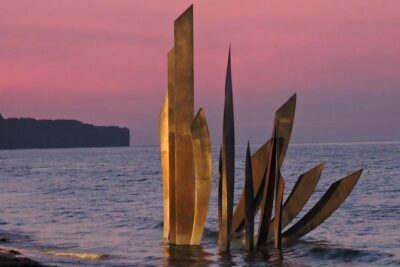
Normandy American D-Day Beaches Full Day Tour from Bayeux
Read our review →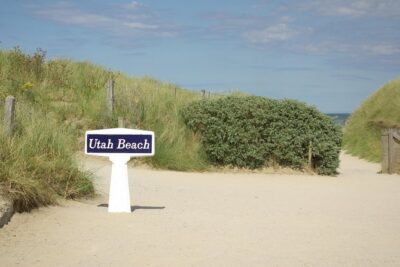
Normandy American D-Day Experience – Group tour from Bayeux
Read our review →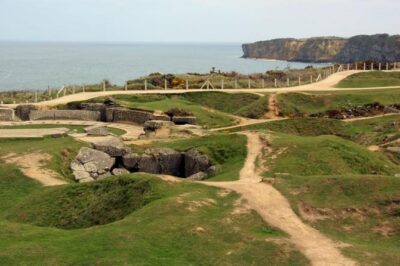
Normandy Beaches Half-Day Afternoon Trip from Bayeux (A2)
Read our review →
Omaha Beach D-Day Experience – Afternoon group tour from Bayeux
Read our review →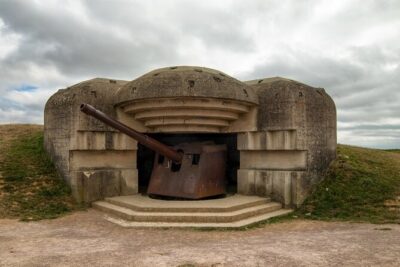
Normandy Battlefields Tour – American Sites (A3)
Read our review →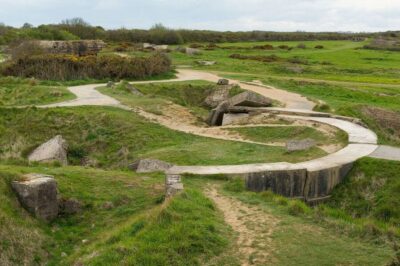
American D-Day Sites in Normandy Half-Day Tour
Read our review →Browse the lists this tour appears in