

REVIEW · LYON TOURS
Storytelling tour of the Vieux-Lyon for children in French
Stories make old stones speak. This 90-minute walk turns Vieux-Lyon into a Renaissance adventure, with a professional actor guiding children through ancient lanes and famous traboules. I like the clear age focus, 6 to 10, and the way the story gives children a reason to notice Lyon’s buildings rather than simply walk past them. I also like the central plot: Lisette wants to learn to read and work in Lyon’s new printing trade, a subject with real emotional weight for children.
The main consideration is language. The tour is French only, so your child needs enough French to follow a spoken story. Cobblestones and old streets also call for comfortable shoes. The 4.8 rating from 60 reviews is encouraging, with particular praise for the theatrical guides Chloé and Alexandre, but the experience will work best for families who enjoy performed storytelling rather than a standard facts-and-dates tour.
In This Review
- Key things to know before meeting Lisette
- A children’s story with real stakes
- Starting at Place Saint-Jean
- Walking through Vieux-Lyon’s ancient streets
- Finding the famous traboules
- Meeting real Lyon figures inside a fictional adventure
- Why the theatrical guide matters
- The right age, and where the edges are
- Is $20 a good value for 90 minutes?
- Practical details for a smoother outing
- Who should book the Lisette tour?
- Should you book this French storytelling tour?
- FAQ
- How long does the storytelling tour last?
- What age group is the tour designed for?
- Is the tour available in English?
- Where does the tour meet?
- What does the tour visit?
- Must an adult accompany each child?
- What should I bring?
Key things to know before meeting Lisette
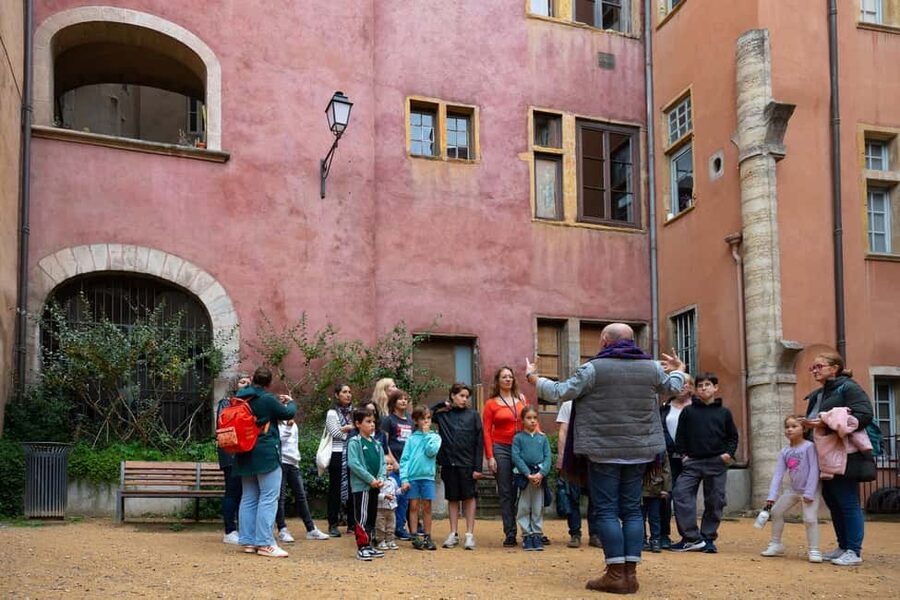
- The story follows a servant girl with a powerful dream: Lisette wants to learn to read and become an apprentice at Lyon’s new printing works.
- A professional actor leads the walk: Chloé and Alexandre have both been praised for holding children’s attention through strong stage presence.
- The setting is real Renaissance Lyon: Ancient streets, historic buildings, and traboules become part of the story.
- The tour is built for ages 6 to 10: A five-year-old may understand parts of it, while older children can still enjoy the acting and historical details.
- It lasts 90 minutes: That is long enough to create a proper story, but short enough for most children to manage.
- The meeting point is easy to identify: Find the guide beside the fountain in the center of Place Saint-Jean, wearing a Cybèle badge.
A children’s story with real stakes
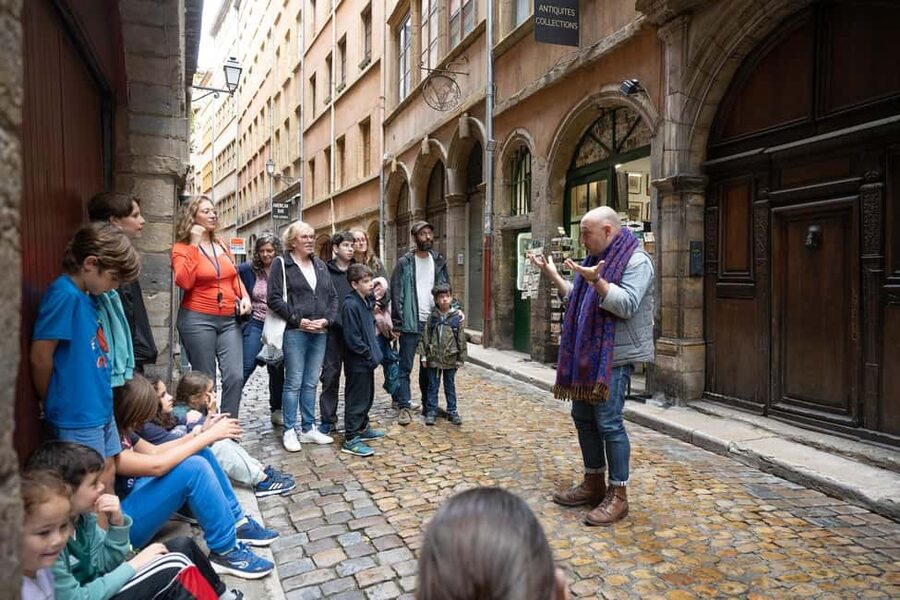
The clever idea here is to teach Lyon through one child’s problem. Lisette is a young servant in a wealthy bourgeois household during the Renaissance. She dreams of reading and hopes to become an apprentice in the city’s new printing works.
That goal gives the tour more substance than a simple treasure hunt. Your child is not just being shown a pretty street. They are following someone who wants an education but must keep that wish secret. With help from her friend Diane, Lisette tries to move toward a better future while facing people who want to stop her.
For a child, the plot offers friendship, danger, courage, and a clear question: can someone from a low social position learn to read? For you, it provides a natural doorway into Lyon’s social and cultural past. The story can help explain why reading mattered, why printing was important, and why a servant’s dream could create trouble.
The tour also brings in real figures from Lyon’s history. The fictional characters meet these historical people along the route, linking the made-up adventure to the actual city. That blend is useful for younger children, who may remember Lisette long after they forget a list of dates.
A few more Lyon outings to set side by side
- Lyon City Hop-on Hop-off Sightseeing Bus Tour
★ 4.0 · 1,614 reviews - Lyon: Musée de l’illusion Entrance Ticket
★ 3.9 · 1,023 reviews - Vieux Lyon Cultural & Historical Walking Guided Tour (English)
★ 5.0 · 942 reviews
Starting at Place Saint-Jean
Your meeting point is the center of Place Saint-Jean, next to the fountain. Look for the guide wearing a Cybèle badge. This is a practical arrangement because Place Saint-Jean is one of the most recognizable spots in Vieux-Lyon, and the fountain gives you a clear landmark.
Arrive ready to walk. You will be moving through old streets rather than gathering in one indoor space. The route includes cobblestones, so sturdy, comfortable shoes matter. Children who are tired, wearing stiff footwear, or not used to uneven paving may find the walk less easy than the 90-minute length suggests.
The guide’s acting begins the moment the story takes hold. That matters with children. A conventional guide may need to work hard to win their attention, while a professional actor can use voice, gesture, expression, and suspense to make the next street feel important.
The strongest praise has gone to the guides’ performance. Chloé was praised for captivating an entire family, while Alexandre was described as punctual and fully committed to his role. One parent even felt his theatrical talent deserved an Oscar. That kind of energy is central to the experience, not a small bonus.
Walking through Vieux-Lyon’s ancient streets
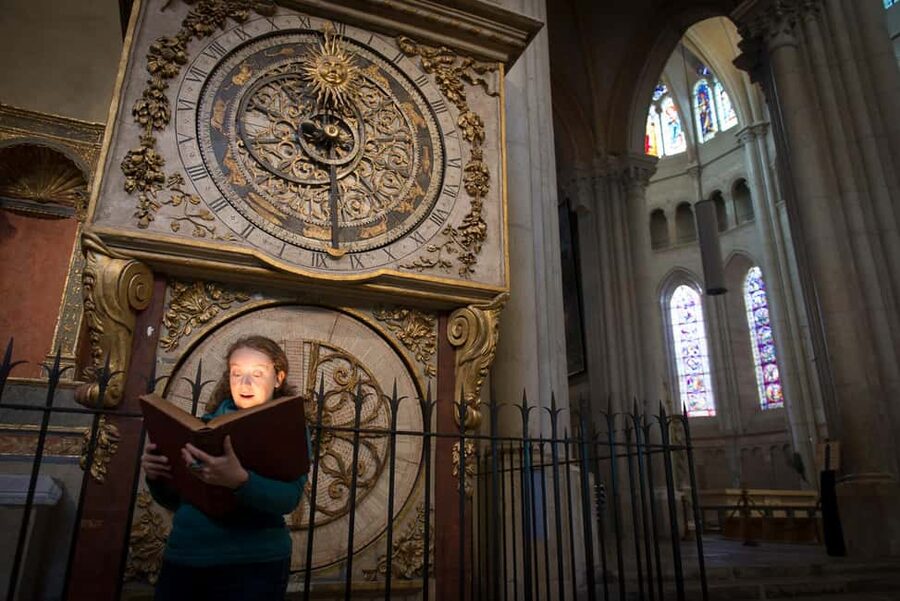
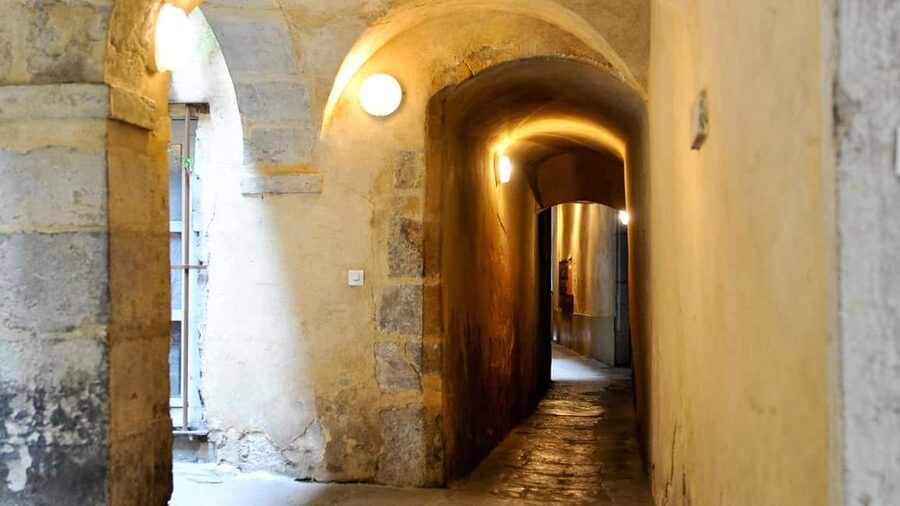
Once the story begins, the old quarter becomes Lisette’s world. The ancient lanes give the setting a strong sense of place without needing elaborate scenery. Tall historic façades, narrow passages, and worn paving help children picture Lyon as a living Renaissance town.
The route visits the district’s most emblematic places, though the exact sequence of stops can vary. I would not book this expecting a complete architectural survey of every famous building. Instead, expect selected sites to serve the story. A doorway, lane, or passage becomes meaningful because it is tied to Lisette’s next problem.
That is a good approach for children aged 6 to 10. They usually remember a building better when it is connected to a person and a decision. The architecture does not have to compete with the plot. It supports it.
Parents also get something from the walk. The story introduces elements of Lyon’s Renaissance architecture in a way that does not require children to stand still for a long lecture. One family with a 10-year-old and a 12-year-old found that they learned historical and architectural details while staying absorbed in Alexandre’s performance.
Still, the balance favors storytelling over exhaustive information. If you want technical detail about construction, church interiors, or Lyon’s political history, you should add a separate adult-focused tour. This experience is designed to make the quarter accessible to children first.
Finding the famous traboules
The traboules are among the most appealing parts of a Vieux-Lyon walk. These hidden passageways connect streets and courtyards through buildings, giving the district a sense of surprise. Here, they are not treated as a checklist of secret corridors. They form part of Lisette’s route and help children feel that they are moving through an adventure.
That story framing is especially helpful. A child may not care much about the word architecture, but a hidden passage can immediately spark curiosity. The route’s use of traboules also gives the walk variety. You are not simply following one long street from one landmark to the next.
Because this is an old district, conditions can be uneven. Keep children close and expect cobblestones. The activity is listed as wheelchair accessible, but the historic paving and passageways may still require extra care. If access needs are important for your family, it is sensible to confirm how the specific route handles the old streets before booking.
The traboules are also working parts of the neighborhood, not a stage set built for the tour. That means the guide must balance storytelling with respect for the setting. The theatrical approach should make the passages memorable without turning the walk into a noisy performance for its own sake.
Same city, a slower kind of day:
- Lyon: Private Walking Tour of “Traboules” in the Old Town
★ 5.0 · 866 reviews - Lyon: City Highlights Walking Tour
★ 4.9 · 847 reviews - Lyon Highlights & Secrets Walking Guided Tour (small group) including Funicular
★ 5.0 · 831 reviews - Highlights and Hidden Gems of Lyon Guided Walking Tour (English)
★ 5.0 · 750 reviews
Meeting real Lyon figures inside a fictional adventure
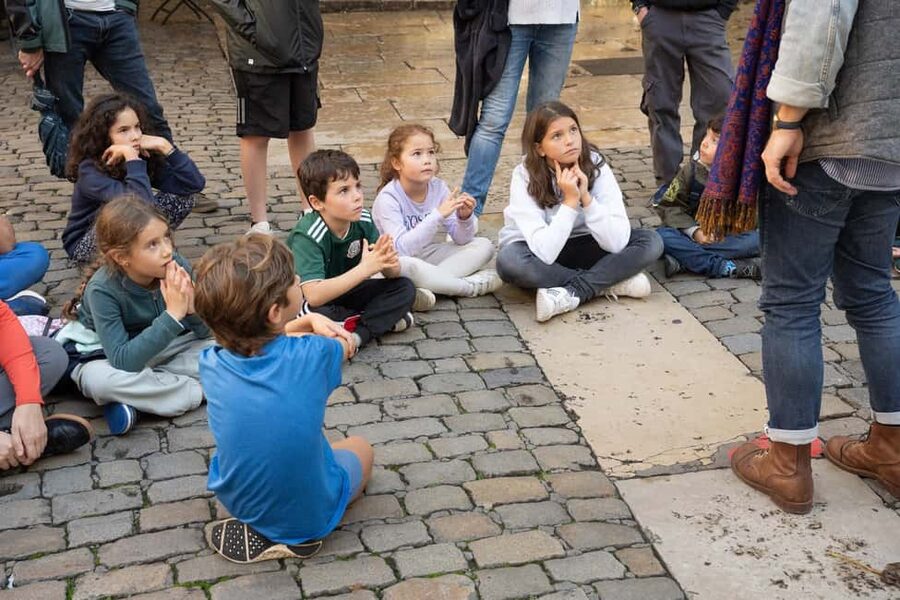
Lisette is fictional, but the tour brings her into contact with real people from Lyon’s past. This gives the story a useful two-level structure.
Children can follow the immediate adventure: Lisette and Diane trying to help her learn to read. At the same time, you can point out that the places and historical figures belong to Lyon’s real past. The story becomes a bridge between imagination and history.
The printing angle is one of the most interesting details. Lisette’s wish to become an apprentice in a new printing works gives the tour a clear link to Renaissance change. It also makes literacy personal. Rather than hearing that printing transformed society in the abstract, children see how access to reading might affect one girl’s life.
The plot includes obstacles and people who try to stop Lisette. That creates tension, but it also makes the social rules of the period easier to discuss afterward. You can ask your child why Lisette had to learn in secret, why Diane helped her, and whether the people blocking her were acting fairly.
The tour does not promise a formal lesson or a worksheet. Its teaching happens through the character and the places. That is a strength for children who learn well through stories, though a child who wants lots of direct explanation may need you to fill in some background later.
Why the theatrical guide matters
The most repeated praise concerns the guide’s ability to hold children’s attention. The tour is led by a professional actor, and the difference is important. A guide who simply recites information might lose a six-year-old in a few minutes. An actor can give Lisette a voice and make the group care about what happens next.
The comments about Chloé and Alexandre point to two useful qualities: strong performance and reliable organization. Chloé was praised for captivating both adults and children. Alexandre was praised for being punctual and fully committed to the role. That combination is valuable on a family outing. You want drama, but you also want the walk to begin properly and keep moving.
The theatrical style can also help parents relax. You do not have to invent games or constantly ask your child to pay attention. The guide carries the performance. You can listen, help your child over difficult paving, and enjoy the historical setting yourself.
There is one reasonable limit. Children respond differently to acting. Some will follow the character eagerly; others may prefer direct explanations or interactive tasks. The tour’s success depends partly on French comprehension and your child’s interest in performed stories.
The right age, and where the edges are
The official target is children from 6 to 10. That is the range I would use when deciding. A six-year-old who understands French and likes stories should have a good chance of following the main plot. A ten-year-old may appreciate the social questions and Renaissance setting more fully.
The experience can stretch beyond that range in both directions, but not equally for every child. A five-year-old may catch the emotional parts without understanding all the history. One parent found the story engaging for a five-year-old, but said the child did not always understand it. That does not make the tour unsuitable, but it means you may need to explain parts of the story afterward.
Older children can also enjoy it. A 12-year-old was reported to have stayed captivated alongside a 10-year-old, especially because of the acting and historical details. Still, the tour is not designed as a teen-focused history walk. Older children who want serious architectural or historical depth may find it light.
French ability is the key test. Since the guide speaks only French, do not treat this as a language-neutral activity. Children do not need to translate every sentence to enjoy a dramatic scene, but they need enough French to understand the basic action and follow Lisette’s goal.
Is $20 a good value for 90 minutes?
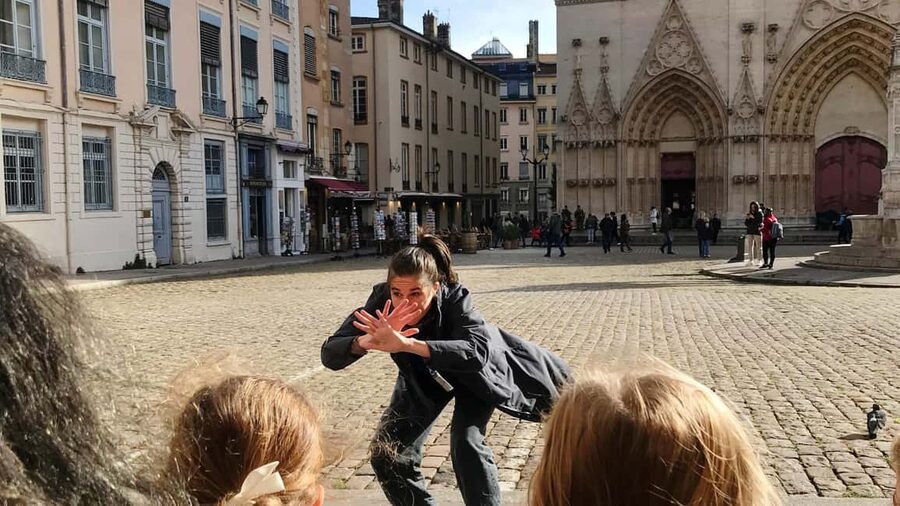
At $20 per person, the tour asks you to pay for more than a walk through a historic district. You are paying for a prepared story, a live professional actor, access to a guided route through Vieux-Lyon, and a child-centered way to encounter the traboules.
That is good value if your family would otherwise struggle to engage with the old quarter. The price can save you from trying to turn an adult walking tour into a children’s activity. A strong performance also gives the outing a clear shape, from Lisette’s introduction through her difficulties and encounters.
The value is less obvious if your child speaks little French, dislikes acting, or is likely to tire on cobblestones. You might see the same streets for free, but you would not get the narrative structure or professional performance. The question is not simply how much of Lyon you cover. It is whether your child will remember what they saw.
The 90-minute duration feels well judged for this age group. One eight-year-old was described as connecting well with the story, and the length was considered just right. Ninety minutes gives the guide time to develop Lisette’s problem without turning the outing into an all-day commitment.
Practical details for a smoother outing
The tour begins beside the fountain at Place Saint-Jean. Look for the Cybèle badge, and make sure the whole family has comfortable shoes before setting out.
Children must be accompanied by an adult. That adult role is useful beyond supervision. You can quietly explain a word, help connect a real building to the story, or revisit the main plot after the tour.
Keep these points in mind:
- The tour is in French only.
- The advertised duration is 90 minutes.
- The route uses old streets and cobblestones.
- Wheelchair accessibility is listed, but historic paving can still make movement slower.
- You can cancel up to 24 hours before the activity for a full refund.
- Reserve now and pay later if you want to keep your plans flexible.
The starting time is not fixed in the information provided, so check availability for the date you want. That also lets you plan the walk around meals and the rest of your time in Lyon.
Who should book the Lisette tour?
I would choose this for a family with a French-speaking child aged 6 to 10 who enjoys stories, characters, and a little suspense. It is particularly useful early in a Lyon visit because it gives children a memorable first look at Vieux-Lyon and the traboules.
I would also recommend it to parents who want historical context without a formal lecture. The tour makes literacy, printing, social class, and Renaissance architecture feel connected to one child’s life.
I would think twice if your child is outside the target age, understands very little French, or needs a completely flat route. You may still enjoy the old quarter, but this particular format depends on language, walking, and attention to a live performance.
Should you book this French storytelling tour?
Book it if your child can follow French and will respond to a professional actor playing out a historical adventure. The strongest evidence is the repeated praise for the guides’ theatrical skill, especially Chloé and Alexandre, along with the high 4.8 rating from 60 reviews.
The best reason to go is not simply to see a traboule. It is to give your child a reason to care about the people who once used Lyon’s streets. If Lisette’s wish to read stays with your child, the tour has done more than fill 90 minutes. It has made the city easier to remember.
FAQ
How long does the storytelling tour last?
The tour lasts 90 minutes.
What age group is the tour designed for?
It is specially designed for children from 6 to 10 years old.
Is the tour available in English?
No. The live tour is in French only.
Where does the tour meet?
Meet in the center of Place Saint-Jean, next to the fountain. The guide will be wearing a Cybèle badge.
What does the tour visit?
The route explores the ancient streets of Vieux-Lyon and its famous traboules, or hidden passageways. It also visits emblematic places connected to the story.
Must an adult accompany each child?
Yes. Children must be accompanied by an adult.
What should I bring?
Wear comfortable shoes because the tour takes place on old streets with cobblestones.
Recently added in Lyon
- 1 or 2-Hour Pedicab tour of Lyon★ 5.0 · 213 reviews
- Northern Rhône Valley Wine tour from Lyon Half Day★ 4.5 · 113 reviews
- Taste Wine in Lyon: Burgundy, Beaujolais, Rhône, and more★ 5.0 · 211 reviews
- Storytelling tour of Old Lyon★ 5.0 · 39 reviews
- Segway Tour by ComhiC – Presqu’île – 1h★ 5.0 · 26 reviews
- Lyon Old Town Private Food Tour with 6 French Delicacies & Wines★ 5.0 · 85 reviews
- Segway – Ride along the rivers 1h30★ 5.0 · 43 reviews
- Northern Rhône Valley From Lyon Full day★ 5.0 · 150 reviews
Lyon Tours, compared.

Lyon City Hop-on Hop-off Sightseeing Bus Tour
Read our review →

Vieux Lyon Cultural & Historical Walking Guided Tour (English)
Read our review →
Private Walking Tour of “Traboules” in the Old Town
Read our review →

Lyon Highlights & Secrets Walking Guided Tour (small group) including Funicular
Read our review →
Highlights and Hidden Gems of Lyon Guided Walking Tour (English)
Read our review →
Food Tour in Lyon – A Full Taste of France by Do Eat Better
Read our review →Browse the lists this tour appears in