
REVIEW · WALKING TOURS
Lyon: City Highlights Walking Tour
Lyon reveals itself one passage at a time. This walking tour links the city’s big sights with local corners, Roman ruins, secret traboules, and useful food advice, making it a smart first look at Lyon. I like the way Aidan and Ryan keep the tour personal, and I like the choice between a focused 90-minute route and a fuller two-hour outing. The main consideration is the walking: the longer option covers about 5 kilometers, and its many stops can feel brisk if you want long, quiet visits.
The price is about $25 per person, which is reasonable for a live small-group tour that includes the Fourvière funicular on the longer route. Still, you can find cheaper city walks, so the value depends on what you want. If you want a guide who explains Lyon’s past, answers questions, suggests places to eat, and helps you get oriented quickly, this tour earns its keep.
In This Review
- Key details before you book
- Why this is a useful first tour of Lyon
- Choosing between the 1.5-hour and two-hour routes
- Place Bellecour gives you Lyon’s broadest welcome
- The funicular makes Fourvière easy
- Roman Lyon appears beside the basilica
- Vieux Lyon and Saint-Jean slow the clock
- Traboules reveal Lyon’s private side
- The Saône connects old Lyon to daily life
- Hôtel Dieu shows Lyon’s old and new faces
- Terreaux brings together art, government, and music
- The guides make the difference
- Is $25 good value in Lyon?
- Who should book this Lyon walk?
- Final verdict: book it for a confident start
- FAQ
- How long is the Lyon City Highlights Walking Tour?
- What languages are available?
- What sights are included on the two-hour tour?
- Is the funicular included?
- Where does the tour start and finish?
- What should I bring?
Key details before you book
- Two routes fit two kinds of days: Choose the 2-kilometer, 1.5-hour route for a quick introduction, or the 5-kilometer, two-hour route for a fuller sweep of Lyon.
- Aidan brings local pride and bilingual skill: He speaks English and French fluently, while Ryan offers an equally friendly and energetic guiding style.
- The long tour reaches Fourvière: The funicular carries you uphill to the basilica and Roman theatres, with the ticket included.
- Traboules are a highlight: You’ll enter Lyon’s old passageways, quiet routes through buildings that are easy to miss on your own.
- Food advice is part of the experience: You receive recommendations for traditional bouchon restaurants and other local places to eat.
- The routes are mostly flat: Even the longer outing includes only the uphill funicular ride, but you still need comfortable shoes for several kilometers on city streets.
Why this is a useful first tour of Lyon
Lyon can be confusing at first because its character is spread across several districts. Vieux Lyon sits beside the Saône, Fourvière rises above it, Presqu’île occupies the land between the Rhône and Saône, and major sights are separated by bridges, squares, and busy streets.
This tour gives you a working map of the city. You see where the old quarter begins, where the main square sits, how the rivers shape Lyon, and why Fourvière matters. I especially like this approach for a first morning or afternoon, because you can return later to the places that caught your eye.
Aidan guides many of the tours, and his strength is connecting the visible city to its past. He covers Lyon’s Roman beginnings, the Renaissance silk trade, and the city’s role during World War II. His English is described as clear and fluent, and the tour also operates in French.
Ryan, Aidan’s father and mentor, guides some departures. His style is personable and energetic, with a good balance between speaking and giving you time to look around. He has also helped with photographs, maps, food suggestions, and practical advice about shopping in more local places.
More Walking Tours in Lyon
- Vieux Lyon Cultural & Historical Walking Guided Tour (English)
★ 5.0 · 942 reviews - Lyon: Private Walking Tour of “Traboules” in the Old Town
★ 5.0 · 866 reviews - Lyon Highlights & Secrets Walking Guided Tour (small group) including Funicular
★ 5.0 · 831 reviews
Choosing between the 1.5-hour and two-hour routes
The shorter option covers roughly 2 kilometers and allows a maximum of 18 people. It is built around five major areas: Vieux Lyon, the traboules, Place Bellecour, the Saône, and the Hôtel Dieu.
Choose it if you have limited time, children who may tire, or a packed sightseeing schedule. It gives you the basic shape of central Lyon without asking you to cross the city from bottom to top. The tradeoff is simple: you see fewer sights and do not get the Fourvière basilica or Roman theatres.
The longer option lasts about two hours, takes up to 10 people, and covers approximately 5 kilometers. It adds Fourvière Basilica, the ancient Roman theatres, Place des Terreaux, the Bartholdi Fountain, Lyon’s city hall, and the opera house.
I prefer the longer route if your schedule allows it. The smaller group makes it easier to hear, ask questions, and move through narrow passages. You also get the funicular ticket, which saves a separate fare and turns the route into a more complete introduction to Lyon.
Do not expect two hours of free time at each sight. The tour moves from place to place, with short guided visits and photo stops. That is the point, but you should plan a separate visit if you want to study the basilica interior, explore a museum, or linger over the Roman remains.
Place Bellecour gives you Lyon’s broadest welcome
Depending on the option booked, you may start at Place Bellecour or Place Saint-Jean. Place Bellecour is the city’s main square and a useful reference point for the Presqu’île.
The open scale of the square helps you understand Lyon’s layout. From here, the tour connects the city center with the riverfront and the old quarter. Your guide can also explain how the Rhône and Saône relate to the city’s neighborhoods and bridges.
The stop lasts about 10 minutes, so think of it as orientation rather than a full visit. It is a good place to listen for practical suggestions about where to eat or shop later. If you begin at Place Saint-Jean, you start closer to the cathedral and Vieux Lyon instead.
The funicular makes Fourvière easy
On the two-hour route, the group takes the Fourvière funicular uphill. The ride is short, practical, and important to the tour’s rhythm. Instead of spending precious time climbing the hill, you arrive near two of Lyon’s most powerful sights.
The funicular ticket is included on this longer option. That helps explain part of the $25 price, though the bigger value is the time saved and the guide’s explanation of what you are seeing.
At the top, the Basilica of Notre-Dame de Fourvière receives about 15 minutes of guided attention. Its interior is famous for its mosaics, and the visit gives you a strong visual moment early in the walk. One useful point from the experience is that Aidan does not treat the basilica as just a pretty photo stop. He explains its place in Lyon’s identity and gives you time to take in the decoration.
You may want more than 15 minutes inside, especially if you enjoy religious art or architecture. The tour is designed to show you the basilica, not replace an independent visit. Make a note of it and return later if the mosaics catch your eye.
Same city, a slower kind of day:
- Lyon City Hop-on Hop-off Sightseeing Bus Tour
★ 4.0 · 1,614 reviews - Lyon: Musée de l’illusion Entrance Ticket
★ 3.9 · 1,023 reviews - Highlights and Hidden Gems of Lyon Guided Walking Tour (English)
★ 5.0 · 750 reviews - Food Tour in Lyon – A Full Taste of France by Do Eat Better
★ 5.0 · 603 reviews
Roman Lyon appears beside the basilica
The Ancient Theatre of Fourvière sits near the basilica and adds a completely different layer to the hill. Here, the story reaches back to Lyon’s Roman origins.
The remains make the city’s age feel concrete. You are not just hearing that Lyon began as a Roman settlement. You are looking at excavated theatre structures and ancient stonework while standing above the modern city.
The guided stop lasts around 10 minutes. That is enough for the main story and photographs, but not for an extended archaeological study. The pairing with the basilica works well: one stop shows the city’s religious and modern identity, the other reaches back to its Roman foundation.
Vieux Lyon and Saint-Jean slow the clock
The tour then moves through the old quarter, including Cathédrale Saint-Jean-Baptiste. This part of Lyon feels more intimate than Place Bellecour, with historic façades, narrow streets, and details that reward a slower pace.
The cathedral receives about 15 minutes of guided time. You can expect an explanation of its place in the old city, along with architectural and historical context. The guide’s bilingual ability is useful here if your group includes both English and French speakers.
Vieux Lyon receives about 20 minutes, making it one of the longer stops. That extra time matters. The district is not just a sequence of buildings to photograph. It is the setting for stories about the city’s past, its commerce, and its changing daily life.
The route is mostly flat, but old-quarter streets can still be uneven. Wear shoes that can handle cobblestones and several hours of standing and walking. The tour welcomes all ages and physical abilities, but the distance and pace still deserve attention when booking for someone who tires easily.
Traboules reveal Lyon’s private side
The traboules are likely to be the most distinctive part of the walk. These medieval passageways run through buildings and connect streets in ways you might never notice from the outside.
La Longue Traboule is included on the route. The guide shows you how these passages function as part of the old quarter rather than treating them as a simple novelty. Their design gives you a sense of how people moved through Lyon before modern streets and open courtyards shaped the city.
This is where a local guide adds real value. A map can point you toward Vieux Lyon, but it may not tell you which doorway leads into a passage or how to behave in these shared spaces. Listen for the guide’s instructions and keep the group together.
The passageways are narrow, so a smaller group is especially helpful. The long tour’s maximum of 10 people should feel more comfortable here than the shorter route’s maximum of 18. If exploring traboules is your main reason for booking, I would choose the smaller option.
The Saône connects old Lyon to daily life
The river portion gives the tour breathing room after the compact streets of Vieux Lyon. The Saône is more than scenery. It helps explain why Lyon grew where it did and how the old quarter relates to the modern center.
You get time to see bridges, river views, and the relationship between the water and the surrounding districts. The pace also allows the guide to shift from old stories to current life in Lyon, including suggestions about food and places to shop.
The tour does not include food or drinks, so this is a good point to ask questions about lunch or dinner. Bouchon recommendations are part of the experience, and that practical advice may be worth as much as another historical fact. Ask for guidance on finding a traditional place rather than simply choosing the first restaurant near a major square.
Hôtel Dieu shows Lyon’s old and new faces
The shorter option includes the Hôtel Dieu, an imposing former hospital now used as a hotel and shopping center. It is a useful stop because it shows how Lyon handles historic buildings in present-day city life.
The building gives you another architectural contrast with the Roman theatre, cathedral, and old passageways. You see a grand historic structure that still has a modern purpose, rather than a monument frozen in time.
This stop also helps make the shorter tour worthwhile. If you have only 90 minutes, you still see major parts of old and central Lyon, along with a building that connects the city’s past to its current use.
Terreaux brings together art, government, and music
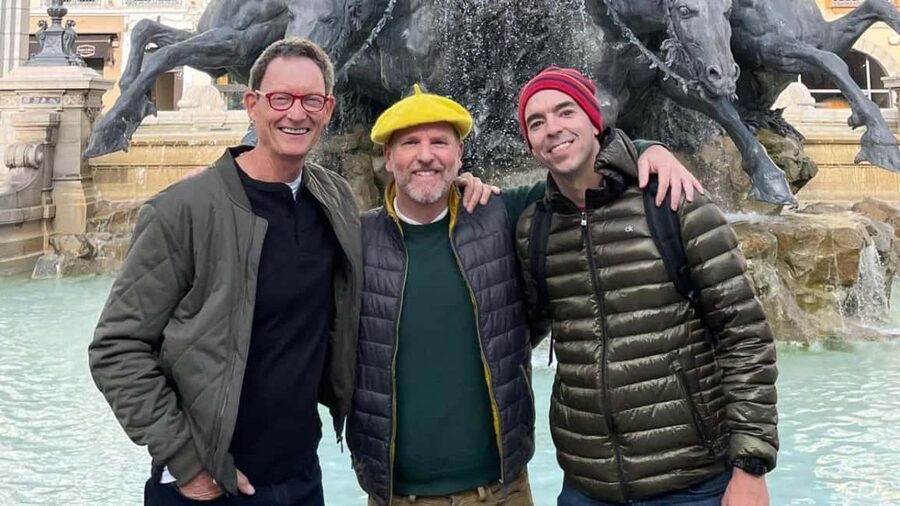
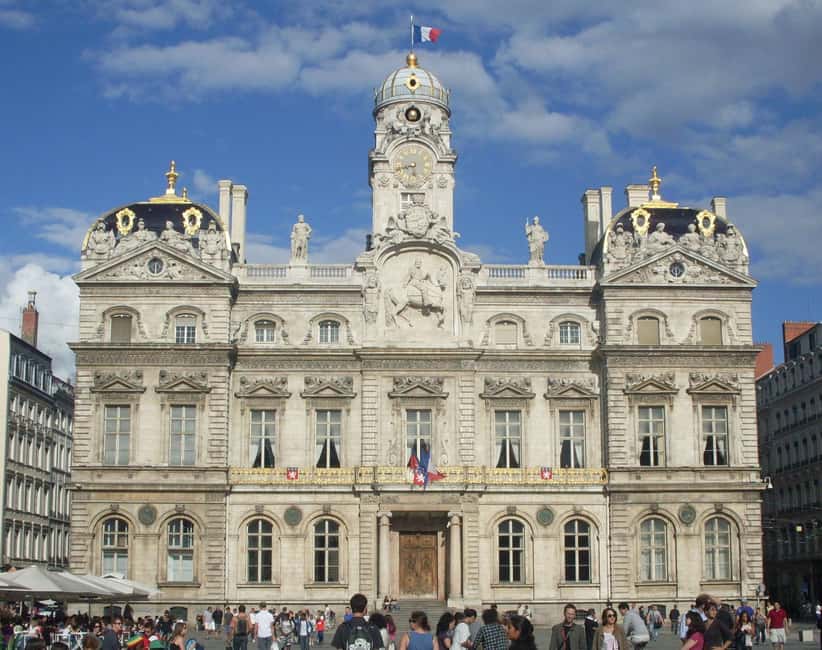
The longer route continues to Place des Terreaux, one of Lyon’s most impressive urban spaces. Here the tour points out Lyon’s city hall, the opera house, and the Bartholdi Fountain.
The fountain is a natural photo stop, while the square gives you a concentrated look at civic architecture and public art. The city hall adds political and historical context. The opera house brings in music, performance, and the city’s cultural life.
The listed timing includes about 10 minutes for Place des Terreaux and another 10 minutes for the Bartholdi Fountain. Additional guided and photo stops complete the route, with drop-off near Place des Terreaux or Place Bellecour depending on the departure.
This ending works well because it brings you back into the city center after the hill, Roman remains, river, and old quarter. You finish with a useful location for continuing your own sightseeing.
The guides make the difference
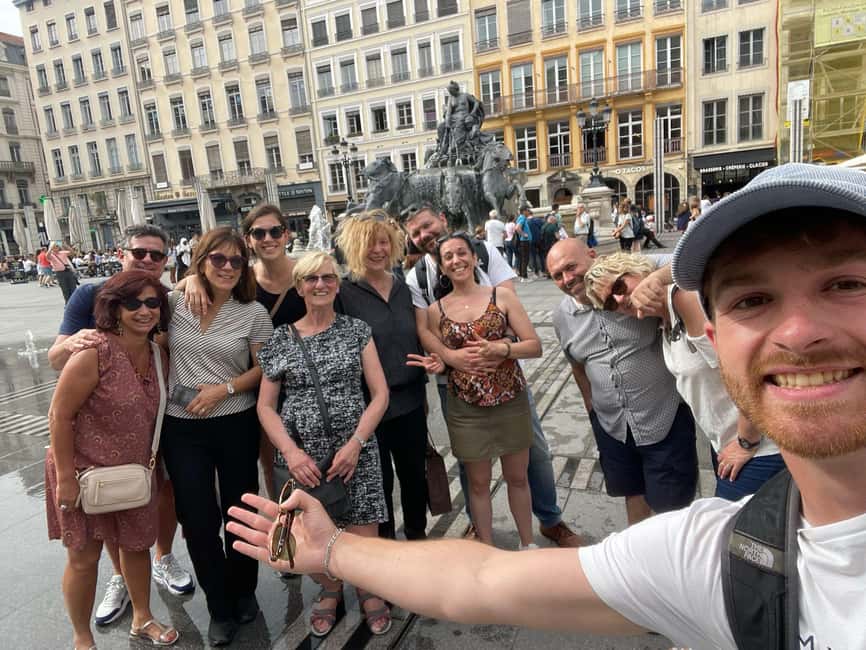
The strongest feature here is the people leading the walk. Aidan comes across as warm, funny, proud of Lyon, and eager to explain the city without turning the experience into a lecture.
His approach suits you if you like asking questions. He can move from Roman history to current food suggestions, architecture, World War II, or local habits without losing the thread. Parents may also appreciate his relaxed manner. He has been described as patient and accommodating when a child became ill and plans had to change.
Ryan offers a similar sense of welcome, with a more conversational style. He pays attention to the group, shares practical recommendations, and keeps the pace manageable. Some groups have also received city maps, a phone-friendly QR code, photographs, or a small Lyon keychain. These touches are not the reason to book, but they add warmth.
The bilingual format is another advantage. The tour is available in English and French, and Aidan is a native French speaker fluent in English. If you are traveling with French and English speakers together, that flexibility can make the outing easier for everyone.
Is $25 good value in Lyon?
At $25, this is not the cheapest possible way to walk around Lyon. You can explore Place Bellecour, Vieux Lyon, and the river independently for little more than the cost of your time.
You are paying for structure, local explanation, and access to the Fourvière funicular on the longer route. The small-group option also matters. With a maximum of 10 people, you can hear the guide in narrow passageways and get more direct answers.
I think the price works best when you book the tour early in your Lyon visit. You get a city overview, restaurant suggestions, a mental map, and a list of places to revisit. If you already know Lyon well, or prefer to wander without a schedule, the value is less clear.
Free cancellation up to 24 hours before the tour and reserve-now, pay-later terms also make it easier to fit into a changing itinerary. Starting points vary by option, so check your booking details carefully. Bring comfortable shoes, and remember that food and drinks are not included.
Who should book this Lyon walk?
This tour suits first-time visitors who want to cover major sights quickly without spending half a day on a large coach. It also works well for couples, families, and mixed-age groups who appreciate a friendly guide and a mostly flat route.
Choose the two-hour small-group tour if Fourvière Basilica, the Roman theatres, and the smaller group matter most to you. It is also the better choice if you want the broadest introduction to Lyon’s history and neighborhoods.
Choose the 1.5-hour route if you need a shorter outing, want to limit walking, or mainly care about Vieux Lyon, the traboules, Place Bellecour, the Saône, and Hôtel Dieu. A maximum of 18 people is still manageable, but it will feel less personal than the 10-person route.
I would not choose either option for someone who cannot manage 2 to 5 kilometers of walking. The terrain is mostly flat, but sightseeing includes standing, moving through old streets, and keeping up with the group. The stated limit is people over 95 years old, though the real issue for most people is stamina rather than age.
Final verdict: book it for a confident start
Book this tour if you want clear history, local food advice, and Lyon’s essential sights in one well-paced walk. Aidan and Ryan bring a personal touch, and the traboules plus Fourvière make the route more memorable than a basic square-and-cathedral stroll.
I would pick the two-hour tour for the best overall value, especially if this is your first visit. Choose the shorter option when time matters more than coverage. Either way, schedule it near the start of your stay, keep notes on the restaurant recommendations, and save time afterward to return to the places you want to see properly.
FAQ
How long is the Lyon City Highlights Walking Tour?
You can choose between a 1.5-hour tour and a two-hour tour. The shorter route covers about 2 kilometers, while the longer route covers about 5 kilometers.
What languages are available?
The tour is available in English and French. Aidan is a native French speaker and fluent in English.
What sights are included on the two-hour tour?
The longer route includes Fourvière Basilica, the Ancient Theatre of Fourvière, Vieux Lyon, the traboules, Place Bellecour, the Saône, Place des Terreaux, the Bartholdi Fountain, Lyon’s city hall, and the opera house.
Is the funicular included?
Fourvière funicular tickets are included with the two-hour tour only.
Where does the tour start and finish?
Starting points may be Place Saint-Jean or Place Bellecour, depending on the option booked. Drop-off locations include Place des Terreaux and Place Bellecour.
What should I bring?
Bring comfortable shoes. The tours involve a fair amount of walking on mostly flat terrain. Food and drinks are not included.
Recently added in Lyon
- 1 or 2-Hour Pedicab tour of Lyon★ 5.0 · 213 reviews
- Northern Rhône Valley Wine tour from Lyon Half Day★ 4.5 · 113 reviews
- Taste Wine in Lyon: Burgundy, Beaujolais, Rhône, and more★ 5.0 · 211 reviews
- Segway Tour by ComhiC – Presqu’île – 1h★ 5.0 · 26 reviews
- Lyon Old Town Private Food Tour with 6 French Delicacies & Wines★ 5.0 · 85 reviews
- Storytelling tour of Old Lyon★ 5.0 · 39 reviews
- Segway – Ride along the rivers 1h30★ 5.0 · 43 reviews
- Northern Rhône Valley From Lyon Full day★ 5.0 · 150 reviews
Walking Tours, compared.

Paris Top Sights Half Day Walking Tour with a Fun Guide
Read our review →
Montmartre Hidden Gems and Scenic Highlights Walking Tour
Read our review →
Montmartre Hill French Gourmet Food and Wine Tasting Walking Tour
Read our review →
Paris Île de la Cité and Notre-Dame Walking Tour With Crypt
Read our review →
Montmartre Cheese, Wine & Pastry Guided Walking Tour
Read our review →
Paris in a Day: Louvre or Orsay, Eiffel Tower, City Walk & Cruise
Read our review →
Montmartre Highlights Walking Tour with a Local Guide
Read our review →
Paris City Center Free Walking Tour (Tip-Based)
Read our review →Browse the lists this tour appears in