
REVIEW · LILLE TOURS
Australian private Somme tour including Sir John Monash Centre
The Somme still speaks in silence. This private seven-hour tour from Amiens connects Australian battle sites, cemeteries, trenches, and memorials with a local guide, making a difficult subject easier to understand. I like the private vehicle and flexible pace, and I like that the guide uses maps, photographs, and detailed battlefield knowledge to bring the 1916 fighting into focus. The main drawback is that lunch costs extra, and the tour is not practical from Paris because of the driving time.
Guide Olivier receives especially strong praise for his care, preparation, and personal approach. You should expect a serious day, not a quick monument-hopping trip. The Somme can be sobering, and seven hours gives you a useful introduction rather than every battlefield detail.
In This Review
- Key points to know before booking
- Why this private Somme tour works so well
- Villers-Bretonneux and the Australian National Memorial
- The Sir John Monash Centre tells Australia’s Western Front story
- Lochnagar Crater and the scale of the first attack
- Lunch in La Boisselle or Pozières
- Pozières and the First Australian Division Memorial
- Windmill Memorial and the first tank attacks
- Beaumont-Hamel and the preserved trench system
- What the $372.45 price includes
- Pickup from Amiens, Arras, or Saint-Quentin
- Who should book this Somme experience?
- Final verdict: a strong choice for Australian military history
- FAQ
- How long is the Australian private Somme tour?
- Where can pickup be arranged?
- Can the tour start from Paris?
- Is the Sir John Monash Centre always open?
- Is lunch included?
- Is this a private tour?
- What happens if I need to cancel?
Key points to know before booking
- Australian focus: Villers-Bretonneux, Pozières, the First Australian Division Memorial, and the Sir John Monash Centre form the heart of the day.
- Private touring: Only your group takes part, so you have more room to ask questions and spend extra time at places that matter to you.
- Useful battlefield context: Olivier uses maps and historic photographs to explain troop movements, terrain, and the physical challenges of trench warfare.
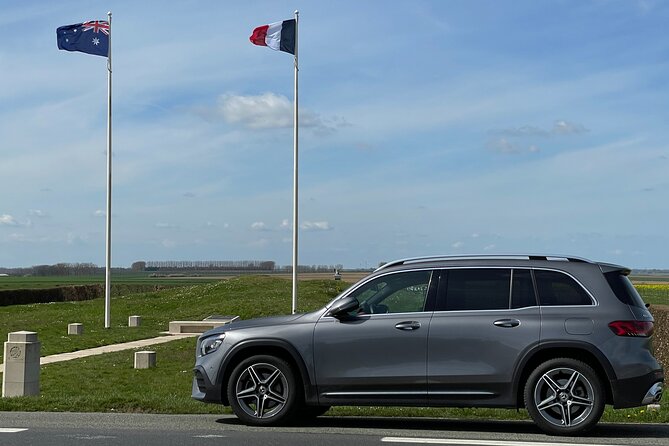
- Comfortable transport: Pickup is available in Amiens, Arras, and Saint-Quentin in a spacious, air-conditioned car with bottled water.
- One important closure check: The Sir John Monash Centre has seasonal closure dates, so confirm that it will be open on your chosen day.
- Plan for lunch: The meal break is at a local restaurant or café in La Boisselle or Pozières, but lunch is not part of the tour price.
Why this private Somme tour works so well
The Somme battlefields are spread across northern France. A village, a cemetery, a crater, and a memorial may look close together on a map, yet the meaning of each place can be hard to grasp without someone explaining how the front shifted and why a particular position mattered.
That is where a private tour earns its price. You are not simply driven from one sign to the next. The guide can explain the sequence of events as you move through the area, then adjust the conversation to your interests. If your family has an Australian military connection, you can ask more about specific units or battles. If you know little about the First World War, you can take the day at a steady pace without feeling lost.
I also like the small group format because battlefield visits need quiet. A private car makes it easier to listen, think, and ask direct questions. It also avoids the fixed rhythm of a large coach tour, where everyone must leave a site at the same moment.
The strongest praise for Olivier centres on his preparation and manner. He is described as organized, attentive, thoughtful, and highly informed about both the geography and the people involved in the battles. Maps and period photographs help you picture ground that can otherwise seem deceptively ordinary.
A few more Lille outings to set side by side
- Entrance Ticket Nausicaa, the biggest aquarium in Europe
★ 3.5 · 1,135 reviews - Lille Driving Tour by Convertible Citroen 2CV
★ 4.9 · 711 reviews - Unique Tour of Lille by Convertible 2CV – 1h00
★ 5.0 · 470 reviews
Villers-Bretonneux and the Australian National Memorial
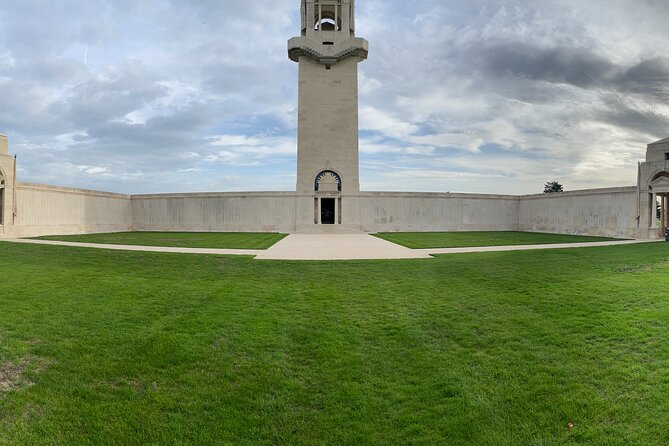
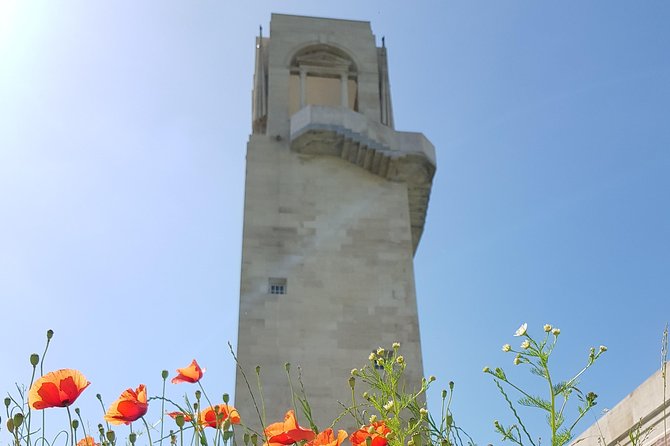
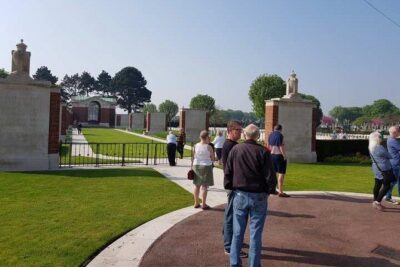
The day begins at the Australian National Memorial of Villers-Bretonneux, a fitting starting point for an Australian-focused tour. The memorial remembers around 11,000 Australian service members who died in the Somme and have no known grave.
You also visit Villers-Bretonneux Military Cemetery. The cemetery gives the memorial’s large number of missing men a more personal scale. Rows of named graves and the surrounding names of those with no known grave make the human cost of the fighting difficult to reduce to statistics.
You have about 30 minutes here. That is enough for a focused visit, though anyone wanting a long, quiet cemetery walk may find the time brief. The stop is free, as are the other planned visits.
The value of having a guide here is clear. Olivier can connect the memorial to the wider fighting around Villers-Bretonneux, rather than leaving you with only an inscription and a few dates. The tour’s Australian emphasis also helps you understand why this area matters so much to Australian military memory.
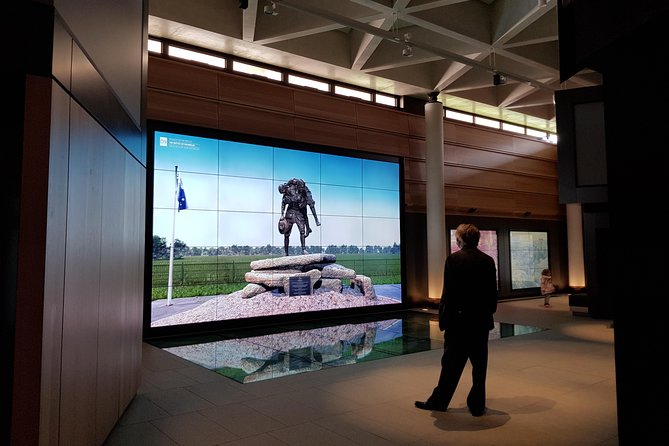
The Sir John Monash Centre tells Australia’s Western Front story
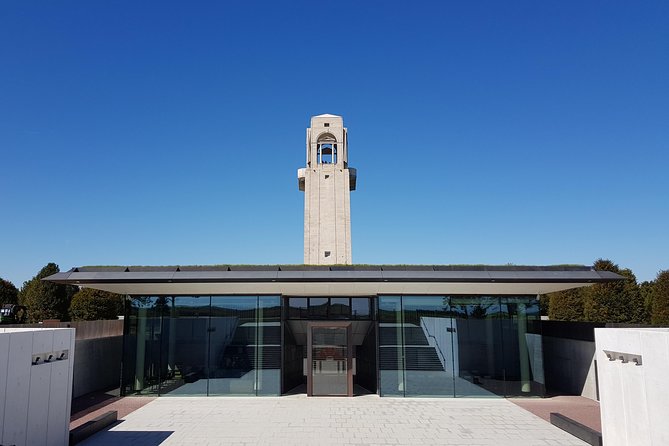
The Sir John Monash Centre is the major indoor stop of the day, with about 90 minutes set aside for it. Its purpose is to explain Australia’s role on the Western Front, giving you a broader framework for the sites you see outside.
I consider this an essential part of the tour, especially if you want more than a drive through memorials. The centre helps link the individual battlefield locations to the wider Australian story. It also gives you a break from the open-air sites, which can be useful in poor weather.
Several detailed accounts of the day single out the centre as a highlight. That makes sense: after seeing Villers-Bretonneux, you can place the memorial and cemetery within a larger account of Australian operations.
Check opening dates carefully before booking. The supplied tour details give more than one closure notice. One note says the centre is closed from 25 December to 1 January and from 10 February to 1 March. The pickup information gives dates for 24 December 2025 to 2 January 2026 and 2 February to 1 March 2026. Because those dates differ slightly, contact the operator before you commit to a winter visit.
Lochnagar Crater and the scale of the first attack
At Lochnagar Crater, you see the remains of the largest mine used by the British Army on the first day of the Battle of the Somme. The planned visit lasts about 15 minutes.
That may sound short, but the crater is a powerful stop because it shows the physical force used to break the German lines. The enormous hollow in the earth makes the opening of the battle easier to picture than a written account alone.
This is also a place where a guide adds useful context. Without explanation, you may see only a large depression in a field. With the battle sequence laid out, you can better understand why the mine was placed there and how such an explosion fitted into the opening attack.
The stop is exposed and weather can change quickly. Wear shoes suitable for uneven ground and bring a waterproof layer. The tour operates in all weather, so do not treat this as a fair-weather sightseeing day.
More private outings in Lille:
- Private Round Trip Transfer to Vimy Ridge from Arras
★ 5.0 · 164 reviews - Private battle of Dunkirk Operation Dynamo Tour
★ 5.0 · 99 reviews - 30-Minutes Private Guided Tour of Lille by Convertible 2CV
★ 5.0 · 79 reviews - 1 Hour Private Lille Tour by Convertible 2CV with a Local Products Tasting
★ 5.0 · 78 reviews
Lunch in La Boisselle or Pozières
The schedule allows about 45 minutes for lunch at a local restaurant or café in La Boisselle or Pozières. Lunch is not included, so budget separately for the meal.
This break is useful for more than eating. It divides the morning’s memorial and crater visits from the afternoon’s Australian focus around Pozières and Beaumont-Hamel. You can also use the time to ask the guide about the places you have just seen.
The local setting fits the tone of the tour better than returning to a distant city for lunch. Still, the exact restaurant is not specified, so you should not book this expecting a particular menu or formal dining experience.
Because the day is tightly planned, keep lunch practical. A slow meal could reduce time at the later memorials. The guide’s flexible approach may help, but the itinerary still has several stops to cover.
Pozières and the First Australian Division Memorial
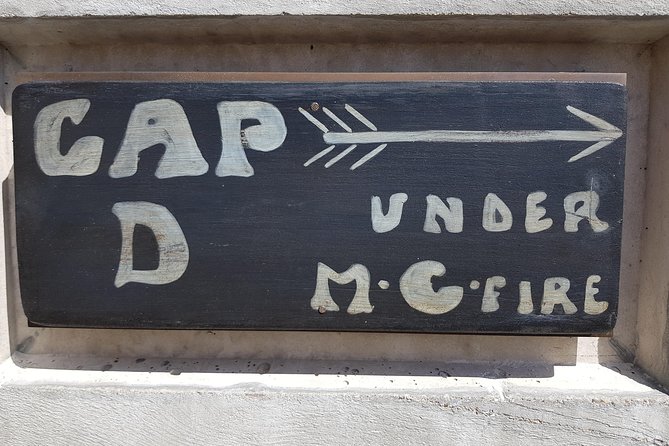
After lunch, the tour turns to Pozières, described as the site of the bloodiest Australian struggle on the Western Front. This is one of the most important stops for anyone booking the tour because of Australian family or military connections.
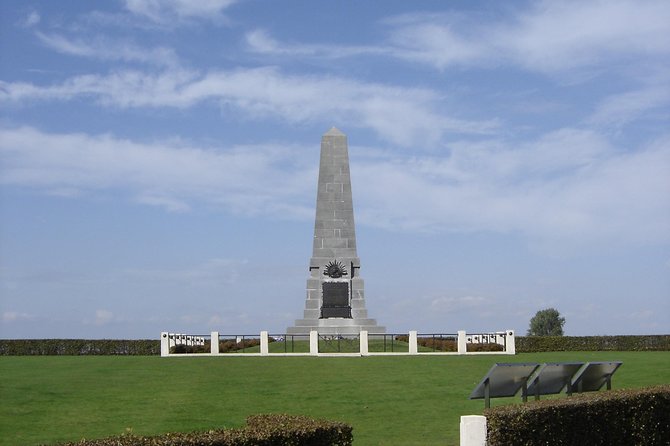
You visit the remaining vestiges of the Gibraltar bunker and see memorials connected with the fighting, including the First Australian Division Memorial. These sites help show how the battle was fought for small but crucial positions, often at a terrible cost.
The planned visit to the First Australian Division Memorial lasts about 15 minutes. Again, that is enough for an introduction, but not a long period of private study. The advantage is that the guide supplies the missing links between the memorial, the village, and the surrounding battlefield.
I would pay close attention here to the explanation of the ground. Reviews of the tour place particular value on the way Olivier combines facts, figures, maps, and photographs. That approach can help you picture the wartime village and understand why Pozières became such a hard-fought point.
Windmill Memorial and the first tank attacks
The Windmill Memorial marks a former German position captured by Australian troops during the Battle of Pozières. You have about 20 minutes at this stop.
The site also connects to the history of tanks. Across the road, the Tanks Memorial marks the place where tanks were used for the first time in history. That pairing gives the visit unusual range. You move from infantry fighting around a German position to the arrival of a new type of weapon that would change warfare.
The two memorials are valuable because they show how quickly military technology was developing during the First World War. They also remind you that the battle was not only about famous commanders. It involved soldiers taking fortified positions, new machines struggling across damaged ground, and repeated attempts to break defensive lines.
This is a short stop, so listen closely while the guide explains the connection. The surrounding area may appear peaceful now, which makes the historic photographs and battlefield briefing especially helpful.
Beaumont-Hamel and the preserved trench system
The final listed stop is the Newfoundland Park at Beaumont-Hamel, with about 30 minutes focused on its well-preserved trench system. This is the tour’s clearest chance to understand trench warfare through physical remains.
A preserved trench can communicate things that maps cannot. You can see how narrow and confined the positions were, and how little comfort or space soldiers had. The visit adds a ground-level dimension to the memorials and museums earlier in the day.
Although this tour is built around Australian history, Beaumont-Hamel broadens the story beyond one national force. It helps you see the Somme as an international battle involving troops from several parts of the British Empire and beyond.
Thirty minutes is a useful introduction, but you should keep expectations realistic. This is not a full-day visit to every part of the park. The stop works best as the final piece in a day that has already shown you memorials, battle positions, a mine crater, and a museum.
What the $372.45 price includes
The listed price is $372.45 per person. For a private seven-hour tour, the value depends heavily on your group size. A solo visitor or couple pays more per person than a larger private group, but you receive private transportation, a driver-guide, a professional guide, bottled water, and pickup arrangements suited to your location.
You are also paying for local battlefield interpretation. That matters here because the sites are spread out and many of the important details are not obvious on arrival. A standard car ride through the Somme would give you scenery and memorials, but not necessarily a clear understanding of how they connect.
The price does not include lunch. Admission is listed as free for all scheduled stops, so the main cost is the private guiding and transportation rather than entry tickets.
I see this as a strong choice for people who place a high value on explanation and convenience. It is less compelling if you prefer to drive yourself, read independently, or spend a long time at one cemetery rather than visit several locations in one day.
Pickup from Amiens, Arras, or Saint-Quentin
The tour starts at 9:30 a.m. Pickup is flexible within the Amiens, Arras, and Saint-Quentin areas, with the operator contacting you after booking to arrange a preferred location such as a train station, hotel, or bed-and-breakfast.
The tour can also start from Arras or Saint-Quentin. It cannot originate from Paris because the distance would leave too little time for the battlefield visits. This is an important practical point. If you are staying in Paris, plan a separate connection to one of the supported pickup areas rather than assuming the guide will collect you there.
The air-conditioned vehicle should make the long periods between sites more comfortable. Bottled water is included, and private transportation means you are not managing local connections between rural memorials.
The tour is offered in English. Confirmation is sent within 48 hours of booking, subject to availability. Children must be accompanied by an adult, and most people can participate, but the operator advises dressing appropriately for all-weather conditions.
Who should book this Somme experience?
I would recommend it first to Australian visitors, families researching military service, and anyone with a serious interest in the First World War. The Australian memorials and Pozières visits give the day a clear focus, while the Sir John Monash Centre provides useful national context.
It also suits first-time battlefield visitors. You do not need to arrive with a detailed grasp of the Somme campaign. A good guide can explain the basics and then add detail as your questions develop.
The tour is less suited to anyone seeking a light sightseeing outing. The subject is painful, and the memorials deal directly with mass death and missing soldiers. You should also avoid booking it if you want an unhurried visit to just one site. The schedule covers seven stops in roughly seven hours, including driving and lunch.
The private format is especially useful for families or small groups with different levels of interest. A beginner can ask basic questions, while a serious military history student can spend more time on tactics, commanders, maps, and battlefield positions.
Final verdict: a strong choice for Australian military history
You should book this tour if you want the Somme explained by a local guide rather than visited as a series of isolated memorials. Olivier’s careful organization, use of maps and photographs, and attention to personal interests are the main reasons this experience earns such strong praise.
Book it for the private car, the Australian focus, and the chance to connect Villers-Bretonneux, Pozières, Lochnagar Crater, Beaumont-Hamel, and the Sir John Monash Centre in one day. Skip it if you need a low-cost group tour, want to start from Paris, or prefer to explore at a very slow pace.
Before paying, confirm the Sir John Monash Centre’s opening date, arrange a suitable pickup, and remember that lunch is extra. With those points settled, this is a thoughtful and practical way to understand the Australian experience on the Somme.
FAQ
How long is the Australian private Somme tour?
The tour lasts approximately seven hours and begins at 9:30 a.m.
Where can pickup be arranged?
Pickup can be arranged within the Amiens, Arras, and Saint-Quentin areas. The operator can coordinate a meeting point such as a train station, hotel, or bed-and-breakfast.
Can the tour start from Paris?
No. The tour cannot originate from Paris because the distance would leave too little time for the battlefield visits.
Is the Sir John Monash Centre always open?
No. The centre has seasonal closure periods. The supplied information lists closures around late December and early January, plus a closure period in February and early March. Confirm the exact dates with the operator before booking.
Is lunch included?
No. The tour includes a 45-minute lunch break at a restaurant or café in La Boisselle or Pozières, but you pay for lunch separately.
Is this a private tour?
Yes. Only your group takes part, and the tour includes private transportation with a driver-guide and professional guide.
What happens if I need to cancel?
You can cancel at least 24 hours before the local start time for a full refund. Cancellations or changes made less than 24 hours before the start time are not accepted for a refund.
Recently added in Lille
- Private Lille Tour by Classic Convertible 2CV with Champagne★ 5.0 · 49 reviews
- 1 Hour Private Lille Tour by Convertible 2CV with a Local Products Tasting★ 5.0 · 78 reviews
- 30-Minutes Private Guided Tour of Lille by Convertible 2CV★ 5.0 · 79 reviews
- Lille Scavenger Hunt and Highlights Self Guided Audio Tour★ 4.0 · 32 reviews
- Lille Scavenger Hunt and City Highlights Walking Tour★ 4.5 · 47 reviews
- Private battle of Dunkirk Operation Dynamo Tour★ 5.0 · 99 reviews
- Private Round Trip Transfer to Vimy Ridge from Arras★ 5.0 · 164 reviews
- Private Full Day Tour of the Somme Battlefields★ 5.0 · 28 reviews
Lille Tours, compared.

Entrance Ticket Nausicaa, the biggest aquarium in Europe
Read our review →
24, 48 or 72-Hour City Pass & 24-Hour Transportation
Read our review →
Private Round Trip Transfer to Vimy Ridge from Arras
Read our review →
Private battle of Dunkirk Operation Dynamo Tour
Read our review →
Browse the lists this tour appears in