
REVIEW · LILLE TOURS
Musee Somme 1916 Admission Ticket
The Somme battle begins underground. This ticket takes you into a 250-meter tunnel beneath Albert, where fifteen scenes, original artifacts, and carefully timed sound and light effects explain the terrible fighting of 1916. I like the atmospheric tunnel and the way the visit ends in a peaceful public garden beside the Ancre River. The main consideration is location: the museum is associated with the Amiens area, but it is in Albert, about 20 miles beyond Amiens.
I also like the four-language presentation, especially for families or mixed-language groups. You can follow the visit in English, French, German, or Dutch, and a free app adds another way to explore. The museum is compact enough for a one-hour visit, yet detailed enough to fill two or three hours if you study the displays.
In This Review
- Key points to know before you go
- Why the Somme Museum works so well
- Entering the 250-meter tunnel beneath Albert
- Fifteen alcoves explain trench warfare
- Twenty-five cabinets filled with First World War artifacts
- The Gallery of Heroes gives the visit a personal ending
- Leaving through the Arboretum beside the Ancre
- Four languages and a free app
- Is $9.67 good value?
- Who will enjoy this museum most?
- Practical timing and booking advice
- Should you book the Somme 1916 Museum?
- FAQ
- Where is the Musée Somme 1916 located?
- How long does a visit take?
- What languages are available?
- What does the admission ticket include?
- Is transportation included?
- Are children allowed to visit?
- What are the opening hours?
Key points to know before you go
- You enter a 250-meter underground tunnel: The museum is 10 meters below ground, giving the visit an unusual setting from the first step.
- Fifteen alcoves recreate trench warfare: Each small scene helps explain the conditions and human cost of the Somme in 1916.
- Twenty-five display cabinets hold wartime objects: You can examine weapons and other First World War artifacts at your own pace.
- Sound and light effects add drama: The presentation is powerful, though some scenes may feel intense for younger children.
- The final Gallery of Heroes honors nine people: This gives the visit a personal focus after the broader battle displays.
- The exit leads to Albert’s Arboretum: You can finish with a quiet walk beside the Ancre River and its cascades.
Why the Somme Museum works so well
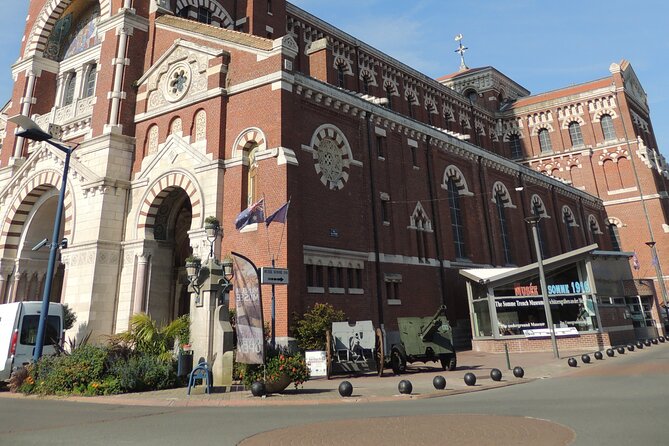
The Somme 1916 Museum does not begin with a grand battlefield panorama or a long wall of dates. It starts with a descent underground. From the entrance hall beside Albert’s basilica, you enter a tunnel that stretches for roughly 250 meters and sits 10 meters below the surface.
That physical setting matters. You are not simply reading about trenches from a bright gallery. The low underground route gives the visit a confined, enclosed feel that suits the subject. You might find the setting more memorable than a standard museum room, especially because the exhibits appear along the route rather than in one large open hall.
The museum focuses on the 1916 Somme battle, one of the First World War’s most destructive campaigns. On the first day alone, 56,000 British soldiers were killed. That figure is hard to grasp on paper, but the museum uses objects, staged scenes, and personal stories to make the scale of the fighting easier to understand.
This is not a light historical attraction. The subject is death, injury, bombardment, and life in the trenches. At the same time, the museum avoids requiring expert knowledge. You can arrive with only a basic understanding of the First World War and still follow the story.
A few more Lille outings to set side by side
- Entrance Ticket Nausicaa, the biggest aquarium in Europe
★ 3.5 · 1,135 reviews - Lille Driving Tour by Convertible Citroen 2CV
★ 4.9 · 711 reviews - Unique Tour of Lille by Convertible 2CV – 1h00
★ 5.0 · 470 reviews
Entering the 250-meter tunnel beneath Albert
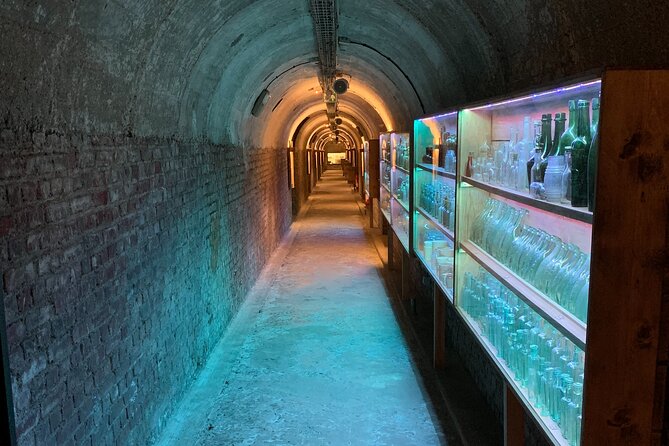
Your visit begins in an entrance hall near the basilica. From there, the route continues underground through the long tunnel. The museum describes this passage as the first part of the experience, and it sets the tone before you reach the main displays.
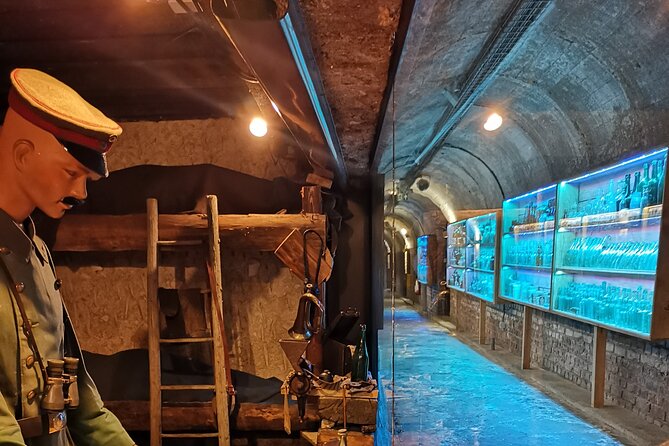
The tunnel is more than a corridor between exhibits. It helps you think about the physical conditions faced by soldiers who lived and fought below ground, often surrounded by mud, noise, darkness, and constant danger. The museum does not ask you to imagine a full battlefield on your own. It uses the space itself to put you in a more enclosed frame of mind.
You should allow at least an hour if you want to see the principal displays without rushing. The stated visit length is approximately one to three hours. That range makes sense: you can move steadily through the staged scenes, or stop at each cabinet, read the explanations, and use the free app for a slower visit.
There is no need to treat this as a fast stop between other sights. The museum is small enough to fit into a half-day plan, but the subject deserves time. If you are visiting with children, set expectations before entering. The tunnel and lighting are theatrical, and the wartime scenes deal with serious material.
Fifteen alcoves explain trench warfare
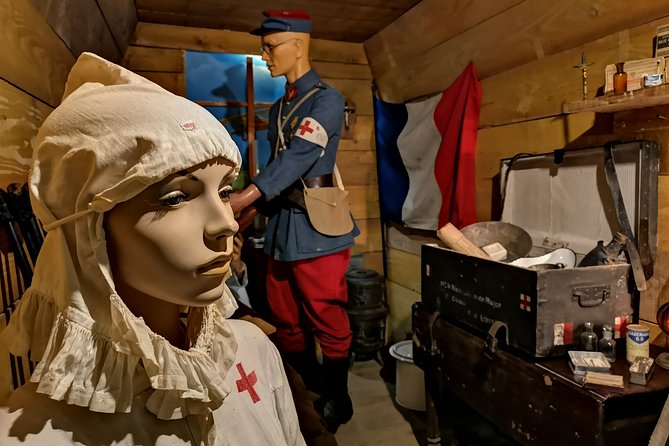
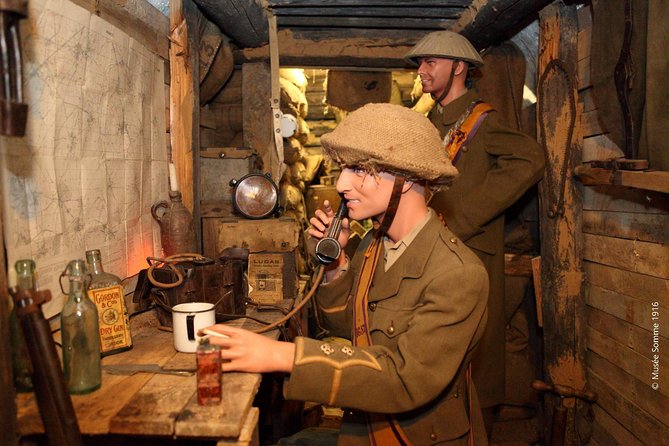
Inside the tunnel, fifteen separate alcoves present scenes from trench warfare in the Somme. These small settings break the subject into manageable sections. Rather than receiving one long lecture, you move from one visual moment to another.
That format helps you keep the story in order. It also gives the museum a human scale. The Somme was an enormous military operation, but the alcoves bring attention back to the conditions of individuals caught inside it.
The sound and light effects are among the most praised parts of the visit. They recreate the sense of bombardment and make the tunnel feel less like a conventional exhibition space. One of the scenes uses realistic lights and effects to suggest the experience of artillery fire, which can be especially effective when paired with the confined underground setting.
I would not describe the effects as a reason to skip the museum, but they are worth considering if you are sensitive to sudden sounds or dark, enclosed spaces. The information provided does not list specific health restrictions, and most people can participate. Still, the presentation is designed to create an emotional response rather than simply display objects under glass.
The best approach is to slow down. Look at the scene first, then read the accompanying information. If you rush from alcove to alcove, the displays may blur together. A measured pace gives each section time to make sense.
Twenty-five cabinets filled with First World War artifacts
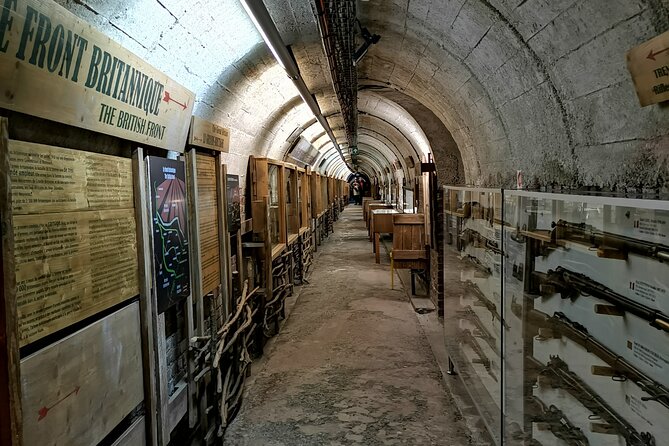
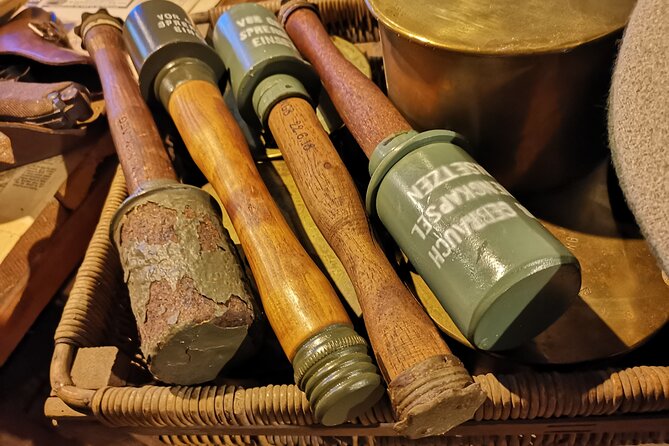
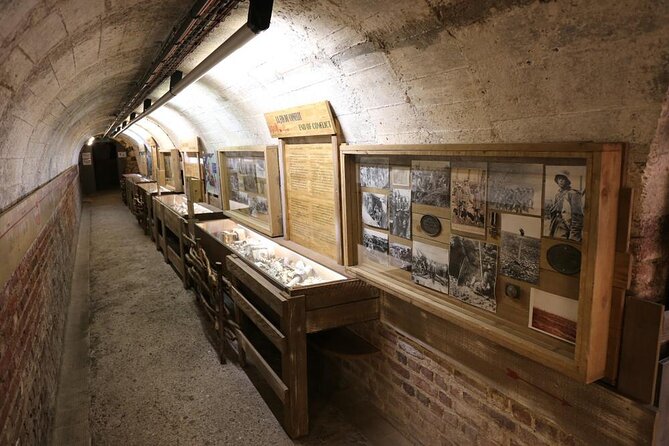
The museum also includes 25 display cabinets containing First World War artifacts and weaponry. These cabinets add a strong material side to the visit. Staged scenes show what the war felt like, while the objects show what soldiers actually used and carried.
I find this combination useful because the two formats do different jobs. The alcoves create context. The cabinets give you something precise to study. Weapons and other wartime objects can make the distance between modern life and trench warfare feel much smaller.
The museum is not presented as a huge national collection, so you should not expect endless galleries. Its strength is the mix of artifacts with reconstructed scenes. You can focus on the objects that catch your attention, then connect them to the wider story shown in the tunnel.
The displays also help younger visitors engage with the history. Children may not absorb every date or military detail, but they often respond to real objects and visual scenes. One family found the experience suitable for young children who became very interested in the subject. That said, the material is still about a deadly battle, so parents should decide how much detail their children are ready to see.
The focus on weaponry is balanced by the museum’s human stories. That balance is important. A collection of guns and equipment alone can make war feel technical or distant. Here, the objects sit within a broader account of suffering and survival.
More entry tickets in Lille:
- Paris: Louvre Museum Timed-Entrance Ticket
★ 4.6 · 71,977 reviews - Disneyland® Paris 1-Day Ticket
★ 4.6 · 49,412 reviews - Paris: Versailles Palace and Gardens Full Access Ticket
★ 4.6 · 41,579 reviews - Paris: Eiffel Tower Entry Ticket with Optional Summit Access
★ 4.4 · 20,035 reviews
The Gallery of Heroes gives the visit a personal ending
The final part of the museum is the Gallery of Heroes, dedicated to nine people who distinguished themselves during the war. After the large subject of the Somme battle, this gallery narrows the focus to individual lives.
That change in scale gives the visit a useful closing point. You move from the machinery of war to people who made difficult choices or performed notable acts under extreme conditions. The gallery helps prevent the battle from becoming only a list of troop numbers and dates.
The presentation also leaves room for reflection. The museum’s portraits deal strongly with those who died, but the wider cost of war included mutilation and lifelong injury. If you are looking for a fuller account of wartime suffering, keep that in mind. The displays may focus more on battlefield death than on the long-term lives of wounded soldiers.
This is one area where a little patience helps. Do not treat the Gallery of Heroes as a quick final corridor before the shop. The nine people give you a chance to pause and consider how individual actions are remembered within a much larger tragedy.
Leaving through the Arboretum beside the Ancre
The route ends differently from the way it begins. After the underground tunnel, you leave through the museum shop and reach Albert’s public garden. From there, you can explore the Arboretum, where the Ancre River flows past cascades.
This outdoor ending is one of the museum’s nicest features. The visit takes you through dark, enclosed scenes of battle and then releases you into open greenery and moving water. The change is simple, but it gives you space to think before returning to your day.
Plan a few extra minutes for the garden rather than walking straight away. The Arboretum is not an optional decoration to the museum experience. It helps balance the emotional weight of the displays. The river and cascades offer a quiet contrast to the sound effects and bombardment scenes underground.
The exit also makes the museum easy to combine with time in Albert. You can visit the basilica area before entering, then use the garden as a natural pause afterward. Just remember that this is not in central Amiens itself. A direct visit from Amiens requires planning for the roughly 20-mile trip beyond the city.
Four languages and a free app
The museum is accessible in English, French, German, and Dutch. That makes the ticket practical for international visitors and families who do not all share the same first language.
English access is particularly helpful because the subject involves military terms and historical context that can be difficult to follow through images alone. You can choose the language that lets you spend less time translating and more time understanding the displays.
A new free app is included with admission. The available information does not specify every app feature, so you should treat it as an added resource rather than the sole reason to book. Still, it gives you another way to approach the exhibits and may be useful if you prefer reading or listening at your own pace.
The museum does not list a live guide or a named guide, so this is primarily a self-guided visit. That can be a benefit if you want to stop whenever you like. It also means you should not expect a personal historical talk or the chance to ask questions throughout the route.
Is $9.67 good value?
At about $9.67 per person, admission is reasonably priced for a museum visit that can occupy one to three hours. The value comes from the combination of a distinctive underground setting, fifteen staged scenes, 25 display cabinets, multilingual access, sound and light effects, and the nearby Arboretum.
I would judge the ticket by the length of your stop. If you spend only 30 minutes moving quickly through the tunnel, the price may feel less impressive. If you take time with the scenes, artifacts, Gallery of Heroes, and garden, it becomes a useful and affordable part of a Somme history day.
The ticket includes admission and the new free app. Food, drinks, and transportation are not included. You should also account for the journey from Amiens if that is where you are staying. The location issue is the most important practical detail: check your route carefully so you do not arrive in Amiens expecting the museum to be in the city center.
The venue limits the activity to a maximum of 15 people, according to the supplied details. That suggests a more manageable visit than a major crowded attraction, although the ticket itself is not described as a guided small-group tour.
Who will enjoy this museum most?
I would recommend the Somme 1916 Museum to:
- People interested in First World War history
- Visitors planning a Somme battlefield day
- Families with older children who can handle serious wartime themes
- Anyone who prefers visual exhibits to long blocks of text
- International visitors who need English, French, German, or Dutch access
- Travelers looking for a compact museum with an outdoor walk afterward
It may be less suitable if you want a broad survey of all First World War campaigns. This museum concentrates on the Somme in 1916, with particular attention to trench warfare and personal wartime stories.
It may also disappoint if you expect transport from Amiens, a meal, or a full guided tour. None of those are included. You are buying entry to a focused museum experience, not a complete battlefield excursion.
Children must be accompanied by an adult, but most people can take part and no health restrictions are specified. Even so, use your judgment about the dark tunnel, realistic effects, and subject matter.
Practical timing and booking advice
The listed opening hours are 9:00 a.m. to 6:00 p.m., Monday through Sunday, for the period from January 25 through December 31, 2026. That gives you flexibility, but you should still allow enough time for the journey if you are coming from Amiens.
The experience is often booked about 19 days ahead. That does not mean you must always reserve weeks early, but it suggests that advance planning is sensible during busy periods or when the museum is part of a fixed day trip.
Free cancellation is available if you cancel at least 24 hours before the start time. Changes or cancellations made inside that 24-hour window are not accepted for a refund. Since the museum is outside Amiens, checking your transport plan before that deadline is wise.
The attraction is recommended by 95 percent of customers and has a 4.6 rating from 105 reviews. Those figures fit the museum’s main strengths: strong atmosphere, clear historical purpose, and a thoughtful route from tunnel to garden. They do not remove the need to plan for the location or to consider how comfortable your group will be with realistic war effects.
Should you book the Somme 1916 Museum?
Book it if you want a focused, atmospheric introduction to the Somme battle and can make the trip to Albert. The underground tunnel, fifteen trench scenes, artifact cabinets, and Gallery of Heroes offer more than a quick collection of military objects. The exit through the Arboretum and along the Ancre River also gives the visit a calm finish.
I would especially choose it for a family history day, a First World War itinerary, or a stop between other sights in the Somme area. The price is modest, the four-language access is useful, and the free app adds flexibility.
Skip it only if you are staying strictly in central Amiens and do not want to arrange transport beyond the city. Also think twice if enclosed spaces, loud effects, or emotionally difficult wartime subjects are a poor fit for your group. For everyone else, this is a well-priced museum that makes a terrible chapter of history feel direct, human, and worth remembering.
FAQ
Where is the Musée Somme 1916 located?
The museum is in Albert, France, near the basilica. It is about 20 miles beyond Amiens, so it is not located in Amiens city center.
How long does a visit take?
The approximate visit time is one to three hours. You can make a shorter visit by moving steadily, or spend longer studying the artifacts, scenes, and Gallery of Heroes.
What languages are available?
The museum is accessible in English, French, German, and Dutch.
What does the admission ticket include?
The ticket includes museum admission and access to the new free app.
Is transportation included?
No. Transportation to and from the attraction is not included, and food and drinks are also excluded.
Are children allowed to visit?
Yes. Children may visit, but they must be accompanied by an adult. Most people can participate, and no health restrictions are listed.
What are the opening hours?
For January 25 through December 31, 2026, the museum is open daily from 9:00 a.m. to 6:00 p.m.
Recently added in Lille
- Private Lille Tour by Classic Convertible 2CV with Champagne★ 5.0 · 49 reviews
- 1 Hour Private Lille Tour by Convertible 2CV with a Local Products Tasting★ 5.0 · 78 reviews
- Lille Scavenger Hunt and Highlights Self Guided Audio Tour★ 4.0 · 32 reviews
- 30-Minutes Private Guided Tour of Lille by Convertible 2CV★ 5.0 · 79 reviews
- Lille Scavenger Hunt and City Highlights Walking Tour★ 4.5 · 47 reviews
- Private battle of Dunkirk Operation Dynamo Tour★ 5.0 · 99 reviews
- Private Round Trip Transfer to Vimy Ridge from Arras★ 5.0 · 164 reviews
- Private Full Day Tour of the Somme Battlefields★ 5.0 · 28 reviews
Lille Tours, compared.

Entrance Ticket Nausicaa, the biggest aquarium in Europe
Read our review →
24, 48 or 72-Hour City Pass & 24-Hour Transportation
Read our review →
Private Round Trip Transfer to Vimy Ridge from Arras
Read our review →
Private battle of Dunkirk Operation Dynamo Tour
Read our review →
Browse the lists this tour appears in