
REVIEW · LILLE TOURS
Private battle of Dunkirk Operation Dynamo Tour
Dunkirk’s beaches still explain the escape. This private tour connects the Commonwealth War Graves cemetery, Malo-les-Bains beach, and the East Mole, while guides such as Emmanuel, Elise, Fred, and Onno add maps, photographs, family stories, and French and British viewpoints. I like the small-group format and the easy hotel pickup, but two hours can feel short if you want a fuller account of the fighting around the evacuation.
The tour works best as a focused introduction, not a complete study of the 1940 campaign. I especially like that you see the actual shoreline and port rather than hearing the story only inside a museum. The main drawback is value: at $193.50 per group, the price is attractive for several people sharing a vehicle, but can feel high for one or two people when the three main stops are close together.
In This Review
- Key points to know before you book
- Why a private two-hour tour can clarify Dunkirk
- Starting at the Commonwealth War Graves cemetery
- Reading the evacuation from Malo-les-Bains beach
- Following the evacuation at the East Mole
- Add the Dunkirk museum before or after
- What the $193.50 price really buys
- Guides, photographs, and the French view
- Who will get the most from this tour
- Should you book the Operation Dynamo tour?
- FAQ
- How long does the Private Battle of Dunkirk Operation Dynamo Tour last?
- What locations are included?
- Is the Dunkirk museum included?
- Is transportation provided?
- How many people can join the private tour?
- What is the cancellation policy?
Key points to know before you book
- See the 20-kilometer evacuation beach from Malo-les-Bains, where troops waited under German attack before being taken across the Channel.
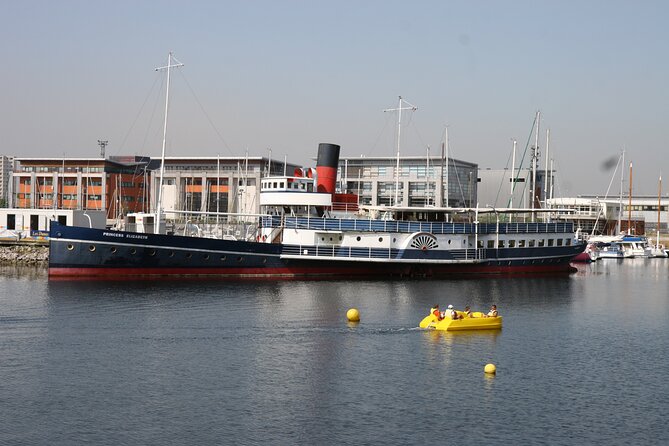
- Stand at the East Mole, the port area that became the main point of evacuation during Operation Dynamo.
- Use the guide’s maps and photographs to match wartime scenes with the modern city and coastline.
- Travel privately, with only your own party in the vehicle and pickup and drop-off available at selected Dunkirk hotels.
- Allow time for the Dunkirk museum separately, since museum admission is not part of this tour.
- Check the vehicle limit carefully, as the information gives a maximum of three people for a car or eight for a minivan.
Why a private two-hour tour can clarify Dunkirk
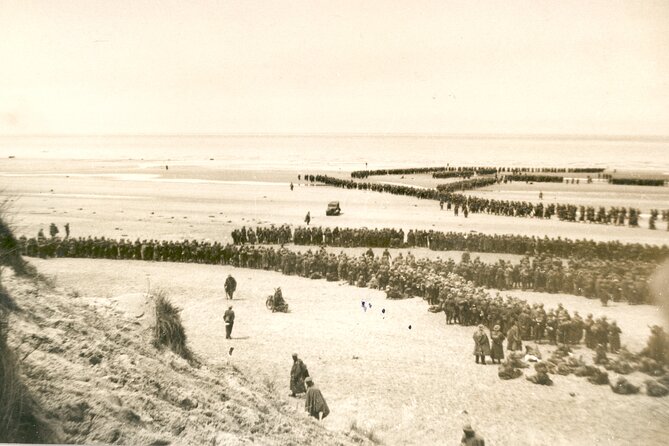
Operation Dynamo is easy to reduce to one dramatic image: small civilian boats crossing the Channel to rescue British troops. The real story is harder to picture. Soldiers waited on open sand, the port was under pressure, and a defensive perimeter gave the evacuation enough time to continue.
A guide helps you connect those pieces. Instead of moving through Dunkirk as a collection of beaches, streets, and port facilities, you follow the basic order of events. You see where troops gathered, where graves record the cost, and where the evacuation was organized.
The private format matters here. You can ask why one section of beach mattered, how the port worked, or what happened to French civilians after the fighting. The guides have been praised for adjusting their explanations to families, teenagers, and people who already read books about the campaign.
Several guides are named in the tour’s feedback. Emmanuel is described as warm, flexible, and passionate about Dunkirk. Elise is praised for presenting both French and British perspectives, while Fred and Freddy bring strong military background and vivid individual stories. Onno is noted for being personable and for connecting the history with the Christopher Nolan film.
That does not mean every guide will give the same tour word for word. It does mean the human guide is the heart of the experience. The vehicle gets you between sites, but the explanations give those sites their meaning.
A few more Lille outings to set side by side
- Entrance Ticket Nausicaa, the biggest aquarium in Europe
★ 3.5 · 1,135 reviews - Lille Driving Tour by Convertible Citroen 2CV
★ 4.9 · 711 reviews - Unique Tour of Lille by Convertible 2CV – 1h00
★ 5.0 · 470 reviews
Starting at the Commonwealth War Graves cemetery
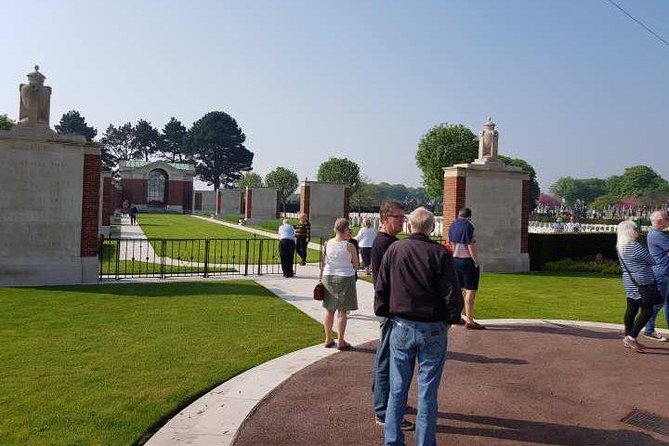
The first stop takes about 20 minutes at the Commonwealth War Graves cemetery in Dunkirk. You enter through the columns of the Dunkirk Memorial and begin with the etched glass inside the memorial before walking to several graves in the Second World War plot.
This is a quiet, useful opening. The beach and port show movement, panic, and escape. The cemetery slows the pace and reminds you that Operation Dynamo was not a clean success story. Many men died during the retreat, the evacuation, or the fighting that made the evacuation possible.
The etched glass and memorial architecture also give the guide a place to explain names, units, and the wider wartime setting. If you know little about Dunkirk, this helps you avoid treating the operation as a single day of rescue. If you already know the basic story, the graves give the history a more personal scale.
Admission is free. The stop is short, so do not expect a long cemetery walk or a detailed study of every inscription. Its value comes from the guide’s interpretation and from setting a respectful tone for the rest of the tour.
Reading the evacuation from Malo-les-Bains beach
The beach at Malo-les-Bains is the emotional center of the tour. You spend about 25 minutes here, looking along the broad shoreline where so many soldiers waited for days under German attacks.
From the beach, you can see the full sweep of the roughly 20-kilometer stretch from which about 100,000 soldiers were taken to England. That view is more useful than a photograph in a book because it shows the sheer scale of the problem. The beach is not a single small patch of sand. It is a long, exposed area where men had to wait, move, and hope that evacuation boats would reach them.
Your guide may use photographs and maps to show how the wartime scene differed from the present one. That visual aid has been especially useful for families and for people who have watched the film Dunkirk. One guide also included the street seen in the film’s opening scene, although that addition may depend on timing and the guide’s approach.
Expect wind. Dunkirk’s coast can be breezy, and one tour took place in poor weather. Bring a jacket even if the forecast looks mild, and wear shoes that are comfortable on sand or wet pavement. Bottled water is provided, but food is not, so plan a snack before or after the tour if needed.
The beach stop is included in the tour price. You are not paying an admission fee here. You are paying for transport, time, and the explanation that turns a wide beach into a military location you can understand.
Following the evacuation at the East Mole
The final listed stop is the East Mole at the Grand Port Maritime of Dunkirk. You spend about 20 minutes learning how the port evacuation was organized and why this area became the main point of departure during Operation Dynamo.
This stop gives you the logistical side of the story. The beach may suggest waiting and confusion, but the port shows the effort required to move men out in large numbers. The guide explains how the evacuation was arranged and places the East Mole within the wider operation.
For many people, this is where the tour’s three locations come together. The cemetery shows the human cost. Malo-les-Bains shows the exposed waiting area. The East Mole shows the organized route out.
The port is also a place where the modern city can make the past harder to see. You will not find a preserved 1940 scene at every turn. That is why the guide’s maps, photographs, and verbal direction matter. A strong guide helps you compare what is visible now with what occupied the same space during the evacuation.
One useful limitation to understand: the tour focuses on the main Dunkirk locations. It does not extend in detail to Gravelines, the Aa Canal, or the shrinking defensive perimeter farther west. If those battles are your main interest, you will need extra research or a longer visit.
More private outings in Lille:
- Private Round Trip Transfer to Vimy Ridge from Arras
★ 5.0 · 164 reviews - 30-Minutes Private Guided Tour of Lille by Convertible 2CV
★ 5.0 · 79 reviews - 1 Hour Private Lille Tour by Convertible 2CV with a Local Products Tasting
★ 5.0 · 78 reviews - Australian private Somme tour including Sir John Monash Centre
★ 5.0 · 51 reviews
Add the Dunkirk museum before or after
The Dunkirk museum is not included, but it is strongly worth adding if Operation Dynamo is your main reason for coming. The museum can give you the objects, photographs, and background that a short outdoor tour cannot provide.
The best order depends on how you like to learn. Visit the museum first if you want basic context before seeing the beach and port. One visitor found that the museum followed by the tour worked especially well: the displays established the story, and the guide then made the locations easier to read.
You can also take the tour first and use the museum afterward to fill in names, equipment, and dates. Either way, allow separate time and budget. Museum admission is not part of the $193.50 tour price.
The guide can explain events in the open air, but no two-hour route can replace a museum visit for someone who wants a fuller account. Think of the two experiences as partners rather than substitutes.
What the $193.50 price really buys
The listed price is $193.50 per group, which makes the arithmetic fairly simple. For three people in a car, it comes to about $64.50 each. For a larger party sharing a minivan, the per-person cost can drop sharply, provided your group fits the stated vehicle limit.
The price includes a guide or driver-guide, private transportation when booked, bottled water, and hotel pickup and drop-off at selected hotels. You are not joining a large coach group, and you do not have to spend the short tour waiting for strangers to finish taking photographs.
That privacy is the strongest argument for the price. You can ask questions freely, slow down for a family member, or discuss the film without holding up a busload of people. The guides have also shown flexibility with timing and special circumstances, including adapting a tour around an injured hand and changing plans for a personal celebration.
The counterpoint is just as clear. The three main stops are fairly close together, and the tour lasts about two hours. If you are paying alone or as a couple, the cost may seem steep for a compact route with no meal, museum ticket, or other paid attraction included.
I would book it for a group of three to eight people who want a private explanation without arranging their own driving. For one person, I would compare the price with a longer tour or consider visiting the museum and sites independently, if you are comfortable building your own historical route.
The booking information also contains two different group limits: up to 15 people is stated in the headline price, while the vehicle details specify three people for a car and eight for a minivan. Ask the operator which vehicle and maximum apply to your party before paying.
Guides, photographs, and the French view
The strongest praise goes to the guides rather than to the transport. Emmanuel is repeatedly described as passionate and able to make the events clear for an entire family. Elise is praised for including French and British perspectives, which is important because Dunkirk was not only a British rescue story.
Fred and Freddy are noted for their military background, polite manner, and ability to bring individual events to life. Alyce also received praise for explaining the French side and for making the tour work despite unpleasant weather. Onno is described as fun, approachable, and good at linking the history with the modern city.
A binder of photographs and maps is another useful touch. Outdoor wartime sites rarely explain themselves. A visual comparison can show where troops stood, how the shoreline looked, and why a particular part of the port mattered.
You should still arrive with a few questions. Ask about the defensive positions around Dunkirk, the experience of local civilians, or how the film used the city. The private setting gives you room to shape the conversation instead of receiving only a fixed speech.
Who will get the most from this tour
This is a good choice for:
- Families with older children and teenagers who need a clear, story-led introduction.
- People who have seen Dunkirk and want to separate the film from the actual places.
- Military-history enthusiasts who want to walk the beach and see the port rather than study maps alone.
- English-speaking visitors who prefer a private guide.
- Small groups who value hotel pickup and do not want to drive around an unfamiliar port city.
It is less suitable if you want a long battlefield tour, extensive time at the museum, or a detailed study of the perimeter battles around Gravelines and the Aa Canal. It may also feel expensive if you are alone and mainly want transportation between three nearby locations.
Most people can participate, and service animals are allowed. The meeting point is 1874 Rue des Chantiers de France, 59140 Dunkerque, France, though pickup is offered from selected hotels. The tour returns to the meeting point, and confirmation is provided when you book.
Free cancellation is available until 24 hours before the start time. After that point, the amount paid is not refunded, and late changes are not accepted.
Should you book the Operation Dynamo tour?
Book it if you want the meaning of Dunkirk explained at the places where the evacuation unfolded. The cemetery, Malo-les-Bains beach, and East Mole form a sensible short route, and a good guide can make the two hours memorable with maps, photographs, military context, and local perspective.
I would pair it with the Dunkirk museum, especially if this is your first visit. For the best value, bring several people, confirm the correct vehicle limit, dress for coastal wind, and tell the guide what interests you most.
Skip it if you only want admission to a museum or if you expect a full campaign tour reaching every defensive position. For a compact, private introduction to Operation Dynamo, however, this is a strong choice, backed by a 4.9 rating from 99 reviews and a recommendation rate of 98 percent.
FAQ
How long does the Private Battle of Dunkirk Operation Dynamo Tour last?
The tour lasts approximately two hours.
What locations are included?
The route includes the Commonwealth War Graves cemetery in Dunkirk, Malo-les-Bains beach, and the East Mole at the Grand Port Maritime of Dunkirk.
Is the Dunkirk museum included?
No. The museum is not included in the tour, but it is recommended for people who want more background on Operation Dynamo.
Is transportation provided?
Private transportation is provided if booked. Hotel pickup and drop-off are available at selected hotels, and the activity ends back at the meeting point.
How many people can join the private tour?
The information gives a maximum of three people for a car tour and eight people for a minivan tour. The headline price also refers to groups of up to 15, so confirm the applicable vehicle limit before booking.
What is the cancellation policy?
You can cancel up to 24 hours before the start time for a full refund. Cancellations or changes made less than 24 hours before the start time are not accepted for a refund.
Recently added in Lille
- Private Lille Tour by Classic Convertible 2CV with Champagne★ 5.0 · 49 reviews
- 1 Hour Private Lille Tour by Convertible 2CV with a Local Products Tasting★ 5.0 · 78 reviews
- Lille Scavenger Hunt and Highlights Self Guided Audio Tour★ 4.0 · 32 reviews
- 30-Minutes Private Guided Tour of Lille by Convertible 2CV★ 5.0 · 79 reviews
- Lille Scavenger Hunt and City Highlights Walking Tour★ 4.5 · 47 reviews
- Private Round Trip Transfer to Vimy Ridge from Arras★ 5.0 · 164 reviews
- Private Full Day Tour of the Somme Battlefields★ 5.0 · 28 reviews
- 1 day Canadian WW1 private tour including Vimy Ridge★ 5.0 · 30 reviews
Lille Tours, compared.

Entrance Ticket Nausicaa, the biggest aquarium in Europe
Read our review →

24, 48 or 72-Hour City Pass & 24-Hour Transportation
Read our review →
Private Round Trip Transfer to Vimy Ridge from Arras
Read our review →

Browse the lists this tour appears in