
REVIEW · CHAMPAGNE TOURS
Aÿ-Champagne: Champagne House Tour and Tasting Class
Small Champagne houses often tell the better story. At Le Clos Corbier in Mareuil-sur-Aÿ, you get a close look at Champagne production, from the traditional press to the cellar, followed by a lively tasting class with three family Champagnes. I especially like the personal, family-run setting and the way the tasting turns technical details into a quiz and aroma workshop. The Grand Cru Vintage tasting also gives this modestly priced visit a serious finish.
The main drawback is getting there. Mareuil-sur-Aÿ sits in the vineyards rather than beside a major train station, and taxis from Reims can be hard to arrange and costly. If you are planning a day trip from Paris, allow plenty of time for transport instead of treating this as a quick stop between trains.
In This Review
- What makes this Champagne visit worth your time
- Arriving at Le Clos Corbier in Mareuil-sur-Aÿ
- The press room explains where Champagne begins
- Cellars dug in the 1850s
- The tasting class turns facts into something you can use
- Three Champagnes, including a Grand Cru Vintage
- Snacks make the tasting feel generous
- Why the small-house setting matters
- How the $47 price holds up
- Who should book this tour?
- My verdict on Le Clos Corbier
- FAQ
- Where does the Champagne house tour take place?
- How long does the visit last?
- How much does the Champagne experience cost?
- How many Champagnes will I taste?
- Is the tasting guided?
- What parts of the Champagne house will I see?
- Are food and drinks included?
- Is the tour offered in English?
- Can I cancel the booking?
What makes this Champagne visit worth your time
- A traditional press and 1850s cellars: See the practical spaces where Champagne is made and learn how the process moves from harvest to bottling.
- Three family Champagnes: Taste a range that includes one Grand Cru Vintage, not just a single house pour.
- A real tasting class: Use an aroma workshop, quiz, and blind tasting to learn how to assess Champagne.
- A small-house atmosphere: The setting feels personal and down to earth rather than designed for large crowds.
- English and French guides: Guides such as Alvaro, Amanda, Charlotte, Martin, Marie, and Emma have been praised for clear explanations and friendly teaching.
- Local snacks included: Sweet treats and finger food accompany the tasting, with adaptations possible for allergies and specific diets.
Arriving at Le Clos Corbier in Mareuil-sur-Aÿ
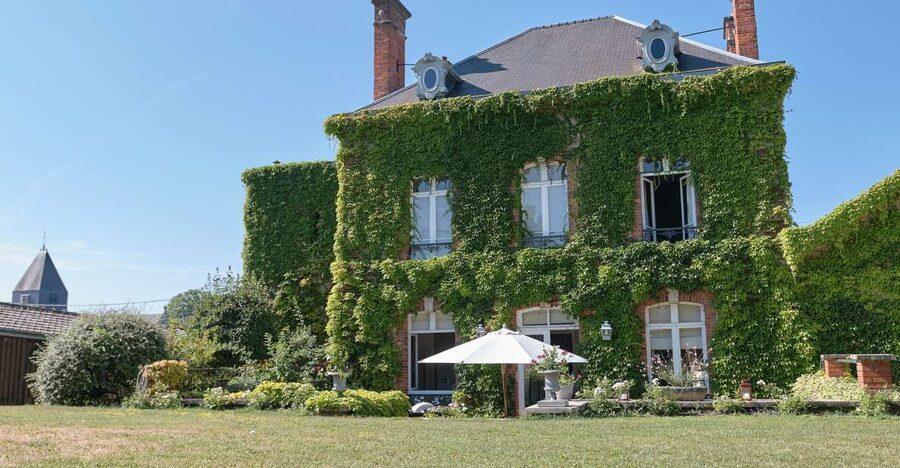
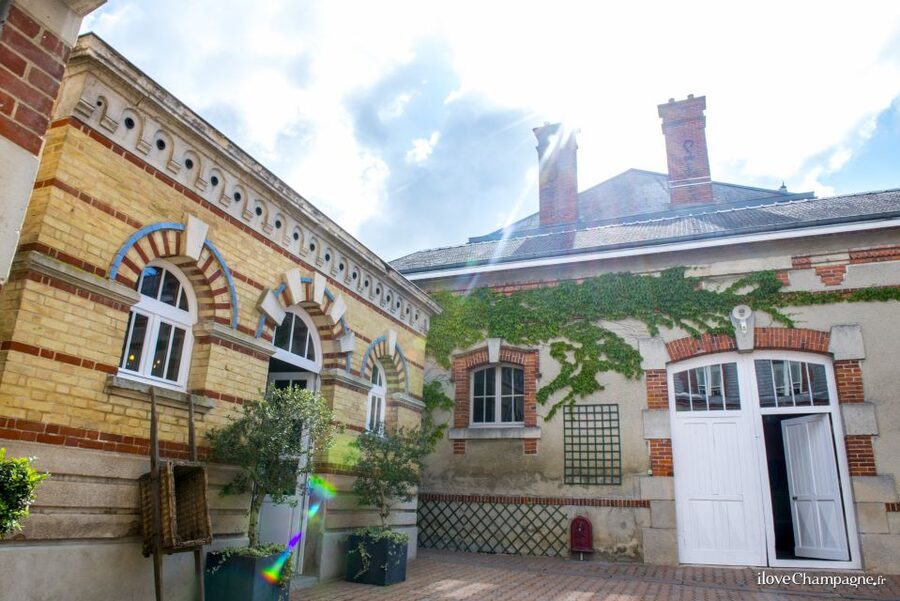
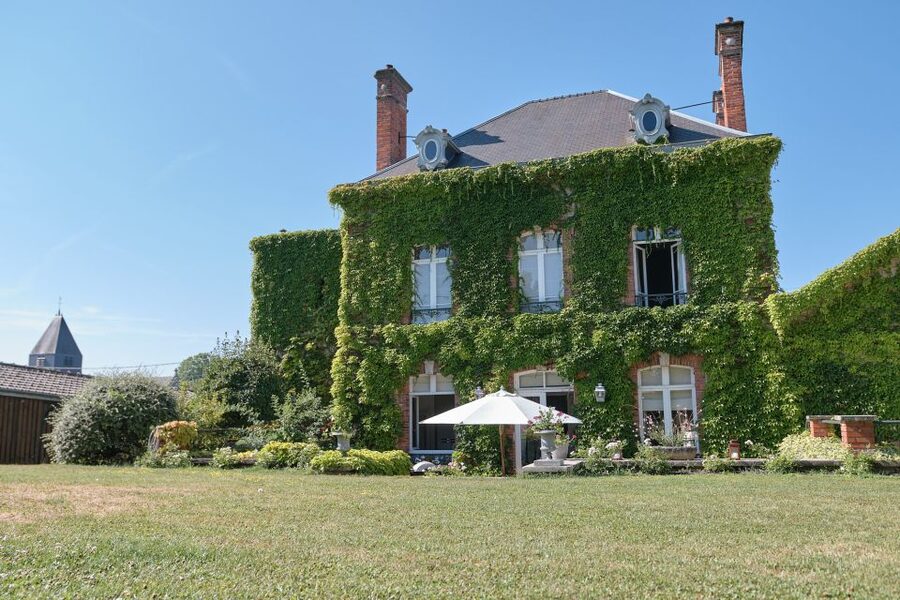
Le Clos Corbier is in Mareuil-sur-Aÿ, a village surrounded by Champagne vineyards in the Grand Est region. This is the kind of setting that makes a Champagne visit feel connected to the place itself. You are not simply entering a tasting room in a city. You are visiting a working Champagne house in the middle of the production area.
The house is described as typical and family-oriented, with a welcoming atmosphere. If you arrive early, you may be offered coffee, tea, or water before the tour begins. That small touch matters, especially if you have come from Reims, Epernay, or Paris and have had a busy morning.
The grounds also add to the appeal. One visitor enjoyed buying Champagne after the tasting and sitting outside in the sun. That is not part of the formal 90-minute schedule, but it shows why you may want to avoid rushing away the moment the tasting ends.
Getting there requires planning. There is no simple, convenient train connection from Reims to the house, and taxis are not always readily available in Aÿ. A rental car is the most practical choice if you are building a day around the vineyards. If you hire a taxi, arrange the return as carefully as the journey there. Do not assume you can find a car at short notice.
More Food Tours in Champagne
- Champagne: Champagne Tasting Class with Lunch
★ 4.9 · 384 reviews - Aÿ-Champagne: Pressoria Champagne Museum with Tasting
★ 4.7 · 239 reviews - The Essential Tour from Epernay with Champagne Tasting
★ 4.9 · 120 reviews
The press room explains where Champagne begins
The visit starts with the production side of the house. You will see a traditional press and hear how Champagne grapes are handled from harvest through bottling. This is valuable because the finished glass can make the process seem effortless. The press reminds you that Champagne begins with careful grape handling, not with the bottle ceremony at the end.
The guide explains the stages of production in plain terms. You will learn about the work involved in making Champagne and gain a clearer sense of why different bottles can taste so different. The focus is not only on drinking. You are given a framework for understanding what you are about to taste.
That teaching style has been one of the strongest parts of this visit. Alvaro has been praised for explaining the process thoroughly without making it heavy. Amanda, Charlotte, Martin, Marie, and Emma have also been singled out for making the subject easy to follow and enjoyable.
The tour works especially well if this is your first Champagne-house visit. You do not need a strong background in wine. The guide builds the lesson from the basics, and the tasting activities later help you remember what you have learned.
Cellars dug in the 1850s
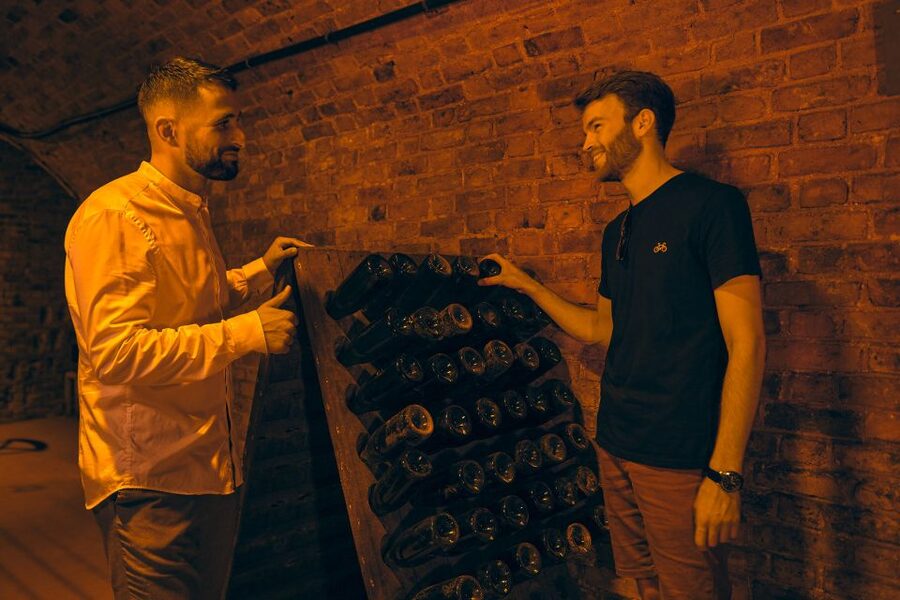
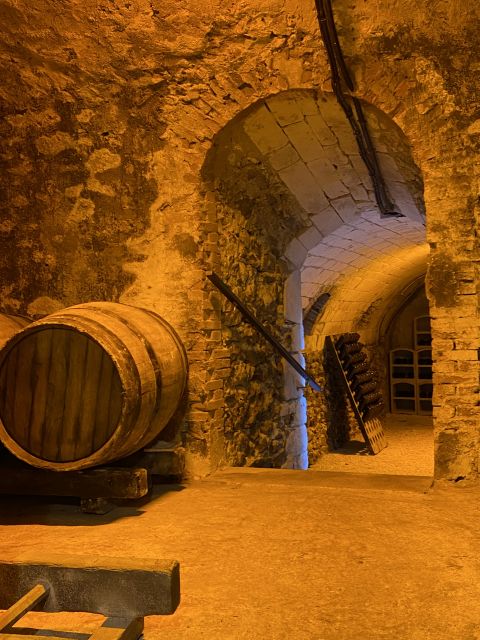
From the press room, the tour continues into cellars dug in the 1850s. The cellar visit gives the production story a physical setting. Instead of hearing about Champagne aging only as a technical step, you see the underground space where bottles rest.
The atmosphere here is likely to appeal to visitors who prefer a traditional house to a large, polished attraction. The cellar is part of the working identity of Le Clos Corbier, and the age of the space adds character without requiring a long historical lecture.
You should still keep your expectations sensible. This is a 90-minute visit, not a full-day examination of every stage of Champagne production. You will get a focused introduction to the house, the press, the cellar, and the tasting method. If you want an extended vineyard walk, a full meal, or a broad comparison of many producers, you will need to add other activities.
The short format is one of the strengths for many people. You can learn the essentials without giving up an entire afternoon. Families have also found the visit workable, with children taking part in a nonalcoholic taste test made with seltzer and syrup.
The tasting class turns facts into something you can use
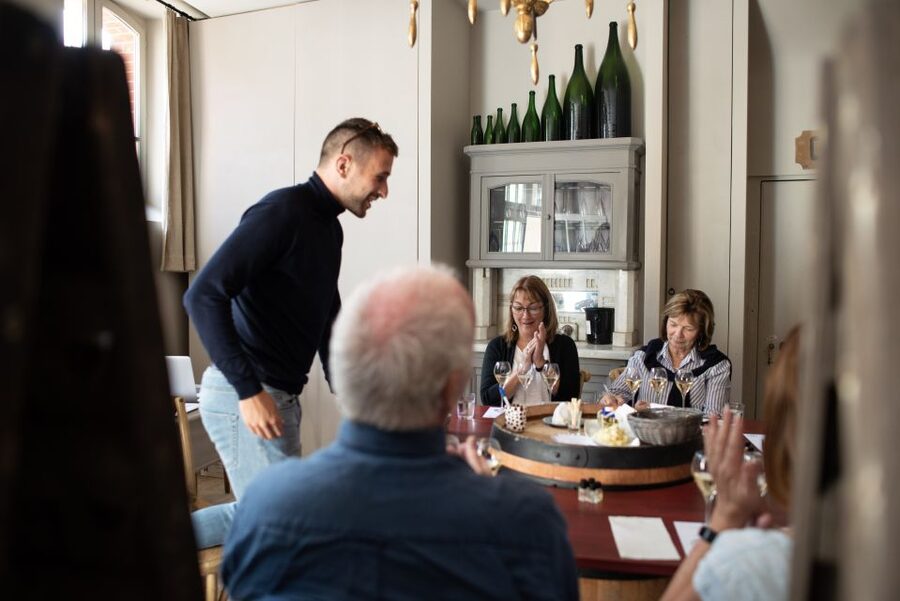
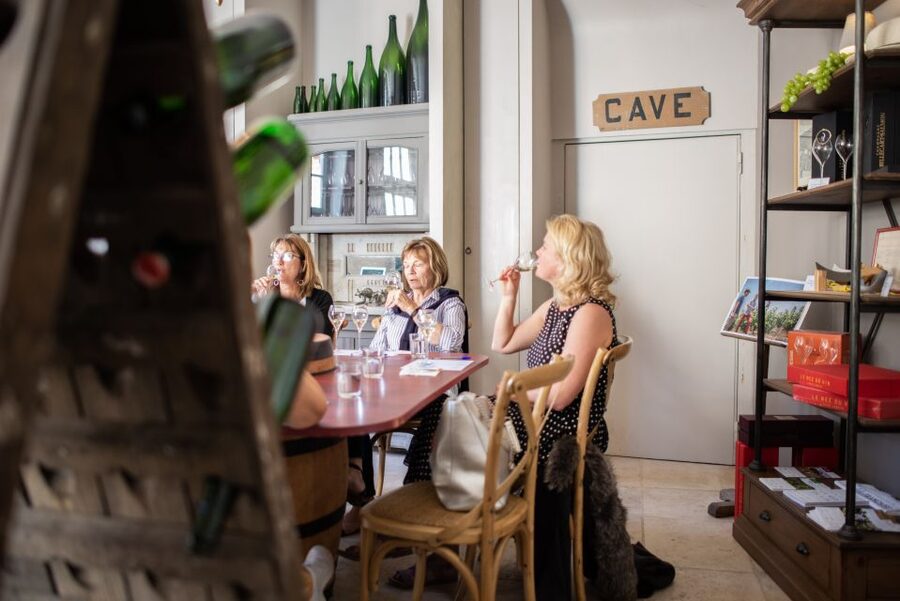
The tasting is not simply three glasses placed in front of you. You take a seat for a class that includes a Champagne quiz and an olfactory workshop. You are asked to train your nose and identify aromas and flavors that can appear in Champagne.
This is a smart way to teach. Many people enjoy wine but struggle to describe what they are sensing. The aroma exercise gives you a practical starting point. You may not suddenly become an expert, but you will leave with better words for discussing what is in your glass.
The quiz also keeps the session lively. It is interactive rather than a test you need to prepare for. Questions reinforce what the guide has explained about Champagne production, the region, and the tasting process. You can relax and treat it as part of the fun.
I like this approach because it prevents the tasting from becoming passive. You are not expected to sit quietly while someone lists grape varieties and production terms. You are invited to make observations, answer questions, and compare your impressions with the rest of the group.
Same city, a slower kind of day:
- From Reims: Champagne and Family-Run Wineries Tour
★ 4.8 · 671 reviews - Reims afternoon tour Champagne and family growers
★ 5.0 · 535 reviews - From Reims: Morning Champagne Tour and Tastings
★ 4.8 · 463 reviews - From Reims: Champagne Day Trip to 3 Family Domains & Lunch
★ 4.8 · 194 reviews
Three Champagnes, including a Grand Cru Vintage
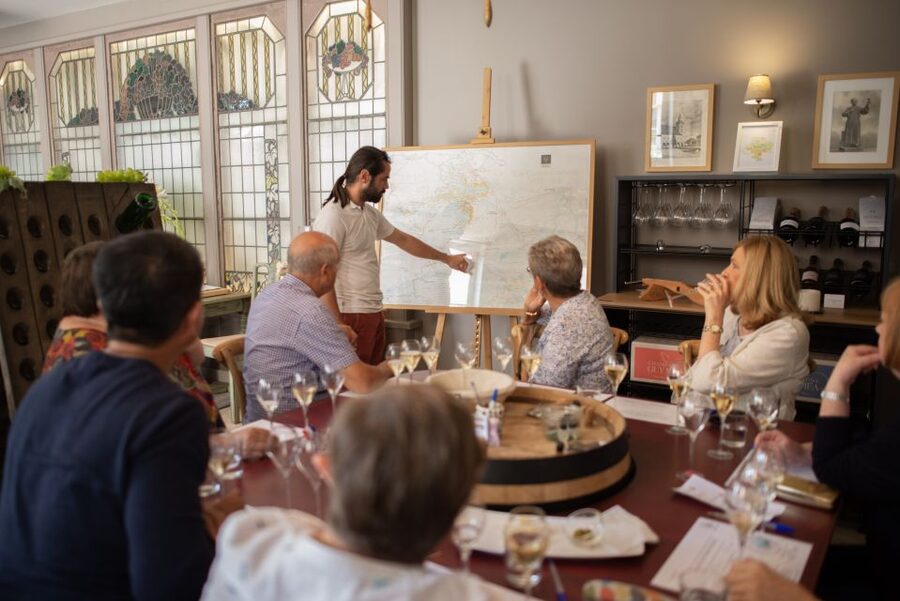
The tasting includes three different Champagnes from the family, with one Grand Cru Vintage among them. That gives you a chance to compare bottles from the same producer while noticing how style and quality can vary.
The blind tasting is the most playful part. You identify the three Champagnes without relying on the label. The point is not to prove that you have a perfect palate. It is to show how much the bottle, price, and expectation can influence your judgment.
A Grand Cru Vintage adds extra interest to the flight. You are not tasting only an entry-level example before being sent on your way. The premium bottle gives the guide a chance to discuss differences in character and helps you see what you are paying for in a more ambitious Champagne.
The exact pours and tasting order can vary, so you should not expect a fixed list of cuvées based on the information available. What is clear is that the class includes three family Champagnes and a Grand Cru Vintage, along with guidance on how to taste them.
Snacks make the tasting feel generous
Local sweet treats and finger food are served with the Champagne. These are not a replacement for lunch or dinner, so plan a separate meal if you need something substantial. Still, the snacks make the tasting more comfortable and help show how Champagne can work with food.
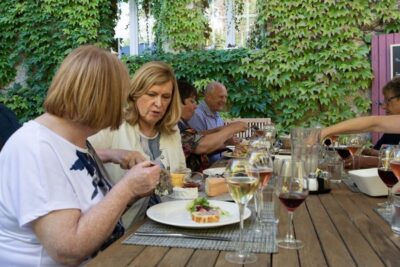
Food is also useful during a tasting. A small bite can change how a wine feels and tastes, and it gives you a chance to pause between pours. If you have allergies or follow a specific diet, the food can be adapted. Mention your needs when arranging the visit rather than waiting until the plates arrive.
One important detail: lunch or dinner is not included in the standard activity. If you want a longer food-and-wine outing, confirm what additional options are available before booking. The 90-minute visit itself is built around the house tour, class, and tasting.
Why the small-house setting matters
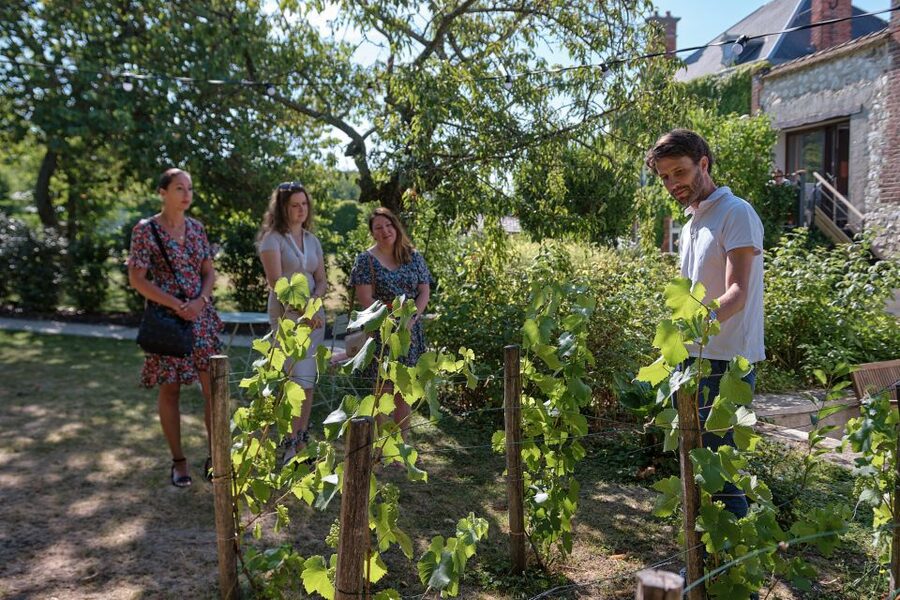
The biggest difference between Le Clos Corbier and a large Champagne attraction is the scale of the encounter. The house is described as down to earth and family oriented, and the guides make an effort to involve the group.
That personal tone appears in the way questions are handled. Alvaro has been praised for answering many questions while keeping the explanation entertaining. Other guides have been described as warm, clear, and enthusiastic. The names may vary on your date, but the teaching style is a central part of the visit.
A smaller house can also make the experience feel less like a production line. You may have more room to ask about the family business, the local vineyards, and the practical decisions behind the bottles. The tradeoff is that you may not get the grand architecture, huge cellars, or highly staged presentation found at the famous houses along Avenue de Champagne.
For me, the choice depends on what you want. If you are collecting famous names and large-scale sights, Le Clos Corbier may feel modest. If you want to understand how Champagne is made and taste it in a more personal setting, the smaller scale is a real advantage.
How the $47 price holds up
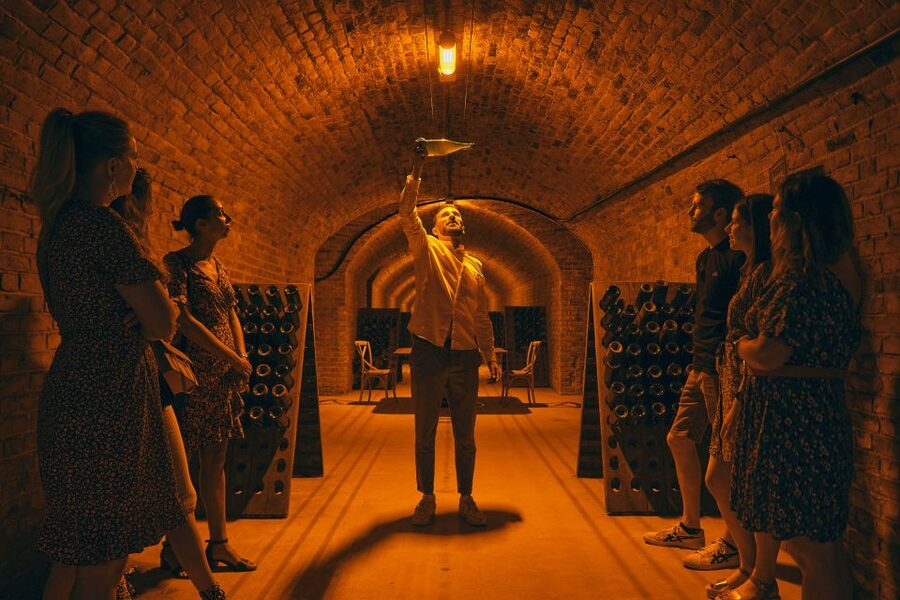
At $47 per person, the visit offers solid value. You receive a house visit, access to the press room and cellar, a guided tasting class, three Champagne tastings, an aroma activity, a quiz, and snacks. The Grand Cru Vintage makes the package more appealing than a basic single-glass tasting.
The value is strongest for first-time visitors. You are paying for instruction as much as for the wine. By the end, you should understand more about the production process and have a better method for tasting Champagne.
The price does not cover transport, lunch, or dinner. Those costs can change the total considerably, particularly if you need an expensive taxi from Reims. A rental car may make more sense if you plan to visit several houses, but you must consider that the driver will need to limit alcohol. Public transport may work for some schedules, but the available connections are not especially convenient.
At 90 minutes, the timing is efficient. You get enough substance to make the journey worthwhile, but not so much that the cellar visit becomes tiring. I would allow extra time around the appointment for arrival, photos, a possible purchase, and your onward journey.
Who should book this tour?
I would recommend Le Clos Corbier to:
- First-time Champagne visitors who want a clear introduction
- Couples looking for a relaxed tasting in the vineyards
- Small groups who prefer conversation to a large commercial presentation
- Families, since children can take part in a nonalcoholic tasting activity
- Wine fans who want to compare three bottles from one family house
- Anyone who enjoys learning through games rather than a formal lecture
You may want another type of visit if you need a full meal, hotel pickup, a major-name Champagne brand, or an easy train connection from Reims. The tour is also not a substitute for a full vineyard day. It gives you a compact and useful look at production, followed by a well-planned tasting.
The activity is offered in French and English. If you have specific language needs, choose the appropriate option when booking and check the available starting time.
My verdict on Le Clos Corbier
Le Clos Corbier offers a warm, educational Champagne visit at a fair price. The best parts are the traditional press, the 1850s cellar, the lively tasting class, and the chance to compare three family Champagnes, including a Grand Cru Vintage.
I would book it if you want a genuine introduction rather than a grand brand presentation. Plan your transport carefully, do not count on the included snacks as a meal, and leave room to enjoy the grounds or buy a bottle after the formal visit. For a first stop in the Champagne region, this is a particularly good choice because you learn how the wine is made before being asked to judge it in your glass.
FAQ
Where does the Champagne house tour take place?
The tour takes place at Le Clos Corbier in Mareuil-sur-Aÿ, in the Grand Est region of France, among the Champagne vineyards.
How long does the visit last?
The activity lasts 90 minutes.
How much does the Champagne experience cost?
The listed price is $47 per person.
How many Champagnes will I taste?
You will taste three Champagnes from the family house, including one Grand Cru Vintage.
Is the tasting guided?
Yes. The tasting is presented as a Champagne tasting class with a quiz, an olfactory workshop, and a blind identification activity.
What parts of the Champagne house will I see?
The visit includes the Champagne house, the press room, and cellars dug in the 1850s.
Are food and drinks included?
Champagne tastings, local sweet treats, and finger food are included. Lunch and dinner are not included.
Is the tour offered in English?
Yes. Live guidance is available in English and French.
Can I cancel the booking?
You can cancel up to 24 hours in advance for a full refund. A reserve-now, pay-later option is also available.
More Hands-On Sessions in Champagne
- Champagne Tasting Class and Lunch near Epernay
★ 5.0 · 53 reviews - Afternoon Champagne visit & tasting class near Epernay
★ 5.0 · 29 reviews - Fragonard Paris: Mini Perfume Workshop
★ 4.5 · 1,924 reviews - Paris Cooking Class and Lunch with Wine plus Market Visit Option
★ 5.0 · 1,024 reviews
Recently added in Champagne
- The Must-sees 3h30 from Epernay (Private Half day Champagne Tour)★ 5.0 · 30 reviews
- From Epernay: Champagne Small-Group tour with tastings & Lunch★ 5.0 · 93 reviews
- Food & Champagne Experience from Epernay (Private tour)★ 4.5 · 28 reviews
- The Connoisseurs from Epernay (Private Half day Champagne Tour)★ 5.0 · 59 reviews
- Champagne experience with a vintage van from Epernay – 3 hours★ 5.0 · 108 reviews
- Bubble Champagne Tour from Epernay (Small group half day tour)★ 5.0 · 58 reviews
- Champagne Munoz Bruneau : Half Day Visit and Tasting★ 5.0 · 50 reviews
- From Epernay Full day Electric bike Champagne and lunch★ 5.0 · 36 reviews
Champagne Tours, compared.
Reims afternoon tour Champagne and family growers
Read our review →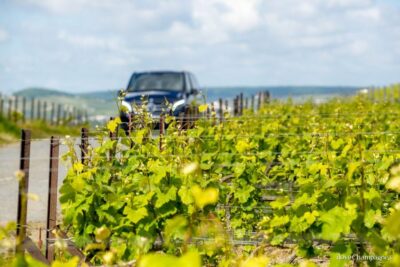
Aÿ-Champagne: Pressoria Champagne Museum with Tasting
Read our review →
Champagne Day Trip to 3 Family Domains & Lunch
Read our review →
Champagne: E-Bike Champagne Day Tour with Tastings and Lunch
Read our review →
The Essential Tour from Epernay with Champagne Tasting
Read our review →Browse the lists this tour appears in