
REVIEW · CHAMPAGNE TOURS
Champagne: Champagne Tasting Class with Lunch
Champagne is better with a quiz. This three-hour visit to Le Clos Corbier combines a small family Champagne house, playful tasting lessons, and a generous regional lunch. I like the personal feel of the family-run setting, and I like that you learn to smell and taste instead of simply lifting a glass. The main drawback is practical: transportation is not included, and the cellars stay around 10°C.
The experience is aimed at curious beginners, but it also gives experienced wine drinkers something useful to chew on. Guides such as Emma, Charlotte, Marie, Amanda, and Estelle have been praised for clear English and a warm approach. If the session is given in both French and English, explanations can take longer than three hours suggests.
In This Review
- What makes this Champagne experience special
- Arriving at Le Clos Corbier in Aÿ-Champagne
- Seeing the old press and cellar
- Learning how to smell Champagne
- Comparing three Champagnes in a blind tasting
- A regional lunch with pâté, cheese, and dessert
- Côteaux Champenois and Ratafia after lunch
- Who will enjoy this best?
- Is $106 a fair price?
- Should you book Le Clos Corbier?
- FAQ
- Where does the Champagne tasting class take place?
- How long does the experience last?
- Is transportation included?
- How many wines are included?
- What food is served at lunch?
- Can lunch accommodate allergies or special diets?
- How cold are the cellars?
- Is the activity available in English?
What makes this Champagne experience special
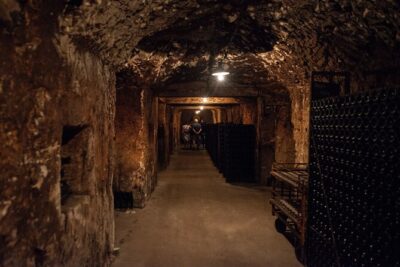
- Cellars from the 1850s: See underground spaces cut into the earth more than 170 years ago, along with a traditional Champagne press.
- A real tasting lesson: Train your nose with an aroma workshop before judging three Champagnes in a blind tasting.
- Small-producer focus: Taste wines from small wineries rather than spending the whole visit on a famous commercial brand.
- Lunch is part of the lesson: Try regional food such as pâté en croûte, Langres cheese, and pink biscuit cake with Champagne pairings.
- More than Champagne: The final tastings include Côteaux Champenois red wine and Ratafia, a local fortified liquor.
- A good value at $106: Six tastings, snacks, lunch, a cellar visit, and a guide make this more than a quick drink-and-leave stop.
Arriving at Le Clos Corbier in Aÿ-Champagne
Le Clos Corbier sits in Aÿ-Champagne, one of the best-known villages in the Champagne area. You will need to arrange your own way there, since transportation is not included. At the property, look for the Clos Corbier sign and ring the doorbell.
That simple arrival matters. This is not a polished city tasting room with a large reception desk and a gift shop built to handle crowds. It feels like a working family wine house, with the visit centered on the cellar, the wines, the food, and the people who make them.
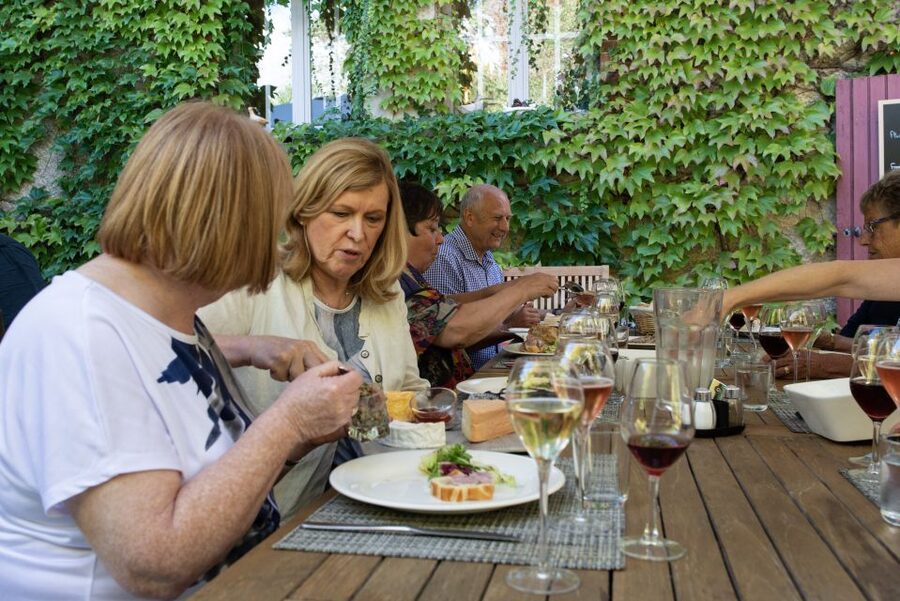
The setting has been warmly received for its house, garden, and dining area. On a sunny day, lunch may be served outside, which gives the meal a pleasant country feel. On a wet or cold day, the indoor rooms still keep the experience comfortable, but bring a jacket for the cellar.
The activity lasts about three hours and usually ends in the early afternoon. That makes it easy to fit into a morning in Aÿ-Champagne or nearby Epernay. It is also long enough to feel like a proper visit rather than a rushed tasting.
More Food Tours in Champagne
- Aÿ-Champagne: Pressoria Champagne Museum with Tasting
★ 4.7 · 239 reviews - Aÿ-Champagne: Champagne House Tour and Tasting Class
★ 4.9 · 209 reviews - The Essential Tour from Epernay with Champagne Tasting
★ 4.9 · 120 reviews
Seeing the old press and cellar
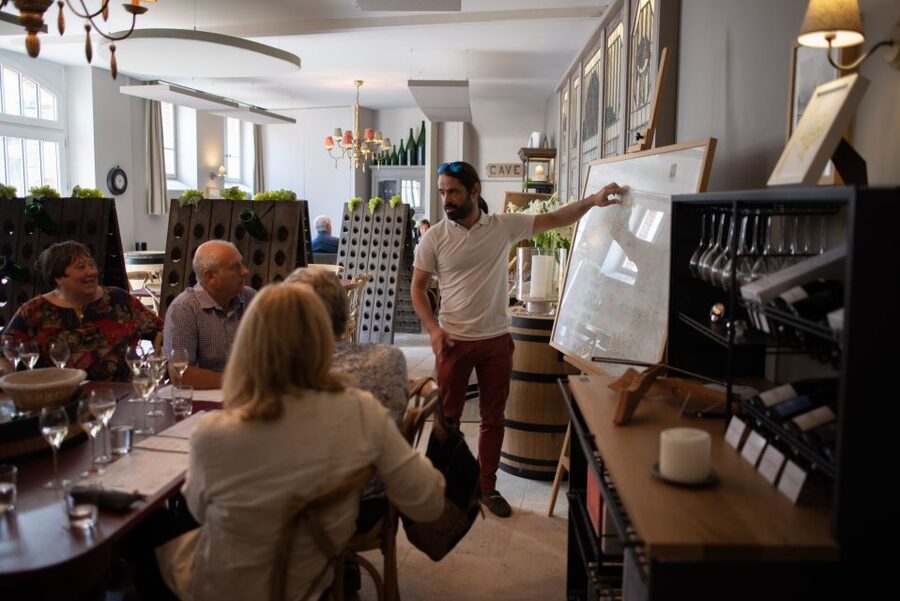
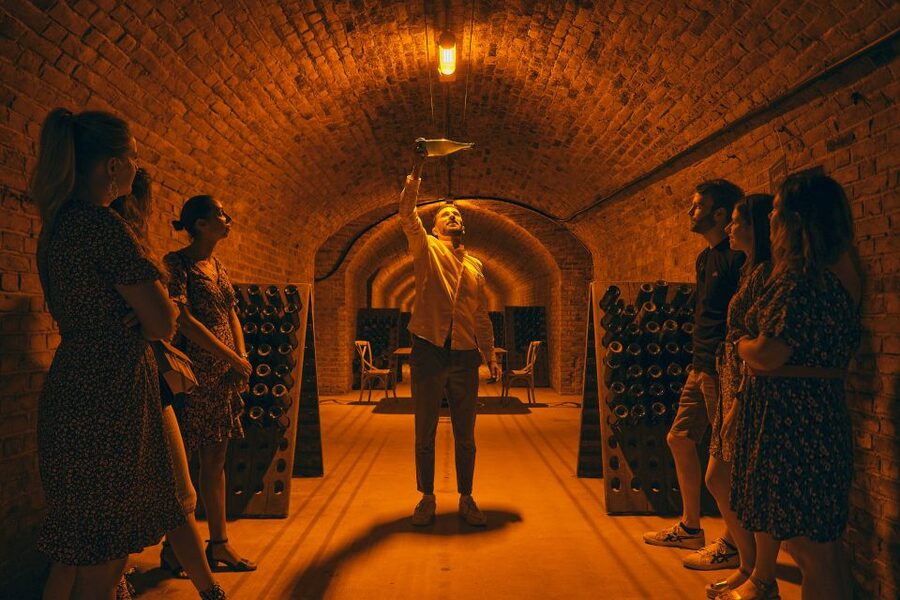
The tour begins with the Champagne-making process. You will hear about the grapes, cultivation, production, and the steps that turn still wine into sparkling wine. The explanation is tied to the family house, which gives the subject a human scale.
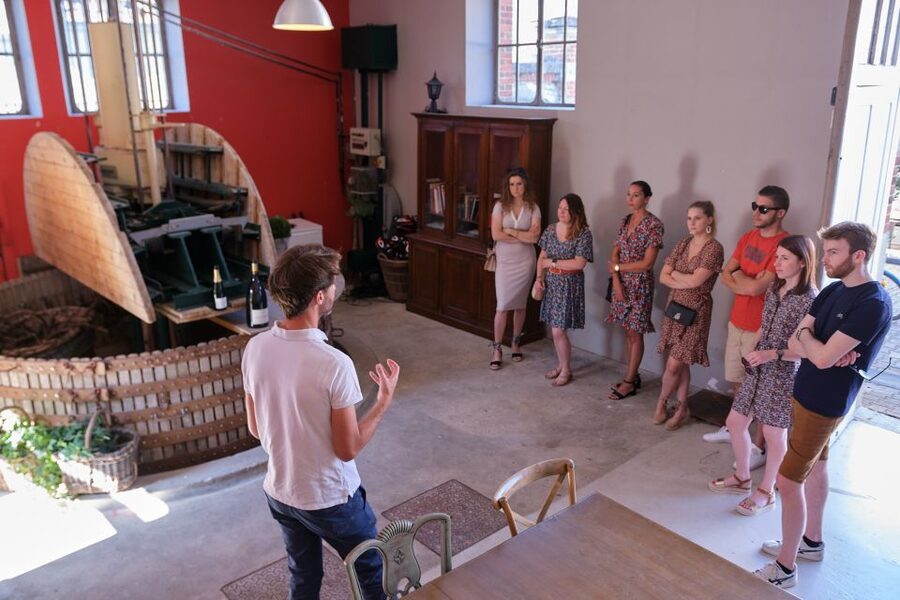
You also see cellars dug in the 1850s and a traditional press. These are useful details, not just old objects placed around for decoration. Champagne production can sound technical when explained in a book, but standing near the equipment helps you connect the work to the place.
The family story is another strong part of the visit. Several guides have explained the history of the house in a way that is easy to follow, even for people who know very little about wine. The owner has sometimes joined the group to answer questions, adding a direct link between the bottle on the table and the family that produces it.
Do not expect a huge underground network like the major Champagne houses in Reims. This is a smaller operation. That is exactly the point for many people: you get a closer look at the human side of production instead of a large-scale brand presentation.
One useful tip is to treat the cellar walk as an introduction, not the whole tour. The most distinctive part comes afterward, when you put the information to work with your nose, palate, and memory.
Learning how to smell Champagne
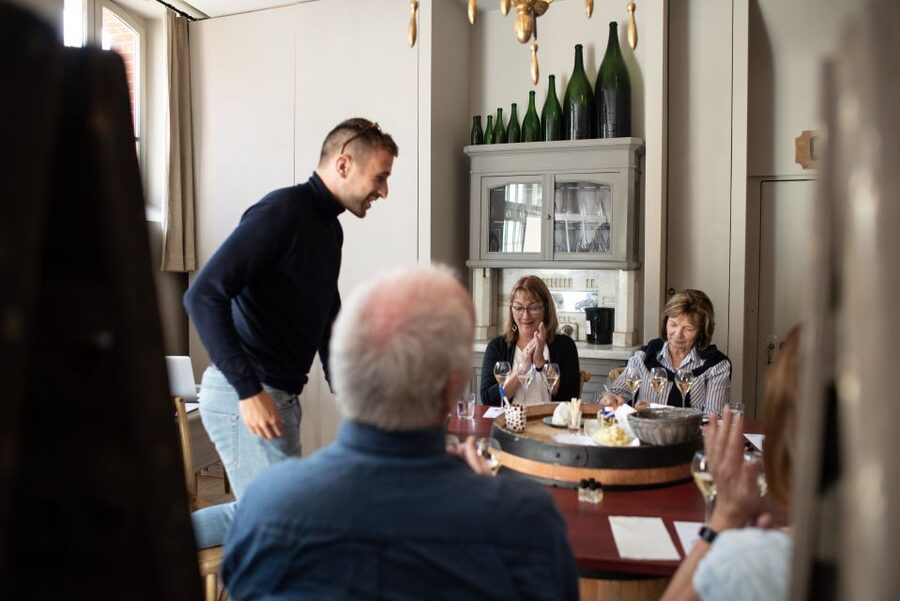
After the cellar visit, you take a seat for the tasting class. The lesson includes a Champagne quiz, which keeps the teaching from becoming a long lecture. You are asked to think about the grapes, production method, aromas, and tasting terms.
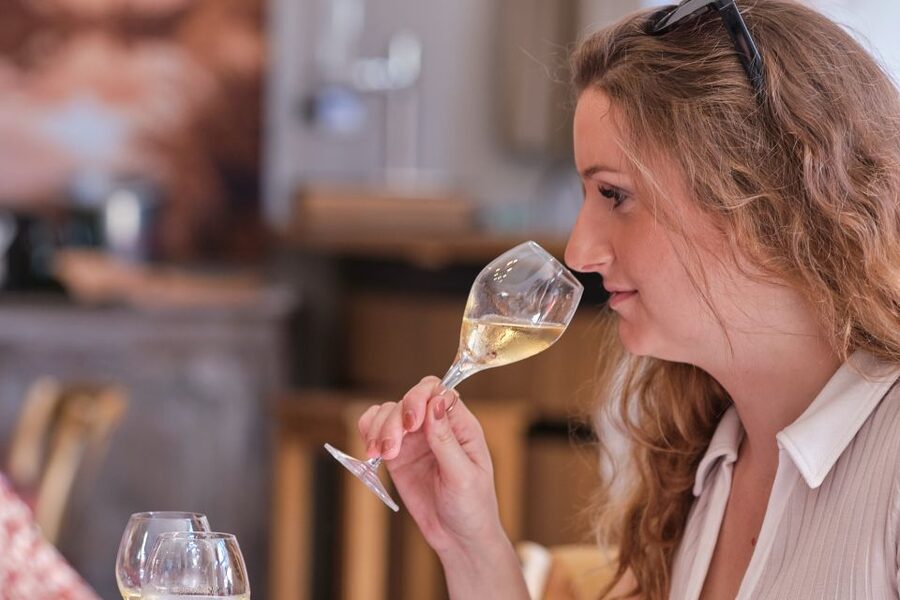
The olfactory workshop is especially helpful for beginners. You train your nose to recognize aromas that can appear in Champagne, then try to connect those smells with what you taste in the glass. This is a simple skill, but it changes the way you drink wine. Instead of saying only that one glass tastes good, you start asking what makes it different.
The workshop also gives experienced drinkers a reason to pay attention. You may already know the standard tasting language, but blind identification forces you to slow down. Smell can be affected by the glass, the temperature, the food, and your own expectations. The activity makes that clear without turning the lesson into an exam.
The guide is important here. Emma has been praised for creating an easygoing group atmosphere, while Estelle has been singled out for excellent English and clear explanations. Other guides, including Charlotte, Amanda, Marie, Thomas, and Alvaro, have also been praised for making the games understandable and fun.
The session may include a certificate at the end. Think of it as a cheerful souvenir rather than a professional wine qualification. The real benefit is that you leave with a better way to taste.
Comparing three Champagnes in a blind tasting
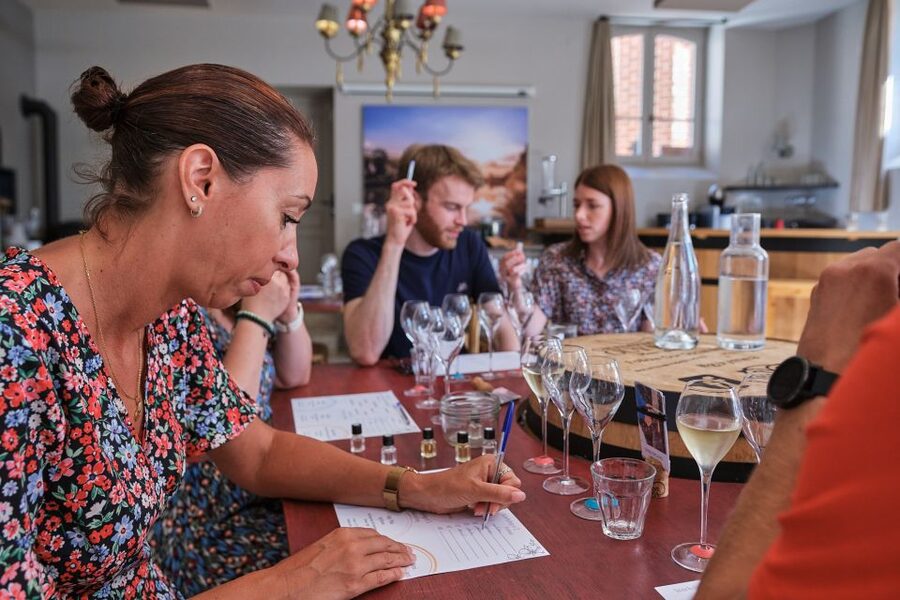
The main tasting compares three different Champagnes from small wineries. The bottles are presented without immediately telling you what they are, so you can focus on the wine rather than the label.
You may be asked to identify differences in aroma, sweetness, structure, or style. Local snacks accompany the tasting, which is practical as well as enjoyable. Food changes how Champagne tastes, and pairing a small bite with each glass helps you notice that.
I like this format because it avoids the usual tasting routine. You do not simply hear a description, take a sip, nod politely, and move on. You have to make a guess, compare notes, and sometimes admit that your first impression was wrong. That is where the lesson becomes memorable.
The pours are described as generous, both during the blind tasting and at lunch. That adds value, but you should still pace yourself. The experience includes six wine tastings in total, followed by more drinks with lunch, red wine, and Ratafia. Three hours can pass quickly when the glasses keep arriving.
The focus on small wineries is also worthwhile. Champagne is often associated with famous labels, but the region includes many family producers with their own styles and methods. Tasting three examples side by side lets you see why the word Champagne covers more variety than many first-time visitors expect.
More long lunches in Champagne:
- From Reims: Champagne Day Trip to 3 Family Domains & Lunch
★ 4.8 · 194 reviews - Champagne: E-Bike Champagne Day Tour with Tastings and Lunch
★ 4.7 · 192 reviews - From Epernay: Champagne Small-Group tour with tastings & Lunch
★ 5.0 · 93 reviews - Reims: Veuve Clicquot and Family-Run Winery Day Tour & Lunch
★ 4.8 · 71 reviews
A regional lunch with pâté, cheese, and dessert
Lunch is not an afterthought. It is one of the strongest reasons to choose this activity over a short tasting at a bar or shop.
The meal features homemade regional specialties. Possible dishes include pâté en croûte, a meat filling baked inside pastry, Langres cheese, and pink biscuit cake. The food is paired with several Champagnes, so you continue learning without sitting through another formal lesson.
The meal has been praised for generous portions, fresh local ingredients, and elegant pairings. You might eat in a pleasant dining room or outside in the garden, depending on the conditions. The mood is casual, and the shared table helps groups settle into conversation.
Langres cheese gives you a clear example of how regional food fits the wine culture of northeastern France. The pâté en croûte brings a savory, filling contrast to the bright bubbles. Pink biscuit cake provides a sweet finish and a distinctly local touch.
Allergies and specific diets can be accommodated, but you should give the host advance notice. The supplied details confirm that lunch can be adapted, though the exact replacement dishes are not specified.
The meal also helps justify the price. At $106 per person, you are not paying only for three glasses of Champagne. You receive the cellar tour, tasting instruction, six tastings, snacks, and a full lunch. If you planned to buy lunch and book a separate winery visit, the total could easily approach this amount.
Côteaux Champenois and Ratafia after lunch
The drinks go beyond sparkling wine. You will also taste Côteaux Champenois, the region’s still red wine, followed by Ratafia, a local liquor.
This is a useful finish because it broadens your understanding of the area. Champagne is not only about bubbles. The same region produces still wine, and Ratafia shows another side of local drinking culture.
These final pours are part of the included tastings, so you do not need to pay extra for them. They also make the lunch feel like a complete regional meal rather than a Champagne lesson with food placed beside it.
If you are not used to alcohol tastings, take the food seriously and drink slowly. Children under 18 may attend only under the stated rules, and they are not allowed to drink alcohol. Pets are not allowed, though assistance dogs are permitted.
Who will enjoy this best?
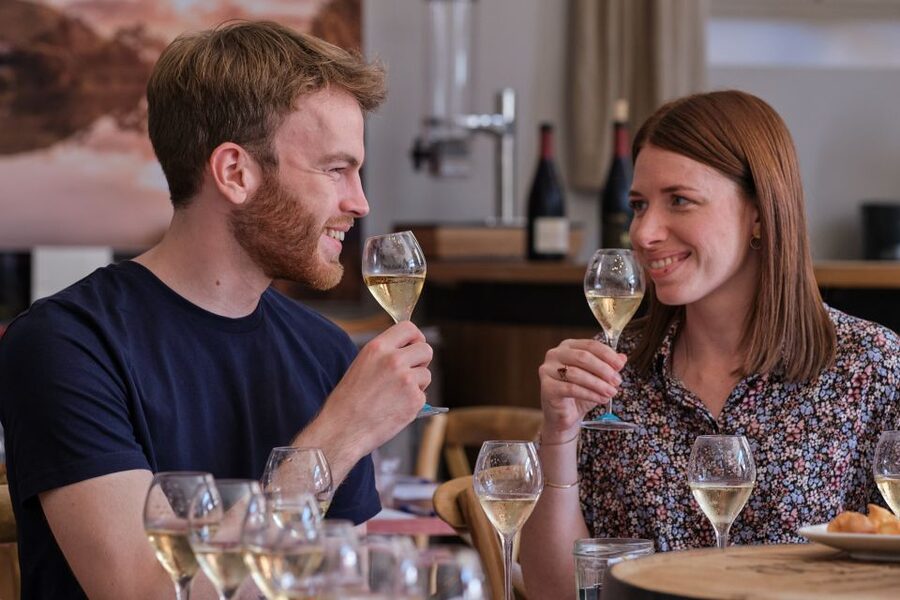
I would choose this for first-time visitors who want to understand Champagne instead of simply collecting photos with a flute in hand. The lessons are structured enough to teach you something, but the quiz and blind tasting keep the mood relaxed.
It also suits couples, small groups, and anyone interested in family producers. The personal setting has more warmth than a large commercial tour, and the owner may speak with the group directly.
Wine lovers who have already visited major Champagne houses can still find value here. The smaller scale, the nose workshop, and the direct comparison of three wines offer a different angle. One visitor who had already taken several Champagne house tours wished this had been their first, because it explained the basics so clearly.
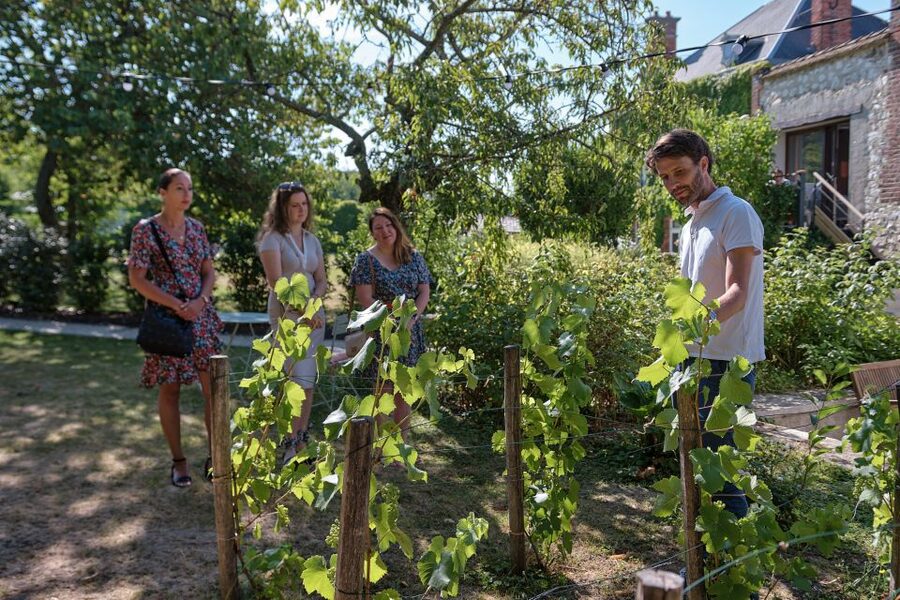
I would be less likely to choose it if your main goal is a large, dramatic cellar complex or a vineyard walk. The experience takes place at a family Champagne house, and one important practical detail is that you should not assume the vineyard itself will be part of the tour. The property and cellar are the focus.
Bilingual groups should also allow a little patience. The host or greeter speaks English and French, and the explanations may be given in both languages. That is helpful for mixed groups, but it can make the pace feel slower.
The activity is wheelchair accessible. A jacket is essential for the cellar, where the average temperature is 10°C. Free cancellation is available up to 24 hours before the start, and you can reserve now and pay later, useful if your route through the region is still changing.
Is $106 a fair price?
For a three-hour visit, $106 is not a bargain-basement tasting, but I think it is a fair price. The package includes winery entry, a guide, the cellar tour, six wine tastings, snacks, and lunch.
The lunch changes the calculation. A simple tasting can be inexpensive, but this experience combines education, food, and several wine styles. You also avoid the common problem of leaving a winery hungry after two tiny pours.
The value is strongest if you enjoy participation. The quiz and aroma workshop are not extras you watch from the side. You use them. If you only want to sip Champagne in a pretty room, a shorter tasting may suit you better.
The family-house setting adds value in a different way. You get a clearer sense of how a smaller producer works, and you may meet someone connected directly with the operation. That personal contact is hard to reproduce at a major brand.
Should you book Le Clos Corbier?
I would book this if you want a friendly, educational introduction to Champagne with a proper meal attached. The best features are the small family setting, the cellar history, the blind tasting, and the generous regional lunch.
Choose it especially if you are new to wine tasting, curious about small producers, or staying near Epernay and can arrange your own transport to Aÿ-Champagne. Bring a jacket, allow time for bilingual explanations, and arrive ready to participate rather than simply observe.
Skip it only if you want a huge branded cellar tour, a dedicated vineyard walk, or a very short tasting. For most visitors who want to understand what they are drinking, Le Clos Corbier offers a satisfying mix of instruction, local food, and good company.
FAQ
Where does the Champagne tasting class take place?
It takes place at Le Clos Corbier in Aÿ-Champagne, in the Grand Est region of France. Look for the Clos Corbier sign and ring the doorbell.
How long does the experience last?
The experience lasts three hours and ends in the early afternoon.
Is transportation included?
No. Transportation and personal expenses are not included.
How many wines are included?
The experience includes six wine tastings in total. These include three Champagnes, plus local red wine called Côteaux Champenois and Ratafia.
What food is served at lunch?
Lunch features homemade regional specialties. Possible dishes include pâté en croûte, Langres cheese, and pink biscuit cake, paired with Champagne and other regional drinks.
Can lunch accommodate allergies or special diets?
Yes. The lunch can be adapted for allergies or specific diets.
How cold are the cellars?
The average temperature in the cellars is 10°C. Bring a jacket.
Is the activity available in English?
Yes. The host or greeter speaks English and French. The experience is also wheelchair accessible, and assistance dogs are allowed, though other pets are not.
More Hands-On Sessions in Champagne
- Champagne Tasting Class and Lunch near Epernay
★ 5.0 · 53 reviews - Afternoon Champagne visit & tasting class near Epernay
★ 5.0 · 29 reviews - Fragonard Paris: Mini Perfume Workshop
★ 4.5 · 1,924 reviews - Paris Cooking Class and Lunch with Wine plus Market Visit Option
★ 5.0 · 1,024 reviews
Recently added in Champagne
- The Must-sees 3h30 from Epernay (Private Half day Champagne Tour)★ 5.0 · 30 reviews
- From Epernay: Champagne Small-Group tour with tastings & Lunch★ 5.0 · 93 reviews
- Food & Champagne Experience from Epernay (Private tour)★ 4.5 · 28 reviews
- The Connoisseurs from Epernay (Private Half day Champagne Tour)★ 5.0 · 59 reviews
- Champagne experience with a vintage van from Epernay – 3 hours★ 5.0 · 108 reviews
- Bubble Champagne Tour from Epernay (Small group half day tour)★ 5.0 · 58 reviews
- Champagne Munoz Bruneau : Half Day Visit and Tasting★ 5.0 · 50 reviews
- From Epernay Full day Electric bike Champagne and lunch★ 5.0 · 36 reviews
Champagne Tours, compared.
Reims afternoon tour Champagne and family growers
Read our review →
Aÿ-Champagne: Pressoria Champagne Museum with Tasting
Read our review →
Aÿ-Champagne: Champagne House Tour and Tasting Class
Read our review →
Champagne Day Trip to 3 Family Domains & Lunch
Read our review →
Champagne: E-Bike Champagne Day Tour with Tastings and Lunch
Read our review →
The Essential Tour from Epernay with Champagne Tasting
Read our review →Browse the lists this tour appears in