
REVIEW · TOULOUSE TOURS
Carcassonne During World War 2
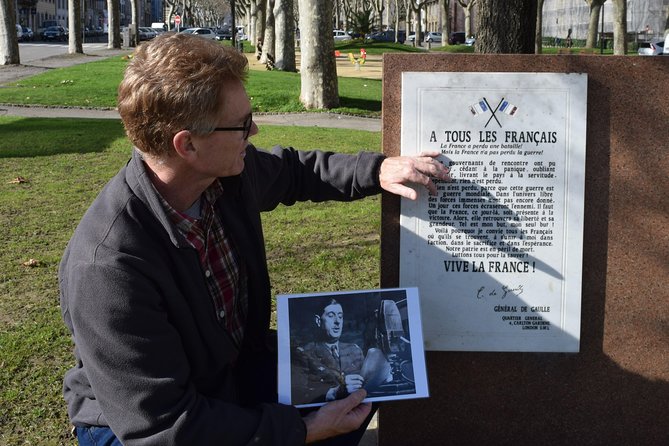
The medieval walls hide a modern wartime story. I like this walking tour because it connects Carcassonne’s streets with the French Resistance, and because guide Paul uses black-and-white wartime photographs to show how familiar places looked between 1939 and 1945. The personal stories of local men and women give the tour real weight, rather than leaving you with only dates and military events.
I also like the way the tour brings the lower town, or la Bastide, into focus. Many people rush toward the famous medieval citadel and miss this part of Carcassonne. The main thing to consider is the walking format: narrow streets can make a large group hard to hear and difficult to manage, although the guide has acknowledged that a group of 23 was too big and that a smaller limit would create a better experience.
In This Review
- Key points to know before booking
- Why this Carcassonne walk feels different
- Meeting Paul at Brasserie a 4 Temps
- Following the fall of France and the divided country
- Rationing, repression, and daily life
- The S.T.O. and the choices facing young people
- Finding heroes, collaborators, and forgotten names
- The liberation and the post-war purges
- What the private format adds
- Is $24.19 good value?
- Practical advice for the walk
- Who should book this Carcassonne tour?
- Should you book Carcassonne During World War 2?
- FAQ
- Where does the tour begin?
- Where does the tour end?
- What time does the tour start?
- How long does the tour last?
- Is the tour offered in English?
- How much does the tour cost?
- Is this a private tour?
- Can I cancel for a full refund?
- What happens if the weather is poor?
- Does the tour require a minimum number of participants?
Key points to know before booking
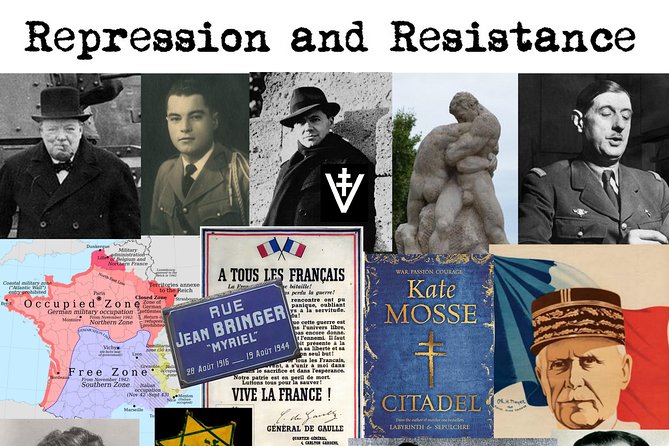
- Local wartime stories: The tour looks closely at Carcassonne and its citizens, not just the wider French campaign.
- A guide with a clear passion for the subject: Paul combines research, photographs, anecdotes, and a good sense of humor.
- The lower town gets its due: The route helps you see la Bastide through the difficult years of occupation and liberation.
- Serious subjects, handled with care: Expect discussion of repression, collaboration, resistance, rationing, deportation-related labor policies, and post-war purges.
- Private booking: Only your group participates, making questions and conversation easier.
- Good value for history fans: At $24.19 per person for about two hours and fifteen minutes, the tour costs less than many larger sightseeing experiences.
Why this Carcassonne walk feels different
Carcassonne is famous for its medieval citadel, towers, and fortified walls. That is the postcard version of the city. This tour asks you to look at the streets as places where ordinary people made difficult choices during an extraordinary period.
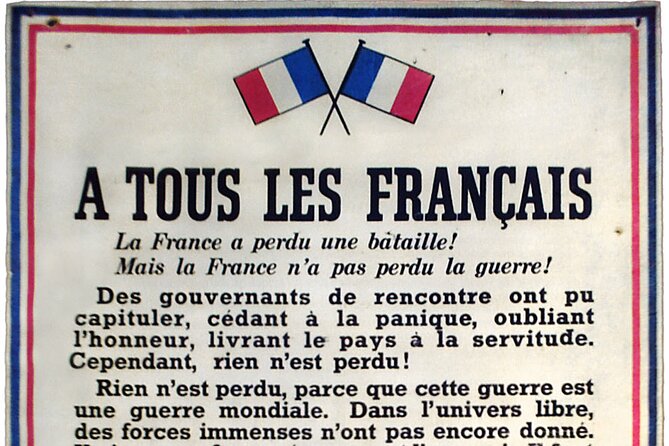
The route centers on the years from 1939 to 1945. You learn how the fall of France changed daily life, how the country was divided into occupied and non-occupied zones, and what happened when German forces invaded the Free Zone. These subjects can sound broad in a classroom, but they become more immediate when tied to actual streets, buildings, memorials, and local names.
I especially like the tour’s attention to people who are not always remembered. Paul discusses national figures, local heroes, collaborators, and people whose actions have faded from public memory. That balance matters. A serious account of wartime France cannot be only a tale of brave resistance. It also needs to address fear, accommodation, repression, and the uneasy choices made by civilians.
The mood is often solemn, but the presentation is not stiff. Paul uses humor when appropriate and invites questions as he walks. The result is an experience that can suit someone with a strong interest in World War II, while still giving a newcomer enough context to follow the story.
A few more Toulouse outings to set side by side
- The “Break in Prison” room
★ 5.0 · 609 reviews - Toulouse: Carcassonne Day Trip by Coach with Audioguide
★ 4.4 · 580 reviews - Toulouse Food & History Tour with a Chef (in English)
★ 5.0 · 503 reviews
Meeting Paul at Brasserie a 4 Temps
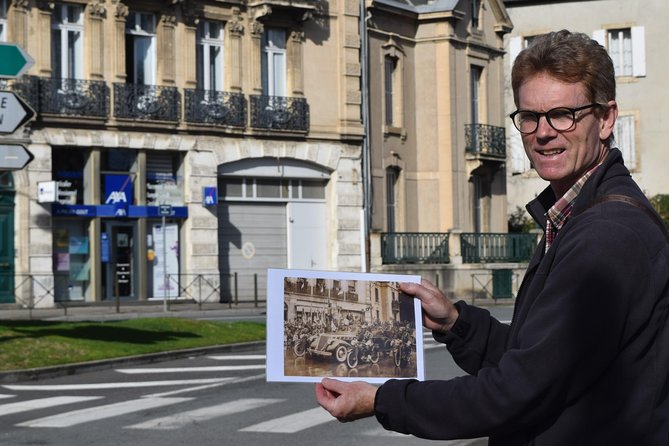
The tour begins at 9:30 am outside Brasserie a 4 Temps, at 2 Boulevard Barbès. This is a practical starting point in the lower town, rather than up inside the citadel.
Arrive with enough time to find the meeting point and get settled. A morning start gives you a useful first activity in Carcassonne, especially if you want to spend the afternoon exploring the fortified city. It also means you will be walking before the day becomes too busy or warm, though the experience still depends on suitable weather.
Paul is the guide named in the tour information and in the feedback from people who took the walk. His strengths are clear: he is prepared, personable, enthusiastic about the subject, and able to explain local events in a wider French and international setting.
That last point is important. You will not simply hear a string of Carcassonne anecdotes. The story includes the fall of France, Vichy France, the occupation, the Free Zone, and the liberation. Paul uses the national picture to explain what local people were facing, then brings the focus back to Carcassonne.
Following the fall of France and the divided country
One early part of the walk covers the fall of France and the division between occupied and non-occupied zones. These events shaped everything that followed, from government policy to travel, food supplies, policing, and personal safety.
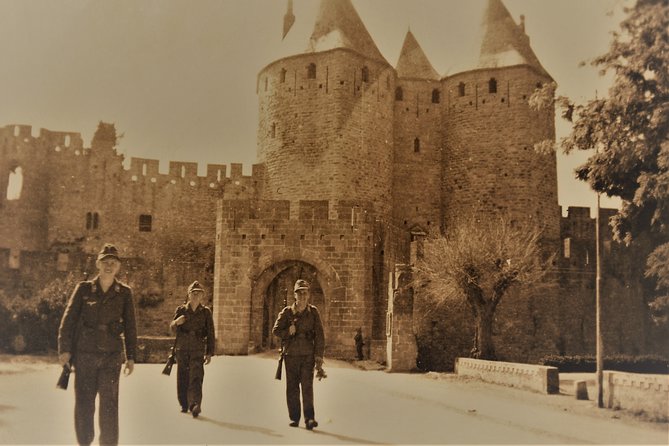
The value of hearing this on foot is that the tour gives you time to absorb the information at the places connected with it. Paul’s use of period photographs helps bridge the gap between present-day Carcassonne and the wartime town. You may recognize a street or public space from the modern city, then see how it looked during the war.
This visual method is one of the tour’s strongest features. The photographs are not decoration. They help you compare the old and new settings and encourage you to look closely at the surroundings. At several points, you may be asked to find or notice details connected with the story.
The pace receives consistent praise. The walk lasts roughly two hours, with the full experience listed at about two hours and fifteen minutes. It is long enough to develop a serious account, but not so long that the subject becomes a blur of names and dates.
Rationing, repression, and daily life
War is often taught through battles and political leaders. This tour spends time on the less dramatic but deeply important pressures of daily life, including rationing and state control.
Rationing shows how the war reached beyond soldiers and battlefields. Food and supplies became part of the daily struggle, and families had to manage shortages and restrictions. Discussing this in the town where people lived makes the subject more understandable than a simple list of wartime policies.
The tour also covers the Milice, the French paramilitary force associated with collaboration and repression. You hear about the spectrum of collaboration, rather than being given a simple story of good people on one side and bad people on the other.
That approach is one reason I would recommend this walk to anyone who wants more than a patriotic version of the Resistance. Paul deals with uncomfortable subjects and allows the local story to remain complicated. The tone is thoughtful, sometimes sombre, but still accessible.
Same city, a slower kind of day:
- Toulouse: Albi and Cordes/Ciel Day Trip with Audio Guides
★ 4.5 · 486 reviews - Toulouse Victor Hugo Market Small Group Tasting Tour
★ 5.0 · 337 reviews - Toulouse: Electric Tuk-Tuk Tour with Photo Stops and Audio
★ 4.8 · 138 reviews - Toulouse: Guided Food Tour with Tastings
★ 4.8 · 80 reviews
The S.T.O. and the choices facing young people
The itinerary includes the S.T.O., or Service du travail obligatoire, the compulsory labor service imposed on many young French people during the occupation. This was a major source of fear and resentment, and it helps explain why resistance took different forms.
The tour presents a range of resistance activity. Not everyone involved carried weapons, and not every act of opposition looked the same. Some people helped others escape, passed information, hid people, or supported underground networks. Others resisted in quieter ways, while some chose collaboration or attempted to keep their heads down.
This spectrum gives the walk a human scale. You are encouraged to think about decisions made under pressure, when the consequences could affect an entire family. The personal stories are often the most memorable part of the morning because they show the war through individual lives.
If your interest is specifically military history, you may find that the tour spends less time on troop movements and more time on civilians, political control, local repression, and moral choices. That is not a weakness, but it is useful to know before you book.
Finding heroes, collaborators, and forgotten names
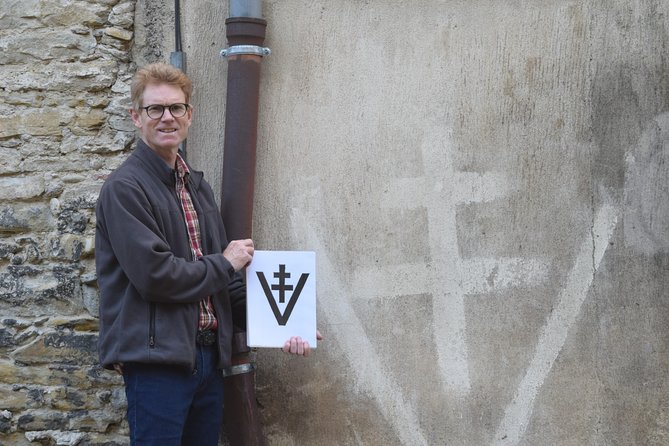
The tour’s focus on national, local, and forgotten heroes makes it more than a standard overview. Well-known names provide context, but local figures show how the occupation affected Carcassonne itself.
Paul’s storytelling is supported by photographs and historical details. He does not rush through a plaque or monument with a quick date and move on. Instead, he explains who was involved and why a place matters.
That method can change the way you see the lower town after the tour. Streets that first appeared to be ordinary routes between cafés and shops may carry a more serious association. A memorial is no longer just something to photograph. It becomes part of a story about people who lived, suffered, resisted, collaborated, or were punished.
Some material is difficult. Repression, collaboration, and wartime persecution are not light subjects. Still, the presentation is described as lively and interactive, with questions encouraged along the way. Paul’s mix of serious quotes, local anecdotes, and occasional humor helps keep the walk approachable without making light of the subject.
The liberation and the post-war purges
The final part of the story covers liberation and the post-war purges. These chapters are essential because the end of German occupation did not instantly settle every question.
Liberation brought relief, but it also created demands for justice and revenge. The post-war purges raised difficult questions about who had collaborated, who had resisted, and how responsibility should be judged. Including this material gives the tour a more complete shape.
The walk does not stop at a triumphant liberation scene. Instead, it considers what came next and how communities dealt with people accused of helping the enemy. That broader view is particularly useful if you already know the basic story of the French Resistance and want to understand the local aftermath.
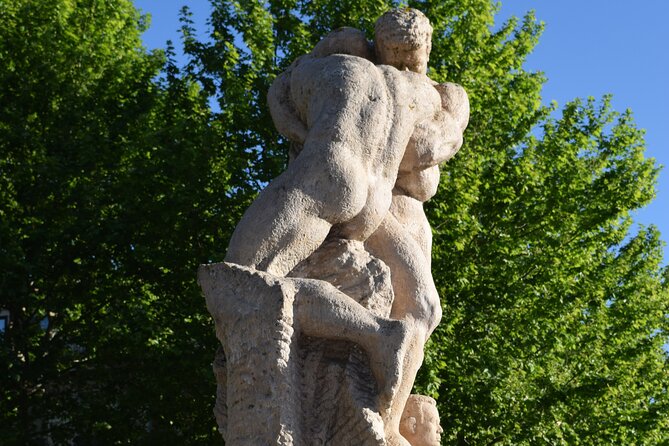
The experience ends at the memorial to the Resistance in Square Gambetta, at 16 Avenue Arthur Mullot. Finishing there gives the tour a fitting point of reflection. You are left with the human stories behind the memorial, rather than treating it as a final photo stop.
What the private format adds
This is a private activity, so only your group participates. That matters most if you want to ask questions or discuss a family interest in World War II without being lost in a large crowd.
A private tour can also make the pacing more flexible. Paul can respond to your questions and adjust the amount of background information to suit your group. The available information does not promise a custom route or a special departure time, so you should still expect the stated meeting time and general walking plan.
Group size deserves a practical note. One occasion involved 23 people, which made hearing difficult in narrow streets and raised concerns about safe places to stand. Paul recognized the problem and said he would consider a limit of 12. If the group is small, the private format should work especially well. If a larger group is assigned, stay close to the guide and speak up if you miss an important point.
Is $24.19 good value?
At $24.19 per person, this is a strong price for a guided experience lasting about two hours and fifteen minutes. Admission to the walking route itself is free, so you are paying mainly for Paul’s preparation, local research, photographs, and interpretation.
That distinction is worth making. You can walk through Carcassonne independently at no cost, but you will not automatically understand the wartime meaning of the streets, memorials, or local figures. The fee buys a connected narrative and the chance to ask questions.
The value is highest if you have an interest in World War II, the French Resistance, Vichy France, or the social history of occupation. It is also a good choice if you have already seen the citadel and want a different way to understand the city.
The experience may be less useful if your main goal is medieval architecture, castle interiors, or panoramic views. This is not a general Carcassonne sightseeing tour. The medieval setting provides the backdrop, but the subject is firmly the period from 1939 to 1945.
Practical advice for the walk
Wear comfortable shoes. The tour is conducted on foot, and the route moves through town streets for roughly two hours. No special admission ticket is required for the walking portion.
The tour is offered in English and includes a mobile ticket. It starts at 9:30 am, near public transportation, and ends at Square Gambetta. Since the end point differs from the start, plan your onward route from the memorial rather than assuming you will return to the brasserie.
Most people can take part, according to the supplied details. The tour does require good weather, so rain or other poor conditions can lead to a new date or a full refund. Confirmation is sent within 48 hours of booking, subject to availability.
You can cancel for a full refund if you do so at least 24 hours before the start time. Changes or cancellations inside that period are not accepted for a refund. The experience also requires a minimum number of participants, so a cancellation by the provider for that reason brings an alternative date or experience, or a full refund.
Who should book this Carcassonne tour?
I would choose this tour if you want local stories rather than another quick circuit of famous sights. It is especially suitable for people who have read about the Resistance, are interested in Vichy France, or want to understand how occupation affected ordinary residents.
It also works for mixed-interest groups. The clear explanations, photographs, and steady pace can help someone with only a passing interest, while the local names and political detail give serious World War II enthusiasts plenty to consider.
Families and older participants should pay attention to the walking time and group size. The tour is not described as accessible in detail, but most people can participate. If hearing clearly is important to you, a smaller group will make a major difference.
Should you book Carcassonne During World War 2?
Yes, if you want to see Carcassonne beyond the medieval walls. The tour gives you a thoughtful account of resistance, repression, collaboration, rationing, liberation, and the difficult years that followed.
I would not book it as a substitute for a standard citadel tour. Book it as a second look at the city, one that shifts your attention from fortifications to people. At $24.19, the cost is modest, and Paul’s use of photographs and local stories gives the walk a clear purpose.
For the best experience, aim for a small group, wear good walking shoes, arrive at Brasserie a 4 Temps before 9:30 am, and leave room afterward to think about what you have heard at the Resistance memorial in Square Gambetta.
FAQ
Where does the tour begin?
The tour begins at Brasserie a 4 Temps, 2 Boulevard Barbès, 11000 Carcassonne, France.
Where does the tour end?
The tour ends at the memorial to the Resistance in Square Gambetta, at 16 Avenue Arthur Mullot, 11000 Carcassonne, France.
What time does the tour start?
The scheduled start time is 9:30 am.
How long does the tour last?
The experience lasts approximately two hours and fifteen minutes. The walking tour itself is described as lasting about two hours.
Is the tour offered in English?
Yes. The guided walking tour is offered in English.
How much does the tour cost?
The listed price is $24.19 per person.
Is this a private tour?
Yes. Only your group participates in the private tour or activity.
Can I cancel for a full refund?
Yes, if you cancel at least 24 hours before the experience start time. Cancellations or changes made less than 24 hours before the start time are not refunded.
What happens if the weather is poor?
If poor weather causes the tour to be canceled, you will be offered a different date or a full refund.
Does the tour require a minimum number of participants?
Yes. If the minimum is not met and the tour is canceled, you will be offered a different date or experience, or a full refund.
Recently added in Toulouse
- Private guided tour of the city of Carcassonne★ 5.0 · 58 reviews
- Medieval Carcassonne: Interactive Ghost Story & City Game★ 3.5 · 33 reviews
- Guided tour of the City of Carcassonne (on foot)★ 5.0 · 26 reviews
- Carcassonne ‘s Medieval Walls: A Self-Guided Tour★ 4.5 · 43 reviews
- Cité de Carcassonne Guided Walking tour. Private tour.★ 5.0 · 42 reviews
- Toulouse Food & History Tour with a Chef (in English)★ 5.0 · 59 reviews
- Welcome to Toulouse: Private Walking Tour with a Local★ 4.2 · 47 reviews
- Toulouse: Electric Tuk-Tuk Tour with Photo Stops and Audio★ 4.8 · 138 reviews
Toulouse Tours, compared.
Toulouse Food & History Tour with a Chef (in English)
Read our review →
Albi and Cordes/Ciel Day Trip with Audio Guides
Read our review →
Toulouse Victor Hugo Market Small Group Tasting Tour
Read our review →
Electric Tuk-Tuk Tour with Photo Stops and Audio
Read our review →
Carcassonne: Private Guided Tour of the Medieval Fortress
Read our review →Browse the lists this tour appears in