
REVIEW · CITY TOURS
Medieval Carcassonne: Interactive Ghost Story & City Game
Old stones hide good stories. This self-guided Carcassonne city game turns a walk through the medieval citadel and lower town into a series of phone puzzles, with local legends and darker tales of persecution along the way. I like the freedom to start whenever you want, and I like that you can pause the game for lunch, a museum visit, or a battery emergency. The main drawback is clear: the app setup can be confusing, and several people have struggled to begin the quest.
You follow a roughly 3-kilometer route from Square Gambetta to Château Comtal, solving 10 interactive challenges as the Questo app sends you from one place to the next. It is a private, contactless experience with no guide and no fixed group departure, which keeps the price low but leaves you responsible for navigation, phone power, and getting the game running.
In This Review
- Key points to know before you book
- What this Carcassonne game is really like
- Starting at Square Gambetta in the lower town
- Notre Dame de la Santé and the plague years
- The former cloth factory near Pont-Vieux
- Saint-Gimer Church and Viollet-le-Duc’s modest design
- Porte de l’Aude, the dramatic approach to the Cité
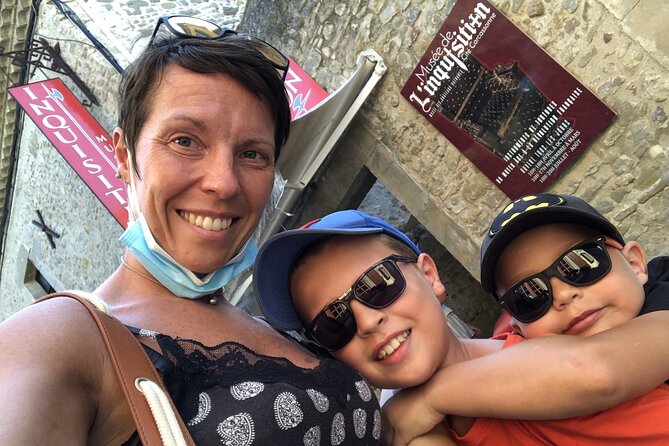
- The Inquisition Museum and the darker side of the story
- The cathedral and Château Comtal finish
- How the app and puzzles affect the experience
- Price, group size, and overall value
- Who should choose this Carcassonne experience?
- Should you book the Medieval Carcassonne city game?
- FAQ
- Where does the Carcassonne city game start?
- Where does the game finish?
- How long does the experience take?
- How far is the route?
- How many puzzles are included?
- Is a guide included?
- Are monument entry tickets included?
- Can I start at any time?
- Can I pause and resume the game?
- What language is offered?
- Is the activity private?
- What happens if the app does not work?
- Can groups larger than 15 people participate?
- What is the cancellation policy?
Key points to know before you book
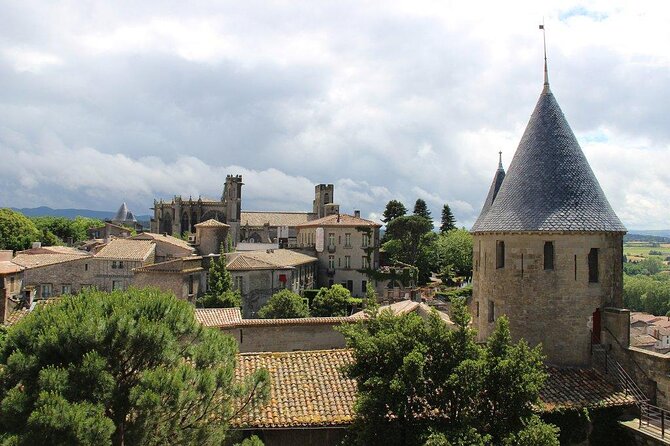
- A 3-kilometer route crosses both sides of Carcassonne: You begin in the lower town, cross toward the famous Cité, and finish at Château Comtal.
- Ten puzzles shape the visit: You look closely at buildings, gates, churches, and public spaces to find answers.
- The stories include grim medieval themes: Persecution, disease, the Inquisition, and torture are part of the subject matter.
- You control the clock: Start any time between 6:00 a.m. and 11:30 p.m., pause whenever you like, and resume later.
- The price is modest at $6 per person: That is strong value if the app works smoothly, but there are no guide services or monument admissions.
- App access deserves attention: Some players had trouble downloading, launching, or opening the quest, so keep the confirmation details handy and contact Questo support quickly if needed.
What this Carcassonne game is really like
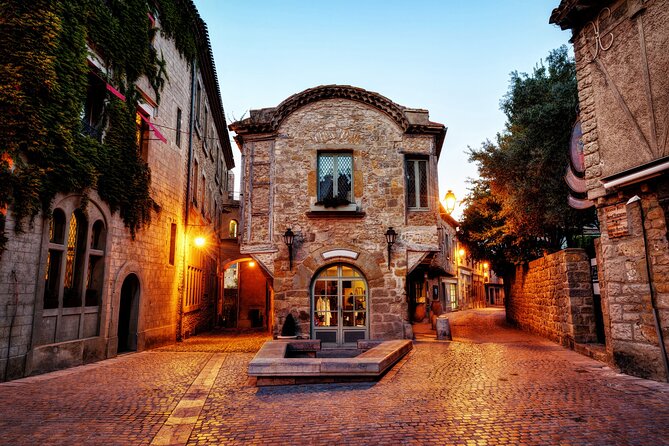
Think of this as a walking puzzle trail, not an audio tour and not a guided history walk. The app leads you step by step, gives you a story at each stop, and asks you to inspect your surroundings for an answer.
That difference matters. One person expected an audio guide and found the format disappointing. You will not simply put on headphones and listen while strolling. You need to read instructions, look for visual clues, enter answers, and keep the group moving.
The reward is a more active visit. Instead of passing a stone arch without much thought, you may stop to examine a doorway, a church facade, or the position of a gate beside the river. I especially like this format for people who enjoy small discoveries and friendly competition.
The tone is not all fairy tales and pretty views. The story includes medieval persecution, the plague, the Inquisition, instruments of torture, and the Cathar past of the region. Some material is presented in a family-friendly way, but the subject matter is not entirely light. Parents should decide if those themes suit their children.
A few more Toulouse outings to set side by side
- The “Break in Prison” room
★ 5.0 · 609 reviews - Toulouse: Carcassonne Day Trip by Coach with Audioguide
★ 4.4 · 580 reviews - Toulouse Food & History Tour with a Chef (in English)
★ 5.0 · 503 reviews
Starting at Square Gambetta in the lower town
Your first stop is Square Gambetta, across the Aude from the famous walled Cité. This is an important opening because it places you in the newer, lower part of Carcassonne before the route climbs toward the medieval stronghold.
The square marks the beginning of La Bastide de Saint Louis, the old lower town built under King Louis IX of France. It gives the game a wider frame. Carcassonne is not only a castle on a hill. It is also a working town with its own streets, institutions, and later buildings.
Here you search the area for the answer to the first challenge. This is a good place to get comfortable with the app before the route becomes more visually complicated. Read the instructions carefully, and do not rush because you are eager to reach the citadel.
A practical concern appears right here. The initial instructions have not been intuitive for everyone. Some people spent a long time trying to launch the game or install the necessary apps. I would download everything before setting out, check that your booking email and access code are available, and make sure your phone has enough charge for the full route.
Notre Dame de la Santé and the plague years
The route then takes you to the small chapel of Notre Dame de la Santé. According to notarial records, it was built in 1527 with money left by Jean de Saix and served as a hospital for people suffering from the plague.
Its position also mattered. The chapel guarded a narrow passage between fortified buildings near the Pont-Vieux and the river. This is the kind of detail that can disappear on a normal sightseeing walk. The game asks you to look around, which encourages you to notice how the chapel fits into the defensive and medical story of the city.
This stop is likely to appeal to anyone who prefers a specific human story over a list of dates. Jean de Saix, the hospital, and the strategic setting connect a small building to a crisis that affected daily life.
The information about disease may not be as extensive as some players expect from the title and description. If plague history is your main reason for booking, keep your expectations measured. The experience touches on the subject, but it is primarily a puzzle walk with short pieces of history.
The former cloth factory near Pont-Vieux
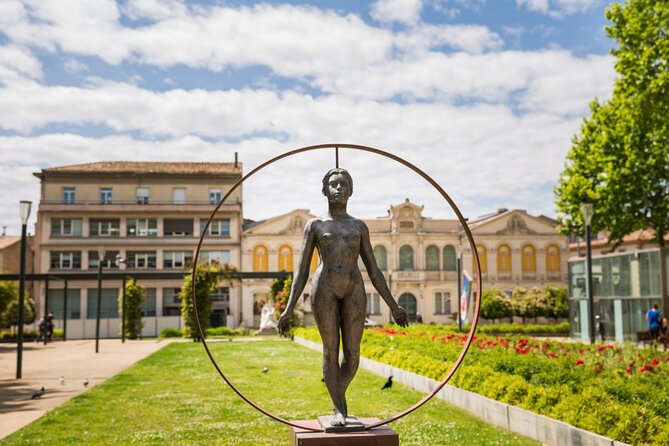
At the foot of the Pont-Vieux, on the right bank of the Aude, the route points out a facade linked to Carcassonne’s prosperous cloth industry. The building once belonged to a noble local family. In 1694, it was bought by a person close to Jean-Baptiste Colbert, the powerful minister of Louis XIV, and converted into a cloth factory.
The factory received the title Manufacture Royale in 1696. The building still visible today is the owners’ residence, rather than a complete surviving factory complex. Its design has links to the 18th-century architecture of the lower town.
This is a useful change of pace. The story moves away from castles and religious conflict and toward trade, manufacturing, and money. You see how Carcassonne’s importance continued beyond the medieval period.
For me, this is one of the strongest reasons to take the route instead of walking only inside the Cité. The game includes less obvious places in both the old and new parts of town. You get a broader sense of Carcassonne, even if the short app text cannot match a full local lecture.
More city sightseeing in Toulouse:
- Private guided tour of the city of Carcassonne
★ 5.0 · 58 reviews - Guided tour of the City of Carcassonne (on foot)
★ 5.0 · 26 reviews - Marseille: City Sightseeing Hop-On Hop-Off Bus Tour
★ 3.8 · 2,820 reviews - Eiffel Tower Summit Option with Seine River Cruise and City Tour
★ 3.5 · 2,176 reviews
Saint-Gimer Church and Viollet-le-Duc’s modest design
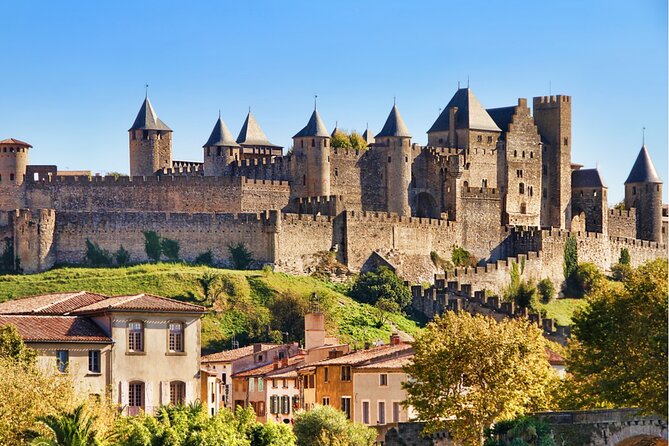
Saint-Gimer Church was built between 1854 and 1859 by Eugène Viollet-le-Duc, the architect associated with the restoration of Carcassonne’s medieval fortifications. The church was designed with modesty in mind, using a nave, two side aisles, a polygonal apse, two vestries, and a porch.
The building gives the route a 19th-century chapter. Carcassonne’s story did not stop in the Middle Ages, and Viollet-le-Duc’s work links the modern city to the renewed interest in its old monuments.
You may find this stop most rewarding if architecture interests you. The puzzle requires close observation, so the church becomes more than a quick photo stop. It asks you to notice form and structure.
There is a limit to the format. You will not have a guide beside you to explain Viollet-le-Duc’s wider career or debate the choices made in restoring Carcassonne. The app offers a starting point, not a seminar. If you want detailed architectural analysis, plan extra time for your own visit or a separate guided tour.
Porte de l’Aude, the dramatic approach to the Cité
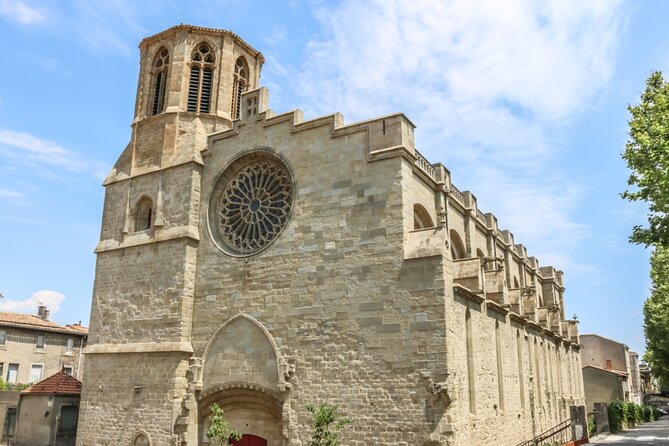
Porte de l’Aude is one of the preserved gates of Carcassonne’s medieval walled city. It overlooks the Aude and provides one of the route’s most atmospheric transitions from the river side into the fortified Cité.
This is where the walk should begin to feel more like a medieval city game. Walls, gates, and changing elevations give the setting a natural sense of drama. The puzzle format also works well here because the gate contains the sort of visual details you might otherwise overlook.
Follow the app’s directions closely. The route is not simply a collection of nearby stops, and confusing one instruction can send you in the wrong direction. One person lost time walking to the starting point, then found the directions unclear. The app’s step-by-step system can help, but only if you read each prompt rather than relying on instinct.
The gate is also a good reminder that Carcassonne is a real historic town, not a theme park built only for the game. You will encounter other people, public streets, and normal city activity. Keep your phone in hand without letting it block the view.
The Inquisition Museum and the darker side of the story
The Inquisition Museum occupies a large 17th-century building and presents instruments of torture dating from the 12th century through the French Revolution. It also covers figures connected with the period, the Inquisition, and the Cathar castles of the region.
The game uses this stop to bring the darker themes into focus. Carcassonne’s medieval past includes religious conflict and persecution, not only pretty towers and fortified walls. That balance is valuable, especially if you want the city’s difficult history acknowledged rather than polished away.
Entry to the museum is not included. You can visit the exterior and solve the related challenge without paying for admission, but entering the attraction requires a separate ticket. Keep this distinction in mind when planning your budget.
The subject matter may not suit young children or anyone who dislikes displays of torture. One family-oriented assessment found the overall activity entertaining but also noted that children could make the game harder to follow. I would treat this stop as a reason to preview the experience before booking for a very young group.
The cathedral and Château Comtal finish
The route ends at the heart of the Cité, near the cathedral and Château Comtal. The present Romanesque cathedral began in June 1096. A Lady Chapel was added in the early 15th century, beside an infirmary and chapel built in the 1260s by Bishop Radulph.
Château Comtal was built in the 12th century by Bernard Aton Trencavel over the western part of the Roman walls. That single fact connects several layers of Carcassonne’s past: Roman foundations, medieval noble power, religious buildings, and the later preservation of the citadel.
The endpoint at Château Comtal makes practical sense. You finish in the place most people associate with Carcassonne, and you can continue sightseeing from there. Remember, the game does not include entry to the château or cathedral. If you want to go inside, buy those tickets separately and allow extra time beyond the stated 1 hour 40 minutes.
The advertised opening window for the game is broad, from 6:00 a.m. to 11:30 p.m., every day during the listed operating period. That flexibility is useful in summer, when midday heat and crowds can make a walk less pleasant. Still, the monuments themselves have their own opening hours, so do not assume the app’s hours apply to every attraction.
How the app and puzzles affect the experience
The Questo app is the guide, map, puzzle book, and story reader all at once. You receive access to the mobile escape game and follow directions from one location to the next. There is no physical guide, no shared departure time, and no group of strangers joining you.
That private format is a real benefit. Your party can stop for photographs, take a break, or discuss an answer without holding up anyone else. It also works well for couples, friends, and families who prefer to move at their own speed.
The puzzles depend on observation. You need to inspect the surroundings and find information that advances the story. This gives the route a purpose, but it can also frustrate anyone hoping for a simple sightseeing app.
I would prepare in three ways:
- Charge your phone fully and bring a portable battery if you have one.
- Install the required app and review the access instructions before arriving.
- Save the booking email and support details where you can reach them quickly.
Support is available through the app’s chat at all hours, and Questo also provides assistance by email at [email protected]. If the quest does not open, contact support promptly instead of spending an hour repeatedly trying the same steps.
The language offered is English. Several people wanted Spanish or more language choices, and one person had to rely on translation. If English is not comfortable for everyone in your group, the stories and puzzle instructions may slow the walk considerably.
Price, group size, and overall value
At $6 per person, this is an inexpensive way to add structure to a walk through Carcassonne. You are paying for the digital game, the route design, 10 puzzles, and the stories at each stop. You are not paying for a guide, museum admissions, or access to Château Comtal.
The value is strongest for a small group that enjoys games. You can spend about 1 hour 40 minutes following the route, then decide which attractions deserve separate entry fees. The route itself is roughly 3 kilometers, so the price compares well with many conventional city activities.
There is one group-size detail worth noting. Groups larger than 15 people should make multiple bookings. Since the game is private and contactless, you are not joining a public tour. A single phone may be enough to play, according to one participant, but the booking setup and access rules should be checked carefully before assuming one purchase covers everyone.
The mixed rating reflects the trade-off. When the app works, the format can be fun, flexible, and a smart way to see less obvious parts of the city. When access fails, the low price does not feel like good value because you may lose time before seeing anything at all.
Free cancellation is available if you cancel at least 24 hours before the scheduled start time. Inside that 24-hour window, changes and refunds are not accepted.
Who should choose this Carcassonne experience?
I would recommend it to you if you enjoy solving clues, using your phone while sightseeing, and setting your own pace. It is particularly suitable for couples, friends, and families with older children who can stay focused on the instructions.
It can also work well on a flexible day. You can begin in the morning, stop for a meal, and resume later. One participant successfully continued the game more than 24 hours after pausing, which shows how useful the pause feature can be when your schedule changes.
I would be cautious if you want a traditional guide, a full audio narration, or a detailed academic account of Carcassonne’s past. The stories are short and game-driven. The experience will not replace a museum visit or a specialist walking tour.
I would also think twice for very young children. The route asks you to stop, observe, read, and solve. Children who prefer running from one sight to the next may interrupt the flow, and the Inquisition Museum subject matter may be too grim.
Should you book the Medieval Carcassonne city game?
Book it if you want a low-cost, flexible walking activity that adds purpose to your time in Carcassonne. The best parts are the route across both the lower town and the Cité, the chance to notice overlooked buildings, and the freedom to pause whenever you need.
Skip it if you expect a polished audio guide or do not want to troubleshoot an app. Before booking, make sure everyone is comfortable with English instructions, charge your phone, and keep support details close at hand.
At $6 per person, the gamble is small. The reward is a playful way to connect the Pont-Vieux, Saint-Gimer Church, Porte de l’Aude, the Inquisition Museum, the cathedral, and Château Comtal into one story. Just remember that the game gets you to the monuments. It does not take you inside them.
FAQ
Where does the Carcassonne city game start?
It starts at Square Gambetta, 11000 Carcassonne, France, in the lower town across the Aude from the famous Cité.
Where does the game finish?
The route ends at Château Comtal in the medieval Cité. The Questo app guides you there step by step.
How long does the experience take?
The stated duration is approximately 1 hour 40 minutes.
How far is the route?
The route covers about 3 kilometers.
How many puzzles are included?
The experience includes 10 interactive puzzles.
Is a guide included?
No. This is a private, self-guided activity played through the Questo app. There is no physical tour guide.
Are monument entry tickets included?
No. Entry fees for Château Comtal, the Inquisition Museum, and other attractions are not included.
Can I start at any time?
Yes. The game offers flexible start times, with the listed operating window running daily from 6:00 a.m. to 11:30 p.m.
Can I pause and resume the game?
Yes. You can take breaks and resume later. The game provides unlimited access during the available play period.
What language is offered?
The experience is offered in English. Spanish and additional language options are not listed.
Is the activity private?
Yes. Only your own group participates, with no shared group or guide.
What happens if the app does not work?
Questo provides support through a chat in the app, available 24 hours a day, 7 days a week. You can also contact [email protected] for help with starting the game or possible refund assistance.
Can groups larger than 15 people participate?
Yes, but groups larger than 15 should make multiple bookings.
What is the cancellation policy?
You can cancel for a full refund at least 24 hours before the scheduled start time. Cancellations or changes made within 24 hours are not refunded.
Recently added in Toulouse
- Private guided tour of the city of Carcassonne★ 5.0 · 58 reviews
- Guided tour of the City of Carcassonne (on foot)★ 5.0 · 26 reviews
- Carcassonne ‘s Medieval Walls: A Self-Guided Tour★ 4.5 · 43 reviews
- Cité de Carcassonne Guided Walking tour. Private tour.★ 5.0 · 42 reviews
- Carcassonne During World War 2★ 5.0 · 127 reviews
- Toulouse Food & History Tour with a Chef (in English)★ 5.0 · 59 reviews
- Welcome to Toulouse: Private Walking Tour with a Local★ 4.2 · 47 reviews
- Toulouse: Electric Tuk-Tuk Tour with Photo Stops and Audio★ 4.8 · 138 reviews
City Tours, compared.

Eiffel Tower Summit Option with Seine River Cruise and City Tour
Read our review →
Paris in a Day: Louvre or Orsay, Eiffel Tower, City Walk & Cruise
Read our review →

Lyon City Hop-on Hop-off Sightseeing Bus Tour
Read our review →
Eiffel Tower Hosted Tour, Seine Cruise and City Tour
Read our review →
Paris City Center Free Walking Tour (Tip-Based)
Read our review →
City and River Seine Tour on an Amphibious Bus
Read our review →Browse the lists this tour appears in