
REVIEW · WINE TOURS
Champagne Day Trip with 6 Tastings, Reims and Winery from Paris
Champagne country is closer than you think. This full-day trip from Paris packs vineyard views, Reims Cathedral, Hautvillers Abbey, Épernay, and six Champagne tastings into one well-organized outing. I especially like the contrast between a large Champagne house and a family-run producer, plus the small eight-person van that makes conversation and questions easy.
I also like that the day includes more than drinking. You learn how grapes are grown, how bottles are made, and why Dom Pérignon is linked to Hautvillers. The main drawback is the pace: this is an approximately 11-hour day with about 3.5 hours of driving, so it can feel long, and a missed early pickup is not easily fixed.
In This Review
- Key points at a glance
- What this Champagne tour actually delivers
- The 7 a.m. departure from Paris
- Rolling vineyards in Champagne-Ardenne
- Nicolas Feuillatte: Champagne at large scale
- Hautvillers and the Dom Pérignon story
- Reims Cathedral in just 30 minutes
- A family cellar at Champagne DOMI
- Épernay gives you an hour to eat
- The guides make the difference
- Six tastings, and what that means
- Who will enjoy this day most
- Should you book it?
- FAQ
- How long is the Champagne day trip from Paris?
- Where does the tour meet in Paris?
- How many people are in the group?
- How many Champagne tastings are included?
- Is lunch included?
- What is the minimum age for the tour?
Key points at a glance
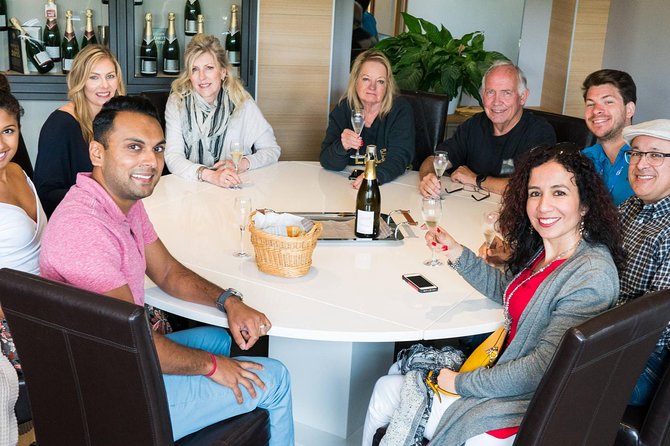
- Six full Champagne tastings: You visit two producers and taste three glasses at Nicolas Feuillatte, followed by three or four at a family-run winery.
- Two very different wine visits: The modern, large-scale operation gives you a useful contrast with the personal cellar visit at Champagne DOMI or another partner producer.
- Reims Cathedral included: You get a guided introduction to one of France’s finest Gothic churches, followed by free time for photographs.
- Hautvillers adds the story: You visit the abbey church and the graveside of Dom Pérignon, a memorable historical stop between tastings.
- One hour in Épernay: You have time to choose and pay for your own lunch, with restaurant suggestions from the guide.
- Small group, long day: The van carries no more than eight people, but the early start and full schedule demand punctuality and stamina.
What this Champagne tour actually delivers
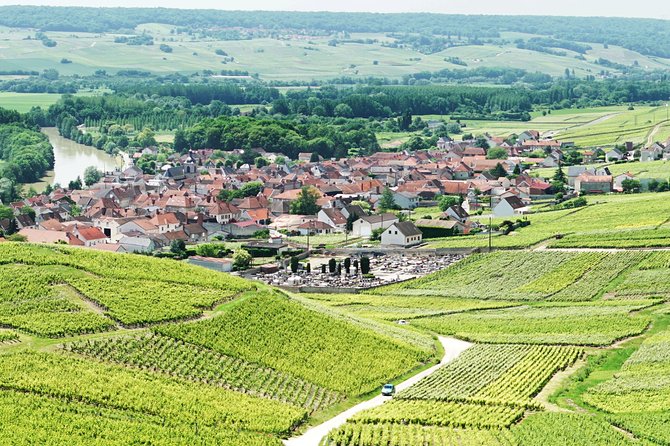
At $278.14 per person, this is not a cheap day out. But the price covers round-trip transport from Paris, an English-speaking local guide, six tastings, two winery visits, and several major sights in the Champagne region.
If you tried to arrange all of this yourself by train, taxi, and separate reservations, you would spend time on connections and coordination. The van also lets you reach vineyard country and smaller producers that are less convenient without a car. I see the price as fair for the amount packed into the day, especially if you want a broad first look at Champagne rather than a single cellar visit.
The trade-off is that this is a survey of the region, not a slow wine holiday. You will not linger for hours at one estate. You will see the main sights, taste widely, and return to Paris with a working sense of how Champagne is made.
More Wine Tours in Paris
- Montmartre Hill French Gourmet Food and Wine Tasting Walking Tour
★ 5.0 · 2,588 reviews - From Paris: Loire Valley Castles Day Trip With Wine Tasting
★ 4.6 · 1,727 reviews - Paris: Les Caves du Louvre Guided Tour with Wine Tastings
★ 4.7 · 932 reviews
The 7 a.m. departure from Paris
The meeting point is Dada at 12 Avenue des Ternes in the 17th arrondissement. The listed start time is 7 a.m., and the tour ends back at the same meeting point around 6 p.m.
Treat the pickup as a firm deadline. One serious complaint came from a person arriving from Bailly-Romainvilliers who missed the van after a complicated early-morning public transport journey. The company explained that the group cannot wait for late arrivals and offered another date, while also helping arrange a meeting point in Champagne at the person’s own taxi expense.
The practical lesson is simple: stay near the Paris meeting point the night before, check your route carefully, and arrive early. The provider has also indicated that some people arrive around 6:30 to 6:45 a.m. Although the stated start time is 7, confirm the exact pickup instructions before the day.
The air-conditioned minivan is a major convenience. You avoid driving after multiple tastings, and your guide handles the rural roads. One person found the vehicle less comfortable than expected, while most of the detailed praise focused on the guides, scenery, and winery visits rather than the van itself.
Rolling vineyards in Champagne-Ardenne
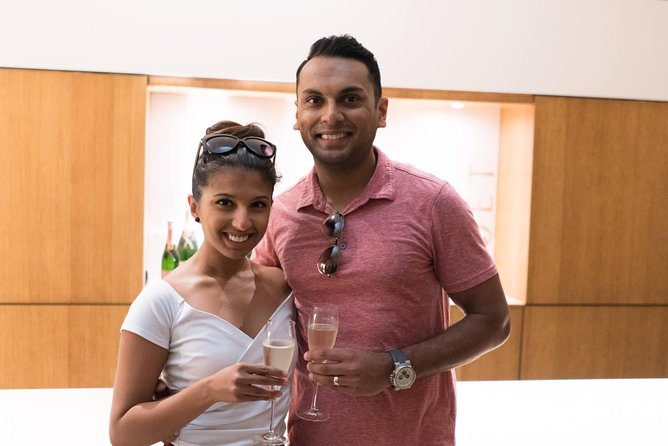
The first countryside stop introduces the basic ingredients of Champagne. You walk among Chardonnay and Pinot Noir vines while the guide explains grape growing, harvesting, and the techniques needed for grapes destined for sparkling wine.
This is a useful opening because it gives you something to look for during the drive. The gently rolling hills, rows of vines, and small villages make the region feel far removed from Paris. You may stop for photographs near the vineyards, and several guides have been praised for finding attractive viewpoints.
The vineyard visit lasts about an hour and does not require an admission ticket. Dress for outdoor conditions. The tour runs in all weather, so shoes suitable for uneven ground and a jacket that can handle rain are sensible choices.
Do not expect a long agricultural workshop. The value here is visual and introductory. You begin to connect the finished bottle with the soil, grape varieties, and seasonal work that come before the cellar.
Nicolas Feuillatte: Champagne at large scale
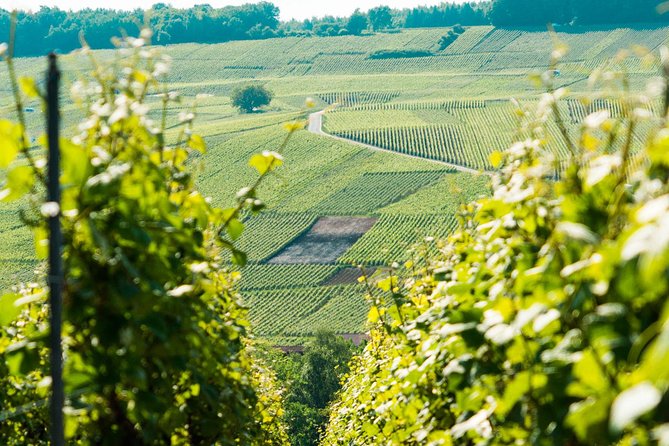
Nicolas Feuillatte provides the tour’s modern, larger-production counterpoint. The visit lasts about 90 minutes and includes a guided look at the facility plus three Champagne tastings.
This is the place to see how Champagne production works when handled by a major cooperative-style house rather than a small family cellar. The scale can make the process easier to understand. You see how production, storage, and presentation function when many growers and large volumes are involved.
The tasting is not just a chance to drink three glasses. It gives you a basis for comparison later in the day. Pay attention to differences in aroma, sweetness, texture, and finish. If you are new to Champagne, tasting several wines in sequence is more instructive than ordering one glass at a Paris bar.
The tour’s description identifies Nicolas Feuillatte as a favorite Champagne among French consumers. That gives the visit a useful local-market angle, though the experience is more about production and comparison than intimate contact with a winemaking family.
More Paris wine tastings:
- Paris Le Marais District Original Food and Wine Tasting Tour
★ 4.5 · 880 reviews - Paris Montmartre Food & Wine Tour with Eating Europe
★ 5.0 · 718 reviews - Paris: Wine and Cheese Lunch
★ 4.9 · 596 reviews - Paris: French Wine Tasting Class with Sommelier
★ 4.8 · 505 reviews
Hautvillers and the Dom Pérignon story
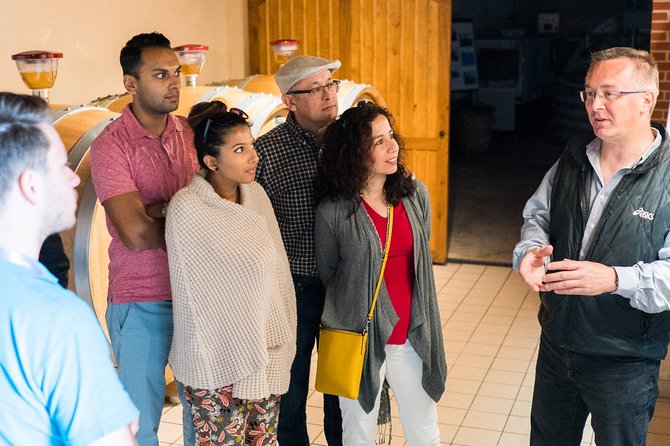
After the larger winery, the group visits Abbaye Saint-Pierre d’Hautvillers. The abbey and church form part of a UNESCO World Heritage site, and the Benedictine monk Dom Pérignon lived here in the 1600s.
Your guide takes you into the abbey church, explains his connection to the site, and points out his graveside. It is a short stop of about 30 minutes, but it adds a human and historical layer to the wine tasting.
The familiar story often gives Dom Pérignon near-mythic credit for Champagne. The useful thing about this stop is not simply repeating a legend. It places the monk in a real village, church, and religious setting. You can appreciate how the region’s identity links vineyards, monasteries, and centuries of local production.
This is also one of the quieter pauses in the day. After the larger facility and before the cathedral, the abbey offers a change of mood. Keep expectations realistic: you receive a guided introduction rather than a long independent visit.
Reims Cathedral in just 30 minutes
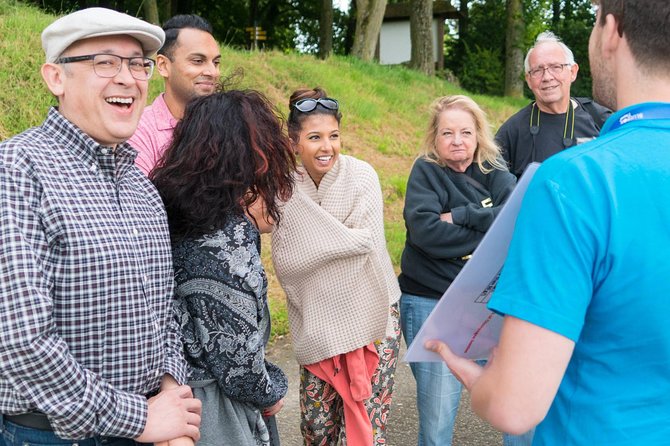
Notre-Dame de Reims is more than 800 years old and famous for its Gothic stone carving. The guide explains the cathedral’s role and points out details inside and outside, then gives you about 20 to 30 minutes to explore on your own.
The timing is tight. You can see the main interior, take photographs, and absorb the scale of the building, but you will not have time for an unhurried architectural study. If the cathedral is a major reason for booking, accept that the Champagne tastings remain the central purpose of the day.
Still, the stop works well in this itinerary. Reims is not only a wine destination. Its cathedral gives you a powerful reminder that the region has shaped French religious and royal history as well as French drinking culture. Several people singled out the cathedral as one of the day’s best sights.
Listen closely during the guide’s introduction, then use your free minutes for the details you care about most. The exterior carving deserves attention, but even a short visit gives you a strong sense of the building’s size and importance.
A family cellar at Champagne DOMI
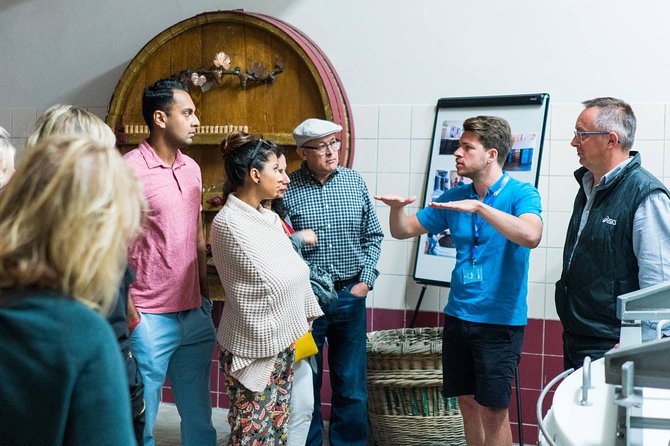
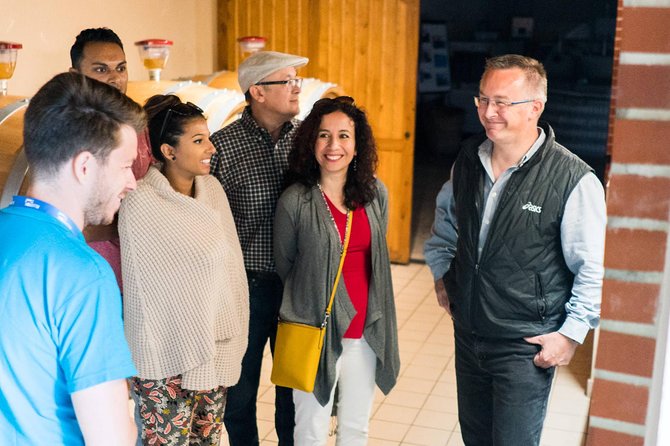
For many people, the small family-run winery is the highlight. At Champagne DOMI, Stéphane welcomes the group and explains the production process from grape to bottle. You may see the wine press, racks of bottles, and the cellar where the wine develops.
The visit lasts about 90 minutes and includes three or four tastings. The personal setting changes the feel of the day. Instead of looking at a large facility, you are close to the equipment and the people who make the wine. You can ask questions and see how a smaller producer presents its work.
The exact producer can vary. The tour works with several small Champagne partners, all described as pleasant places to visit and taste. That means you should not treat Champagne DOMI as an absolute guarantee, but you can expect the same basic idea: a family-scale visit with a personal welcome, production explanation, cellar access, and several glasses.
This is where the contrast with Nicolas Feuillatte becomes most useful. One stop shows a major operation; the other shows the human side of a smaller label. Several people preferred the family winery, and one family described meeting third-generation owners as a special part of the day.
If you hope to buy bottles, this is likely the most personal place to do so. Purchases are not included, of course, but direct contact with a producer can make a bottle feel connected to a place rather than just another souvenir.
Épernay gives you an hour to eat
Épernay is known as the capital of Champagne and provides the day’s main break. The guide introduces the old town and points out notable places, then gives you a full hour to find lunch.
Lunch is not included. You pay for your own meal and drinks, so budget for that separately. The guide can suggest local places, and one person appreciated having recommendations before setting off to eat.
An hour is enough for a straightforward meal and a quick look around, but it is not enough for a leisurely restaurant experience followed by extensive shopping. Keep an eye on the time. The group must reunite for the afternoon schedule.
You might also notice major Champagne names in Épernay, including Moët & Chandon. The tour does not promise a Moët visit, and the included winery program is already set, but the town gives you a chance to see how Champagne shapes local commerce and daily life.
This lunch stop is valuable because it breaks up the tastings and gives you control over one part of the day. You can choose the food, take a short walk, or simply sit down and rest before the return journey.
The guides make the difference
The strongest praise is reserved for the guides. Names that appear repeatedly include Clément, John, Matthew, Frankie, Enzo, Philippe, Bruno, Johnnie, Julian, Will, and Carlyle. Their roles vary by departure, so you cannot choose a particular person unless the provider confirms it.
The best guides do more than drive. They explain the Champagne region during the road sections, help with translation at the wineries, answer questions, share French words, and join the tastings without taking over the conversation. Clément was also praised for helping a person with mobility issues, and other guides were described as attentive to guests who needed extra support.
Guide quality can affect the day because much of the experience takes place between stops. A warm, well-informed guide turns traffic and long drives into useful time. One person felt the driving seemed rushed and wanted more explanation in the villages along the route. Another found a strong French accent occasionally hard to follow, though the guide repeated information when asked.
If you have questions, ask them. The small group makes this easier than on a large coach tour. With a maximum of eight people, you are more likely to have direct contact with the guide and to chat with the rest of the group.
Six tastings, and what that means
The six tastings are divided between two wineries. You receive three glasses at Nicolas Feuillatte and three or four at the smaller producer, depending on the exact visit.
That is a generous amount for a full-day excursion, especially because the glasses have been described as full pours rather than tiny samples. Eat breakfast, use the pauses between tastings, and pace yourself. You do not need to finish every glass to learn from it.
The tasting schedule also helps people who are not serious Champagne fans. One person who did not consider themselves a major Champagne drinker still found at least one wine they liked at each producer. The range gives you room to compare instead of assuming every Champagne tastes the same.
Lunch drinks are not included. You pay for anything you order in Épernay, and tips are also separate. The provider says guides prefer cash tips but may accept bottles of good wine. Carry a little cash if you want to thank the guide.
Who will enjoy this day most
I would recommend this tour to you if you are staying in Paris and want one efficient introduction to Champagne without renting a car. It suits solo visitors especially well because the small group makes it easy to talk with others during tastings and lunch.
It is also a good fit for families with older children. The minimum age is seven, though parents should decide if a long day centered on wine, churches, and cellar explanations suits their children. The historical stops help keep the day varied.
You should think twice if you want a slow, luxurious wine retreat. The early start, long return drive, fixed schedule, and short cathedral and Épernay visits leave little room for wandering. People with limited mobility should ask about current vehicle and stop arrangements before booking, even though a guide has assisted a person with mobility issues.
Weather should not stop you, but it can affect the vineyard walk. Wear comfortable shoes and clothing suitable for outdoor conditions. The tour operates in all weather.
Should you book it?
Book this Champagne day trip if you want variety, structure, and six tastings in one day from Paris. The mix is unusually complete: vineyard, large producer, family cellar, Reims Cathedral, Hautvillers Abbey, Dom Pérignon’s graveside, and free time in Épernay.
Skip it if you dislike early departures or full schedules. You will spend much of the day on the road, and missing the pickup can mean paying for your own taxi or losing the outing. For the right person, though, the value is strong: one long day gives you both the famous sights and a close look at how Champagne is made.
FAQ
How long is the Champagne day trip from Paris?
The experience lasts approximately 11 hours. It starts around 7 a.m. and ends back at the Paris meeting point around 6 p.m.
Where does the tour meet in Paris?
The meeting point is Dada, 12 Avenue des Ternes, 75017 Paris, France. The tour returns to this same meeting point.
How many people are in the group?
The tour has a maximum of eight participants and uses an air-conditioned minivan for round-trip transportation.
How many Champagne tastings are included?
Six tastings are included at two different wineries. Nicolas Feuillatte includes three glasses, while the family-run producer includes three or four glasses.
Is lunch included?
No. You have about one hour to eat in Épernay, but you pay for your own lunch and any drinks ordered with it.
What is the minimum age for the tour?
The minimum age for all participants is seven years old.
More One-Day Plans in Paris
- Disneyland® Paris 1-Day Ticket
★ 4.6 · 49,412 reviews - Normandy D-Day Sites & Cemetery Day Trip from Paris with Lunch
★ 5.0 · 6,877 reviews - Day Trip to Mont-Saint-Michel from Paris
★ 4.5 · 4,876 reviews - Disneyland® Paris 1-Day Flexible Date Ticket
★ 4.3 · 4,347 reviews
Recently added in Paris
- Private Transfers in Paris★ 5.0 · 75 reviews
- Disneyland® Paris 1 Day Ticket with Transport from Paris★ 3.5 · 302 reviews
- CDG – Euro Disney – CDG Two Way Private Shuttle Transfer★ 5.0 · 233 reviews
- Personalized Transport service from Disneyland to Paris★ 5.0 · 63 reviews
- Monet’s Gardens & House-Private Giverny Tour From Paris★ 4.5 · 137 reviews
- Guided tour Monet’s house and gardens/small group★ 4.5 · 68 reviews
- Giverny Monet House and Gardens Skip the line Walking tour★ 4.0 · 217 reviews
- Monet’s House and Garden & Giverny Village★ 4.5 · 39 reviews
Wine Tours, compared.
Montmartre Hill French Gourmet Food and Wine Tasting Walking Tour
Read our review →
Loire Valley Castles Day Trip With Wine Tasting
Read our review →
Afternoon Saint-Emilion Wine Tasting & snack
Read our review →
Medoc or Saint Emilion Wine Tasting and Chateau from Bordeaux
Read our review →
Saint Emilion Day Trip with Sightseeing Tour & Wine Tastings from Bordeaux
Read our review →
Saint-Émilion: Grand Cru Classé Winery Visit and Tasting
Read our review →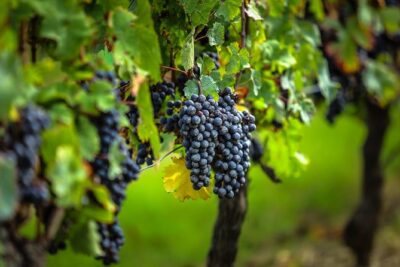
Saint Emilion Half-Day Trip with Wine Tasting & Winery Visit from Bordeaux
Read our review →Browse the lists this tour appears in