
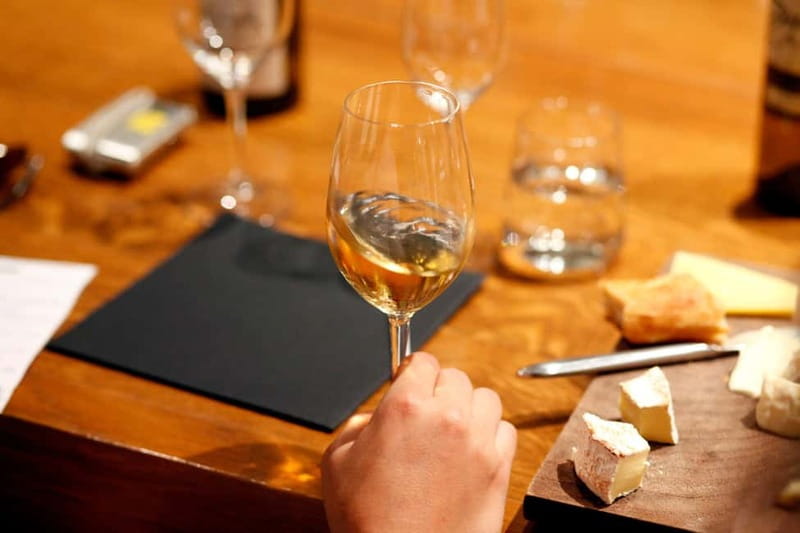
REVIEW · WINE TOURS
Paris: French Wine Tasting Class with Sommelier
Taste Paris one glass at a time. This two-hour class turns French wine into something you can actually understand, with six wines from six regions, a Champagne lesson, and a sommelier who keeps the mood light. I especially like the 17th-century cellar near the Louvre and the clear tour through France’s major wine areas. The one drawback is that larger groups can make it harder to ask questions.
I also like the practical focus. You learn how to taste, read a French label, spot tannins, and think about food pairings rather than simply sipping expensive wine in the dark. The €15 cheese or charcuterie add-on is worth considering, but it should be clear when booking that these plates cost extra.
In This Review
- Key points to know before booking
- A Paris wine class in a 17th-century cellar
- What happens during the two-hour tasting
- Learning how to taste wine without feeling silly
- The six-region tour of French wine
- Champagne, labels, and food pairing
- The sommelier makes or breaks the evening
- Is $85 a fair price?
- Why the 5pm start works well in Paris
- Who will enjoy this class most?
- Small details that improve the experience
- Should you book this French wine tasting?
- FAQ
- Where does the French wine tasting take place?
- How far is the meeting point from the Louvre?
- Which Metro stations are closest?
- How long does the tasting last?
- How many wines will I taste?
- What is included with the tasting?
- Is cheese included?
- What language is the class conducted in?
- Can I buy the wines after the class?
- What is the cancellation policy?
Key points to know before booking
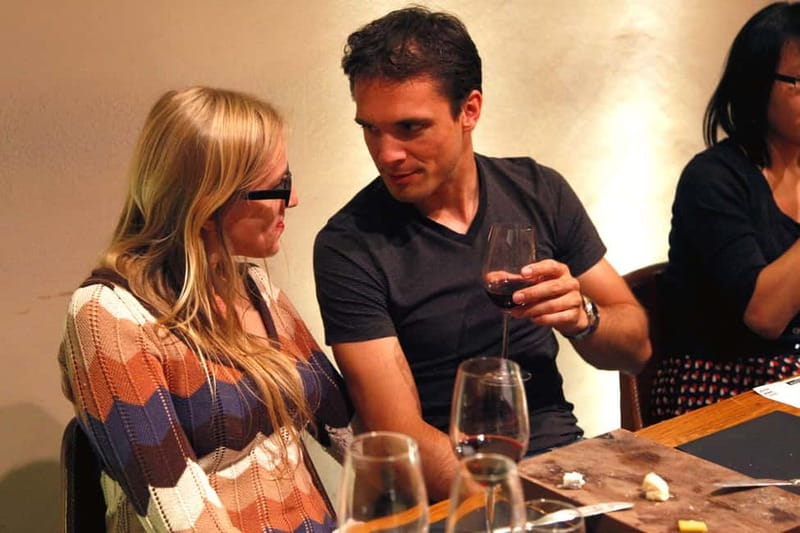
- Six wines, six French regions: The tasting includes one Champagne and five other French wines, each tied to a different part of the country.
- A useful lesson, not just a tasting: You learn about terroir, appellation, grape varieties, labels, Champagne production, and food pairing.
- Excellent central location: The cellar at 68 Rue Jean-Jacques Rousseau is about a six-minute walk from the Louvre.
- English-speaking sommeliers: Hosts such as Jasmina, Clément, Laurie, Paul, Pierre, and Gérard have been praised for making the class both clear and funny.
- Good pre-dinner timing: The class begins at 5pm and usually finishes around 7pm, leaving you near central Paris for dinner.
- Cheese is extra: Bread and water are included, but cheese or charcuterie costs an additional €15.
A Paris wine class in a 17th-century cellar
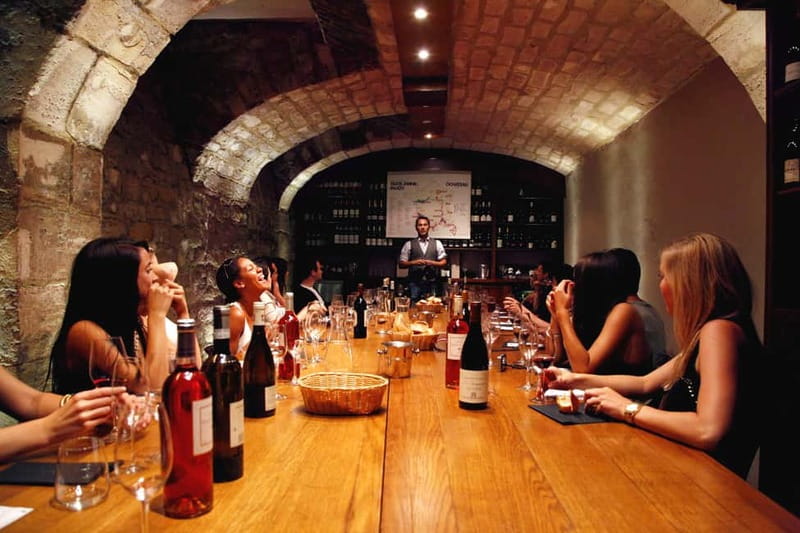
The setting does a lot of the work. You meet at 68 Rue Jean-Jacques Rousseau in the 1st arrondissement, close to the Louvre, then settle into a 17th-century wine cellar for the class.
This is not a vineyard visit or a formal restaurant meal. It is an indoor tasting built around conversation, instruction, and a steady succession of wines. You sit at a large table with tasting glasses, bread, and still water while the sommelier guides the group through the evening.
The location is especially handy if you are already sightseeing around the Louvre, Palais Royal, or Les Halles. Louvre-Rivoli on Metro Line 1 and Étienne Marcel on Line 4 are the closest stated metro options. After the tasting, you return to the same meeting point, so you do not need to arrange a second pickup.
The cellar can become warm, especially with a full room and several glasses on the table. I would wear light clothing and comfortable shoes for the short walk from the Metro.
More Food Tours in Paris
- Paris: Seine Cruise & Crepe Tasting near the Eiffel Tower
★ 4.4 · 11,231 reviews - Authentic Parisian Gourmet Food Tour with 10 Local Dishes & Wines
★ 5.0 · 4,754 reviews - Normandy D-Day Small-Group Day Trip with Omaha Beach, Cemetery & Cider Tasting
★ 5.0 · 2,786 reviews
What happens during the two-hour tasting
The class begins at 5pm, though you should check the available date and start time when booking. The plan is simple: taste six French wines while the sommelier explains what is in your glass and why it tastes the way it does.
You receive one Champagne and five additional French wines from five other regions. That gives the class a broad national sweep instead of focusing on one famous area such as Bordeaux or Burgundy.
The sommelier introduces each wine as part of a larger story. You learn which grapes grow in different parts of France, what styles those regions produce, and how climate, soil, tradition, and local rules affect the final bottle. This is where the idea of terroir becomes useful. It is not just a French word placed on a menu. It helps explain why the same grape can taste different when grown in another place.
The class also covers appellation, the system used to identify wines made under particular regional rules. If French labels usually look like a puzzle, this part can save you from ordering blindly later.
Learning how to taste wine without feeling silly
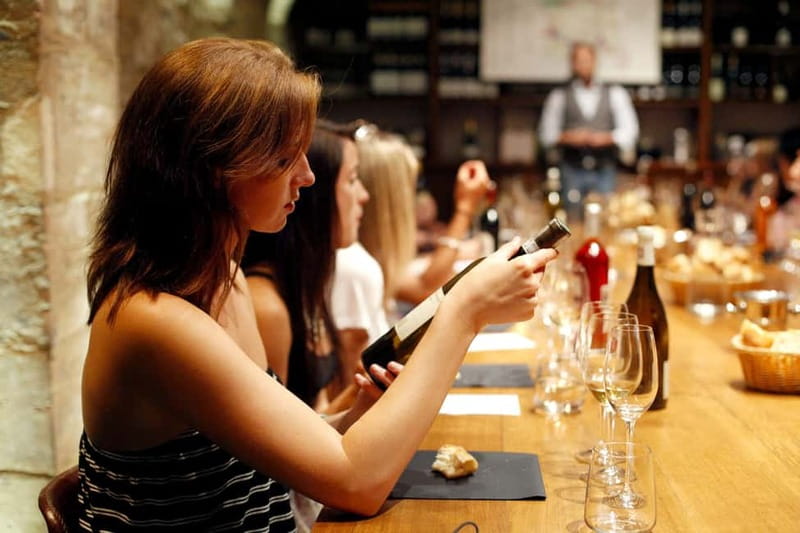
Many first-time tasters worry about using the wrong words. This class gives you a basic method without making wine feel like a school exam.
You are shown how to look at the wine, smell it, swirl it, and taste it. You consider color, aroma, texture, acidity, sweetness, and tannins. The process helps you pay attention to what you already notice, rather than forcing you to sound like a professional.
One particularly useful lesson is the explanation of tannins. These are the drying sensations often found in red wine, and understanding them makes it easier to explain why one bottle feels smooth while another feels firm or astringent.
The tasting also helps you compare wines side by side. A wine from one region may feel lighter, sharper, fruitier, or more structured than the next. You do not need a trained palate to enjoy this comparison. The point is to leave with a few reliable tools for choosing wine in a shop or restaurant.
The teaching style seems to be a major strength. Hosts including Clément, Jasmina, Laurie, Pierre, Paul, and Gérard have been praised for balancing facts with humor. Clément, in particular, is described as someone who trains sommeliers, while Laurie is noted for finding a good mix of wit and instruction. That level of experience matters because wine can become dull when the presenter recites facts without reading the room.
The six-region tour of French wine
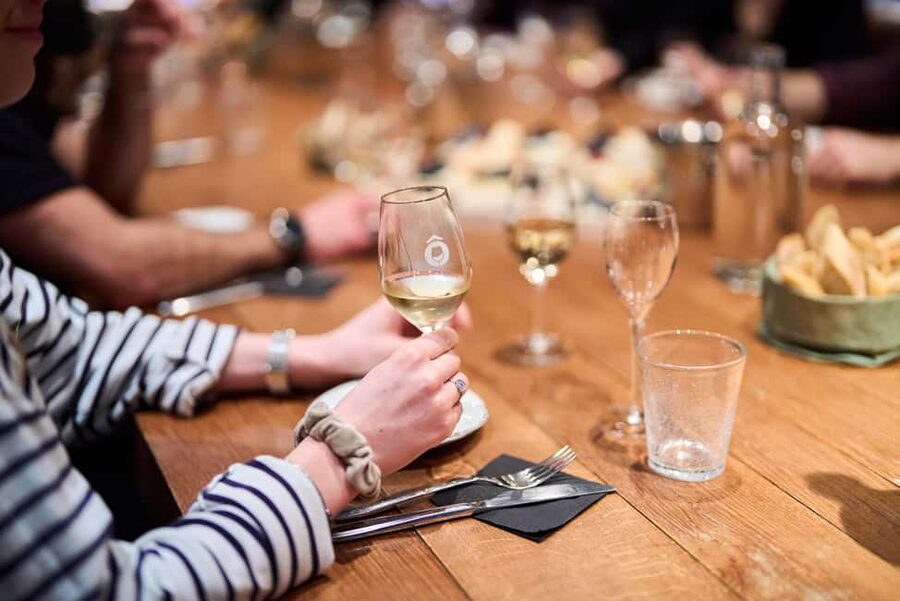
The tasting is arranged like a small Tour de France of wine. Each glass brings a different region, grape, and style into the discussion.
The supplied information does not name the exact bottles or guarantee a fixed selection. That is worth knowing. Wine menus can change, so you should think of the class as a guided sample of France rather than a promise to taste six specific labels.
Still, the regional format gives the evening a clear purpose. France has many wine areas, and a beginner can easily lose track of names. Moving from one region to another helps you connect a place with a style instead of memorizing a long list.
The sommelier explains the grapes used in each region and the kind of wine they make. You can ask where different grape varieties grow, how French winemaking traditions work, and how new wine trends are changing the old rules.
The class is also a good place to ask questions you might not get answered during a normal dinner. How is Champagne made? Why do some French bottles highlight the region instead of the grape? What should you pair with a particular style? The stated format leaves room for these questions, though a large group may limit how much individual discussion you get.
More Wine Tours in Paris
- Montmartre Hill French Gourmet Food and Wine Tasting Walking Tour
★ 5.0 · 2,588 reviews - From Paris: Loire Valley Castles Day Trip With Wine Tasting
★ 4.6 · 1,727 reviews - Paris: Les Caves du Louvre Guided Tour with Wine Tastings
★ 4.7 · 932 reviews - Champagne Day Trip with 6 Tastings, Reims and Winery from Paris
★ 5.0 · 902 reviews
Champagne, labels, and food pairing
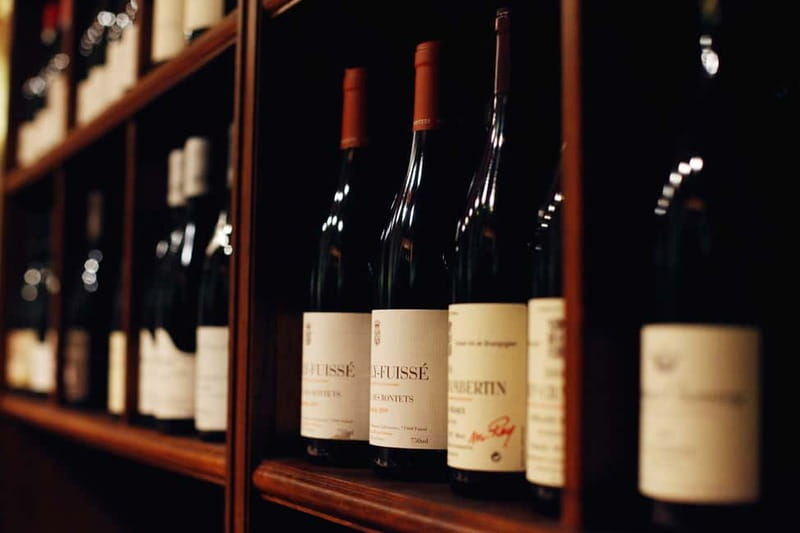
The first glass is Champagne, and the lesson includes how it is made. That gives you more than a celebratory sip. You learn why sparkling wine has bubbles and how Champagne differs from other wines.
The other important practical lesson is reading a French wine label. French labels often emphasize the place where the wine was produced, while many New World labels make the grape the main clue. Once you understand that difference, a French bottle becomes less intimidating.
Food pairing is another useful theme. The sommelier discusses which wines work with different foods and why. You can ask about pairings, tannins, grape varieties, and current wine styles during the session.
Bread is included and helps clear the palate between pours. If you want something more substantial, you can add either a cheese plate or a charcuterie platter for €15. One piece of practical advice: confirm exactly what your add-on includes at check-in. Cheese and charcuterie are not part of the base price, despite some confusion about this point.
The cheese option has been especially well received, with one detailed account preferring its selection to the meat-and-cheese combination. If you enjoy French cheese and want the tasting to feel more like an evening snack, the extra charge is reasonable.
The sommelier makes or breaks the evening
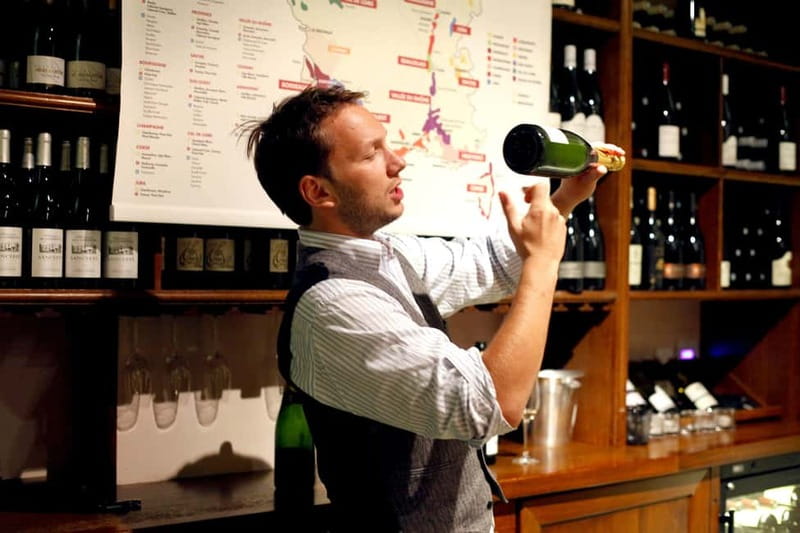
Wine information is only useful when it is delivered well. Here, the human side appears to be one of the strongest parts of the experience.
Jasmina is praised for taking time with each wine and explaining where it comes from. Pierre is described as especially effective with first-time tasters, making the traditional methods of French winemaking easy to follow. Paul receives credit for a warm and informative session, while Gérard is praised for presenting quality wines clearly.
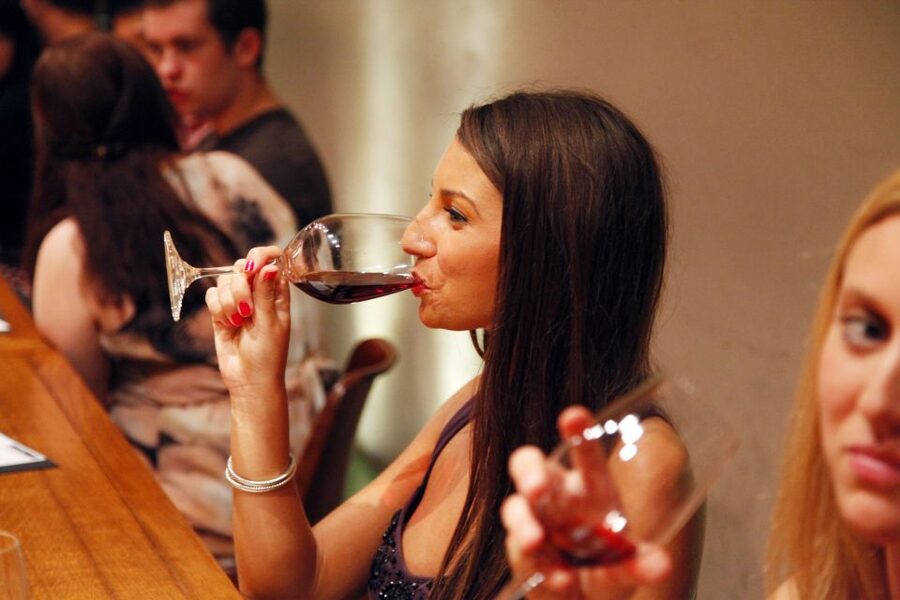
The class is built for group participation. You can compare your impressions with the people at your table, and the relaxed tone helps beginners speak up. Several hosts are described as funny, generous, and able to keep the room comfortable.
Still, the group size can matter. One account describes a group of about 25 people and found that the size discouraged some questions, particularly from people seated at the back. If you want a quiet, highly personal lesson, this may feel too social. If you enjoy meeting people from different places over a glass of wine, the large-table format can be part of the fun.
The pours are described as generous enough to leave people mildly tipsy by the end. That makes the class good value, but it also means you should plan your evening sensibly. This is not a quick sample before rushing to another appointment.
Is $85 a fair price?
The listed price is $85 per person. At first glance, that may seem high for a two-hour activity, but the value depends on how you use it.
You receive six French wines, including Champagne, a live English-language presentation, bread, water, a wine list, and instruction on subjects that can improve the rest of your trip. You are not paying only for the liquid in the glass. You are paying for the sommelier’s explanations and for a structured way to compare wines from different regions.
The class also has a useful after-effect. Once you understand labels and tasting basics, you can make better choices at Paris wine shops and restaurants. You may not become an expert in two hours, but you can stop ordering a bottle based only on a familiar-looking name.
The price is easier to justify for wine lovers, couples, and people who want an evening activity with a learning angle. It is less compelling if you only want a small taste of French wine or if you do not drink much. The cheese or charcuterie option adds €15, so budget for that separately.
All wines tasted during the class are available to buy, along with other bottles. Ask your sommelier for recommendations if a particular wine suits your taste. This can turn the lesson into a useful shopping guide, though you should not feel obliged to purchase anything.
Why the 5pm start works well in Paris
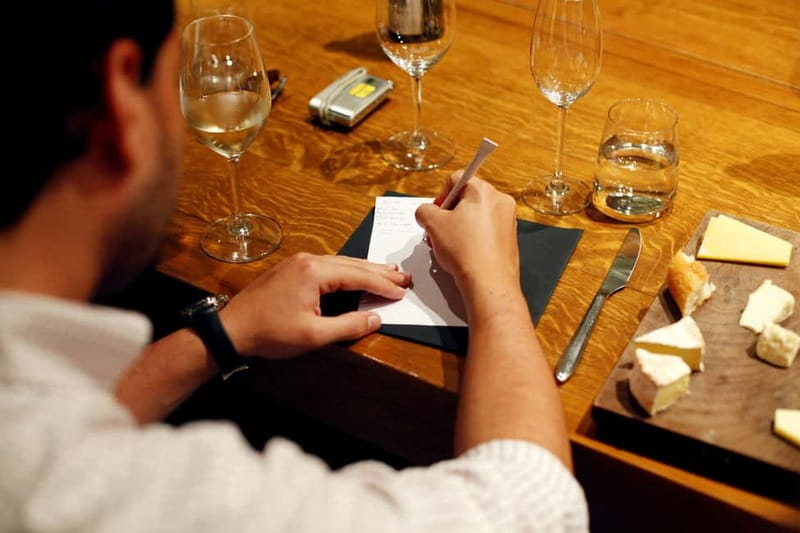
A 5pm start fits neatly into a Paris sightseeing day. You can visit the Louvre earlier, walk through the central districts, and arrive at the cellar without giving up a full evening.
Finishing around 7pm puts you in a good position for dinner. The activity ends where it begins, near the Louvre, so you can continue on foot or use the nearby Metro lines.
The timing also shapes the mood. This is best viewed as a pre-dinner event, not a morning lesson. By the end, you may feel pleasantly relaxed and ready for food. If you have an important reservation immediately afterward, allow time to leave the cellar, collect yourself, and get across town.
The activity lasts two hours, but the social nature of the class can make it feel full. You are tasting six wines, listening to explanations, and taking part in discussion. It is a proper evening plan rather than a quick stop between museums.
Who will enjoy this class most?
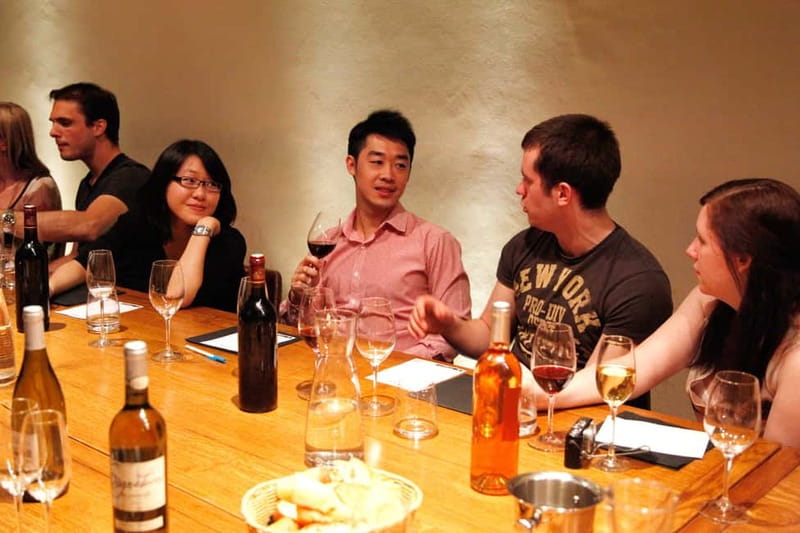
I would recommend it most strongly to:
- First-time French wine drinkers who want simple explanations without a formal lecture.
- Couples looking for a relaxed pre-dinner activity near central Paris.
- Families with adult children who want something everyone can discuss together.
- Wine lovers who want to compare regions and learn more about labels.
- Solo visitors who enjoy meeting people around a shared table.
- Food-minded people who plan to add the cheese or charcuterie platter.
You should think twice if you dislike group activities, prefer a private tasting, or want a fixed list of rare or prestigious wines. The focus is education and variety, not a private bottle-by-bottle study of one famous estate.
The class is in English, so it is a practical choice if you want detailed explanations without relying on your French. The sommelier’s presentation is the central feature, and strong communication makes a real difference here.
Small details that improve the experience
Arrive with enough time to find 68 Rue Jean-Jacques Rousseau. The cellar is close to the Louvre, but central Paris streets can still slow you down when you are watching a map and crossing busy intersections.
Wear light clothing because the cellar may feel warm. Do not plan to drive afterward. The tasting includes six wines and has been described as generous enough to leave people vaguely tipsy.
If you want cheese or charcuterie, add it at the start and confirm the €15 charge. Bread and water are included in the basic experience.
Try to sit where you can hear the sommelier clearly. In a larger group, people at the back may find it harder to join the discussion. Come with questions, too. The best topics include Champagne production, tannins, food pairing, French labels, grape varieties, and new wine trends.
Cancellation is free up to 24 hours before the activity for a full refund. You can also reserve now and pay later, which helps if your Paris schedule is still shifting.
Should you book this French wine tasting?
Book it if you want a friendly, useful introduction to French wine with a central location and enough tasting material to make the $85 worthwhile. The strongest feature is the sommelier-led teaching, especially when hosts such as Clément, Jasmina, Laurie, Pierre, Paul, and Gérard bring humor and clear explanations to the table.
I would choose this as an early-evening activity during a first Paris visit. You will learn how to taste, understand terroir and appellation, read labels, and make better choices at dinner afterward.
Skip it if you want privacy, a small class, or a specific list of famous wines. For everyone else, this is a relaxed way to replace wine confusion with a few practical skills, six French samples, and a pleasantly tipsy walk into the Paris night.
FAQ
Where does the French wine tasting take place?
The tasting starts at 68 Rue Jean-Jacques Rousseau in Paris’s 1st arrondissement, in a 17th-century wine cellar near the Louvre.
How far is the meeting point from the Louvre?
The cellar is about a six-minute walk from the Louvre.
Which Metro stations are closest?
You can use Louvre-Rivoli on Line 1 or Étienne Marcel on Line 4.
How long does the tasting last?
The experience lasts two hours. The stated schedule runs from about 5pm to 7pm, but you should check available start times for your date.
How many wines will I taste?
You will taste six wines: one Champagne and five additional French wines from five other French regions.
What is included with the tasting?
The price includes the six wines, a sommelier’s presentation, a wine list, bread, and still water.
Is cheese included?
No. Cheese or charcuterie can be added for €15. The base tasting includes bread and water.
What language is the class conducted in?
The live tour guide and presentation are in English.
Can I buy the wines after the class?
Yes. All wines tasted during the masterclass are available to buy, along with additional wines. You can ask the sommelier for assistance.
What is the cancellation policy?
You can cancel up to 24 hours in advance for a full refund. Reserve now and pay later is also available.
More Hands-On Sessions in Paris
- Fragonard Paris: Mini Perfume Workshop
★ 4.5 · 1,924 reviews - Paris Cooking Class and Lunch with Wine plus Market Visit Option
★ 5.0 · 1,024 reviews - Paris Croissant Small-Group Baking Class with a Chef
★ 5.0 · 910 reviews - Paris: Macaron Class at Galeries Lafayette
★ 4.3 · 905 reviews
Recently added in Paris
- Private Transfers in Paris★ 5.0 · 75 reviews
- CDG – Euro Disney – CDG Two Way Private Shuttle Transfer★ 5.0 · 233 reviews
- Disneyland® Paris 1 Day Ticket with Transport from Paris★ 3.5 · 302 reviews
- Personalized Transport service from Disneyland to Paris★ 5.0 · 63 reviews
- Monet’s Gardens & House-Private Giverny Tour From Paris★ 4.5 · 137 reviews
- Guided tour Monet’s house and gardens/small group★ 4.5 · 68 reviews
- Giverny Monet House and Gardens Skip the line Walking tour★ 4.0 · 217 reviews
- Monet’s House and Garden & Giverny Village★ 4.5 · 39 reviews
Wine Tours, compared.
Montmartre Hill French Gourmet Food and Wine Tasting Walking Tour
Read our review →
Loire Valley Castles Day Trip With Wine Tasting
Read our review →
Afternoon Saint-Emilion Wine Tasting & snack
Read our review →
Medoc or Saint Emilion Wine Tasting and Chateau from Bordeaux
Read our review →
Saint Emilion Day Trip with Sightseeing Tour & Wine Tastings from Bordeaux
Read our review →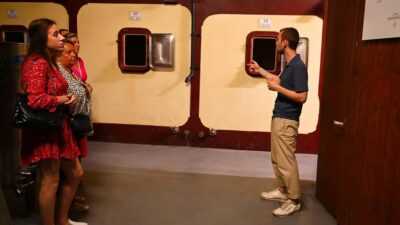
Saint-Émilion: Grand Cru Classé Winery Visit and Tasting
Read our review →
Saint Emilion Half-Day Trip with Wine Tasting & Winery Visit from Bordeaux
Read our review →Browse the lists this tour appears in