
REVIEW · WINE TOURS
Champagne Vineyard Experience: Delve into the terroir
Champagne starts with the soil. At Champagne Harlin Père & Fils, you follow that idea from the family garden and oldest vines to a historic cellar, then taste the results. I like the small-producer setting and the clear focus on organic, sustainable vine growing. I also like that the tasting includes both Champagne and Ratafia Champenois, a local drink many visitors may not know.
The main consideration is that the experience may feel modest rather than grand. You are visiting a family estate, not a large Champagne house with polished showrooms, and one critical review felt the tasting did not match the price. The tour also includes a short walk among the vines and stairs in the cellar, so comfortable shoes will help.
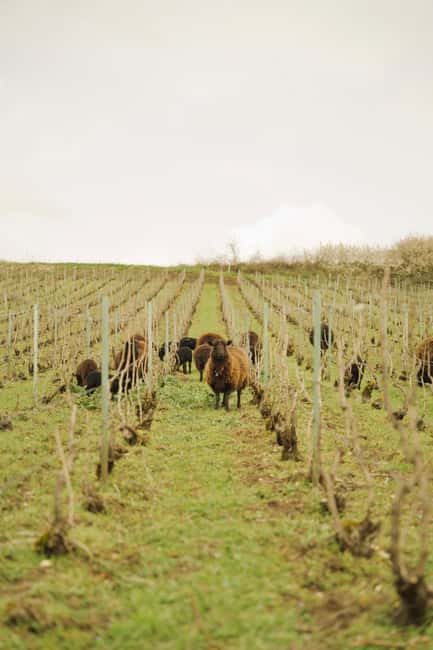
- Old family vines: Begin in the garden where the grandfather’s vines grow, then walk through the estate’s vineyard.
- A working cellar: See the historic cellar and learn how grapes become Champagne.
- Terroir made practical: Connect the soils of Mareuil-le-Port, Épernay, and Tours-sur-Marne with the character of each cuvée.
- Two kinds of tasting: Sample Champagne and the estate’s Ratafia Champenois.
- Personal guiding: Sarah and Chléo have been praised for clear explanations, warmth, and enthusiasm.
- Family-friendly format: Children under 18 may join without a ticket and can receive fruit juice, but French law prevents them from drinking alcohol.
In This Review
- A Small Estate With Soil at the Center
- Walking Through the Oldest Vines
- What Terroir Means in the Glass
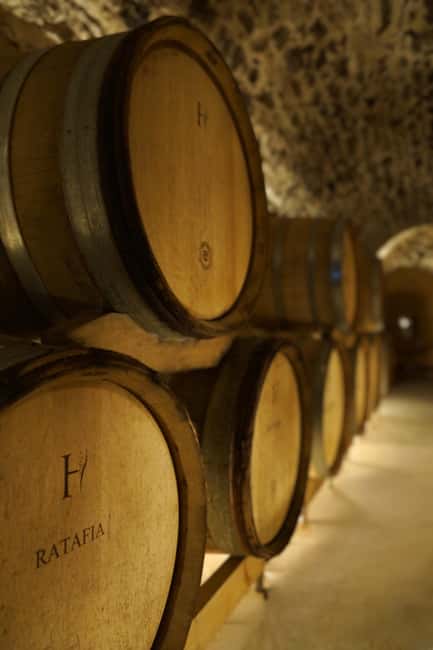
- Inside the Historic Cellar
- The Tasting: Champagne and Ratafia Champenois
- A Personal, Family-Run Style of Visit
- How the 90 Minutes Fits Together
- Is $28 a Fair Price?
- Who Will Enjoy This Visit Most?
- Booking Details That Matter
- Should You Book Champagne Harlin?
- FAQ
- Where does the Champagne vineyard experience begin?
- How long does the experience last?
- Which languages are available?
- What does the experience include?
- Will I visit the vineyards?
- Will I visit a cellar?
- Can children attend?
- Can I cancel for a refund?
A Small Estate With Soil at the Center
The strongest idea here is simple: Champagne does not begin in the glass. It begins in the ground, among the vines, and in the decisions made by the producer.
Your visit starts at Champagne Harlin Père & Fils, at 8 Rue de la Fontaine. You enter the courtyard, where your guide is expected to meet you. If the guide is not there right away, the instructions say someone will greet you shortly. That small detail matters at a family property, where the welcome may feel more personal and less like a formal reception desk.
From there, the tour takes you into the estate’s garden, where the grandfather’s vines grow. This is a useful opening because it gives the family story a physical place. You are not simply hearing that the business is family-run. You are seeing a direct link between older vines, family work, and the bottles produced today.
I would approach this first part with curiosity rather than expecting a grand spectacle. The appeal is the connection to the family and the land. If you want a personal introduction to a smaller Champagne producer, this is the right tone. If you want dramatic architecture, large underground galleries, or a museum-style presentation, you may find the setting more restrained.
Walking Through the Oldest Vines
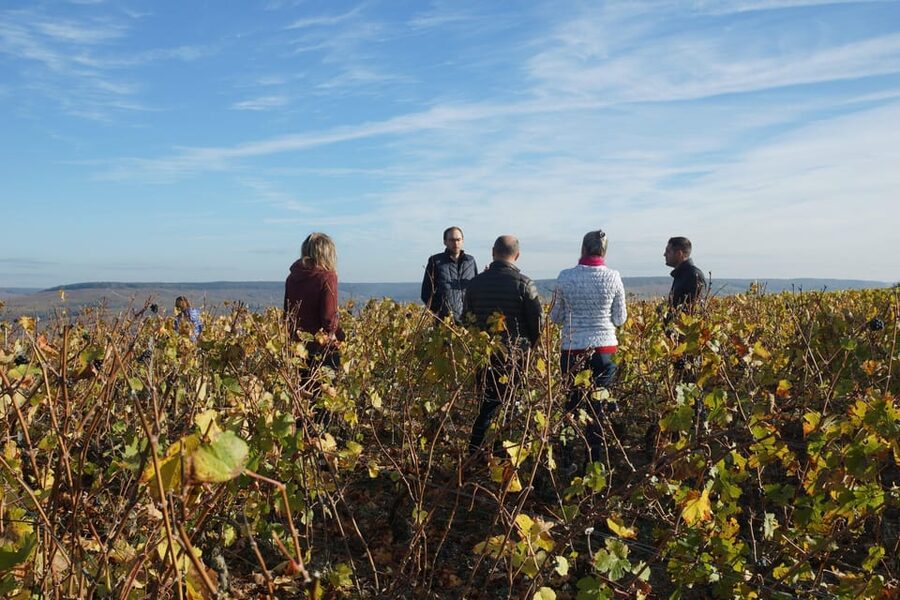
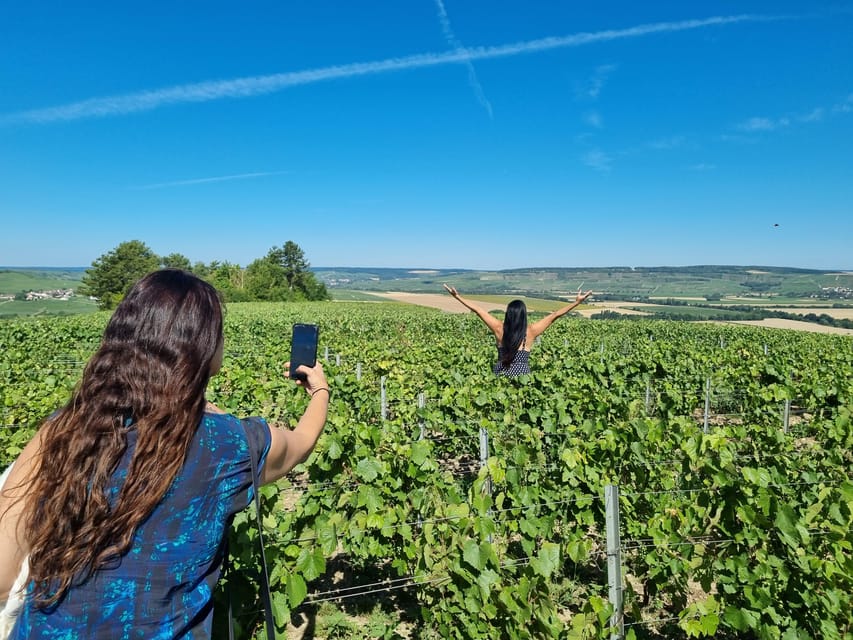
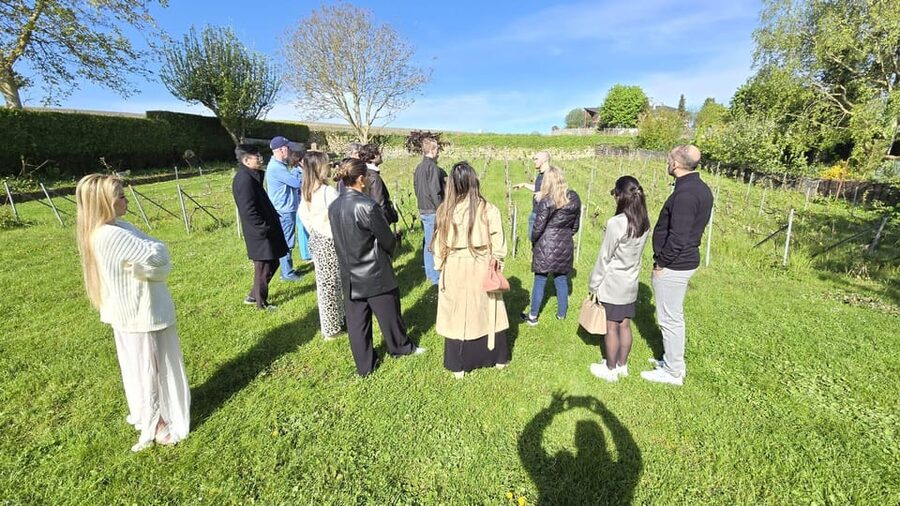
The vineyard portion gives the tour its sense of place. You move from the garden into the vines and learn how the estate’s approach to organic and sustainable viticulture affects the work.
That focus on biodiversity preservation is one of the best reasons to choose this visit. Sustainability can sound vague when it appears only in promotional language, but here it is tied to the producer’s daily relationship with the vineyard. You get a chance to ask how the soil, plants, and vineyard care shape the final wine.
The experience is not only about Champagne as a luxury drink. It helps you see it as an agricultural product. The condition of the soil, the work among the vines, and the handling of the grapes all matter before the bottle reaches the cellar.
The walk is described as a small promenade, not a long hike. Still, wear shoes that can handle uneven ground. One visitor specifically noted that the tour includes time in the vines and several stairs on the way to the cellar and tasting room. I would not choose delicate footwear for this outing, especially if the ground is damp.
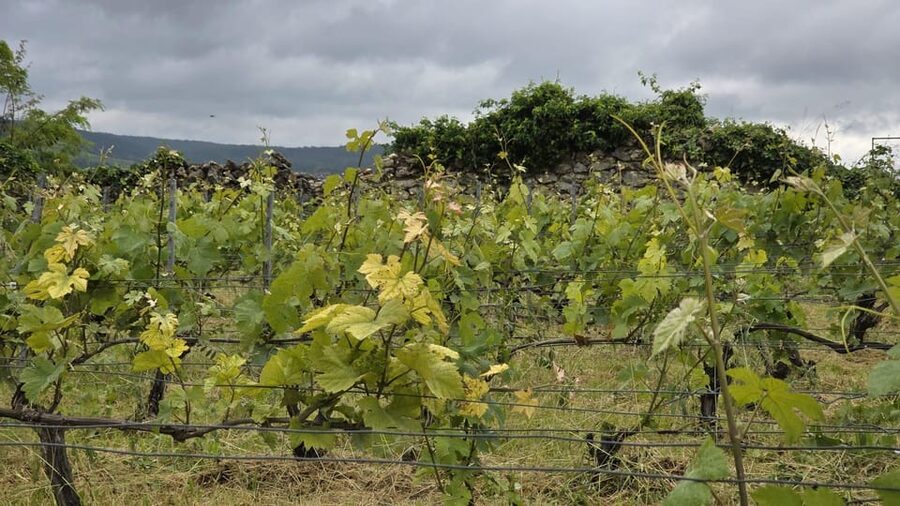
The vineyard walk also helps you understand the idea of terroir. The estate works with fruit connected to Mareuil-le-Port, Épernay, and Tours-sur-Marne. These places are not just names on a label. The tour aims to show how different soils and growing conditions influence each cuvée.
More France wine tastings:
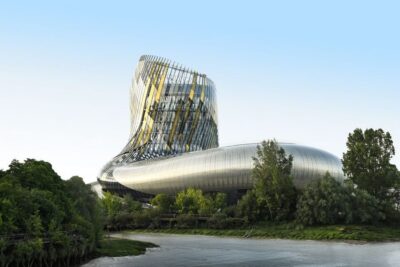
- Bordeaux: Cité du Vin Entry Ticket and Wine Tasting
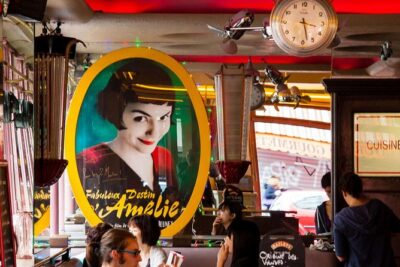
★ 4.6 · 3,885 reviews - Montmartre Hill French Gourmet Food and Wine Tasting Walking Tour
★ 5.0 · 2,588 reviews - From Paris: Loire Valley Castles Day Trip With Wine Tasting
★ 4.6 · 1,727 reviews
What Terroir Means in the Glass
Terroir is often used as a fancy word with no clear explanation. This tour has a chance to make it concrete.
You learn how the estate’s soils affect the wines and how those differences appear in the finished cuvées. The useful part is the connection between three stages: the ground, the production process, and the tasting. You see the vines, hear how the cellar work changes the base wine, and then taste the outcome.
I like that order. It gives you something to look for once the glasses arrive. Instead of tasting Champagne as a general category, you can think about texture, aroma, freshness, and finish in relation to where and how the grapes were grown.
The guide also explains the production of Champagne. The supplied information does not provide a detailed technical list of every cellar step, so you should not expect a full winemaking class. You can expect an introduction to the process and an explanation of the producer’s methods, with the cellar itself as the setting.
A clear guide makes a big difference here. Sarah received praise for her explanations of Champagne production, while Chléo and Sarah were both described as warm and informative during another visit. The guiding is available in English and French, so you can select the language that suits you when booking.
Inside the Historic Cellar
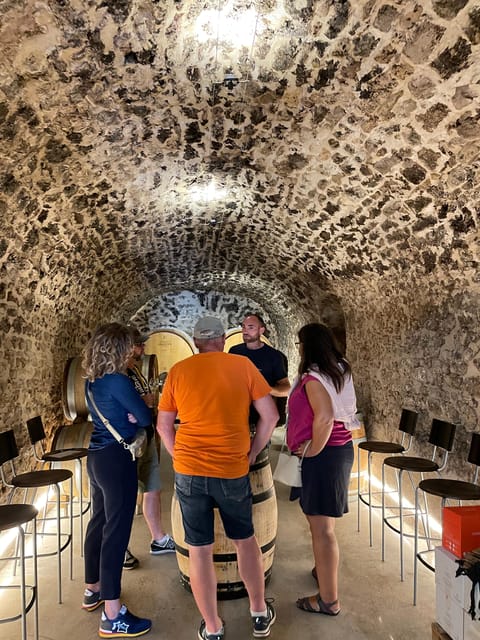
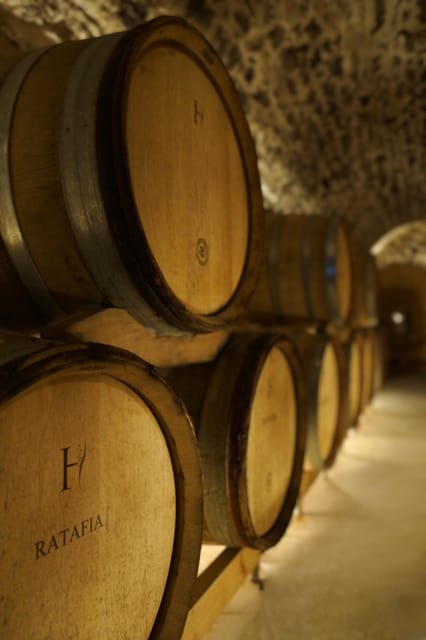
The route then drops into the estate’s historic cellar. This is the most atmospheric part of the visit, even if the cellar is not presented as a huge attraction.
The change from open vines to cool underground space gives the production story a natural rhythm. Outside, you see the source. Below ground, you learn how the wine is handled and stored. The cellar is described as a place where you can hear the secrets of Champagne production, but the real value is the chance to connect the method with the bottles you will taste later.
You should be ready for stairs. One French-language review specifically points out steps both for the cellar and for reaching the tasting room. The available information does not give an accessibility statement, so anyone who has difficulty with stairs should contact the provider before booking.
The cellar visit may be especially useful for first-time Champagne drinkers. You do not need to arrive with technical knowledge. The guide’s role is to explain the process in a way that links tradition with present-day production.
The estate’s sustainability message also carries into this portion of the tour. The point is not only to show an old cellar as a picturesque room. It is to explain how a small producer protects the environment while continuing a long family practice.
The Tasting: Champagne and Ratafia Champenois
The tasting closes the visit and includes Champagnes along with the estate’s emblematic Ratafia Champenois. That second drink adds welcome variety.
Ratafia Champenois is not the same as sparkling Champagne. Including it gives you another way to understand the local wine culture and the producer’s range. If you have already tasted Champagne elsewhere in the region, the Ratafia may be the most distinctive part of this stop.
The tasting is also where the tour’s earlier explanations should come together. You have seen the vines, heard about the soils of Mareuil-le-Port, Épernay, and Tours-sur-Marne, and visited the cellar. Now you can ask how those choices show up in the glass.
I would keep your expectations realistic. This is a tasting included with a 90-minute experience, not a lengthy private flight designed for serious collectors. The overall rating is 4.4 from 52 ratings, with several especially positive comments about the explanation, atmosphere, and guide quality. At the same time, one critical assessment found the Champagne too expensive for what was poured and felt the tasting did not meet expectations.
That criticism is worth taking seriously. Your view of the value will depend on what you want from the $28 price. If you want an affordable introduction that combines a vineyard walk, cellar visit, guide, and tasting, the cost is reasonable. If you are booking mainly for a generous or premium Champagne tasting, you may want to ask how many wines are included before paying.
Same city, a slower kind of day:
- Paris: Louvre Museum Timed-Entrance Ticket
★ 4.6 · 71,977 reviews - Disneyland® Paris 1-Day Ticket
★ 4.6 · 49,412 reviews - Paris: Versailles Palace and Gardens Full Access Ticket
★ 4.6 · 41,579 reviews - Paris: Evening River Cruise with Music
★ 4.4 · 22,721 reviews
A Personal, Family-Run Style of Visit
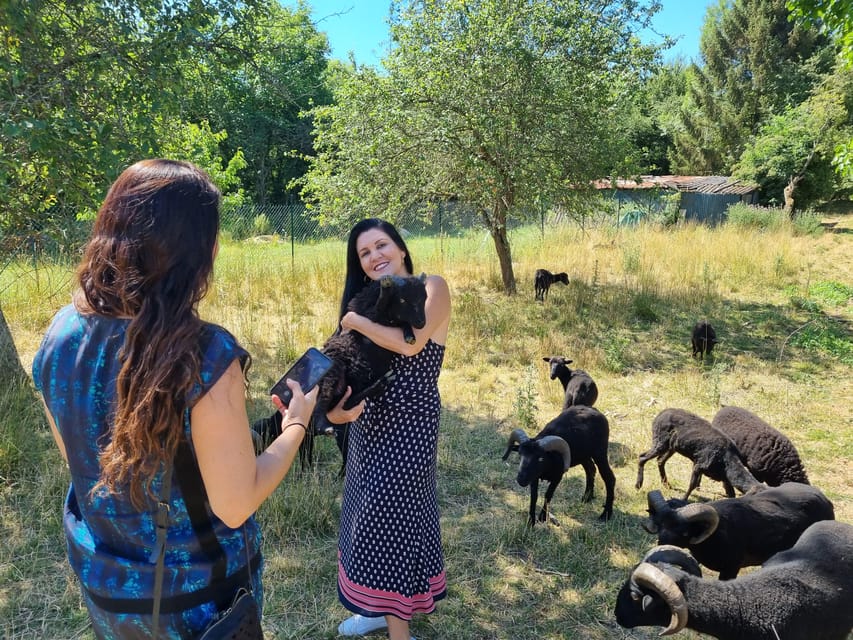
The best praise for this experience centers on the human side. Sarah was described as enthusiastic, clear, attentive, and generous with her time. Chléo and Sarah also received praise for making a visit feel almost private when the group happened to be small.
You should not count on a private tour, since group size can change. Still, the family-estate format may give you more direct contact than a major Champagne house. You are meeting a producer with a stated commitment to biodiversity preservation, rather than simply moving through a large commercial display.
That personal scale has both strengths and limits. The strength is warmth and direct conversation. The limit is that the visit may include ordinary working areas and simple presentation rather than a carefully staged attraction.
One Dutch-language assessment was sharply negative. It described the presentation as overly theatrical and questioned the value of the tasting. It also raised concerns about staged activity around the house. There is no reason to ignore that experience, even though it differs from the more positive comments. I would book this for the producer’s story, vineyard access, and guide interaction, not because you expect every moment to feel spontaneous or luxurious.
How the 90 Minutes Fits Together
The advertised duration is 90 minutes. The visit begins and ends at 8 Rue de la Fontaine, so you do not need to arrange a second meeting point during the activity.
The experience includes a guided estate visit, time in the vineyard and cellar, and a tasting. The supplied schedule also lists separate blocks of 45 minutes, one hour, and 30 minutes, which do not fit neatly within the stated 90-minute total. Because of that mismatch, I would check the exact timing when you select a starting slot.
The practical sequence is clear even if the time breakdown is not:
- Meet in the courtyard.
- Visit the garden and oldest vines.
- Walk through the vineyard and discuss soil and sustainable growing.
- Enter the historic cellar and learn about Champagne production.
- Finish with Champagne and Ratafia Champenois.
- Return to the courtyard at the same address.
That compact format works well if you are building a day around several stops in the Champagne region. You get a focused introduction without giving up an entire afternoon. It may feel rushed if you want a long conversation about each cuvée or a slow tasting.
Is $28 a Fair Price?
At $28 per person, the value depends on how you measure the visit.
The price includes the ticket, guide, and tasting. You are paying for more than a glass of wine: the visit links a family garden, old vines, vineyard soils, cellar work, and the final tasting. For someone new to Champagne, that is a sensible package.
The price is also low enough to make this a practical introduction rather than a major splurge. You can learn how a small estate works and sample Ratafia Champenois without committing to an expensive full-day wine program.
Still, the tasting itself needs to match your expectations. One low rating specifically objected to the price of the Champagne in relation to the amount served. I would not book this expecting a large pour or a collector-level tasting. Think of the wine as the final chapter of a guided estate visit.
The value is strongest for you if you care about:
- Meeting a family producer
- Seeing old vines and a working cellar
- Learning how soil affects different cuvées
- Understanding organic and sustainable vineyard practices
- Trying Ratafia Champenois
- Keeping the visit short and affordable
The value is weaker if your only goal is to taste several premium Champagnes.
Who Will Enjoy This Visit Most?
I would recommend it to first-time Champagne visitors who want context before tasting. The sequence helps you understand what is in the bottle and why the producer’s work matters.
It also suits wine lovers who are interested in organic growing and biodiversity. The estate’s commitment to protecting biodiversity is not an extra theme added at the end. It shapes the way the visit presents the vines and the soils.
Couples, small groups, and families can all fit the format. Children under 18 may accompany adults without buying a ticket. They cannot drink alcohol under French law, but fruit juice can be provided. That makes the visit easier for families who want to include younger children in the estate visit.
I would be cautious about booking if stairs are difficult for you, since the cellar and tasting room require them according to the available visitor information. I would also choose another experience if you want a large-scale house visit, elaborate displays, or a tasting built around many different bottles.
The strongest guide praise goes to Sarah, Chléo, and the clear, friendly style they bring to the visit. Guide assignments can vary, so treat those names as useful context rather than a guarantee.
Booking Details That Matter
The meeting point is the courtyard of Champagne Harlin Père & Fils at 8 Rue de la Fontaine. The guide should greet you there, and the activity returns to the same location.
Tours are offered in English and French. The duration is listed as 90 minutes, and you need to check the available starting times for your chosen date.
You can cancel up to 24 hours ahead for a full refund. A reserve-now, pay-later option is also available, which helps if your Champagne plans are still shifting.
Alcohol and drugs are not allowed as general items during the activity. Since alcohol is part of the tasting, under-18 visitors may attend but cannot drink.
Should You Book Champagne Harlin?
Book this tour if you want a short, personal introduction to Champagne that ties the vineyard to the cellar and the glass. The old vines, biodiversity focus, English and French guiding, and Ratafia Champenois make it more distinctive than a simple tasting-room stop.
Go in with modest expectations about scale and quantity. The visit is best understood as a family producer experience with wine at the end, not as a grand Champagne-house show or an extensive tasting flight. If you are comfortable with a vineyard walk and stairs, $28 is a fair price for the mix of place, explanation, and tasting.
FAQ
Where does the Champagne vineyard experience begin?
The experience begins in the courtyard of Champagne Harlin Père & Fils at 8 Rue de la Fontaine.
How long does the experience last?
The advertised duration is 90 minutes. The available schedule also lists separate activity blocks that do not fit perfectly within that total, so check the exact timing when booking.
Which languages are available?
The live tour guide is available in English and French.
What does the experience include?
The price includes the ticket, guide, and tasting of Champagne and Ratafia Champenois.
Will I visit the vineyards?
Yes. The experience includes a visit to the estate’s oldest vines, a garden where the grandfather’s vines grow, and a walk through the vineyards.
Will I visit a cellar?
Yes. You visit the estate’s historic cellar and learn about Champagne production.
Can children attend?
Yes. Children under 18 may accompany adults without a ticket. They cannot drink alcohol under French law, and fruit juice can be provided.
Can I cancel for a refund?
Yes. You can cancel up to 24 hours in advance for a full refund.
Recently added in France
- Mt St. Michel Private Tour with Abbey tickets and tour guide★ 5.0 · 45 reviews
- Private Guided Tour in WW2 Jeep of the Landing Beaches★ 5.0 · 110 reviews
- Mont-St-Michel: Private Walking Tour “Abbey Ticket Included”★ 5.0 · 28 reviews
- Normandy Victory Museum admission ticket★ 5.0 · 58 reviews
- The Urban Hike of Marseille★ 5.0 · 35 reviews
- Airborne Museum Admission Ticket★ 5.0 · 424 reviews
- From Cherbourg: D-Day Beaches Shore Excursion★ 5.0 · 28 reviews
- Surf school Soonline Moliets★ 4.5 · 27 reviews
Wine Tours, compared.
Montmartre Hill French Gourmet Food and Wine Tasting Walking Tour
Read our review →
Loire Valley Castles Day Trip With Wine Tasting
Read our review →
Afternoon Saint-Emilion Wine Tasting & snack
Read our review →
Medoc or Saint Emilion Wine Tasting and Chateau from Bordeaux
Read our review →
Saint Emilion Day Trip with Sightseeing Tour & Wine Tastings from Bordeaux
Read our review →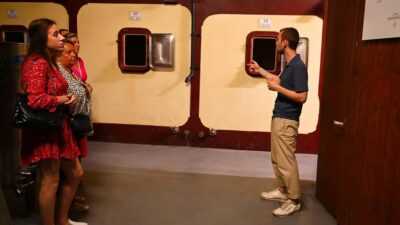
Saint-Émilion: Grand Cru Classé Winery Visit and Tasting
Read our review →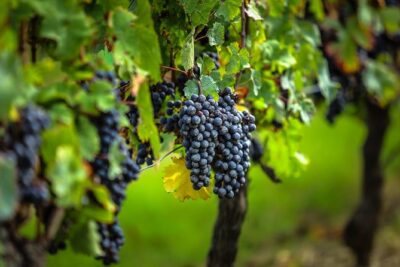
Saint Emilion Half-Day Trip with Wine Tasting & Winery Visit from Bordeaux
Read our review →Browse the lists this tour appears in