
REVIEW · MUSEUMS
Airborne Museum Admission Ticket
Step into the night of D-Day. The Airborne Museum brings the American paratroopers’ story to life through a real C-47 aircraft, strong films, and an interactive Histopad guide. I especially like the freedom to visit at your own pace and the way Operation Neptune combines sound, movement, and visual effects with serious wartime history. The main drawback is location: the museum is in Sainte-Mère-Église, not at Mont-Saint-Michel, so you need to plan your Normandy route carefully.
At about $13.32 per person, this is a good-value stop for anyone visiting the D-Day beaches. Allow roughly two hours, though families and history fans may spend closer to three. The museum is easy to follow without a guide, but the popular multimedia sections can feel more like a dramatic attraction than a quiet museum.
In This Review
- Key points to know before you go
- Why Sainte-Mère-Église matters
- Operation Neptune puts you aboard a C-47
- The 20-minute film supplies the wider story
- The Histopad changes how you read the exhibits
- What the two-hour visit feels like
- Is the $13.32 admission good value?
- Who will enjoy this museum most?
- Small practical details that affect your visit
- Should you book the Airborne Museum?
- FAQ
- Where is the Airborne Museum located?
- How long should I allow for the visit?
- Is the visit guided?
- Is skip-the-line entry included?
- What are the museum’s opening hours?
- Can I cancel the ticket for a refund?
Key points to know before you go
- The museum is in Sainte-Mère-Église: It is close to Utah Beach and the Normandy Landing Beaches, but not in Mont-Saint-Michel itself.
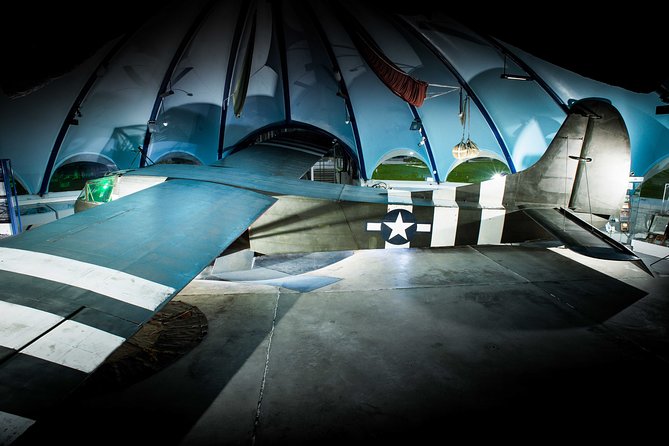
- Operation Neptune uses a real C-47: You enter a wartime aircraft and follow a staged night flight from England toward Normandy.
- The Histopad adds augmented reality: The tablet places interactive images and scenes from 1944 over parts of the museum.
- A 20-minute film gives useful context: It covers German occupation, the liberation of Sainte-Mère-Église, and the Cotentin region.
- Plan on two to three hours: The visit is self-guided, so your timing depends on how closely you read and watch everything.
- The ticket is flexible but not skip-the-line: You can visit during opening hours, but the admission does not promise priority access.
Why Sainte-Mère-Église matters
Sainte-Mère-Église is closely linked with the American airborne operation on June 6, 1944. The museum focuses on the 82nd and 101st Airborne divisions, whose paratroopers landed in Normandy during the Allied invasion.
That setting gives the visit a useful sense of place. You are not simply studying a distant military campaign through objects in a display case. You are learning about an operation tied directly to this Normandy town and the surrounding Cotentin area.
The museum also helps explain a part of D-Day that can be overlooked. Many people picture the landing beaches first, but the airborne troops were sent inland during the same operation. Their job was to seize roads, bridges, and key positions, disrupt German movement, and help protect the troops arriving by sea.
You do not need to be a military expert to follow the story. The displays and films give you the basic sequence, while the interactive elements help connect individual actions to the wider invasion.
One practical point matters here: check the location before building your day. The experience is in Sainte-Mère-Église, near Utah Beach and the Normandy Landing Beaches. If your wider trip is based around Mont-Saint-Michel, this museum is not a quick walk from the abbey. It belongs on a Normandy D-Day route.
More museums in Normandy:
- Caen: Guided D-Day Sites Tour & Caen Memorial Museum Ticket
★ 4.8 · 385 reviews - Mémorial de Caen Museum Admission and Guided Tour of D-Day Sites
★ 4.5 · 275 reviews - Small Group Guided D-Day Tour and Mémorial de Caen Museum
★ 5.0 · 237 reviews
Operation Neptune puts you aboard a C-47
The most theatrical part of the visit is Operation Neptune, housed in its own building. Here, you enter a real C-47 aircraft and follow the airborne operation as if you were part of the flight.
The presentation begins at night in England. From there, it carries you toward Sainte-Mère-Église, with the fighting already underway below. The idea is simple, but effective: instead of only reading about the paratroopers, you move through a setting connected to their transport and landing.
This is the section that gives the museum its strongest physical impact. A C-47 is a large, tangible aircraft, and walking inside it helps turn an abstract account of troop movements into something you can picture. The experience also includes aircraft simulation and bombing effects, which add drama to the presentation.
I would not confuse this with a quiet historical exhibit. Operation Neptune is designed to create an emotional response. It uses motion, sound, and visual effects, so some people will find it exciting while others may prefer the more traditional displays elsewhere in the museum.
For children, this is likely to be the easiest part to understand. A family can see what the aircraft looks like, follow the sequence of the flight, and then discuss what happened after the paratroopers reached the ground. One particularly useful family detail is that the museum has worked well for children from ages 6 to 12, although adults should be ready to explain the difference between a dramatic simulation and a full historical account.
The 20-minute film supplies the wider story
The museum’s film lasts about 20 minutes and covers German occupation, the liberation of Sainte-Mère-Église, and the liberation of the Cotentin region. This gives you a broader frame before or after the more active Operation Neptune presentation.
I like this part because it prevents the visit from becoming only a sequence of special effects. The film places the airborne landings within the life of the town and the wider military campaign. You get a sense of what occupation meant locally, followed by the changes brought by liberation.
The film is also a good reason to slow down. If you rush from one exhibit to the next, you may remember the aircraft and the simulation but miss the human and political setting. Try to watch the entire presentation rather than treating it as background noise.
The strongest value of the film is its clarity. A 20-minute running time is long enough to explain the main events but short enough to fit into a busy day along the Normandy coast. If you are traveling with children or with someone who has limited patience for museums, this section provides useful information without requiring a long lecture.
The Histopad changes how you read the exhibits
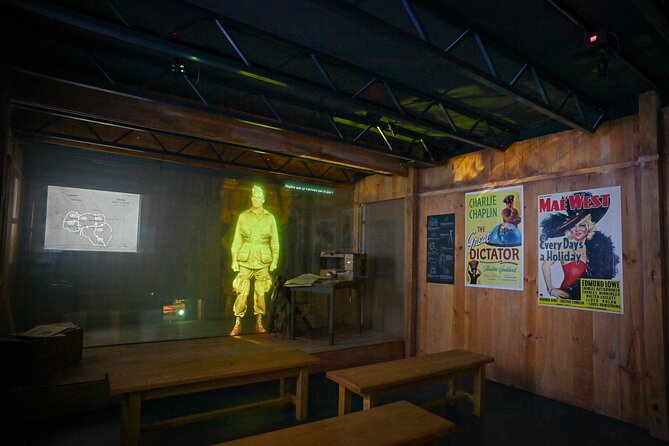
The included Histopad is an interactive tablet using augmented reality. It takes selected parts of the museum and adds images, information, and scenes linked to Normandy in 1944.
This is more than an audio guide. The tablet uses interactive features and highly detailed graphics to show moments from D-Day and help you connect the physical displays with the events they represent. For visitors who learn best through images, it can make the material easier to follow.
I see the Histopad as especially useful for younger visitors and for anyone who finds traditional military museums hard to decode. Dates, unit names, maps, and equipment can blur together in a standard display. An interactive screen gives you something active to do while you are learning.
There is a tradeoff. Tablets can pull your attention away from the actual objects in front of you. If you spend the whole visit looking down at the screen, you may lose some of the impact of the aircraft, artifacts, and exhibition spaces. I would use the Histopad as a guide, then look up and take in the physical setting.
The augmented-reality element also gives the museum a more modern feel than a basic collection of wartime objects. That can be a plus if you are visiting several D-Day museums and want some variety. It may be less appealing if you prefer original artifacts presented with minimal technology.
A few more Normandy outings to set side by side
- Normandy American D-Day Beaches Full Day Tour from Bayeux
★ 5.0 · 2,103 reviews - Normandy American D-Day Experience – Group tour from Bayeux
★ 5.0 · 1,566 reviews - Normandy Beaches Half-Day Afternoon Trip from Bayeux (A2)
★ 4.5 · 1,116 reviews - Omaha and Band Of Brothers Full Day Tour
★ 5.0 · 1,104 reviews
What the two-hour visit feels like
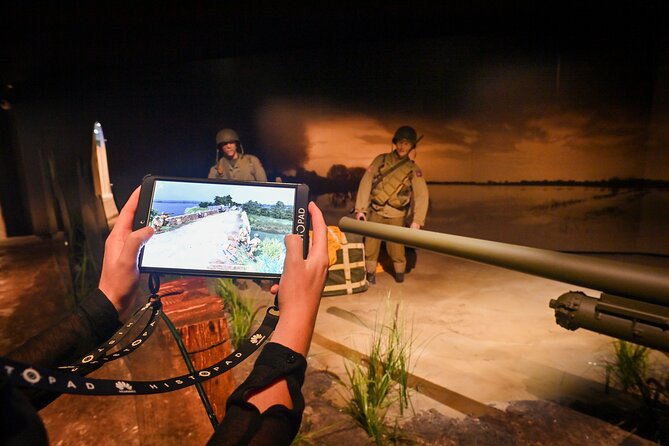
The visit is self-guided, which gives you control over the pace. You can move more quickly through sections that cover familiar material and spend longer with the aircraft, film, or Histopad scenes that interest you most.
A typical visit can fit into about two hours. That estimate works well if you watch the major film, use the Histopad, and take time with the main exhibits. Families may need closer to two or three hours, especially if children want to interact with the tablet and revisit the most dramatic sections.
The museum works best as part of a full Normandy day rather than as an isolated attraction. You can pair it with Utah Beach or other D-Day sites in the area. The visit gives you the airborne story, while the coastal sites help explain the seaborne landings.
Because the ticket is flexible, you do not have to arrive at one exact tour departure time. That is helpful on a driving day, when road delays or a longer stop at another site can change your schedule. Still, flexible admission does not mean skip-the-line access. The ticket specifically does not include priority entry.
The opening hours vary by season:
- From May 1 through August 31, the museum is open daily from 9:00 a.m. to 7:00 p.m.
- From September 1 through September 30, it is open daily from 9:30 a.m. to 6:30 p.m.
- From October 1 through November 30, it is open daily from 10:00 a.m. to 6:00 p.m.
These hours give you room to fit the museum around other sites, but always match your arrival to the correct seasonal schedule. If you want a calm visit, arriving earlier may help you avoid the busiest periods, though the ticket does not guarantee a quieter time.
Is the $13.32 admission good value?
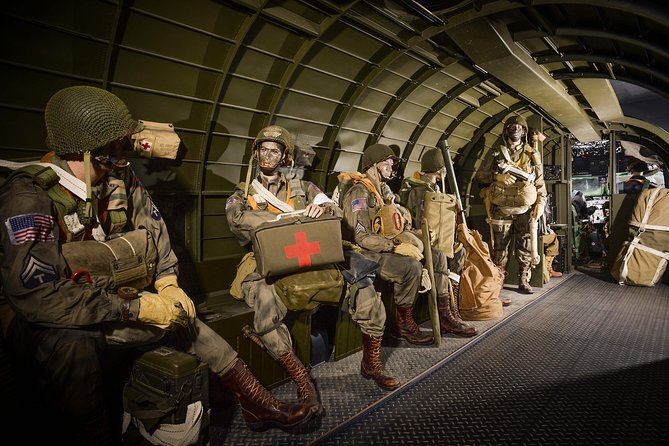
At around $13.32 per person, the ticket is reasonably priced for a two-hour museum visit with a film, a real aircraft, and an augmented-reality guide. The value becomes stronger if you use the Histopad fully and watch the complete film rather than treating the museum as a quick photo stop.
The price is also easy to justify for families. One admission gives children something visual and interactive, while adults receive a clear account of the 82nd and 101st Airborne operations. The museum can serve as a useful introduction before visiting more technical military sites.
Its value depends partly on your interests. If you already know the D-Day story and prefer original documents, quiet galleries, and long historical explanations, the dramatic presentation may feel less satisfying. If you want a clear, accessible account with physical scale and visual effects, the admission makes sense.
A visit lasting only 45 minutes would feel less worthwhile. I would budget the full two hours so you get the complete experience and do not skip the film or Histopad sections.
Who will enjoy this museum most?
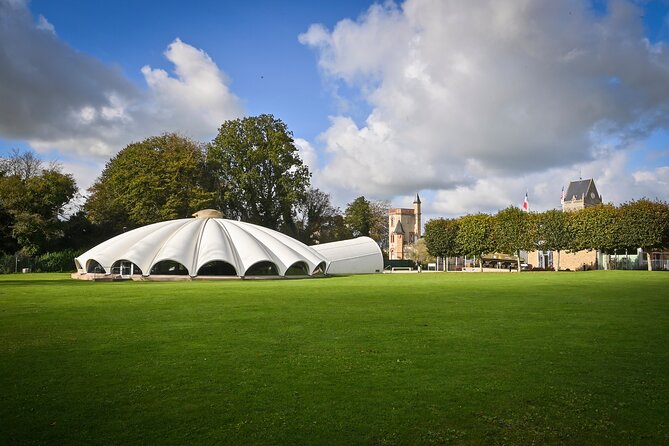
This is a strong choice for families, first-time visitors to the Normandy D-Day area, and anyone interested in the American airborne divisions. The interactive guide and aircraft presentation give children a clear way into a difficult subject.
It also suits visitors who prefer a self-guided visit. There is no fixed group tour pace to follow, and you can decide how much time to spend at each part. The booking information says most people can participate, and service animals are allowed.
History specialists may find the experience less detailed than a research-focused military museum. The presentation aims for clarity and emotional impact, not an exhaustive account of every unit, weapon, and movement. I would treat it as one well-made part of a Normandy itinerary.
The museum is also a good fit if you want to balance beach visits with an inland site. Utah Beach and the other Landing Beaches show the scale of the invasion from the coast. Sainte-Mère-Église adds the airborne side of the story, including the dangerous night landings and the fighting that followed.
Small practical details that affect your visit
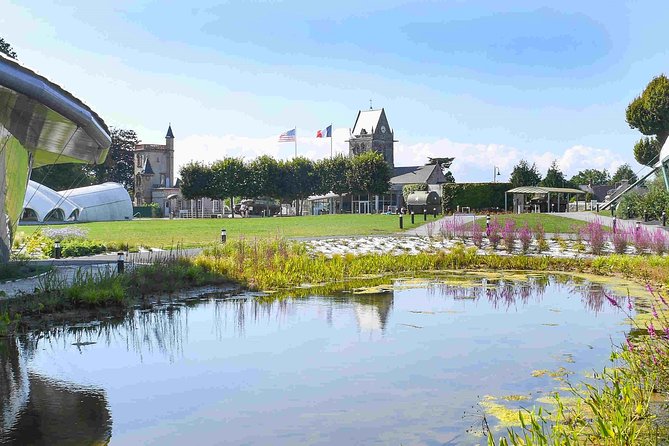
Your booking confirmation is provided at the time of purchase. The ticket allows free cancellation if you cancel at least 24 hours before the scheduled start time. Cancellations or changes made less than 24 hours before the start are not accepted for a refund.
The activity has a maximum group size of nine people, according to the booking details. Since the visit is self-guided, that limit should not be mistaken for a guided tour with a personal historian. It is best understood as a small booking capacity attached to an independent museum visit.
The museum is open every day during the listed May through November periods. Check the date carefully, since the opening time changes from 9:00 a.m. in summer to 10:00 a.m. in October and November.
Most people can take part, and service animals are allowed. The available details do not describe every accessibility feature inside the aircraft or exhibition areas, so you should contact the museum directly if you need specific mobility information.
Should you book the Airborne Museum?
I would book this museum if you are visiting Sainte-Mère-Église, Utah Beach, or the Normandy Landing Beaches and want a clear account of the airborne operation. The real C-47, 20-minute film, and Histopad give the visit enough variety to hold the attention of both adults and children.
I would be more cautious if you are expecting a traditional museum with long written explanations and a quiet atmosphere. Operation Neptune uses simulation, sound, and visual effects, and the experience can feel closer to a historical attraction than a purely academic collection.
For most people, the combination is worthwhile. The price is modest, the visit fits into a two-hour schedule, and the self-guided format gives you control. Just confirm the location in Sainte-Mère-Église before booking, then pair it with the nearby D-Day sites for a fuller understanding of what happened in Normandy in June 1944.
FAQ
Where is the Airborne Museum located?
The museum is in Sainte-Mère-Église, Normandy, close to Utah Beach and the Normandy Landing Beaches. It is not located at Mont-Saint-Michel itself.
How long should I allow for the visit?
Allow about two hours. Families and visitors who take their time with the films, exhibits, and Histopad may spend two to three hours.
Is the visit guided?
No. The museum visit is self-guided, so you can explore at your own pace. The included Histopad provides interactive augmented-reality content.
Is skip-the-line entry included?
No. The admission ticket is flexible, but skip-the-line entry is not included.
What are the museum’s opening hours?
From May 1 through August 31, it is open daily from 9:00 a.m. to 7:00 p.m. From September 1 through September 30, hours are 9:30 a.m. to 6:30 p.m. From October 1 through November 30, hours are 10:00 a.m. to 6:00 p.m.
Can I cancel the ticket for a refund?
Yes. You can receive a full refund if you cancel at least 24 hours before the experience start time. Cancellations or changes made less than 24 hours before the start are not accepted.
Recently added in Normandy
- Mt St. Michel Private Tour with Abbey tickets and tour guide★ 5.0 · 45 reviews
- Mont-St-Michel: Private Walking Tour “Abbey Ticket Included”★ 5.0 · 28 reviews
- Normandy Victory Museum admission ticket★ 5.0 · 58 reviews
- Private Guided Tour in WW2 Jeep of the Landing Beaches★ 5.0 · 110 reviews
- From Cherbourg: D-Day Beaches Shore Excursion★ 5.0 · 28 reviews
- Outdoor Escape Game in Étretat★ 5.0 · 171 reviews
- Paris On Your Own from Le Havre Port with Round Trip Bus Transfer★ 5.0 · 59 reviews
- Deluxe Paris Shore Excursion from Le Havre with Seine Cruise★ 4.5 · 79 reviews
Museums, compared.


Louvre Museum Masterpieces Guided Tour with Access
Read our review →
Louvre Museum Entry Ticket With Host and River Cruise
Read our review →
Les Invalides: Napoleon’s Tomb & Army Museum Entry
Read our review →
Louvre Museum – Exclusive Guided Tour (Entry Included)
Read our review →
Louvre Museum Hosted Entry and Mona Lisa Audioguide
Read our review →
Louvre Museum Tour Mona Lisa & Iconic Masterpieces
Read our review →
Browse the lists this tour appears in