
REVIEW · FRANCE
Domain visit
Wine gets more interesting underground. At Château de la Selve, you follow the full path from vineyard to cellar, taste nine estate vintages, and see wine aging in amphorae and barrels. I like the close look at organic winemaking, and I like that the tour includes white, rosé, and red wines. The main consideration is language: the tour is generally conducted in French, though the guides speak good English.
This is a private two-hour visit, so your group gets the guide’s attention instead of being folded into a large crowd. At $14.38 per person, it offers strong value for anyone already exploring the Ardèche area and interested in wine beyond a quick tasting at a shop.
In This Review
- Key points to know before you book
- Arriving at Château de la Selve in Grospierres
- From the vineyards to the vat room
- Amphora aging and a barrel tasting
- The cellar tasting: nine vintages across three colors
- English support and the language question
- Is $14.38 a good value?
- Who will enjoy this wine estate visit?
- Timing, cancellation, and practical planning
- Should you book Château de la Selve?
- FAQ
- Where does the Château de la Selve wine tour begin?
- Where does the activity end?
- How long does the experience last?
- Is the tour available in English?
- How many wines will I taste?
- Can I cancel for a full refund?
Key points to know before you book
- Nine estate wines are included: You taste a broad selection, including white, rosé, and red wines.
- The tour follows the entire winemaking process: You visit the vineyards, vat room, and cellar in a clear order.
- Amphora aging adds something unusual: You see how one of the estate’s wines is raised in clay vessels, then taste another from the barrel.
- The visit takes about two hours: It gives you enough time for explanations and tasting without taking up a full day.
- English is available, but French is the usual language: Guides speak good English, yet some parts may be easier if you are comfortable with basic French.
- The experience is private: Only your group participates, which makes questions and conversation easier.
Arriving at Château de la Selve in Grospierres
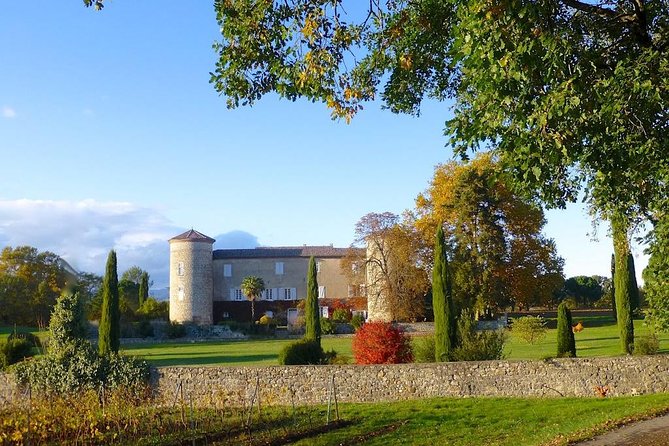
The tour begins at Château de la Selve, at 3120 route d’Alès in Grospierres, France. You also finish at the same meeting point, so there is no second location to arrange at the end.
That simple setup matters. You can leave your day’s plans open before and after the visit instead of worrying about a shuttle or a separate drop-off. The supplied information does not give details about public transport, parking, or the best way to reach the estate, so you should check your route before setting out.
The confirmation arrives at booking, which gives you the meeting address and activity details in advance. Since the visit lasts roughly two hours, it fits well into a day that includes other sights in the area. I would avoid scheduling it too tightly with another timed activity, since a guided tasting is more pleasant when you are not watching the clock.
The setting is a working wine estate rather than a standard tasting counter. That distinction shapes the visit. You are not simply handed several glasses and left to guess your way through them. The guide explains how the wine moves through the property, from the vines to the finished bottle.
Other France afternoons worth holding open:
- Paris: Louvre Museum Timed-Entrance Ticket
★ 4.6 · 71,977 reviews - Disneyland® Paris 1-Day Ticket
★ 4.6 · 49,412 reviews - Paris: Versailles Palace and Gardens Full Access Ticket
★ 4.6 · 41,579 reviews
From the vineyards to the vat room
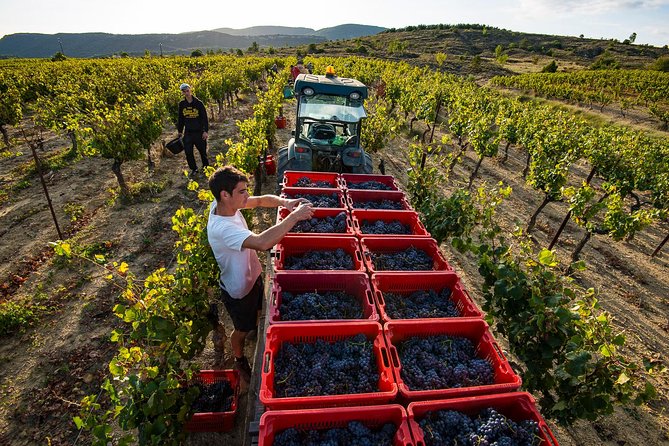
The tour begins near the Château, with the vineyards and the estate’s approach to wine production. This opening gives you a useful frame for the tasting later. You first learn where the grapes come from and how the estate works with them before you begin comparing wines in the cellar.
The organic focus is one of the strongest reasons to choose this experience. Organic wine can sound like a label claim when you encounter it on a shelf. Here, you have a chance to connect that idea with the actual stages of production and ask questions as the guide explains the process.
The information does not specify every organic technique used at the estate, so you should not expect a technical lecture on each treatment or certification rule. Instead, think of this as a practical introduction to how an organic estate makes wine, supported by a walk through the places where that work happens.
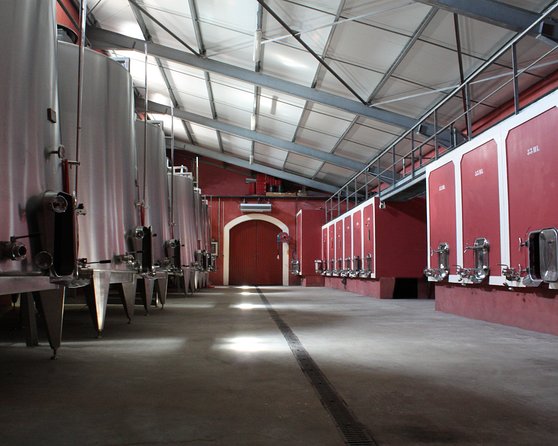
Next comes the vat room, where the grapes are handled during production. This stop helps bridge the gap between vineyard and cellar. You see that winemaking is not just about aging and tasting. The vat room is part of the working sequence, and the guide places it in that larger story.
I appreciate this order because it makes the final tasting more useful. By the time you reach the wine, you have a basic sense of the estate’s methods. You can pay attention not only to what is in your glass, but also to why the wine may have been made in a particular way.
Amphora aging and a barrel tasting
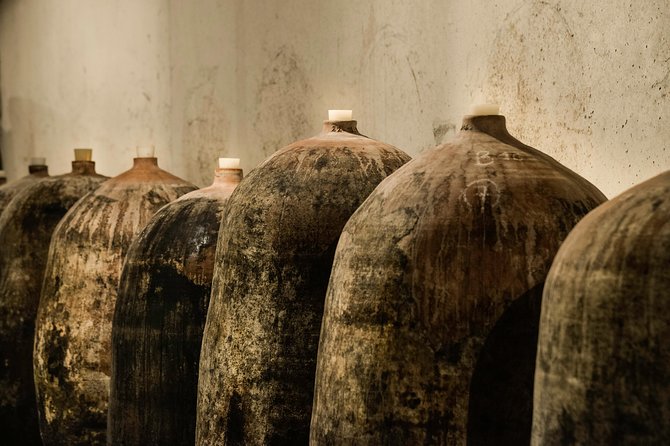
One of the more unusual parts of the visit is the chance to discover wine being raised in amphorae. These large clay vessels give the tour a point of difference from a basic cellar walk. Even if you already know the broad outlines of wine production, amphora aging gives you something specific to look for.
The available information does not identify the amphora material, shape, age, or the exact wine inside. The guide explains the role it plays at the estate, and you can use that moment to ask how the vessel affects the wine compared with more familiar aging methods.
You also get to taste one of the wines directly from the barrel. This is a small but memorable detail. A barrel sample lets you encounter a wine before it has reached its final form, which can make the tasting feel more connected to the work happening around you.
Do not expect every wine in the tasting to come from a barrel or amphora. The point is to see these methods as part of the estate’s range of techniques. The visit gives you a look at production choices, then lets you taste the results across several finished wines.
The cellar tasting: nine vintages across three colors
The guided tour ends with a tasting in the cellar. You sample nine different vintages from the estate, including white, rosé, and red wines. That variety gives you a much wider look at Château de la Selve than a tasting limited to one style.
A nine-wine tasting can sound generous for a two-hour visit, but the format matters. The estate combines the tour and tasting, so the time includes movement through the property, explanations, and sampling. You should expect a guided introduction rather than a long, formal wine seminar.
The three broad wine colors also make the tasting approachable for mixed groups. You might prefer reds while someone with you favors rosé or white wine. With all three represented, the tasting has a better chance of giving each person something to enjoy.
The visit also includes an explanation of the wine’s stages, so you can compare the tasting glasses with what you have just seen. Pay attention to how the guide connects the wines to the estate’s organic methods, cellar work, and aging choices.
One published rating for the experience is 4.7 out of 5 from 40 ratings, and 93 percent of participants recommend it. The strongest praise centers on the full winery visit, the range of white, rosé, and red wines, and the guide’s friendly, professional explanations. That matches the design of the tour: the tasting is important, but it is not the entire point.
Same city, a slower kind of day:
- Paris: Evening River Cruise with Music
★ 4.4 · 22,721 reviews - Paris: Eiffel Tower Entry Ticket with Optional Summit Access
★ 4.4 · 20,035 reviews - Paris: Eiffel Tower Summit or Second Floor Access
★ 4.3 · 17,248 reviews - Paris: Louvre Guided Tour with Reserved Access & Boat Cruise
★ 4.3 · 16,353 reviews
English support and the language question
The tour is generally in French, with guides who speak good English. This is the main issue you should weigh before booking. If you need every technical explanation in English, the experience may require some patience and occasional clarification.
If you understand some French, you may find the visit easier to follow. If you do not, you can still take part in the tasting and ask questions in English, but the quality of your experience may depend on the guide available that day.
The private format helps here. You are not sharing the tour with a large mixed group, and you can ask the guide to repeat or explain a point. The supplied details do not name a specific guide, so I would not plan around a particular person or assume that an English-first tour is guaranteed.
The language point should not put you off if you mainly want to see how the estate operates and taste its wines. The tour has plenty of visual elements: vineyard, vat room, cellar, amphora, and barrel. Still, the explanations are a large part of the value, especially if organic production is your main interest.
Is $14.38 a good value?
At $14.38 per person, this is a very reasonable price for a private two-hour estate visit with nine tastings. You get more than a short pour at a retail tasting room. The price includes admission, the guided walk, the production explanation, the barrel sample, and the cellar tasting.
The value is strongest if you want context. A wine tasting can be inexpensive but forgettable when you learn little about the producer. Here, the visit connects the glasses to the estate and its methods. You leave with a clearer idea of how the wines are made, not just which one you liked best.
The price may feel less attractive if you only want a quick drink or a brief introduction. Nine wines and a full property visit require attention and time. If your schedule is packed, a two-hour stop could feel long, especially if the language barrier makes the explanations harder to follow.
For anyone curious about organic production, the price is particularly appealing. The amphora and barrel details give the visit some substance, while the three wine colors keep it broad enough for different tastes.
Who will enjoy this wine estate visit?
I would recommend Château de la Selve to several types of visitors:
- Wine beginners who want a clear introduction to vineyards, vats, barrels, and cellar aging.
- Wine enthusiasts who are curious about organic methods and amphora aging.
- Couples and small private groups who prefer a quieter visit with room for questions.
- Mixed wine groups because the tasting includes white, rosé, and red wines.
- Visitors already touring Grospierres who want a two-hour activity rather than a full-day excursion.
Families and non-drinkers may still find the estate visit interesting, but the tasting is a major part of the experience. The supplied information says most people can participate, and service animals are allowed. It does not give a child-specific program or a separate nonalcoholic tasting, so you should ask the provider directly if those details matter to your group.
The tour is less suited to anyone who wants a fully English-language wine course or a very short tasting. It is also not the best choice if you are looking for a large social group, since this activity is private and limited to your own party.
Timing, cancellation, and practical planning
The activity lasts approximately two hours and begins and ends at the Château de la Selve meeting point. Confirmation is provided when you book, and the experience is listed as a mobile-ticket activity, so you can keep the booking on your phone.
Free cancellation is available up to 24 hours before the local start time. Cancel later than that and you will not receive a refund. Changes made within the same 24-hour window are not accepted, so check your schedule before the deadline.
The provider is Château de la Selve. Since the tour usually takes place in French, I would use the booking confirmation to check the exact start time and, if needed, contact the estate about English support for your date.
Should you book Château de la Selve?
Book this tour if you want a well-priced, private introduction to organic wine with more substance than a quick tasting. The combination of vineyards, vat room, cellar, amphora aging, barrel sampling, and nine wines gives you a clear sense of how the estate works.
Think twice if you need a guaranteed English-first tour, want only a short tasting, or are not interested in the production side of wine. For most visitors spending time near Grospierres, though, the $14.38 price and two-hour format make this an easy activity to fit into your plans. Just arrive ready to listen, taste, and let the cellar do some of the talking.
FAQ
Where does the Château de la Selve wine tour begin?
The tour begins at Château de la Selve, 3120 route d’Alès, 07120 Grospierres, France.
Where does the activity end?
The tour ends back at the Château de la Selve meeting point.
How long does the experience last?
The guided visit and tasting last approximately two hours.
Is the tour available in English?
The tour is generally conducted in French, but the guides speak good English. English support is available, though the experience is not described as an English-only tour.
How many wines will I taste?
You will taste nine different vintages from the estate, including white, rosé, and red wines.
Can I cancel for a full refund?
Yes. You can cancel up to 24 hours before the experience start time for a full refund. Cancellations or changes made less than 24 hours before the start time are not accepted for a refund.
Recently added in France
- Mt St. Michel Private Tour with Abbey tickets and tour guide★ 5.0 · 45 reviews
- Mont-St-Michel: Private Walking Tour “Abbey Ticket Included”★ 5.0 · 28 reviews
- Normandy Victory Museum admission ticket★ 5.0 · 58 reviews
- Private Guided Tour in WW2 Jeep of the Landing Beaches★ 5.0 · 110 reviews
- The Urban Hike of Marseille★ 5.0 · 35 reviews
- Airborne Museum Admission Ticket★ 5.0 · 424 reviews
- From Cherbourg: D-Day Beaches Shore Excursion★ 5.0 · 28 reviews
- Surf school Soonline Moliets★ 4.5 · 27 reviews