
REVIEW · LE MARAIS WALKING TOURS
Explore the Marais: Culture, History & Hidden Gems of Paris
Paris rewards walkers. The Marais rewards curious walkers. This two-hour tour moves from the Pompidou Center through medieval lanes, the Jewish Quarter, Saint Gervais church, Place des Vosges, and the revolutionary story of the Bastille. Along the way, you get a pastry and a useful introduction to how this neighborhood has changed.
I like the small group of no more than 12 people, which gives the guide room to answer questions and adjust the walk to your interests. I also like the mix of subjects: LGBTQIA+ life, Jewish culture, old Parisian architecture, street art, churches, food, and French political history all fit into one route.
The main drawback is the short time. Two hours goes quickly in the Marais, and the walk covers about 2 kilometers, with several stops that deserve more time. The food element is also modest: you receive a pastry, but drinks and extra food cost more.
In This Review
- Key points to know before you book
- Why the Marais makes such a good walking tour
- Starting beside the Pompidou Center
- Hôtel de Ville and the first look at modern Paris
- Medieval lanes and Saint Gervais church
- The Marais and its LGBTQIA+ identity
- A merveilleux, then Rue des Rosiers
- Place des Vosges and Victor Hugo’s Paris
- The Bastille and the French Revolution
- Guide quality and the small-group advantage
- Walking comfort, timing, and practical value
- Who should book this Marais walk?
- Should you book Explore the Marais?
- FAQ
- How long does the Marais tour last?
- Where does the tour start?
- Where does the tour end?
- What language is the tour conducted in?
- How many people are in the group?
- Is food included?
- Is the tour suitable for special diets?
- How much walking is involved?
Key points to know before you book
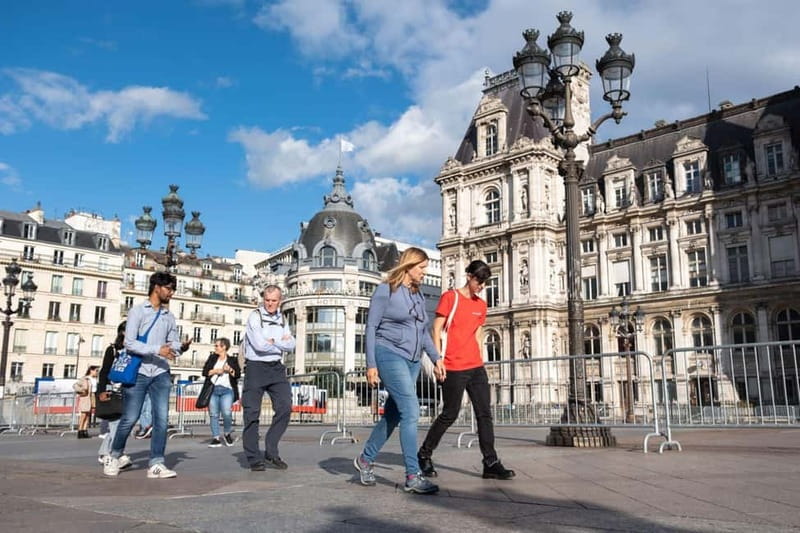
- Start near the Pompidou Center: Meet opposite the Centre Pompidou by the Centre Culturel de Serbie, where your guide will hold a sign for the local partner.
- A broad look at the Marais: The route covers medieval streets, Saint Gervais church, Rue des Rosiers, Place des Vosges, and Place de la Bastille.
- LGBTQIA+ and Jewish heritage: The guide explains how both communities helped shape the neighborhood you see today.
- A pastry is included: The tour includes a merveilleux, a meringue-based treat, but drinks and additional food are not included.
- Personal attention: The standard group has a maximum of 12 people, and a private option is available.
- Easy walking, but wear good shoes: The route covers about 2 kilometers on city streets, and an umbrella is recommended.
Why the Marais makes such a good walking tour
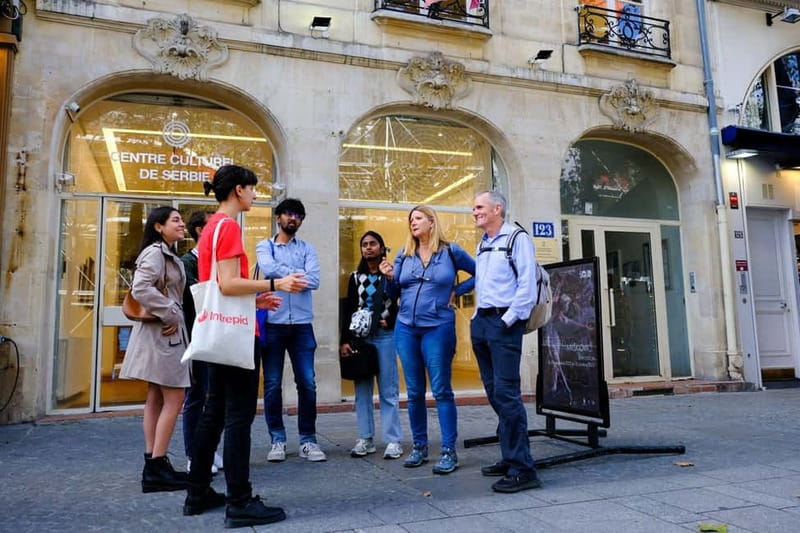
The Marais is one of Paris’ most rewarding areas for wandering because its story is written into the streets. You can pass a grand mansion, a medieval-looking lane, a modern gallery, a Jewish bakery, and an LGBTQIA+ bar within a few minutes.
That mixture is the point of this tour. It does not treat the Marais as a museum frozen in the past. You learn how old buildings and newer communities occupy the same neighborhood, and how the area has shifted over time.
The walk also works well early in a Paris trip. Camila, one of the guides praised for her friendly approach, helped a first-time visitor get oriented and offered suggestions for food and shopping. That kind of local advice can be as useful as the historical facts, especially if you plan to return to the Marais on your own.
At $56 per person, the price is reasonable if you want a guided introduction rather than simply a stroll. You are paying for a live English-speaking guide, a planned route, local interpretation, and a pastry. It is less attractive if you mainly want a food tour, since the included tasting is limited and extra drinks or snacks are not part of the price.
More Historical Tours in Paris
- Paris: Louvre Museum Entry with History of Mona Lisa
★ 3.9 · 2,823 reviews - Paris: Dark History and Ghostly Guided Walking Tour
★ 4.7 · 1,000 reviews - Le Marais/Paris – The Historic, Trendy, Jewish, LGBT district
★ 5.0 · 341 reviews
Starting beside the Pompidou Center
The meeting point is opposite the Centre Pompidou, near the Centre Culturel de Serbie. Look for a guide holding a sign with the local partner’s name. Give yourself enough time to find the exact spot, since the area around the Pompidou has several entrances, open spaces, and busy pedestrian routes.
The Centre Pompidou itself is part of the opening context, with a guided portion listed at about 10 minutes. You may discuss the building, the surrounding area, or the way modern art and old Paris meet at the edge of the Marais.
This is a practical starting point because the Pompidou is easy to connect with by public transport, and the nearby streets quickly shift from a major cultural site to smaller neighborhood lanes. The tour gets you moving right away rather than spending a long time on introductions.
Hôtel de Ville and the first look at modern Paris
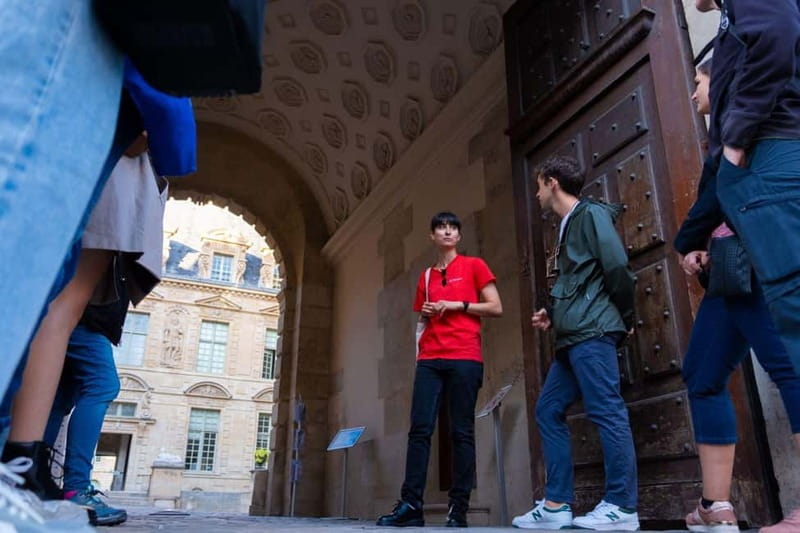
The route continues toward Hôtel de Ville, Paris’ city hall. The stop lasts about 15 minutes and helps place the Marais within the larger story of central Paris.
The walk also passes the Stravinsky Fountain and street art. These details matter because they prevent the tour from becoming a string of old dates and monuments. You see the Marais as a working neighborhood with contemporary art and public life, not only as a historic district.
I would pay attention here to the guide’s explanation of how the area mixes older Parisian character with the LGBTQIA+ community. The tour treats LGBTQIA+ life as part of the Marais’ identity, rather than as a separate subject added at the end.
Medieval lanes and Saint Gervais church
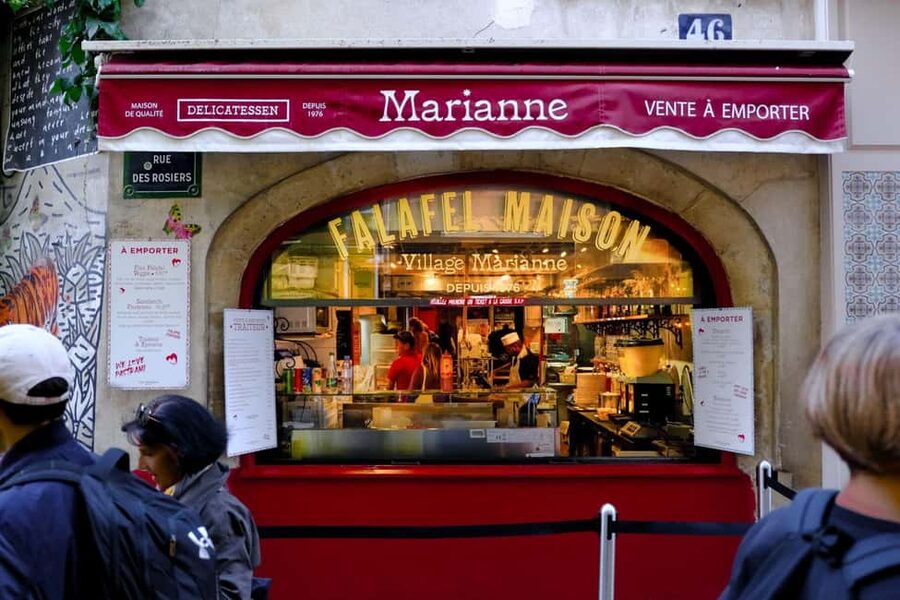
The Marais portion lasts about 15 minutes, but the real pleasure is in the transition between major streets and tucked-away medieval lanes. Look for the unusual corbelled houses, where upper floors project over the street. These structures give the neighborhood a distinctive shape and offer the kind of detail you could easily miss alone.
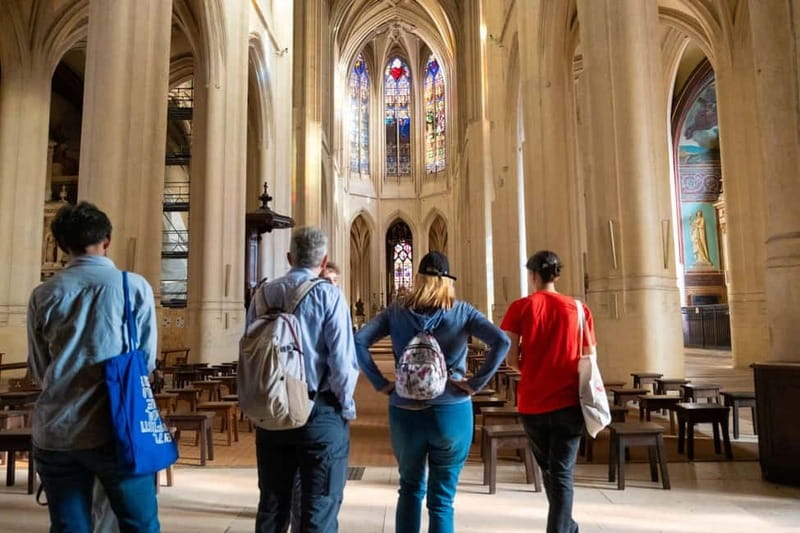
Saint Gervais church receives another 15-minute stop. The church is described as a key part of the route, with attention to its legacy and the story behind the building. This is a good place to slow down, since the church adds a quieter pause after the city streets and street art.
Guide Paloma was praised for bringing the area to life instead of reciting facts. That is especially valuable at a site such as Saint Gervais, where a short explanation can help you notice architectural and historical details that would otherwise blur together.
The stop is primarily sightseeing, not a full church tour. If you want extensive time inside or a detailed architectural study, you will need to return independently.
More walks through Le Marais:
- Award-Winning Paris French Bakery Experience — Le Marais, 4th Arr
★ 4.5 · 1,186 reviews - Paris Le Marais Food Tour With 10+ Tastings, Cheese, Wine & More
★ 5.0 · 985 reviews - Paris Le Marais District Original Food and Wine Tasting Tour
★ 4.5 · 880 reviews - Paris Bike Tour Hidden Secrets in the Latin Quarter & Le Marais neighborhoods
★ 5.0 · 766 reviews
The Marais and its LGBTQIA+ identity

One of the tour’s strongest features is its attention to the LGBTQIA+ community. The guide explains how this community has helped shape the Marais’ modern character and how the area combines older traditions with present-day social life.
That subject gives the walk a more honest feel. Paris neighborhoods change, and the Marais is not simply a collection of preserved buildings. The route connects the visible streets with the people and communities who have made the district what it is today.
The quality of this part will depend on your guide, but the small group helps. With no more than 12 people, you can ask for more context or steer the conversation toward social history, architecture, food, or local life. A private group gives you even more control.
A merveilleux, then Rue des Rosiers
The pastry stop is one of the tour’s most memorable small touches. You receive a merveilleux, a meringue-based pastry with a light, indulgent texture. It adds a taste of Paris without turning the walk into a full restaurant crawl.
Food lovers should set expectations correctly. Some experiences connected with the guides and route have included several pastries, cheese, charcuterie, and wine, but the information for this activity specifically includes one pastry. Drinks and additional food are not included.
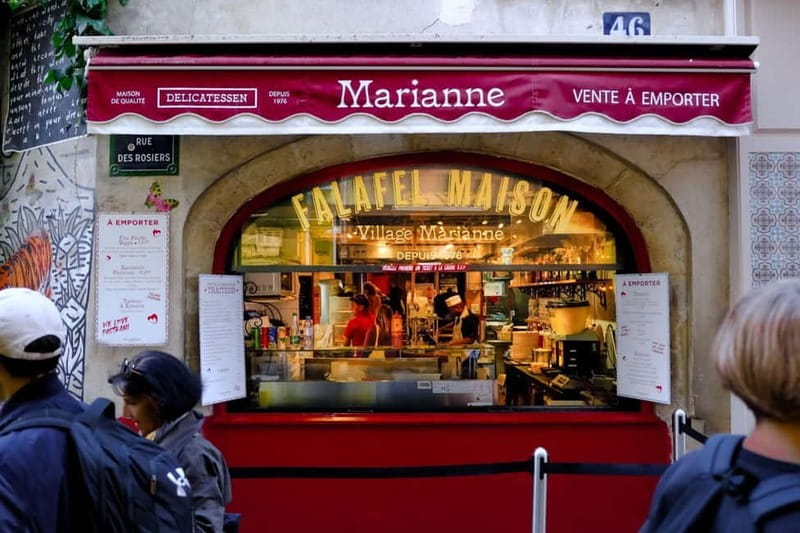
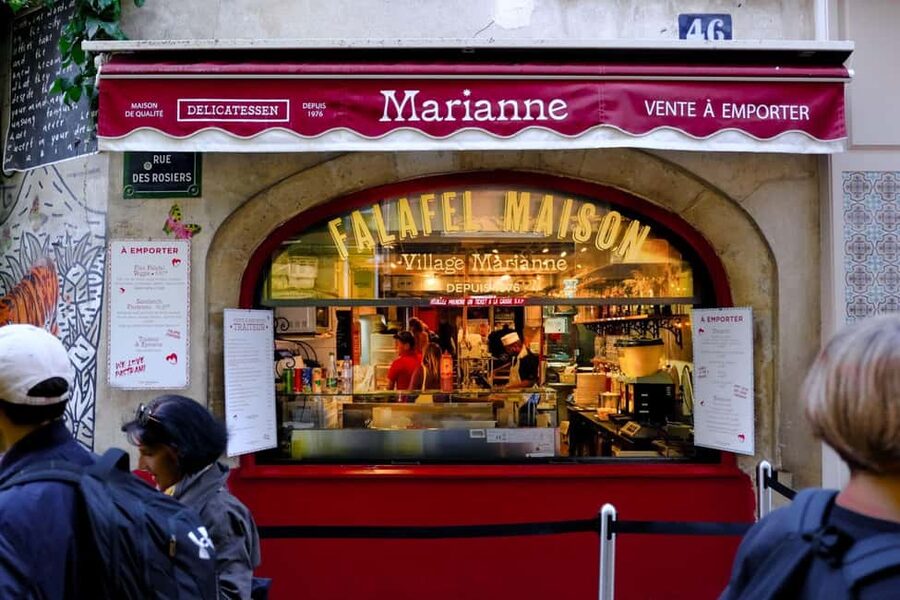
The walk then reaches Rue des Rosiers, the heart of Paris’ Jewish Quarter. The stop lasts about 15 minutes and focuses on the Jewish community’s influence on the Marais. This is also an area associated with falafel and Jewish food traditions, so you will have a natural chance to continue eating after the tour.
I like this part because food and culture are connected rather than treated as separate attractions. The street gives you a sense of how a community’s traditions become part of the everyday life of a city.
Vegetarians can take part, but the tour is not suitable for lactose-free, gluten-free, or vegan diets. If that applies to you, ask about the current pastry before booking. The supplied information does not list substitutions.
Place des Vosges and Victor Hugo’s Paris
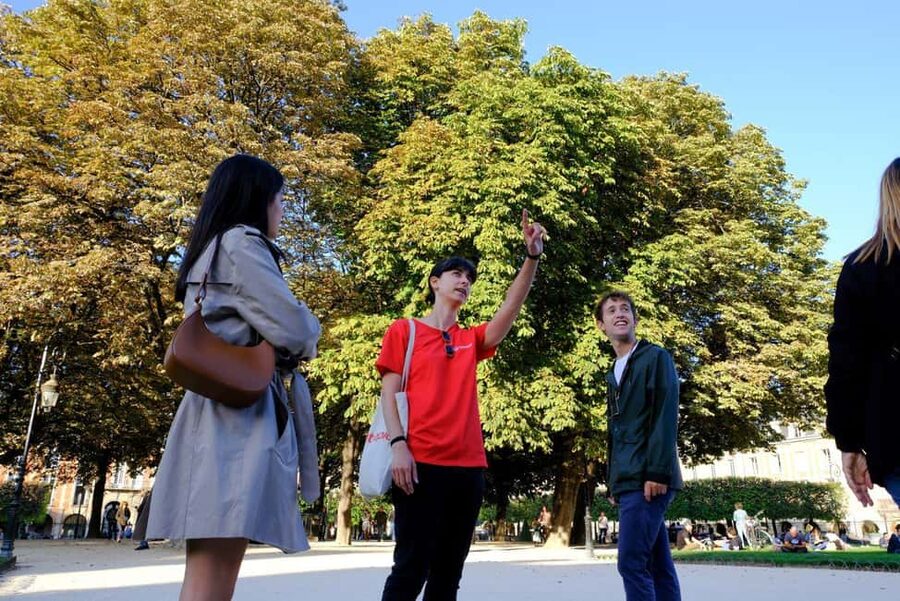
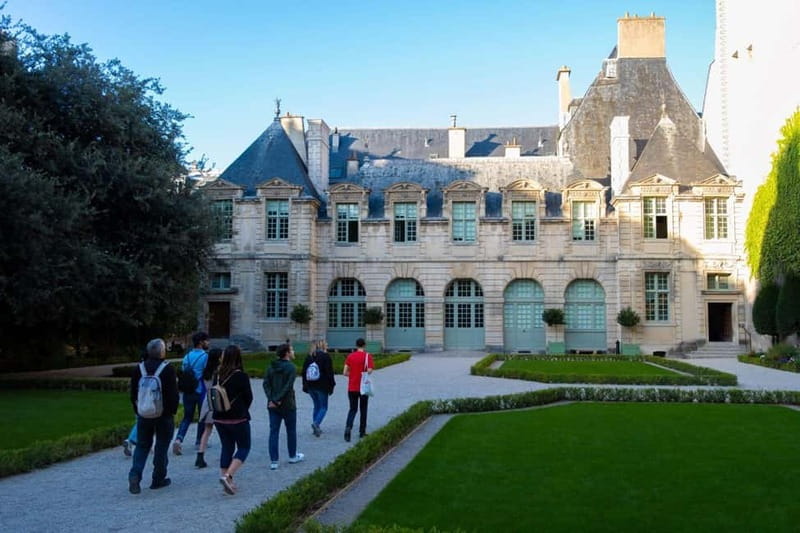
Place des Vosges is one of the prettiest spaces on the route. Its formal layout and surrounding buildings provide a sharp contrast with the narrow streets of the Jewish Quarter and the rougher medieval lanes.
The stop lasts about 15 minutes. You learn about the square and its connection with Victor Hugo, whose former home is associated with the Place des Vosges. The setting gives you a useful break from walking and a chance to take in the architecture at a slower pace.
This is also a good place to return after the tour. The square is an easy anchor for further exploring, and it puts you close to more of the Marais’ shops, food spots, and streets. If you like taking photographs, this stop offers some of the clearest architectural views on the walk.
There is a small inconsistency in the supplied route details: Place des Vosges is listed as the finish point in one section, while Place de la Bastille appears as the final stop elsewhere. The meeting information also says the activity ends back at the meeting point. Confirm the exact ending with the operator on the day, especially if you have dinner or a timed reservation afterward.
The Bastille and the French Revolution
The route may continue to Place de la Bastille, with about 30 minutes devoted to the area. This is where the tour shifts from neighborhood culture to national political history.
The Bastille is tied to the start of the French Revolution, so the guide can connect the location with one of France’s defining historical moments. The modern square is not a preserved medieval site, which makes the guide’s explanation particularly useful. You need context to understand what happened here and why the location matters.
The description suggests finishing with the option of finding a drink at a local bar near Bastille. That is not included in the tour price, but it is a sensible way to continue the evening if the route ends there.
Again, check the final meeting point before you set off. The route description names both Bastille and Place des Vosges, and the practical meeting instructions state that the activity ends back at the meeting point. The operator can clarify which arrangement applies to your departure.
Guide quality and the small-group advantage
The guides are the biggest reason to choose this walk. Maxi was praised for sharing a large amount of neighborhood history in an engaging way. Camila was noted for combining historical detail with street art and practical suggestions for food and shopping.
Paloma received especially strong praise for her pace and flexibility. She allowed time to absorb the information and adapted the walk to personal interests. That matters in the Marais, where stopping to examine a doorway, sign, church detail, or street artwork can make the difference between a routine walk and a memorable one.
Laure was also singled out for pointing out details that are easy to walk past. Adele was praised for her grasp of Parisian history and architecture, as well as her ability to answer questions beyond a guidebook level.
The experience has earned a 4.6 rating from 100 reviews, with repeated praise for the guides, pacing, food samples, and balance between history and local culture. A few comments describe longer versions with more food and wine, so check the exact duration and inclusions for your chosen booking rather than assuming every departure is identical.
Walking comfort, timing, and practical value
The advertised duration is two hours, and the route covers about 2 kilometers. That is not a strenuous distance, but Paris streets can be uneven, and you will spend most of the time standing or walking. Wear comfortable shoes, and bring an umbrella as advised.
The tour is child-friendly, though younger children may find the amount of historical explanation demanding. The route suits adults, older children, solo visitors, couples, and small groups who want a cultural introduction without committing to a full-day excursion.
The maximum group size of 12 is a useful middle ground. You get more personal contact than on a large city tour, but you still have the social feel of walking with other people. If you have very specific interests or want a fully private pace, the private-group option is worth considering.
The tour is carbon neutral and operated by a B Corp-certified company that aims to use travel as a force for good. That does not change the route itself, but it may matter if you prefer booking with a company that makes environmental and social commitments.
Free cancellation is available up to 24 hours before the activity for a full refund, and you can reserve now and pay later. Those terms help if your Paris schedule is still shifting.
Who should book this Marais walk?
I would choose this tour if you want a well-rounded first look at the Marais. It gives you enough history to understand the streets, enough food to add flavor, and enough time in the main areas to decide where you want to return.
It is especially useful if you care about:
- Jewish Paris and Rue des Rosiers
- LGBTQIA+ culture and the neighborhood’s modern identity
- Medieval architecture and small street details
- The connection between food and local communities
- A short, manageable introduction to central Paris
- Personal conversation with an English-speaking guide
I would skip it if you want a serious food tour, a long church visit, or a slow architectural study. The pastry is a pleasant inclusion, but the experience is primarily a walking and history tour.
Should you book Explore the Marais?
Book it if you want more than postcard sights but less than a full-day commitment. For $56, you receive a guided route through several of Paris’ most interesting streets, plus a pastry and the chance to ask questions in a small group.
The best reason to book is the combination of subjects. You move from modern art and street life to medieval buildings, Saint Gervais church, Jewish culture, LGBTQIA+ history, Victor Hugo, and the French Revolution. That is a lot of Paris in a short walk.
Just confirm the ending point, check the food restrictions, and wear shoes you can trust. If you do, this is a strong choice for your first or second day in Paris, when a good local guide can help you see the Marais with sharper eyes.
FAQ
How long does the Marais tour last?
The advertised duration is two hours. Check the available starting times when booking.
Where does the tour start?
The meeting point is opposite the Centre Pompidou, by the Centre Culturel de Serbie. The guide will hold a sign with the local partner’s name.
Where does the tour end?
The supplied details list Place des Vosges as the finish point, while another route description includes Place de la Bastille as the final stop and the meeting information says the activity ends back at the meeting point. Confirm the exact ending location with the operator.
What language is the tour conducted in?
The tour is conducted in English by a live local English-speaking guide.
How many people are in the group?
The small group has a maximum of 12 passengers. A private-group option is also available.
Is food included?
One pastry, a merveilleux, is included. Drinks and additional food are not included.
Is the tour suitable for special diets?
The tour is suitable for vegetarians. It is not suitable for lactose-free, gluten-free, or vegan customers according to the provided information.
How much walking is involved?
The tour covers about 2 kilometers, or 1.2 miles. Comfortable shoes and an umbrella are recommended.
Recently added in Paris
- Private Transfers in Paris★ 5.0 · 75 reviews
- CDG – Euro Disney – CDG Two Way Private Shuttle Transfer★ 5.0 · 233 reviews
- Disneyland® Paris 1 Day Ticket with Transport from Paris★ 3.5 · 302 reviews
- Personalized Transport service from Disneyland to Paris★ 5.0 · 63 reviews
- Monet’s Gardens & House-Private Giverny Tour From Paris★ 4.5 · 137 reviews
- Guided tour Monet’s house and gardens/small group★ 4.5 · 68 reviews
- Giverny Monet House and Gardens Skip the line Walking tour★ 4.0 · 217 reviews
- Monet’s House and Garden & Giverny Village★ 4.5 · 39 reviews
Le Marais Walking Tours, compared.

Award-Winning Paris French Bakery Experience — Le Marais, 4th Arr
Read our review →
Paris Le Marais Food Tour With 10+ Tastings, Cheese, Wine & More
Read our review →
Paris Le Marais District Original Food and Wine Tasting Tour
Read our review →
Paris Bike Tour Hidden Secrets in the Latin Quarter & Le Marais neighborhoods
Read our review →
Food and Wine Tasting Walking Tour in Le Marais
Read our review →
Le Marais/Paris – The Historic, Trendy, Jewish, LGBT district
Read our review →

Browse the lists this tour appears in