
REVIEW · AVIGNON TOURS
From Avignon: Provence Highlights Full-Day Tour
Five Provençal worlds fit into one long day. This nine-hour tour links the region’s best-known villages, natural sights, Van Gogh connections, and Roman remains without asking you to puzzle out several bus routes. I especially like the small group of up to eight and the unusual range of stops, from the spring at Fontaine de Vaucluse to the ochre cliffs of Roussillon.
I also like that Pont du Gard entry is included, and guides such as Anne have earned praise for their humor, enthusiasm, and local insight. The trade-off is simple: this is a busy day with a lot of time on the road. You will see a remarkable amount, but you will not have hours to linger in every village.
In This Review
- Five things to know before booking
- Why this Provence tour works for a short stay
- Fontaine de Vaucluse and the start of the day
- Gordes and the Luberon’s hilltop villages
- Roussillon and the red ochre country
- Saint-Rémy-de-Provence and the Van Gogh connection
- Les Baux-de-Provence, stone and medieval drama
- Pont du Gard and the Roman finale
- Seasonal changes: lavender and the Sunday market
- The guide, vehicle, and pace
- Who should book this full-day tour?
- Is the $165 price fair?
- Should you book it?
- FAQ
- Where does the tour meet?
- How long does the tour last?
- What languages are available?
- Is Pont du Gard admission included?
- Is lunch included?
- Can I cancel the booking?
Five things to know before booking
- Nine hours, five major areas: You visit Fontaine de Vaucluse, the Luberon villages, Saint-Rémy-de-Provence, Les Baux-de-Provence, and Pont du Gard in one ambitious circuit.
- A true small-group outing: The air-conditioned minivan holds no more than eight participants, making it easier to hear the guide and ask questions.
- Gordes and Roussillon bring the classic Provence views: One is built into a limestone hillside, while the other is framed by red ochre cliffs.
- Anne has been especially praised: Her humor, experience, and clear explanations helped make the long day more enjoyable for several people.
- Seasonal extras matter: Lavender fields are visible during blossom season, and Sunday morning departures can include the market at L’Isle-sur-la-Sorgue.
- Plan for walking and a full schedule: Comfortable shoes are important, and the outing is not suitable for wheelchair users.
Why this Provence tour works for a short stay
If you have only a few days in Avignon, Provence can feel frustratingly spread out. The villages, Roman monuments, springs, and market towns are not arranged in one neat sightseeing corridor. Public transportation can take patience and careful planning, especially if you want to combine the Luberon with Saint-Rémy, Les Baux, and the Pont du Gard in the same day.
This tour solves that problem with a single vehicle and an English or French-speaking driver-guide. You meet at the Tourism Office rather than being collected at your hotel, so you need to allow time to reach the meeting point. Hotel pickup and drop-off are not included.
The minivan format matters. A group capped at eight is much easier to manage than a large coach. You can usually hear the guide without straining, and the day has a more personal feel. You should still expect a group schedule, though. The driver cannot wait indefinitely while you browse a shop or take one more photograph.
The price is $165 per person. That is not a bargain-basement day trip, but it can be fair value if you want a driver, an air-conditioned vehicle, a bilingual guide, and admission to Pont du Gard. It also saves you the cost and effort of arranging several separate journeys. If you already have a rental car and prefer slow village visits, the price may feel less attractive. If you are relying on public transportation, the convenience is a major part of what you are paying for.
More full-day plans in Avignon:
- Provence Highlights Full-Day Tour from Avignon
★ 5.0 · 499 reviews - From Avignon: Full-Day Best of Provence Tour
★ 4.7 · 338 reviews - Nimes, Uzes & Pont du Gard Small Group FULL DAY Tour from Avignon
★ 4.5 · 187 reviews
Fontaine de Vaucluse and the start of the day
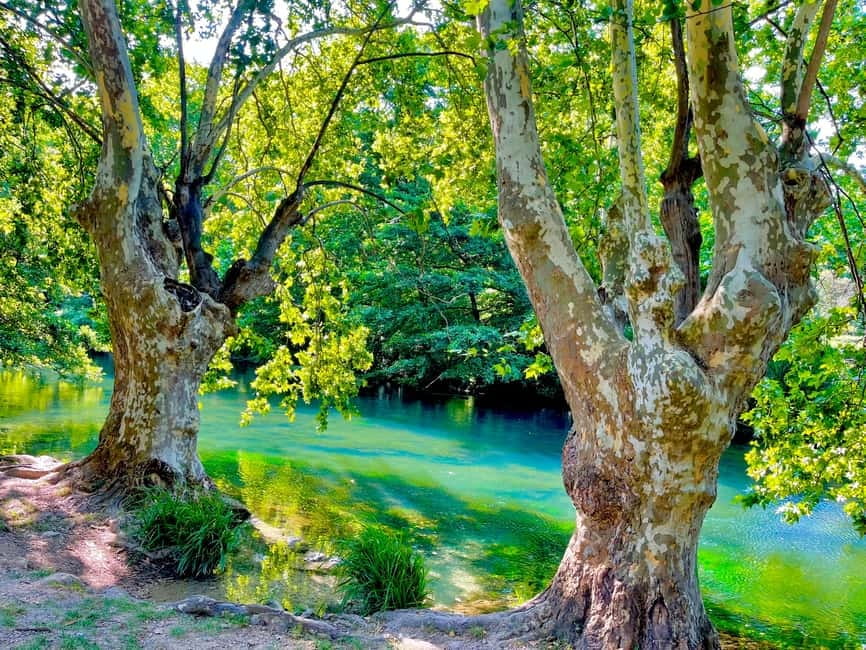
The first stop is Fontaine de Vaucluse, known for its powerful natural spring and leafy setting. It is described as the biggest spring in France, and the appeal is different from the stone villages later in the day. Here, water and shade provide a calmer opening before the tour moves into the Luberon.
The spring’s pure water is the main reason for the stop. You can expect a natural setting rather than a grand architectural sight, so keep your expectations in the right place. This is a place to notice the source of the river, the greenery, and the contrast with Provence’s drier hill country.
The early stop also gives you a chance to get comfortable with the group and the guide. With such a full schedule ahead, I would use this time to ask about the day’s timing, walking conditions, and any seasonal changes to the route.
Gordes and the Luberon’s hilltop villages
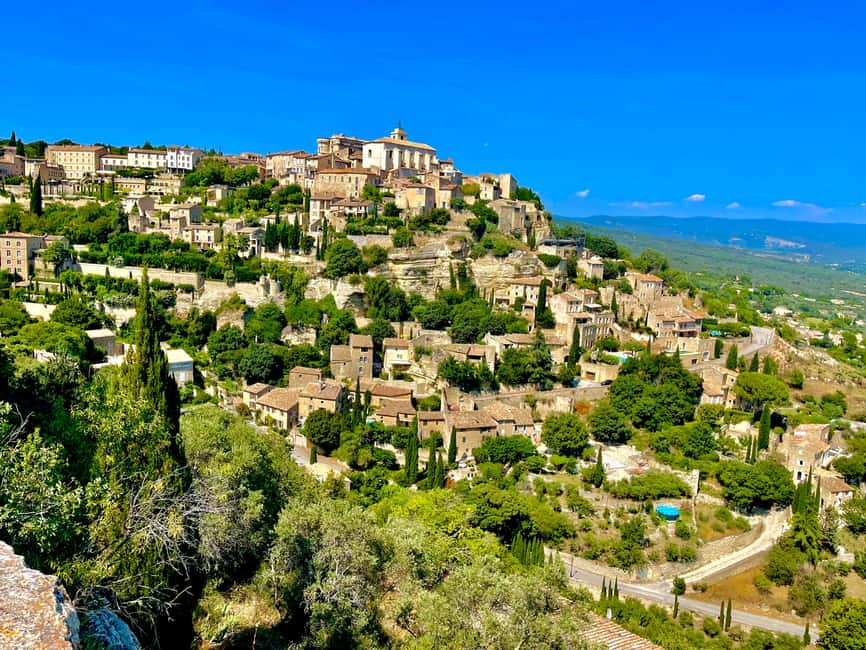
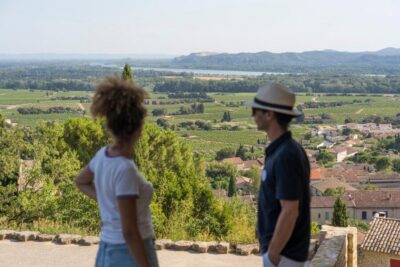
The tour then enters the Luberon Regional Natural Park, established in the 1970s. The area is known for limestone villages perched on hills, and Gordes is the star of this section.
Gordes is famous for its position above the surrounding countryside. From the village, you get the steep stone walls, pale limestone buildings, and broad views that make this part of Provence so recognizable. The visual appeal is immediate, but the hillside setting also means uneven streets and some uphill walking.
I would bring comfortable shoes rather than stylish but flimsy sandals. One person who praised the tour specifically pointed out that the Luberon villages are breathtaking, while also advising comfortable footwear for the full day. That is practical advice, not a minor detail.
Gordes is also where the tour’s pace becomes more noticeable. You may have enough time to enjoy the main views and walk through part of the village, but this is not a leisurely base for a long café stop. If you want to examine every lane, shop, and church, you may wish to visit Gordes independently on another day.
Still, for a first look at Provence, the stop is valuable. You see how villages were built for protection and practicality on high ground, while also getting the views that draw people here today. The guide can add context that you would miss by simply arriving, taking a photograph, and leaving.
Roussillon and the red ochre country
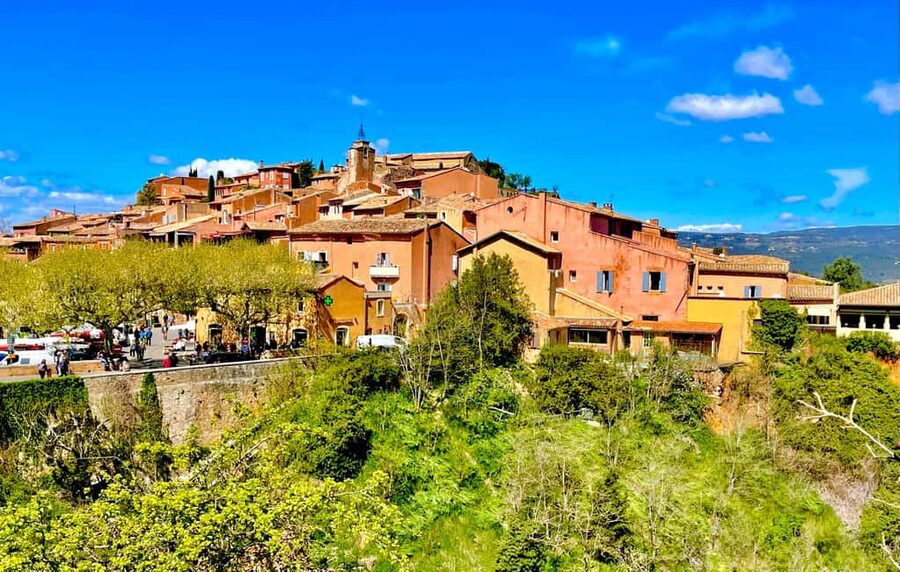
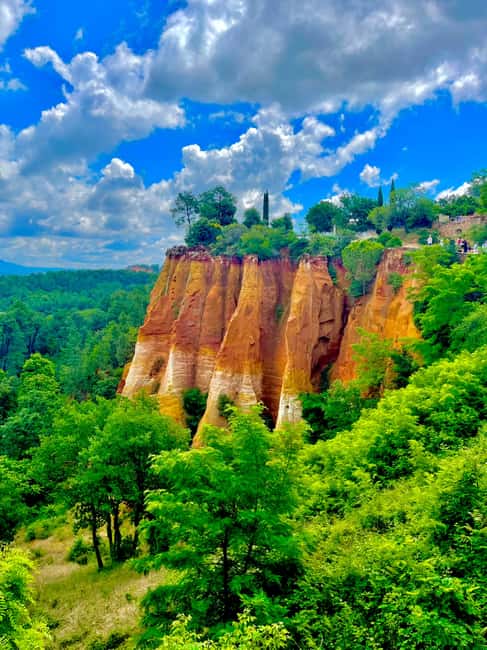
Roussillon changes the color palette completely. The village is known for its red cliffs and its long connection with ochre quarrying. Instead of the pale stone associated with Gordes, you get oranges, reds, yellows, and rust tones.
Ochre was worked here for centuries, shaping both the local economy and the look of the area. The cliffs are not just a pretty backdrop. They explain why buildings, walls, and surrounding paths have such distinctive colors.
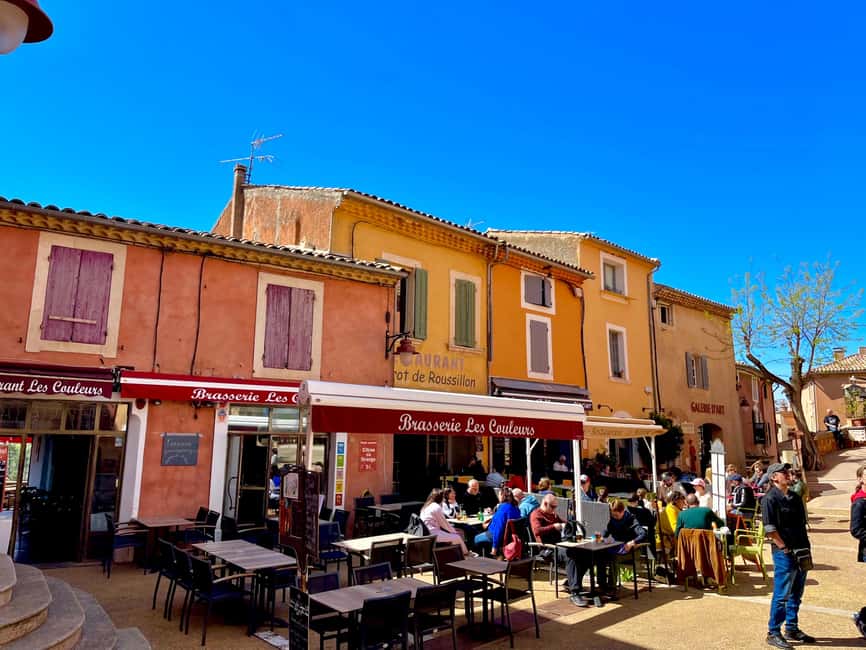
This is also the planned lunch break. The information provided does not specify whether lunch is included, so you should expect to arrange and pay for your own meal. That gives you some choice, but time may be limited on a packed day. If you want a full restaurant meal, keep an eye on the schedule. If you prefer a quick bite, Roussillon is a good place to keep lunch simple.
For me, Roussillon is one of the most useful stops on the route because it shows a side of Provence that is easy to miss if you only visit lavender fields and pale-stone villages. The ochre country gives the day more variety and makes the Luberon feel like a region with distinct local identities, not one repeated postcard view.
A few more Avignon outings to set side by side
- From Arles: Half-Day 4×4 Camargue Safari
★ 4.7 · 1,772 reviews - Chateauneuf du Pape wine tour
★ 5.0 · 484 reviews - 4×4 Camargue Safari 4h – Departure from Arles
★ 4.5 · 467 reviews - From Avignon: Châteauneuf du Pape Half-Day Wine Tour
★ 4.7 · 365 reviews
Saint-Rémy-de-Provence and the Van Gogh connection
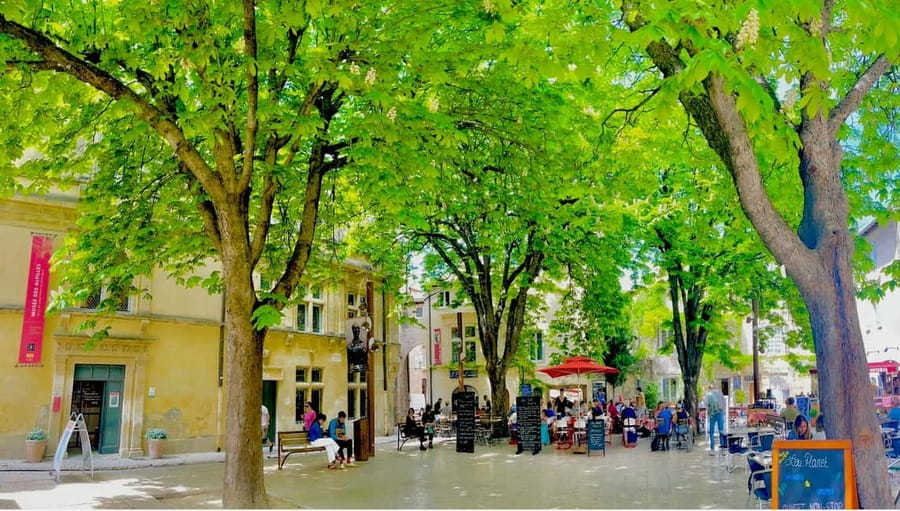
Early in the afternoon, the minivan heads to Saint-Rémy-de-Provence. The town is associated with Nostradamus, who was born there, and with Vincent van Gogh, who created some of his best-known paintings in the area.
That connection gives the stop a different focus. You are not only looking at buildings and streets. You are also placing a major artist’s work within the Provence setting that inspired him. The strong light, cypress trees, fields, and hills around Saint-Rémy helped shape Van Gogh’s paintings during his time in the region.
The tour information does not promise a museum visit or a specific Van Gogh site, so you should think of Saint-Rémy as a town visit with historical and artistic context, not a dedicated Van Gogh tour. Your guide may help connect the place to his work, but the exact amount of free time and interpretation can depend on the day.
Saint-Rémy is also a useful pause between the ochre country and Les Baux. After a morning of hilltop villages and natural sights, the town gives you another kind of Provence, tied to people, art, and local identity.
Les Baux-de-Provence, stone and medieval drama
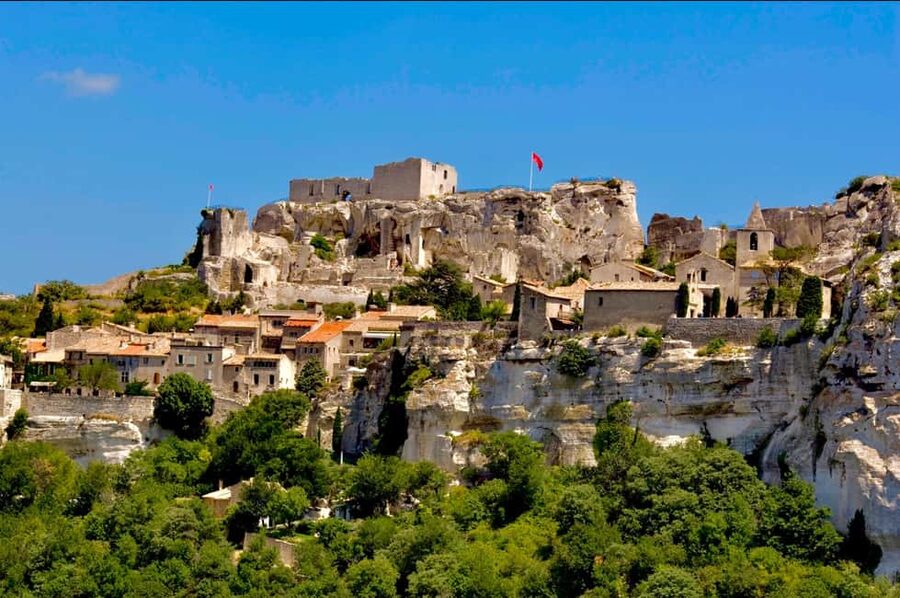
Nearby Les Baux-de-Provence returns you to a hilltop setting, but with a stronger sense of fortified history. The village is built among rocky heights and is packed with old stone structures, narrow passages, and views across the surrounding area.
This is one of the most atmospheric stops on the route. Les Baux feels less like a regular modern town and more like a historic settlement shaped by its difficult position. The high setting explains both its defensive importance and its visual drama.
You should expect walking over uneven surfaces and slopes. The village’s charm comes partly from its old stone layout, but that same layout can be tiring after several earlier stops. This is where comfortable shoes earn their keep.
The amount of time here is an important consideration. A full exploration of Les Baux, including every historic corner and any extra attraction, would need more than a short stop. On this tour, you get a strong introduction and the chance to see why the village is so famous. I would focus on the main streets, views, and the feel of the place rather than trying to check off every detail.
Pont du Gard and the Roman finale
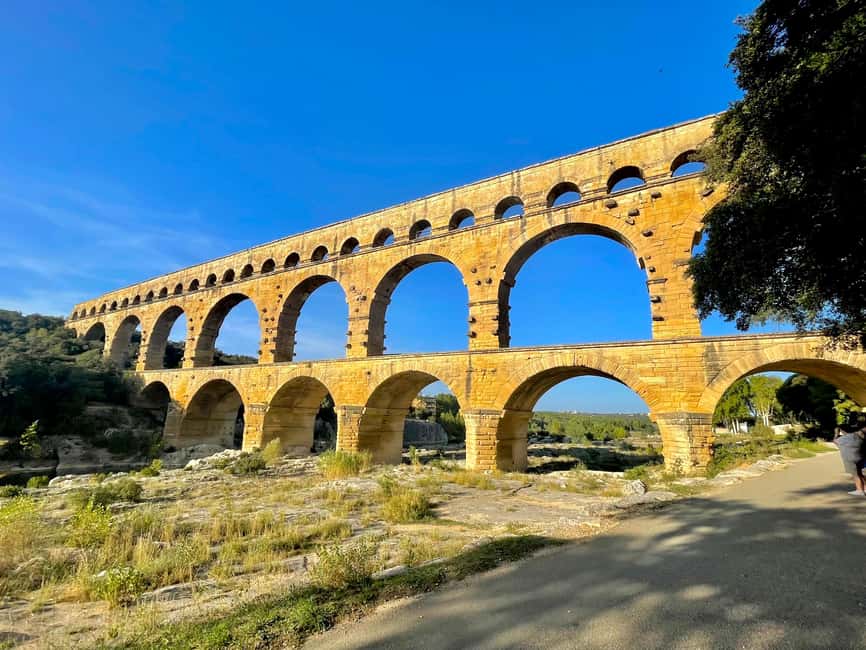
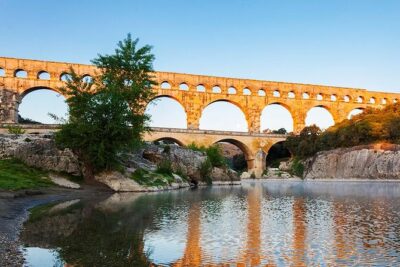
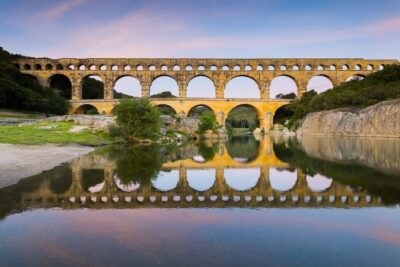
The final major stop is Pont du Gard, a first-century Roman aqueduct and UNESCO site. Ending here is a smart choice. After villages shaped by medieval and Provençal life, you finish with a huge piece of Roman engineering.
The aqueduct carried water across the Gardon River and remains impressive because of its scale, clean arches, and setting. You do not need to be an ancient-history expert to appreciate it. The structure makes Roman planning and construction feel direct and physical.
Entry to Pont du Gard is included in the tour price, which improves the value of the day. Many excursions advertise a major monument but leave admission as an extra cost. Here, that part is covered.
The late arrival can have two effects. You may be tired after a long day, but the aqueduct is a memorable final sight. I would save a little energy for this stop instead of treating it as a quick photo break. The monument deserves more attention than a rushed glance from the parking area.
Because the tour returns to Avignon after Pont du Gard, the final timing depends on the day’s traffic and how long earlier stops take. The advertised duration is nine hours, so plan your evening with some flexibility rather than booking a tight dinner reservation immediately afterward.
Seasonal changes: lavender and the Sunday market
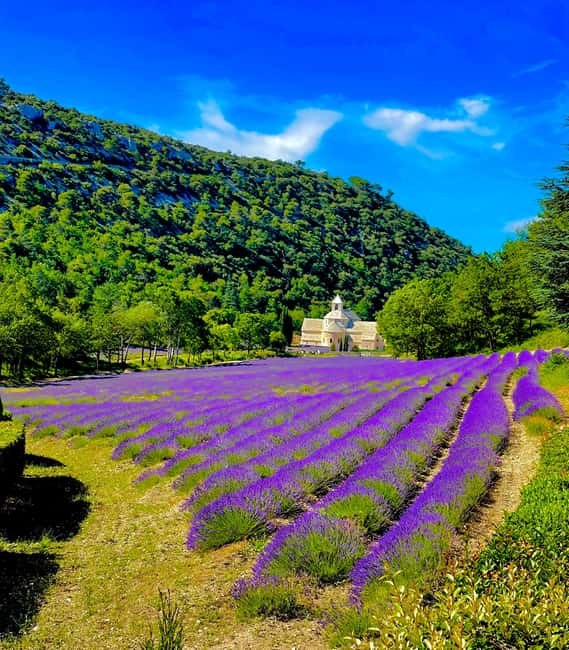
The route can include lavender fields during blossom season. This is a useful seasonal bonus, but the timing of lavender is naturally limited. If the purple fields are your main reason for booking, confirm the expected season before you reserve. A tour that runs outside bloom will still include the main villages and monuments, but lavender should not be treated as a guaranteed year-round stop.
Sunday morning departures may also include the market in L’Isle-sur-la-Sorgue. Markets add a more everyday side of Provence, with local food, produce, and regional goods, but this option is tied to the day of the week. It is not a standard feature of every departure.
These seasonal details make the tour feel less fixed than a simple checklist, but they also mean you should ask about the date you plan to go. The core route is clear. The lavender and market elements depend on timing.
The guide, vehicle, and pace
The driver-guide is fluent in English, with tours also available in French. Anne has received especially strong praise for her experience, humor, and enthusiasm. That matters on a nine-hour tour because the guide shapes the day between the stops as much as the monuments do.
A good guide can turn a long transfer into useful regional context. The best moments may happen while you are moving between villages, when someone explains why the towns sit on hills, how ochre changed Roussillon, or how Roman water systems worked. Anne’s combination of humor and insight is a strong sign for people who want more than transport.
The air-conditioned minivan is another practical advantage, particularly in warm weather. Bottled water is included. The small group should also make loading, unloading, and group communication easier than on a large bus.
There are firm vehicle rules: smoking and alcohol are not allowed inside. The tour is not suitable for wheelchair users. Since the day includes hilltop villages and old surfaces, anyone with mobility concerns should ask detailed questions before booking rather than assume the minivan solves every access issue.
Who should book this full-day tour?
I would recommend it most strongly to you if you are staying in Avignon for a short time and want a broad introduction to Provence. It suits people who want scenery, villages, art connections, Roman remains, and a guide in one day.
It is also a good match if you do not want to rent a car. The route would be difficult to reproduce by public transportation in a single day, and one person specifically praised the tour for reaching special sites that would be hard to access independently.
You will probably enjoy it if you like variety. The day moves from a spring to limestone villages, ochre cliffs, an artist’s town, a medieval hilltop village, and a Roman aqueduct. You are unlikely to become bored, but you may feel rushed if your ideal holiday involves slow lunches and long walks in one place.
I would be more cautious if you use a wheelchair, dislike early starts or long road transfers, or want deep time at every site. The tour is designed for coverage, not total freedom. It gives you a strong first look, then leaves you to return independently to the places that capture you most.
Is the $165 price fair?
At $165, this is a mid-range full-day excursion rather than a cheap shuttle. I think the cost makes sense when you place value on the small group, air-conditioned transport, a live guide, bottled water, and included Pont du Gard admission.
The route covers enough ground that arranging the same day yourself could involve several transport costs, missed connections, and considerable planning. You are paying for the driver’s route knowledge and for the ability to see distant places without handling the logistics yourself.
The price is less compelling if you already have a car, are comfortable planning rural bus connections, or would rather pay for one village at a time. You may also want to budget separately for lunch in Roussillon, since lunch is not listed among the inclusions.
The tour has a 4.8 rating from 31 verified ratings, with particularly warm comments about the guides and the range of places covered. That fits the tour’s main strength: it delivers a lot of Provence in a single day, provided you accept the pace.
Should you book it?
Book this tour if you want an efficient Provence sampler from Avignon, especially if you are without a car. The combination of Gordes, Roussillon, Les Baux, Saint-Rémy, and Pont du Gard gives you a broad sense of the region, while Anne and other English-speaking guides add useful context along the way.
Skip it if you want a relaxed village holiday with long meals and unhurried wandering. For most short-stay visitors, though, the route is hard to beat for range. Wear solid shoes, check the season for lavender, ask about the Sunday market if relevant, and keep your evening free after the nine-hour day.
FAQ
Where does the tour meet?
The meeting point is the Tourism Office in Avignon. Hotel pickup and drop-off are not included.
How long does the tour last?
The tour lasts nine hours. Starting times vary, so you need to check availability for your chosen date.
What languages are available?
The live guide service is available in English and French.
Is Pont du Gard admission included?
Yes. Entry to the UNESCO-listed Pont du Gard is included in the tour price.
Is lunch included?
No lunch is listed as an inclusion. The scheduled lunchtime break takes place in Roussillon, so you should plan to arrange your own meal.
Can I cancel the booking?
You can cancel up to 24 hours in advance for a full refund. Reserve now and pay later is also available, according to the tour conditions.
Recently added in Avignon
- Rafting Verdon – “Explor Verdon” – Family Course★ 5.0 · 51 reviews
- Rando Aqua – “Le Pont de Tusset” – Discovery Course★ 5.0 · 92 reviews
- Lavender Route – Small-Group Day Trip from Avignon★ 5.0 · 120 reviews
- Wines from Châteauneuf-du-Pape and surrounding areas in 1/2 day★ 5.0 · 96 reviews
- Châteauneuf du Pape Wine Day Tasting Tour including Lunch from Avignon★ 5.0 · 287 reviews
- Truffle Hunting in Provence★ 5.0 · 55 reviews
- Van Gogh & Carrières de Lumières Half-Day Tour from Avignon★ 4.5 · 29 reviews
- Morning Wine Tour to Chateauneuf du Pape from Avignon★ 4.5 · 70 reviews
Avignon Tours, compared.
Provence Highlights Full-Day Tour from Avignon
Read our review →
Provence Cru Wine Small-Group Half-Day Tour from Avignon
Read our review →Browse the lists this tour appears in