
REVIEW · LILLE TOURS
Full day Australian Battlefields Tour
The Somme tells its story in fields and names. This private, eight-hour tour from Amiens follows the Australian experience of the First World War through Villers-Bretonneux, Pozières, the Somme battlefield, and several major memorials. I especially like the personal guidance from Brigitte De Cuyper, a local guide with a strong command of the area, and the visit to the Sir John Monash Centre, where letters, diaries, voices, and life-size images bring the soldiers’ experience close. The main drawback is the pace: you cover a great deal in one day, and some stops last only 10 or 20 minutes.
I also value the tour’s flexibility. Brigitte has researched family members in advance for several people and, when practical, has adjusted the day to include an additional cemetery or small museum. Lunch is not included, and rain can make the open battlefield stops less comfortable, so bring suitable clothing and be ready for an emotional day.
In This Review
- Key points to know before booking
- Why this eight-hour day works
- Amiens Cathedral and the road to Villers-Bretonneux
- Villers-Bretonneux: cemetery, memorial, and Australian voices
- The Sir John Monash Centre
- Chipilly and the Somme Valley viewpoint
- Albert and a one-hour lunch stop
- Lochnagar Crater and the opening of the Somme offensive
- Pozières and the Windmill site
- Thiepval and the problem of the missing
- Ulster Tower and Beaumont-Hamel
- What the guide adds to the experience
- Is $253.97 good value?
- Who should book this tour?
- Should you book the Australian Battlefields Tour?
- FAQ
- How long does the Australian Battlefields Tour last?
- Where does the tour start?
- Is the tour private?
- Is the tour offered in English?
- Is lunch included?
- Are admission fees included?
- Is the Sir John Monash Centre part of the tour?
- Can the tour include family military research?
Key points to know before booking
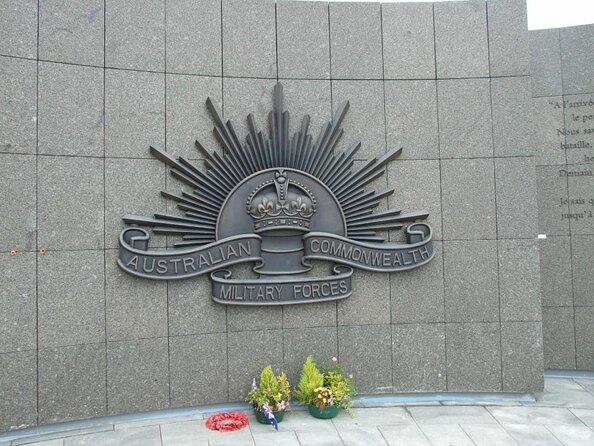
- Villers-Bretonneux is the emotional opening: You visit the cemetery, Australian National Memorial, and Sir John Monash Centre.
- The tour follows Australian sacrifice across the Somme: Pozières, the Windmill site, Mouquet Farm, and the 1st Australian Division Memorial receive special attention.
- You also see the wider Allied battlefield: Lochnagar Crater, Thiepval, Ulster Tower, Chipilly, and Newfoundland Memorial Park add British, Irish, and Newfoundland perspectives.
- Brigitte personalizes the experience: Share family names and military details before the tour if you want her to research possible connections.
- This is a private tour: Only your group participates, making it easier to ask questions or discuss family history.
- The $253.97 price reflects private transport and a full day: Lunch costs extra, but all listed entrance fees and taxes are included.
Why this eight-hour day works
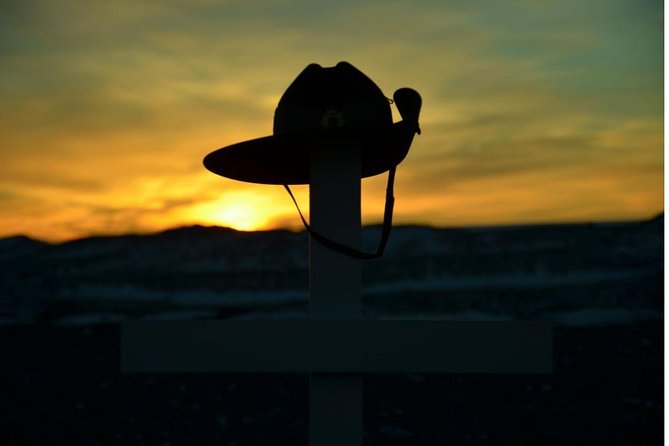
This is not a quick memorial photo stop. It is a full route through the Somme, built around the places where Australian forces fought, suffered, and were remembered after the war. You begin in Amiens and move through a broad section of the former front, with Brigitte explaining how the villages, roads, cemeteries, and ridges fit together.
That local connection matters. Brigitte grew up in the Somme area, and her explanations are shaped by familiarity with the ground itself, not just by dates in a textbook. She also has a gift for moving between the large military picture and the life of one soldier or one family.
The private format helps. You can ask why a battle happened in a particular place, stop to think at a cemetery, or spend more time on a subject that matters to your family. This is especially useful if you are tracing a great uncle or great-granduncle who served in France.
The day begins at 9:00 am, with pickup offered. The exact return time is not stated, but the tour lasts about eight hours. If you are coming from Paris, Amiens is practical by train, and the tour can also include pickup from Amiens accommodation. Allow enough time around the scheduled start. One person was left waiting when a hotel change had not reached the guide, so confirm your pickup location carefully.
More full-day plans in Lille:
- Private Full Day Tour of the Somme Battlefields
★ 5.0 · 28 reviews - Normandy American D-Day Beaches Full Day Tour from Bayeux
★ 5.0 · 2,103 reviews - Paris: Parc Astérix Full-Day Entrance Ticket
★ 4.4 · 1,697 reviews
Amiens Cathedral and the road to Villers-Bretonneux
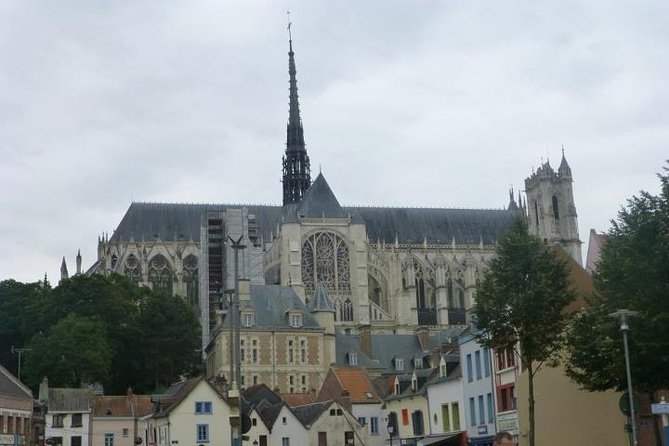
The first sight is Amiens Cathedral, a vast Gothic church celebrating its 800th birthday this year. The tour description calls it the largest Gothic cathedral in the world, and its scale gives the morning a strong beginning before the focus shifts to the First World War.
As you travel toward Villers-Bretonneux, Brigitte explains Amiens from the Middle Ages to the present. You also hear about the local economy and culture as the road crosses the rolling countryside of the Somme.
This opening drive is useful because it gives you a sense of place. The battlefield is not an isolated museum area. It is part of a living French region, with villages, farms, churches, and roads that existed before the war and continued afterward.
Villers-Bretonneux: cemetery, memorial, and Australian voices
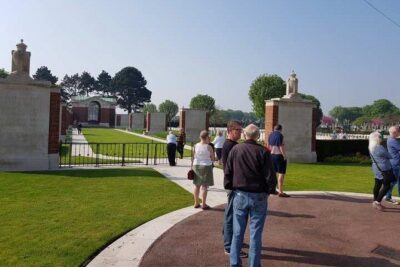
Villers-Bretonneux is one of the most important Australian stops of the day. At the military cemetery and Australian National Memorial, Brigitte explains Australia’s role on the Western Front, with particular attention to the Allied counterattack of April 1918.
Australian troops fought with great courage in this battle, but the cost was severe. You have time to pay your respects at the graves of the Diggers before walking a short distance to the Sir John Monash Centre.
The cemetery visit is brief, listed at about 20 minutes. That may feel short if you have a family grave to find, so tell Brigitte in advance if a particular name matters to you. The private format and her willingness to research family connections are among the strongest reasons to choose this tour over a large group outing.
The Sir John Monash Centre
Plan to use your full hour here. The centre tells the Australian Western Front story through interactive media, letters, diaries, recorded words, and life-size images of those who served.
This is the most modern part of the day, and it gives emotional weight to the outdoor sites. Instead of hearing only about units and advances, you connect with ordinary Australians who endured the campaign. The installations link their words to the places where they fought and died.
If you are mainly interested in Australian service, this is likely the highlight. One person said they could have spent all day here. The hour provided is enough for a worthwhile visit, but you may leave wishing for more time.
The centre has occasionally been closed, according to one tour account. When that happens, Brigitte has filled the day with other relevant and thought-provoking stops, but you should not assume every planned indoor visit will be available on every date.
A few more Lille outings to set side by side
- Entrance Ticket Nausicaa, the biggest aquarium in Europe
★ 3.5 · 1,135 reviews - Lille Driving Tour by Convertible Citroen 2CV
★ 4.9 · 711 reviews - Unique Tour of Lille by Convertible 2CV – 1h00
★ 5.0 · 470 reviews - Lille: 24, 48 or 72-Hour City Pass & 24-Hour Transportation
★ 4.3 · 205 reviews
Chipilly and the Somme Valley viewpoint
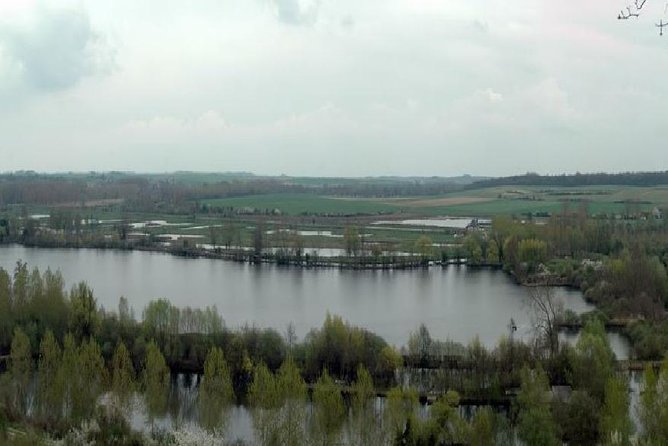
The route then moves into the Somme Valley and the village of Chipilly. The 58th British Division Memorial is a memorable piece of public sculpture: a soldier comforting a wounded horse.
The monument honors the men of the 58th Division and the many horses killed during the war. It offers a welcome reminder that the conflict depended on animals as well as people, and that suffering reached far beyond the infantry trenches.
At the Camp Cesar viewpoint, you pause for about 10 minutes to look across the Somme Valley. From here, Brigitte explains why the Battle of the Somme was planned, how it began, and which nations took part.
Do not expect a long walk or an extended viewpoint stop. This is a short orientation pause, but it helps you read the ground before reaching the main battlefield sites.
Albert and a one-hour lunch stop
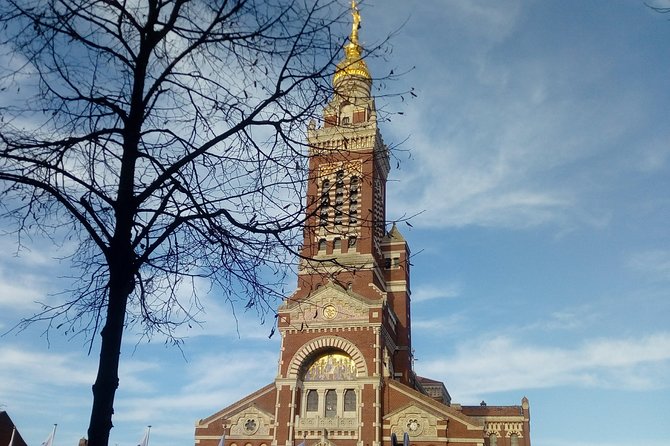
In Albert, you see the Basilica Notre Dame de Brebières, a distinctive Neo-Byzantine building with a gold-covered dome and a statue of the Virgin Mary holding the infant Jesus.
The basilica was destroyed during the First World War and later rebuilt in its original form by Edmond Duthoit, son of the first architect. Brigitte also tells the wartime story connected with the statue, adding a local human detail to the architecture.
Lunch is scheduled for one hour at Le Hygge Restaurant Brasserie. The meal is not included in the tour price, so budget separately. This pause breaks up a demanding day and gives you time to sit down before the afternoon battlefield visits.
Because the schedule is full, lunch is not an opportunity for a long, leisurely meal. Think of it as a practical local restaurant stop that keeps the day moving.
Lochnagar Crater and the opening of the Somme offensive
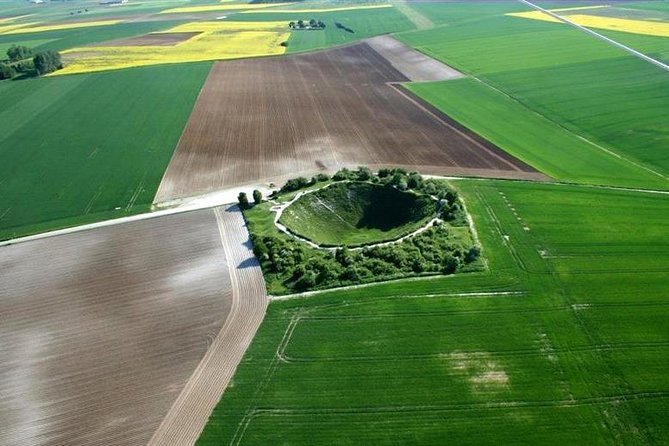
Lochnagar Crater is one of the most striking physical reminders of the 1916 battle. A large mine was placed beneath the German front lines and detonated on the first day of the offensive. It was one of 19 mines placed along the British section of the Somme front to help the infantry advance.
The crater measures about 70 feet deep and 330 feet wide. You have around 20 minutes here, enough to grasp its huge scale and hear how underground mining formed part of the attack plan.
This is a place where the battlefield becomes visibly three-dimensional. Memorials record names, but Lochnagar shows the force used to break the front. The ground itself carries evidence of the battle.
Pozières and the Windmill site
At the 1st Australian Division Memorial, Brigitte focuses on the fighting at Pozières between July 23 and September 3, 1916. Almost 7,000 men lost their lives here, making it one of the most painful places in the Australian story of the Somme.
The stop lasts about 20 minutes. That is enough for an explanation and a respectful pause, but not enough to explore every nearby feature at length.
The Windmill site adds another layer. It became an Australian memorial in the 1930s at the suggestion of Charles Bean, Australia’s official war historian. The site commemorates 23,000 casualties, including men who died in the surrounding countryside.
Across from it, the Tank Memorial opens a conversation about the arrival of tanks on the Western Front and the changing nature of modern warfare. Together, these sites connect the human cost of Pozières with the technology used to fight it.
You also pass Mouquet Farm, another familiar name in the Australian battlefield story. The supplied schedule gives no separate time allocation, so expect this to be a brief stop or a point explained from the vehicle rather than a long visit.
Thiepval and the problem of the missing
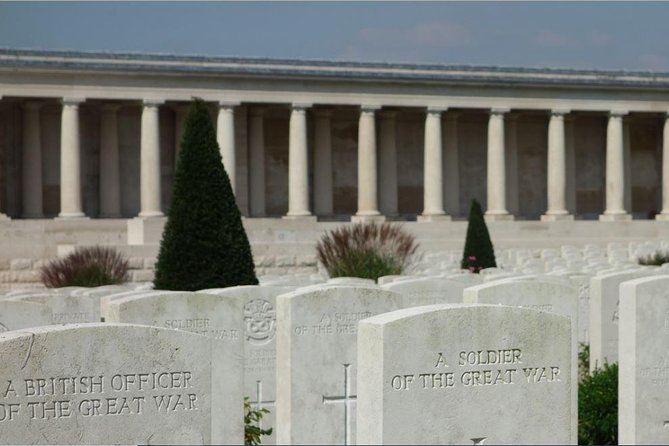
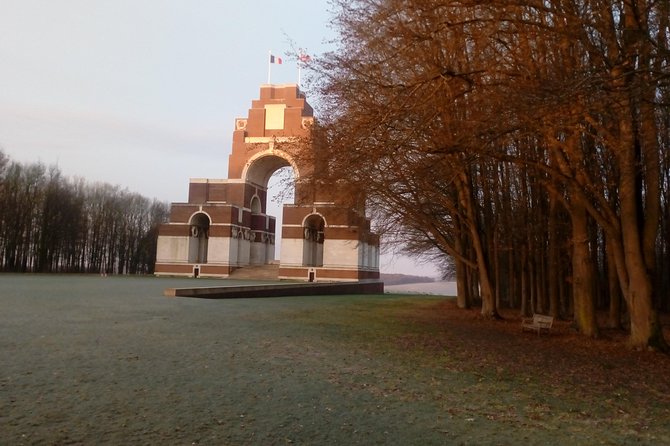
The Memorial to the Missing at Thiepval is the largest British war memorial in the world. Its walls carry the names of more than 72,000 soldiers who are missing or whose bodies were found but could not be identified.
You have approximately 45 minutes here, one of the longer outdoor memorial stops. The monument overlooks the surrounding countryside, and Brigitte uses the setting to explain military tactics and what being missing meant to families waiting for news.
This is one of the day’s most powerful places, even if your main interest is Australian service. The memorial widens the story beyond one national force. It shows how the war left families with uncertainty, not only confirmed death.
The scale can be difficult to absorb. Rather than trying to read every name, use the time to understand the memorial’s purpose and the absence it represents.
Ulster Tower and Beaumont-Hamel
The Ulster Tower is Northern Ireland’s national war memorial. It honors the men of the 36th Division and others from Ulster who served in the First World War. Opened in 1921, it was among the first memorials built on the Western Front.
From the hill, you can still see traces of the Somme front lines in the opposite field, along with the remains of a German machine gun post. This is another short orientation stop, but the surviving earthworks help you understand the defensive character of the fighting.
The final major visit is Newfoundland Memorial Park at Beaumont-Hamel. It is the largest battlefield site in the Somme and commemorates Newfoundlanders who served in the war.
The Newfoundland Regiment suffered staggering losses on July 1, 1916, during its first major engagement of the Somme. The ground was purchased in 1921 by the women of Newfoundland and its government, and it became a symbol of sacrifice and identity for the island.
You have about 30 minutes here. The visit brings the day to a fitting close because it shows how the Somme became part of national memory for communities far beyond France and Britain.
What the guide adds to the experience
The strongest feature is Brigitte herself. She is described as fluent in English, warm, flexible, and exceptionally well prepared. Her local roots give her a sense of how the battlefield relates to present-day villages and roads.
Her real strength is personal preparation. Several people gave her the names of relatives before the tour, and she researched those soldiers in advance. In some cases, she added a cemetery or another site connected with the family member. If you have a military ancestor, send the details before the day. It can change a general battlefield visit into a personal pilgrimage.
Brigitte also keeps the larger story in view. She explains tactics and national forces, then brings the discussion back to individuals. That balance prevents the day from becoming either a list of battles or a string of emotional memorials without context.
There is one practical qualification. A guide’s style can vary by date, and one account records Barbara Legrand leading the tour instead. The experience appears to depend heavily on the individual guide, but the available information identifies Brigitte De Cuyper as the main provider.
Is $253.97 good value?
At $253.97 per person, this is not a budget sightseeing day. It is a private, full-day battlefield tour with pickup offered, an English-speaking guide, all taxes and fees, and admission to the Sir John Monash Centre. Lunch is extra.
For one or two people with a serious interest in Australian military history, the price can make sense. You receive private attention, transport between widely scattered sites, and guidance that would be difficult to reproduce alone in one day.
The value improves if you have family research to discuss. Brigitte’s preparation and willingness to make reasonable adjustments are difficult to price as part of a standard bus excursion.
If you are only mildly curious about the First World War, the cost may feel high, especially since several stops are brief and much of the day is spent driving between sites. In that case, consider how much time you want at each memorial before booking.
Who should book this tour?
I would choose this experience if you are Australian, have relatives who served in France, or want to understand Australia’s role in the Western Front within the wider Somme campaign.
It also suits anyone who prefers a private day with room for questions. The tour requires moderate physical fitness, though the supplied details do not give a precise walking distance. Expect outdoor cemetery and memorial visits, uneven battlefield ground may be possible, and changing weather can affect comfort.
You should allow the entire day. The schedule is tightly packed, and rain can make the experience harder. Wear practical clothing and shoes, and bring patience for a solemn subject.
Should you book the Australian Battlefields Tour?
Book it if you want a serious, personal introduction to the Australian battlefields around the Somme, especially if a family name connects you to the area. The combination of Villers-Bretonneux, the Sir John Monash Centre, Pozières, Lochnagar Crater, Thiepval, and Beaumont-Hamel gives you a broad and meaningful route in one day.
Skip it if you prefer a slow visit to just one or two sites, or if you want lunch and every admission included in the headline price. This is a long, emotionally heavy day, but for the right visitor, Brigitte’s local knowledge, personal research, and clear storytelling make the $253.97 fare a fair exchange for a deeply memorable experience.
Free cancellation is available up to 24 hours before the start time. The tour is offered in English, confirmation is provided at booking, and service animals are allowed.
FAQ
How long does the Australian Battlefields Tour last?
The tour lasts approximately eight hours and begins at 9:00 am.
Where does the tour start?
The tour is based in Amiens, with pickup offered. Pickup details should be confirmed carefully, especially if your accommodation changes.
Is the tour private?
Yes. Only your group participates in this private tour or activity.
Is the tour offered in English?
Yes. The experience is offered in English.
Is lunch included?
No. Lunch at Le Hygge Restaurant Brasserie is scheduled for one hour, but the meal is not included in the tour price.
Are admission fees included?
All fees and taxes are included. Admission to the Sir John Monash Centre is included, while the listed cemetery and memorial visits have no admission charge.
Is the Sir John Monash Centre part of the tour?
Yes. You have about one hour to visit the centre, which uses interactive media, letters, diaries, recorded voices, and life-size images to tell Australia’s Western Front story.
Can the tour include family military research?
The guide has researched relatives for people who supplied names and details in advance, and has sometimes added a related cemetery or site. Contact the guide before the tour if you want to request this kind of preparation.
Recently added in Lille
- Private Lille Tour by Classic Convertible 2CV with Champagne★ 5.0 · 49 reviews
- 1 Hour Private Lille Tour by Convertible 2CV with a Local Products Tasting★ 5.0 · 78 reviews
- Lille Scavenger Hunt and Highlights Self Guided Audio Tour★ 4.0 · 32 reviews
- 30-Minutes Private Guided Tour of Lille by Convertible 2CV★ 5.0 · 79 reviews
- Lille Scavenger Hunt and City Highlights Walking Tour★ 4.5 · 47 reviews
- Private battle of Dunkirk Operation Dynamo Tour★ 5.0 · 99 reviews
- Private Round Trip Transfer to Vimy Ridge from Arras★ 5.0 · 164 reviews
- Private Full Day Tour of the Somme Battlefields★ 5.0 · 28 reviews
Lille Tours, compared.

Entrance Ticket Nausicaa, the biggest aquarium in Europe
Read our review →
24, 48 or 72-Hour City Pass & 24-Hour Transportation
Read our review →
Private Round Trip Transfer to Vimy Ridge from Arras
Read our review →
Private battle of Dunkirk Operation Dynamo Tour
Read our review →
Browse the lists this tour appears in