

REVIEW · WALKING TOURS
Montmartre Hidden Gems and Scenic Highlights Walking Tour
Montmartre rewards curious walkers. This 90-minute English tour takes you through the neighborhood’s art-filled lanes, old cafés, windmills, and hilltop views, with a local guide supplying the stories that are easy to miss on your own. I like the mix of famous sights and quieter corners, and I especially like that the tour connects Montmartre’s artists with its ordinary streets and village character. The main consideration is the pace: you cover hills and narrow streets in a short time, and the tour does not include the Moulin Rouge, the funicular, or entry inside Sacré-Cœur.
The strongest guides bring the area to life with humor and local advice. Laura, Sylvia, Denise, David, Linda, and others receive especially warm praise for clear storytelling, art knowledge, and restaurant suggestions. One useful tip comes up repeatedly: book an early departure if you want calmer streets and easier listening.
In This Review
- Key points to know before booking
- Why Montmartre works so well as a walking tour
- Starting at 19 Rue des Abbesses
- The I Love You Wall and Rue des Abbesses
- Bateau-Lavoir and Montmartre’s art story
- Moulin de la Galette and the Man Who Walked Through the Wall
- Dalida’s bust and the pink café
- The Montmartre vineyard
- Reaching Sacré-Cœur without rushing
- Place du Tertre and the end near La Bonne Franquette
- What the $38.70 price buys you
- Group size, pace, and guide quality
- Who should book this Montmartre walk?
- Should you book it?
- FAQ
- How long is the Montmartre walking tour?
- What language is the tour offered in?
- How much does the tour cost?
- Where does the tour begin?
- Where does the tour end?
- Is entry to Sacré-Cœur included?
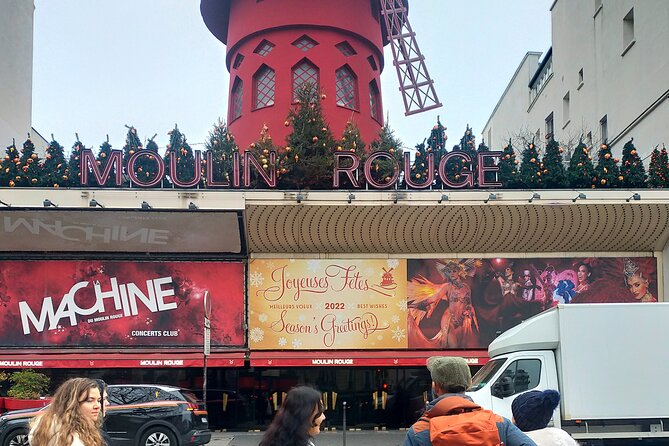
- Does the tour include the Moulin Rouge?
- Are there stairs on the route?
- What level of fitness is needed?
- What happens if it rains?
- How large can the group be?
- How early should I arrive?
- Can I cancel for a full refund?
Key points to know before booking
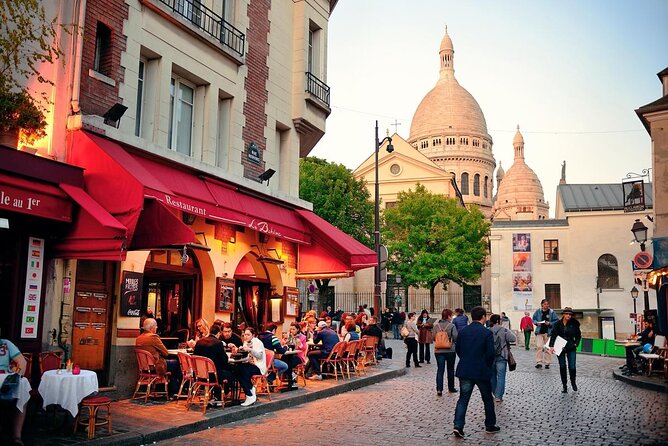
- See Montmartre’s artistic landmarks on foot: Visit the Bateau-Lavoir, Moulin de la Galette, Dalida bust, and the Man Who Walked Through the Wall.
- Expect a gentle but hilly route: There are no stairs on the planned route, but Montmartre’s slopes and cobbled, narrow streets still require steady footing.
- Sacré-Cœur is an exterior stop: You can enter on your own afterward when the basilica is open, with tips from the guide.
- Finish near La Bonne Franquette: The tour ends at 18 Rue Saint-Rustique, a useful spot for lunch or continued exploring.
- Pay for context, not admission: At $38.70, the value comes from local stories, orientation, and a compact introduction to the neighborhood.
- Allow for a group of up to 25: A larger group can make it harder to hear, especially on busy streets.
Why Montmartre works so well as a walking tour
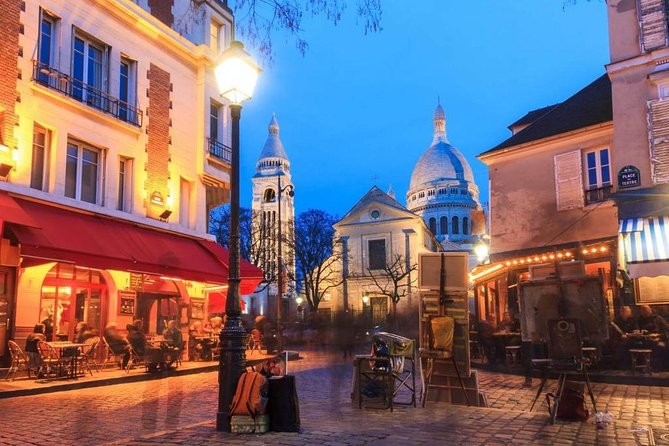
Montmartre is not just a collection of postcard stops. It is a neighborhood of slopes, small squares, old houses, cafés, studios, churches, and tourist crowds pressed together on the northern heights of Paris. A walking tour helps you understand how these pieces fit.
The area’s artistic reputation is familiar, but the details are more interesting than the usual slogan. Painters lived beside cafés. Singers became neighborhood legends. A vineyard survived among city streets. A simple pink café became a symbol of the district. The guide’s job is to join these details into a story you can remember.
At 90 minutes, this is a compact introduction rather than a full day in Montmartre. I see that as a strength if you are short on time or want a useful orientation before exploring alone. It is less suitable if you want long stops, museum visits, interior tours, or a slow photo session at every corner.
The tour is offered in English and includes a local guide. Confirmation arrives at booking, and the experience runs in all weather, so your shoes and rain gear matter more than your outfit.
More Walking Tours in Paris
- Paris Top Sights Half Day Walking Tour with a Fun Guide
★ 5.0 · 2,893 reviews - Montmartre Hill French Gourmet Food and Wine Tasting Walking Tour
★ 5.0 · 2,588 reviews - Paris Île de la Cité and Notre-Dame Walking Tour With Crypt
★ 5.0 · 2,272 reviews
Starting at 19 Rue des Abbesses
The walk begins at 19 Rue des Abbesses, in the lower part of Montmartre. Arrive 15 minutes early. The tour starts on time, and catching up can be difficult once the group moves into the side streets.
Starting near Abbesses gives you an immediate feel for the neighborhood’s everyday side. This part of Montmartre has cafés, shops, apartment buildings, and plenty of foot traffic. It is not a grand ceremonial entrance, which is useful. You begin with the streets people actually use, then work upward toward the famous sights.
The neighborhood can become crowded quickly. David’s early tour worked particularly well for one visitor because the route was easier to follow before the streets filled up. I would choose a morning time if your schedule allows, especially if you want to hear every story without straining.
The I Love You Wall and Rue des Abbesses

One of the first stops is the I Love You Wall, a small-square installation displaying the phrase in more than 300 languages. It is a brief, poetic pause and an easy way to see how Montmartre mixes public art with daily life.
Next comes one of the neighborhood’s oldest streets. Its cafés, boutiques, and historic buildings help explain Montmartre’s bohemian image. Your guide can point out details you might pass without noticing and describe how the district changed from a less expensive artists’ quarter into one of Paris’s costlier addresses.
That change is one of the tour’s most useful themes. Montmartre is often sold as frozen in an old artistic age, but it is also a living neighborhood shaped by rising prices, tourism, and new businesses. The best guides, including Laura and Denise, make that change part of the conversation instead of treating the area like a stage set.
Bateau-Lavoir and Montmartre’s art story
The Bateau-Lavoir was once an artists’ residence associated with Picasso, Modigliani, Braque, and other figures who helped reshape modern art. You do not come for a museum visit here. You come to understand the kind of working environment that made Montmartre attractive to artists.
This is where a guide adds real value. A building name alone does not tell you much. A good explanation connects the cramped residence, the surrounding cafés, and the neighborhood’s low-cost reputation with the ambitious, experimental art created there.
Linda is praised for making these artist stories funny and easy to follow. That matters because Montmartre’s art past can become a string of names if presented poorly. Stories give the names a human scale.
If you are mainly interested in art, this stop and the nearby artist landmarks may be the strongest part of the walk. If your priority is Paris architecture or grand interiors, you may find the outdoor focus less satisfying.
Same city, a slower kind of day:
- Paris: Louvre Museum Timed-Entrance Ticket
★ 4.6 · 71,977 reviews - Disneyland® Paris 1-Day Ticket
★ 4.6 · 49,412 reviews - Paris: Versailles Palace and Gardens Full Access Ticket
★ 4.6 · 41,579 reviews - Paris: Evening River Cruise with Music
★ 4.4 · 22,721 reviews
Moulin de la Galette and the Man Who Walked Through the Wall
The Moulin de la Galette is one of Montmartre’s enduring symbols. This old windmill appeared in paintings by Renoir and Van Gogh and once served as a dance hall. Today, it offers a glimpse of the village atmosphere that existed before Montmartre was swallowed by Paris.
The stop is viewed from outside, so do not expect a working windmill visit or a long indoor presentation. Its value is visual and historical. The guide helps you see why this modest structure mattered to painters and why the neighborhood became such a popular subject.
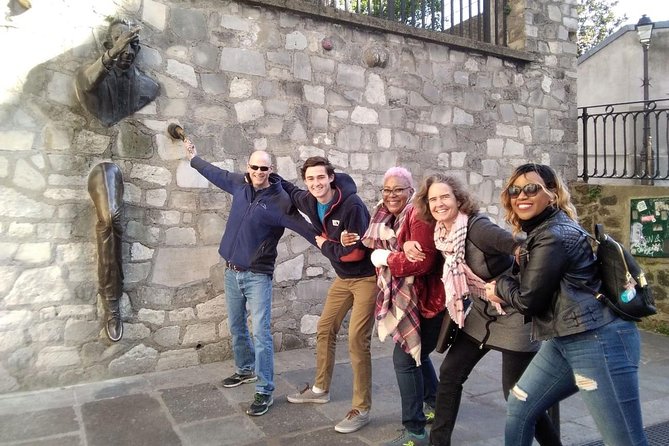
Nearby, the Man Who Walked Through the Wall adds a playful change of mood. Inspired by a story by Marcel Aymé, the sculpture shows a man passing through a wall near the author’s former home. It is an odd, memorable sight, and it fits Montmartre’s fondness for theatrical and surreal touches.
These smaller stops are exactly where a guide can save you time. You might walk past them without knowing their meaning. With context, a short pause becomes part of the neighborhood’s character.
Dalida’s bust and the pink café
The bronze bust of Dalida honors the French singer who lived in Montmartre for many years. It sits in a peaceful square and has become a place for admirers to leave tributes. The story adds a modern cultural layer to a district often associated only with painters.
I like this stop because it broadens the idea of what Montmartre represents. The neighborhood is not solely Picasso and old windmills. It also belongs to singers, writers, café owners, residents, and fans who keep local memories alive.
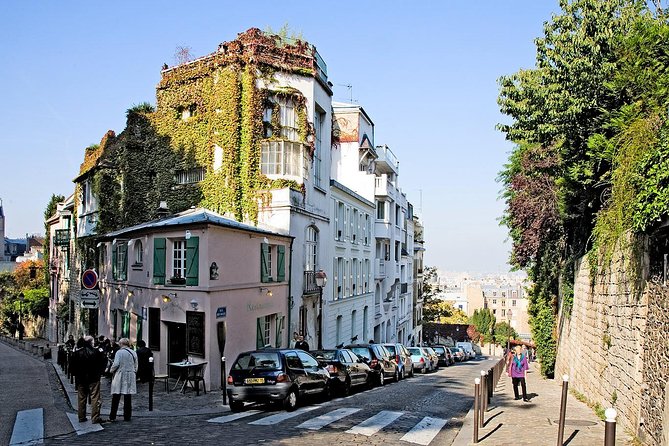
The pink café is one of the area’s most photographed corners. Once associated with artists such as Picasso and Utrillo, it now serves French food and remains a favorite picture stop. You will probably want a quick photograph, but the tour does not promise a meal there.
This is a good place to ask your guide for practical advice. Several guides receive praise for pointing people toward restaurants and additional places to visit after the walk. The tour ends near La Bonne Franquette, so you can continue with lunch or another meal nearby.
The Montmartre vineyard
Montmartre’s small vineyard is an unexpected sight in a dense Paris neighborhood. It was established in 1933 to protect the area’s winemaking tradition, and it still produces wine.
Do not expect a winery tour or tasting as part of this experience. You see the vineyard as a local landmark and hear why it exists. Its importance lies in the reminder that Montmartre once had a rural side, with vineyards and windmills rather than apartment blocks and souvenir shops.
For me, this is the kind of detail that justifies a guided walk. You receive a better sense of the district’s older identity, not just its tourist highlights. It also gives you a welcome change from art stories and crowded viewpoints.
Reaching Sacré-Cœur without rushing
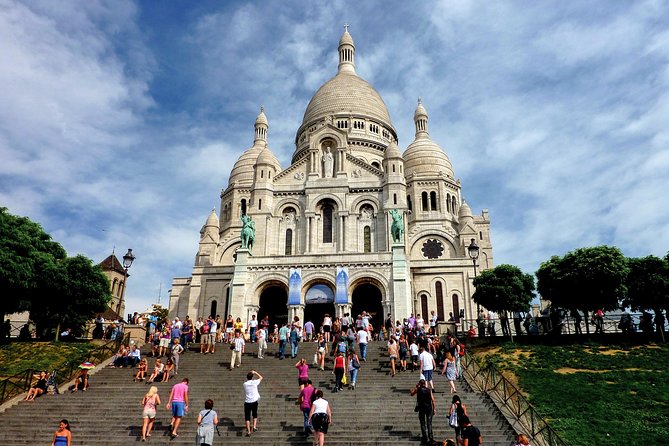
The route continues toward the Basilica of Sacré-Cœur, perched at the highest point in Paris. The white domes and mosaics make it one of the city’s most recognizable buildings, while the open views across Paris provide a natural high point for the walk.
The tour passes the basilica from the outside. Entry is free when it is open, but admission is not part of the guided experience. Your guide will explain what to look for if you choose to go inside afterward.
Pay attention to the terrain here. The listed route does not include stairs, but you still climb hills, and some streets are narrow or crowded. Montmartre is made of slopes, cobbles, and uneven walking surfaces. The route may feel manageable for someone with moderate fitness, but it is not a flat city stroll.
One detailed account points out the difficulty for wheelchair users, particularly on steep grades and cobbled streets. If you have mobility concerns, ask yourself whether you can comfortably manage hills and uneven paving. The tour provider specifically recommends booking only if you feel confident with the route.
Place du Tertre and the end near La Bonne Franquette
Place du Tertre is the classic Montmartre artists’ square, filled with painters, caricaturists, and cafés. It can be crowded, but it remains an important stop because it shows how the neighborhood’s artistic identity continues in public.
The square is better understood with a little guidance. You will see artists working, but the guide can also explain how the space fits into Montmartre’s larger story. Treat it as a lively viewing point, not a quiet gallery.
The tour ends at La Bonne Franquette, 18 Rue Saint-Rustique. This is convenient because you are left in a part of Montmartre where you can eat, continue walking, or make your own way toward Sacré-Cœur and nearby sights.
The stated end point matters. Some descriptions of the experience may leave you expecting to finish at the basilica itself, but the formal end point is La Bonne Franquette. Plan your afternoon from there.
What the $38.70 price buys you
At $38.70 per person, this is not the cheapest way to see Montmartre. You can walk through the neighborhood for free. The question is what you want from the visit.
I think the price is fair if you want a short, organized introduction with historical context and practical suggestions. The guide handles the route, identifies easy-to-miss sights, and gives you a framework for exploring afterward. That is especially useful on a first Paris visit or during a tight schedule.
The value drops if you already know Montmartre well, prefer to wander alone, or expect entry to attractions. There is no included basilica admission, no meal, and no stated visit inside the artists’ sites. You are paying for guiding and interpretation.
The 97 percent recommendation rate and 4.9 rating from 2,684 ratings point to a strong overall record. Still, two poor experiences reveal a real expectation problem. Some people want a broad tour with the Moulin Rouge, funicular, stairs, and more major sights. This route does not promise those things. Read the stops carefully and decide if its art-and-local-streets focus suits you.
Group size, pace, and guide quality
The maximum group size is 25 people. That is not enormous, but it is large enough for the back of the group to miss parts of a story on a noisy street. One visitor specifically found a large group made hearing difficult.
Guide quality appears to be the biggest variable, as it is on any walking tour. The strongest feedback highlights funny, friendly, attentive guides who answer questions and keep people engaged. Laura is praised for charm and historical detail. Sylvia receives credit for asking questions and offering useful local advice. Denise is repeatedly described as warm and clear. David is noted for welcoming everyone and keeping the group together.
The pace is generally described as easy and unhurried, but you still cover hills in 90 minutes. Wear shoes with good grip, dress for the weather, and keep your belongings secure in crowded lanes. Since the tour runs in rain or shine, a bad forecast is not a reason to assume the walk will be canceled.
Who should book this Montmartre walk?
I would choose this tour if you want:
- A first look at Montmartre in under two hours
- Art, singer, writer, and neighborhood stories
- A guide who can suggest restaurants and follow-up sights
- A route focused on outdoor landmarks and local atmosphere
- A manageable plan before spending more time in the area alone
I would choose something else if you want the Moulin Rouge, the funicular, a stair climb, museum entry, or a dedicated Sacré-Cœur interior visit. This is also not a good choice if steep hills, cobbles, and crowded narrow streets are difficult for you.
Should you book it?
Book it if you want a well-paced introduction to Montmartre’s art and street life, especially on a first visit. The tour gives you more than a string of photographs, and the best guides turn the neighborhood’s odd corners into memorable stories.
Choose an early time if possible. Arrive 15 minutes before the start at 19 Rue des Abbesses, and leave time afterward for Sacré-Cœur, lunch, or more independent walking. At $38.70, it is worthwhile for orientation and storytelling, but only if you understand that the basilica is viewed from outside and the route is about Montmartre itself, not every nearby attraction.
Cancellation is free up to 24 hours before the start time. Within 24 hours, the payment is not refunded.
FAQ
How long is the Montmartre walking tour?
The tour lasts approximately 1 hour and 30 minutes.
What language is the tour offered in?
The guided visit is offered in English.
How much does the tour cost?
The listed price is $38.70 per person.
Where does the tour begin?
The meeting point is 19 Rue des Abbesses, 75018 Paris, France.
Where does the tour end?
The tour ends at La Bonne Franquette, 18 Rue Saint-Rustique, 75018 Paris, France.
Is entry to Sacré-Cœur included?
No. The tour passes the exterior of Sacré-Cœur. Entry is free when the basilica is open, and the guide provides tips for visiting on your own afterward.
Does the tour include the Moulin Rouge?
No. The listed route does not include the Moulin Rouge.
Are there stairs on the route?
The planned route does not include stairs, but it does include several hills and narrow, sometimes busy streets.
What level of fitness is needed?
A moderate level of physical fitness is recommended. You should feel comfortable walking uphill and navigating Montmartre’s narrow streets.
What happens if it rains?
The tour runs regardless of weather conditions. Dress appropriately for the forecast.
How large can the group be?
The activity can include a maximum of 25 people.
How early should I arrive?
Arrive 15 minutes before the scheduled start. The tour begins on time, and you may not be able to join if you arrive late.
Can I cancel for a full refund?
Yes. You can cancel at least 24 hours before the experience for a full refund. Cancellations within 24 hours are not refunded.
Recently added in Paris
- Private Transfers in Paris★ 5.0 · 75 reviews
- CDG – Euro Disney – CDG Two Way Private Shuttle Transfer★ 5.0 · 233 reviews
- Disneyland® Paris 1 Day Ticket with Transport from Paris★ 3.5 · 302 reviews
- Personalized Transport service from Disneyland to Paris★ 5.0 · 63 reviews
- Monet’s Gardens & House-Private Giverny Tour From Paris★ 4.5 · 137 reviews
- Guided tour Monet’s house and gardens/small group★ 4.5 · 68 reviews
- Giverny Monet House and Gardens Skip the line Walking tour★ 4.0 · 217 reviews
- Monet’s House and Garden & Giverny Village★ 4.5 · 39 reviews
Walking Tours, compared.

Paris Top Sights Half Day Walking Tour with a Fun Guide
Read our review →
Montmartre Hill French Gourmet Food and Wine Tasting Walking Tour
Read our review →
Paris Île de la Cité and Notre-Dame Walking Tour With Crypt
Read our review →
Montmartre Cheese, Wine & Pastry Guided Walking Tour
Read our review →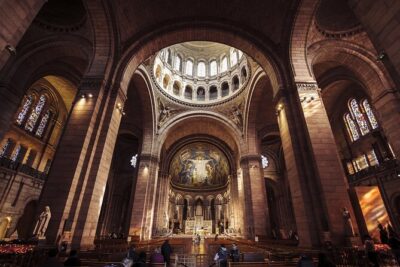
Paris in a Day: Louvre or Orsay, Eiffel Tower, City Walk & Cruise
Read our review →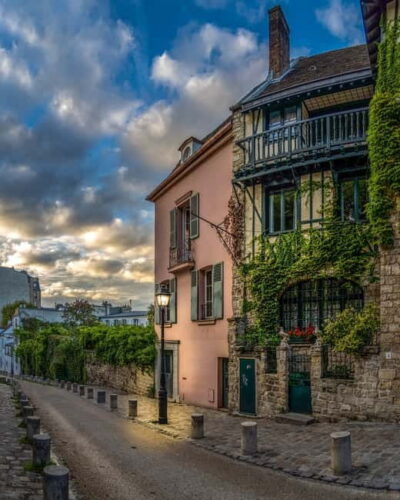
Montmartre Highlights Walking Tour with a Local Guide
Read our review →
Paris City Center Free Walking Tour (Tip-Based)
Read our review →
Browse the lists this tour appears in