
REVIEW · WALKING TOURS
Paris: Montmartre Highlights Walking Tour with a Local Guide
Montmartre rewards slow wandering. This 140-minute small-group walk takes you beyond Sacré-Cœur to the artists, singers, cabarets, courtyards, and cobbled lanes that shaped the district’s bohemian character. I especially like the local storytelling, which brings figures such as Picasso, Van Gogh, Dalida, and Edith Piaf into the streets around you. I also like the compact group size, capped at 16 people, which makes it easier to hear the guide and ask questions. The main consideration is the terrain: hills, uneven paving, and some walking make this a poor fit for wheelchair users or people with mobility impairments.
At $34 per person, the tour offers good value if you want context rather than a quick checklist of sights. Guides such as Yazid and Sylvia have been praised for energy, humor, and strong English, while Jean Baptiste has been noted for his wide knowledge of art and Parisian life. Just remember that food is not included, and you will want comfortable shoes.
In This Review
- Key points to know before you book
- Why Montmartre works best on foot
- Starting at Place Saint-Pierre beneath Sacré-Cœur
- The Wall of Love and a gentle opening stop
- Bateau-Lavoir and the birth of modern art
- Moulin de la Galette and the painted Montmartre
- Maison Rose, photographs, and the quieter lanes
- Place du Tertre and what comes next
- Guide quality and group size
- Is $34 a fair price?
- Who should take this walk?
- Should you book the Montmartre Highlights Walking Tour?
- FAQ
- How long does the Montmartre walking tour last?
- What language is the tour in?
- How large is the group?
- Where does the tour begin?
- Where does the tour end?
- Is the tour suitable for children?
- Is the tour suitable for wheelchair users?
- What should I bring?
Key points to know before you book
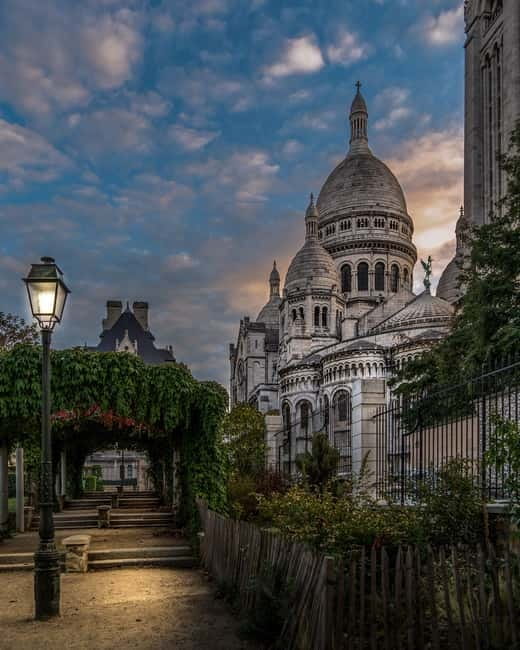
- The tour begins beneath Sacré-Cœur: Start at Place Saint-Pierre, where you get an early view across Paris and an introduction to Montmartre.
- Art history is central: Bateau-Lavoir connects the neighborhood with Picasso, Modigliani, and the birth of modern art.
- You see more than the famous corners: Vineyards, quiet courtyards, old cabarets, and passageways add texture to the walk.
- The Wall of Love is a short but memorable stop: The phrase I love you appears 311 times in dozens of languages.
- The group stays small: A maximum of 16 people gives the guide room to adjust the pace and answer questions.
- The finish sets up further exploring: The walk ends around Place du Tertre, with advice for visiting Sacré-Cœur on your own.
Why Montmartre works best on foot
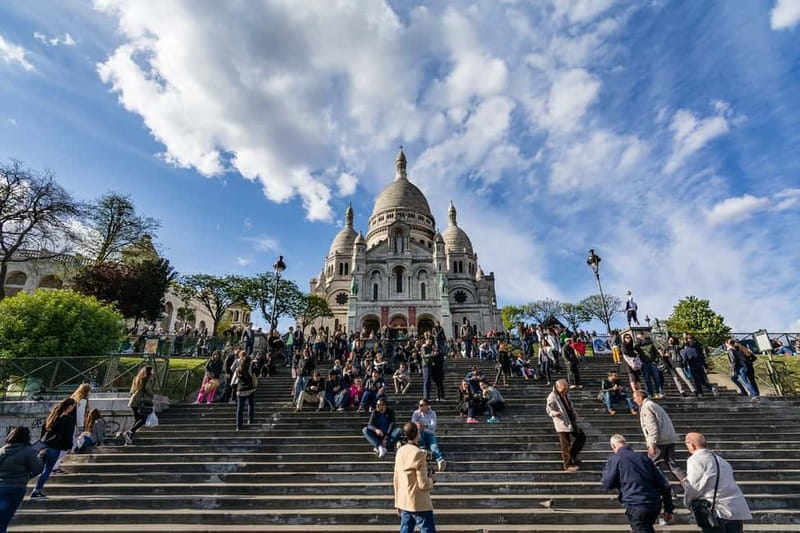
Montmartre is one of Paris’s most recognizable districts, yet it is easy to see only the postcard version. You arrive, climb toward Sacré-Cœur, take a few pictures, pass the portrait artists, and leave. That gives you the view, but not much sense of why this hill became such a magnet for painters, musicians, rebels, and eccentrics.
A walking tour helps connect the pieces. The streets are not simply pretty backdrops. They are tied to the artists who lived here, the cabarets that shaped Parisian entertainment, and the political events that gave Montmartre its independent spirit.
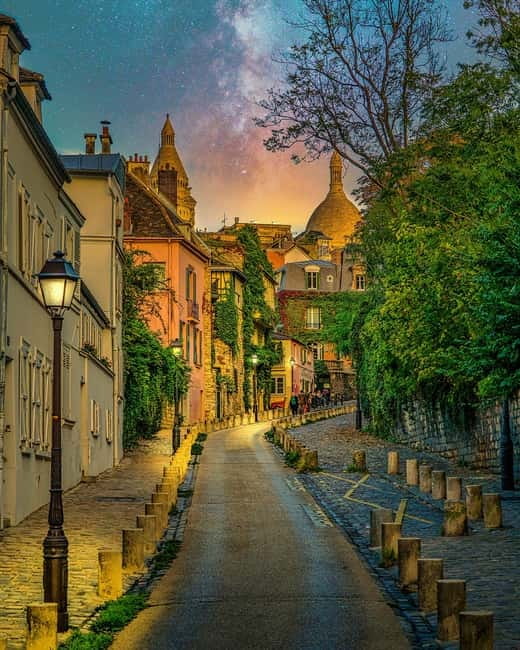
I like that this route mixes major sights with less obvious corners. You will see Maison Rose and Place du Tertre, but you will also hear about vineyards, old passageways, and quiet courtyards. That balance keeps the walk from feeling like a march between photo stops.
The guide matters a great deal here. Montmartre has plenty of stories, but a good guide needs to separate useful history from random trivia. The strongest guides on this experience, including Yazid, Sylvia, and Jean Baptiste, have been praised for making the material personal, funny, and easy to follow.
More Walking Tours in Paris
- Paris Top Sights Half Day Walking Tour with a Fun Guide
★ 5.0 · 2,893 reviews - Montmartre Hidden Gems and Scenic Highlights Walking Tour
★ 5.0 · 2,684 reviews - Montmartre Hill French Gourmet Food and Wine Tasting Walking Tour
★ 5.0 · 2,588 reviews
Starting at Place Saint-Pierre beneath Sacré-Cœur
The meeting point is at Place Saint-Pierre, near the carrousel, with a Paris Tours Experiences guide waiting there. This is a sensible place to begin because you are already at the foot of the Montmartre hill and close to the basilica.
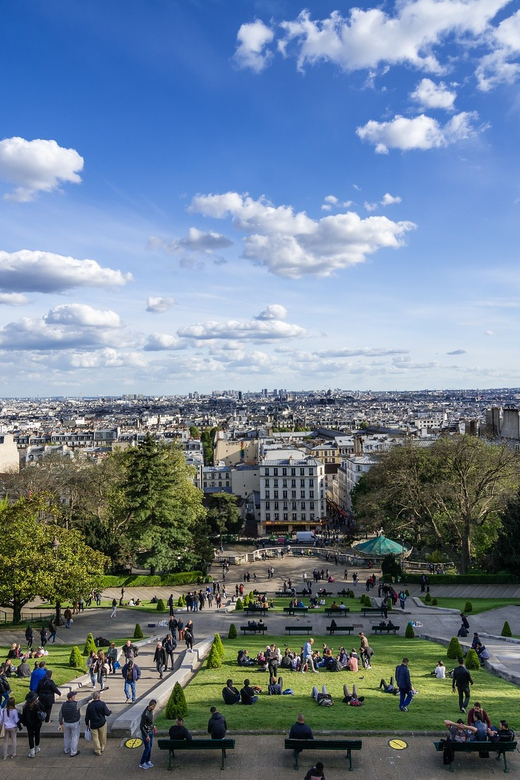
The opening section gives you a broad view of the neighborhood. Your guide introduces Montmartre as more than a tourist district, explaining how its artists, performers, and political characters helped form its identity. You also get an early look across Paris, which gives useful orientation before you turn into the narrower streets.
The basilica is part of the setting, but this is not advertised as an interior visit. The planned advice is to explore Sacré-Cœur independently after the walk. That can work well because you first learn where the basilica fits into the area, then visit it without trying to listen to a guide while managing the crowds.
Expect some uphill walking, though the route has been described as manageable, with a pace that can suit children and regular rest points. Still, Montmartre is a hill. Comfortable shoes are not optional here.
The Wall of Love and a gentle opening stop

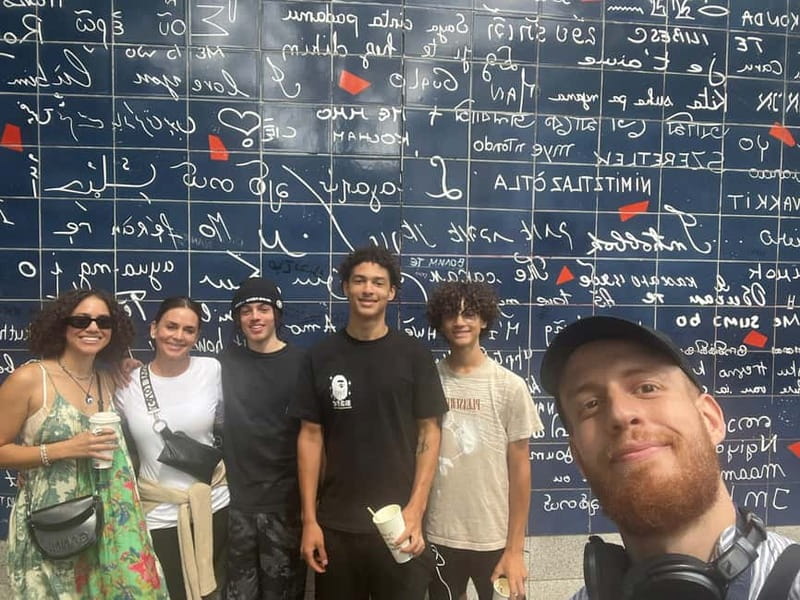
The next stop is the Wall of Love, or Le Mur des Je t’aime, in a small square near Abbesses. The wall displays the words I love you 311 times in many languages.
This is a brief, visual stop rather than a major history lesson, but it gives the group a chance to pause and take pictures. It also changes the mood after the broad views at Place Saint-Pierre. Montmartre can feel grand and monumental near Sacré-Cœur, while this corner is intimate and playful.
The stop is scheduled for about 30 minutes, though exact timing can vary with the guide and the group. If you are photographing the wall, you may appreciate having someone explain what you are looking at instead of simply snapping a picture and moving on.
Families should find this section easy to enjoy. The tour is specifically described as suitable for children, and guides have been praised for keeping younger participants involved.
Bateau-Lavoir and the birth of modern art
For many people, Bateau-Lavoir is the most meaningful stop on the route. This former artists’ residence is linked with Picasso, Modigliani, and other painters who worked in Montmartre during the early twentieth century.
The building itself is not a grand museum. Its value comes from the people who lived and worked there and from what happened around it. This was a place where artists tested new ideas, argued about painting, shared cramped working spaces, and helped move European art in a new direction.
Your guide uses the site to explain how Montmartre shaped its artists, and how those artists changed the way the district was understood. That is more useful than simply collecting famous names. You begin to see why the neighborhood attracted people willing to live cheaply, work intensely, and ignore polite rules.
If you enjoy art, this part may be the highlight. The guides have been especially praised for their knowledge of Picasso and Salvador Dalí, but the storytelling also reaches musicians and performers. The result is a broader picture of Montmartre as a place of art, music, nightlife, and strong personalities.
One small caution: this tour leans heavily toward art and cultural history. If you want only architecture or restaurant recommendations, you may find the commentary more detailed than expected. One participant noted that the guide sometimes ran long because there was so much to explain. For an art lover, that is likely a benefit. For someone in a hurry, it may require patience.
Same city, a slower kind of day:
- Paris: Louvre Museum Timed-Entrance Ticket
★ 4.6 · 71,977 reviews - Disneyland® Paris 1-Day Ticket
★ 4.6 · 49,412 reviews - Paris: Versailles Palace and Gardens Full Access Ticket
★ 4.6 · 41,579 reviews - Paris: Evening River Cruise with Music
★ 4.4 · 22,721 reviews
Moulin de la Galette and the painted Montmartre
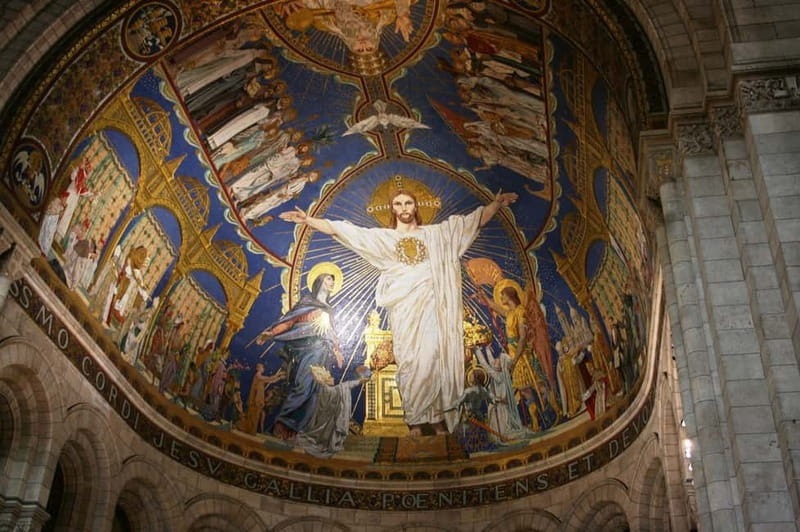
The walk continues to Moulin de la Galette, a former windmill that became an icon of Impressionist painting. It is a good example of how ordinary working places turned into symbols through art.
The stop combines a visit, photographs, and explanation. Your guide can connect the windmill with the pictures that made it famous, helping you understand why artists were drawn to everyday scenes around the hill.
You may not find a dramatic interior visit here. The pleasure comes from seeing the place in its street setting and hearing how the real windmill became part of Montmartre’s artistic image. This is a useful reminder that the district was not created for tourists. Its charm came from the mixture of working life, entertainment, rural traces, and cheap studios.
The route also gives you time to notice the streets between major stops. That is where the tour earns part of its price. A map can show you Moulin de la Galette, but it cannot easily explain which alley connects the site to the next corner or why a quiet courtyard matters.
Maison Rose, photographs, and the quieter lanes
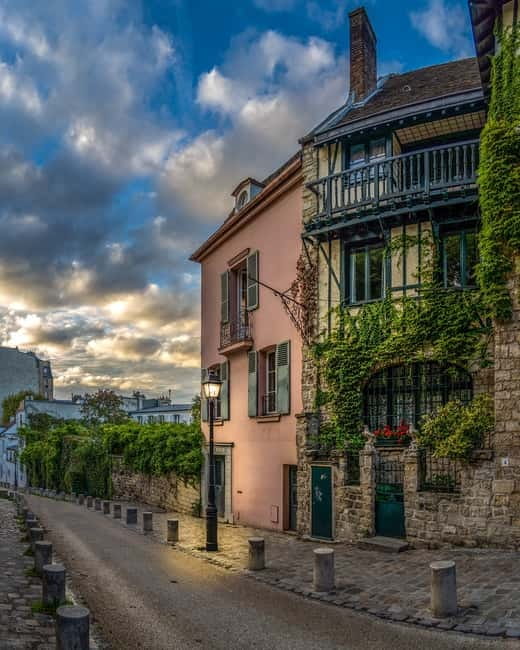
Maison Rose is one of Montmartre’s best-known photo stops. Its pink exterior and corner position make it instantly recognizable, so expect to pause for pictures and hear about its place in the neighborhood’s visual identity.
This stop includes a break, which is welcome after the walking and standing. Food is not included, so bring your own plan for snacks or a drink. Cash is also recommended, useful if you want to buy something during free time or afterward.
The tour does not stop at the famous pink house and rush on. It also moves through less familiar parts of Montmartre, including vineyards, old cabarets, courtyards, and passageways. These details are important because they show how much of the district’s personality sits away from the main tourist route.
The guide may also bring in stories of revolution and resistance, along with the artists and singers who lived in or around the neighborhood. Names connected with the walk include Van Gogh, Dalí, Dalida, Charles Aznavour, and Toulouse-Lautrec. That range gives you a fuller idea of Montmartre. It was not only a painters’ quarter.
The strongest guides add small touches to make the stories stick. Yazid, for example, has been praised for using photographs and music during the walk, and for handing out Chupa Chups connected with Dalí’s daisy logo. You should not book solely for that kind of extra, since guides vary, but it shows the personal style that can make a walking tour memorable.
Place du Tertre and what comes next
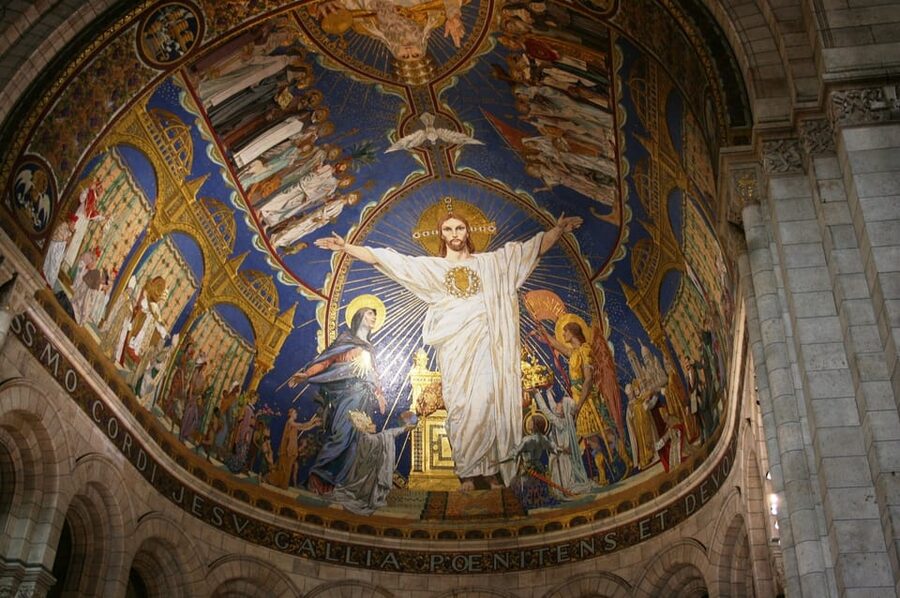
The planned final sight is Place du Tertre, the square where artists still work outdoors. It is close to Sacré-Cœur and usually busy, with portrait artists, visitors, cafés, and plenty of opportunities for photographs.
By arriving here after the quieter lanes, you can better understand the contrast. Place du Tertre is the public face of artistic Montmartre, while the earlier stops explain the less polished story behind it.
The scheduled photo stop is about 15 minutes. Your guide also provides tips for visiting Sacré-Cœur independently, making this a practical end point for the rest of your afternoon.
The activity information describes the walk as ending at Place du Tertre, while the meeting-point details indicate that it ends back at the meeting point. Confirm the precise end location when you book, especially if you have a timed reservation afterward.
Guide quality and group size
A local guide is the main reason to choose this experience over walking Montmartre alone. You can find every major stop on a map, but you will miss much of the connection between the people, places, and events.
Yazid receives especially strong praise for his enthusiasm, storytelling, and ability to cover art, music, and local history without losing the group. Sylvia has been described as friendly, fluent in English, entertaining, and good at keeping a steady pace. Jean Baptiste has been praised for being well educated, approachable, and skilled at encouraging people to see Paris through local eyes.
Of course, a walking tour is partly dependent on the individual guide assigned that day. The repeated praise for several guides is encouraging, but you should allow for differences in style. Some guides may speak at length, while others may move more quickly.
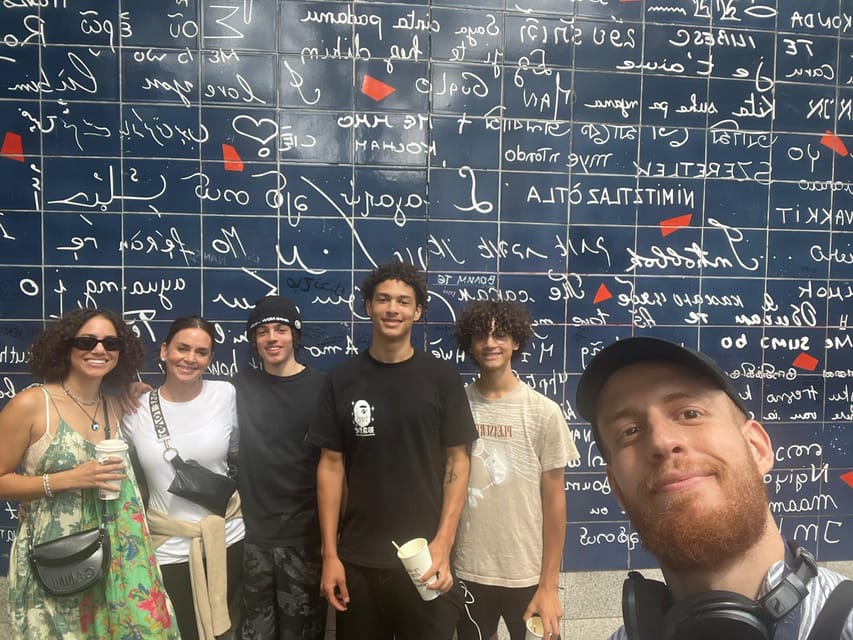
The maximum group size is 16. That is not a private tour, but it is small enough for a guide to answer questions and keep the group together on narrow streets. It also makes family pictures easier. The guide takes pictures of the group at different spots, a useful extra if you want more than self-timer photographs.
Is $34 a fair price?
At $34, this is reasonably priced for a 140-minute guided walk in one of Paris’s most sought-after districts. You are paying for a local English-speaking guide, a planned route, cultural context, and help finding places you might otherwise pass without noticing.
The value is strongest if you are visiting Montmartre for the first time or if a previous visit felt limited to Sacré-Cœur and Place du Tertre. You get several major sights plus smaller corners, and the guide’s stories can help you decide where to return later.
The value is weaker if you already know Montmartre well or prefer to wander without a schedule. You will not receive food, museum admission, or a private guide. This is a street-level experience, and its success depends on the guide and the weather.
The free cancellation period gives you some planning flexibility. You can cancel up to 24 hours in advance for a full refund, and the reserve-now, pay-later option means you do not have to pay at once.
Who should take this walk?
I would recommend it to:
- First-time visitors who want an introduction to Montmartre
- Art lovers interested in Picasso, Modigliani, Dalí, and Impressionist painting
- Music fans curious about Dalida, Aznavour, and other Parisian performers
- Photographers looking for Maison Rose, the Wall of Love, and Place du Tertre
- Families who prefer a guided activity that can suit children
- Visitors who want local stories rather than only famous monuments
I would think twice if you use a wheelchair or have a mobility impairment, since the tour is not suitable for wheelchair users and takes place on hilly, uneven streets. I would also avoid bringing oversize luggage. Wear practical shoes, dress comfortably, and keep some cash with you.
Should you book the Montmartre Highlights Walking Tour?
Book it if you want Montmartre explained through its people and stories, not just photographed from the outside. The mix of Sacré-Cœur views, the Wall of Love, Bateau-Lavoir, Moulin de la Galette, Maison Rose, and Place du Tertre gives you the classic sights, while the side streets and courtyards add a sense of the district beyond the postcard.
I especially like the way the tour combines art with music, revolution, resistance, and everyday neighborhood life. At $34, that is a fair exchange for more than two hours of walking and interpretation.
Skip it if you want a private experience, a museum visit, or a short route with very little uphill walking. For most first-time visitors who enjoy culture and photographs, this is a smart way to get your bearings and leave with a better understanding of why Montmartre still feels unlike the rest of Paris.
FAQ
How long does the Montmartre walking tour last?
The tour lasts 140 minutes, or about two hours and 20 minutes. Starting times vary, so check availability when booking.
What language is the tour in?
The live guided tour is conducted in English.
How large is the group?
The group has a maximum of 16 people.
Where does the tour begin?
It begins at Place Saint-Pierre. Look for Paris Tours Experiences near the carrousel, where the guide will be waiting.
Where does the tour end?
The planned route ends at Place du Tertre, near Sacré-Cœur. The meeting-point information also says the activity ends back at the meeting point, so confirm the exact end location when booking.
Is the tour suitable for children?
Yes. The walk is adapted for children, and guides have been praised for making the experience engaging for younger participants.
Is the tour suitable for wheelchair users?
No. The activity is not suitable for wheelchair users or people with mobility impairments.
What should I bring?
Bring comfortable clothes, comfortable shoes, and cash. Food is not included, and oversize luggage is not allowed.
Recently added in Paris
- Private Transfers in Paris★ 5.0 · 75 reviews
- CDG – Euro Disney – CDG Two Way Private Shuttle Transfer★ 5.0 · 233 reviews
- Disneyland® Paris 1 Day Ticket with Transport from Paris★ 3.5 · 302 reviews
- Personalized Transport service from Disneyland to Paris★ 5.0 · 63 reviews
- Monet’s Gardens & House-Private Giverny Tour From Paris★ 4.5 · 137 reviews
- Guided tour Monet’s house and gardens/small group★ 4.5 · 68 reviews
- Giverny Monet House and Gardens Skip the line Walking tour★ 4.0 · 217 reviews
- Monet’s House and Garden & Giverny Village★ 4.5 · 39 reviews
Walking Tours, compared.

Paris Top Sights Half Day Walking Tour with a Fun Guide
Read our review →
Montmartre Hidden Gems and Scenic Highlights Walking Tour
Read our review →
Montmartre Hill French Gourmet Food and Wine Tasting Walking Tour
Read our review →
Paris Île de la Cité and Notre-Dame Walking Tour With Crypt
Read our review →
Montmartre Cheese, Wine & Pastry Guided Walking Tour
Read our review →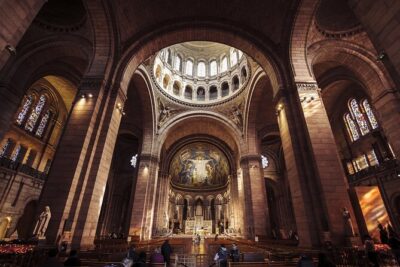
Paris in a Day: Louvre or Orsay, Eiffel Tower, City Walk & Cruise
Read our review →
Paris City Center Free Walking Tour (Tip-Based)
Read our review →
Browse the lists this tour appears in