

REVIEW · LOUVRE MUSEUM TOURS
Murders and Mysteries of the Louvre Museum
Dark stories make famous art feel newly alive. I like the way this two-hour Louvre tour pairs headline works with overlooked rooms, medieval remains, Egyptian rituals, royal jewels, and paintings filled with betrayal or violence. I also like the small group of no more than eight, which gives the guide a better chance to explain details and help you move through the museum.
The main drawback is that the experience depends heavily on the guide’s English, voice, and ability to keep the group together. One guide received praise for expertise and warmth, while another was difficult to hear in the crowded galleries. At $200 per person, this is a premium tour, so clear storytelling and smooth organization matter.
In This Review
- Key points at a glance
- Why the Louvre works so well for a mystery tour
- Meeting at the pyramid and getting inside
- The medieval Louvre: fortress, palace, and crime scene
- Egyptian collections and forgotten rituals
- Venus de Milo and the art of uncertainty
- Crown jewels, French masterpieces, and royal ambition
- The Mona Lisa with a suspicious smile
- Does the theme deliver?
- Two hours, eight people, and the real value
- Who should book this Louvre experience?
- Final verdict: a good choice for curious first visits
- FAQ
- Where does the Louvre mystery tour meet?
- How long does the experience last?
- Is Louvre admission included?
- Does skip-the-line access include security?
- What language is the tour offered in?
- How large is the group?
- What should I bring?
- Can I bring luggage into the Louvre?
- How much does the tour cost?
- Can I cancel the booking?
Key points at a glance

- A Louvre tour with a darker angle: Expect stories about magic, rituals, murder, scandal, betrayal, and disturbing scenes in famous art.
- A useful mix of famous and overlooked sights: The route includes the Mona Lisa, Venus de Milo, Egyptian collections, crown jewels, French masterpieces, and the old fortress.
- Two hours, then more time on your own: Your museum ticket lets you continue exploring after the guided visit.
- Small groups make a difference: With a maximum of eight people, the guide can offer more personal attention than a large coach group.
- Skip the ticket queue, not security: You still need to wait for the museum security check.
- Good for a short Paris visit: The tour brings order to a huge museum when you have limited time and want more than a quick photo stop.
Why the Louvre works so well for a mystery tour
The Louvre is not just a place filled with famous paintings. It is also a former fortress, royal residence, and setting for centuries of political tension, personal betrayal, scandal, and murder. That gives this tour a useful advantage: the building itself becomes part of the story.
You begin beneath the great glass pyramid, then move into a museum whose oldest layers reach back to its medieval use as a defensive castle. The change from fortress to palace to public museum gives the guide plenty of material. You are not only looking at isolated objects. You are following a building that changed with the power of France.
I like this approach because it gives the Louvre a clear thread. The museum can otherwise feel like a giant catalogue of rooms. One moment you are facing an Egyptian statue, then a French painting, then a jewel display, with little sense of how it all fits together. A mystery-focused guide can connect the objects through human motives: fear, ambition, faith, vanity, violence, and secrecy.
The tone is not a ghost hunt. The supplied details point to stories of magic, forgotten rituals, dark events shown in art, and the troubling background of the Louvre itself. If you want serious art history with a slightly macabre edge, the subject should keep your attention. If you expect theatrical actors, staged scares, or supernatural claims, this is probably not the right match.
More Louvre visits and guided rooms:
- Paris: Louvre Museum Timed-Entrance Ticket
★ 4.6 · 71,977 reviews - Paris: Louvre Guided Tour with Reserved Access & Boat Cruise
★ 4.3 · 16,353 reviews - Louvre Museum Masterpieces Guided Tour with Access
★ 4.5 · 12,023 reviews
Meeting at the pyramid and getting inside
The meeting point is the Statue of Louis XIV in front of the Louvre Pyramid on Rue de Rivoli. Your voucher gives the precise instructions, so read it before you arrive. The guide meets you underneath the pyramid after the security check but before the ticketed entrance.
That detail matters. The tour includes skip-the-line access to enter the museum, but it does not remove the security queue. Do not arrive assuming you can walk straight past every line. Build in enough time to find the statue and pass security without rushing.
You need a passport or identity card. Large bags and luggage are not allowed, and anything larger than 55 by 35 by 20 centimeters cannot enter the museum. For a smooth start, carry only what you need for the visit.
Once the group is assembled, the guide leads you through the entrance and into the museum. Museum admission is included in the price, which saves you from buying a separate entry ticket. The guide’s presence also gives you a route through the vast complex instead of leaving you to guess which wing to visit first.
The medieval Louvre: fortress, palace, and crime scene
The medieval remains are an important early stop because they change how you see the whole institution. Before it became a palace and museum, the Louvre had a defensive role. The old foundations and surviving medieval areas reveal a building shaped by security and royal power.
This section is especially valuable if you enjoy architecture and political history. The walls are not just background scenery. They help explain why the Louvre feels more like a city than a normal museum. You are walking through layers of construction, authority, and reinvention.
The tour also connects the building to betrayal, scandal, and murder. The supplied information does not promise a single sensational crime story or a theatrical reenactment, so you should expect historical context rather than a staged mystery. The appeal comes from seeing the Louvre as a place where power was concentrated and where human conflict left its mark.
I would pay close attention here, even if you came mainly for paintings. The fortress section gives the later galleries more meaning. Royal collections, crown jewels, and grand French works make more sense once you understand the building’s connection to the monarchy.
Egyptian collections and forgotten rituals
The Egyptian galleries bring a different kind of mystery. The tour uses ancient-world collections to discuss magic and long-forgotten rituals, then links those ideas to the beliefs and fears of earlier societies.
This is one of the most distinctive parts of the route. A standard first visit often rushes toward the biggest names and overlooks the ancient collections. Here, the Egyptian material becomes a doorway into questions about death, protection, ceremony, and the unknown.
Your guide’s explanation is crucial. Egyptian objects can look impressive but silent when viewed without context. A good story helps you notice why an object was made, what concern it addressed, and how ancient people tried to control forces they could not fully understand.
The dark theme also needs some balance. The tour appears to use the collection to discuss historical beliefs, not to claim that the objects are cursed or dangerous. That should appeal to you if you prefer mystery grounded in culture and history.
More museums in Paris:
- Paris: Louvre Museum Entry Ticket With Host and River Cruise
★ 4.6 · 9,926 reviews - Les Invalides: Napoleon’s Tomb & Army Museum Entry
★ 4.6 · 9,185 reviews - Louvre Museum – Exclusive Guided Tour (Entry Included)
★ 5.0 · 6,296 reviews - Paris: Louvre Museum Hosted Entry and Mona Lisa Audioguide
★ 4.6 · 5,235 reviews
Venus de Milo and the art of uncertainty
The Venus de Milo is one of the Louvre’s most familiar sculptures, yet the tour places it within a route built around questions and unanswered stories. That makes the statue more than a quick stop for a famous photograph.
You can expect the guide to use celebrated works as starting points for interpretation rather than simply naming them and moving on. The supplied details emphasize artistic techniques, connections between artists, and lesser-known works, all of which can give a familiar object fresh context.
This is also where the tour’s limited group size should help. A group of eight is easier to gather around a sculpture than a large crowd. You may have a better chance of hearing the explanation and asking a question, although the museum itself can still be loud and crowded.
One practical warning: small-group size does not guarantee perfect listening conditions. A past participant found the guide’s English difficult to understand and her voice too soft for the Louvre. That is a fair concern in any museum tour. If you have hearing difficulties, stay close to the guide and ask for repetition when needed.
Crown jewels, French masterpieces, and royal ambition
The crown jewelry collection adds another form of mystery: wealth, status, desire, and danger. Jewelry is easy to admire as decoration, but royal jewels also reflect power. Their value made them symbols of legitimacy and objects worth protecting, displaying, and fighting over.
The guide’s larger story about the Louvre’s royal past should give this collection a useful place in the itinerary. You are not simply looking at glittering objects. You are seeing how monarchy presented itself and how luxury could become part of political theater.
French masterpieces continue that story through painting. The route includes works connected to dark events and violent scenes, so you may see familiar art in a less comfortable light. The point is not just that a painting contains blood or tragedy. The stronger experience comes when the guide explains the event, artistic choices, relationships between artists, and the ideas the work was meant to express.
One participant praised a guide for covering both famous works and lesser-known pieces, along with artistic techniques and links between artists. That is the best version of this tour. You want the darker theme to open the door to better art understanding, not become an excuse to point at a few gory images.
The Mona Lisa with a suspicious smile
The Mona Lisa is usually the most crowded stop, and you should expect a short, tightly managed look rather than peaceful contemplation. The tour includes the painting as part of its route, then asks you to consider her famous expression from a new angle.
The mystery here is psychological and artistic. Her smile has invited centuries of speculation, and the guide can use that uncertainty to discuss how a painting creates a response that remains difficult to pin down. You will not need to know technical art terms in advance. The value is having someone point out what to look for and explain why this small portrait became such a large cultural force.
Keep your expectations realistic. The Mona Lisa is not a private viewing, and the tour cannot control crowd levels in front of the painting. The advantage is that you arrive with a guide who can frame the experience, rather than spending your only moment there wondering what you are supposed to notice.
The guide also takes you to other major highlights, according to the experience details and past feedback. That makes the tour practical for a first visit. You get the famous names, but the route does not stop there.
Does the theme deliver?
The theme is strongest when it combines the building, the objects, and the people connected to them. The medieval fortress, ancient rituals, royal jewels, violent scenes, and Mona Lisa’s uncertain expression all fit under the broad idea of secrets and mysteries.
Still, the quality may vary from one guide to another. One participant felt the guide selected several gruesome paintings but did not create much intrigue. That criticism is worth taking seriously. A dark subject alone does not make a compelling tour. The guide needs to explain why a story matters and how it connects to the Louvre.
At its best, the tour gives you a new way to read art. At its weakest, it may feel like a fast walk through famous rooms with a few sinister anecdotes added. The strong rating of 4.6 from 28 reviews suggests that most people found the experience effective, but the range of feedback shows why the guide’s delivery is important.
The best praise centers on expertise, friendliness, and engaging explanations. Several participants found the guides highly informed, accommodating, and generous with their time. One guide even took photos for the group. Those details suggest a personal style rather than a stiff lecture.
Two hours, eight people, and the real value
The tour lasts two hours and costs $200 per person. That is not a budget Louvre visit. You are paying for more than admission: you are paying for a planned route, live interpretation, and a small group in one of the world’s largest museums.
The price makes the most sense in three situations. First, you have limited time and want to see the main highlights without spending hours deciding where to go. Second, you prefer stories and explanation to reading labels on your own. Third, you are interested in unusual historical angles and do not want a standard greatest-hits tour.
The value is weaker if you already know the Louvre well or prefer to explore at your own pace. You may find the two-hour structure too directed, especially if you want to linger over one artist or collection. The good news is that your ticket lets you remain inside and continue exploring after the guided portion ends.
That follow-on time improves the value. You can use the tour to get your bearings, see the major works, and learn which areas deserve a second look. After the guide leaves, you are free to return to a favorite gallery or visit sections not included in the route.
The small group is another reason the price may be worthwhile. Eight people is still a group, but it is far more manageable than a large museum crowd. You can stay near the guide, hear more of the explanation, and ask questions without competing with dozens of other people.
Who should book this Louvre experience?
I would recommend it to a first-time Louvre visitor who wants structure but does not want a dry survey of art history. It should suit couples, families with older children, and small groups of friends who enjoy unusual stories and major cultural sights in the same outing.
It is also a sensible choice for a short Paris break. You can see the medieval remains, Egyptian collection, Venus de Milo, crown jewels, French masterpieces, and Mona Lisa within one organized visit, then keep exploring on your own.
You may want to choose another format if you need a very quiet guide, have difficulty hearing in crowded rooms, or want a highly theatrical mystery experience. The English and French options are useful, but the spoken delivery still depends on the individual guide. Stay close, especially in busy galleries, since one past group lost two members in the crowd.
Book with the museum rules in mind. Leave luggage at your accommodation, bring identification, and allow time for security before meeting the guide. You can cancel up to 24 hours ahead for a full refund, and the reserve-now, pay-later option keeps your plans flexible. Tips are optional and not included.
Final verdict: a good choice for curious first visits
I would book this tour if you want the Louvre to feel like a place shaped by people, power, fear, and ambition, not just a long list of famous objects. The medieval fortress and royal past give the visit a strong backbone, while the Egyptian rituals, violent artworks, jewels, and Mona Lisa provide plenty of memorable stops.
The $200 price demands a good guide, and the mixed feedback about voice and English means you should keep that risk in mind. Still, the small group, included admission, skip-the-ticket-line entry, famous highlights, and extra time inside make it a practical choice for a first Louvre visit.
Choose it for sharp stories, unusual context, and a reliable route through an overwhelming museum. Skip it if you want a cheap ticket, complete freedom, or a fully theatrical ghost story.
FAQ
Where does the Louvre mystery tour meet?
Meet the guide at the Statue of Louis XIV in front of the Louvre Pyramid, Louvre Museum, Rue de Rivoli, 75001 Paris, France. The precise meeting instructions will be on your voucher.
How long does the experience last?
The guided tour lasts two hours. Afterward, your ticket allows you to stay in the Louvre and explore the rest of the museum independently.
Is Louvre admission included?
Yes. Museum entrance fees are included in the tour price.
Does skip-the-line access include security?
No. The guide provides skip-the-line access for entering the museum, but you still need to wait for the security check.
What language is the tour offered in?
The live tour is offered in English and French.
How large is the group?
The tour is limited to eight participants.
What should I bring?
Bring a passport or identity card.
Can I bring luggage into the Louvre?
No. Luggage and large bags are not allowed. Items larger than 55 by 35 by 20 centimeters cannot enter the museum.
How much does the tour cost?
The listed price is $200 per person.
Can I cancel the booking?
Yes. You can cancel up to 24 hours in advance for a full refund. You can also reserve the tour and pay later.
Recently added in Paris
- Private Transfers in Paris★ 5.0 · 75 reviews
- CDG – Euro Disney – CDG Two Way Private Shuttle Transfer★ 5.0 · 233 reviews
- Disneyland® Paris 1 Day Ticket with Transport from Paris★ 3.5 · 302 reviews
- Personalized Transport service from Disneyland to Paris★ 5.0 · 63 reviews
- Monet’s Gardens & House-Private Giverny Tour From Paris★ 4.5 · 137 reviews
- Guided tour Monet’s house and gardens/small group★ 4.5 · 68 reviews
- Giverny Monet House and Gardens Skip the line Walking tour★ 4.0 · 217 reviews
- Monet’s House and Garden & Giverny Village★ 4.5 · 39 reviews
Louvre Museum Tours, compared.


Louvre Guided Tour with Reserved Access & Boat Cruise
Read our review →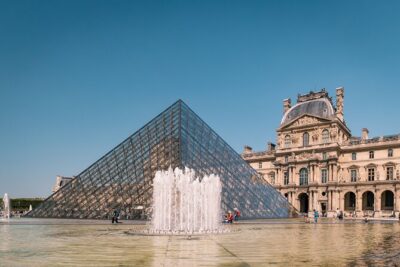
Louvre Museum Masterpieces Guided Tour with Access
Read our review →
Louvre Museum Entry Ticket With Host and River Cruise
Read our review →
Priority Access Louvre with Host -Direct to Mona Lisa
Read our review →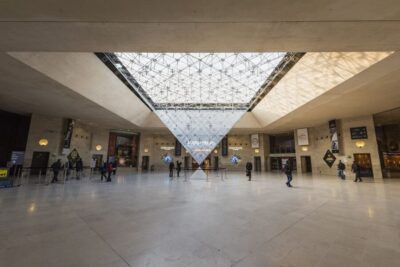
Mona Lisa & Louvre Masterpieces Tour with Reserved Access
Read our review →
Louvre Museum – Exclusive Guided Tour (Entry Included)
Read our review →
Louvre Reserved Ticket and River Cruise Combo
Read our review →Browse the lists this tour appears in