
REVIEW · MUSEUMS
Les Invalides: Napoleon’s Tomb & Army Museum Entry
History wears a golden dome here. Les Invalides gives you Napoleon’s Tomb, royal armor, World War exhibits, and a grand slice of Parisian history for one modest admission price. I especially like the freedom to enter any time from 10 AM to 6 PM and the sheer range of displays under one roof. The main drawback is simple: this is far larger than many visitors expect, so two or three hours will only scratch the surface.
The Dome Church is the visual star, but the Army Museum makes the ticket worthwhile. I also like that signs are available in French and English, and that the museum includes films, scale models, digital displays, and seats for regular breaks. Keep your ticket handy, though, because you may need to show or scan it again as you enter different parts of the complex.
In This Review
- Key points to know before you go
- Why Les Invalides matters in Paris
- Start beneath the golden dome
- Royal armor and weapons from the Middle Ages
- Napoleon, battles, and the French military story
- The World Wars and the French Resistance
- Plans, liberation, and temporary exhibitions
- How much time should you allow?
- Is the $20 ticket good value?
- Entry, comfort, and access tips
- Who will enjoy Les Invalides most?
- Should you book Les Invalides?
- FAQ
- How long is the Les Invalides ticket valid?
- What does the admission ticket include?
- Is a guided tour included?
- Can children enter for free?
- Is Les Invalides wheelchair accessible?
- When is Les Invalides closed?
Key points to know before you go

- Napoleon’s Tomb sits beneath the gilded Dome Church, an ornate and moving stop even if military history is not your main interest.
- The Army Museum is huge, with more than 500,000 objects covering the Middle Ages through the present day.
- One ticket covers several museums and exhibitions, including the Plans-Reliefs Museum and the Museum of the Order of the Liberation.
- A half-day is the realistic minimum for a thoughtful visit, while a full day suits anyone who wants to see nearly everything.
- Entry is flexible from 10 AM to 6 PM, so you can leave for lunch and return later the same day.
- The $20 price offers strong value, especially compared with the number of collections and historic rooms included.
Why Les Invalides matters in Paris
The Hôtel National des Invalides was created by Louis XIV to house veterans and wounded soldiers. Its original purpose still shapes the visit. This is not just a collection of objects placed in modern galleries. The building itself is part of the story, with courtyards, churches, ceremonial spaces, and a long connection to France’s armies.
Today, the site is home to the Musée de l’Armée, one of the world’s major military history museums. You can move from medieval weapons to Napoleonic battlefields, then on to the French Resistance and the World Wars. That broad reach makes the visit useful for understanding how French power, politics, and national identity changed over several centuries.
I like the way the building forces you to think about both sides of military history. The displays show impressive craftsmanship and famous victories, but they also bring you close to the cost of war. Uniforms, personal belongings, photographs, and films make the subject more human than a simple parade of weapons.
The site is in the heart of Paris, near the Esplanade des Invalides and Place Vauban. It fits easily into a day that includes the Seine, the Musée Rodin, or the Eiffel Tower area. You do not need to commit to a guided group or fixed tour schedule. Your ticket is valid for one day, and you set the pace.
More museums in Paris:
- Paris: Louvre Museum Timed-Entrance Ticket
★ 4.6 · 71,977 reviews - Louvre Museum Masterpieces Guided Tour with Access
★ 4.5 · 12,023 reviews - Paris: Louvre Museum Entry Ticket With Host and River Cruise
★ 4.6 · 9,926 reviews
Start beneath the golden dome
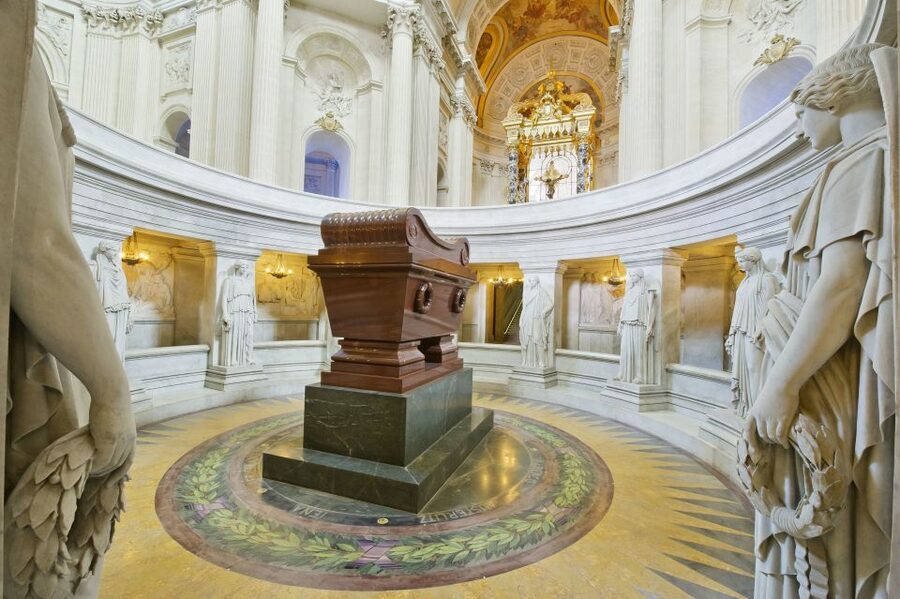
If you have limited time, begin with the Dome Church and Napoleon’s Tomb. The gilded dome catches your eye before you enter, but the interior is the real reward. Since 1861, the church has held Napoleon Bonaparte’s tomb, surrounded by grand architecture and a solemn sense of ceremony.
The tomb is not a small memorial tucked into a corner. It is designed to impress, and it does. The scale, ornament, and carefully arranged crypts create one of the most memorable interiors in Paris. Even people who are tired of military displays often find this section worth the admission by itself.
I would not treat the tomb as a quick photo stop. Take a few minutes to look around the church and consider the message of the setting. Napoleon’s resting place was designed to connect him with France’s rulers and military tradition. You can admire the artistry while also remembering that this is a monument to a complicated, ambitious figure.
The Dome Church is especially useful as an opening stop because it gives you a sense of the site’s scale. Afterward, the museum galleries feel less like isolated rooms and more like parts of a national story. If the church is your main goal, allow enough time to find the correct entrance and keep your ticket with you.
Royal armor and weapons from the Middle Ages

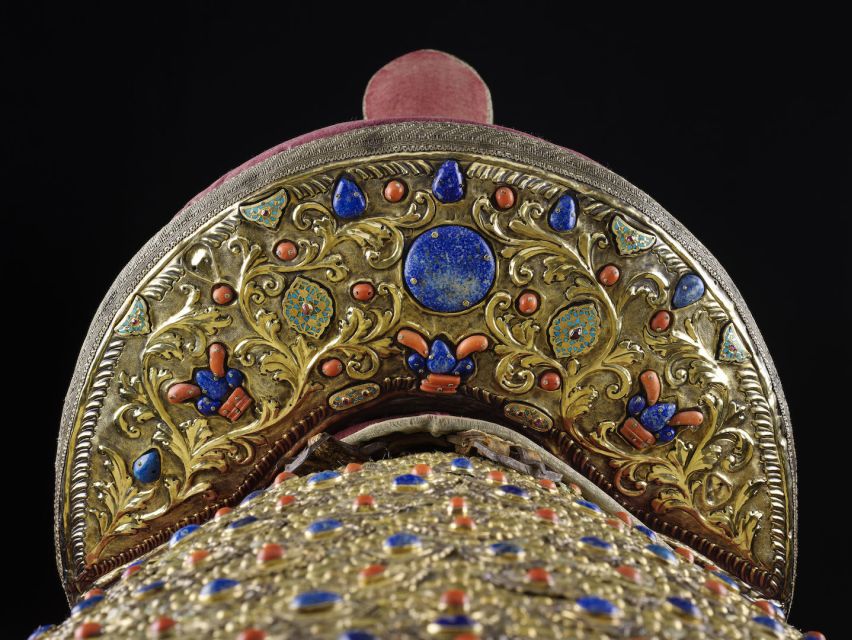
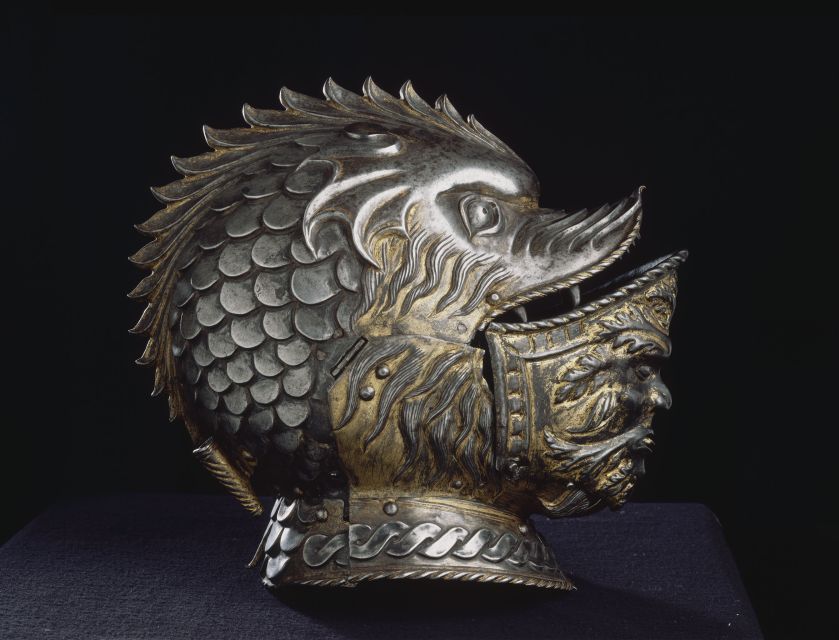
The older galleries hold one of the largest arms and armor collections in the world. Here you can see the equipment of kings, knights, and soldiers from the Middle Ages onward. Swords, shields, armor, and ceremonial pieces show how warfare was shaped not only by tactics, but also by wealth and status.
This section works well for families because the objects are easy to understand at a glance. Children can spot the armor and weapons, while adults can study the details, workmanship, and changes in design. A seven-year-old may enjoy the visual spectacle, while a teenager can begin asking why weapons and protection changed over time.
I like this part for its physical presence. A painting can tell you about a battle, but a suit of armor lets you see the weight, shape, and limits of the equipment. The displays connect political power to material objects. The kings of France did not simply command armies. They also used clothing, weapons, and ceremony to project authority.
Do not rush through these rooms on your way to Napoleon. They provide the foundation for the later galleries. The museum becomes easier to follow when you see how French armies developed from medieval forces into more organized national institutions.
Napoleon, battles, and the French military story

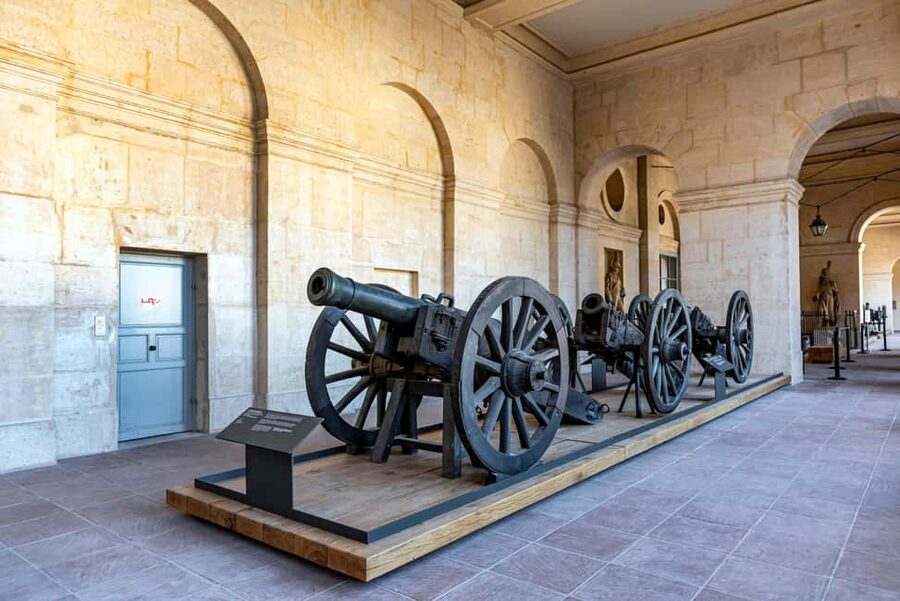
The Napoleonic displays are a natural draw, particularly if you are coming for the tomb. You can look at weapons, uniforms, paintings, maps, and personal belongings linked to France’s major figures. These objects help turn Napoleon from a distant name into a person surrounded by a real military world.
The museum does not require you to be an expert. Explanatory panels in French and English make it easier to follow names, dates, and events. If you want more detail, a multimedia guide can be purchased on-site for €5. That extra cost may be worthwhile if you prefer a structured route through the galleries.
The museum also offers interactive digital experiences. Devices and displays help explain some of the battles that shaped France. These features are useful when a map or written panel feels too abstract. Instead of trying to picture troop movements from a flat description, you can get a clearer sense of how a campaign unfolded.
A note of balance is important here. Napoleon’s military skill and historical importance are clear, but the museum does not turn the visit into a simple hero worship exercise. You can appreciate the art, architecture, and military legacy while forming your own view of the man and the wars connected to his rule.
A few more Paris outings to set side by side
- Disneyland® Paris 1-Day Ticket
★ 4.6 · 49,412 reviews - Paris: Versailles Palace and Gardens Full Access Ticket
★ 4.6 · 41,579 reviews - Paris: Evening River Cruise with Music
★ 4.4 · 22,721 reviews - Paris: Eiffel Tower Entry Ticket with Optional Summit Access
★ 4.4 · 20,035 reviews
The World Wars and the French Resistance
The 20th-century sections may be the most informative part of the museum for many people. The World War I and World War II displays include artifacts, films, photographs, and explanations that place France’s experience into a wider military story.
The World War galleries are large enough to require real time. If you have only three hours, you will need to choose carefully. If you are particularly interested in the World Wars, reserve several hours for these sections alone. A short visit can give you highlights, but it will not allow you to read everything or watch every film.
The French Resistance exhibition adds an important civilian and political dimension. It explores how resistance efforts affected the course of World War II, including the role of women. This is a valuable stop because it moves beyond generals and battle plans. You see how ordinary people, organized groups, and underground efforts became part of France’s wartime story.
The exhibits use a mix of original objects, reproductions, films, and scale models. That variety helps keep the galleries from feeling like a long row of glass cases. Some displays are especially useful for younger visitors, since the visual material gives them more than dates and paragraphs to absorb.
If you are visiting with children or teenagers, I would make this section a planned part of the day rather than hoping to reach it at the end. The museum is large, and fatigue arrives before curiosity does. Benches are available throughout the site, which helps families and anyone who needs regular rests.
Plans, liberation, and temporary exhibitions

Your ticket also includes the Museum of Plans-Reliefs. Its models can help you understand fortified towns, defensive positions, and military planning in a way that ordinary maps cannot. These pieces reward patience, especially if you enjoy seeing how commanders studied terrain and designed defenses.
The Museum of the Order of the Liberation adds another perspective on France during World War II. It fits naturally with the French Resistance material, but it has its own focus and deserves more than a passing glance. Together, these sections broaden the visit beyond Napoleon and the royal collections.
Temporary exhibitions are included as well. The exact subject will depend on the date of your visit, so check the current program before you go if a special exhibition matters to you. The permanent galleries provide plenty to see, but a temporary show can change the balance of your day.
One practical detail can surprise first-time visitors. Les Invalides contains several museums and sections, so you may need to show or rescan your ticket at different entrances. This can feel repetitive, but it is normal. Do not put the ticket away after entering the first room. Keep it accessible until you finish.
How much time should you allow?
The advertised duration is one day, and that is not an exaggeration. You can enter between 10 AM and 6 PM, then leave for lunch and return later the same day. This flexible arrangement is one of the best features of the ticket.
For a quick visit, allow at least two hours for the Dome Church, Napoleon’s Tomb, and a few selected galleries. Three hours will give you a solid introduction, but you will still leave important sections unseen.
I would plan four to five hours for a satisfying museum visit. That gives you time for the tomb, medieval armor, Napoleon, one of the World War sections, and a break. If military history is a central interest, set aside most of the day.
The museum closes at 6 PM, and the tills close 30 minutes earlier. You should not arrive at the last minute and expect to see the entire site. The Esplanade des Invalides access is available from 10 AM to 6 PM, while Place Vauban access is available from 2 PM to 6 PM.
Saturday and Sunday family activities are offered at 11 AM and 2:30 PM in French, subject to availability. They cost €7 per child on-site. These are separate from the main admission, and free entry for eligible children does not automatically include a place in the activity.
Is the $20 ticket good value?
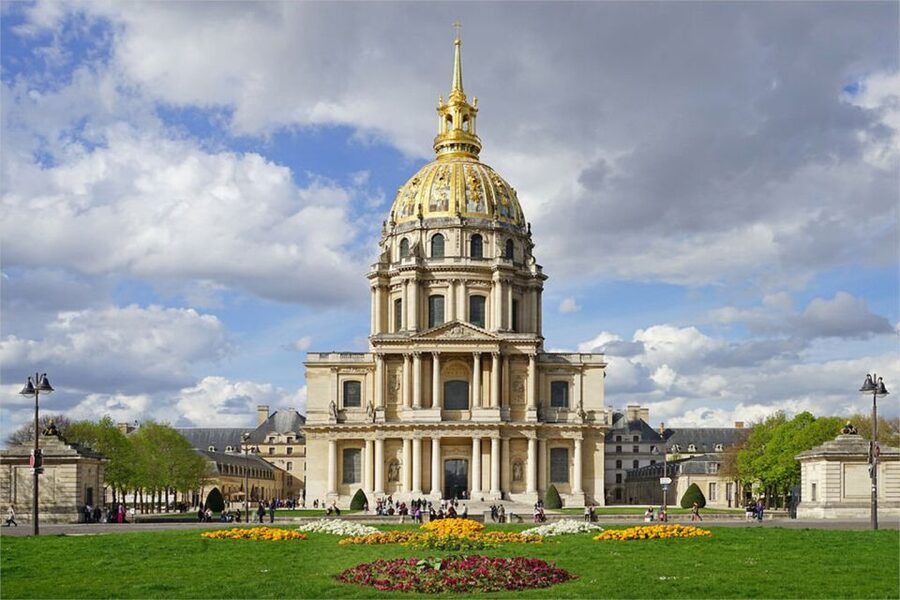
At $20 per person, this is one of the better-value major museum admissions in Paris if you use it properly. The ticket includes the permanent collections, the Dome Church, Napoleon’s Tomb, the Plans-Reliefs Museum, the Museum of the Order of the Liberation, and temporary exhibitions.
The value depends on your time. If you rush in for 45 minutes, the price may feel less attractive. If you spend half a day or return after lunch, you are getting access to a large group of collections for a reasonable cost.
A guided tour is not included, so you should not expect someone to lead you from room to room. The advantage is freedom. You can spend an hour on armor, skip a gallery that does not interest you, or focus on the French Resistance without following a group.
The optional €5 multimedia guide gives you a more organized experience. Some people will be happy with the bilingual signs and their own reading. If you want context for battles, people, and dates, the guide can make the museum easier to navigate.
Entry, comfort, and access tips
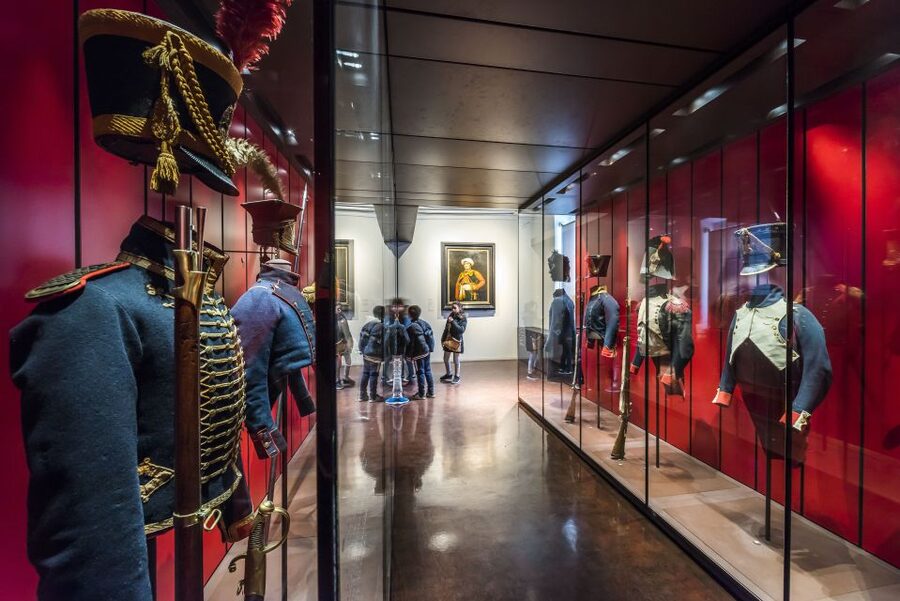
You can avoid the cash desk by entering with your ticket and showing it at the museum entrances. Still, do not assume this means every doorway will work the same way. Because the complex contains multiple museums and the Dome, staff may check your ticket at each section.
Cloakrooms are available. That is useful because a long museum visit is more comfortable without a heavy coat or large bag. Snacks can be purchased, but bringing water is sensible, especially if you plan to stay several hours.
The site is listed as wheelchair accessible, though access is not perfect in every area. If mobility is a concern, plan a slower visit and ask staff for help with any difficult route. The layout includes a lot of walking, and the scale of the museum can be tiring even when you are fit.
Admission is free for people under 18 and for European Union citizens under 26, but eligible visitors still need a ticket. An access pass must be collected from the museum office before entering. Bring the required identification, and allow time for that step.
The museum is closed on January 1, May 1, and December 25. Since the activity is non-refundable, check your date and opening hours before purchasing.
Who will enjoy Les Invalides most?
I would recommend this experience to anyone interested in Napoleon, French history, armor, military technology, the World Wars, or the French Resistance. It is also a strong choice for families because the collection includes objects children can recognize, along with films, models, and interactive material.
You do not need a military background to enjoy it. The architecture and tomb provide a memorable visit on their own, while the galleries let you choose how much historical detail you want.
This may not be ideal if you want a short, light museum stop between tightly scheduled attractions. The site is too large for that. You may also find the number of galleries overwhelming if you try to see everything without a plan.
I suggest choosing two or three priorities before entering. For example: Napoleon’s Tomb, medieval armor, and the World War II galleries. Then add other rooms as your energy and interest allow. That approach keeps the visit enjoyable instead of turning it into a race.
Should you book Les Invalides?
Yes, if you can give it at least half a day. The gilded Dome and Napoleon’s Tomb are reason enough for many people, but the Army Museum is where the ticket earns its keep. You get a wide view of French military history, from royal armor to resistance movements, with enough variety to hold the attention of families and serious history fans alike.
Book it if you value flexibility, bilingual information, and the chance to explore at your own speed. Skip it only if your Paris schedule is so tight that you can spare less than two hours. For most visitors, the $20 admission is a sensible purchase, especially when you remember that the ticket can support a full day of exploring.
FAQ
How long is the Les Invalides ticket valid?
The ticket is valid for one day. You can access the site during the stated opening hours and may leave for lunch before returning later the same day.
What does the admission ticket include?
Admission includes the permanent collections, the Dome Church and Napoleon’s Tomb, the Museum of Plans-Reliefs, the Museum of the Order of the Liberation, and temporary exhibitions.
Is a guided tour included?
No. A guided tour is not included. A multimedia guide may be purchased on-site for €5.
Can children enter for free?
Admission is free for visitors under 18. European Union citizens under 26 also qualify for free admission, but they still need an access pass from the museum office before entering.
Is Les Invalides wheelchair accessible?
The activity is listed as wheelchair accessible. Some areas may not be fully disability friendly, so visitors with mobility concerns should allow extra time and ask museum staff for assistance if needed.
When is Les Invalides closed?
The site is closed on January 1, May 1, and December 25. The museum tills close 30 minutes before the museum itself closes.
Recently added in Paris
- Private Transfers in Paris★ 5.0 · 75 reviews
- Disneyland® Paris 1 Day Ticket with Transport from Paris★ 3.5 · 302 reviews
- CDG – Euro Disney – CDG Two Way Private Shuttle Transfer★ 5.0 · 233 reviews
- Personalized Transport service from Disneyland to Paris★ 5.0 · 63 reviews
- Monet’s Gardens & House-Private Giverny Tour From Paris★ 4.5 · 137 reviews
- Guided tour Monet’s house and gardens/small group★ 4.5 · 68 reviews
- Giverny Monet House and Gardens Skip the line Walking tour★ 4.0 · 217 reviews
- Monet’s House and Garden & Giverny Village★ 4.5 · 39 reviews
Museums, compared.


Louvre Museum Masterpieces Guided Tour with Access
Read our review →
Louvre Museum Entry Ticket With Host and River Cruise
Read our review →
Louvre Museum – Exclusive Guided Tour (Entry Included)
Read our review →
Louvre Museum Hosted Entry and Mona Lisa Audioguide
Read our review →
Louvre Museum Tour Mona Lisa & Iconic Masterpieces
Read our review →

Louvre Museum: Skip-the-Line Small Group Guided Tour
Read our review →Browse the lists this tour appears in