
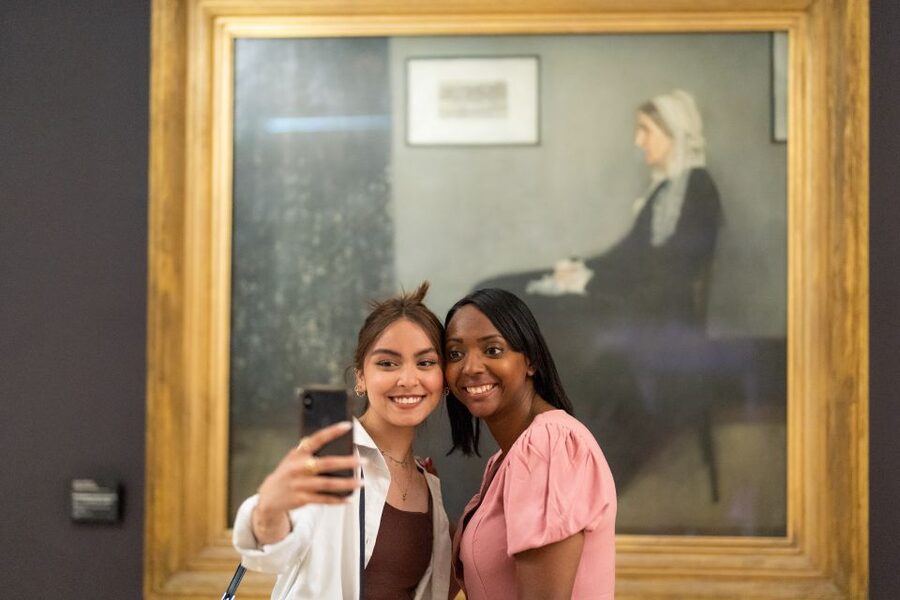
REVIEW · SKIP THE LINE
Musée d’Orsay Skip-the-Line Tour with Expert Guide
Paris saves its best surprises indoors. The Musée d’Orsay combines a grand former railway station with some of Europe’s most exciting art, and this guided visit gives you a clear route through its famous Impressionist collection. I especially like the dedicated entrance and the guide’s use of stories about artistic rivalries, scandals, and social change. The main tradeoff is time: a 90 to 105 minute tour can feel rushed inside such a large museum.
I also like that you can remain in the museum after the guided portion ends. Guides such as Anthony, Avi, Sarah, Perrine, and Marjolein have earned praise for making difficult art easy to follow, but the quality of the experience still depends on your guide and the size of the crowd. Bring patience, arrive at the exact meeting point, and do not join the public museum lines.
In This Review
- Key points to know before you book
- Why the Musée d’Orsay makes a fine first museum visit
- Meeting your guide beside the Legion d’Honneur Museum
- Entering through the former railway station
- The Impressionists and the scandal of modern life
- Seeing Monet, Renoir, Degas, and Manet with context
- Van Gogh and the later rooms
- What the guide adds to the admission price
- Crowds, pace, and the practical reality
- Who should book this Musée d’Orsay visit?
- My verdict: a smart way to meet the Orsay
- FAQ
- How long does the Musée d’Orsay tour last?
- What language is the tour conducted in?
- Where do I meet the guide?
- Should I join the museum’s public entrance line?
- Can I stay inside the museum after the tour?
- Is hotel transportation included?
- Can I bring luggage or a large bag?
- What happens if I need to cancel?
Key points to know before you book
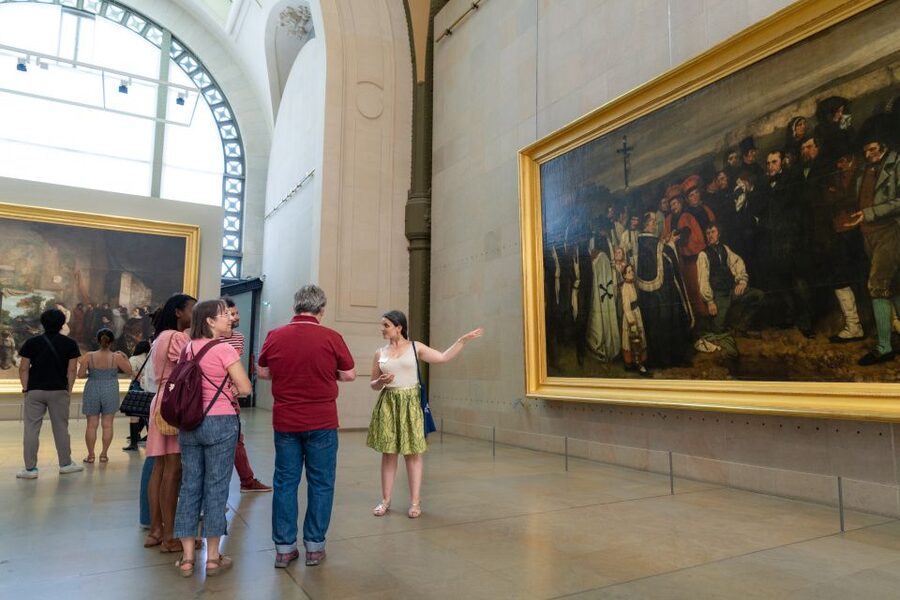
- The meeting point is across from the museum entrance: Look for your guide beside the entrance to the Legion d’Honneur Museum, wearing a guide badge on an orange lanyard.
- You see the major Impressionist highlights: Monet, Manet, Renoir, Degas, and Van Gogh receive special attention, along with works that explain how modern art changed.
- The building is part of the experience: The museum occupies a magnificent Beaux-Arts railway station built for the World’s Fair.
- The guided visit lasts about 1 hour 45 minutes: The stated activity range is 90 to 150 minutes, depending on the selected time and pace.
- You can keep exploring afterward: Once the tour finishes, you are free to remain in the museum and continue through the galleries.
- This is an English-only experience: Headsets are provided when appropriate, which helps when the galleries are crowded or your group is spread out.
Why the Musée d’Orsay makes a fine first museum visit
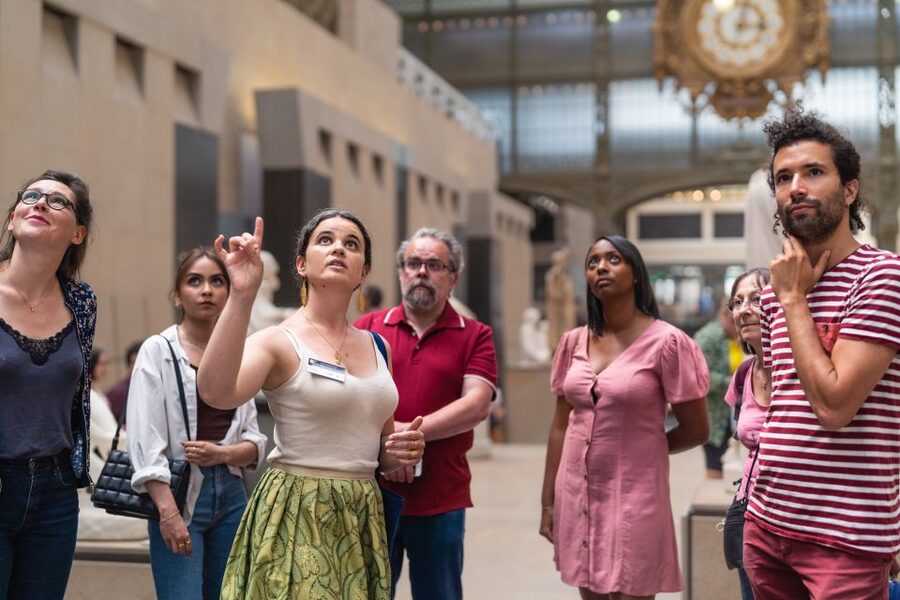
The Musée d’Orsay is not simply a container for famous paintings. The building gives you an immediate sense of drama. It was created as a railway station for the 1900 World’s Fair, then converted into a museum. Its huge clock, soaring interior, and long central spaces make the setting feel different from the more formal rooms of the Louvre.
That setting matters because the art inside also marks a break with older rules. The collection focuses on a period when artists began painting modern streets, leisure, work, theater, cafés, and ordinary people with new freedom. Instead of treating art as a polished display of ancient subjects or official portraits, painters looked at daily life and showed it in fresh ways.
Your guide’s job is to connect those changes. You are not just told that Monet used loose brushwork or that Van Gogh painted with forceful strokes. You get the reasons those choices caused trouble, the artists who influenced one another, and the social ideas behind the pictures.
I find this especially helpful if you like art but sometimes feel unsure what you are supposed to notice. A good guide gives you a way into the painting without telling you what you must feel.
More reserved-entry tickets in Paris:
- Versailles: Skip-the-Line Tour of Palace with Gardens Access
★ 4.7 · 9,778 reviews - Versailles: Skip-the-Line Guided Palace Tour and Full Access
★ 4.6 · 5,214 reviews - Louvre Museum: Skip-the-Line Small Group Guided Tour
★ 4.6 · 3,960 reviews
Meeting your guide beside the Legion d’Honneur Museum
The meeting point is opposite the main entrance to the Musée d’Orsay, next to the entrance of the Legion d’Honneur Museum. Your guide should be near the entrance with a guide badge on an orange lanyard.
This detail is important. You are specifically told not to get into the museum lines. The group uses a dedicated entrance, so joining the wrong queue can waste time and create needless confusion.
The easiest public transport options listed are the RER Musée d’Orsay station on Line C and Solferino Metro station on Line 12. Allow enough time to identify the meeting point before your start time. Missed tours are not refundable, even though cancellation up to 24 hours before departure is allowed.
Large bags and luggage are not permitted. That makes this a poor stop if you are between hotels with suitcases or carrying a substantial day bag. Plan to arrive with only what the museum permits.
Entering through the former railway station
Once inside, the building itself becomes the first major sight. The former station gives the museum a sense of scale, but it can also make orientation tricky. A guide helps by giving you a route instead of leaving you to wander from room to room without a plan.
The tour is designed around the museum’s major works. You should expect your guide to lead you through the best-known sections, explain the story of the building, and point out how the collection moves from academic traditions toward Impressionism and later styles.
The route is not meant to cover every painting. That would be impossible in under two hours. Its value comes from selecting works that explain the larger change in art. You see key examples, then learn how to look at the rest of the collection on your own.
Several people have praised guides for handling crowds well. Barbara described a guide who found good viewing positions despite a packed museum, while Steven Robert appreciated that his group could hear every explanation even with ages ranging from the late teens to the late seventies. That is where headsets can make a real difference. You can listen without standing shoulder to shoulder around the guide.
The Impressionists and the scandal of modern life
One of the strongest parts of the experience is the story of Impressionism as a rebellion, not just a pretty style. Today, a sunny scene by Renoir or a shimmering view by Monet may feel familiar. At the time, visible brushstrokes, unusual framing, bright colors, and everyday subjects could seem unfinished or even offensive.
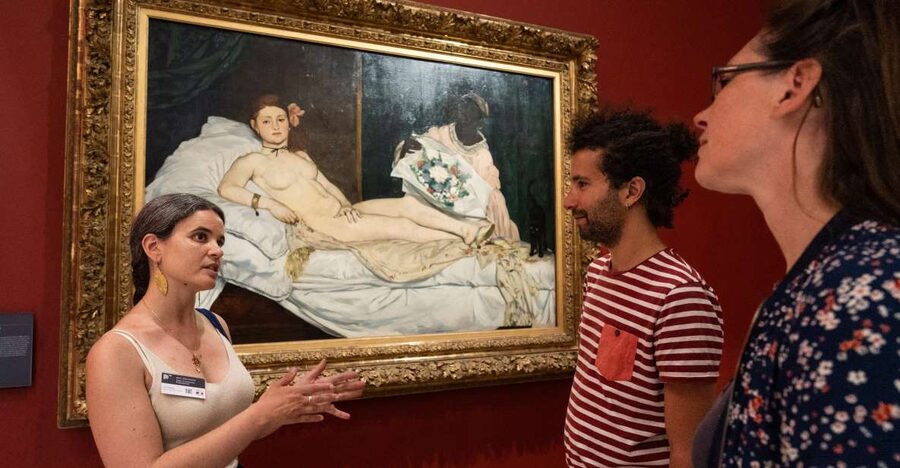
The guide explains why. Many artists were pushing against official standards that favored smooth technique, grand themes, and carefully controlled composition. Monet, Manet, Renoir, and Degas chose scenes from contemporary life, often showing people at leisure or work without turning them into idealized figures.
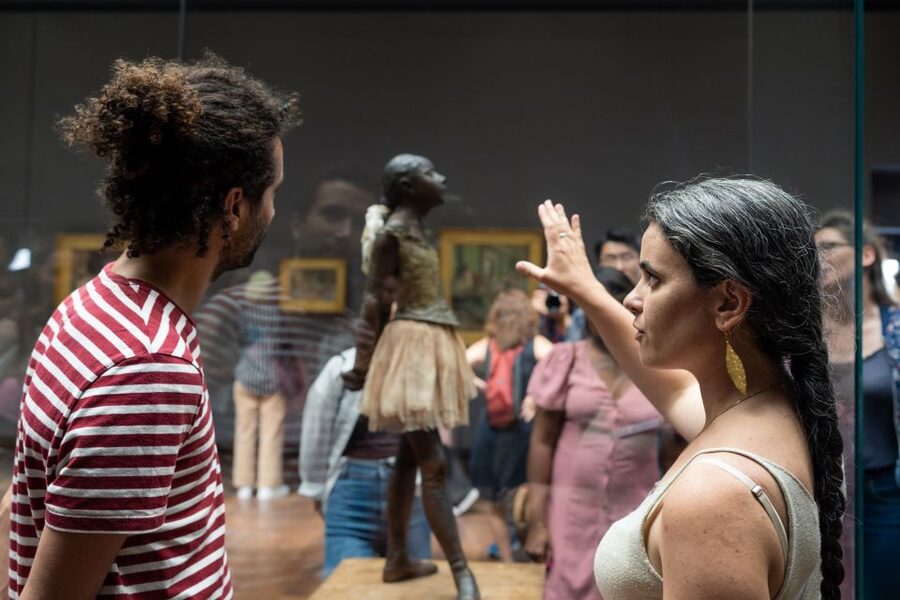
Manet is especially useful in this story because his work helps show how a painting could challenge both artistic taste and social expectations. Degas offers another angle, with unusual viewpoints and scenes that feel observed rather than staged. Renoir brings the pleasures of social life, while Monet makes changing light a subject in its own right.
The better guides do not bury you in dates. They use the artists’ friendships, arguments, influences, and private lives to make the paintings easier to read. Avi, Anthony, Sara, Sophia, and Simone have been praised for explaining both the art and the period around it in a friendly, entertaining way.
A useful warning: some guides move quickly between rooms. One guest found the 90-minute version rushed and felt that the guide spoke too fast. Another suggested slowing down while walking so the group could glance at other works. If you want long, quiet contemplation of each painting, this is not the right format. If you want a strong overview, the pace is generally a fair trade.
A few more Paris outings to set side by side
- Paris: Louvre Museum Timed-Entrance Ticket
★ 4.6 · 71,977 reviews - Disneyland® Paris 1-Day Ticket
★ 4.6 · 49,412 reviews - Paris: Versailles Palace and Gardens Full Access Ticket
★ 4.6 · 41,579 reviews - Paris: Evening River Cruise with Music
★ 4.4 · 22,721 reviews
Seeing Monet, Renoir, Degas, and Manet with context
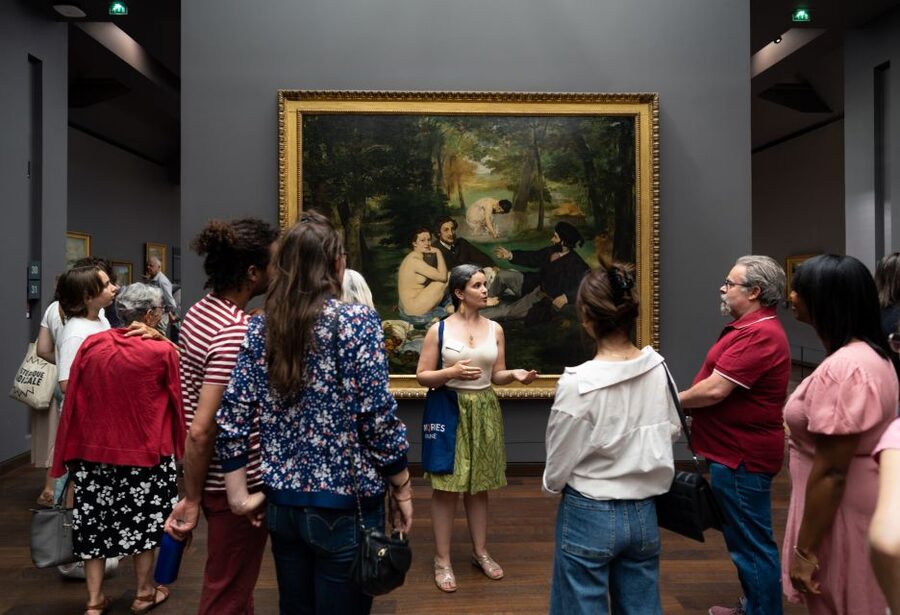
A museum label may give you an artist’s name, a title, and a date. That is useful, but it rarely explains why a picture mattered. This tour adds the missing connections.
You may hear how artists borrowed ideas from one another, reacted against older conventions, or used a subject to comment on society. One guide was praised for explaining relationships among artists, along with the humor, irony, and social criticism built into many works.
That kind of detail can change your visit. A crowded café scene becomes more than a pleasant image. A theatrical or urban subject may reveal new ideas about class, gender, leisure, or the speed of modern life. You begin to see choices in the composition instead of merely recognizing a famous name.
Families can benefit, too. One guide adjusted the route for a seven-year-old who particularly liked Van Gogh, giving extra attention to Impressionist works and pointillism. That group also had time to linger in places that interested them. This suggests that a small or flexible group can make the tour feel more personal, though you should not assume every guide will change the route to the same degree.
Van Gogh and the later rooms
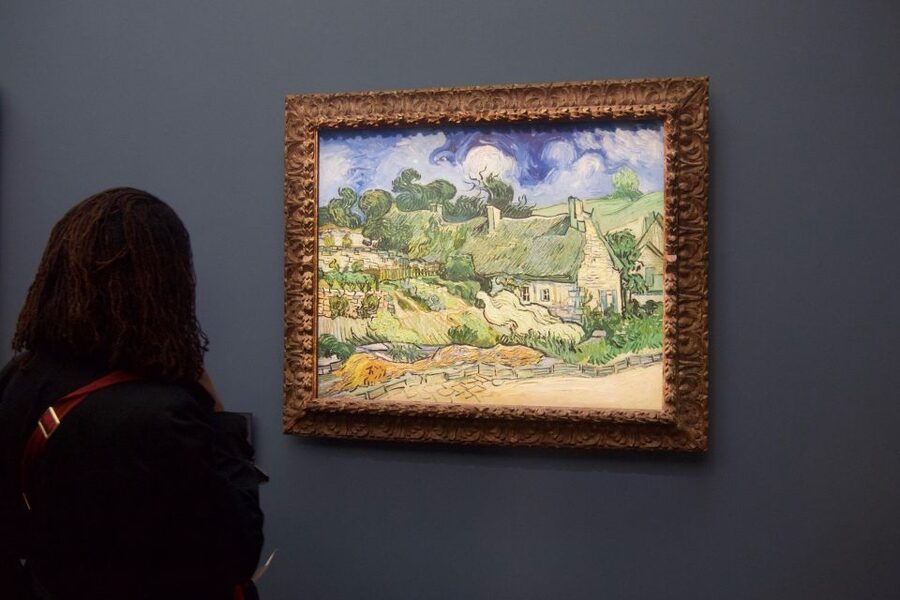
Van Gogh usually provides the emotional finish for this kind of visit. His work belongs to a later stage of the museum’s collection, and guides use it to show how the freedom of earlier artists opened the door to even more personal forms of painting.
The tour may continue as far as the Van Gogh section, after which you might be left to explore independently, depending on the guide and route. That is not necessarily a weakness. Van Gogh’s paintings reward extra time, and you may prefer to return to them without a group gathered around you.
You can also use the post-tour access to revisit the works that went by quickly. This is one of the best features of the experience. The guided section gives you a framework, then the remaining museum time lets you follow your own interests.
If Van Gogh is your main reason for visiting, tell the guide early. The experience has included guides who adjusted their typical route when a family had a strong interest in him. There is no guarantee of a private itinerary, but speaking up may help the guide understand what matters to you.
What the guide adds to the admission price
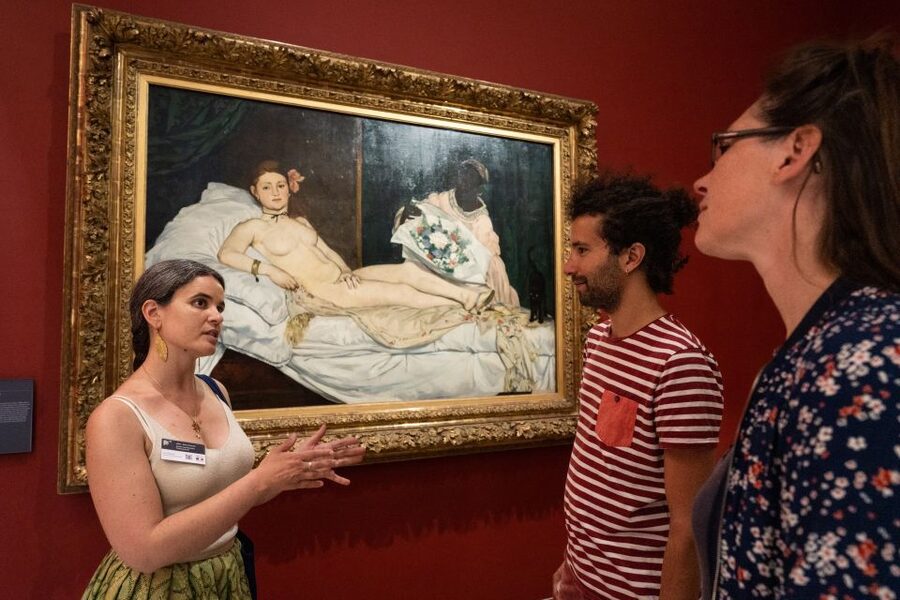
At $82 per person, this is not a low-cost museum entry. You are paying for more than admission. The price includes entrance fees, a dedicated entrance, a fully accredited local guide, and headsets when appropriate.
I see the value most clearly if you have limited time in Paris, feel unsure about art, or want help finding the major works in a crowded museum. A good guide can prevent you from spending your whole visit searching for the famous rooms or reading every label. You also get a story that ties the collection together.
The value is less clear if you already know the Orsay well, prefer to explore in silence, or want to spend twenty minutes with one painting. You could reasonably prefer a self-guided visit in that case.
Guide quality has been a major strength. Anthony received repeated praise for his warmth, clear explanations, and passion. Avi was appreciated for turning art history into an entertaining conversation. Perrine, Sarah, Marjolein, Pauline, Carolina, and Sophia were also singled out for clarity, care, and enthusiasm.
Still, do not book this expecting identical performances. Some guides speak faster than others, and a crowded day can limit how long you remain in front of a work. The price is easiest to justify when you treat the tour as an orientation followed by independent museum time.
Crowds, pace, and the practical reality
The Musée d’Orsay can be extremely crowded. That affects the experience more than any other factor. You may need to stand at an angle, wait for a clear view, or listen through a headset while the guide positions the group.
A strong guide can make a major difference. Several praised their guides for moving efficiently through busy rooms and finding good vantage points. That skill is practical, not decorative. It means you are more likely to see the key works rather than spend the visit looking at the backs of other people.
The pace is brisk by design. The listed guided portion is 1 hour 45 minutes, while the overall activity can range from 90 to 150 minutes. You should plan on a focused overview, not a slow museum afternoon.
Afterward, stay as long as you like. This gives you the flexibility the short guided route cannot provide. You can return to Monet, spend longer with Degas, seek out works your guide mentioned only briefly, or visit a temporary exhibition if available and accessible under the museum’s current arrangements.
Who should book this Musée d’Orsay visit?
I would recommend it to:
- First-time visitors who want to understand the Orsay’s main collection
- People with only a few hours for the museum
- Families who benefit from stories and a clear route
- Art lovers who want context about the Impressionist movement
- Visitors who dislike navigating large museums alone
- Anyone who values a guide’s help in crowded galleries
It is less suitable for wheelchair users, as the activity is not listed as suitable for wheelchair users. It is also a poor match for anyone carrying luggage or large bags.
If you are traveling with older relatives, the headsets may help everyone hear the guide. If your group includes children, ask questions early and mention particular interests. If you are an experienced art student, consider the tour for orientation only, then use the extra museum time for independent study.
My verdict: a smart way to meet the Orsay
Book this tour if you want the Musée d’Orsay to make sense quickly. The building, the Impressionist story, and the guide’s explanations work well together, and the dedicated entrance saves useful time.
At $82, it is best for a first visit rather than a repeat visit. Choose it for structure, context, and help with the crowds. Skip it if you want complete freedom, long periods of quiet looking, or the lowest possible admission cost.
The strongest plan is simple: arrive early at the Legion d’Honneur meeting point, carry no large bags, listen closely during the guided route, and stay afterward to revisit the paintings that caught your eye. That combination gives you both the guide’s insight and your own time with the art.
FAQ
How long does the Musée d’Orsay tour last?
The guided tour is listed as 1 hour and 45 minutes. The total activity duration can range from 90 to 150 minutes, depending on the selected starting time and schedule.
What language is the tour conducted in?
The live tour guide speaks English. Headsets are provided when appropriate so you can hear the guide in crowded galleries.
Where do I meet the guide?
Meet opposite the main entrance to the Musée d’Orsay, beside the entrance to the Legion d’Honneur Museum. The guide wears a guide badge on an orange lanyard.
Should I join the museum’s public entrance line?
No. Do not join the museum lines. The tour includes a dedicated entrance.
Can I stay inside the museum after the tour?
Yes. You can remain in the museum after the guided visit and continue exploring at your own pace.
Is hotel transportation included?
No. Hotel pickup and drop-off are not included.
Can I bring luggage or a large bag?
No. Luggage and large bags are not allowed for this activity.
What happens if I need to cancel?
You can cancel up to 24 hours before departure for a full refund. Missed tours are not refundable.
Recently added in Paris
- Private Transfers in Paris★ 5.0 · 75 reviews
- CDG – Euro Disney – CDG Two Way Private Shuttle Transfer★ 5.0 · 233 reviews
- Disneyland® Paris 1 Day Ticket with Transport from Paris★ 3.5 · 302 reviews
- Personalized Transport service from Disneyland to Paris★ 5.0 · 63 reviews
- Monet’s Gardens & House-Private Giverny Tour From Paris★ 4.5 · 137 reviews
- Guided tour Monet’s house and gardens/small group★ 4.5 · 68 reviews
- Giverny Monet House and Gardens Skip the line Walking tour★ 4.0 · 217 reviews
- Monet’s House and Garden & Giverny Village★ 4.5 · 39 reviews
Skip the Line, compared.

Skip-the-Line Tour of Palace with Gardens Access
Read our review →
Skip-the-Line Guided Palace Tour and Full Access
Read our review →
Louvre Museum: Skip-the-Line Small Group Guided Tour
Read our review →
Versailles Skip-the-Line Tour & Gardens Access
Read our review →
Versailles Guided Tour with Skip-the-Line Entry
Read our review →
Palace of Versailles Skip-the-Line Guided Tour
Read our review →
Musée d’Orsay Skip-the-Line Tour with Expert Guide
Read our review →
Skip-the-Line Louvre Highlights Tour with Mona Lisa
Read our review →Browse the lists this tour appears in