REVIEW · TICKETS
Paris : Atelier des Lumières admission ticket
Art gets a new set of wheels here. Paris’s Atelier des Lumières turns a former foundry into a huge digital gallery, where paintings spread across walls and floors in continuous programs. I like the unusual setting, and I like that the ticket includes two exhibitions rather than one. The main drawback is that digital art can feel less personal than standing before an original canvas.
The current programs focus on Pablo Picasso and Henri Rousseau, with music, color, and motion shaping the experience. You can visit any day of the week, but the lack of a fixed tour group means you must check the available starting time before booking. The space also welcomes children, although strollers and large bags are not allowed inside.
In This Review
- Key points to know before you go
- What the Atelier des Lumières actually offers
- Picasso, art in motion, from Spain to Guernica
- Rousseau’s dream country is the calmer half
- L’Atelier des Enfants for ages 4 to 12
- How the continuous format shapes your visit
- Is the $20 ticket good value?
- Who will enjoy this most?
- Practical advice for getting the most from the visit
- Should you book the Atelier des Lumières?
- FAQ
- Where is the Atelier des Lumières?
- How much does admission cost?
- How long is the ticket valid?
- Does the ticket include both current exhibitions?
- Are the exhibitions shown continuously?
- Is the Atelier des Lumières open every day?
- Is L’Atelier des Enfants included?
- What ages is L’Atelier des Enfants designed for?
- Is the venue wheelchair accessible?
- Can I bring a stroller, luggage, or a large bag?
- Is the experience suitable for children under 2?
- Is it suitable for people with epilepsy?
- Can I cancel my booking?
- Can I reserve now and pay later?
Key points to know before you go
- Two exhibitions share one ticket: See Picasso, art in motion and Le Douanier Rousseau, au pays des rêves during the same visit.
- The former foundry is part of the appeal: The large industrial setting gives the digital images room to spread across walls, columns, and floors.
- Programs run continuously: You are not joining a guide-led tour, so the format is flexible and easy to fit into a day in Paris.
- Picasso gets a broad visual treatment: The presentation moves from Spain and the bullring to Paris cabarets, Les Demoiselles d’Avignon, and Guernica.
- Rousseau offers a gentler family choice: His plants, animals, and dreamlike scenes work well for children and adults.
- Children ages 4 to 12 have their own creative space: L’Atelier des Enfants lets young visitors make digital art inspired by Rousseau.
What the Atelier des Lumières actually offers
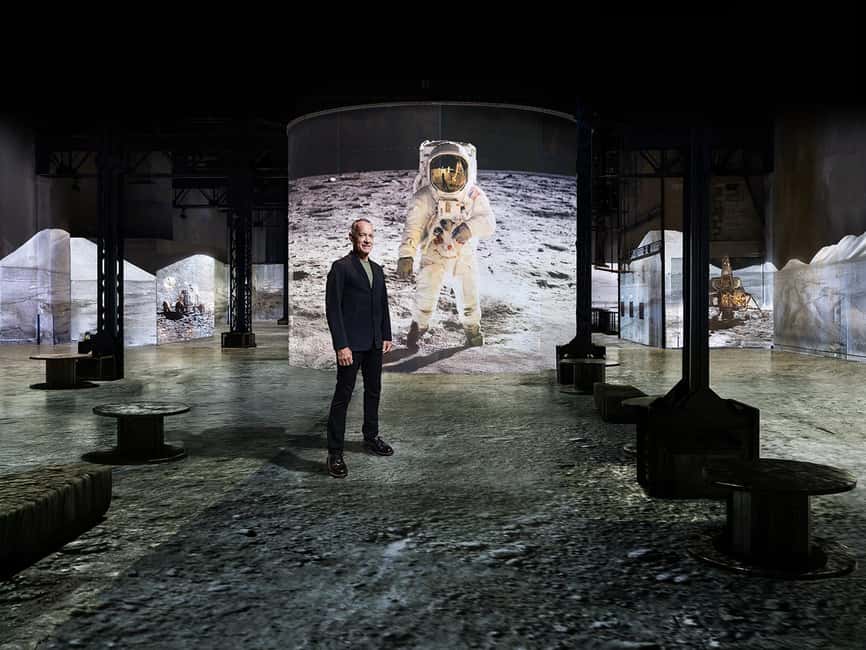
The Atelier des Lumières is not a conventional museum with framed works arranged along quiet walls. It is a presentation of art through large digital projections in a former foundry. Images appear at monumental scale, move around the room, and are paired with a changing visual rhythm.
That distinction matters. You will not spend your visit studying the brushwork of one original Picasso. Instead, you will see familiar works placed into a wider visual sequence. A painting may cover an entire wall, shift in color, or become part of a moving progression through an artist’s career.
I find this format best for readers who want an art experience that feels active and immediate. It gives you a fresh way to approach major works, especially if a traditional museum has ever felt too formal. Still, you should come knowing that this is an interpretation of art, not a substitute for seeing the original paintings in a museum.
The building adds character. A former foundry gives the experience a broad, industrial shell, rather than the polished hush of a palace gallery. That contrast between old workshop and modern projection technology is one of the most interesting parts of the visit.
A few more Paris outings to set side by side
- Paris: Louvre Museum Timed-Entrance Ticket
★ 4.6 · 71,977 reviews - Disneyland® Paris 1-Day Ticket
★ 4.6 · 49,412 reviews - Paris: Versailles Palace and Gardens Full Access Ticket
★ 4.6 · 41,579 reviews
Picasso, art in motion, from Spain to Guernica
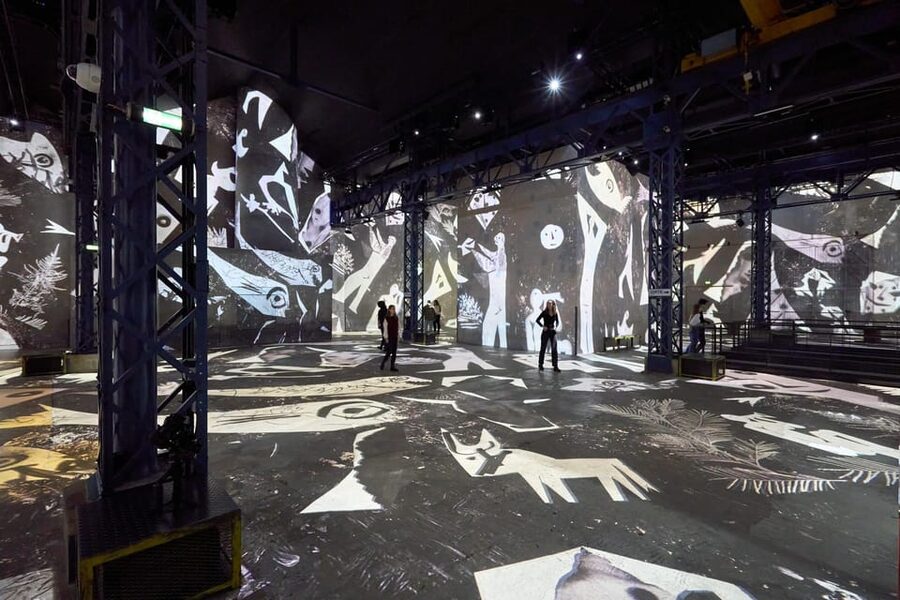
The Picasso program is the main draw for many adults. It follows the artist from his native Spain to France, where he spent much of his life, using key subjects and works to create a visual journey.
The sequence includes the bullring, Paris nightlife, and the cabarets that helped shape the city’s artistic identity. You also encounter the fractured forms and strong colors of Les Demoiselles d’Avignon, followed by the grim force of Guernica.
This broad sweep helps you see Picasso as more than one familiar image or one period. His work changed repeatedly, and the presentation uses movement to connect those changes. Instead of treating each painting as an isolated object, it places Picasso’s ideas into a flow of shapes, faces, bodies, and colors.
That approach can be especially useful if you know Picasso only through a few famous works. You may find the shift from early influences to later experiments easier to follow when the images surround you. The format also makes the bold geometry of his work particularly effective.
The trade-off is that the scale and motion can take attention away from fine detail. Picasso’s paintings often reward close inspection, and a projection cannot offer the same surface, texture, or physical presence as an original. I would treat this program as a strong visual introduction, not a complete art lesson.
A notable work included in the presentation is Picasso’s 1907 Les Demoiselles d’Avignon, held by New York’s Museum of Modern Art. The program also includes Portrait de jeune fille, d’après Cranach le jeune II, a 1958 linoleum engraving from the Musée National Picasso in Paris. Those details give the exhibition a useful connection to real collections, even though you are seeing digital versions here.
Rousseau’s dream country is the calmer half
The second program turns to Henri Rousseau, often called Le Douanier Rousseau. It explores the early development of naive art in France through paintings that can look simple at first, yet contain carefully observed plants and animals.
Rousseau was self-taught, and his inspiration came from vegetation and animals seen in places such as the greenhouses and menagerie of Paris’s Jardin des Plantes. The program builds on those elements, creating a dreamlike world of dense plant forms, creatures, and imagined settings.
I expect many people to find this section softer and easier to absorb than the Picasso presentation. Rousseau’s art has a storybook quality, but the digital treatment still gives the work room to shift and expand around you. It is a good contrast to Picasso’s sharper changes in form and mood.
Families may appreciate Rousseau most. The images are approachable, and children can respond to the animals and plants without needing much background in art history. Adults also get a useful reminder that naive art was not simply childish art. Rousseau observed the natural world closely and transformed those observations into his own visual language.
This program is not presented as a detailed academic study of Rousseau. You will not receive a long lecture or a room-by-room explanation of individual paintings. Instead, the program lets repeated images, color, and motion build an atmosphere. If you want dates, labels, and close comparisons, plan to supplement the visit with a traditional museum.
L’Atelier des Enfants for ages 4 to 12
Families receive more than basic admission. Children ages 4 to 12 can use L’Atelier des Enfants, a space designed to introduce digital art through Rousseau’s work.
The goal is not simply to place children in front of another screen. Young visitors become creators and take part in making their own digital exhibitions. That hands-on angle gives the family visit a purpose beyond asking children to stand still while adults look at art.
I especially like the connection between the children’s activity and the Rousseau program. The younger audience can first encounter the artist’s plants and animals, then explore how images can be arranged and changed digitally. It is a practical way to show that art can be made through more than paint and canvas.
The age range is important. The space is aimed at children from 4 to 12, and the activity may not suit very young toddlers. Children under 2 are not considered suitable for the experience overall.
Parents should also plan around the practical restrictions. Baby strollers and baby carriages are not allowed, and large bags or luggage are prohibited. If you are coming with small children, pack lightly and do not assume you can bring a stroller into the venue.
More entry tickets in Paris:
- Paris: Eiffel Tower Entry Ticket with Optional Summit Access
★ 4.4 · 20,035 reviews - Paris: Moulin Rouge Cabaret Show Ticket with Champagne
★ 4.7 · 16,088 reviews - Paris: Montparnasse Tower Observation Deck Entry Ticket
★ 4.5 · 10,532 reviews - Paris: Louvre Museum Entry Ticket With Host and River Cruise
★ 4.6 · 9,926 reviews
How the continuous format shapes your visit
The exhibitions use continuous broadcasts rather than a single guide-led departure. That makes the visit flexible. You can fit it into a day of sightseeing without committing to a long tour with a fixed group.
The ticket is valid for one day, and you need to check availability for the starting times. This wording means you should pay attention when choosing your booking time rather than simply arriving whenever convenient. Once inside, the continuous presentation gives you a more relaxed way to watch the programs.
You may prefer to stand in one place and let the pictures move around you. You may also want to shift position, since the images fill the room and look different from different angles. There is no single perfect viewing spot stated for the experience, so I would give yourself time to get oriented.
Do not expect a short, tightly timed gallery visit. The absence of a traditional guide makes the pace your own, but the programs are still built around repeated broadcasts. That is useful if you arrive late or want to see a section again. It can also feel less structured if you prefer a clear beginning, middle, and end.
Because the broadcasts continue, the experience works well as one stop within a larger Paris day. You do not need to build an entire day around it. At the same time, the ticket is valid for one day rather than an extended period, so it is not designed as a casual return visit on another date.
Is the $20 ticket good value?
At about $20 per person, the ticket sits in a reasonable range for a Paris cultural activity, especially because it covers both current programs and access to L’Atelier des Enfants.
The value is strongest if you plan to watch both exhibitions. Picasso and Rousseau offer clearly different moods, and the contrast keeps the visit from feeling like one long presentation with the same visual tone. Families gain extra value from the children’s space.
The price is less compelling if you want to study original paintings in depth. Your ticket does not provide access to a conventional collection of original canvases. You are paying for scale, technology, the foundry setting, and a new way of encountering well-known artists.
I would compare it with the cost and time of a standard museum visit. If you want art that feels accessible, visual, and easy to share with children, $20 is a fair price. If your main aim is detailed art scholarship or original works, put that money toward a museum instead, or pair this experience with one.
The option to reserve now and pay later also helps if your Paris plans are still shifting. Free cancellation is available up to 24 hours in advance for a full refund, which gives you some protection if your schedule changes.
Who will enjoy this most?
I would recommend the Atelier des Lumières to several types of visitors.
First-time art visitors may like the clear visual impact. You do not need a long background in Picasso or Rousseau to understand the broad themes. The images and music create an immediate entry point.
Families with children ages 4 to 12 have a particularly good reason to come. The children’s creative space gives younger visitors something designed for them, rather than expecting them to follow an adult museum routine.
Picasso fans will appreciate seeing works and periods connected in one large-scale sequence. The experience may also encourage you to seek out the original pieces later at the Musée National Picasso in Paris or elsewhere.
Repeat Paris visitors may enjoy the former foundry and digital format as a change from the city’s traditional museums. It offers a different kind of art stop without requiring a full day.
I would hesitate to recommend it to anyone with epilepsy, since the experience is not suitable for people with epilepsy. I would also think twice if you dislike moving images, changing lights, or art presented without detailed wall labels. The program is designed around visual sensation, not quiet study.
The venue is wheelchair accessible, which makes it a practical choice for visitors who need an accessible cultural attraction. Still, the restrictions on strollers, large bags, and luggage apply, so plan your belongings carefully.
Practical advice for getting the most from the visit
Check the available starting time before you finalize the booking. The experience is open seven days a week, but your ticket is tied to a one-day visit and availability determines when you can begin.
Travel light. Large bags, luggage, baby strollers, and baby carriages are not allowed. This is more than a minor rule for families arriving with a full day’s equipment, so make a plan before you set out.
Give both exhibitions a fair chance. Picasso will likely catch your attention first because of his fame and the force of works such as Guernica. Rousseau offers a different reward, with plants, animals, and a quieter dreamlike mood. Seeing only the first program would leave out half of the ticket’s value.
If you are bringing children, set aside time for L’Atelier des Enfants rather than treating it as a quick extra. Its purpose is to let children create, and that works better when they are not being hurried through the space.
Keep your expectations clear. This is not a guided tour, and no guide names or live commentary are provided. You are entering a visual program with continuous broadcasts, so the experience depends on your own pace and attention.
Should you book the Atelier des Lumières?
Book it if you want a fresh, highly visual look at Picasso and Rousseau, especially if you are visiting with children or have already seen Paris’s traditional museums. The two programs, the unusual foundry setting, and the family activity make the $20 ticket a sound buy for the right audience.
Skip it if you want original paintings, detailed labels, or a quiet museum visit. The digital presentation trades close study for size, motion, and atmosphere.
For most people, the best choice is to treat the Atelier des Lumières as a lively supplement to Paris’s art museums. It offers an accessible way to meet major artists, and the 4.5 rating from 91 reviews reflects its broad appeal. Just check the starting time, leave the large bags behind, and make sure the format suits your comfort level before booking.
FAQ
Where is the Atelier des Lumières?
The Atelier des Lumières is in the Ile-de-France region of France.
How much does admission cost?
Admission costs about $20 per person.
How long is the ticket valid?
The ticket is valid for one day.
Does the ticket include both current exhibitions?
Yes. Admission includes the current immersive exhibitions, including Picasso, art in motion and Le Douanier Rousseau, au pays des rêves.
Are the exhibitions shown continuously?
Yes. The digital exhibitions use continuous broadcasts.
Is the Atelier des Lumières open every day?
Yes. It is open seven days a week.
Is L’Atelier des Enfants included?
Yes. Admission includes access to L’Atelier des Enfants.
What ages is L’Atelier des Enfants designed for?
L’Atelier des Enfants is designed for children ages 4 to 12.
Is the venue wheelchair accessible?
Yes. The Atelier des Lumières is wheelchair accessible.
Can I bring a stroller, luggage, or a large bag?
No. Baby strollers, baby carriages, luggage, and large bags are not allowed.
Is the experience suitable for children under 2?
No. The experience is not suitable for children under 2.
Is it suitable for people with epilepsy?
No. The experience is not suitable for people with epilepsy.
Can I cancel my booking?
Yes. You can cancel up to 24 hours in advance for a full refund.
Can I reserve now and pay later?
Yes. You can reserve your spot and pay later, keeping your travel plans flexible.
Recently added in Paris
- Private Transfers in Paris★ 5.0 · 75 reviews
- CDG – Euro Disney – CDG Two Way Private Shuttle Transfer★ 5.0 · 233 reviews
- Disneyland® Paris 1 Day Ticket with Transport from Paris★ 3.5 · 302 reviews
- Personalized Transport service from Disneyland to Paris★ 5.0 · 63 reviews
- Monet’s Gardens & House-Private Giverny Tour From Paris★ 4.5 · 137 reviews
- Guided tour Monet’s house and gardens/small group★ 4.5 · 68 reviews
- Giverny Monet House and Gardens Skip the line Walking tour★ 4.0 · 217 reviews
- Monet’s House and Garden & Giverny Village★ 4.5 · 39 reviews
Tickets, compared.

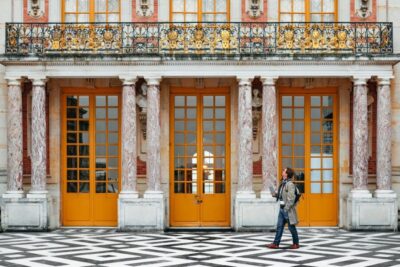
Versailles Palace and Gardens Full Access Ticket
Read our review →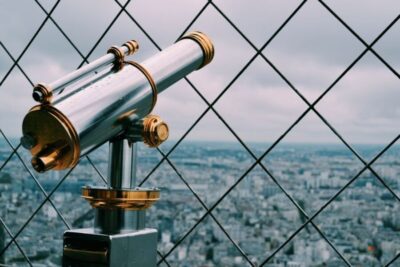
Eiffel Tower Entry Ticket with Optional Summit Access
Read our review →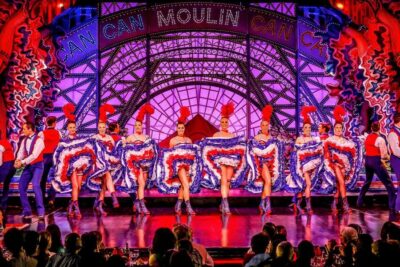
Moulin Rouge Cabaret Show Ticket with Champagne
Read our review →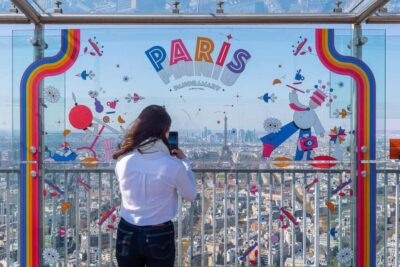
Montparnasse Tower Observation Deck Entry Ticket
Read our review →
Louvre Museum Entry Ticket With Host and River Cruise
Read our review →